
Mike Vernon and David Bowie – Producing the 1967 Debut

Mike Vernon (20 November 1944 – 2 March 2026) was an English record producer, label founder and singer whose work helped establish the British blues recording scene. His connection with David Bowie was direct: he produced Bowie’s first studio album, David Bowie, released by Deram in June 1967.
Working with engineer Gus Dudgeon, Vernon helped turn a young songwriter’s theatrical material into a collection of compact stories, orchestral pop songs and unusual studio performances. This was the Bowie of “Silly Boy Blue”, “Love You Till Tuesday” and “Please Mr. Gravedigger”: an artist exploring character and atmosphere before the arrival of his first major hit.
Vernon also produced associated Deram recordings, including “The Laughing Gnome”. Outside Bowie, his career encompassed John Mayall, Eric Clapton, Peter Green’s Fleetwood Mac and the Blue Horizon label. Those achievements provide the background to a collaboration that took him well beyond the blues and into Bowie’s early experiments with storytelling through recorded sound.
- Name: Mike Vernon
- Born: 20 November 1944, Harrow, Middlesex, England
- Died: 2 March 2026, Spain, aged 81
- Roles: Record producer, label founder and vocalist
- Direct Bowie collaboration: Producer of David Bowie (1967)
- Bowie label: Deram, a subsidiary of Decca
- Principal album engineer: Gus Dudgeon
- Associated recordings: “The Laughing Gnome”, “The Gospel According to Tony Day” and the single version of “Love You Till Tuesday”
- Label legacy: Co-founder of Blue Horizon
- Other notable collaborators: John Mayall, Eric Clapton, Fleetwood Mac, Ten Years After, Chicken Shack, Focus and Sari Schorr
- Recognition: BASCA Gold Badge, MBE and European Blues Hall of Fame recognition
Early life: learning to listen before learning to produce
Born in Harrow in 1944, Vernon developed his musical interests through listening rather than through a formal plan to become a record producer. In a later interview with Gianni Franchi, he recalled family visits where a collection of 78 rpm records introduced him to performers including Louis Jordan, the Mills Brothers and the Ink Spots. The records offered different ways of combining a voice with an ensemble, from close vocal harmonies to rhythm and blues built around a band.
His upbringing also included singing in a church choir with his brother Richard. Musical theatre and popular singers belonged to the family’s listening environment, while the arrival of rock and roll brought a particularly strong response. Little Richard, Fats Domino and Larry Williams became important reference points. These interests help explain why Vernon’s musical background was broader than the blues productions for which he would eventually become best known.
Decca: an apprenticeship inside the recording industry
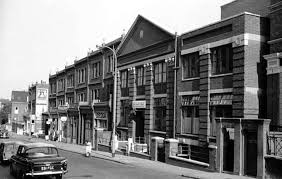
Vernon entered Decca’s organisation in the early 1960s and learned production through everyday studio work. His own account describes assisting Frank Lee, whose artists included Gracie Fields, Mantovani and Vera Lynn. This was a setting in which large ensembles, established vocalists and carefully organised sessions were part of the job. It gave the young assistant an introduction to the practical discipline behind records that could sound effortless to their listeners.
One of his responsibilities was keeping notes about takes: where a performance was complete, where something had broken down and which passages might be useful during editing. In sessions with voices and instruments recorded together, a mistake could require another performance. The assistant needed to listen closely while keeping information that the engineers and producer could use later. This was detailed work, with consequences for the finished recording.
Hugh Mendl and the opportunity to record new music
Vernon credited Hugh Mendl with giving him greater scope as a producer at Decca. Mendl’s willingness to support different kinds of repertoire created opportunities to record American blues musicians and emerging British performers. The relationship also became important in Bowie’s history: Mendl was among the Decca executives who responded positively to the young singer when manager Kenneth Pitt sought a new recording contract in 1966.
The two careers intersected through the workings of a record company. Pitt brought forward an artist seeking a platform; Mendl helped open the door; Vernon was assigned to make the album. That division of responsibilities matters. It allows the story to recognise management, A&R and production without compressing all three activities into the claim that one person discovered Bowie. The debut emerged from several people’s decisions, followed by the work of musicians and engineers.
John Mayall and Eric Clapton: Vernon’s blues credentials
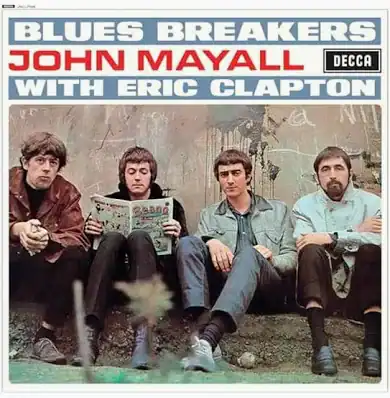
Before Bowie’s debut appeared, Vernon had produced Blues Breakers with Eric Clapton, John Mayall’s influential 1966 album. Its familiar nickname, the Beano album, comes from the comic Clapton holds in the cover photograph. The recording brought Vernon’s production work into close contact with a guitarist whose amplified sound was becoming a major point of interest within the British blues scene.
The record’s force depends on the interaction of guitar, voice and rhythm section. In that setting, the producer’s task included preserving the impact of a band whose live sound could exceed the polite expectations of a conventional recording room. Vernon’s later interviews describe the importance he placed on capturing committed performances. His blues records provide a useful comparison with Bowie because their musical priorities were so different.
The beginnings of Blue Horizon
Vernon’s commitment to blues extended beyond producing sessions for Decca. With his brother Richard Vernon and fellow blues enthusiast Neil Slaven involved in the early enterprise, he helped build the network from which Blue Horizon developed. The venture was connected with the specialist publication R&B Monthly and with an audience eager to hear American blues recordings that were not always easy to obtain in Britain.
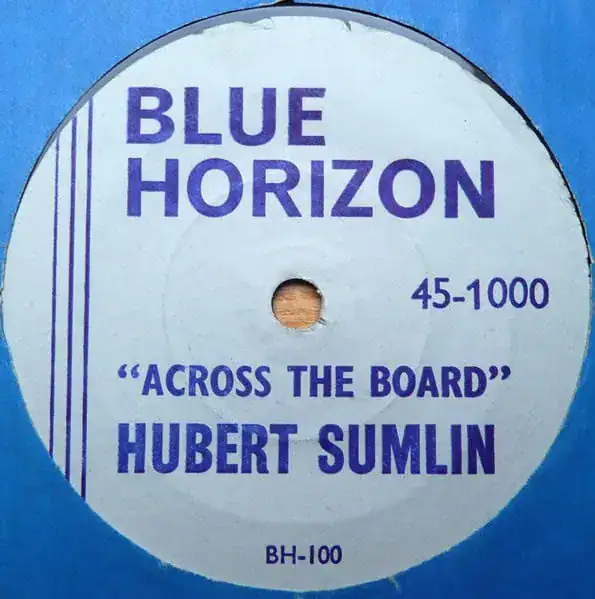
The label’s early history included a recording of Howlin’ Wolf’s guitarist Hubert Sumlin, made at Vernon’s parents’ house and released in 1965. Its modest beginnings are a useful reminder that an influential catalogue can start with limited means and a small circle of enthusiasts. Recording, collecting, writing and distributing music were related activities for people determined to give the blues a wider hearing.
Blue Horizon later provided a home for both British artists and American musicians. Its identity grew through the recordings it released and the connections it made between different generations of performers. This part of Vernon’s career belongs alongside his Bowie work, but the labels must remain distinct. Bowie recorded his debut for Deram. Blue Horizon was Vernon’s separate enterprise, with its own artists and commercial history.
First working connection with Bowie: the Deram opportunity
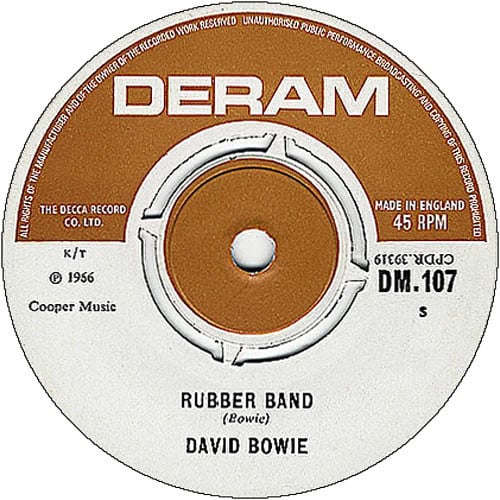
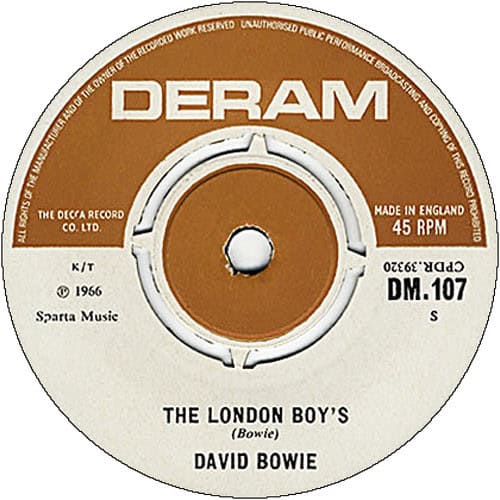
By autumn 1966, Bowie had released a series of singles without achieving a chart breakthrough. His Pye period had ended, and Pitt was seeking a new opportunity. Recordings made at RG Jones’s studio in Morden on 18 October 1966 included “Rubber Band” and “The London Boys”. These recordings helped secure interest from Decca and a contract with its recently established Deram label.
That earlier session should be distinguished from Vernon’s subsequent album production. Universal’s catalogue credits the original single recordings of “Rubber Band” and “The London Boys” to Bowie and Dek Fearnley as producers. The album version of “Rubber Band” was a later recording made under Vernon. Keeping those versions separate gives a more accurate account of how the Deram relationship began and how it developed.
Vernon later recalled the Bowie assignment as an intriguing project that he did not completely understand. This was a frank assessment from someone working within the commercial recording business. Bowie’s material presented a problem of identity: it drew on recognisable entertainment forms while giving them unusual characters and subject matter. The producer could appreciate its individuality and still wonder which audience would respond to the finished record.
From rhythm and blues to theatrical songs
The young Bowie had already worked in groups rooted in rhythm and blues, but the material he brought to his debut album moved in another direction. Anthony Newley’s theatrical singing was a significant reference point. The songs often made their effect through pronunciation, character and narrative detail. A vocal could be funny, wistful, unsettling or openly performed as a role rather than presented as a straightforward personal confession.
This approach makes the album easier to understand as a collection of scenes. A listener encounters domestic dependency, romantic disappointment, childhood, social pressure and darker fantasies. The subjects do not all belong to the same emotional register. Some songs invite an affectionate response to their characters; others allow humour to turn uncomfortable. The variety demanded changes in instrumentation and vocal presentation across the record.
Vernon described the material’s theatrical nature in a published interview. His words offer a useful first-hand frame for the album without implying that he anticipated every direction Bowie’s later career would take. The recordings document a young artist’s actual choices at this stage: an interest in telling stories, adopting voices and making short songs behave like miniature performances.
Mike Vernon on Bowie’s early material
“It was like poetry, but set to music.”
Source: Mike Vernon, interviewed by Rob Hughes, “New Horizons: Mike Vernon (Part One)”, published by Louder in 2015. Read the interview.
Recording the debut at Decca Studios
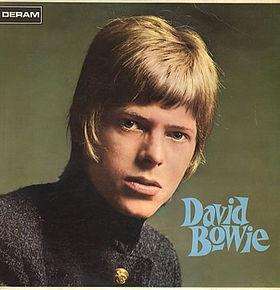
The main album sessions took place at Decca Studios in West Hampstead, London, across the period from late 1966 into early 1967. Vernon was the producer and Gus Dudgeon the principal engineer. Their work brought Bowie’s repertoire into a professional studio environment where additional musicians could realise arrangements beyond those of his existing live group.
The album’s credits also preserve the participation of musicians from Bowie’s circle, including bassist Dek Fearnley, organist Derek Boyes and drummer John Eager. Bowie and Fearnley were involved in arranging the material, while Arthur Greenslade contributed arrangements to selected songs. The recorded result therefore belongs to a collaboration between songwriter, producer, engineer, arrangers and performers rather than to a single person’s musical design.
Gus Dudgeon and the producer–engineer partnership
Dudgeon’s role is essential to the story. A producer and an engineer brought different responsibilities to a recording, even when their ideas overlapped. Vernon oversaw the project as producer; Dudgeon handled the engineering that helped place the performances on tape. Their shared work had to connect the musical intentions in the room with a recording that could be edited, mixed and released.
In his interview with Gianni Franchi, Vernon explicitly included Bowie’s early recordings among the sessions he made with Dudgeon. He also discussed the restrictions of four-track recording and the need to combine tracks to create room for further parts. His account describes the value of an engineer who could contribute creatively within those restrictions. It does not provide a track-by-track technical log, but it explains the working conditions he remembered.
Mike Vernon on studio collaboration
“you had to work as a team to get the best results.”
Source: Mike Vernon, interview with Gianni Franchi, “Mike Vernon: ‘the Producer’”, Spaghetti Blues. Read the published interview.
“Rubber Band”: separating the single from the album
David Bowie – “Rubber Band”
Deram released “Rubber Band” backed with “The London Boys” on 2 December 1966. The single introduced listeners to a very different presentation from Bowie’s earlier group records. Its central image of a band allowed the song to draw on an older musical atmosphere, while the singer delivered the narrator’s romantic disappointment with conspicuous theatricality.
Bowie subsequently recorded a new version of “Rubber Band” for the album. This was the Vernon-produced recording, with Dudgeon engineering and an arrangement associated with Arthur Greenslade. The two versions can be compared directly: their performances, pacing and vocal treatment differ. The shared title does not make them the same recording, and a compilation may contain one version while another release contains the other.
“Love You Till Tuesday”: a clear pop possibility
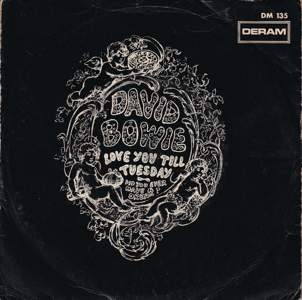
“Love You Till Tuesday” offered one of the debut’s clearest approaches to accessible pop. The title itself gives the romance a comic limitation, allowing the singer to sound eager while the song quietly undermines the permanence of his declaration. Melody and presentation make it inviting; the joke keeps it from becoming a completely conventional love song.
Vernon singled out this song positively in his later interview with Rob Hughes, remembering its orchestral sound and commercial appeal. His assessment helps explain the difficulty of the project. A producer could hear a promising single within the repertoire without being certain that the album’s full collection of theatrical subjects would find an audience. The record contained several possible identities for Bowie rather than one settled image.
The album version and the single version again need to be kept separate. Official release documentation places the new single recording on 3 June 1967, with the single issued on 14 July. Universal credits Ivor Raymonde with musical direction and conducting on that version and Bill Price as engineer. Vernon remained producer, but the personnel associated with the single were not simply identical to the album team.
“When I Live My Dream”: Bowie as a ballad singer
David Bowie – “When I Live My Dream”
“When I Live My Dream” presents a more sustained romantic mood. Its role in the album is different from the humour of “Uncle Arthur” or the unease of “We Are Hungry Men”. Here the voice has to carry an idealised emotional world with conviction. The dramatic element comes through the scale of the promise and the singer’s phrasing rather than through a parade of eccentric characters.
This song illustrates another possible direction within Bowie’s early repertoire: an entertainer able to deliver an arranged ballad. The range of the debut becomes clearer when such a performance is placed beside the more unusual pieces. The album did not propose that every track should use the same kind of voice, rhythm or instrumental support. Its coherence depended partly on the listener accepting Bowie as a performer who could move between roles.
A further recording was made at the June 1967 session associated with the single version of “Love You Till Tuesday”. Official documentation identifies it as the single version of “When I Live My Dream”, although it was not issued as a British single at that time. This is another example of a contemporary recording whose release history unfolded later, rather than a song that can be assigned one simple recording-and-release date.
“Silly Boy Blue”: an expansive early recording
David Bowie – “Silly Boy Blue”
“Silly Boy Blue” is one of the most substantial songs associated with the Vernon-produced debut. Its Tibetan subject matter belongs to an interest that Bowie would revisit in later years. The song reaches beyond the local social portraits found elsewhere on the album, establishing a setting and emotional scale that make it stand apart from the shorter comic sketches.
The recording gives the melody room to develop through a broad arrangement and prominent supporting voices. Bowie combines narrative detail with a more expansive singing style, making the song feel larger than its compact running time. Its effect depends on accumulation: the lead voice, repeated musical material and supporting parts build an atmosphere that is less conversational than much of the surrounding repertoire.
This can be heard as an early example of Bowie using a recorded arrangement to create a world around a song. That is an interpretation of the finished performance, rather than evidence that Vernon deliberately planned a model for later Bowie albums. The production credit tells us who oversaw this recording; it does not allocate every harmony, instrumental idea or emotional intention to that producer.
Character portraits: “Uncle Arthur” and “Little Bombardier”
“Uncle Arthur” opens the British album with a compact domestic comedy. Its title character’s difficulty in leaving his mother creates a story that can be followed almost as a scene from a stage sketch. Bowie’s delivery encourages the listener to notice the absurdity of the situation. The small scale is part of its design: an ordinary household becomes the setting for an unusually memorable protagonist.
“Little Bombardier” takes the character song into a more troubling emotional area. It describes a lonely former soldier whose relationship with children attracts suspicion. The narrative does not settle every question about him, and a responsible account should preserve that ambiguity. The recording’s waltz movement and arranged accompaniment give the story a surface grace that sits uneasily beside its social rejection.
Heard together, these songs show the difference between writing a character and making the audience comfortable with that character. Bowie could use a recognisable figure to produce laughter in one song and uncertainty in another. The singer’s position is not always that of a reliable witness explaining what the listener should think. Performance, melody and story can pull in different directions.
Childhood and the acoustic side of the album
“There Is a Happy Land” brings childhood into the foreground, presenting a world with its own rules and boundaries. The distinction between children and adults is central to its atmosphere. Its appeal does not depend on the elaborate character impersonation found in some neighbouring tracks. Instead, it asks the singer and arrangement to sustain a particular viewpoint, with the adult world held at a distance.
“Come and Buy My Toys” offers another contrast through a relatively spare acoustic setting. Guitarist John Renbourn is associated with the recording, and the prominence of the acoustic instrument changes the relationship between voice and accompaniment. The words are placed in a more open space, giving the song a different texture from the brass and orchestral colours elsewhere on the album.
“We Are Hungry Men”: dark comedy and a dangerous narrator
David Bowie – “We Are Hungry Men”
“We Are Hungry Men” is among the debut’s most unsettling departures from straightforward pop. Its fictional world involves population anxiety, authoritarian proposals and a self-appointed figure offering extreme answers. The song uses humour and exaggeration to expose a dangerous gap between the narrator’s grand claims and what his ideas actually imply.
The theatrical treatment is essential to the effect. Voices and changes of delivery make the performance behave like a compressed piece of drama. The listener has to distinguish the person being played from the songwriter presenting him. Reading the narrator’s programme as a literal statement of Bowie’s beliefs would erase the satire and misunderstand the relationship between artist and character.
A useful interpretation is to hear the recording as an early exploration of power expressed through performance. The speaker tries to command attention by making himself indispensable. That gives the song an interest beyond its period humour, while still leaving it firmly in the context of a young writer experimenting with exaggerated roles. The production accommodates a scenario that asks more of the studio than a conventional love song would.
“Join the Gang” and “She’s Got Medals”
“Join the Gang” directs its attention towards social belonging and the pressure to take part in a fashionable scene. Its crowded mood suits a song about participation: the invitation can sound attractive while the surrounding details suggest that the group offers less freedom than it promises. The record gives the listener a lively surface through which a more cynical portrait can emerge.
“She’s Got Medals” makes a different use of comic storytelling, following a woman who passes as a man to enter the military. Its handling of disguise and gender belongs to the language and humour of its time. The song can be recognised as part of Bowie’s early interest in changing social roles without treating its character as a precise declaration of the identities he would explore later.
Both recordings show a songwriter finding dramatic material in the rules that groups impose on individuals. One considers a fashionable circle; the other plays with military expectations. Their energy comes partly from the friction between the character and the setting. In the context of the album, they extend the range of subjects Vernon was helping to present, moving from domestic comedy and romantic promises to questions of conformity and disguise.
“Please Mr. Gravedigger”: ending with sound and performance
David Bowie – “Please Mr. Gravedigger”
The original British album ends with “Please Mr. Gravedigger”, a disturbing performance in which atmosphere is inseparable from the story. Bowie’s voice, environmental sounds and bodily noises create a scene that departs markedly from the familiar structure of a pop recording. The effect is closer to a short piece of audio theatre than to a song built around an instrumental backing band.
Its position at the end changes the emotional destination of the album. The listener has travelled through romance, childhood, comedy and satire before encountering a particularly bleak narrator. That final turn complicates any easy description of the record as a harmless collection of whimsical songs. The same performer who can sound charming is willing to finish in a setting designed to make the audience uncomfortable.
For an account of Vernon’s work, this recording is valuable because it demonstrates the breadth of the actual assignment. Producing the debut involved material that could be understood as orchestral pop, but it also involved a performance whose impact depended on a constructed sonic setting. Dudgeon’s engineering belongs to that process. The studio served as a place to stage an imagined event, with the microphone capturing a character as well as a singer.
“The Laughing Gnome”: a separate single
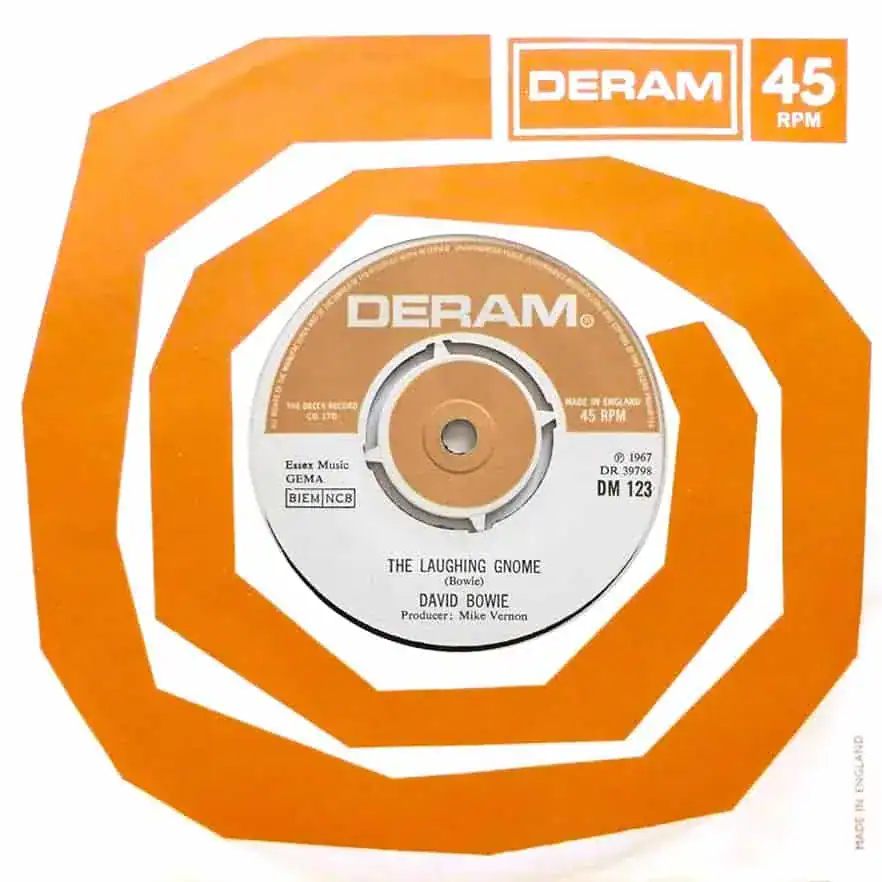
“The Laughing Gnome” was released on 14 April 1967, backed with “The Gospel According to Tony Day”. It was a separate single, not one of the fourteen tracks on the original British debut LP. Later expanded editions often place the recordings together, which can make their original relationship less obvious to listeners encountering the period through a modern compilation.
Vernon produced the single and Dudgeon engineered it. The record’s sped-up voices, puns and comic interruptions make the studio manipulation part of the entertainment. Universal also credits Dudgeon with additional vocals. His participation therefore extended beyond operating recording equipment on this track, contributing to a performance whose joke depended on the exchange between Bowie and the altered voices.
The song is often treated as an awkward curiosity beside Bowie’s later work. In its original setting, however, it belongs to the same period of experimenting with theatrical delivery and different audiences. Its humour was deliberately overt. The recording is best understood by examining what it actually attempts rather than assuming that every early release had to resemble the artist’s subsequent rock records.
The B-side has its own identity and should not disappear behind the better-known title. “The Gospel According to Tony Day” presents another set of characters and a different rhythmic mood. Together, the two sides show how widely Bowie’s Deram repertoire could range within a single release.
June 1967: an album without a breakthrough
David Bowie appeared in Britain on 1 June 1967, in mono and stereo editions. The album did not provide the commercial breakthrough Bowie and his supporters needed. Its failure to establish him cannot be explained solely by the reputation it acquired after he became famous. At the time, it was a debut by a young performer without a hit single to draw attention to a full-length release.
In retrospect, the album is frequently compared with the work Bowie made after his artistic identity became more recognisable. That comparison can obscure the circumstances of 1967. The debut offered a collection of different possibilities, and the record-buying public had little reason to know which of them might define the singer. The difficulties of promotion and audience recognition were separate from the practical achievement of making the record.
Vernon’s later uncertainty about the material’s market is relevant here. His comments identify a genuine question within the project rather than evidence of hostility towards Bowie. A producer could complete an unusual album with care and still be unsure how it would sell. The recording exists as the result of that effort, irrespective of its initial chart performance.
The American edition and a changing album sequence
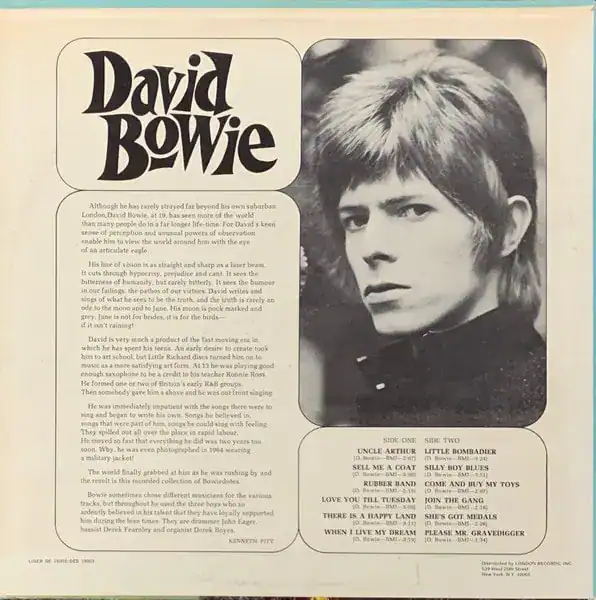
The American version, released in August 1967, contained twelve tracks rather than the British fourteen. Bowie’s official discography identifies the omissions as “We Are Hungry Men” and “Maid of Bond Street”. This is a small discographical detail with a real consequence: audiences in the two markets encountered different sequences and slightly different portraits of the same young artist.
Removing a track changes more than the running time. A theatrical album gains part of its character from the order in which moods and stories appear. Without “We Are Hungry Men”, one of its darkest comic scenarios is absent. Without “Maid of Bond Street”, another compact portrait of appearances and expectations disappears. The American record therefore presented a narrower selection of the material Vernon had produced.
Moving towards Tony Visconti and “Space Oddity”
Bowie’s next recordings introduced new production relationships. Universal credits Tony Visconti as producer of “Let Me Sleep Beside You” and “Karma Man”, and later Deram-period material also carries Visconti’s name. The company’s catalogue provides an important boundary: an anthology covering 1966–1968 contains recordings by several producers, even when it is marketed as a single chapter of Bowie’s career.
Dudgeon’s connection with Bowie continued into “Space Oddity” in 1969, for which he was producer. His role on that recording differs from his engineering role on the 1967 album. The distinction preserves the development of his own career and prevents Vernon’s production credit from being carried forward into a project he did not produce.
Fleetwood Mac and Blue Horizon’s wider audience
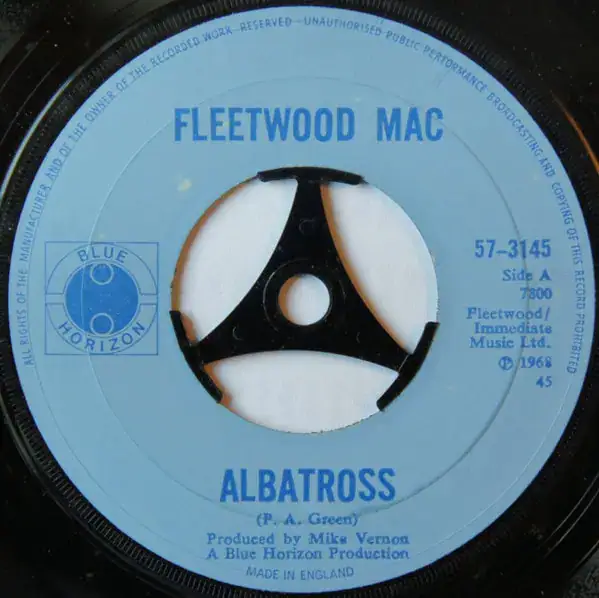
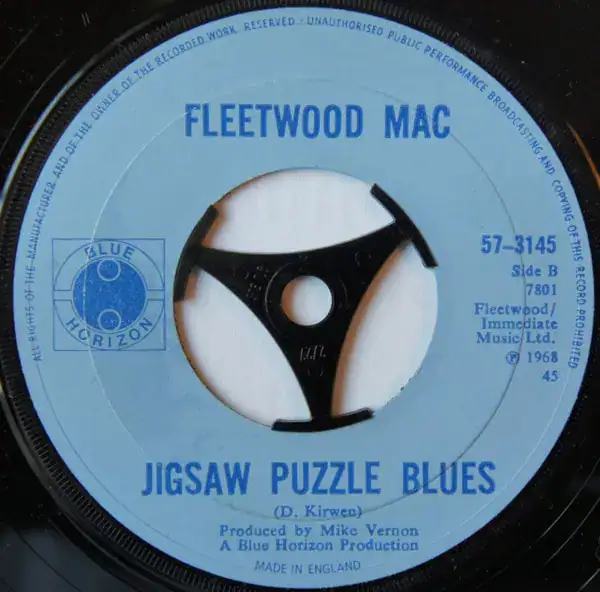
As Bowie’s Deram period unfolded, Vernon’s separate blues work continued to develop. Peter Green’s Fleetwood Mac became central to Blue Horizon’s history. Their first album appeared in 1968, and the label helped bring the band’s early blues repertoire to a growing audience. The relationship involved more than issuing records: Vernon also played a substantial role in producing the sound captured on them.
The instrumental “Albatross” became a British number-one hit in 1969. Its atmosphere gives another example of the variety within Vernon’s work. A recording could reach a broad audience without depending on a singer’s narrative or the force of a blues solo. The guitar melody and surrounding texture supplied its identity, with the ensemble supporting an unusually restrained kind of popular record.
American blues musicians and the label’s catalogue
Blue Horizon’s importance also rests on its recordings and releases involving American musicians, including Otis Spann and Champion Jack Dupree. The label connected an expanding British interest in blues with artists whose work had helped establish the music’s vocabulary. This history gives substance to Vernon’s role as an advocate: he helped make recordings available rather than simply praising the music from a distance.
The catalogue combined contemporary performances with attention to older recordings. For listeners, those activities could open different routes into the same tradition. A British group might provide the first point of contact, after which an American artist’s record offered another perspective on the style. The label’s identity depended on that breadth, with the producer and his colleagues working across recording, licensing and distribution.
Beyond blues: Focus and a broader production career
Vernon’s later production credits included the Dutch group Focus, whose work combined rock, instrumental virtuosity and other musical influences. His association with the group is another reminder that a blues reputation did not confine his assignments. A producer could carry listening skills and studio experience into a setting where songs and instrumental passages required very different kinds of organisation.
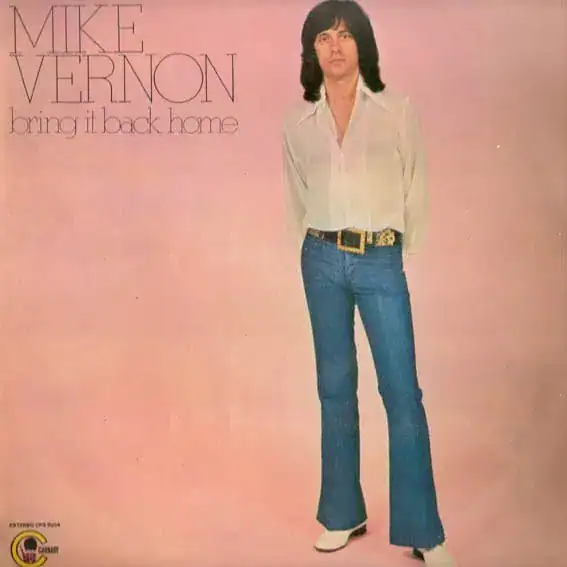
Blue Horizon’s own artist biography also records Vernon’s solo album Bring It Back Home, released in 1971, with appearances by Paul Kossoff and Rory Gallagher. This moved him from the position of facilitating another performer’s record into the role of an artist whose own material and voice were being presented. His career subsequently continued to include both production and performance.
Singing with Olympic Runners and Rocky Sharpe & the Replays
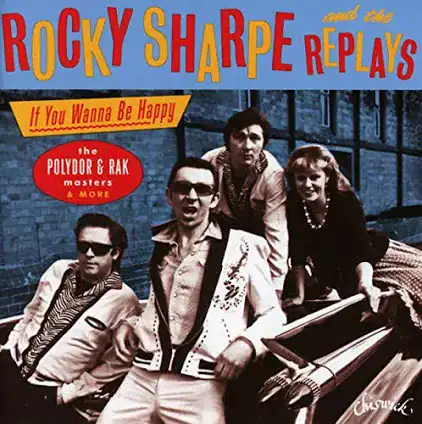
Vernon was a member of Olympic Runners and later the baritone singer in Rocky Sharpe & the Replays, where he used the name Eric Rondo. These activities broaden the familiar portrait of a producer associated with guitar-led blues. Rhythm, ensemble singing and the revival of older vocal styles also belonged to his working life.
In a vocal group, the place of a baritone voice depends on blend, timing and the shape of the collective sound. Those are related to skills a producer needs when listening to supporting parts on a record. Vernon’s performing history therefore provides a practical counterpart to his production career, although it should not be projected backwards into unsupported claims about him singing on particular Bowie recordings.
Later production: a new generation of performers

Vernon continued producing younger artists well after the 1960s. His later work included Laurence Jones’s Take Me High and Sari Schorr’s A Force of Nature, both associated with 2016. Published interviews from that period show him discussing current recording problems in detail rather than relying exclusively on memories of famous sessions from his youth.
In his conversation with Ross Muir for FabricationsHQ, Vernon described encouraging Jones to sing with the commitment he would bring to a concert. The point was practical: a vocal recorded in a studio should communicate rather than become restrained simply because a microphone and control room are present. The account offers a direct example of production as guidance in performance, with attention to how a musician approaches the moment of recording.
Schorr’s official label biography confirms Vernon’s production of her debut. The collaboration illustrates the continued relevance of an experienced producer to an emerging artist. A long career can provide useful perspective while the requirements of each singer remain individual. These later projects extend Vernon’s biography beyond a list of historic names, showing that he continued applying his judgement to new voices and new recordings.
Mike Vernon & the Mighty Combo
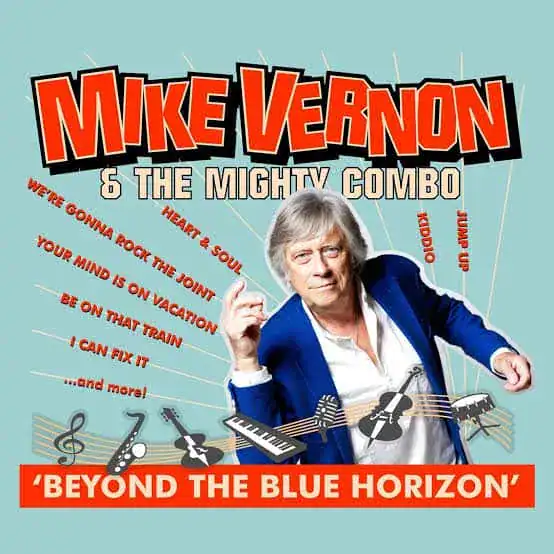
Vernon’s later performing career included Mike Vernon & the Mighty Combo. Their album Beyond the Blue Horizon appeared through Manhaton Records in 2018. The label described a programme of twelve songs, including nine originals and three covers. The project drew on the rhythm and blues that had helped shape his earliest musical interests.
The band’s name placed Vernon openly at the front of a group. This was a different public role from the small-print production credits through which many listeners had first encountered him. His singing and songwriting became the centre of the presentation, supported by musicians working within the musical language he had spent decades recording and promoting.
Mike Vernon on fronting his own band
“To be fronting my own R&B outfit has always been a dream”
Source: Mike Vernon, quoted in the official Manhaton Records artist biography accompanying Beyond the Blue Horizon. Read the artist biography.
Cat Squirrel and the Spanish blues scene

After settling in Spain, Vernon also developed musical relationships there. Cat Squirrel brought him together with guitarist Kid Carlos and harmonica player Mingo Balaguer, with Oriol Fontanals on bass and Pascual Monge on drums in the line-up associated with the debut recording. The band’s album, Blues What Am, was released by Dixiefrog on 6 October 2023.
In a 2023 interview with Michael Limnios, Vernon explained that the project followed the end of the Mighty Combo. Renewed songwriting with Kid Carlos helped supply a direction for a Spanish-based group. This account presents a musician adjusting to the practical circumstances of performing while continuing to create opportunities for new work.
The band’s published material documents Vernon as a vocalist, not simply an honorary name attached to a project. Guitar, harmonica and rhythm section gave the songs an ensemble setting in which he performed at the front. It was another chapter in the same sustained engagement with rhythm and blues that had begun through listening to records as a child, now expressed through a different group of colleagues and a different location.
1973 and the unexpected return of “The Laughing Gnome”
Vernon’s early Bowie work acquired a different commercial history after Bowie became a major star. A reissue of “The Laughing Gnome” reached number six in Britain in 1973, as recorded by the Official Charts Company. The public was now hearing a much earlier production alongside an artist associated with a very different current image.
That later success should not be confused with a new collaboration. The recording originated in the Deram period; its chart audience arrived years afterwards. This separation between making a record and finding an audience is particularly revealing in a catalogue like Bowie’s, where fame gave renewed value to recordings that had initially attracted little attention.
Archive editions: hearing the Deram recordings in context
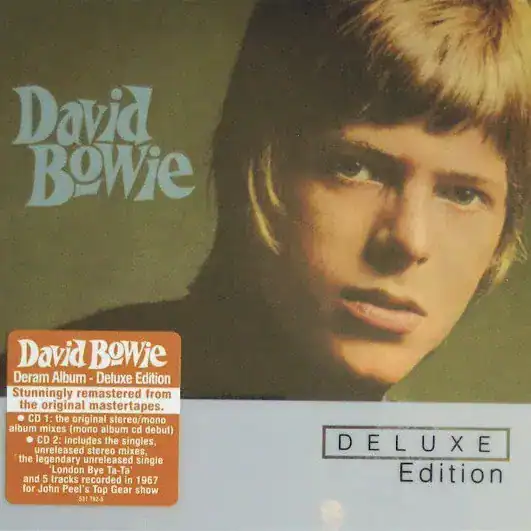
Later releases brought the early material together in ways that made comparison easier. Collections such as Images 1966–1967 and The Deram Anthology 1966–1968 placed the debut songs alongside singles and other period recordings. They helped keep Vernon’s Bowie productions available while also presenting tracks associated with other producers.
The 2010 two-CD deluxe edition offered the original album in both stereo and mono, with a second disc of related material. Bowie’s official announcement included recording locations, dates and original release information for the additional tracks. This made the collection useful for tracing the difference between an album performance, a single recording, a later remix and a BBC session.
Universal’s 2024 reissue continued the release history, with expanded editions drawing on the period’s recordings. Its published credits identify Vernon, Dudgeon and the other producers involved. For a listener, the availability of alternate versions changes the kind of attention the material invites: a familiar melody can be followed through different vocal performances and instrumental treatments.
“Silly Boy Blue”, Toy and the life of an early song

Bowie returned to several early compositions for Toy, recorded in 2000 with his contemporary band and co-producer Mark Plati. “Silly Boy Blue” was among the songs selected. The album eventually received an official release in 2021, followed by Toy:Box in January 2022.
The later recording is a separate production, not an extension of Vernon’s original session. Its relevance lies in the composition’s survival. Bowie found material in his early catalogue that could be interpreted through an older voice and a different band. The new performance opened another way of listening to a song whose first released album version belonged to the Decca studio work of the 1960s.
Comparing the versions can bring the original arrangement into sharper focus. Changes of pace, vocal weight and ensemble texture affect how a song’s emotional scale is perceived. Such a comparison does not need to declare one recording definitive. Each preserves a particular answer to the musical problem, with Vernon’s production marking the first album context in which the song reached listeners.
Recognition, death and an enduring recorded legacy
Vernon’s work received formal recognition through a BASCA Gold Badge in 2013 and his appointment as MBE for services to music in the 2020 Birthday Honours. He died in Spain on 2 March 2026, aged eighty-one. Ace Records’ tribute confirmed the date and recalled a career encompassing production, publishing, label ownership and performance. The European Blues Union subsequently published his European Blues Hall of Fame recognition in 2026.
His recorded legacy connects artists who approached music in different ways. Mayall and Clapton, Peter Green’s Fleetwood Mac, Bowie, Focus and later blues performers appear within a catalogue that cannot be understood through one genre label alone. Its breadth reflects the practical adaptability required of a producer, as well as Vernon’s particular attachment to blues and rhythm and blues.
Within Bowie’s history, the achievement is concrete. Vernon helped make the first studio album and related recordings at a moment when the singer was still seeking a sustainable career. Those sessions preserve early songwriting, theatrical voices and arrangements that can be examined independently of what followed. His contribution remains audible whenever the original Deram productions are played.
Official Website & Further Information
For further information about Vernon’s work, the official Blue Horizon website provides an artist biography and a history of the label he helped establish. These resources document a major part of his career beyond Bowie, including the label’s British and American blues connections.
Mike Vernon at Blue Horizon Records
The official Blue Horizon label history
His later performing projects are documented through Manhaton Records and the official Cat Squirrel website. These are label and project resources, rather than an independently verified personal Mike Vernon website. Older promotional pages may retain present-tense wording written during his lifetime.
First-Hand Contributions
This article draws on Mike Vernon‘s published first-hand recollections, including interviews with Rob Hughes, Gianni Franchi, Ross Muir and Michael Limnios. The quotations above are attributed to their original published sources. They preserve his descriptions of Bowie’s early material, studio collaboration and his later work as a performer.
These interviews were conducted by other writers and publications. This page does not claim that Vernon personally contributed information to DavidBowieWorld.com. Any future material supplied by his colleagues, family or archive holders will be identified separately, with its provenance made clear.
Article Origin
This article has been researched and written for DavidBowieWorld.com. It brings together official release information, record-company credits, published interviews and documented biographical sources to explain Mike Vernon‘s direct contribution to David Bowie’s first studio album and associated Deram recordings.
The musical discussion interprets the released recordings; it is distinguished from the production credits and first-hand recollections used to establish the history. Original performances, subsequent remakes and later reissues are treated separately so that each person’s contribution remains attached to the appropriate recording.
Principal reference points include Bowie’s official album discography, Universal Music’s recording credits, the official 2010 deluxe-edition announcement and Ace Records’ tribute to Vernon.
Further sources include the 2016 FabricationsHQ interview, the 2023 Cat Squirrel interview, the official Toy release documentation and the European Blues Union’s 2026 recognition.
© DavidBowieWorld.com – David Bowie Collaborations & Creative Circle Archive.
