
Alan Dodds – The Konrads Guitarist and Songwriter in David Bowie’s Early Years
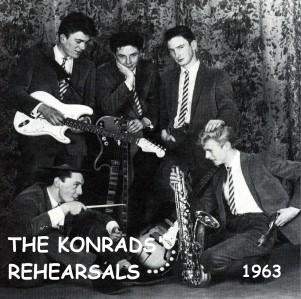
Alan Dodds played rhythm guitar in The Konrads, the early band in which David Bowie gained experience as a performing musician. Their association belongs to the period when Bowie was still known as David Jones, playing saxophone and contributing vocals within a changing local lineup.
Dodds’ connection extends beyond sharing a stage. He wrote “I Never Dreamed”, the song associated with two important early Konrads recording sessions. The surviving Morden demo features Jones singing lead, while a subsequent Decca audition placed Roger Ferris on lead vocals.
Dodds later became an Anglican clergyman. He also shared recollections of The Konrads through published accounts and public presentations, helping preserve the history of Bowie’s first band.
- Name: Alan Dodds
- Born: Exact birth date and birthplace not reliably confirmed
- Musical roles: Guitarist and songwriter
- Instrument in The Konrads: Rhythm guitar
- Bowie connection: Early bandmate of David Jones, later David Bowie
- Shared band period: Early 1960s, including the 1963 recordings
- Principal song: “I Never Dreamed”
- Songwriting attribution: Music and words credited to Dodds in the 2018 auction announcement
- Arrangement credit: Alan Dodds, David Jones and Roger Ferris
- Later career: Anglican clergyman; identified in later event material as a former Rector of Uffculme, Devon
The Konrads and Bowie’s first steps
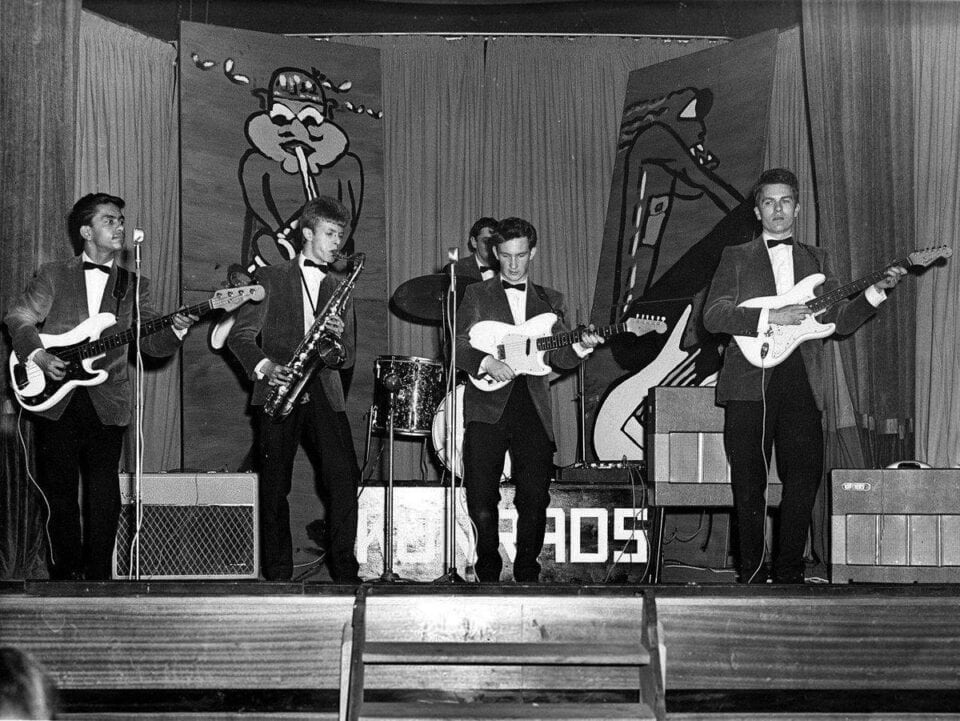
The Konrads developed within the local music scene around Bromley in 1962. Their beginnings preceded the records and stage identities that would make David Bowie famous. David Jones entered a group in which other young musicians were already involved.
The band’s working world included rehearsals, local halls, dances and other engagements through which inexperienced musicians could learn to perform together. Its immediate ambitions concerned finding work, preparing material and reaching an audience.
Dodds belongs to that early musical environment. His association with Jones developed within an ensemble whose members had different instrumental and vocal responsibilities. Their later historical importance arose from work undertaken before anyone could know how Jones’ career would unfold.
Alan Dodds in the lineup
Dodds is identified as rhythm guitarist in accounts of The Konrads. This distinguishes his position from that of Neville Wills, who played lead guitar. The two musicians occupied separate places in the group’s instrumental structure.
The band’s changing membership also included drummer Dave Hadfield, bassist Rocky Shahan, singer Roger Ferris and vocalists Christine and Stella Patton. George Underwood and drummer Dave Crook belonged to its earlier history.
These names describe the group across its development, rather than an unchanged lineup present at every engagement. Membership is particularly important when identifying photographs or discussing the musicians involved in a recording.
Rhythm guitar and the work of a band
Rhythm guitar provides part of the harmonic and rhythmic support around a song. Within The Konrads, Dodds’ instrument worked alongside the other players and singers, contributing to an ensemble presentation.
This role can be less conspicuous than a lead vocal or instrumental solo, but it forms part of the structure on which a performance depends. Chord changes, rhythmic consistency and the relationship with the rhythm section help hold an arrangement together.
Dodds’ songwriting adds a further dimension. His place in the story is supported by a specific original composition, giving him a contribution beyond a name in the band’s personnel history.
Rehearsals and local performances
The Konrads rehearsed around Bromley and played local engagements, including dances, youth clubs and church halls. These settings gave Alan Dodds and his bandmates practical experience of preparing music for an audience. The group’s development depended on repeated rehearsals and performances rather than on recording opportunities alone.
As rhythm guitarist, Dodds occupied a supporting position within the instrumental arrangement. His guitar worked alongside Neville Wills’ lead guitar and the other instruments, helping provide the accompaniment around the singers. Bringing these parts together was a collective task, requiring the musicians to agree on the structure and presentation of each song.
For David Jones, this was an early experience of finding his place within a working ensemble. Saxophone and vocals had to fit around the other players, while the use of different singers meant that musical responsibilities could change from song to song. Dodds shared in that practical environment as a bandmate.
These local performances provide the context for the later studio sessions. Before “I Never Dreamed” became an object of historical interest, it was material that a developing band could prepare and present together. Dodds’ songwriting emerged within that shared musical work.
David Jones before David Bowie
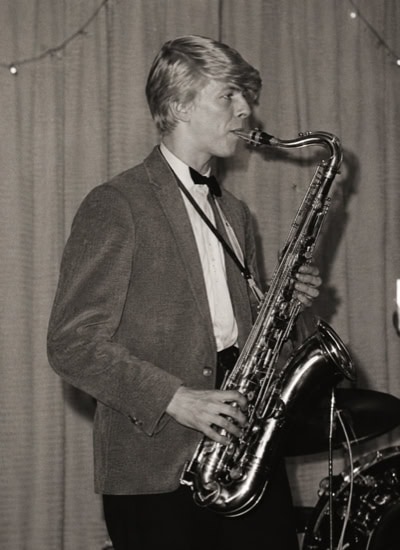
Jones was developing as a saxophonist and singer during his time with The Konrads. Accounts also associate him with the name Dave Jay during this early period. The David Bowie identity belonged to a later stage of his career.
His responsibilities within the band varied. The presence of other singers meant that he did not automatically take every lead vocal, even when he contributed to an arrangement or performed on a recording.
The group offered experience of working within a shared musical structure. Jones had to respond to other musicians, learn the repertoire and find a place for his own abilities within the performance.
The repertoire and the early-1960s setting
The Konrads performed a mixture of popular vocal songs and instrumentals. Their repertoire reflected the music familiar to the musicians and the expectations of local audiences. Preparing a programme involved selecting material that suited the available players and voices.
The combination of guitars, bass, drums, saxophone and singers offered several ways to arrange a song. Dodds’ rhythm guitar belonged to that ensemble sound, providing accompaniment alongside the more prominent vocal and instrumental parts. The musical setting was broader than a description of the group as simply a vehicle for Jones.
Accounts of Jones’ departure describe his growing interest in a stronger rhythm-and-blues direction. That difference helps explain his changing ambitions, but it does not establish Dodds’ personal position on every repertoire decision. The group’s musical choices should be understood as part of its shared working history.
“I Never Dreamed” introduced original material into this environment. Dodds’ composition gave the band a song of its own to develop, alongside the existing material used in its performances. Its importance therefore begins with its purpose for The Konrads, before the later fame of the young musician who sang on the Morden demo.
Dodds remembers Jones’ stage presence
Looking back, Dodds recalled a quality that extended beyond instrumental skill: Jones’ ability to attract an audience’s attention. His recollection was reproduced in reporting that drew on the eyewitness collection David Bowie: I Was There.
Alan Dodds on the young David Jones
“He could command an audience instantly.”
Alan Dodds — recollection from David Bowie: I Was There, quoted in NPR reporting, 23 July 2018 .
The observation describes a performer’s effect on an audience. It preserves a bandmate’s memory of Jones’ emerging stage presence, while the recording history shows that his vocal responsibilities still differed between sessions.
Writing “I Never Dreamed”
“I Never Dreamed” gives Dodds a specific place in the history of the early recordings. The 2018 auction announcement credited him with the song’s music and words, while identifying Dodds, Jones and Roger Ferris as its arrangers.
That distinction separates the creation of the song from its preparation for performance. It recognises Dodds’ composition while retaining the contributions associated with the arrangement.
Original material gave the band something of its own to present when seeking a recording opportunity. The song’s historical interest now centres on Jones’ involvement, but its place in Dodds’ biography rests on his documented authorship.
“I Never Dreamed”: the Morden demo
“I Never Dreamed” — an early Konrads demo featuring David Jones, later David Bowie, on lead vocals, recorded at R. G. Jones’ studio in Morden in 1963.
Dave Hadfield recalled arranging a 1963 demo session at R. G. Jones’ studio in Morden. The recording was intended to help The Konrads obtain a professional opportunity.
Hadfield selected “I Never Dreamed” and chose Jones to sing lead. This is the early performance associated with the surviving tape offered for auction in 2018.
Dodds’ song therefore became a vehicle for an early recorded lead vocal by the future Bowie. Its origins belong to the collective ambitions of a local group seeking further attention.
Dave Hadfield on choosing the singer
“I also decided that David was the best person to sing it and give the right interpretation.”
Dave Hadfield — recollection published by Omega Auctions, 23 July 2018 .
The Decca audition: a separate session
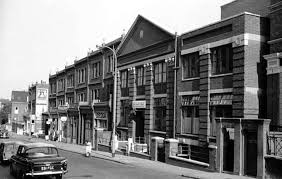
The Morden demo should be distinguished from the later Decca audition. Bowie’s official archive dates that audition to 29 August 1963, at the company’s West Hampstead studios. Some other chronologies give the following day.
The band again performed “I Never Dreamed”, but Roger Ferris sang lead and Jones supplied backing vocals. The song connects the sessions; the different vocal arrangement helps distinguish them.
Decca did not offer the group a contract. Acetates were made, but the official archive’s 2013 account reported that Dodds and Ferris had lost their personal copies.
The subsequent appearance of the Morden tape was therefore not the recovery of the Decca audition. They represent separate performances within the band’s attempts to enter the recording industry.
Departure and the end of the shared band period
Jones left The Konrads in 1963. His musical interests and ambitions led him towards other partnerships, ending this stage of his association with Dodds.
Accounts of the departure describe dissatisfaction with the repertoire and an interest in a stronger rhythm-and-blues direction. This provides context for the change without establishing a personal rupture with Dodds.
The early collaboration was brief, but it had already produced a concrete connection through performances and an original song. Its significance belongs to the experience they shared as members of a developing local band.
The Konrads continue
The Konrads continued after Jones moved on. Their later recordings belong to subsequent lineups and should not be treated as additional Bowie performances.
The band name covers a history broader than the period in which Dodds and Jones worked together. A later release under that name does not establish the participation of every earlier member.
For Dodds, the central documented recording connection remains “I Never Dreamed”. Its composition and early performances give his contribution a specific place within the chronology.
A later life in the Church

Dodds subsequently became an Anglican clergyman. Bowie’s official archive identified him in 2013 as the Reverend Alan Dodds, living in Devon.
Later event material described him as a former Rector of Uffculme. His career as an Anglican clergyman added another chapter to his life, while his musical past remained part of the story he shared.
The early association with Jones explains the interest of Bowie listeners, while his ministry belongs to his own subsequent biography. Both strands form part of the documented account of Dodds.
Public talks and memories of the early years
A January 2020 event announcement from the Exeter Spread Eagle Club advertised Dodds as a forthcoming speaker on his musical past. The proposed presentation combined stories, photographs and rock-and-roll performances.
The announcement also referred to another presentation, “Confessions of a Country Vicar”. Together, the subjects reflected the different experiences through which he could address an audience.
A church programme subsequently recorded a David Bowie talk by the Reverend Alan Dodds in October 2021. This provides a documented example of his early musical recollections reaching a local audience.
Such appearances preserve history in a different way from a studio tape. A recording captures a performance; a participant’s recollection can describe the people and circumstances surrounding it.
Renewed attention around the surviving demo

The auction publicity in 2018 gave the early recording renewed public visibility. It also returned attention to Dodds as the writer associated with the song.
A demo originally intended to secure an opportunity for a young band had acquired a different significance. It could now be heard in relation to the career Jones subsequently built.
Dodds’ contribution remains part of the recording’s original circumstances. The song existed because a member of The Konrads had written material that the group could develop and present together.
Legacy
Alan Dodds’ significance in Bowie’s history rests on both performance and songwriting. He played rhythm guitar alongside the young Jones and wrote the song associated with an important early recorded lead vocal.
These contributions place him within the musical environment in which Bowie began learning to work with other players. The Konrads provided experience of rehearsal, performance and the attempt to obtain professional recognition.
“I Never Dreamed” also preserves the distinction between a composition and its performances. Dodds’ authorship connects the history, while the Morden and Decca sessions reveal different uses of the group’s voices.
His later recollections add a personal perspective. They preserve a bandmate’s impression of Jones as a young performer, allowing the history to include the experience of someone who shared those beginnings.
Dodds’ ministry and public presentations broaden that picture. His association with Bowie was an early chapter in a life that subsequently included another vocation, while music and its memories remained subjects he could share with audiences.
Official Website & Further Information
No personal official website specifically documenting the Konrads guitarist’s career has been verified for this article. His association with Bowie is preserved through recording history, published recollections and documented public appearances.
A useful starting point is the early demo, followed by the account of the separate Decca audition. This sequence clarifies how the same song could involve Jones as lead singer in one setting and backing vocalist in another.
Dodds’ later talks offer another perspective on the shared band years. They connect the surviving recording history with the memories of a participant who also developed a later career as an Anglican clergyman.
Article Origin
This article was researched and written for DavidBowieWorld.com as part of its archive of David Bowie’s collaborators and creative circle. It draws on the official Bowie archive, the original auction announcement, published recollections and event documentation. Short quotations are attributed to their speakers and linked to the publications preserving them.
Its purpose is to describe Dodds’ contribution accurately while separating the song’s authorship, its arrangement and the different recording sessions. It also recognises his later life without treating every stage of his biography as an extension of Bowie’s career.
The account is independently compiled and does not claim personal participation or approval from Dodds. His inclusion recognises the musicians whose shared work formed Bowie’s earliest performing environment and preserves their individual contributions within that history.
© DavidBowieWorld.com – David Bowie Collaborations & Creative Circle Archive.
Chronology
1962
1963
🏛️ R.G. Jones Studios
🎧 Event: First Studio Session
🎤 Artist: The Konrads
🗒️ Notes: The Konrads record the demo ‘I Never Dreamed’. Roger Ferris sings lead, with David Jones on harmony vocals. The tape was rediscovered in 2018.
🏛️ Hillsiders Youth Club, W.I. Hall
🎤 Artist: The Konrads
🗒️ Notes: One of the final documented gigs featuring David Jones.
© DavidBowieWorld.com — David Bowie Collaborations & Creative Circle Archive.
