
Harry Maslin – Producer of David Bowie’s Young Americans and Station to Station

No verified copyright-free portrait of Harry Maslin is currently available. Placeholder image used.
Harry Maslin is an American record producer, recording engineer and studio designer whose work with David Bowie coincided with one of the most important creative transitions of Bowie’s career. Working first on the completion of Young Americans (1975) and later as co-producer of Station to Station (1976), Maslin helped oversee recordings that bridged Bowie’s move from Philadelphia soul towards the more austere and experimental direction that would eventually lead to the celebrated Berlin Trilogy.
Although Harry Maslin‘s name is less familiar to many Bowie fans than producers such as Tony Visconti or Nile Rodgers, his contribution to Bowie’s mid-1970s catalogue was substantial. As both an experienced recording engineer and producer, he brought technical precision, organisational discipline and an ear for clarity during a period when Bowie was working under increasingly difficult personal circumstances.
Beyond his collaborations with Bowie, Maslin enjoyed a distinguished career that included work with artists such as Bonnie Raitt, Carly Simon, James Taylor, Barry Manilow, Dionne Warwick, Air Supply, Melissa Manchester, Eric Carmen and many others. His productions and engineering work span more than five decades of popular music.
- Full name: Harry Maslin
- Born: Philadelphia, Pennsylvania, United States
- Profession: Record producer, recording engineer, mixing engineer and studio designer
- Bowie connection: Producer and engineer on Young Americans; co-producer of Station to Station
- Major Bowie recordings: Fame, Across the Universe, Station to Station, Golden Years, TVC 15
- Known for: Clear, powerful productions and technically refined studio recordings
Early Life
Harry Maslin was born and raised in Philadelphia, Pennsylvania, a city that during the 1960s was developing into one of America’s most important centres for live music, rhythm and blues and professional recording. Growing up in this environment exposed him to an exceptionally broad range of musical styles and laid the foundations for a career that would combine technical expertise with an understanding of artists from very different musical backgrounds.
Rather than beginning as a musician or songwriter, Maslin developed his career behind the scenes. From an early stage he became fascinated by the technical side of live performance and recording, learning how sound systems, recording equipment and studio technology could influence the way audiences experienced music. That practical understanding would later become one of his greatest strengths as both an engineer and producer.
The Electric Factory
Maslin’s professional career began in the late 1960s at Philadelphia’s legendary Electric Factory, one of the most important concert venues of its era. Working as a live sound engineer placed him in direct contact with many of the defining performers of the period, providing invaluable practical experience long before he entered the recording studio.
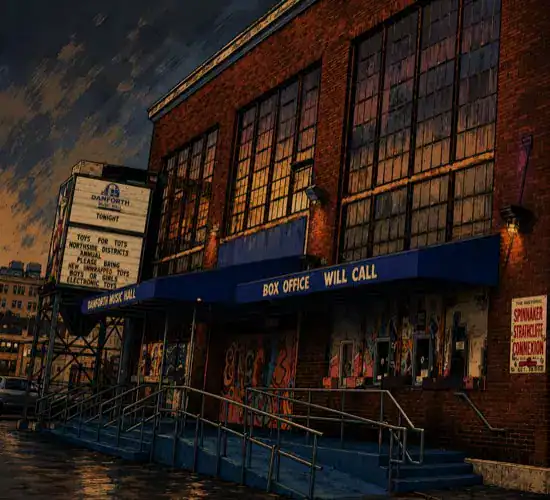
The Electric Factory welcomed an extraordinary range of internationally acclaimed artists, and Maslin found himself mixing live sound for performers including Cream, The Jimi Hendrix Experience, B.B. King, Buddy Guy, Janis Joplin, The Grateful Dead, Procol Harum, Ten Years After, Frank Zappa, The Moody Blues, Moby Grape and The Chambers Brothers, among many others.
Although his role was technical rather than creative, these concerts became an intensive education in musical dynamics, stage presentation and audio engineering. Every performance required different solutions, teaching Maslin how to adapt quickly while maintaining clarity and balance under demanding live conditions.
The experience also introduced him to many leading musicians, managers and concert promoters, allowing him to build a reputation for professionalism and technical excellence. Those early years at the Electric Factory provided the practical foundation for the recording career that would soon take him into some of America’s most respected studios and, ultimately, to his collaboration with David Bowie.
The experience also introduced him to many leading musicians, managers and industry professionals, helping establish a reputation for reliability that would open the door to opportunities in professional recording studios.
Regent Sound Studios
After gaining extensive experience in live sound, Maslin moved into studio recording at Regent Sound Studios in Philadelphia before later transferring to the company’s New York operation. The move represented a significant step in his career, allowing him to develop a far broader understanding of the recording process than live engineering alone could provide.
At Regent Sound he became involved in virtually every aspect of studio production. His work extended beyond operating recording equipment to include editing, mastering preparation, console maintenance, studio management and even elements of studio design. This unusually broad technical background distinguished Maslin from many engineers who specialised in only one area of production.
Working in both Philadelphia and New York also exposed him to an increasingly diverse client base. Recording sessions ranged from pop and rock to rhythm and blues, jazz and commercial productions, requiring versatility and meticulous attention to detail.
By the early 1970s Maslin had developed a reputation not only as an accomplished engineer but also as someone capable of managing complex recording sessions while maintaining productive working relationships with artists, producers and record companies alike.
The Hit Factory
Following his time at Regent Sound, Harry Maslin joined The Hit Factory in New York, one of the most respected recording studios in the United States. He eventually became the studio’s chief recording engineer, working on sessions for a growing list of internationally successful artists.
Among the musicians he engineered during this period were James Taylor, Carly Simon, Dionne Warwick and Bonnie Raitt. His engineering work also included recordings connected with Barry Manilow, including the sessions that produced the number-one hit Mandy, as well as Dionne Warwick and The Spinners’ chart-topping collaboration Then Came You.

The Hit Factory, New York City, photographed in 2009. Photo by Beyond My Ken, via Wikimedia Commons. Licensed under CC BY-SA 4.0.
These projects demonstrated Maslin’s ability to work across very different musical styles while maintaining consistently high technical standards. Producers valued his calm approach, attention to detail and ability to translate an artist’s musical ideas into polished recordings without sacrificing spontaneity or emotional impact.
It was during his years at The Hit Factory that Harry Maslin first entered David Bowie’s professional circle. Their collaboration would soon result in two of the most influential albums of Bowie’s career and establish Maslin as one of the leading producers of the mid-1970s.
First Meeting with David Bowie
Harry Maslin first became professionally involved with David Bowie during the final stages of the Young Americans sessions in late 1974 and early 1975. By that point Bowie had already spent several months recording material in Philadelphia and New York as he pursued a dramatic musical shift away from glam rock and towards American soul, rhythm and blues and funk.
Much of the album had already been recorded at Sigma Sound Studios in Philadelphia with producer Tony Visconti and a group of outstanding musicians that included Carlos Alomar, Willie Weeks, Andy Newmark, David Sanborn, Mike Garson and a large ensemble of vocalists. However, the production was interrupted by management complications surrounding Bowie and Visconti, who withdrew from the project before the album was completed.
Needing to finish the record quickly, Bowie turned to Harry Maslin, who had already established a strong reputation as chief recording engineer at The Hit Factory in New York. Impressed by Maslin’s technical abilities and calm approach to complex recording sessions, Bowie asked him to oversee the remaining work required to complete the album.
For Maslin, the invitation represented a major turning point. Although he had already engineered successful recordings for leading artists, working directly with David Bowie placed him at the centre of one of the most ambitious recording projects of the decade.
Completing Young Americans
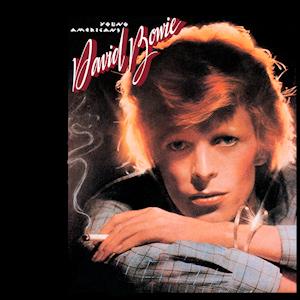
When Harry Maslin joined the project, Young Americans was already well underway. Rather than beginning a new album from scratch, his responsibility was to help complete an evolving record whose musical direction had largely been established during the earlier sessions in Philadelphia and New York.
Maslin worked closely with Bowie as additional recording sessions were organised in New York. His combination of engineering experience and production skills enabled the project to move forward efficiently at a time when Bowie was eager to complete the album and prepare for its release.
Although Young Americans is often remembered as Bowie’s celebrated “plastic soul” album, it was never intended to imitate American soul music. Instead, Bowie drew inspiration from rhythm and blues, gospel and Philadelphia soul while filtering those influences through his own distinctive songwriting and theatrical imagination. Maslin’s contribution was to help shape the final recordings with a polished, contemporary sound that complemented Bowie’s changing musical ambitions.
The completed album was released in March 1975 and marked one of the most significant stylistic transformations of Bowie’s career. It reached number two on the UK Albums Chart and number nine on the US Billboard chart, introducing Bowie to an even wider American audience.
Recording Fame
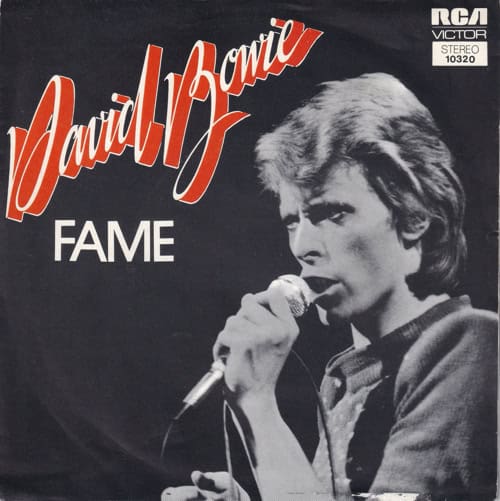
Among Harry Maslin‘s most important contributions to Bowie’s catalogue was his work on Fame, the song that became David Bowie’s first number-one single in the United States.
The recording emerged during sessions at Electric Lady Studios in New York in January 1975. Bowie had invited John Lennon to participate after the two musicians became friends in New York, while guitarist Carlos Alomar contributed the distinctive riff that formed the musical foundation of the track.
Maslin supervised the recording as producer and engineer, capturing a performance that combined funk rhythms, sharp guitar work and an unmistakable vocal interplay between Bowie and Lennon. Rather than creating an elaborate studio production, the session relied on the chemistry of the musicians and the relaxed atmosphere that developed in the studio.
Lennon not only contributed backing vocals but also suggested lyrical ideas during the session. His influence helped transform the song into a witty reflection on celebrity, ambition and the pressures of success, themes that Bowie himself was increasingly confronting as his popularity continued to grow.
Released as the album’s second single, Fame became Bowie’s first American chart-topper, reaching number one on the Billboard Hot 100. The success established Bowie as a genuine mainstream artist in the United States while demonstrating Maslin’s ability to deliver commercially successful recordings without sacrificing musical sophistication.
Recording Across the Universe
During the same period Maslin also produced Bowie’s recording of John Lennon‘s Across the Universe, originally written and recorded by The Beatles. Lennon’s presence during the sessions gave the recording unusual historical significance, with the songwriter contributing guitar and backing vocals to Bowie’s interpretation of his own composition.
Rather than attempting to recreate the original Beatles recording, Bowie approached the song from the perspective of the musical language he had developed during the Young Americans sessions. Soul-influenced arrangements, layered vocal textures and a contemporary rhythm section gave the recording its own identity while remaining respectful of the original composition.
Although Across the Universe was never intended as the album’s commercial centrepiece, it reflected the creative atmosphere surrounding the final sessions. Bowie, Lennon and Maslin worked together in a relaxed environment that encouraged experimentation while maintaining the disciplined standards required to complete the album on schedule.
A Productive Partnership
The successful completion of Young Americans established a strong professional relationship between David Bowie and Harry Maslin. Bowie appreciated Maslin’s technical knowledge, efficient working methods and ability to remain composed during demanding recording sessions, qualities that became increasingly valuable as Bowie’s career continued to accelerate.
For Maslin, the collaboration confirmed that he could move beyond engineering into the role of producer on major international recording projects. His work on Young Americans, particularly the sessions that produced Fame, significantly enhanced his reputation within the recording industry and laid the foundation for an even greater challenge when Bowie began work on his next studio album later that year.
Producing Station to Station
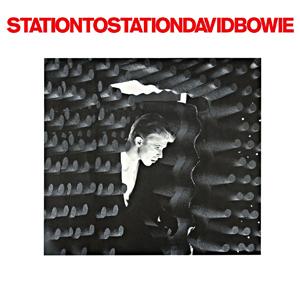
The success of Young Americans strengthened David Bowie’s confidence in Harry Maslin, and when work began on his next studio album later in 1975, Bowie invited Maslin to return as co-producer. Unlike the previous project, where Maslin had joined during the final stages of production, Station to Station was planned from the outset as a collaboration between Bowie and Maslin.
Recording sessions began in September 1975 at Cherokee Studios in Hollywood, Los Angeles. Bowie had recently completed filming Nicolas Roeg’s The Man Who Fell to Earth, while at the same time developing the elegant and enigmatic stage persona that would become known as the Thin White Duke. The music reflected another significant artistic transformation, moving away from the warm Philadelphia soul sound of Young Americans towards a darker, more spacious and increasingly European musical landscape.
Although the album was recorded during a turbulent period in Bowie’s personal life, the sessions themselves were remarkably disciplined. Maslin later recalled that Bowie remained deeply involved in the creative process, making clear musical decisions even while facing considerable personal difficulties away from the studio.
Cherokee Studios

Image: Cherokee Studios, Los Angeles. Photo by Coolcaesar, via Wikimedia Commons. Licensed under CC BY-SA 3.0.
Cherokee Studios was central to the album’s sound.
The studio gave Bowie and Harry Maslin the technical space to build long, layered recordings. The title track in particular required careful construction, with its extended opening section, dramatic changes of mood and complex arrangement.
Unlike Young Americans, which had been strongly connected to Philadelphia soul and Sigma Sound, Station to Station was recorded in Los Angeles with a colder, more experimental atmosphere.
The sessions were often long and intense. Bowie remained highly creative, but the working environment was shaped by exhaustion, heavy drug use and intense concentration, resulting in one of the most distinctive albums of his career.
Assembling the Band
For Station to Station, Bowie brought together an exceptional group of musicians, many of whom had already worked with him during the Young Americans period. Their familiarity with one another allowed the sessions to progress quickly while encouraging a high degree of musical interaction.
Carlos Alomar remained Bowie’s principal rhythm guitarist and musical arranger, providing the disciplined funk-inspired playing that anchored much of the album. Earl Slick contributed expressive lead guitar parts that added power and dramatic intensity, while bassist George Murray and drummer Dennis Davis created one of the strongest rhythm sections of Bowie’s career.
The sessions also welcomed pianist Roy Bittan of Bruce Springsteen’s E Street Band. His elegant piano playing became one of the defining characteristics of the album, particularly on songs such as TVC 15 and Word on a Wing. Vocal support came from Warren Peace, whose harmonies complemented Bowie’s increasingly restrained vocal performances.
Together these musicians formed the nucleus of the band that would later accompany Bowie on the 1976 Isolar Tour, bringing many of the album’s complex arrangements to audiences around the world.
Creating a New Sound
Although elements of soul and funk remained present, Station to Station represented a clear departure from the musical language of Young Americans. The rhythms became leaner, the arrangements more spacious, and the overall atmosphere noticeably darker and more introspective.
Maslin approached the production with restraint, allowing the musicians considerable room while ensuring that every instrument occupied its own clearly defined place within the stereo image. Rather than relying on dense orchestration or heavy studio effects, the album’s power came from precise performances and carefully balanced recording techniques.
This approach is especially evident on the ten-minute title track, where subtle changes in texture and dynamics gradually build tension before the rhythm section drives the music into its powerful second half. Throughout the album, Maslin favoured clarity over excess, helping Bowie realise a sound that was both sophisticated and emotionally controlled.
Golden Years

One of the earliest songs completed during the sessions was Golden Years, which was released as a single ahead of the album in November 1975. The recording retained elements of the funk and soul influences explored on Young Americans, while introducing the cleaner production and cooler atmosphere that characterised the new record.
Maslin’s production balanced an infectious rhythmic groove with a highly polished studio sound. The result was a commercially successful single that reached the Top Ten in both the United States and the United Kingdom, providing listeners with an early indication that Bowie was once again moving in a new artistic direction.
The Thin White Duke
The recording sessions coincided with the emergence of Bowie’s Thin White Duke persona, first introduced publicly through the opening line of the album’s title track. Although the character became closely associated with the music of Station to Station, it was fundamentally a stage and performance persona rather than the subject of a conventional concept album.
Maslin’s production complemented this new visual identity. The recordings avoided unnecessary ornamentation, favouring sharp instrumental definition, measured pacing and an understated sense of drama. This disciplined production style matched the elegant, detached image Bowie presented during the period and contributed significantly to the album’s distinctive atmosphere.
The Album’s Six Songs
Unlike most rock albums of the mid-1970s, Station to Station contained only six tracks. Rather than filling the record with shorter songs, Bowie and Harry Maslin chose to develop a smaller number of extended performances, giving each composition room to evolve naturally. The result was an album that felt carefully structured from beginning to end, with every track serving a distinct purpose within the overall narrative of the record.
Maslin’s production emphasised continuity rather than individual singles. Although Golden Years achieved considerable commercial success, the album was conceived as a complete listening experience, moving seamlessly from the monumental title track through moments of spiritual reflection, surreal humour and tightly controlled funk before concluding with Bowie’s dramatic interpretation of Wild Is the Wind.
Station to Station
The opening title track remains one of the most ambitious recordings of David Bowie’s career. Lasting more than ten minutes, it begins with an extended introduction built around electronic effects, train-like rhythms and gradually unfolding musical textures before developing into a driving rock performance.
From a production standpoint, the recording demonstrated Harry Maslin‘s ability to maintain clarity within an unusually complex arrangement. Rather than allowing the growing number of instrumental layers to become crowded, each instrument retained its own position within the mix. Carlos Alomar‘s rhythm guitar, Earl Slick‘s lead guitar, Roy Bittan‘s piano and the rhythm section all remained clearly defined even during the song’s most powerful passages.
The title track also introduced the Thin White Duke in its opening line, establishing the character that became inseparable from Bowie’s public image during the 1976 tour. Although Bowie later distanced himself from aspects of this period, the recording itself remains one of the defining achievements of his catalogue.
Word on a Wing
Following the intensity of the opening track, Word on a Wing offered one of the album’s most personal moments. Bowie later described the song as a genuine spiritual appeal written during a period of considerable emotional uncertainty.
Maslin’s production deliberately avoided excessive studio embellishment. Roy Bittan‘s expressive piano playing formed the emotional centre of the arrangement, while the restrained performances by George Murray, Dennis Davis and Carlos Alomar allowed Bowie’s vocal to remain the primary focus.
The recording demonstrated another aspect of Maslin’s production philosophy. Rather than overwhelming emotionally intimate material with technical effects, he allowed the natural dynamics of the musicians’ performances to carry the song.
TVC 15
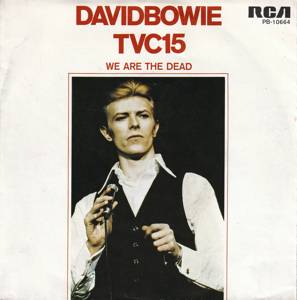
One of the album’s most unusual compositions, TVC 15 combined an infectious rhythm with surreal lyrics inspired by an eccentric story circulating within Bowie’s circle during the mid-1970s. The song’s playful energy provided a striking contrast to the darker atmosphere that dominated much of the album.
Maslin’s production highlighted the interaction between Roy Bittan‘s lively piano, Carlos Alomar‘s rhythm guitar and the disciplined rhythm section. Every element remained exceptionally clear, creating a recording that sounded simultaneously loose in spirit yet meticulously organised in execution.
Although its lyrical narrative remains deliberately ambiguous, TVC 15 demonstrated Bowie’s continuing willingness to combine experimental ideas with highly accessible musical arrangements.
Stay
Stay showcased one of the strongest performances by the core band assembled for the album. Built around George Murray‘s bass line, Dennis Davis‘ precise drumming and the contrasting guitar styles of Carlos Alomar and Earl Slick, the recording reflected the remarkable musical chemistry that had developed during the sessions.
Harry Maslin captured these performances with minimal unnecessary interference. Rather than constructing the recording through extensive overdubbing, much of the song’s power came directly from the interaction of the musicians themselves. The result was one of Bowie’s most compelling funk-influenced recordings and a highlight of the subsequent Isolar Tour.
Wild Is the Wind

The album concluded with Bowie’s interpretation of Wild Is the Wind, written by Dimitri Tiomkin and Ned Washington and previously associated with Nina Simone, one of Bowie’s favourite singers.
Maslin’s production approached the song with considerable restraint. The arrangement avoided unnecessary orchestration, allowing Bowie’s vocal performance to carry the emotional weight of the recording. Roy Bittan‘s piano and the understated accompaniment created a spacious musical setting that emphasised the song’s quiet intensity.
Ending Station to Station with this interpretation reinforced the album’s dramatic arc, bringing a sense of emotional vulnerability after the intellectual and musical complexity of the preceding tracks.
Mixing the Album
Following the completion of the recording sessions in Los Angeles, Harry Maslin supervised the mixing of Station to Station at The Hit Factory in New York. His long experience as both an engineer and producer enabled him to shape a final mix that balanced technical precision with musical warmth.

One of the album’s most striking characteristics is its openness. Instruments occupy clearly defined positions within the stereo image, while the rhythm section retains exceptional impact without overpowering Bowie’s vocals or the more subtle instrumental details. This clarity has contributed significantly to the album’s enduring reputation among recording engineers and music historians.
Decades later, Maslin returned to the album when preparing new stereo and surround mixes for the deluxe editions released in 2010. Revisiting the original multitrack recordings allowed him to present the music with greater fidelity while remaining faithful to the character of the original 1976 release. His involvement ensured that the reissues reflected both modern audio standards and the artistic intentions of the original sessions.
A Defining Bowie Collaboration
Harry Maslin‘s work with David Bowie was concentrated within a relatively short period, yet its importance far exceeded its duration. Together they completed Young Americans, produced Bowie’s first American number-one single with Fame, and created Station to Station, an album that continues to be regarded as one of the defining works of Bowie’s career.
Although Bowie would later embark on new creative partnerships with producers including Tony Visconti and Brian Eno, the recordings Maslin helped create remain central to Bowie’s artistic development. They document the moment at which Bowie moved from American soul towards a more experimental European aesthetic while maintaining the highest standards of musicianship and studio craftsmanship.
Beyond David Bowie
Although Harry Maslin‘s collaborations with David Bowie remain among the most celebrated achievements of his career, they formed only part of a much broader body of work. During the 1970s and 1980s Maslin established himself as one of America’s leading producers and recording engineers, working with artists across pop, rock, singer-songwriter, rhythm and blues and adult contemporary music.
Even before his work with Bowie, Maslin had engineered recordings by James Taylor, Carly Simon, Bonnie Raitt, Barry Manilow and Dionne Warwick. His engineering credits included Barry Manilow’s breakthrough hit Mandy and Dionne Warwick & The Spinners’ chart-topping collaboration Then Came You, both of which reached number one in the United States.
Following the success of Station to Station, Maslin’s reputation as a producer grew considerably. Record companies increasingly entrusted him with commercially important projects, recognising his ability to combine strong performances with polished, radio-friendly production while maintaining high technical standards.
Success with Air Supply
Among Harry Maslin‘s greatest commercial achievements was his long association with the Australian soft rock duo Air Supply. Beginning in 1980, he produced a succession of highly successful albums and singles that established the group as one of the most successful international pop acts of the decade.
Maslin produced the albums Lost in Love (1980), The One That You Love (1981) and Now and Forever (1982). Together they generated a remarkable run of international hit singles, including Lost in Love, All Out of Love, Every Woman in the World, The One That You Love, Here I Am, Sweet Dreams and Even the Nights Are Better.
The commercial success of these recordings demonstrated Maslin’s versatility. While his work with David Bowie explored artistic experimentation and musical reinvention, his productions for Air Supply showcased his ability to create polished mainstream recordings that appealed to an international audience without sacrificing recording quality.
Melissa Manchester, Eric Carmen and the Bay City Rollers
Harry Maslin also produced successful recordings for Melissa Manchester, Eric Carmen and the Bay City Rollers. Melissa Manchester’s Don’t Cry Out Loud became one of her signature recordings, while his productions for the Bay City Rollers helped the Scottish group maintain commercial success during the late 1970s.
His work with Eric Carmen further demonstrated his ability to adapt to different musical styles. Rather than applying a single production formula, Maslin tailored each project to the individual artist, balancing commercial appeal with the performer’s own musical identity.
Image Recording Studios
As his career developed, Harry Maslin expanded beyond production and engineering by establishing Image Recording Studios in Hollywood. Designed as a modern, state-of-the-art recording facility, the studio became a popular destination for internationally successful artists, producers and film composers.
Over the years Image Recording hosted an impressive range of musicians, including Madonna, Tina Turner, Quincy Jones, Leonard Cohen, Faith Hill, Fleetwood Mac, Cher, Eric Clapton, Joe Cocker, Ray Charles, Melissa Etheridge, Sheryl Crow, Green Day, Goo Goo Dolls, No Doubt, Janet Jackson, Michelle Branch, Carlene Carter and Guns N’ Roses, among many others.
The studio also became involved in film soundtrack production, contributing to recordings connected with major Hollywood productions including Lethal Weapon and The Hunt for Red October. These projects reflected Maslin’s continuing interest in combining technical innovation with practical studio design.
Studio Designer and Consultant
Alongside his work as a producer and engineer, Harry Maslin became respected for his knowledge of recording technology and studio design. Throughout his career he advised recording studios, equipment manufacturers and music industry professionals on acoustics, recording equipment and technical workflow.
His unusually broad experience—from live sound engineering at the Electric Factory to large-scale commercial recording projects—allowed him to understand both the creative and technical demands of professional music production. This expertise made him a valued consultant as recording technology evolved from analogue tape to digital workstations.
Return to David Bowie’s Catalogue
![David Bowie Station To Station [Special Edition, 3CD] (2010)](https://www.davidbowieworld.com/wp-content/uploads/2014/08/david-bowie-station-to-station-special-front.jpg "David Bowie Station To Station [Special Edition, 3CD] (2010)")
More than three decades after the original recording sessions, Harry Maslin once again became involved with David Bowie’s music when preparing new stereo and surround mixes for the deluxe editions of Station to Station. Working from the original multitrack tapes, he created new mixes that preserved the character of the 1976 album while taking advantage of advances in modern audio technology.
His return to one of Bowie’s most acclaimed albums demonstrated the lasting confidence placed in his understanding of the original recordings. Rather than radically reinterpreting the material, Maslin sought to present the performances with greater detail and fidelity while respecting the artistic decisions made during the original sessions.
Legacy
Harry Maslin occupies a distinctive place in David Bowie’s history. Although his collaboration with Bowie was concentrated within a relatively brief period, it coincided with one of the artist’s most remarkable creative transformations. His work on the completion of Young Americans and his co-production of Station to Station helped document Bowie’s transition from the soul-influenced sound of the mid-1970s towards the more experimental direction that followed.
Beyond Bowie, Maslin built a distinguished career as a producer, engineer, studio owner and technical innovator. His recordings have sold millions of copies worldwide, while his engineering and production work continues to be studied for its exceptional clarity, balance and attention to musical detail.
Although producers often remain behind the scenes, Harry Maslin‘s contribution can be heard throughout some of the most enduring recordings of the 1970s and 1980s. His combination of technical excellence and musical sensitivity has earned him recognition as one of the most accomplished recording professionals of his generation.
Further Information
Harry Maslin‘s work continues to be recognised through the many classic recordings he produced and engineered during a career spanning more than five decades. Although he does not currently maintain an official public website, his production work remains widely documented through album credits, interviews and archival releases.
DavidBowieWorld.com is dedicated to documenting the careers of David Bowie’s collaborators through carefully researched historical information and, where available, first-hand contributions from the artists themselves. This page will continue to be expanded as additional verified historical information becomes available.
Article Origin
This article has been researched and written for DavidBowieWorld.com as part of the site’s ongoing project documenting the musicians, producers, engineers, designers and creative collaborators who helped shape David Bowie’s extraordinary career. Particular attention has been given to Harry Maslin‘s documented work on the completion of Young Americans, the production of Fame, and his co-production of Station to Station, one of the defining albums of Bowie’s career.
