
Peter Frampton – David Bowie’s School Friend and Glass Spider Guitarist
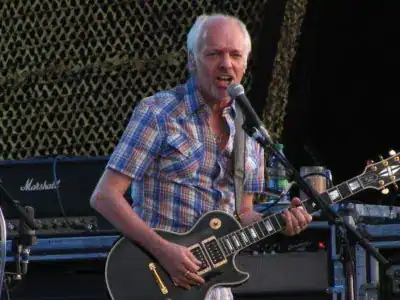
Photo: Rahul Reddy Media / Wikimedia Commons / CC BY-SA 2.0.
Peter Frampton knew David Bowie long before either became internationally famous. Both attended Bromley Technical High School, where Peter’s father, Owen Frampton, taught art. Their shared interest in music preceded the very different public identities they would acquire during the 1960s and 1970s.
The friendship became a substantial recording and touring partnership when Frampton contributed to Never Let Me Down and joined Bowie’s Glass Spider Tour in 1987. Bowie wanted the musician he remembered from school to be heard again as a guitarist, beyond the celebrity image created by Frampton’s enormous solo success.
Frampton was a featured lead guitarist in the touring band, working alongside Carlos Alomar. Alomar held the musical-director role. Their complementary guitar responsibilities were part of a larger ensemble supporting one of Bowie’s most elaborate combinations of rock music, dance and theatrical staging.
- Full name: Peter Kenneth Frampton
- Born: 22 April 1950
- Birthplace: Beckenham, Kent, England
- Principal roles: Guitarist, singer and songwriter
- Early Bowie connection: School friends at Bromley Technical High School
- Family connection: His father, Owen Frampton, taught Bowie art
- Earlier bands: The Herd and Humble Pie
- Breakthrough solo release: Frampton Comes Alive! (1976)
- Bowie studio collaboration: Never Let Me Down, recorded in 1986 and released in 1987
- Bowie tour: Glass Spider Tour, 1987
- Tour role: Lead guitar and vocals; musical director Carlos Alomar
- Related live release: Glass Spider (Live Montreal ’87)
- Later recognition: Rock & Roll Hall of Fame, class of 2024
Early life in Beckenham
Peter Kenneth Frampton was born in Beckenham on 22 April 1950. His early musical development took place in the same part of south-east England in which David Jones, later David Bowie, was growing up. Their relationship began through school and music, before either became an established recording artist.
Frampton’s father, Owen, was an art teacher and became head of the art department at Bromley Technical High School. For Peter, music and the visual arts therefore belonged to an everyday educational environment. For Bowie, Owen Frampton was one of the teachers encountered during the years before leaving school and pursuing a career as a musician.
Peter developed his instrumental abilities while still young, beginning before his teenage years and playing in local groups while attending school. His later reputation for melodic guitar playing had foundations in this period of learning and performing. By the time Bowie remembered hearing him in the school art block, Frampton was already an accomplished young player.
The school connection also establishes an important difference in their ages. Bowie, born in January 1947, was approximately three years older. They were pupils at the same school, but should not be described as classmates of the same age. Their friendship crossed that small age gap through a common enthusiasm for making music.
Bromley Technical High School: friendship before fame
Peter Frampton recalls his school connection with David Bowie.
The art block was one of the places where the school’s young musicians gathered. Bowie later recalled pupils bringing guitars into that environment and playing when they were not occupied with painting. In his memory, Frampton’s ability stood out well before the younger musician entered a professional band.
That recollection gives the later partnership a particular character. Bowie did not discover Frampton through a hit record or a stadium performance. He had heard him as a schoolboy, when technique, musical curiosity and the enjoyment of playing were more immediately visible than any public image.
David Bowie on music in the school art block
“When we weren’t painting we were playing guitar.”
— David Bowie, Vox Pop, 18 March 1987; reproduced in The Bowie Bible.
Early groups and the arrival of the Herd
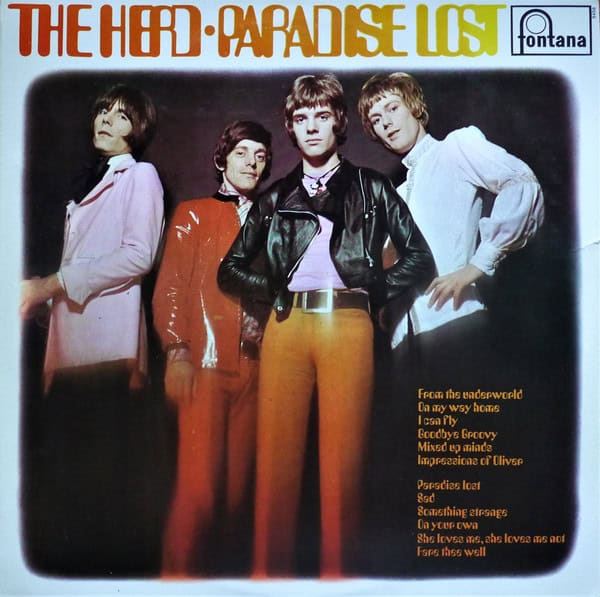
Frampton’s route into the music business began through school-age and local groups before he joined the Herd during the 1960s. The Herd brought him a national audience as a singer and guitarist. Their success placed him within the British pop scene while he was still a teenager, considerably earlier than the international breakthrough of his solo career.
Songs associated with the group included From the Underworld and I Don’t Want Our Loving to Die. These records belonged to a different musical setting from the extended live performances that would later define his best-known work. They nevertheless gave him experience of recording, promotion and performing as a visible member of a commercially successful band.
Public attention also concentrated on his appearance. The image of Frampton as a young pop idol became an enduring part of the way his career was discussed. That attention could sit awkwardly alongside his instrumental ambitions, creating a tension between the musician he wanted audiences to hear and the personality promoted in photographs and magazines.
Humble Pie and a different kind of band experience
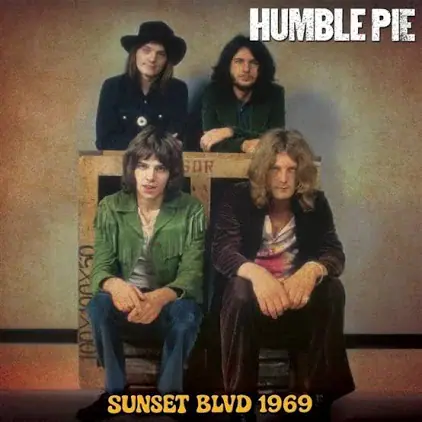
In 1969, Frampton became a founding member of Humble Pie with Steve Marriott, Greg Ridley and Jerry Shirley. The group moved him into a more expansive rock setting, drawing on blues, soul and the possibilities of a powerful live band. It was an important development beyond the public image formed during his time with the Herd.
Working with Marriott also meant working alongside another singer and guitarist with a strong musical personality. Humble Pie’s history should not be treated merely as a waiting room for Frampton’s solo success. It gave him sustained experience of sharing a band with other distinctive players and of contributing to a collective sound rather than presenting every musical decision under his own name.
The group’s catalogue included studio recordings and the live album Performance: Rockin’ the Fillmore. Frampton left Humble Pie in 1971 and began the next stage of his career as a solo artist. The live work remained an important part of the professional background he brought to subsequent projects.
The solo albums before Frampton Comes Alive!
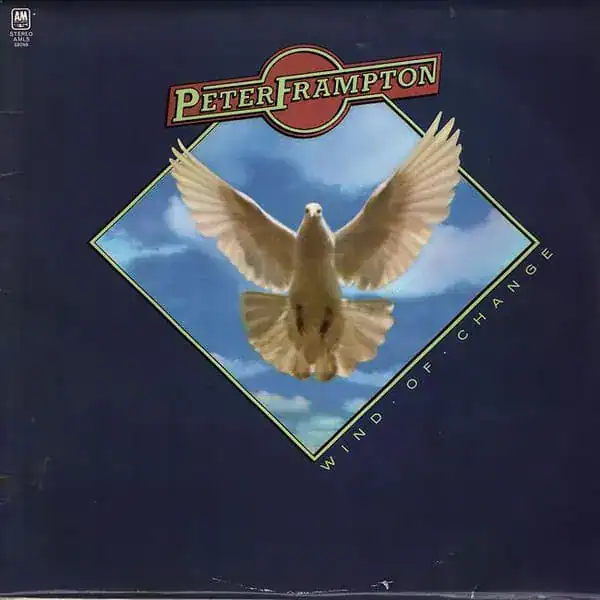
Frampton’s solo career developed over several releases rather than arriving fully formed with a single breakthrough. Wind of Change appeared in 1972, followed by Frampton’s Camel, Somethin’s Happening and Frampton. These records established songs and arrangements that could be developed further in concert.
The sequence is important because the best-known live album drew on an existing body of work. The material had already been written, recorded and performed before the scale of the audience changed. Success did not create Frampton’s musicianship; it brought a much larger public to music and a live approach that had been developing over time.
Touring was central to this process. Performing the songs repeatedly allowed arrangements to become part of an exchange between the band and its audience. A studio recording fixes a particular performance, while a concert gives a musician room to shape phrasing, extend an instrumental passage or respond to the pace of an evening.
Frampton Comes Alive! and the scale of success
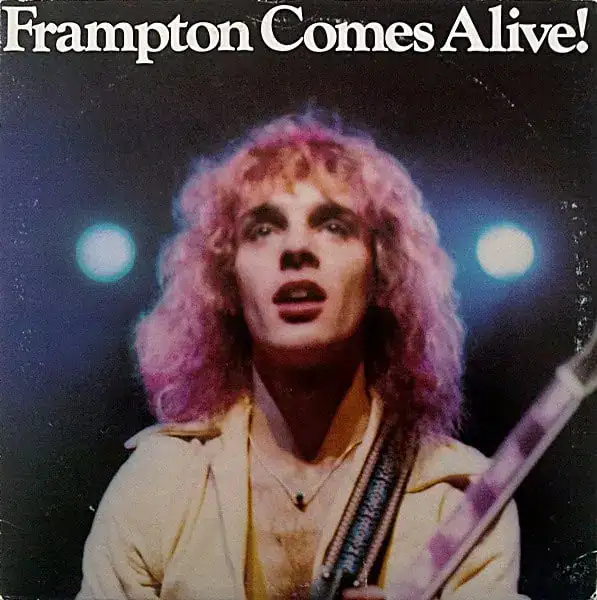
Released in 1976, Frampton Comes Alive! became the defining commercial event of Frampton’s career. The live album brought songs including Show Me the Way, Baby, I Love Your Way and Do You Feel Like We Do to an enormous audience and remains one of rock’s most familiar live recordings.
Its appeal involved several elements working together: recognisable songs, melodic guitar playing, a band comfortable with the material and the sense of an audience participating in the performance. The record made a concert experience available far beyond the people who had attended the shows from which it was assembled.
Frampton’s use of the talk box also became closely associated with the album. The effect uses the player’s mouth to shape an amplified instrumental sound, producing a quality that can seem to sit between guitar and voice. He helped popularise it; he did not invent the device, and it should not be confused with every other electronic treatment capable of changing a guitar’s tone.
The difficult years after the breakthrough
The success of Frampton Comes Alive! created expectations that subsequent projects could not easily reproduce. I’m in You followed in 1977, and Frampton appeared in the 1978 film Sgt. Pepper’s Lonely Hearts Club Band. The film’s poor reception became part of the story of the downturn in his public fortunes.
It would be misleading, however, to treat everything between 1976 and Bowie’s invitation as a period of inactivity. Frampton continued making records and performing. Albums including Where I Should Be, Breaking All the Rules and The Art of Control belong to this continuing professional history, even though they did not repeat the extraordinary impact of the live album.
By 1986, he had released Premonition and was again working to bring his playing to audiences. Bowie’s contemporary account also associated this period with Frampton’s appearances on the road with Stevie Nicks. The invitation to record came during an active attempt to move forward, rather than after a complete withdrawal from music.
A friendship maintained through different careers
Bowie and Frampton followed very different paths after their school years, yet the relationship did not disappear. Frampton later recalled remaining in contact, receiving invitations and being able to speak with Bowie for advice. Their professional reunion therefore grew out of an existing friendship rather than a newly arranged introduction between strangers.
The friendship also gives the story a longer timescale than the album and tour alone suggest. The central recording work took place in 1986, the album and world tour reached audiences in 1987, but their personal acquaintance extended back roughly a quarter of a century. The shared history was part of what made this particular invitation different from an ordinary session booking.
Peter Frampton on Bowie’s support
“For that, I can never thank him enough.”
— Peter Frampton, Uncut, November 2018; discussing Bowie’s invitation to the album and tour, reproduced in The Bowie Bible.
The invitation to record with Bowie
Peter Frampton discusses David Bowie in an extract from The Big Interview, AXS TV.
Bowie’s invitation first concerned the recording of the album that became Never Let Me Down. In his account from 1987, he described wanting Frampton as a guitarist for the new material. The possibility of taking the music on the road developed while the album was being made.
Frampton accepted a role within Bowie’s project rather than appearing as a co-headlining artist. That distinction was central to the opportunity. He could play guitar throughout the work without carrying all the expectations attached to a Peter Frampton solo concert or reproducing the familiar songs associated with his own breakthrough.
Never Let Me Down: the recording context
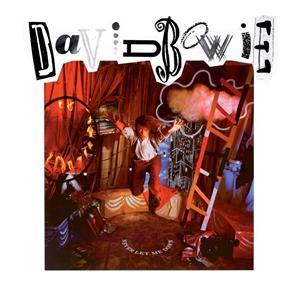
Never Let Me Down was recorded during 1986 and released on 20 April 1987. Bowie co-produced it with David Richards. Work took place at Mountain Studios in Montreux and the Power Station in New York, with the record developing through basic tracks, instrumental additions and mixing.
The preparation included demos on which Bowie had already worked out substantial parts of the arrangements. These gave the players a framework to develop rather than requiring them to invent the entire album from nothing in the studio. Erdal Kızılçay contributed extensively to the instrumental foundations, while Carlos Alomar and Frampton added guitar work.
The album represented Bowie’s renewed interest in a guitar-oriented presentation after the more overtly pop and dance-associated direction of his preceding releases. His own instrumental involvement also increased. Frampton’s presence therefore belonged to a broader musical decision, rather than functioning simply as a celebrity name added to the credits.
Guitar overdubs with Carlos Alomar
Engineer Justin Shirley-Smith recalled Frampton and Alomar joining the Montreux work for guitar overdubs in October 1986. His account places their contributions within the actual sequence of making the record: the early instrumental framework had already been established, and the guitarists arrived to add further parts.
Alomar brought years of experience working with Bowie, including the ability to develop interlocking guitar arrangements and respond to the demands of different styles. Frampton brought another lead voice into that working environment. The finished sound could therefore combine several guitar approaches rather than relying on a single player to supply every texture and featured line.
Justin Shirley-Smith on the guitar sessions
“In October we had the pleasure of Peter Frampton and Carlos Alomar’s company for guitar overdubs.”
— Justin Shirley-Smith, March 2018, Loving the Alien (1983–1988) book; reproduced in The Bowie Bible.
Which guitar parts belong to Frampton?
Frampton’s album credit covers guitar and electric sitar, but it should not be expanded into a claim that he played every lead part. Bowie and Sid McGinnis also contributed lead guitar. McGinnis is associated with lead work on Day-In Day-Out, Time Will Crawl and Bang Bang, while Bowie played lead on New York’s in Love and ’87 and Cry.
Frampton’s documented contributions include guitar on Beat of Your Drum, Zeroes and Glass Spider, with electric sitar also identified on Zeroes. The presence of more than one guitarist on a track means that a general personnel credit and the authorship of a particular solo are not always the same thing.
The title song offers another example. Never Let Me Down was a Bowie–Alomar composition, and its original track credits identify Alomar on guitar. Naming the album as a Frampton collaboration does not mean every individual song on it carries the same guitar personnel.
Zeroes: guitar, electric sitar and the memory of the 1960s
David Bowie – Zeroes, from Never Let Me Down (1987), featuring Peter Frampton on guitar and electric sitar.
Zeroes is one of the clearest examples of Frampton adding a distinctive instrumental colour to the record. Its original credits include both his guitar and electric sitar. The latter contributed to a deliberately retrospective musical setting, alongside layered voices and the song’s references to the language of 1960s pop.
Bowie’s explanations of Zeroes associated it with the clichés and optimism of that period, approached with affection. Frampton’s contribution forms part of that musical vocabulary. It is a different use of a guitarist’s identity from simply asking for a long solo: an instrument’s colour can locate a song within a set of cultural memories as effectively as a prominent lead passage.
Glass Spider: a song that became a stage environment
Glass Spider supplied the name and central image for the tour. The album recording combined a spoken introduction, sung passages and a dramatic story involving abandonment. Frampton and Alomar both appear in its guitar credits, placing their partnership within the very piece that would frame the stage production.
The song gave Bowie a route from an album track into a larger visual and theatrical world. Its imagery could be extended through a set, movement and the performer’s relationship with the stage around him. The concert production was therefore not merely named after a convenient title: it expanded an image already embedded in the new material.
Carlos Alomar on playing with Frampton
“We bonded as lead guitar player and rhythm player on ‘Glass Spider’”
— Carlos Alomar, David Bowie: Ultimate Record Collection, Uncut; reproduced in The Bowie Bible. Excerpt.
Time Will Crawl and the television record
David Bowie and Peter Frampton in the 1987 Top of the Pops recording of Time Will Crawl. The appearance was not broadcast when originally recorded.
Time Will Crawl was released as a single in June 1987. It became part of the Glass Spider programme and also generated promotional footage linking the new music with Bowie’s touring personnel and dancers.
During the British leg of the tour, Bowie recorded an appearance for Top of the Pops. The programme did not transmit it at the time because of its chart-based selection policy. Part of the recording was eventually shown in a later retrospective, so the surviving clip should not be described as a contemporary 1987 broadcast.
The television footage is also distinct from the promotional video directed by Tim Pope, which used the tour’s rehearsal environment and included Frampton, Alomar and members of the dance group. Both belong to the visual history of the same song, but they are different productions. Neither should be confused with an audio document of a Glass Spider concert.
The Glass Spider Tour: a band inside a theatrical production
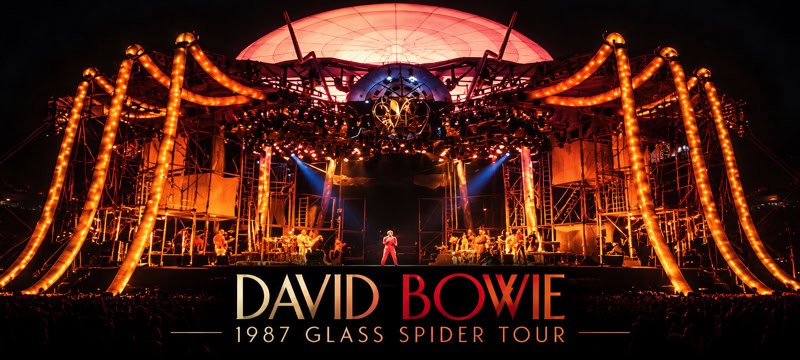
The Glass Spider Tour of 1987 placed Frampton within a production that combined a rock band with dancers, narrative episodes, theatrical gestures and a large spider-shaped stage structure. Bowie’s musical catalogue was presented as part of a visual environment rather than as an uninterrupted sequence of songs played from a conventional stage.
For the musicians, that meant the performance had responsibilities beyond reproducing a record’s instrumental parts. Musical transitions existed alongside movement and staging. The band supplied continuity while attention shifted between Bowie, the dancers and the larger production. Frampton’s guitar was one of the musical voices working within that structure.
Frampton’s role and Carlos Alomar’s musical direction
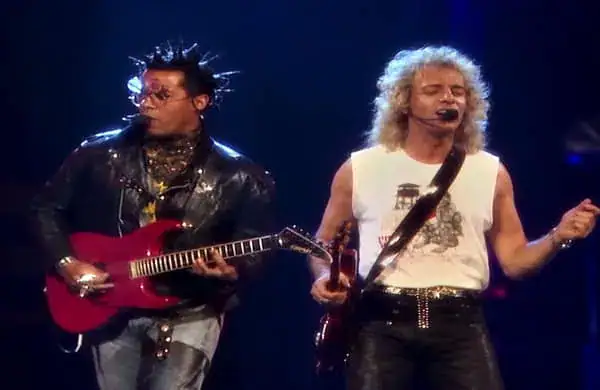
Carlos Alomar was the musical director; Frampton was a featured lead guitarist. Frampton’s featured guitar work and Alomar’s responsibility for musical direction were separate contributions to the production.
Alomar’s relationship with Bowie extended back through earlier albums and tours. He brought detailed familiarity with the catalogue and with the working methods through which Bowie’s live arrangements were developed. Frampton joined that history with a separate instrumental personality and his own extensive performing experience.
The musicians around the two guitarists
The principal touring band also included Carmine Rojas on bass, Alan Childs on drums, Richard Cottle on keyboards and saxophone, and Erdal Kızılçay, whose responsibilities included keyboards and several other instruments. Bowie sang and played guitar, while the musicians also supplied supporting vocals where required.
This ensemble differed from the complete studio personnel of Never Let Me Down. Its task was to carry both the new material and songs recorded across different periods of Bowie’s career. Keyboards, guitars, saxophone, bass and drums could be redistributed to suit a practical live arrangement rather than reproduce every overdub from a studio master.
Guest appearances should be distinguished from the regular band. Charlie Sexton, for example, appears in the wider Glass Spider performance history, but was not one of the permanent members of the core touring ensemble. A guest visible in a concert film does not establish an additional full-tour position.
New songs and Bowie’s earlier catalogue
The Glass Spider repertoire extended well beyond the album that supplied its title. Alongside songs from Never Let Me Down, the band performed material associated with earlier chapters of Bowie’s career. The documented Montreal programme includes All the Madmen, Big Brother, Sons of the Silent Age, Time and Scary Monsters (and Super Creeps).
It also contains familiar singles such as Rebel Rebel, Fashion, China Girl, Let’s Dance, Fame, Blue Jean and Modern Love. This mixture required more than a single guitar sound or one approach to accompaniment. The arrangements had to make room for songs originally recorded by different groups of musicians across nearly two decades.
The Montreal set is a documented example, not a guarantee that every song appeared in the same position at every concert. Tour programmes can change, and a recording released later preserves one selection of performances. It remains a useful way to hear the actual range of music Frampton played with Bowie in 1987.
Montreal and Sydney: two different concert documents
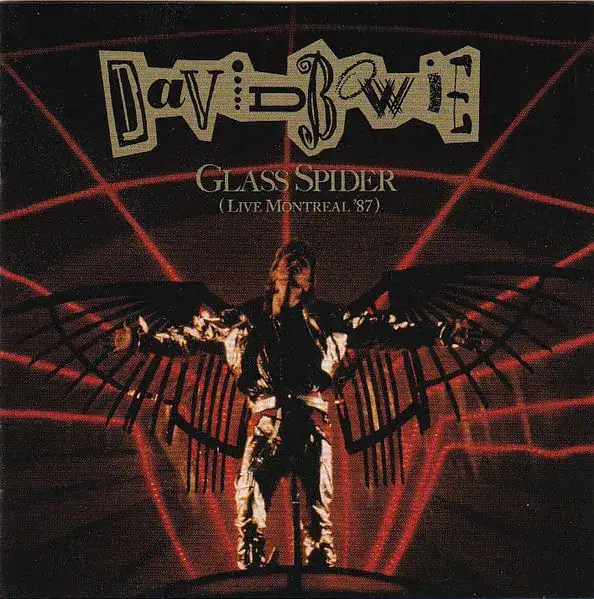
The principal official documents of Glass Spider do not all come from the same performance. Glass Spider (Live Montreal ’87) preserves material from 30 August 1987 at Montreal’s Olympic Stadium. The familiar concert film directed by David Mallet was assembled from shows in Sydney, with much of its footage associated with the November engagement there.
The film was originally released on video in 1988. A 2007 edition brought the concert film to DVD, with a special edition adding the Montreal double album. In 2018, the Montreal recording appeared in the Loving the Alien (1983–1988) collection under its now-familiar title and with different artwork.
Carmine Rojas on the Glass Spider repertoire
“We really worked hard on the material.”
— Carmine Rojas, David Bowie: Ultimate Record Collection, Uncut; reproduced in The Bowie Bible.
Reception: separating the production from the playing
Both Never Let Me Down and Glass Spider have occupied a contested place in Bowie’s history. The album has often been criticised for its production, while the tour’s elaborate theatrical framework has divided listeners. Those reactions form part of the historical reception, but they do not make every element of the recording or performance identical in quality or intention.
Bowie himself later expressed dissatisfaction with the album’s finished sound. His retrospective comments should be distinguished from the enthusiasm with which he described the guitar-oriented project during its launch. They represent different moments in his assessment of work that had already been completed and heard by the public.
David Bowie reassessing the album
“I thought it was great material that got simmered down to product level.”
— David Bowie, Q, June 1989; reproduced in The Bowie Bible.
What Frampton meant by a career revival
Frampton credited the Bowie collaboration with helping audiences recognise him again as a guitarist. The claim is his assessment of the opportunity, not a statement that one tour instantly restored every aspect of his commercial position. Its meaning concerns professional identity and visibility as much as record sales.
The setting made that possible in a practical way. International audiences saw him playing throughout Bowie’s programme. He did not need to re-create the publicity surrounding Frampton Comes Alive! to reach them, and the performance was not built around a demand to reproduce his biggest solo hits. The guitar work was the reason for his presence.
After the Glass Spider Tour
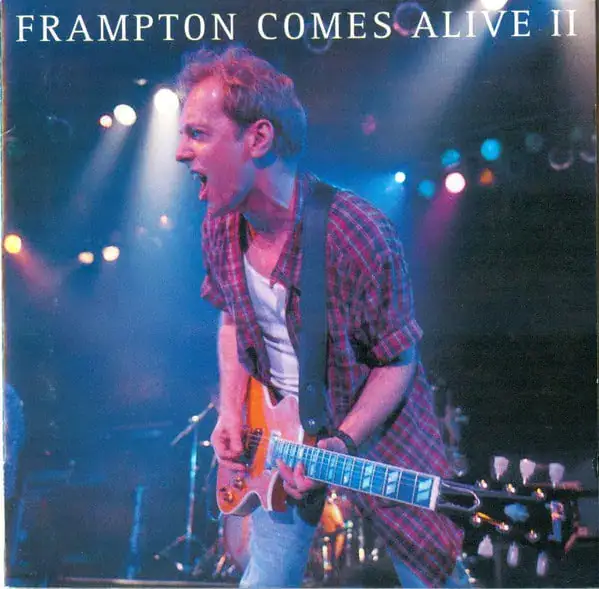
Frampton’s subsequent career returned to his own recording and touring projects. The Bowie partnership was an important chapter within that longer history, rather than the beginning of a permanent position in Bowie’s later touring bands. The 1990s brought further solo work, including the self-titled Peter Frampton album and Frampton Comes Alive! II.
The second live album drew on a later body of songs rather than simply repeating the first collection. That decision belongs to the continuing challenge of making new work alongside a famous earlier success. A musician can acknowledge the lasting importance of a breakthrough record while continuing to record material that has a different relationship with the audience.
Fingerprints and renewed recognition of the guitarist
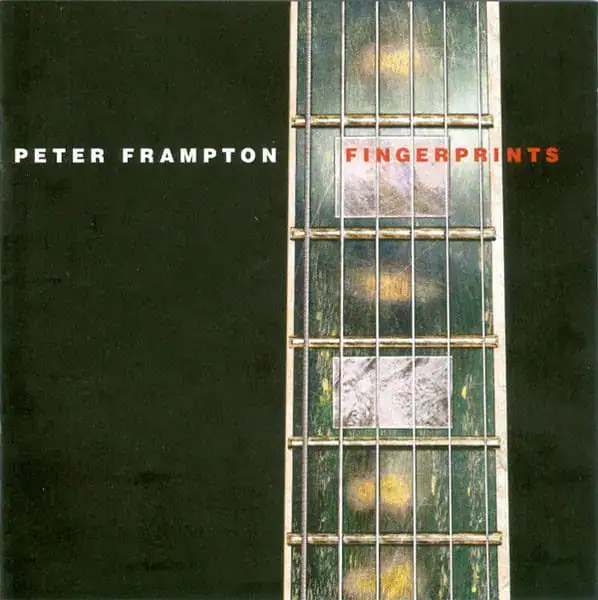
The instrumental album Fingerprints, released in 2006, put guitar playing at the centre of another major stage in Frampton’s career. It won the Grammy Award for Best Pop Instrumental Album in 2007. The award recognised an instrumental project released almost twenty years after the Bowie collaboration.
The later Thank You Mr. Churchill and Acoustic Classics offered further ways of presenting an established musician: through new songs and revised approaches to familiar material. These projects continued the solo career beyond its defining 1970s breakthrough, rather than treating that success as the limit of what Frampton could record or perform.
The 2018 reconstruction of Never Let Me Down
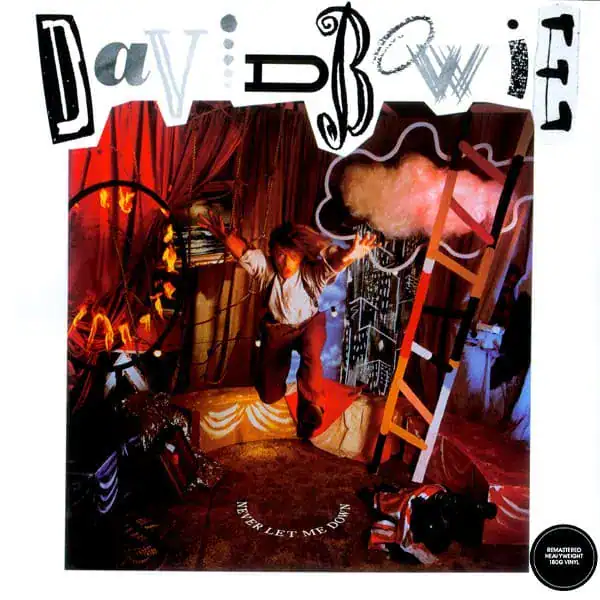
The release of Never Let Me Down 2018 created a second major instrumental context for the songs. Produced by Mario McNulty, the reconstruction retained Bowie’s vocals while replacing much of the original accompaniment. Its principal new players included Reeves Gabrels, David Torn, Tim Lefebvre and Sterling Campbell.
This should not be described as Frampton returning to record a new Bowie album in 2018. His work belongs primarily to the 1986 sessions and their subsequent release history. Among the original parts retained in the reconstruction was his electric sitar on Zeroes, heard alongside the newly recorded instruments.
The original and reconstructed albums offer different arrangements of the same songs. Comparing them can reveal how strongly instrumentation and production affect a listener’s understanding of material, but the versions have separate personnel and working histories. For Frampton’s discography, the original album remains the principal studio document of the collaboration with Bowie.
Memoir, instrumental interpretations and the Rock & Roll Hall of Fame
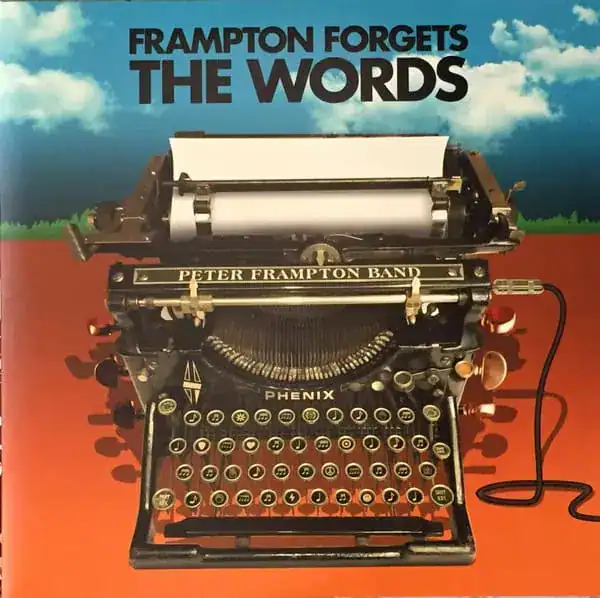
Frampton’s memoir Do You Feel Like I Do? appeared in 2020, providing his own longer account of a career extending from his early groups through international solo success and collaborations. It supplies a different perspective from a discography: the experiences of the person whose name appears on the records.
The 2021 instrumental album Frampton Forgets the Words included an interpretation of Bowie’s Loving the Alien. Returning to a Bowie composition in this setting connected the later solo work with a musical relationship reaching well beyond the single touring season of 1987.
In 2024, Frampton was inducted into the Rock & Roll Hall of Fame. That recognition encompasses a career extending from the Herd and Humble Pie through solo success and later work. The Bowie collaboration occupies one identifiable part of it, connecting his school years with a mature professional partnership on a very different stage.
Peter Frampton in Bowie’s collaborative universe
Peter Frampton’s place in Bowie’s history combines an unusually long personal connection with a concentrated period of studio and live work. The friendship began at school, when neither musician could have known the public identities awaiting him. Their substantial professional partnership emerged after both had already experienced success, changing expectations and the pressures attached to fame.
The surviving work gives that history a concrete form: guitar and electric sitar on Never Let Me Down, a featured place beside Carlos Alomar in the Glass Spider band, filmed promotional appearances and official concert recordings. Together they document more than an anecdote about school friends meeting again. They show musicians taking an existing relationship into a demanding professional collaboration.
Official Website & Further Information
For Peter Frampton’s official releases, announcements, performance information and other projects, visit his official website:
The site provides the appropriate starting point for current activity, while this article concentrates on the historical relationship with Bowie and the recordings and performances associated with their collaboration.
First-Hand Accounts & Historical Sources
This article includes published recollections and statements by Peter Frampton, David Bowie, Carlos Alomar, Justin Shirley-Smith and Carmine Rojas. Their words are attributed individually and used to distinguish personal memories, studio observations and retrospective assessments of the work.
The embedded interviews provide additional first-hand context. This page does not claim a direct interview, private correspondence or personal cooperation with Frampton or the other contributors.
Article Origin
This article has been researched and written for DavidBowieWorld.com as part of its David Bowie Collaborations & Creative Circle Archive. It brings together the school friendship, the Never Let Me Down sessions, the Glass Spider Tour and the subsequent release history of the collaboration.
© DavidBowieWorld.com — David Bowie Collaborations & Creative Circle Archive.
