
David Torn & David Bowie – Experimental Guitar and the Sound of Bowie’s Later Years
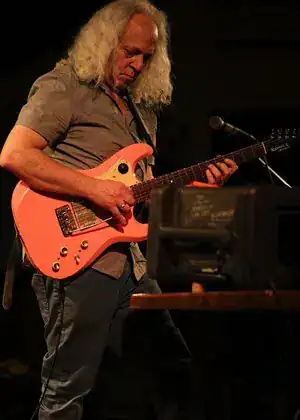
Photo: Unknown photographer / Wikimedia Commons / CC BY-SA 4.0 (editorial use)
David Torn is an American guitarist, composer, producer and sound designer whose work moves between experimental music, jazz, ambient sound, rock, film scoring and studio texture. Within the David Bowie story, Torn belongs mainly to Bowie’s later creative world: the period in which Bowie became increasingly interested in atmosphere, damaged beauty, unusual guitar colour and sound as architecture.
Torn’s Bowie connection is not best understood through conventional rock-guitar roles. He was not simply a guitarist who arrived to play solos. His importance lies in texture, looping, distortion, abstraction and the ability to make the guitar behave like an unstable emotional landscape. Bowie recognised that quality and reportedly described Torn as the “Yo-Yo Ma of guitar”.
- Name: David Torn
- Born: 26 May 1953, Amityville, New York, USA
- Role: Guitarist, composer, producer, sound designer
- Main Bowie link: Experimental guitar textures and studio work in Bowie’s later period
- Key Bowie-related albums: The Buddha of Suburbia, Reality, The Next Day, Never Let Me Down 2018
- Important correction: David Torn should not be presented as a confirmed member of Bowie’s 1987 Glass Spider Tour band
- Known for: Looping, ambient guitar, processed sound, film scoring and experimental improvisation
- Notable Bowie quote: Bowie reportedly called Torn the “Yo-Yo Ma of guitar”
Who is David Torn?
David Torn, also known in some credits as David M. Torn, is one of the most individual guitarists to emerge from the experimental side of American music. His playing is difficult to reduce to one genre. He has worked across jazz, rock, ambient music, electronic processing, improvisation, film scoring and studio production.
Torn’s guitar language is not built mainly around traditional riffs or blues-rock solos. His music often uses loops, feedback, drones, volume swells, fuzz, unusual processing and real-time manipulation. The result can sound like guitar, but it can also sound like weather, machinery, voices, memory or damaged light.
That made him a natural fit for Bowie’s later work. Bowie was repeatedly drawn to musicians who could disturb familiar musical habits: Brian Eno, Robert Fripp, Adrian Belew, Reeves Gabrels, Mike Garson, Carlos Alomar and others. Torn belongs in that wider family of collaborators because he gave Bowie access to another kind of guitar thinking.
Early background and musical language
Torn developed as a guitarist through a broad set of influences, including jazz, rock, experimental music and electronic processing. He studied and absorbed traditional musical language, but his mature work became increasingly focused on what could happen beyond the normal vocabulary of the guitar.
His 1987 album Cloud About Mercury, made with musicians including Mark Isham, Tony Levin and Bill Bruford, became an important statement of his sound world. The album placed electric guitar inside an atmospheric, spacious and exploratory setting rather than using it only as a lead instrument.
Torn’s reputation grew as a musician who could bring character to a recording without overpowering it. This quality later became central to his Bowie work. He could add disturbance, depth and atmosphere, but he did not need to take over the song.
Where Torn fits in Bowie’s story
The original version of this page placed heavy emphasis on Bowie’s late-1980s period and the Glass Spider Tour. That has been corrected here. There is no solid reason to present David Torn as a confirmed member of Bowie’s 1987 Glass Spider touring band.
Torn’s real Bowie importance lies elsewhere: in the studio-centred, textural and experimental side of Bowie’s later catalogue. His work connects most strongly with The Buddha of Suburbia, Reality, The Next Day and the posthumous 2018 reworking of Never Let Me Down.
This matters because it changes the meaning of the collaboration. Torn was not simply part of Bowie’s 1980s spectacle. He was part of the later Bowie world in which sound design, guitar abstraction and studio imagination became increasingly important.
The Buddha of Suburbia
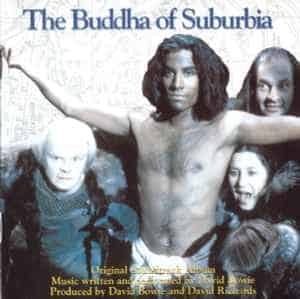
The Buddha of Suburbia, released in 1993, began as music connected to the BBC television adaptation of Hanif Kureishi’s novel, but Bowie later treated the album as a highly personal and important work. It is often described as one of the overlooked bridges between Bowie’s 1980s output and the more adventurous direction he would take during the 1990s.
Torn’s connection to this Bowie period is important because The Buddha of Suburbia is not a conventional rock album. It moves through memory, suburbia, electronic colour, jazz echoes, ambient atmosphere and fragments of Bowie’s own past. A musician like Torn fits naturally into that world because his guitar is able to suggest space and psychological movement rather than simply provide accompaniment.
The album points forward to Outside, Earthling and Bowie’s later interest in mood, identity and fragmentation. Torn’s experimental vocabulary belongs to that same broad creative direction, even when his contribution is best understood as texture rather than centre-stage performance.
Bowie’s search for new guitar languages
Bowie had a long history of using guitarists as agents of change. Mick Ronson gave the early 1970s records a dramatic, arranged and muscular identity. Carlos Alomar helped stabilise Bowie’s funk, soul and rhythm-based language. Robert Fripp and Adrian Belew brought danger and surprise to the Berlin and post-Berlin records. Reeves Gabrels later pushed Bowie toward harsher, more aggressive and modern rock textures.
David Torn belongs to this history, but in a different way. His playing is less about classic guitar heroics and more about transforming the sonic environment around the song. His guitar can behave like a texture, a shadow, a machine, a memory or an emotional disturbance.
That made him useful to Bowie because Bowie did not only want musicians who could play well. He wanted musicians who could open doors.
Heathen and the return to Tony Visconti
Heathen, released in 2002, marked Bowie’s major studio reunion with producer Tony Visconti. The album is often heard as one of Bowie’s strongest late-career works: reflective, uneasy, carefully arranged and emotionally direct.
Torn’s name is connected with Bowie’s early-2000s studio world, including the period around Heathen. His kind of guitar language fits the album’s atmosphere: spiritual uncertainty, damaged modernity and a sense that beauty and threat can exist in the same sound.
It is important not to exaggerate any single contribution, because Bowie’s late records were carefully assembled works involving many musicians and producers. But Torn’s presence in this period matters because he represented exactly the kind of player Bowie valued: someone able to contribute sound, not just notes.
Reality

Reality, released in 2003, is one of the clearest Bowie albums to include Torn’s later-period studio role. Torn has described working on Reality in a short, concentrated burst, sometimes with Bowie present and sometimes with Mario McNulty involved in the room.
That working method says much about Bowie’s trust in certain musicians. Torn was not only there to reproduce a fixed part. He was asked for ideas, textures and reactions. Bowie’s later studio process often depended on this kind of intelligent collaboration: musicians were given room to find something that might surprise the track.
Reality combines direct rock songs with darker, more atmospheric writing. Torn’s approach fits that tension. He could thicken the surface of a song, add edge, or place a strange colour in the background without making the music feel cluttered.
The studio relationship with Bowie
Torn’s recollections of working with Bowie suggest a creative relationship based on trust, speed and openness. Bowie might be in the room, or he might check in and ask whether Torn had ideas. If Torn did, Bowie was willing to let him explore them.
This kind of working relationship is important to understand. Bowie’s best collaborations were rarely about simply hiring famous musicians. He assembled people whose instincts might activate new parts of his own imagination. Torn was useful because his instincts were unusual.
Bowie’s reported description of Torn as the “Yo-Yo Ma of guitar” captures that respect. The phrase suggests not just technical skill, but expressive range, sensitivity and a voice-like command of the instrument.
The Next Day
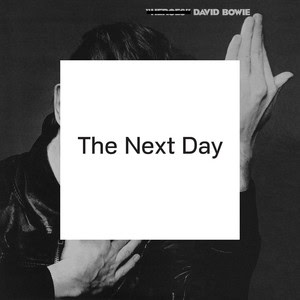
The Next Day, released in 2013, was Bowie’s unexpected return after a decade without a new studio album. It arrived in a climate of secrecy and surprise, and it quickly became one of the defining events of Bowie’s final creative chapter.
Torn is part of the broader group of musicians associated with Bowie’s later studio circle, including the world around The Next Day. The album is not an exercise in nostalgia, even though it deliberately looks back at parts of Bowie’s visual and musical history. Its power comes from the way familiar Bowie signals are made unstable.
That instability is exactly where a guitarist such as Torn makes sense. Bowie’s later records often needed sounds that did not simply decorate the songs but unsettled them. Torn’s vocabulary of loops, distorted texture and processed guitar belongs naturally to that approach.
Never Let Me Down and Bowie’s dissatisfaction
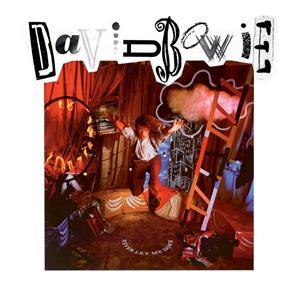
Never Let Me Down, released in 1987, remained one of the most controversial albums in Bowie’s catalogue. Bowie later spoke critically of the record and felt that some of the songs were stronger than the production around them suggested.
The original album belonged to a period of big 1980s production, programmed drums and heavily polished surfaces. Over time Bowie came to feel that the record did not represent the songs as well as it might have done. This dissatisfaction became important after his death.
The 2018 version, released as part of the Loving the Alien box set, was not simply an ordinary remix. It was a substantial reworking built around Bowie’s wish that the album should be reimagined with a different musical character.
Never Let Me Down 2018
The 2018 reworking of Never Let Me Down is one of the most unusual posthumous Bowie projects because it was connected to Bowie’s own stated wishes. The project involved producer and engineer Mario McNulty and included new musical contributions from musicians such as Reeves Gabrels and David Torn.
Torn’s participation is especially meaningful because he was not being brought in to imitate 1987. He represented a later Bowie aesthetic: more textural, more experimental, less tied to the production habits of the original decade.
In this context, Torn helped connect the songs of 1987 to the Bowie of the 1990s, 2000s and beyond. The reworking allowed the material to be heard through a different guitar language, one closer to the sharper and more exploratory sound world Bowie later preferred.
Working with Reeves Gabrels
The 2018 Never Let Me Down project also brought Torn into the same creative frame as Reeves Gabrels, Bowie’s major guitar collaborator from the Tin Machine period through the 1990s. Gabrels and Torn are very different players, which is exactly why the combination made sense.
Gabrels is often associated with fierce, disruptive, high-energy guitar interventions. Torn is often associated with clouds of processed texture, looping, ambience and sonic architecture. Together, they could bring both attack and atmosphere to the reimagined material.
This pairing also reflects Bowie’s own instincts. Bowie often liked to place different musical personalities beside one another and allow the friction to create something new. The 2018 project became a posthumous example of that method.
Sound design rather than standard guitar
One of the most important things about Torn’s Bowie work is that it expands the meaning of “guitarist”. In a traditional rock context, the guitarist plays riffs, chords and solos. Torn can do those things, but his deeper value lies in the way he treats sound itself.
His guitar can blur into electronics, behave like a looped environment, or become a strange emotional pressure inside the track. For Bowie, who was always interested in identity, performance and transformation, that approach had obvious value.
Torn’s work reminds listeners that Bowie’s later music was not only about songs and lyrics. It was also about sonic worlds.
Beyond Bowie
Outside his work with Bowie, David Torn has built a wide-ranging career as a solo artist, collaborator, producer and film composer. He has worked with musicians including David Sylvian, Tony Levin, Bill Bruford, Jan Garbarek, k.d. lang, Ryuichi Sakamoto and many others.
He has also composed and contributed to film and television music, where his ability to create atmosphere and emotional ambiguity is especially valuable. That filmic quality also explains why his sound could fit Bowie so well. Bowie’s songs often feel visual, theatrical and cinematic, and Torn’s textures can intensify that feeling.
Torn is not a mainstream celebrity guitarist in the usual sense, but among musicians he is highly respected as a player who changed what electric guitar could do inside a recording.
Video
David Torn — experimental guitar and sound design
This video is included as a general example of David Torn’s musical language. His Bowie connection is best understood through studio texture, sound design, processed guitar and the ability to make the guitar function as atmosphere rather than only as a lead instrument.
For Bowie listeners, Torn’s importance lies in the later studio world around The Buddha of Suburbia, Reality, The Next Day and the 2018 reworking of Never Let Me Down.
Why the collaboration matters
David Torn matters in Bowie’s universe because he represents one of Bowie’s deepest late-career interests: the transformation of familiar rock instruments into strange new emotional tools. Bowie never stopped looking for players who could alter the temperature of a song, and Torn was exactly that kind of musician.
Torn’s guitar work does not always announce itself in obvious ways. Sometimes its importance lies in pressure, disturbance, atmosphere or shadow. That makes him different from collaborators whose Bowie roles are built around famous solos or stage presence. Torn’s contribution is more architectural.
He belongs to the line of Bowie collaborators who helped Bowie avoid repetition. By bringing looping, ambient guitar, distortion and abstract texture into the studio, Torn helped strengthen the sound world of Bowie’s later work.
Legacy within Bowie’s world
Within the wider story of David Bowie collaborations, David Torn should be understood as a sonic architect rather than a conventional sideman. His connection to Bowie is strongest where Bowie’s music becomes uncertain, atmospheric, damaged, cinematic and exploratory.
The corrected Bowie-Torn story is not primarily about the Glass Spider Tour. It is about later studio imagination: The Buddha of Suburbia, Reality, The Next Day and the unusual afterlife of Never Let Me Down in 2018.
Torn’s presence in Bowie’s world shows that Bowie continued to seek musicians who could surprise him, even late in his career. That is why Torn’s role, although sometimes less visible than that of Bowie’s most famous guitarists, remains important.
