
Holly Palmer – Vocalist and Percussionist with David Bowie

Holly Palmer Album.
Holly Palmer is an American singer, songwriter, multi-instrumentalist and recording artist whose distinctive voice brought her to the attention of David Bowie during the recording of ‘hours…’ in 1999. Invited by guitarist Reeves Gabrels and producer Mark Plati, Palmer contributed backing vocals to the album before joining Bowie’s touring band as both a vocalist and percussionist.
Although her time with Bowie covered only a relatively short period, Palmer participated in an important chapter of his later career. She appeared on the ‘hours…’ album, performed during Bowie’s 1999–2000 concerts and television appearances, and later took part in the recording sessions for Toy. Her first-hand recollections provide valuable insight into Bowie’s working methods in both the recording studio and on tour.
Beyond her work with Bowie, Palmer has built an acclaimed career as a solo artist, songwriter and collaborator, recording with musicians ranging from Billy Preston and Dr. Dre to Michael Bublé, while continuing to explore jazz, soul, pop and experimental music through her own recordings.
- Full name: Holly Palmer
- Born: 7 July 1965, California, United States
- Profession: Singer, songwriter, musician and recording artist
- Bowie connection: Backing vocalist on ‘hours…’ (1999)
- Live with Bowie: Vocalist and percussionist in David Bowie’s touring band (1999–2000)
- Additional Bowie work: Participated in the Toy recording sessions (2000)
- Associated musicians: Reeves Gabrels, Mark Plati, Gail Ann Dorsey, Mike Garson, Sterling Campbell, Emm Gryner and Earl Slick
- Known for: Powerful, expressive vocals and stylistic versatility across pop, soul, jazz and alternative music
Early Life and Musical Beginnings
Holly Palmer was born on 7 July 1965 in California and spent her early years between Santa Monica, California, and Seattle, Washington. Music formed an important part of her childhood, and while still at school she developed a deep appreciation for jazz, particularly the vocal artistry of Sarah Vaughan and Nancy Wilson. Their sophisticated phrasing, musical freedom and emotional expression would leave a lasting impression on her own approach to singing.
As a teenager Palmer played saxophone in her junior high school jazz band. One of her music teachers introduced her to a double album by Sarah Vaughan, a recording that became a turning point in her musical development. Years later Palmer recalled being captivated by Vaughan’s phrasing, humour and remarkable vocal tone, often singing along to the recordings at home while gradually discovering her own voice.
Although jazz provided her earliest musical foundation, Palmer’s interests soon expanded beyond the traditional repertoire. During high school she regularly performed jazz standards but also became increasingly attracted to contemporary pop and rock music, discovering that she enjoyed moving freely between different musical styles rather than limiting herself to a single genre.
This combination of jazz technique, soulful expression and openness to popular music would later become one of the defining characteristics of her career. Whether performing intimate ballads, contemporary pop songs or experimental material, Palmer developed a vocal style that combined technical precision with emotional warmth, qualities that would eventually attract the attention of producers and fellow musicians throughout the American recording industry.
Berklee College of Music
Palmer’s growing talent earned her a scholarship to the prestigious Berklee College of Music in Boston, one of the world’s leading institutions for contemporary music education. While studying there she continued to develop her understanding of jazz harmony and vocal performance, but she also rediscovered her enthusiasm for pop and rock music.

Berklee College of Music, Boston, Massachusetts.
Photo: Wikimedia Commons. Licensed under the Creative Commons Attribution-Share Alike 3.0 Unported licence.
Outside her formal studies she frequently joined informal rock sessions around Boston, gaining valuable experience performing in a wide variety of musical settings. Rather than choosing between jazz and popular music, Palmer embraced both worlds, developing the versatility that would later become one of her greatest professional strengths.
The years at Berklee helped shape her into a confident and adaptable musician. By the time she completed her studies she had developed not only as a vocalist, but also as a songwriter and performer capable of moving comfortably between jazz, soul, pop, rock and alternative music. This versatility would become one of the defining characteristics of her career, enabling her to collaborate with artists from an exceptionally wide range of musical backgrounds.
Early Professional Career
After completing her studies at Berklee College of Music, Holly Palmer moved to New York City, where she began establishing herself as a professional singer, songwriter and performer. She appeared intermittently with rock bands while continuing to draw upon the jazz repertoire that had shaped her early musical development.
Palmer’s ability to move between jazz, soul, pop and alternative rock gave her an unusually broad musical foundation. During these early years she continued writing original material and developing an artistic identity that was increasingly centred on her own songs rather than solely on interpreting existing standards.
In 1993, Palmer signed a development agreement with Island Records. The arrangement did not ultimately lead to the release of an album, but it represented an important step in her emergence as a recording artist and brought her work to the attention of a wider group of music-industry professionals.
She later came to the attention of Sue Drew at Reprise Records. Palmer signed with the label and began preparing the recordings that would become her first commercially released album.
Holly Palmer (1996)
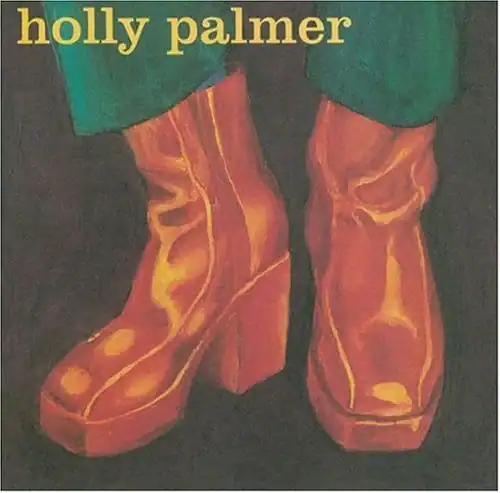
Palmer’s self-titled debut album, Holly Palmer, was released by Reprise Records in 1996. The album introduced her as a songwriter and lead vocalist whose music drew upon soul, jazz, pop and contemporary singer-songwriter traditions without fitting neatly into a single category.
Determined to retain a meaningful degree of creative control, Palmer took an active role in shaping the record. She co-produced the album with musician and producer Kenny White, whose previous work included collaborations with artists such as Shawn Colvin and Marc Cohn.
The sessions also included several distinguished musicians. Bassist Meshell Ndegeocello appeared on the song Lickerish Man, while guitarists Bill Frisell and John Leventhal were among the musicians who contributed to the album.
The record established Palmer as an artist with a distinctive musical perspective and a strong commitment to her own material. Rather than allowing the label to determine her sound, she sought to preserve the combination of emotional directness, sophisticated musicianship and stylistic independence that had developed throughout her early career.
Creative Independence
Palmer’s experience within the major-label system proved difficult. Although her debut album had introduced her work to a wider audience, her relationship with Reprise did not develop as she had hoped.
During the years that followed, she recorded additional material, including two albums that remained unreleased by the label. Palmer eventually left Reprise and retained the master recordings, allowing her to revisit some of that music later in her independent career.
This period strengthened her determination to work on her own terms. The experience would eventually lead her to establish an independent label through which she could release music without surrendering control over its artistic direction.
From Reprise to a New Chapter
Although Holly Palmer‘s debut album introduced her to a wider audience, her relationship with Reprise Records proved increasingly frustrating. During the following years she completed additional recordings, but creative differences ultimately led to her departure from the label before those albums were released.
Rather than bringing her recording career to a halt, this period unexpectedly opened the door to new opportunities. Through her long-standing friendships with guitarist Reeves Gabrels and producer Mark Plati, Palmer soon found herself stepping into David Bowie’s creative circle at exactly the moment Bowie was beginning work on ‘hours…’.
First Meeting with David Bowie
By the late 1990s, Holly Palmer had become well known within New York’s music community through her work as both a solo artist and session vocalist. Her connection with David Bowie came unexpectedly during the recording sessions for what would become Bowie’s ‘hours…’ album.
Palmer was living in Brooklyn and preparing for a performance when she received a telephone call from guitarist Reeves Gabrels, with whom she had previously written songs while living in Boston. Gabrels explained that he and producer and musician Mark Plati were working in the studio and were looking for a particular vocal sound for a new recording.
During the conversation Palmer jokingly sang a few lines from TLC’s hit Waterfalls. Moments later another voice came over the studio talkback and politely asked whether she could sing the passage again, but with less vibrato. Only after the conversation ended did Gabrels reveal that the person listening was David Bowie himself.
Within the hour Palmer was on her way to Chung King Studios in New York, where she met Bowie for the first time. The session would become the recording of Thursday’s Child, the opening track recorded for Bowie’s forthcoming album ‘hours…’, and would mark the beginning of their professional collaboration.
Recording Thursday’s Child
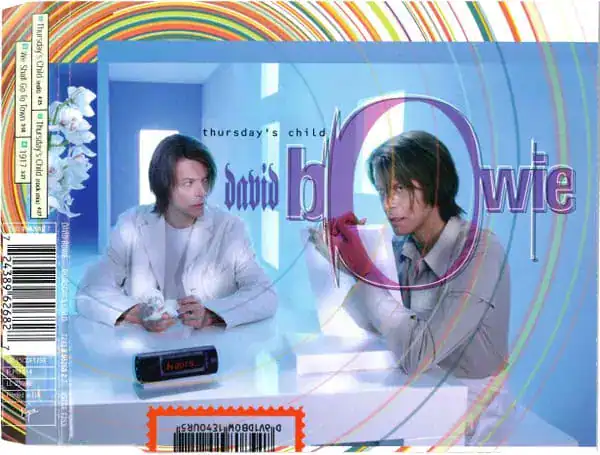
The recording session immediately revealed Bowie’s collaborative approach in the studio. Palmer later recalled that he already had a clear idea of the vocal character he wanted, while remaining open to new ideas that emerged during the session.
Rather than asking for an overtly soulful or jazz-influenced performance, Bowie encouraged Palmer to sing in a more direct style. He wanted the vocal to remain firmly on the beat and to feel conversational, allowing it to blend naturally into the atmosphere of the song rather than drawing attention away from the lead vocal.
After completing the principal backing vocal parts, Palmer was invited by Mark Plati to record several improvised vocal ideas. As Bowie listened back to the session, Palmer pointed out two improvisations she particularly liked. One was a high melodic phrase, while the other was an improvised repeating figure near the end of the recording. Bowie agreed that both ideas worked, and the latter became part of the finished version of Thursday’s Child.
For Palmer, the session became more than simply another recording date. It introduced her to Bowie’s relaxed but highly focused working style and established a professional relationship that soon developed beyond the studio into rehearsals, touring and further recording projects.
Recording the ‘hours…’ Album

Released on 4 October 1999, ‘hours…’ marked a significant change in David Bowie’s musical direction. Following the experimental electronic soundscapes of the mid-1990s, Bowie returned to a more melodic and song-oriented approach, combining reflective songwriting with contemporary production techniques developed alongside guitarist Reeves Gabrels and producer Mark Plati.
Holly Palmer became part of these sessions through her contribution to Thursday’s Child, one of the album’s best-known songs and its lead single in many territories. Her backing vocals added warmth and texture to the recording while complementing Bowie’s understated lead performance. Rather than dominating the arrangement, her voice became an integral part of the song’s layered vocal sound.
For Palmer, the recording sessions also provided an opportunity to observe Bowie’s creative process at close quarters. She later remembered him as an artist who arrived with clear musical ideas but remained receptive to suggestions from the musicians around him whenever they served the song.
The experience established an immediate sense of mutual trust. What began as a single recording session soon developed into a broader collaboration, with Palmer joining Bowie’s touring ensemble for the performances that followed the release of ‘hours…’.
The collaboration quickly extended beyond the recording studio. Impressed by Palmer’s musicianship and versatility, Bowie invited her to join his live band as both a vocalist and percussionist for the performances supporting ‘hours…’. It marked the beginning of almost two years of touring and recording together.
Joining David Bowie’s Touring Band
The success of the ‘hours…’ recording sessions soon led to a much closer collaboration. Holly Palmer was invited to join David Bowie’s touring band as both a vocalist and percussionist, becoming part of the live ensemble that would promote the album throughout 1999 and 2000.
Working alongside musicians including Mark Plati, Mike Garson, Gail Ann Dorsey, Sterling Campbell, Emm Gryner and, later, Earl Slick, Palmer became part of Bowie’s touring line-up during an important period of his later career. The concerts and recording sessions that followed would further strengthen the musical relationship that had begun during the recording of Thursday’s Child.
Working with David Bowie
As Holly Palmer spent more time working with David Bowie in both the recording studio and on tour, she came to know not only one of the most influential musicians of his generation but also the person behind the public image. Her recollections reveal an artist who combined professionalism with warmth, humour and genuine curiosity about the people around him.
Palmer has described Bowie as someone who was exceptionally intelligent and naturally gracious, but who also enjoyed making people laugh. During rehearsals he frequently entertained the band with humorous stories, impressions and different character voices, creating a relaxed atmosphere before returning his full attention to the music.
She also remembered how focused Bowie remained whenever the work began. Whether rehearsing, recording or preparing for a concert, he approached every performance with enthusiasm and seemed to genuinely enjoy making music alongside his band. Rather than creating distance between himself and the musicians around him, he encouraged collaboration and listened carefully whenever ideas were offered that might benefit a song.
Holly Palmer on David Bowie
“I remember David as an incredibly intelligent, graceful and funny person who loved to laugh.”
One particular incident remained vivid in Palmer’s memory. While preparing for a television performance in Italy, the band experienced a serious technical problem during the soundcheck when an unexpected burst of loud feedback came through Bowie’s in-ear monitors. Instead of reacting with anger or blaming the crew, Bowie calmly removed the monitors, stepped away from the stage and quietly waited until the problem had been solved.
For Palmer, the moment perfectly illustrated Bowie’s professionalism. Rather than allowing frustration to dominate the situation, he treated the technical difficulties with patience and respect for everyone involved in the production. It was a quality she never forgot.
Holly Palmer on David Bowie
“I remember being struck by how graceful he was in that moment.”
Looking back on her time with Bowie, Palmer consistently describes an environment built on mutual respect, creativity and openness. Her recollections provide a valuable first-hand perspective on an artist whose professionalism extended far beyond the concert stage, revealing someone who inspired confidence not through authority alone but through kindness, humour and an unwavering commitment to the music.
Touring with David Bowie (1999–2000)
Following the release of ‘hours…’, Holly Palmer joined David Bowie’s touring band as both a vocalist and percussionist. Throughout 1999 and 2000 she performed alongside Bowie during concerts, television appearances and promotional performances, becoming part of one of the strongest live line-ups of his later career.
The band featured David Bowie together with Earl Slick, Mark Plati, Gail Ann Dorsey, Mike Garson, Sterling Campbell and fellow vocalist Emm Gryner. Palmer’s combination of expressive backing vocals and percussion added warmth and rhythmic energy to performances that ranged from intimate theatre concerts to major festival appearances.
One of the highlights of this period was Bowie’s celebrated headline performance at the Glastonbury Festival in June 2000, now widely regarded as one of the defining concerts of his later career. Shortly afterwards the same touring line-up entered the recording studio to begin work on what became Toy.
The concerts demonstrated Bowie’s continuing desire to reinterpret both recent material and classic songs with a band that balanced technical excellence with musical spontaneity. Palmer’s role as both vocalist and percussionist reflected the trust Bowie placed in her versatility and stage presence.
The Toy Sessions

Following the triumph of Glastonbury in June 2000, David Bowie brought his touring band directly into the recording studio to begin work on Toy. Rather than recording an entirely new collection of songs, Bowie decided to revisit material he had originally written and recorded between 1964 and 1971.
Holly Palmer participated in these sessions as a backing vocalist and percussionist alongside fellow touring musicians Mark Plati, Earl Slick, Gail Ann Dorsey, Mike Garson, Sterling Campbell and Emm Gryner. Bowie deliberately chose to record the album live with the touring band in order to capture the energy and chemistry they had developed on stage.
Although Toy was completed during 2000, disagreements surrounding its release meant the album remained officially unavailable for more than twenty years. It finally appeared in 2021 as part of the Brilliant Adventure (1992–2001) box set, allowing listeners to hear the work Palmer and the rest of Bowie’s touring ensemble had created together two decades earlier.
Celebrating David Bowie
Following David Bowie’s death in January 2016, Holly Palmer joined fellow musicians in celebrating his life and music through a number of tribute performances. One of the most memorable took place during Celebrating David Bowie at The Roxy Theatre in Los Angeles, where she performed Where Are We Now?.
Looking back on that evening, Palmer explained that the performance was not dominated by sadness but by gratitude. Surrounded by musicians, friends and admirers of Bowie, she experienced a powerful sense of unity through the music they had all shared with him.
Holly Palmer on Celebrating David Bowie
“That night I felt so much gratitude and appreciation for David and for everything he gave us.”
For Palmer, performing David Bowie’s music after his death became more than a tribute to a former colleague. It was an opportunity to celebrate the creativity, generosity and humanity she had experienced while working alongside him. The concerts also demonstrated the lasting impact Bowie continued to have on the musicians who had shared both the studio and the stage with him.
Beyond David Bowie
Although Holly Palmer‘s collaboration with David Bowie introduced her to a worldwide audience of Bowie fans, it represents only one chapter in a diverse and continually evolving musical career. Throughout the years that followed, she continued writing, recording and performing while exploring a wide variety of musical styles, from singer-songwriter material and soul to jazz, experimental music and contemporary art-pop.
After leaving the major-label system, Palmer chose to work independently, allowing her complete artistic freedom over both her recordings and creative direction. She established her own Bombshell Records label, through which she was able to release music on her own terms without the commercial limitations she had previously experienced.
I Confess (2004)
Palmer returned with her second studio album, I Confess, released in 2004. The album reflected a broader contemporary sound, incorporating elements of soul, hip-hop and modern pop while maintaining the expressive vocal style that had become her trademark.
The recordings featured contributions from an impressive group of musicians and producers, including Dr. Dre, Don Was and Billy Preston. Among the album’s highlights was Palmer’s interpretation of the Supremes classic You Keep Me Hangin’ On, demonstrating both her vocal range and her ability to reinterpret familiar material in a highly personal way.
Tender Hooks (2004)
Later the same year Palmer released Tender Hooks, an album built around recordings originally made during the late 1990s with producer Howie B. Although the material had remained unreleased during her years with Reprise Records, Palmer eventually made the recordings available independently.
The album serves as an interesting bridge between the more acoustic singer-songwriter style of her debut album and the contemporary production approach heard on I Confess, illustrating the breadth of her musical interests during that period.
Songs for Tuesday
Palmer continued writing and recording original music with the release of Songs for Tuesday. By this stage she had established herself as a fully independent artist, combining songwriting, recording and production while remaining committed to creating music that reflected her own artistic vision rather than commercial expectations.
Throughout this period she also continued working with a wide range of musicians and recording artists, building a reputation as a versatile vocalist equally comfortable in studio sessions, live performances and collaborative recording projects.
Collaborations Beyond Bowie
Alongside her solo career, Holly Palmer has worked with an unusually diverse group of musicians representing many different genres. Her recording and performance credits include collaborations with artists such as Billy Preston, Dr. Dre, Seal, Michael Bublé and Gnarls Barkley, reflecting the versatility that has characterised her career from its earliest years.
Rather than becoming associated with a single musical style, Palmer has consistently embraced new creative opportunities, allowing her voice to move naturally between soul, jazz, rock, pop and experimental music while maintaining a distinctive artistic identity.
Metamorphosis
Palmer’s more recent work continues to demonstrate her willingness to explore new musical territory. Her album Metamorphosis, created in collaboration with producer and multi-instrumentalist Pete Min, grew from an improvisational creative process in which compositions developed organically through experimentation rather than traditional songwriting methods.
The resulting recordings combine atmospheric vocal textures, jazz influences and contemporary art-pop, with Palmer using her voice not only to deliver lyrics but also as an expressive instrument in its own right. The project reflects the same artistic curiosity and openness to experimentation that have characterised her work throughout her career.
Released by Colorfield Records, Metamorphosis also brought Palmer together with several distinguished musicians, including drummer Mark Guiliana and bassist Tim Lefebvre. Both musicians had previously formed the rhythm section on David Bowie’s final studio album, Blackstar. Their participation created a further connection between Palmer’s continuing solo work and the wider musical world surrounding Bowie.
Legacy
Although Holly Palmer‘s period of collaboration with David Bowie covered only a relatively short chapter of his career, her contribution formed part of an important moment in Bowie’s artistic development. She joined his creative circle during the ‘hours…’ era, contributing to both the studio recordings and the live performances that introduced the album to audiences around the world.
Beyond her work with Bowie, Palmer has established herself as an accomplished singer, songwriter and recording artist whose career has consistently reflected musical curiosity and artistic independence. Moving comfortably between jazz, soul, pop, rock and experimental music, she has continued to develop her own distinctive voice while collaborating with an unusually diverse range of musicians and producers.
Her first-hand recollections of working with David Bowie also provide valuable historical insight into one of the final major touring periods of Bowie’s career. They reveal not only the professionalism of an exceptional musician, but also the generosity, humour and curiosity that characterised Bowie away from the spotlight.
Official Website & Further Information
Holly Palmer continues to write, record and perform while exploring new creative projects that combine songwriting, improvisation and contemporary music. Her recent work reflects an ongoing commitment to artistic independence and musical exploration.
For more information about Holly Palmer‘s music, recordings and current projects, please visit her official website:
www.hollypalmer.com
DavidBowieWorld.com is dedicated to documenting the careers of David Bowie’s collaborators through carefully researched historical information and, where available, first-hand contributions from the artists themselves. This page will continue to be updated as new verified information becomes available.
First-Hand Contributions
This page combines verified historical research with first-hand recollections shared by Holly Palmer during an exclusive interview conducted for DavidBowieWorld.com by Godfried Nevels in December 2016. During the interview, Palmer discussed her early musical career, the recording of Thursday’s Child, her work on ‘hours…’, touring with David Bowie, the Toy sessions and her personal memories of Bowie as both an artist and colleague.
These first-hand recollections have been combined with verified historical research to present an accurate account of Holly Palmer‘s contribution to David Bowie’s later career. As additional verified information becomes available, this article will continue to be expanded.
Article Origin
This article has been researched and written exclusively for DavidBowieWorld.com. It combines verified historical research with first-hand material from Holly Palmer‘s exclusive interview with DavidBowieWorld.com, together with carefully documented information relating to her recording career and collaboration with David Bowie.
© DavidBowieWorld.com
