David Bowie 1972-08-19 London ,The Rainbow Theatre - Starman Over The rainbow - (Diedrich) - SQ -8
Label: Savage Hippo Records
Audio Source: Audience recording (main concert)
Total running time: 2:26:06
Sound Quality: Noisy and dull, but listenable
Attendance: Approximately 3,000 (reported)
Artwork: Yes
Format: Unofficial concert and bonus compilation
David Bowie 1972-08-19 London, The Rainbow Theatre – Starman Over The Rainbow – (Diedrich)
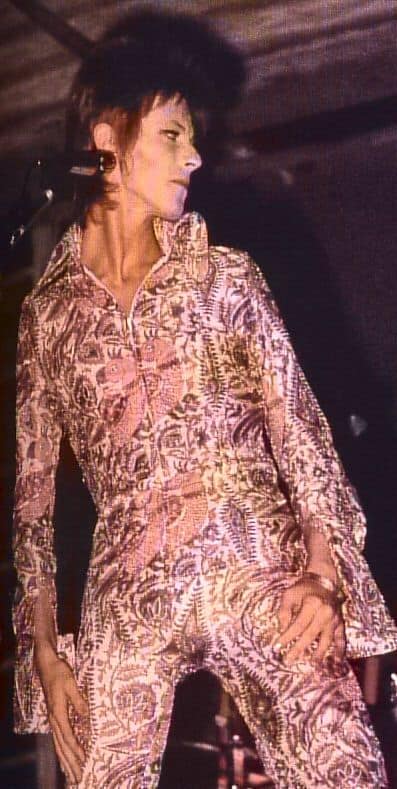
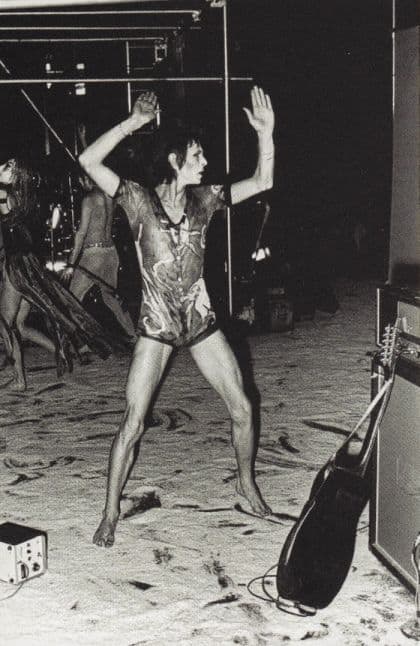
David Bowie – Starman Over The Rainbow is an unofficial Savage Hippo Records release, catalogue number SH118, featuring Bowie's performance at the Rainbow Theatre in London on 19 August 1972. The concert was one of the most ambitious productions of the early Ziggy Stardust Tour, combining the music of the Spiders from Mars with the theatrical imagination of Lindsay Kemp. The performance incorporated mime, dancers, elaborate costumes, projected images and a multi-level stage, creating an unusually dramatic presentation of Bowie's music.
With a stated running time of 2 hours, 26 minutes and 6 seconds, this edition combines the Rainbow Theatre audience recording with BBC performances and additional material attributed to the early 1970s. Although the main concert recording suffers from noise and a dull tonal balance, it remains listenable and preserves an important moment in Bowie's artistic development. The compilation also contains several bonus tracks whose recording details or performer attributions require caution, making it valuable both as a concert document and as an example of the complexities surrounding unofficial Bowie releases.
Sound Quality Rating
Key Facts
Artist: David Bowie
Title: Starman Over The Rainbow (Diedrich)
Concert Date: 19 August 1972
Venue: Rainbow Theatre, Finsbury Park, London, England
Tour: Ziggy Stardust Tour
Catalogue Number: SH118
Bonus Sources: BBC sessions and miscellaneous recordings
Recording Lineage: Not documented
Tracklisting – Rainbow Theatre, 19 August 1972
The main concert occupies tracks 101–116 and 201–204. The numbering below follows the supplied edition, with obvious spelling errors in song titles corrected.
Disc One – Rainbow Theatre Concert
101. Intro – Theme From A Clockwork Orange
102. Lady Stardust
103. Hang On To Yourself
104. Ziggy Stardust
105. Life On Mars?
106. The Supermen
107. Changes
108. Five Years
109. Space Oddity
110. Andy Warhol
111. My Death
112. The Width Of A Circle
113. Wild Eyed Boy From Freecloud
114. Starman
115. Queen Bitch
116. Suffragette City
Disc Two – Rainbow Theatre Concert
201. White Light/White Heat
202. Waiting For The Man
203. Band Introductions
204. Moonage Daydream
Bonus Tracks – BBC Sessions and Additional Recordings
The following bonus sequence reproduces the numbering supplied with this edition. The original listing contains duplicate numbers 208 and 216; these are deliberately retained rather than silently renumbering the recordings.
205. Waiting For The Man – BBC, January 1972
206. Queen Bitch – BBC, January 1972
207. Changes – BBC, May 1972
208. Andy Warhol – BBC, May 1972
208. Oh! You Pretty Things – BBC, May 1972
209. Lady Stardust – BBC, May 1972
210. White Light/White Heat – BBC, January 1972
211. Waiting For The Man – BBC, January 1972
212. Queen Bitch – BBC, January 1972
213. Something Happens
214. Don't Be Afraid
215. All The Young Dudes
216. Starman
216. Sweet Jane
217. All The Young Dudes
218. Don't Be Afraid
Bonus Track Documentation and Attribution
The bonus section combines recordings associated with Bowie's BBC appearances in 1972 with material presented as studio recordings, demos or alternative versions.
The original notes identify Something Happens as Something Happens When You Touch Me, associated with Colin Blunstone. They also identify Don't Be Afraid as a recording called Oh! Darlin' by the band Czar.
These identifications are preserved as information supplied with the release, but the actual performances have not been independently authenticated here. It would therefore be premature to state conclusively that Bowie does or does not sing on the particular audio files included in this edition.
The track titles remain in their original positions, allowing collectors to compare the recordings directly with other circulating editions.
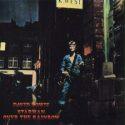
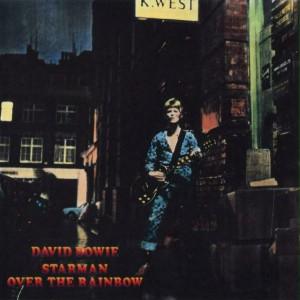
Original Artwork – Savage Hippo Records SH118
The following six images reproduce the original artwork associated with the Savage Hippo Records edition. The original proportions and red borders are retained, with a maximum display height of 300 pixels.


19 August 1972 – The Rainbow Theatre Concert
By the summer of 1972, David Bowie had transformed his public image through the character of Ziggy Stardust. The release of The Rise and Fall of Ziggy Stardust and the Spiders from Mars in June had brought increasing attention to Bowie and his musicians, while Starman introduced his new appearance to a wider television audience.
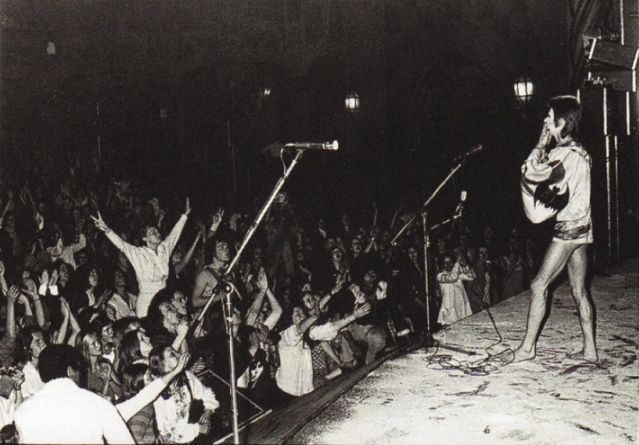
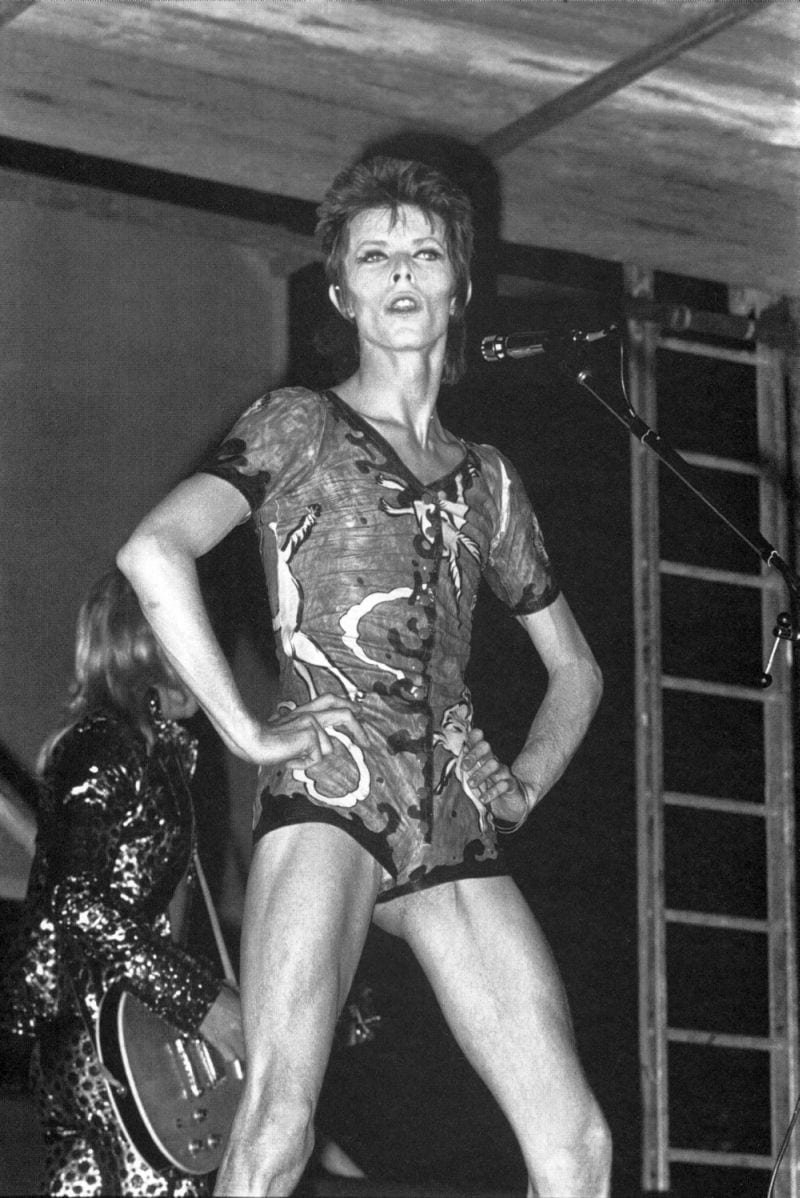
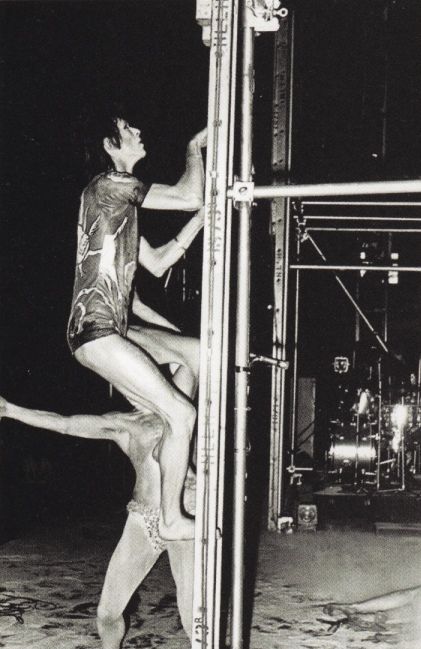
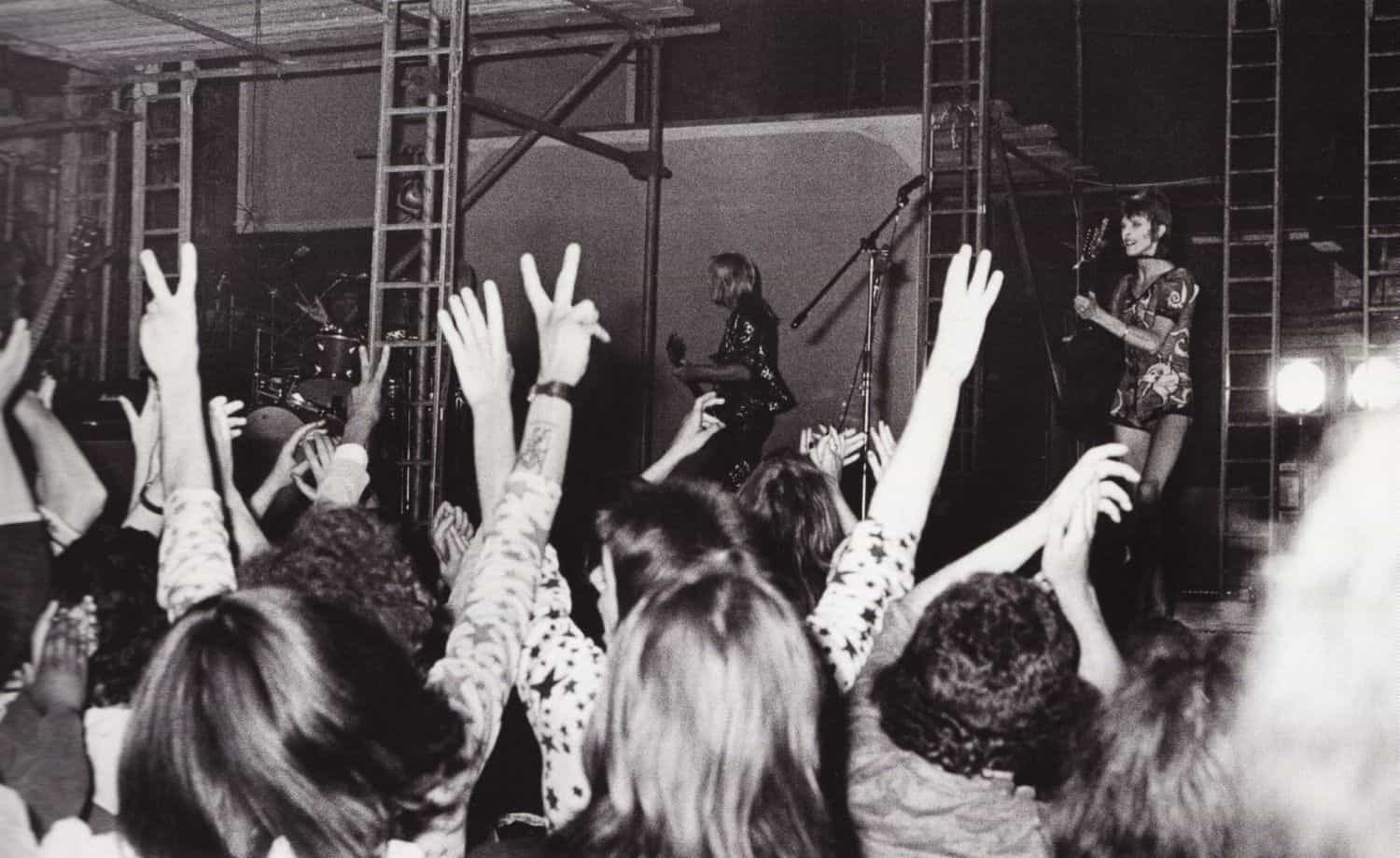
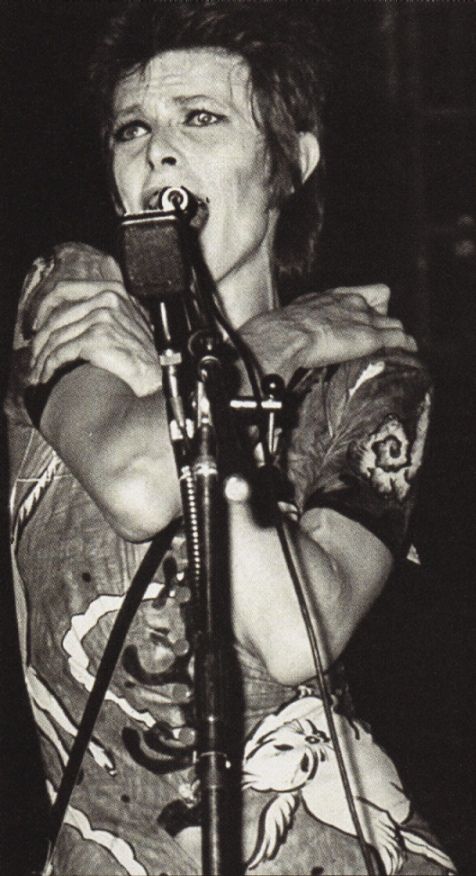
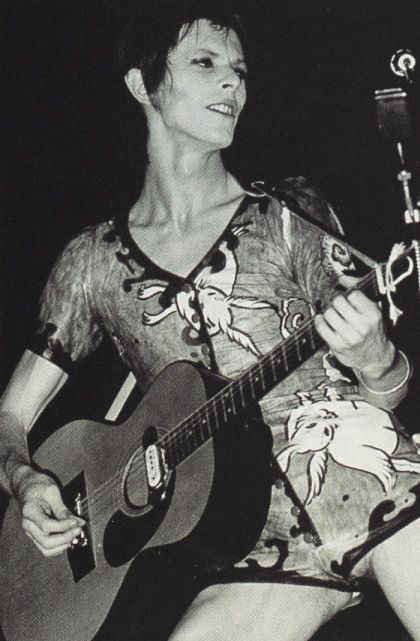
The Rainbow Theatre concerts on 19 and 20 August offered Bowie an opportunity to expand the Ziggy Stardust presentation into a more ambitious theatrical production.
Rather than relying solely on the music and costumes, Bowie worked with Lindsay Kemp and his company to incorporate mime, dance, lighting and dramatic movement.
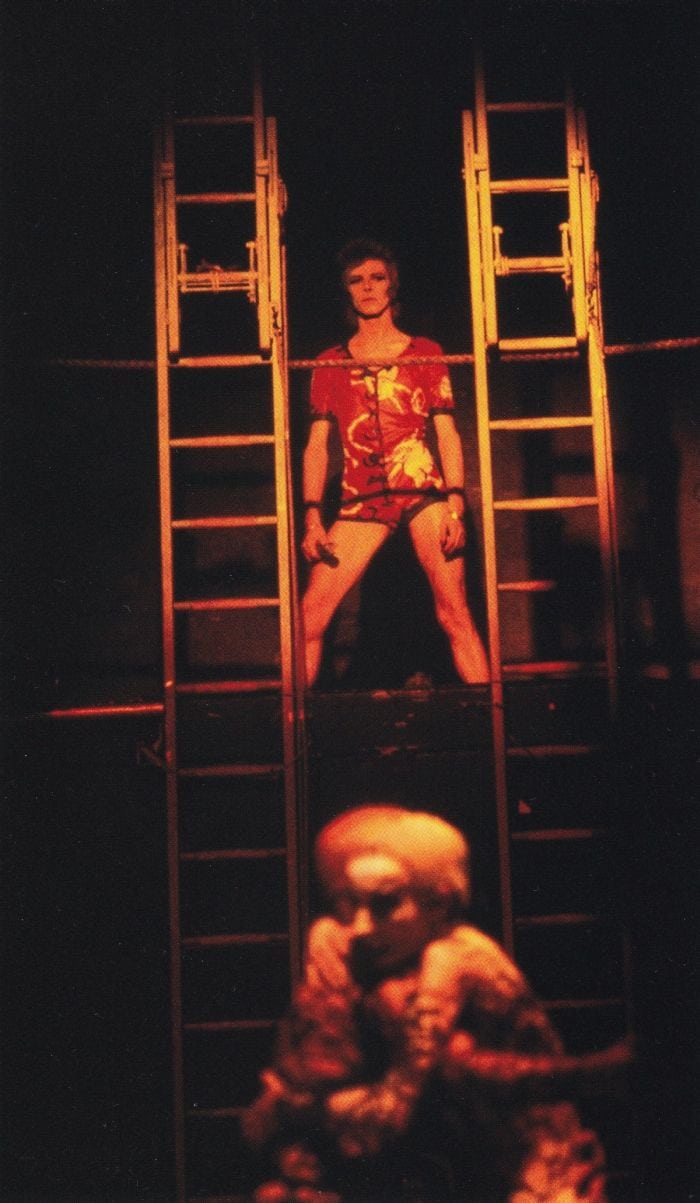
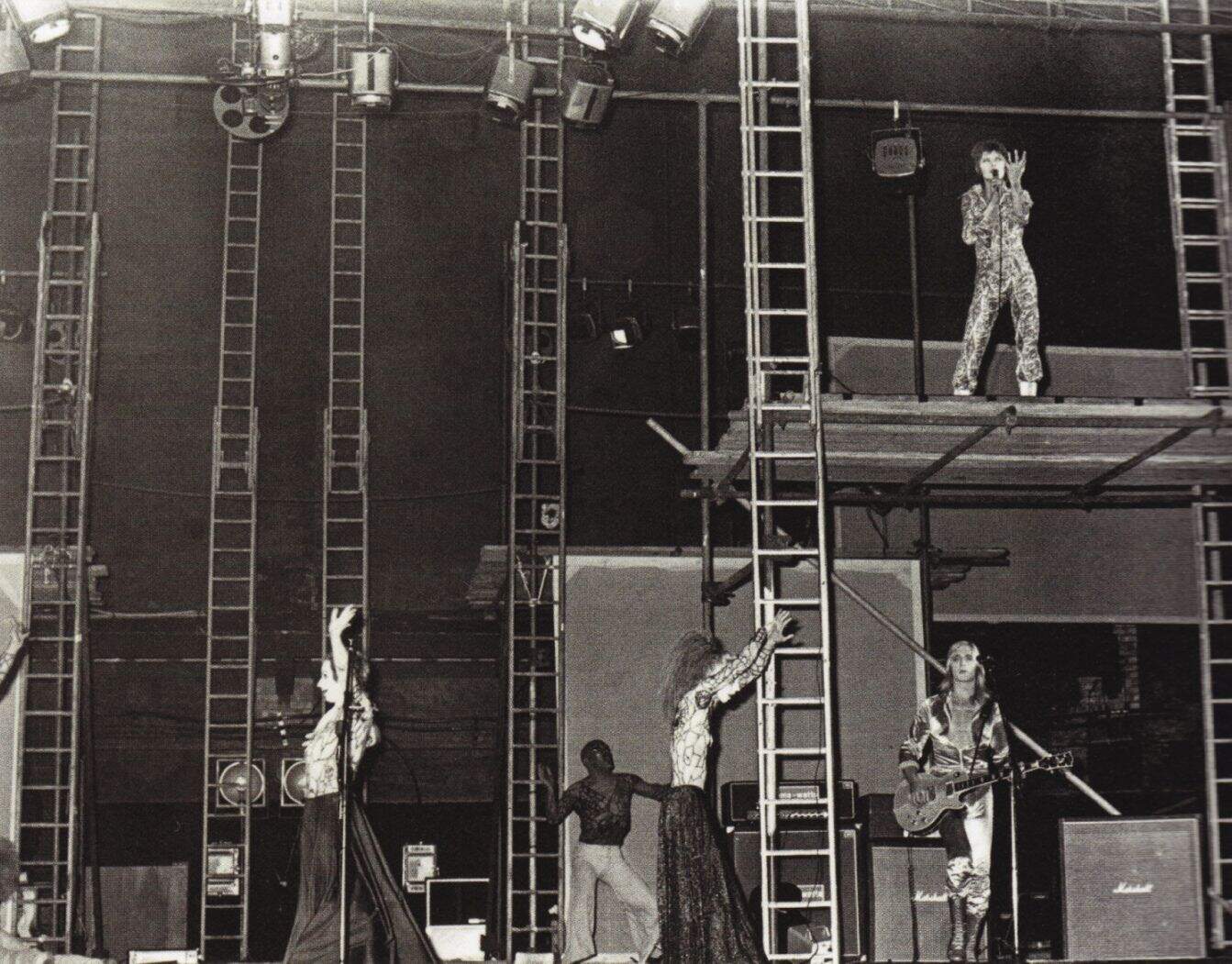
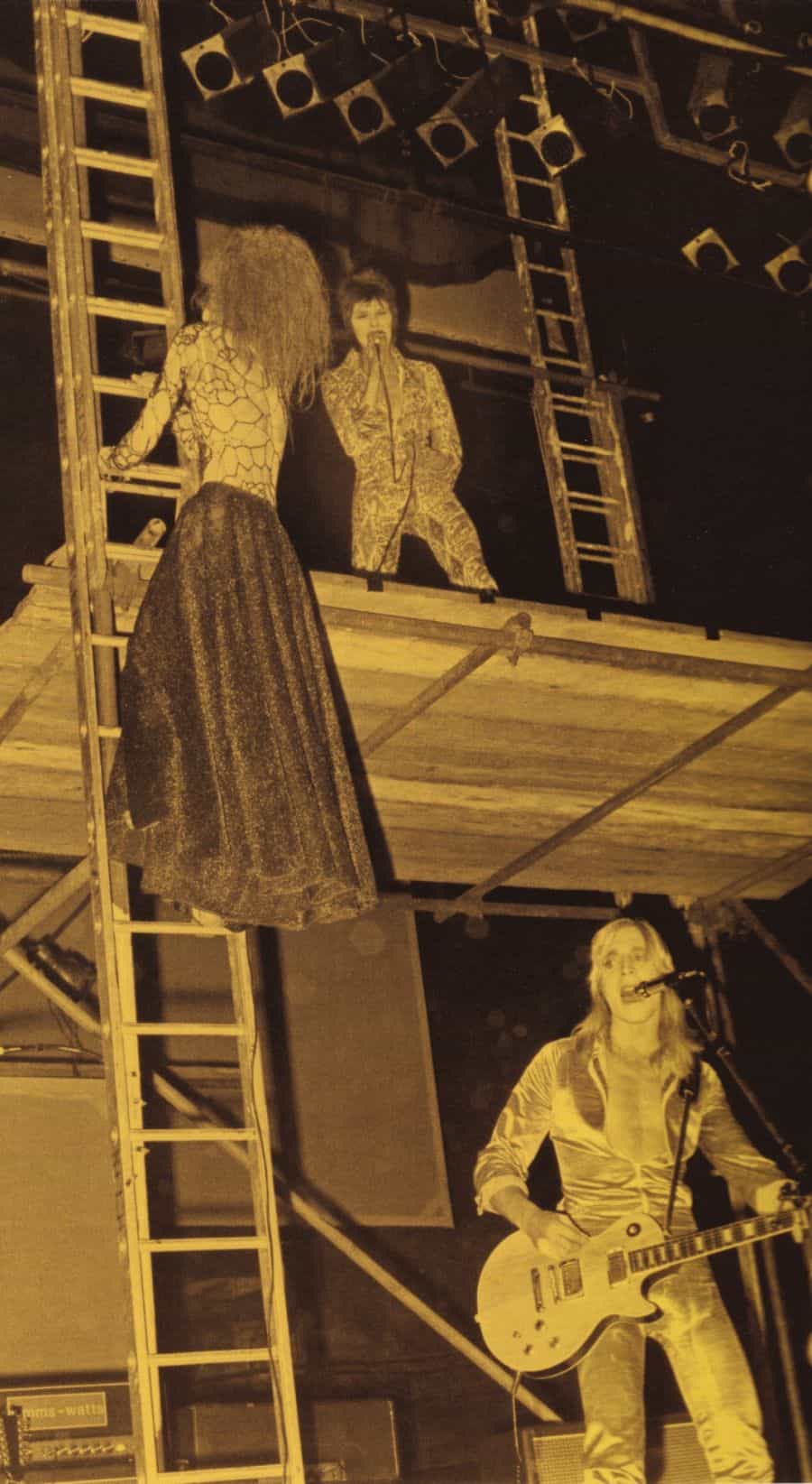
The production used a multi-level stage structure, allowing performers to appear at different heights and to move between platforms during the songs.
The surviving audience recording cannot reproduce the visual spectacle, but it preserves the musical sequence and spoken moments that accompanied the performance.
Lindsay Kemp and the Theatrical World of Ziggy Stardust
Lindsay Kemp had played an important role in Bowie's artistic development during the late 1960s. Through his work with Kemp, Bowie had explored mime, movement and theatrical characterisation.
Those experiences helped shape the visual language of Ziggy Stardust, whose appearance and behaviour were as important to the presentation as the songs themselves.
At the Rainbow Theatre, Kemp and his company contributed choreographed sequences, elaborate costumes and dramatic appearances.
The production demonstrated how Bowie's interest in theatre could be integrated directly into a rock concert.
The involvement of the dancers also required the musicians and technical crew to coordinate their work with the changing stage presentation.
The Opening – Theme From A Clockwork Orange
The performance opened with music associated with Stanley Kubrick's film A Clockwork Orange, using the electronic arrangement of Beethoven's Ode To Joy associated with Walter Carlos, later known as Wendy Carlos.
The futuristic sound was particularly suitable for the Ziggy Stardust presentation, creating an atmosphere of anticipation before Bowie appeared.
The introductory music also connected the concert with Bowie's interest in contemporary cinema and its visual imagery.
Lady Stardust – Bowie's Dramatic Entrance
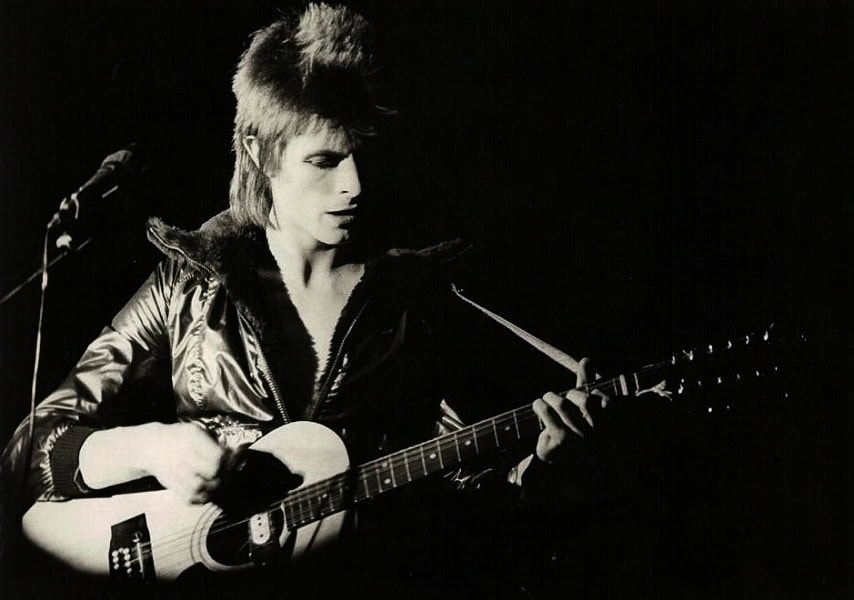
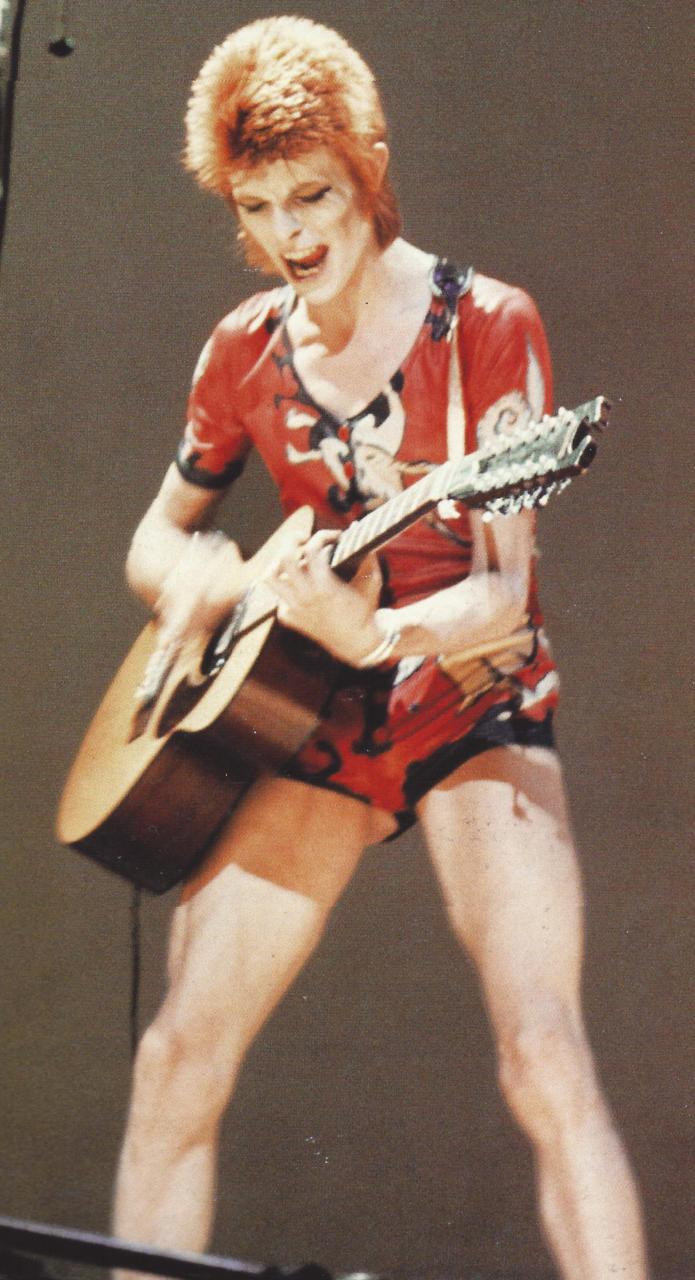
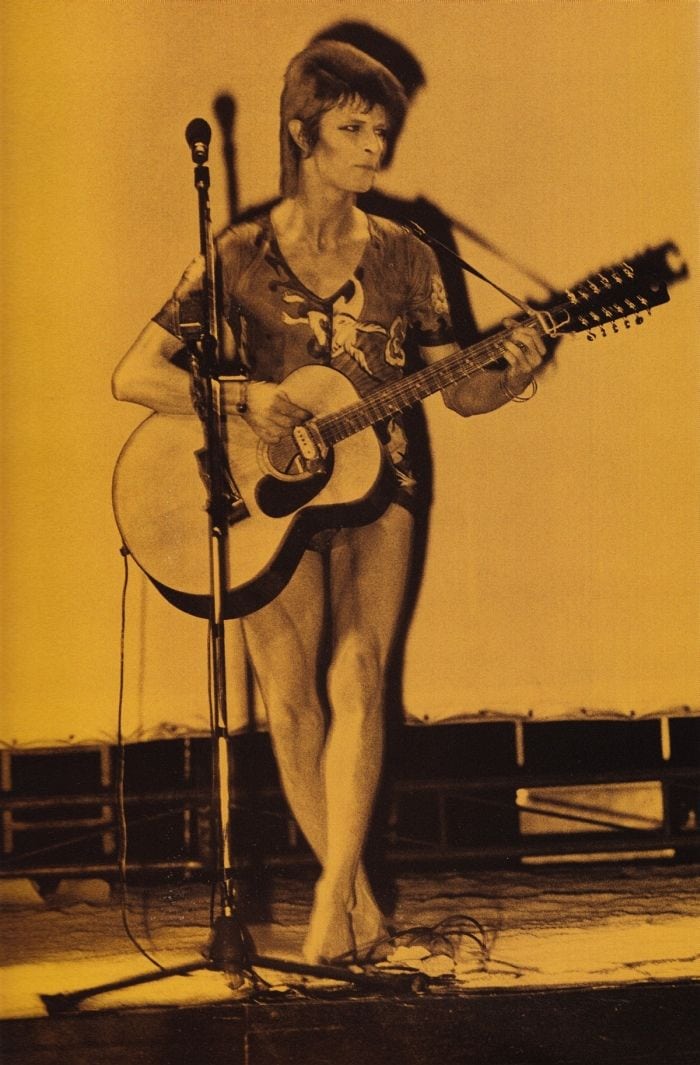
The first performed song was Lady Stardust, with Bowie appearing through theatrical fog while playing a twelve-string guitar.
The restrained opening was an unusual choice for a concert that would later feature powerful guitar-driven performances.
The song's subject, a glamorous performer attracting the attention of an audience, was closely connected with Bowie's own Ziggy Stardust identity.
The original account describes a projected image of Marc Bolan accompanying the song. Although the composition has often been associated with Bolan, its meaning should not be reduced to a single interpretation.
A contemporary account in Petticoat magazine emphasised the extraordinary visual impact of Bowie's entrance:
"the boy is beautiful"
The description captures the importance of theatrical appearance in the developing Ziggy Stardust phenomenon.
The Spiders from Mars – Hang On To Yourself and Ziggy Stardust
Following the atmospheric opening, the performance moved into Hang On To Yourself and Ziggy Stardust.
These songs demonstrated the musical strength of the Spiders from Mars, with Mick Ronson's guitar, Trevor Bolder's bass and Mick Woodmansey's drums providing the powerful arrangements that supported Bowie's vocals.
Hang On To Yourself had developed from earlier Arnold Corns material into an important part of Bowie's live repertoire.
Ziggy Stardust, meanwhile, introduced the fictional rock star whose story formed the centre of Bowie's latest album.
The contrast between the opening ballad and the following rock performances gave the concert a strong musical and theatrical progression.
Life On Mars?, The Supermen and Changes
The Rainbow programme included material from several stages of Bowie's early recording career.
Life On Mars? and Changes came from Hunky Dory, while The Supermen originated on The Man Who Sold The World.
These selections demonstrated that the Ziggy Stardust concerts were not limited to the new album.
The Spiders from Mars adapted the earlier material to their live sound, connecting songs written in different circumstances through a consistent musical approach.
Five Years – The Costume Change
One of the distinctive features of the Rainbow performance occurred during the transition from Changes to Five Years.
According to the original concert account, Mick Woodmansey extended the drum introduction while Bowie changed costume and moved through the stage structure.
The multi-level arrangement allowed Bowie to reappear above the main performance area, creating a dramatic visual effect.
This sequence illustrates how the music was coordinated with the practical demands of the theatrical presentation.
The audience recording preserves the extended introduction, although the physical movement and costume change can only be understood through accompanying descriptions.
Space Oddity and Andy Warhol
Space Oddity remained one of Bowie's most recognisable songs in 1972.
Its narrative of space travel fitted naturally into the science-fiction imagery surrounding Ziggy Stardust.
The Rainbow performance included Bowie and Mick Ronson using vocal effects to imitate elements of the spacecraft launch sequence.
Andy Warhol, from Hunky Dory, reflected Bowie's fascination with contemporary art, celebrity and visual identity.
Together, the songs connected the theatrical presentation with themes that had been developing throughout Bowie's earlier work.
My Death – The Jacques Brel Connection
My Death was one of the most dramatic selections in the Rainbow programme.
Originally written by Jacques Brel as La Mort, the song reached English-speaking audiences through adaptations associated with the theatrical revue Jacques Brel Is Alive and Well and Living in Paris.
Bowie's interest in Brel reflected his attraction to cabaret, dramatic songwriting and European theatrical traditions.
The surviving recording preserves his introduction to the song:
"This is a Jacques Brel number..."
The performance provided a contrast with the heavier material elsewhere in the concert.
Its dramatic vocal interpretation also demonstrated how Bowie could command an audience without relying on elaborate instrumental arrangements.
The Width Of A Circle – Mick Ronson's Guitar
The Width Of A Circle was one of the most expansive compositions in Bowie's early live repertoire.
Originally released on The Man Who Sold The World, the song provided a substantial showcase for Mick Ronson's guitar playing.
Its extended instrumental passages and changing sections distinguished it from the shorter compositions associated with the Ziggy Stardust album.
At the Rainbow, the performance balanced the elaborate theatrical presentation with the musical strength of the Spiders from Mars.
Wild Eyed Boy From Freecloud – A Rare Live Selection
Wild Eyed Boy From Freecloud was an unusual choice for the Ziggy Stardust Tour.
The song originally appeared on Bowie's 1969 album and is notable for its elaborate narrative and dramatic musical structure.
Its inclusion at the Rainbow was particularly appropriate because the theatrical production offered a setting in which the song's storytelling qualities could be emphasised.
The surviving performance is valuable to collectors because the composition was not a regular feature of Bowie's later concert repertoire.
Starman – Lindsay Kemp and the Rainbow Theatre
Starman had become one of Bowie's defining songs during the summer of 1972.
At the Rainbow, Lindsay Kemp contributed a theatrical interpretation of the mysterious visitor described in the lyrics.
Contemporary accounts describe Kemp appearing in costume with wings and a wig, using the stage structure to create a dramatic visual presence.
Bowie also introduced a playful reference to Over The Rainbow, acknowledging the name of the venue.
This moment helped establish the connection between the performance and the title under which several unofficial recordings of the concert would later circulate.
Queen Bitch and Suffragette City
The later part of the concert returned to the direct rock sound of the Spiders from Mars.
Queen Bitch, from Hunky Dory, reflected Bowie's admiration for the Velvet Underground and the guitar-driven sound associated with the New York group.
Suffragette City provided another energetic performance, driven by the rhythm section and Mick Ronson's guitar.
Together, these songs maintained the musical momentum of the concert while contrasting with the more theatrical selections heard earlier.
White Light/White Heat and Waiting For The Man
The concert included two Velvet Underground compositions, White Light/White Heat and Waiting For The Man.
Bowie had been strongly influenced by Lou Reed and the Velvet Underground during the late 1960s and early 1970s.
Their music offered an alternative to conventional British rock, combining direct arrangements with unusual lyrical subjects.
The Spiders from Mars transformed these songs into forceful live performances, with Mick Ronson's guitar giving them a harder rock character.
Their inclusion also demonstrated the continuing influence of the New York music scene on Bowie's developing sound.
Band Introductions and Moonage Daydream
After the Velvet Underground selections, Bowie addressed the audience and acknowledged the musicians and theatrical performers who had contributed to the evening.
His remarks included thanks to the Spiders from Mars, the dancers and Lindsay Kemp.
The encore was Moonage Daydream, one of the defining songs from the Ziggy Stardust album.
Bowie introduced the number with the words:
"This is one of Ziggy's numbers."
The performance brought the concert to a powerful conclusion, with Mick Ronson's guitar playing taking a prominent role.
The BBC Recordings – Bowie's Radio Work in 1972
The bonus material on Starman Over The Rainbow broadens the collection beyond the Rainbow Theatre concert.
During the early 1970s, BBC radio sessions played an important role in introducing Bowie's music to listeners.
These performances often featured live-in-the-studio arrangements that differed from the commercial album recordings.
Songs such as Queen Bitch, Waiting For The Man, Andy Warhol and Lady Stardust illustrate the range of material Bowie was performing during this period.
The BBC selections also demonstrate how the Spiders from Mars developed their arrangements in parallel with Bowie's studio work and live appearances.
However, the exact recording date and source of each bonus track should be established from original BBC documentation rather than relying exclusively on unofficial sleeve descriptions.
All The Young Dudes, Sweet Jane and Starman
The inclusion of All The Young Dudes, Sweet Jane and an additional version of Starman reflects important musical connections in Bowie's career.
Bowie wrote All The Young Dudes for Mott the Hoople, whose recording became a major hit in 1972.
Sweet Jane, written by Lou Reed, was originally recorded by the Velvet Underground. Bowie and Mick Ronson later became closely involved with Reed's solo career through their work on Transformer.
Starman was central to Bowie's commercial breakthrough during the summer of 1972.
Although these songs belong to the wider musical context of Bowie's activities during this period, the exact identity of the individual bonus versions on this compilation has not been independently established.
Sound Quality and Recording Limitations
The principal Rainbow Theatre recording is an audience source with considerable noise and a dull tonal balance.
The sound lacks the clarity and instrumental separation of a professional recording, and some passages are more difficult to hear than others.
Nevertheless, the recording preserves the sequence of songs, Bowie's spoken introductions and elements of the interaction between the performers and audience.
The bonus recordings originate from different sources and should not be judged as though they were recorded under the same conditions as the concert.
The overall three-star rating reflects the limitations of the principal audience recording while recognising its historical importance.
David Bowie Tour Band – Rainbow Theatre, 19 August 1972
The musical personnel documented for the Rainbow Theatre performance were:
David Bowie – Lead vocals, guitar, harmonica
Mick Ronson – Lead guitar, backing vocals
Trevor Bolder – Bass guitar
Mick "Woody" Woodmansey – Drums
Matthew Fisher – Piano
Lindsay Kemp – Mime, choreography and theatrical performance
The Astronettes and Lindsay Kemp's company – Dance and theatrical presentation
The keyboard personnel deserve particular attention. Nicky Graham was associated with the August 1972 touring period, but historical accounts identify Matthew Fisher as the pianist for the Rainbow Theatre performances of 19 and 20 August.
Nicky Graham – Piano; associated with the surrounding touring period, but not confirmed here as a performer at the 19 August concert.
Other musicians associated with different stages of the Ziggy Stardust Tour are not automatically listed as performers at this specific concert.
Crew and Technical Production
The Rainbow Theatre production required extensive technical support for sound, lighting, stage equipment, costumes and the coordination of the theatrical performers.
Personnel associated with the wider Ziggy Stardust touring operation include:
Robin Mayhew – Sound engineering
Mick Hince – Touring and technical support
Peter Hunsley – Stage equipment
Suzi Fussey – Hair, makeup and wardrobe
Other names appearing in the original touring notes include Will Palin, Dean Heiser, Nigel Olliff, Nick Gilbey and Paul Normand. Their precise individual assignments at this specific Rainbow performance have not been independently confirmed.
Video – David Bowie at the Rainbow Theatre, 1972
The following video is retained from the original page as additional material associated with Bowie's Rainbow Theatre performances.
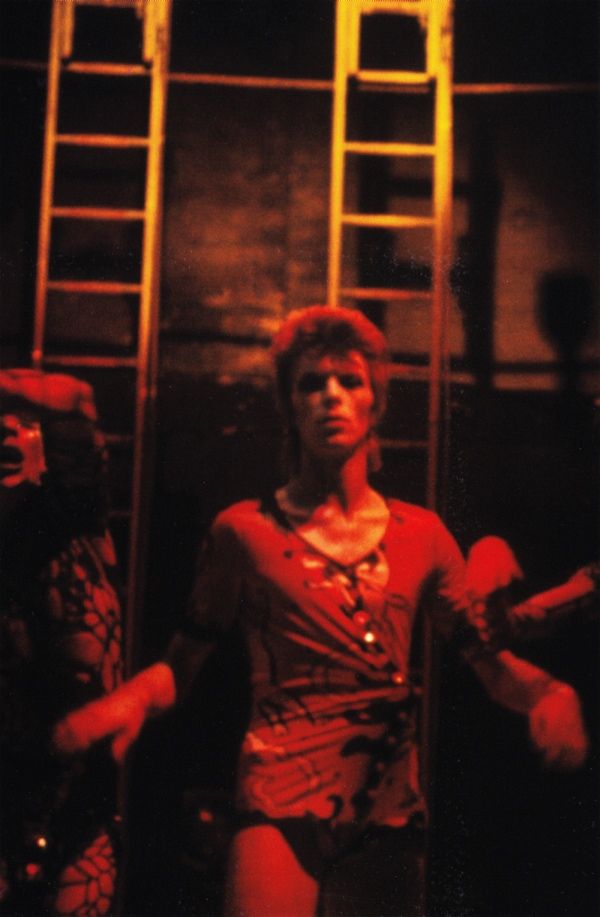
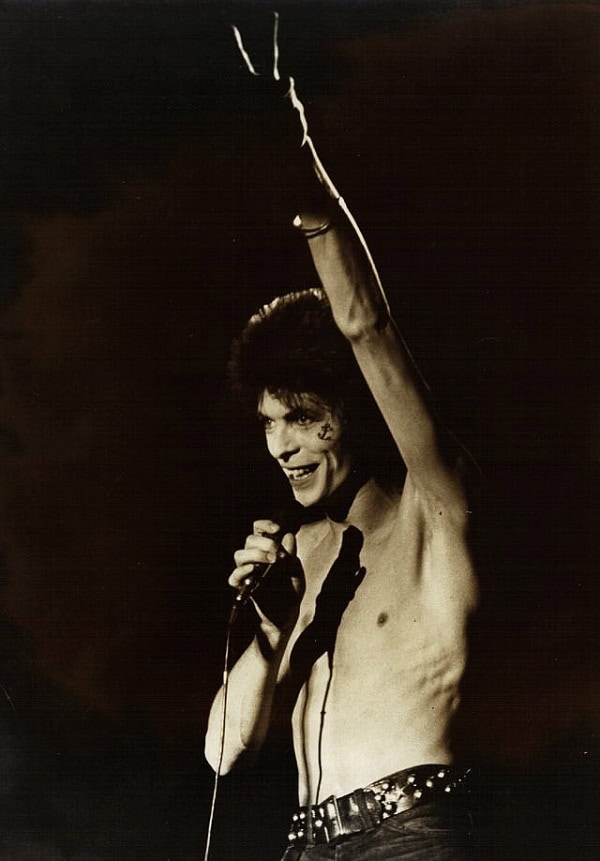
Rainbow Theatre – Photographic Archive
The following photographic slider contains additional visual material associated with the Rainbow Theatre performances.
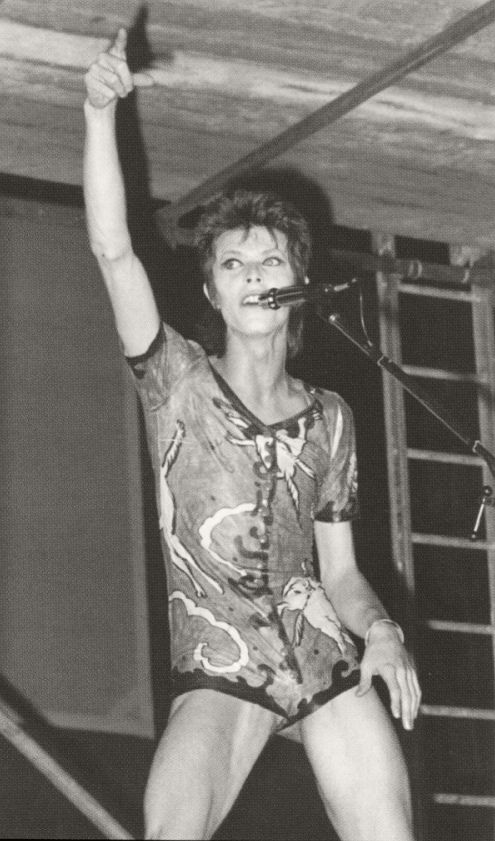
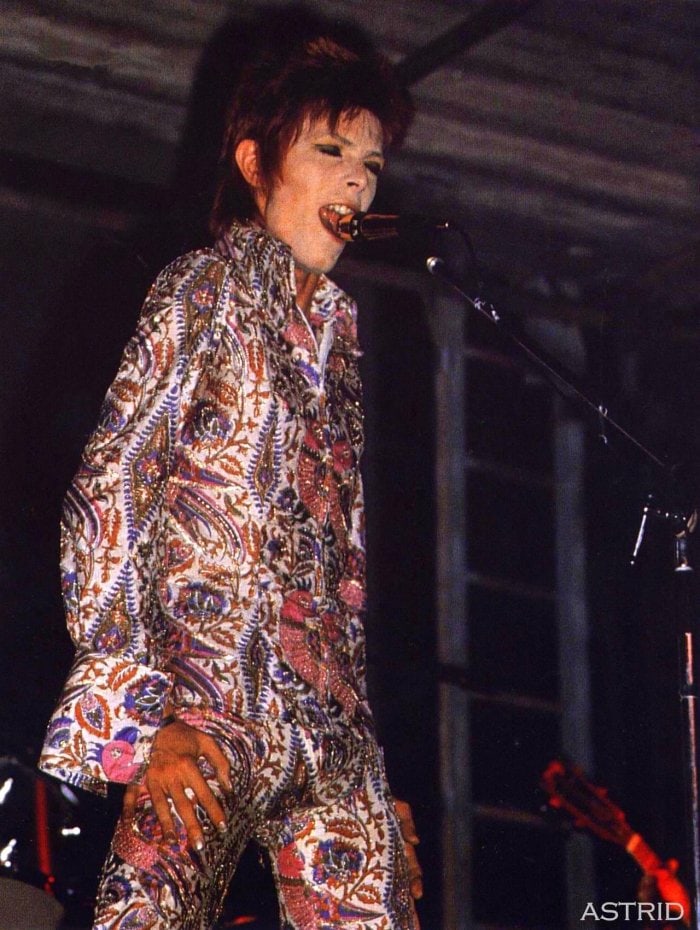
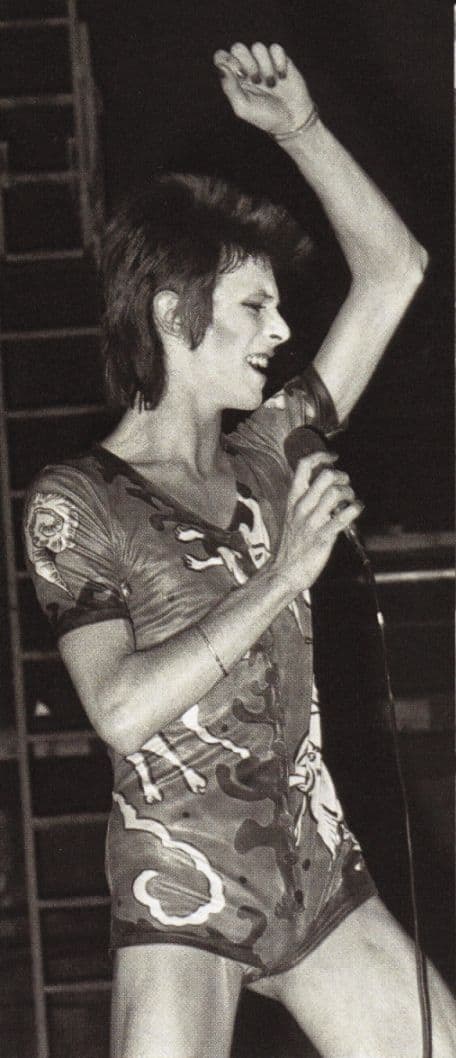
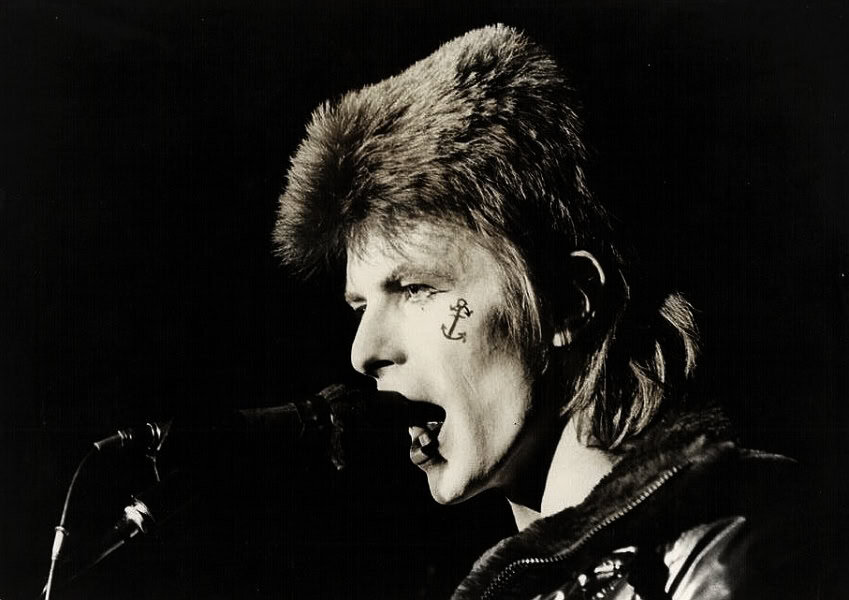
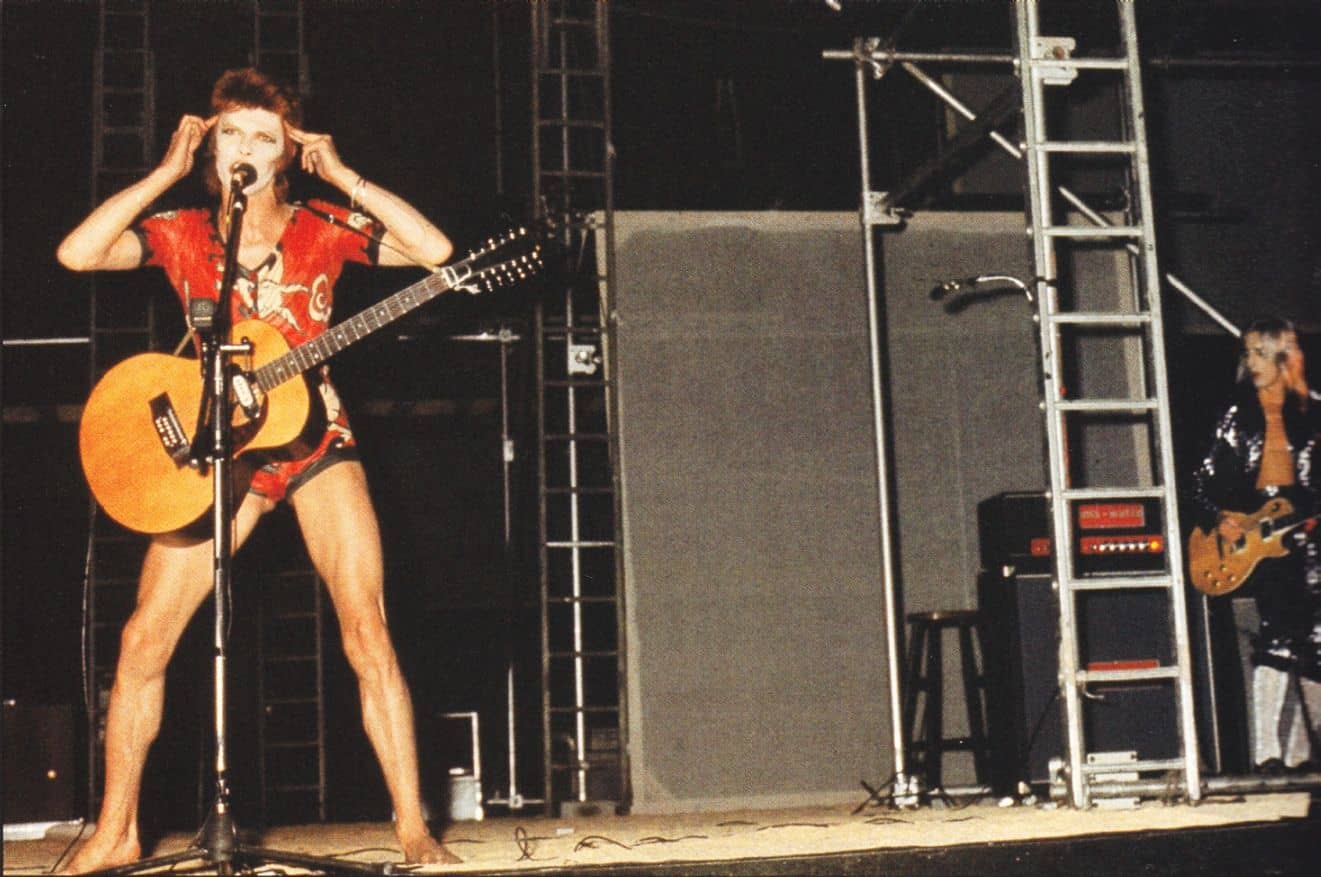
Starman Over The Rainbow – Digital Archive Booklet
The following original digital flipbook is retained from this edition of the page.
[real3dflipbook id="96"]
Additional Rainbow Theatre Artwork
The following four images are preserved from the original page, retaining their original proportions, red borders and maximum display height of 300 pixels.


Concert Setlist – Rainbow Theatre, 19 August 1972
The following external setlist reference provides an additional resource for comparing the surviving recording with published concert documentation.
Collector's Notes – Savage Hippo Records SH118
Starman Over The Rainbow is one of several unofficial releases documenting Bowie's 19 August 1972 Rainbow Theatre performance.
This edition is identified as Savage Hippo Records SH118 and has a stated running time of 2:26:06.
The main concert recording is accompanied by BBC performances and miscellaneous bonus material, distinguishing the compilation from editions that contain only the Rainbow Theatre concert.
The original tracklisting includes duplicate numbering in the bonus section, and some of the recording attributions require further verification.
The source information does not establish a complete tape lineage or mastering history. It is therefore not possible to determine from the supplied documentation alone whether this edition derives from a unique audience tape or from another circulating transfer.
These limitations are important for collectors comparing different releases of the same concert.
Historical Significance – The Rainbow Theatre and Ziggy Stardust
The Rainbow Theatre performances of August 1972 represented an important development in Bowie's approach to live music.
The production brought together the Spiders from Mars, Lindsay Kemp's theatrical company and a stage design that incorporated multiple levels, dramatic lighting and projected imagery.
It also demonstrated the versatility of Bowie's repertoire, combining material from The Man Who Sold The World, Hunky Dory and The Rise and Fall of Ziggy Stardust and the Spiders from Mars.
The participation of Matthew Fisher added another musical dimension to the performances, while Kemp's involvement reconnected Bowie with an important influence from his earlier theatrical work.
Although the surviving audience recording cannot reproduce the complete visual spectacle, it preserves the musical structure and spoken moments that formed part of the evening.
For historians and collectors, the concert provides evidence of Bowie's transition from a singer presenting songs to an artist constructing an integrated musical and theatrical experience.
About Starman Over The Rainbow – 19 August 1972
David Bowie – Starman Over The Rainbow (Diedrich) documents the Rainbow Theatre concert of 19 August 1972 in an unofficial edition issued by Savage Hippo Records, catalogue number SH118.
The release combines the principal audience recording with BBC and miscellaneous bonus material, with a stated total running time of 2:26:06.
Its sound quality is limited by audience noise and a dull tonal balance, but the performance remains historically important because of the elaborate theatrical presentation involving Lindsay Kemp and the Spiders from Mars.
The bonus material broadens the collection's scope, although several recording details and performer attributions require further verification.
As a collector's document, Starman Over The Rainbow preserves an important moment in the development of Ziggy Stardust, when Bowie was beginning to combine rock music, theatrical character and elaborate stage design into a unified performance.
