
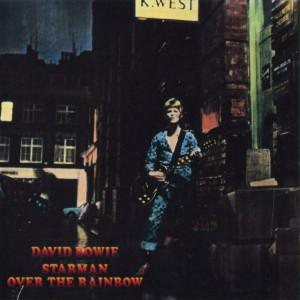
David Bowie 1972-08-19 London ,The Rainbow Theatre - Starman Over The Rainbow - SQ -8
Label: Savage Hippo Records – SH118
Audio Source: Audience recording (main concert)
Lineage: Unknown
Total running time: 2:26:06
Sound Quality: Considerable noise and dullness on the concert recording; bonus sources vary
Attendance: Approximately 3,000 (reported)
Artwork: Yes
Format: Unofficial multi-disc release
Note: Some bonus tracks are incorrectly attributed to David Bowie.
David Bowie 1972-08-19 London, The Rainbow Theatre – Starman Over The Rainbow –
David Bowie – Starman Over The Rainbow is an unofficial release on Savage Hippo Records, catalogue number SH118, built around Bowie's celebrated performance at the Rainbow Theatre in London on 19 August 1972. The concert brought together David Bowie, the Spiders from Mars and the theatrical company of Lindsay Kemp in an unusually elaborate presentation of the Ziggy Stardust character. Alongside the surviving audience recording, the release includes a collection of BBC performances and other recordings attributed to Bowie, although not every bonus-track attribution is correct.
With a stated total running time of 2 hours, 26 minutes and 6 seconds, the release combines a historically important concert with supplementary material from the early 1970s. The Rainbow recording suffers from considerable noise and a dull tonal balance, but remains listenable. Its importance lies in documenting one of the most ambitious stage productions of Bowie's breakthrough year, while the additional tracks offer a broader view of the music associated with his transition from Hunky Dory to The Rise and Fall of Ziggy Stardust and the Spiders from Mars.
Sound Quality Rating
Title: Starman Over The Rainbow
Artist: David Bowie
Main Recording: Rainbow Theatre, London, 19 August 1972
Tour: Ziggy Stardust Tour
Bonus Sources: BBC sessions and miscellaneous recordings
Catalogue Number: SH118
Starman Over The Rainbow – The Savage Hippo Records Edition
Starman Over The Rainbow is distinguished from a straightforward Rainbow Theatre concert recording by the addition of supplementary material. Savage Hippo Records assembled the surviving performance from 19 August 1972 together with BBC recordings, demos and tracks presented under other descriptions.
The release therefore combines two different kinds of material. The main concert documents Bowie and the Spiders from Mars during the theatrical expansion of the Ziggy Stardust presentation. The bonus selections, meanwhile, look back to recordings associated with Bowie's radio appearances and studio activity during 1972.
These sources should not be confused. The Rainbow performance was recorded in front of an audience, while the BBC material originated from radio sessions and broadcasts. Their recording conditions, personnel and sound characteristics are different.
The release also contains some inaccurate track descriptions. In particular, the titles Something Happens and Don't Be Afraid require correction because the recordings identified under those names are not established Bowie performances.
Tracklisting – Rainbow Theatre, 19 August 1972
The original release numbering is retained below. The first eighteen concert tracks carry numbers 101–116 and 217–220, followed by the bonus material numbered 301–316.
Main Concert Recording
101. Intro
102. Lady Stardust
103. Hang On To Yourself
104. Ziggy Stardust
105. Life On Mars?
106. The Supermen
107. Changes
108. Five Years
109. Space Oddity
110. Andy Warhol
111. My Death
112. The Width Of A Circle
113. Wild Eyed Boy From Freecloud
114. Starman
115. Queen Bitch
116. Suffragette City
217. White Light/White Heat
218. Waiting For The Man
219. Band Introduction
220. Moonage Daydream (Encore)
Bonus Recordings – BBC Sessions and Additional Material
The following titles reproduce the bonus-track sequence supplied for SH118. Dates and session descriptions are presented as release attributions rather than independent confirmation of the identity of every recording.
Sounds Of The Seventies – Kensington House, London, 11 January 1972
301. Waiting For The Man
302. Queen Bitch
Johnnie Walker Show – Aeolian Hall, London, 22 May 1972
303. Changes
304. Oh! You Pretty Things
Sounds Of The Seventies – Maida Vale Studios, London, 23 May 1972
305. Andy Warhol
306. Lady Stardust
307. White Light/White Heat
Sounds Of The Seventies – January 1972 Session Attribution
308. Waiting For The Man
309. Queen Bitch
The release associates these two tracks with 18 January 1972. Because the compilation also contains the same song titles under an 11 January session heading, the precise relationship between these entries requires confirmation from the original BBC recording documentation.
Studio, Demo and Miscellaneous Recordings
310. Something Happens – attributed as a 1971 Hunky Dory outtake
311. Don't Be Afraid
312. All The Young Dudes
313. Sweet Jane
Top Of The Pops – BBC Television, April 1972 Attribution
314. Starman – Alternative Version
Additional Studio, Demo and Miscellaneous Recordings
315. All The Young Dudes
316. Don't Be Afraid
Bonus Track Corrections – Something Happens and Don't Be Afraid
Two of the bonus-track titles require particular attention because their attribution to David Bowie is misleading.
The recording labelled Something Happens is identified in the supplied release notes as Something Happens When You Touch Me, a song associated with Colin Blunstone. It should not be presented as a verified Bowie recording or a confirmed outtake from the Hunky Dory sessions.
Similarly, Don't Be Afraid is identified in the release notes as a recording by the band Czar, under the title Oh! Darlin'. Its inclusion on a Bowie compilation does not establish Bowie as the performer.
These corrections matter because unofficial compilations sometimes circulate with incomplete or inaccurate source information. Repeated copying of an incorrect track description can eventually make an unsupported attribution appear established.
For this reason, the two titles are retained in the original tracklisting while their identification is explained separately.
Original Artwork – Starman Over The Rainbow
The following six original artwork images accompany the Savage Hippo Records edition. They are displayed at their original page scale, up to 300 pixels high, with the existing red borders retained.


19 August 1972 – Bowie Returns to the Rainbow Theatre
The Rainbow Theatre performances of 19 and 20 August 1972 marked an important development in the Ziggy Stardust stage production.
By this point, Bowie had achieved a major breakthrough with The Rise and Fall of Ziggy Stardust and the Spiders from Mars, released in June. The album's success brought growing attention to the character of Ziggy Stardust and to the band that accompanied him.
Rather than simply reproducing the existing concert presentation, Bowie sought to expand its theatrical possibilities. He invited Lindsay Kemp, with whom he had studied mime during the late 1960s, to contribute to a production involving dancers, elaborate costumes and choreographed sequences.
The result was a performance that combined the energy of the Spiders from Mars with a visual presentation closer to experimental theatre.
Lindsay Kemp and the Ziggy Stardust Theatre
Lindsay Kemp's involvement brought an important element of Bowie's earlier artistic development back into his live performances.
Kemp was an influential mime artist, dancer and theatrical director whose work combined expressive movement, elaborate costumes and dramatic visual symbolism.
Bowie's experience with Kemp had encouraged him to think about performance as the creation of a character rather than simply the presentation of songs.
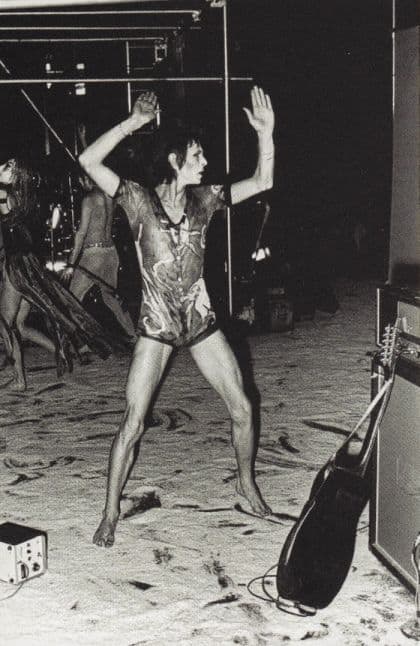
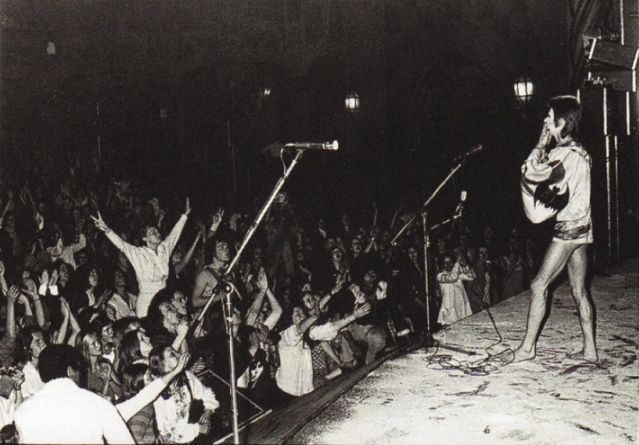
At the Rainbow, that influence became especially visible. The dancers and theatrical performers interacted with the musical presentation, while Bowie moved between the roles of singer, guitarist and stage character.
The production demonstrated how the Ziggy Stardust concept could be developed through theatrical staging without losing its connection to rock music.
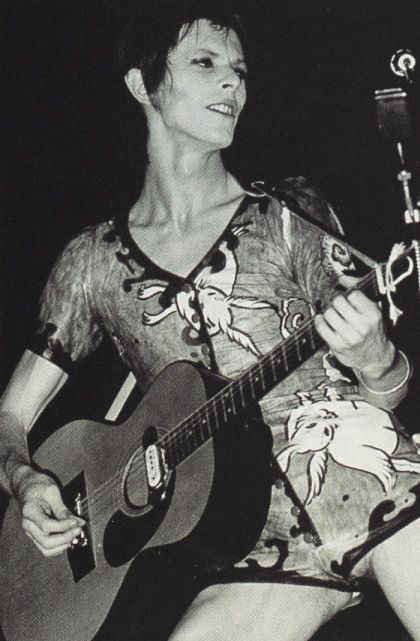
The Opening – Lady Stardust
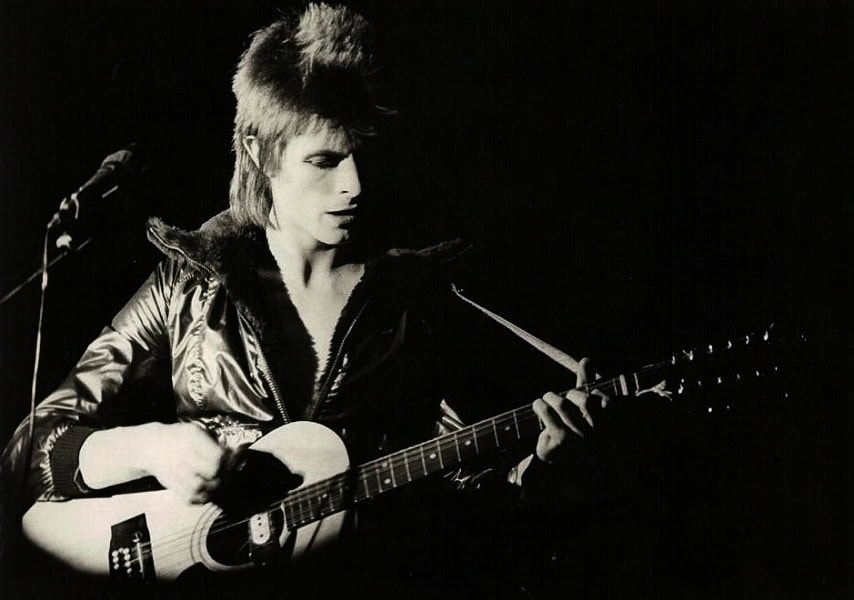
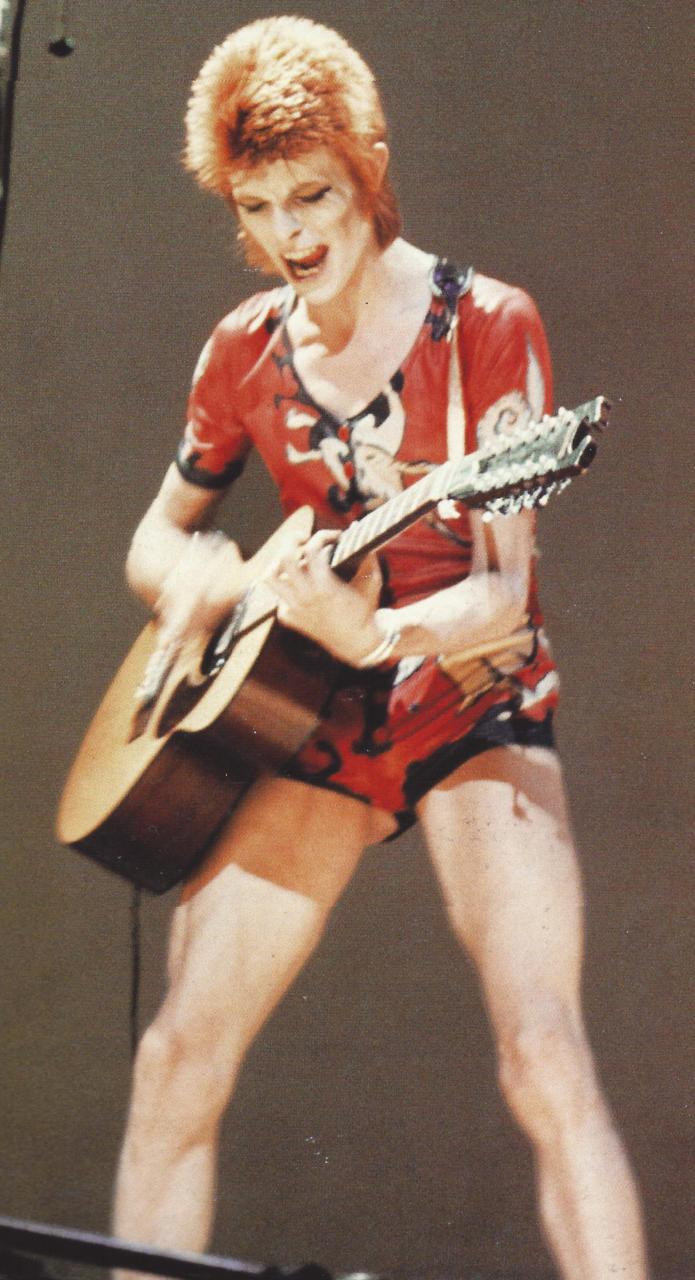
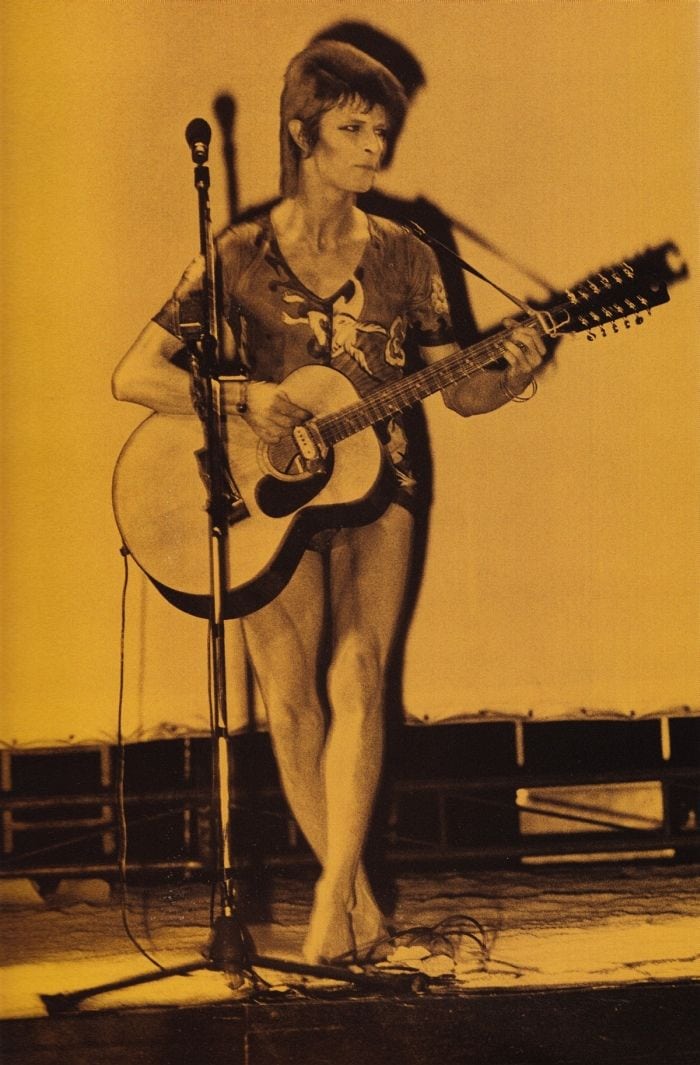
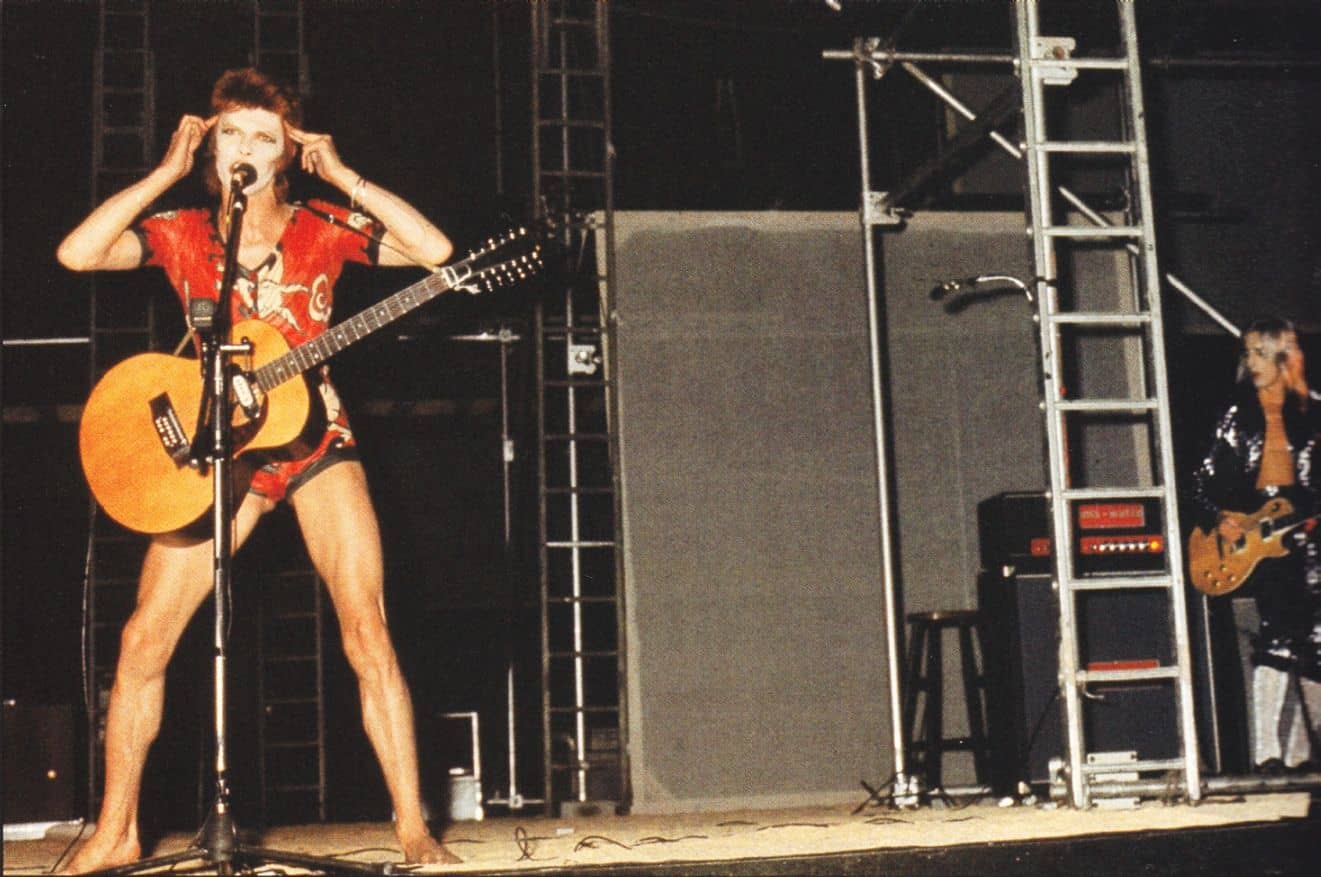
The concert began with introductory music before Bowie appeared with a twelve-string guitar to perform Lady Stardust.
The choice was striking because the song offered a restrained and theatrical introduction rather than the explosive opening normally associated with a rock concert.
Its subject, a glamorous performer attracting the attention of an audience, fitted naturally into the world Bowie was creating around Ziggy Stardust.
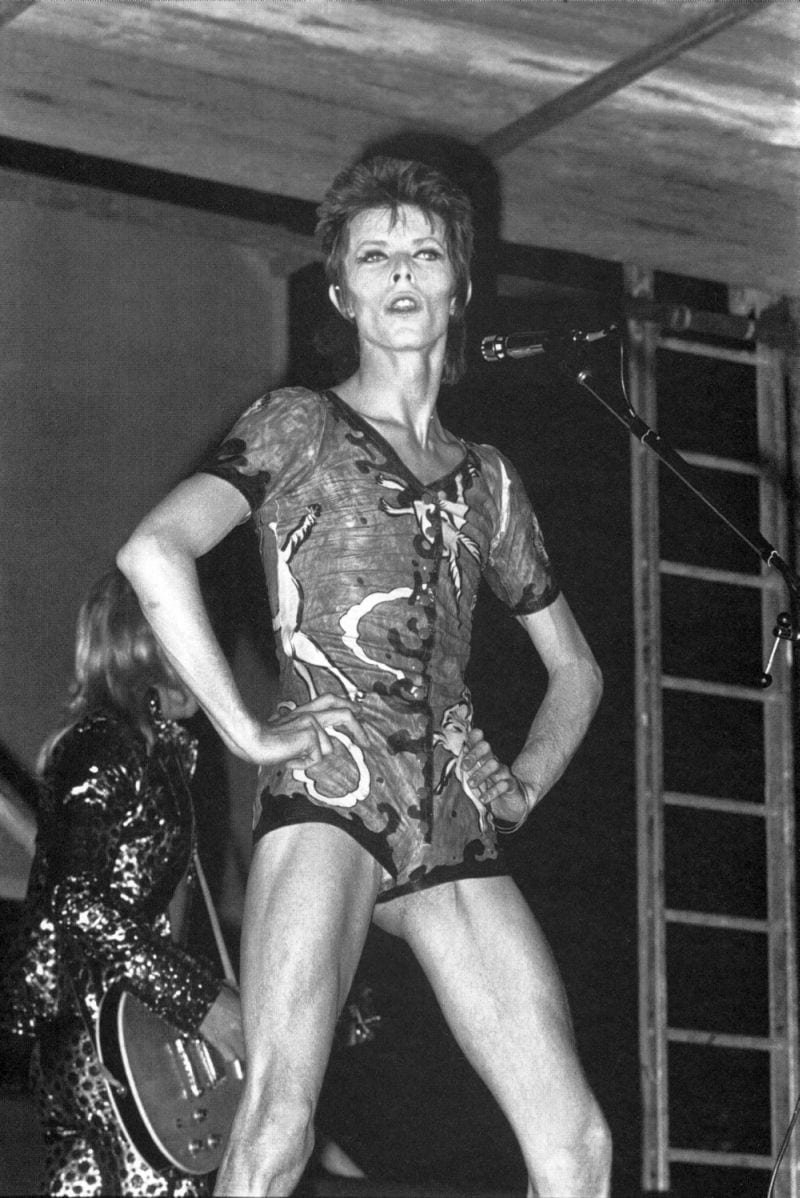
Accounts of the performance describe theatrical fog drifting across the stage and Bowie emerging into the light wearing his distinctive Ziggy Stardust costume.
The appearance of Lady Stardust in this recording is particularly interesting because the song was not a regular part of the surviving concert recordings from the period.
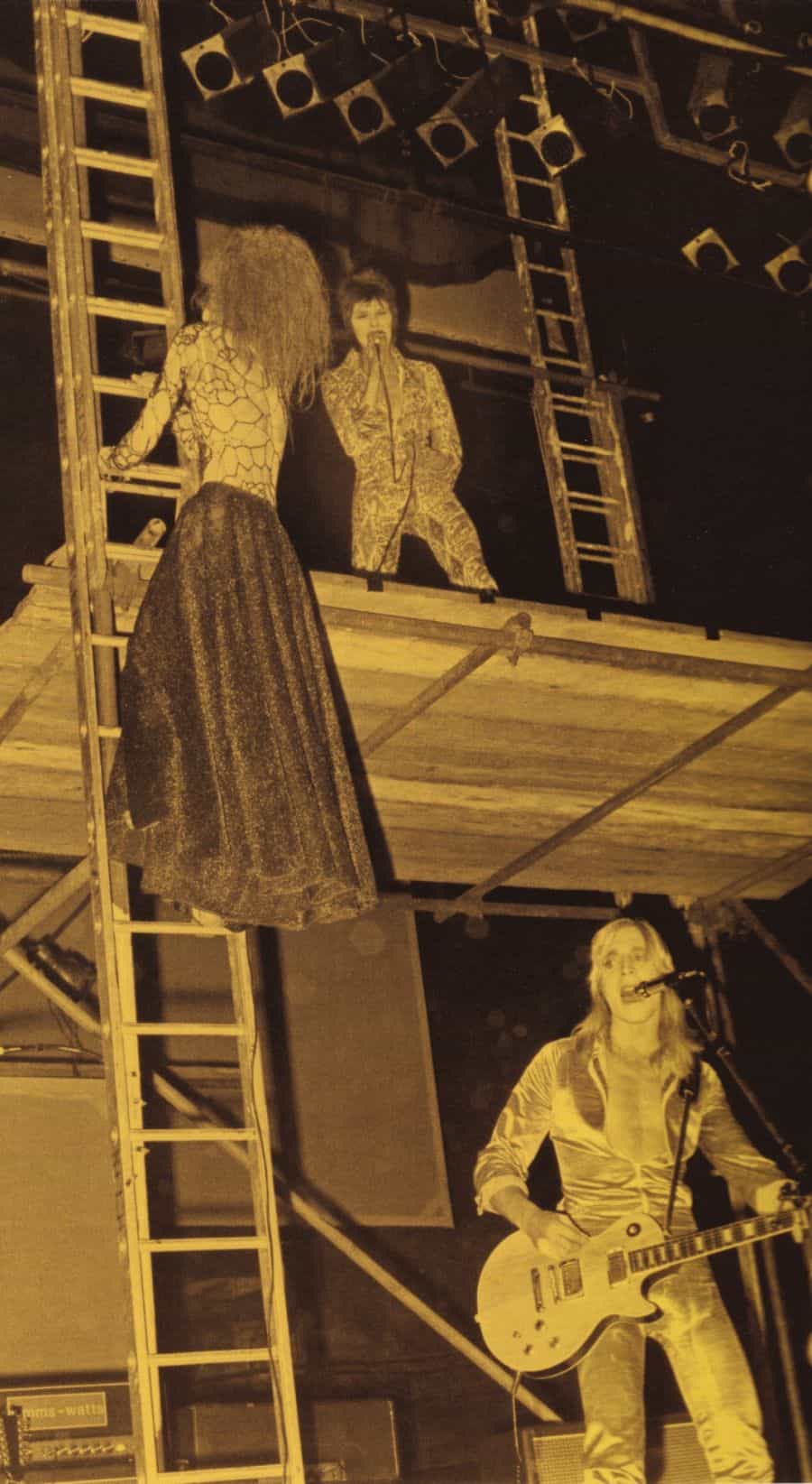
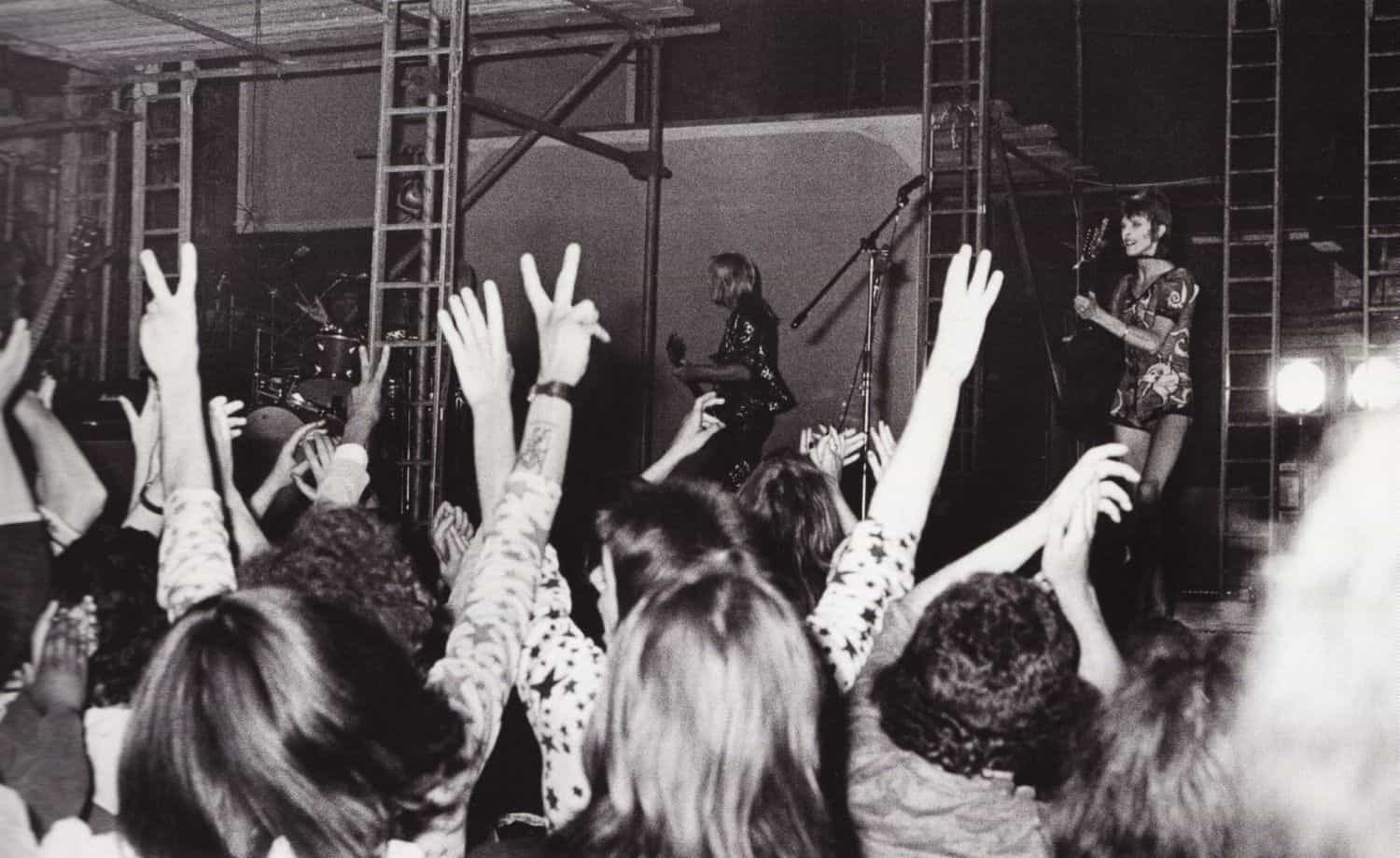
The Rainbow Stage – Scaffolding and Projected Images
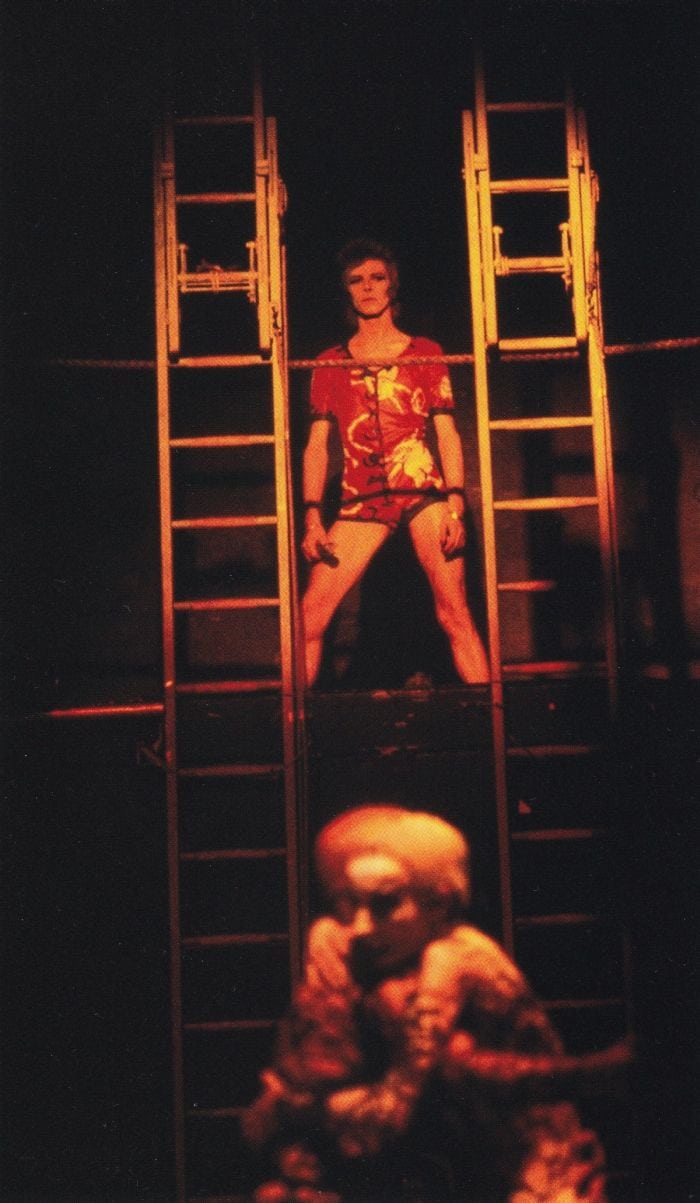
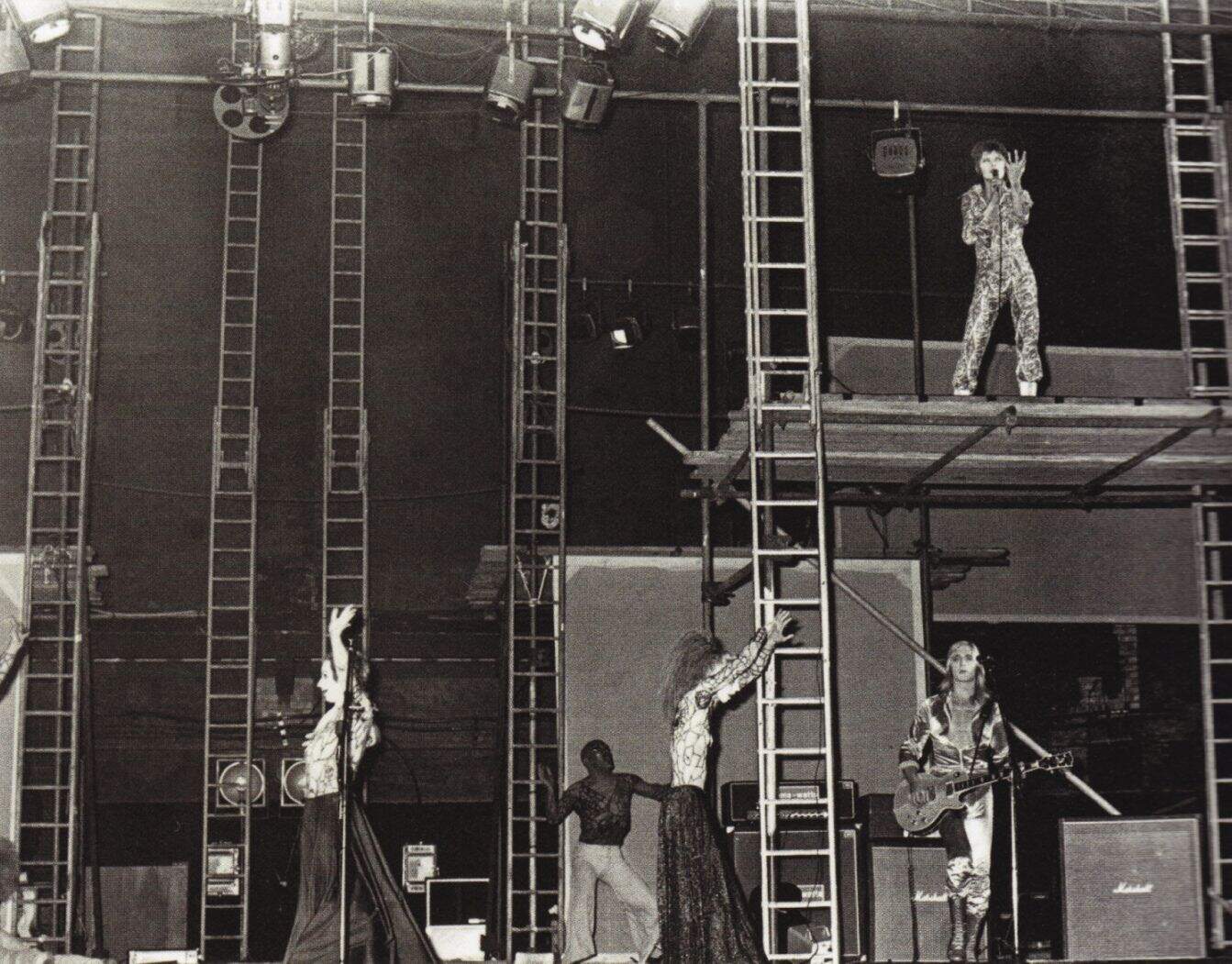
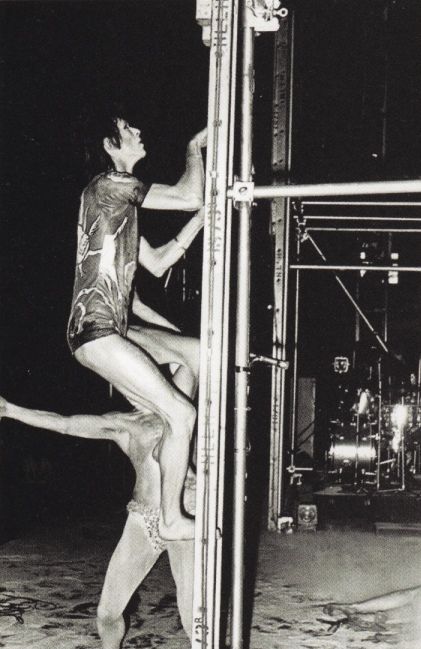
The stage design incorporated multiple levels of scaffolding, platforms and connecting ladders.
This arrangement allowed Bowie and the dancers to appear at different heights and to move through the set during the performance.
Projected imagery was used to accompany the songs, creating visual associations that extended beyond the lyrics.
The production also made extensive use of lighting and dry ice, giving the stage an atmosphere quite different from that of a conventional concert.
These elements helped transform the Rainbow performances into an early example of the large-scale theatrical rock presentation Bowie would continue to develop.
Changes and Five Years – The Costume Change
The transition between Changes and Five Years provides an example of the coordination required by the production.
Contemporary descriptions refer to Mick Woodmansey extending the drum introduction to Five Years while Bowie changed costume and moved through the stage structure.
The musical arrangement therefore served a practical theatrical purpose, allowing the performance to continue without a complete break.
Such details are significant because they demonstrate how closely the musicians and stage performers had to work together.
My Death – Bowie and Jacques Brel
One of the most important songs preserved in the recording is My Death, Bowie's interpretation of Jacques Brel's La Mort.
The English-language adaptation was associated with the theatrical production Jacques Brel Is Alive and Well and Living in Paris.
Bowie's interest in Brel reflected his wider fascination with European cabaret, theatrical storytelling and dramatic vocal performance.
The Rainbow recording preserves his spoken introduction to the song, which begins:
"This is a Jacques Brel number..."
The performance contrasted with the louder rock arrangements elsewhere in the concert and demonstrated Bowie's ability to create an atmosphere through relatively restrained musical means.
Wild Eyed Boy From Freecloud – A Rare Live Selection
Wild Eyed Boy From Freecloud was originally released on Bowie's 1969 album commonly known as Space Oddity.
The composition is one of his most elaborate early narrative songs, combining unusual imagery with a dramatic musical structure.
Its appearance at the Rainbow is especially noteworthy because it was not a regular part of the Ziggy Stardust concert repertoire.
The theatrical setting provided an opportunity to present material whose narrative qualities suited the elaborate stage production.
For collectors, the recording is an important surviving example of Bowie performing this composition during the Ziggy Stardust period.
Starman – Theatrical Interpretation
The performance of Starman was closely connected with the visual elements of the Rainbow production.
Contemporary descriptions recount Lindsay Kemp appearing in costume as a theatrical representation of the mysterious visitor described in the song.
The staging brought a physical character into the performance and strengthened the connection between the music and the theatrical world surrounding Ziggy Stardust.
Bowie also made a playful reference to Over The Rainbow, reflecting the name of the venue.
That connection helps explain the title Starman Over The Rainbow, which brings together the Ziggy Stardust song and the location of the performance.
The Velvet Underground Influence
The concert included two Velvet Underground compositions, White Light/White Heat and Waiting For The Man.
Bowie had been strongly influenced by the Velvet Underground and Lou Reed during the late 1960s and early 1970s.
Their music offered an alternative to conventional British rock, combining direct arrangements with unusual lyrical subjects and a distinctive urban atmosphere.
The Spiders from Mars transformed these songs into powerful live performances, with Mick Ronson's guitar playing giving them a harder rock character.
The presence of these compositions also illustrates how Bowie connected his own developing music with the artists who had influenced him.
Moonage Daydream – The Encore
Following the band introduction and Bowie's acknowledgements to the musicians and theatrical performers, the concert moved into its encore.
The surviving recording identifies Moonage Daydream as the final selection.
Bowie introduced it as a Ziggy Stardust song before the Spiders from Mars launched into the familiar arrangement.
The composition had become one of the band's most powerful live numbers, providing a prominent role for Mick Ronson's guitar.
Its position at the end of the recording gives the concert a strong musical conclusion, although the surviving source should not automatically be treated as a complete document of every moment of the original performance.
The BBC Bonus Recordings – Bowie's Radio Work in 1972
The bonus material on SH118 broadens the release beyond the Rainbow Theatre concert.
During the early 1970s, BBC radio sessions played an important role in introducing Bowie's music to listeners. These recordings often featured live-in-the-studio performances, alternative arrangements and material that was not necessarily identical to the commercial album versions.
Songs such as Queen Bitch, Waiting For The Man, Andy Warhol and Lady Stardust illustrate the range of material Bowie was performing during this period.
The sessions also show how the Spiders from Mars were developing their arrangements in parallel with Bowie's studio work and concert appearances.
However, the precise recording date and source of each bonus track should be established from original BBC documentation rather than relying exclusively on unofficial sleeve descriptions.
All The Young Dudes and Sweet Jane
The inclusion of All The Young Dudes and Sweet Jane reflects two important musical connections in Bowie's career.
Bowie wrote All The Young Dudes for Mott the Hoople, whose recording became a major hit in 1972. The song is closely associated with the glam-rock period and with Bowie's work as a songwriter for other artists.
Sweet Jane, written by Lou Reed, was originally recorded by the Velvet Underground. Bowie and Mick Ronson later became closely involved with Reed's solo career through their production work on Transformer.
Both titles therefore belong to the wider musical context of Bowie's activities during 1972, although their appearance on this compilation does not by itself establish the precise identity or recording history of the individual bonus versions.
Sound Quality and Recording Limitations
The principal Rainbow Theatre recording is an audience source with considerable noise and a dull tonal balance.
The sound lacks the clarity and instrumental separation of a professional recording, and some passages are more difficult to hear than others.
Nevertheless, the recording preserves the sequence of songs, Bowie's spoken introductions and elements of the interaction between the performers and audience.
The bonus recordings have different origins and should not be judged as though they were recorded under the same conditions as the concert.
The release's overall sound-quality rating of three stars reflects the limitations of the principal audience recording rather than a uniform assessment of every bonus track.
David Bowie Tour Band – Rainbow Theatre, August 1972
The principal musicians associated with the Rainbow Theatre performances were:
David Bowie – Lead vocals, guitar, harmonica
Mick Ronson – Lead guitar, backing vocals
Trevor Bolder – Bass guitar
Mick "Woody" Woodmansey – Drums
Matthew Fisher – Piano, keyboards (Rainbow Theatre performances, 19–20 August 1972)
Lindsay Kemp – Mime, choreography and theatrical performance
Lindsay Kemp's company – Dance and theatrical presentation
This personnel section is limited to the Rainbow performances. Musicians who joined Bowie's touring ensemble later in 1972 or during 1973 are not included as performers at this particular concert.
Crew and Technical Production
The Rainbow Theatre production depended on substantial technical support for sound, lighting, costumes, stage equipment and the coordination of the theatrical performers.
Names associated with the wider Ziggy Stardust touring operation include:
Robin Mayhew – Sound engineering
Mick Hince – Touring and technical support
Peter Hunsley – Stage equipment
Suzi Fussey – Hair and makeup
Other personnel named in touring documentation include Will Palin, Dean Heiser, Nigel Olliff, Nick Gilbey and Paul Normand. Their exact individual assignments at the Rainbow concert have not been independently confirmed here.
Video – David Bowie at the Rainbow Theatre
The following video accompanies this archive entry as additional material relating to Bowie's Rainbow Theatre performances in August 1972.
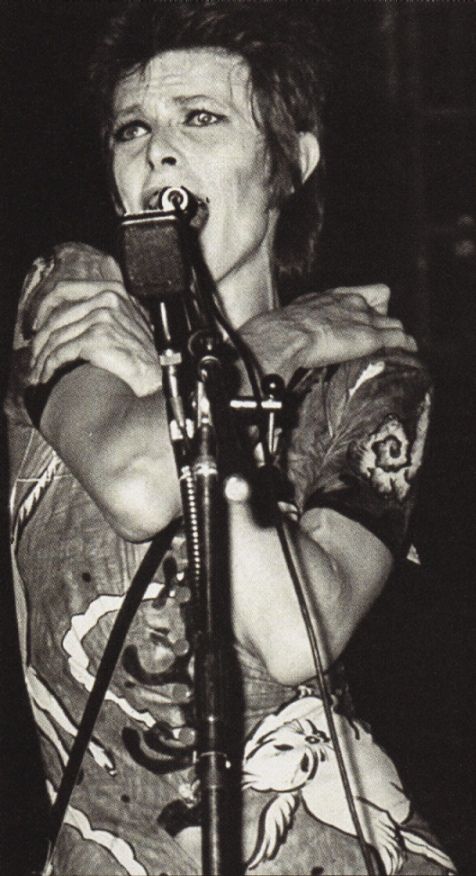
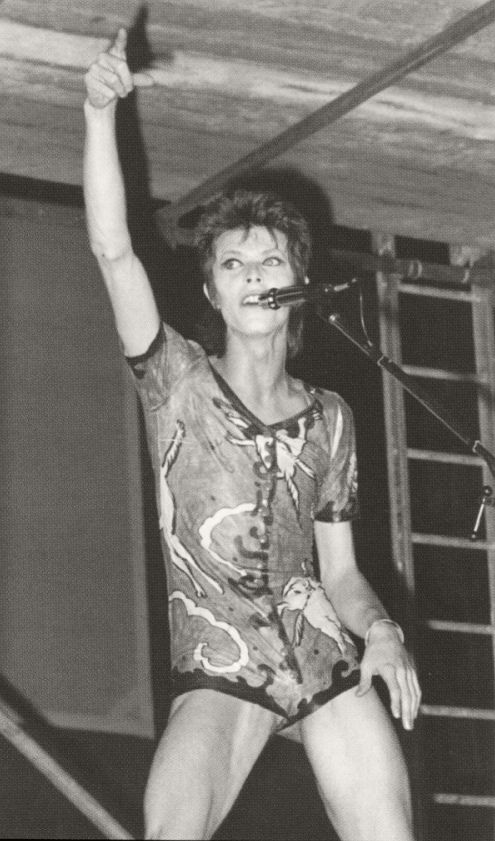
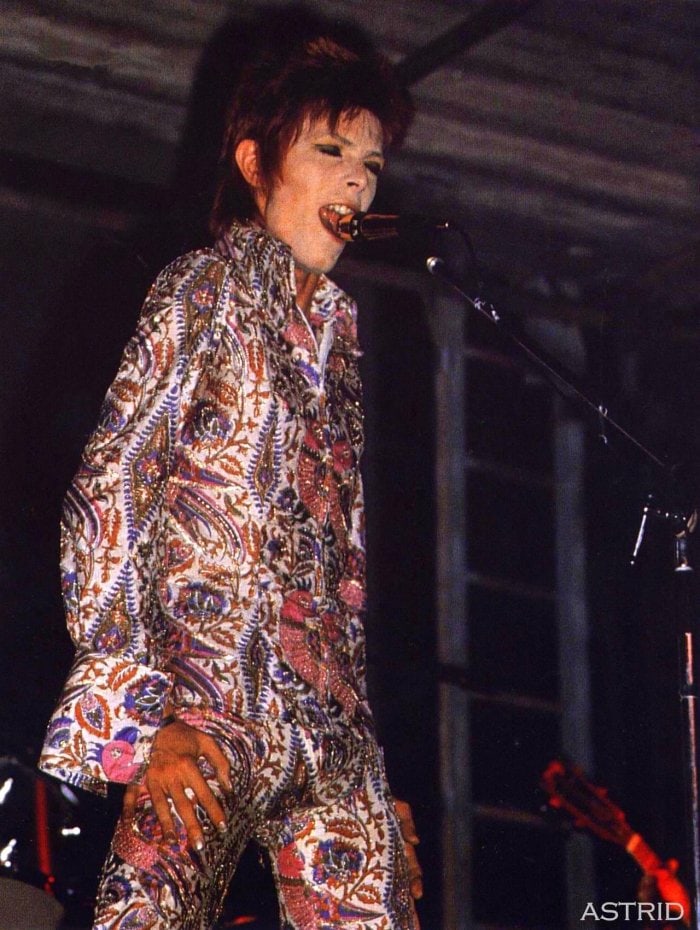
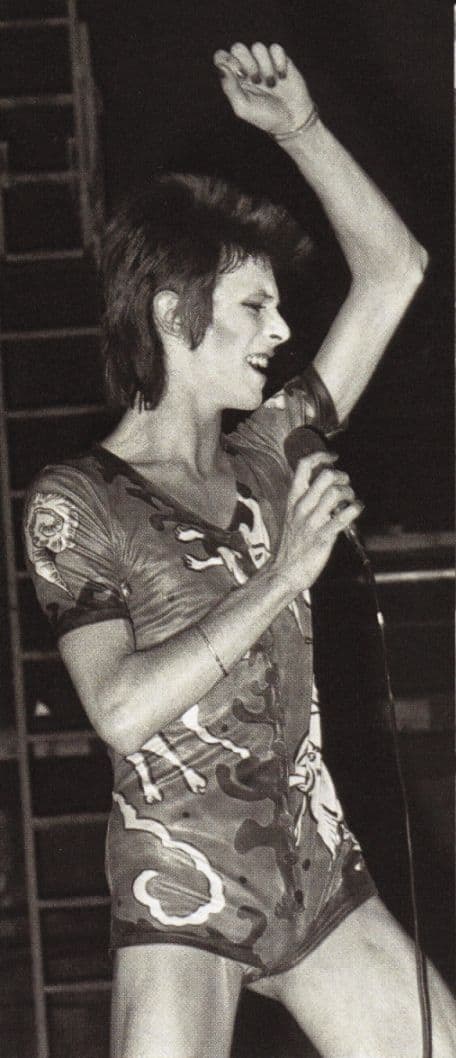
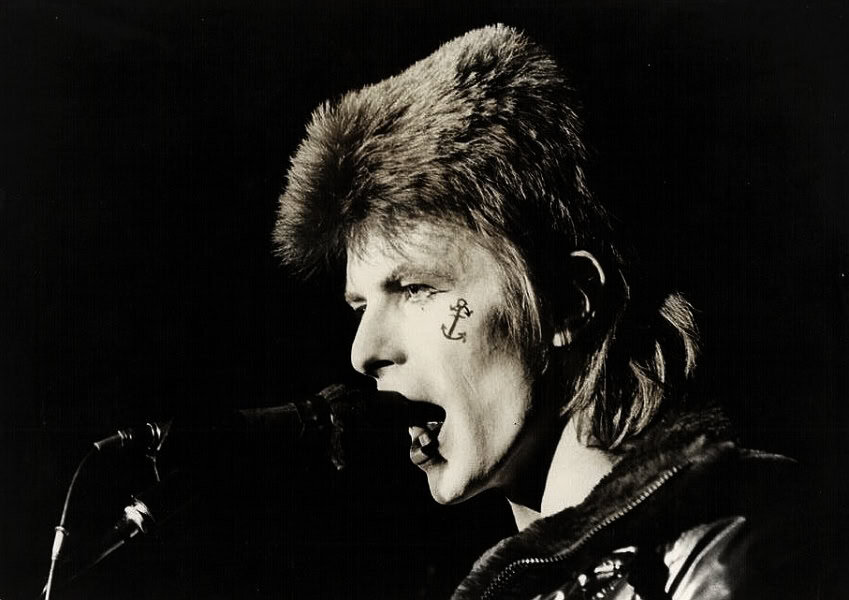
Rainbow Theatre Photographic Archive
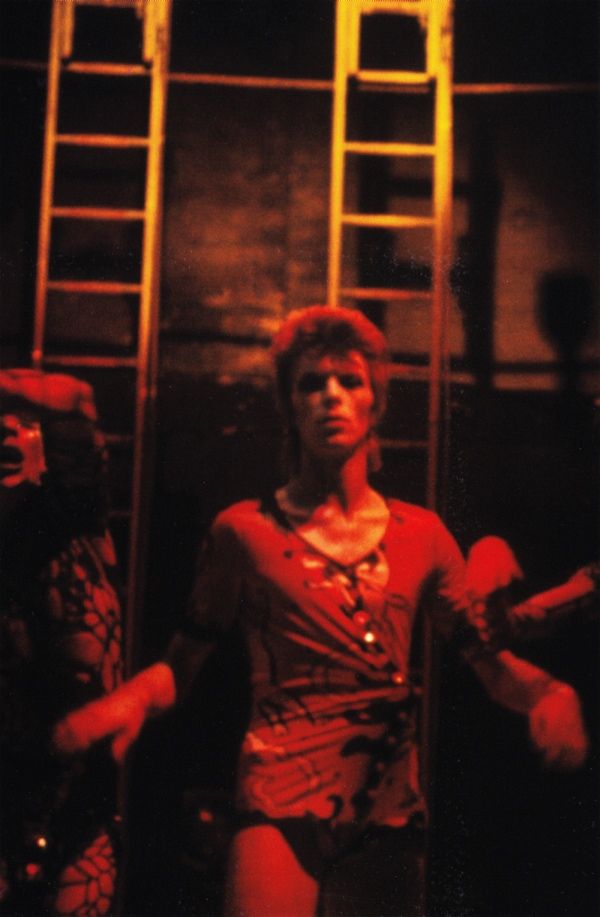
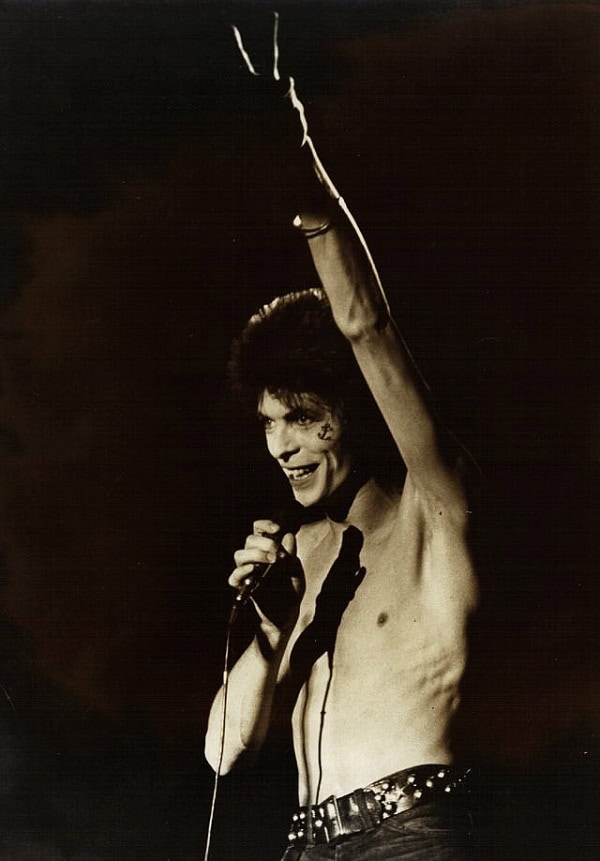
The following gallery presents additional photographs and visual material associated with Bowie's Ziggy Stardust performances at the Rainbow Theatre.
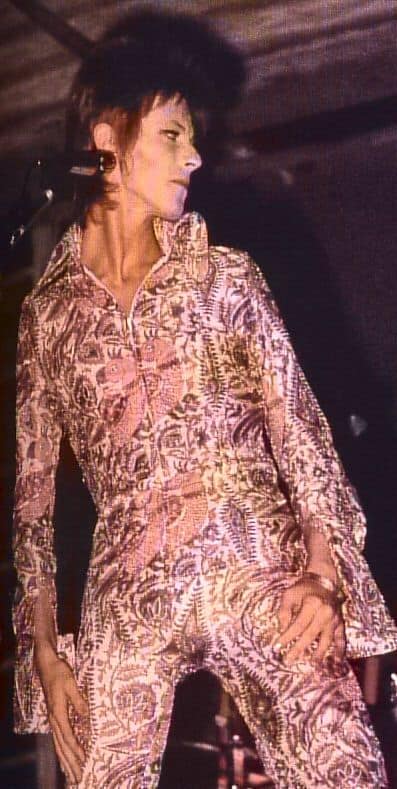
Starman Over The Rainbow – Archive Booklet
The following digital booklet provides additional archive material relating to the Rainbow Theatre performance and its theatrical presentation.
Additional Rainbow Theatre Artwork
The following four images are retained from the original page, preserving their existing dimensions and red borders.


Concert Setlist – Rainbow Theatre, 19 August 1972
The following external setlist reference provides an additional resource for comparing the surviving recording with published concert documentation.
The Historical Value of Starman Over The Rainbow
The historical importance of Starman Over The Rainbow lies primarily in its preservation of the August 1972 Rainbow Theatre concert.
The performance represented a major step in the development of Bowie's theatrical approach to live music, bringing together the Spiders from Mars, Lindsay Kemp's company and an ambitious stage design.
The surviving recording also documents unusual repertoire choices, including Lady Stardust and Wild Eyed Boy From Freecloud, alongside established Ziggy Stardust songs.
The additional BBC material expands the collection's scope, connecting the Rainbow performance with Bowie's radio appearances and studio activity during the same period.
At the same time, the incorrectly attributed bonus tracks demonstrate the importance of careful documentation when evaluating unofficial recordings.
About Starman Over The Rainbow – Savage Hippo Records SH118
David Bowie – Starman Over The Rainbow is an unofficial release on Savage Hippo Records, catalogue number SH118, featuring the Rainbow Theatre performance of 19 August 1972 together with BBC and miscellaneous bonus material.
The release has a stated running time of 2:26:06 and includes songs from Hunky Dory, The Man Who Sold The World and The Rise and Fall of Ziggy Stardust and the Spiders from Mars, as well as compositions associated with Lou Reed and Mott the Hoople.
Its main concert recording suffers from considerable audience noise and a dull tonal balance, but preserves a historically significant performance involving Bowie, the Spiders from Mars and Lindsay Kemp's theatrical company.
The bonus section contains useful period material, although some session attributions remain uncertain and two recordings have been incorrectly associated with Bowie.
For collectors, Starman Over The Rainbow is therefore best understood as a combined concert and bonus compilation rather than a definitive or fully authenticated archive release. Its greatest value remains the documentation of Bowie's extraordinary theatrical experiment at the Rainbow Theatre in August 1972.
