
Leee Black Childers – Photographer, MainMan Executive and David Bowie Associate

No verified free image available — placeholder used
Leee Black Childers was an American photographer, writer, stage manager and music-industry figure whose career connected New York’s underground theatre, Andy Warhol‘s circle, glam rock and punk.
His relationship with David Bowie developed after Childers travelled to London in 1971 as stage manager and photographer for the controversial production Pork. The encounter eventually led him into MainMan, the organisation created by manager Tony Defries around Bowie’s rapidly expanding career.
Childers became vice-president of MainMan’s American operation, worked on the advance promotion surrounding Bowie’s American breakthrough and photographed Bowie during the Ziggy Stardust period. In 1973 he also accompanied Bowie and Geoff MacCormack on part of their remarkable journey home from Japan through the Soviet Union on the Trans-Siberian Railway.
His photographs preserve Bowie not only as the carefully constructed figure seen on stage, but also as a traveller and working artist observed from unusually close range.
- Full name: Leee Black Childers
- Born: 24 July 1945, Jefferson County, Kentucky, United States
- Died: 6 April 2014, Los Angeles, California, United States
- Professions: Photographer, writer, stage manager and music-industry executive
- Early theatre work: Femme Fatale, World – Birth of a Nation and Pork
- MainMan role: Vice-president of the American operation
- Bowie connection: MainMan, advance promotion and photography during the Ziggy Stardust period
- Notable journey: Travelled with Bowie and Geoff MacCormack through the Soviet Union in 1973
- Later management: Johnny Thunders and the Heartbreakers; Levi and the Rockats
- Photography book: Drag Queens, Rent Boys, Pick Pockets, Junkies, Rockstars & Punks (2012)
From Kentucky to New York
Leee Black Childers was born in Jefferson County, Kentucky, on 24 July 1945. Photography entered his life early, and a camera eventually became a way for the naturally shy Childers to approach people and enter social situations that might otherwise have remained inaccessible to him.
After leaving Kentucky he spent time in San Francisco during the late 1960s before moving to New York. There he entered a cultural world far removed from his upbringing: experimental theatre, underground film, rock music, gay and drag culture, artists and performers associated with Andy Warhol, and the nightlife surrounding venues such as Max’s Kansas City.
Childers did not initially build his career as a conventional studio photographer. He photographed the people around him: performers, friends, musicians and personalities whose lives crossed between theatre, art and nightlife.
This position inside the scene would later become one of the defining characteristics of his work. Many of his best-known photographs were made not because he had been granted a short celebrity photo session, but because he already belonged to the environment he was documenting.
Underground theatre
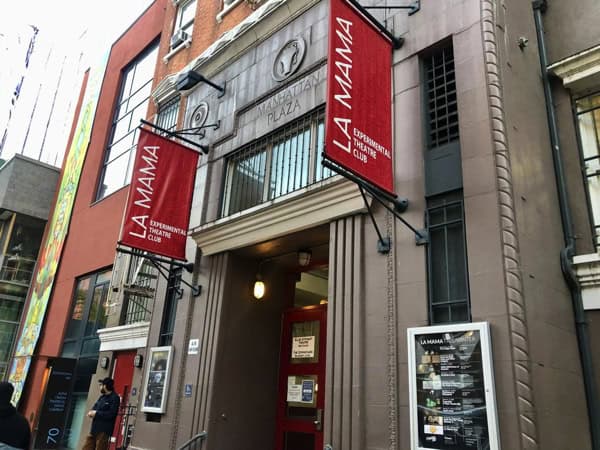
Childers became involved with the experimental theatre world that flourished in downtown New York. He worked with performers including Jackie Curtis, Wayne County — later known as Jayne County — and others associated with the broader Warhol community.
He stage-managed Jackie Curtis’s Femme Fatale at La MaMa in 1970 and also worked on Wayne County’s World – Birth of a Nation. Both were directed by Anthony Ingrassia.
These productions belonged to a theatrical culture that deliberately challenged conventional ideas about gender, sexuality, celebrity and performance. Childers’ combination of backstage work and photography placed him in a unique position: he helped make the performances happen while simultaneously preserving parts of the world surrounding them with his camera.
Andy Warhol‘s Pork
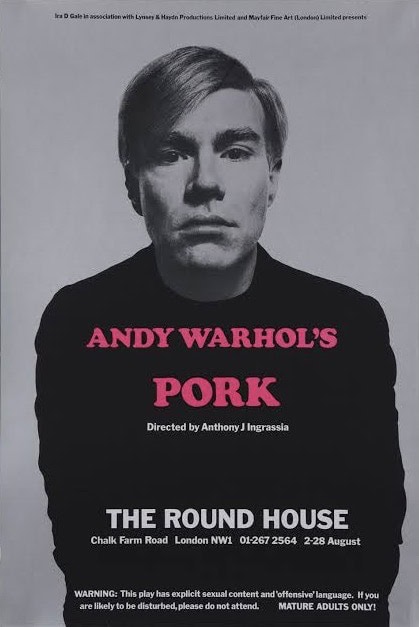
The production that would have the greatest effect on Childers’ later Bowie connection was Pork.
Developed from material associated with conversations and personalities around Andy Warhol‘s Factory, the play was directed by Anthony Ingrassia and featured performers including Cherry Vanilla, Tony Zanetta and Wayne County.
Childers served as stage manager and official photographer for the production. After performances in New York, Pork travelled to London in 1971 for a run at the Roundhouse.
The show attracted considerable attention because of its explicit sexuality, outrageous characters and close connection with the Warhol world. Its London appearance also brought Childers and several of his colleagues into direct contact with David Bowie.
Discovering David Bowie in London
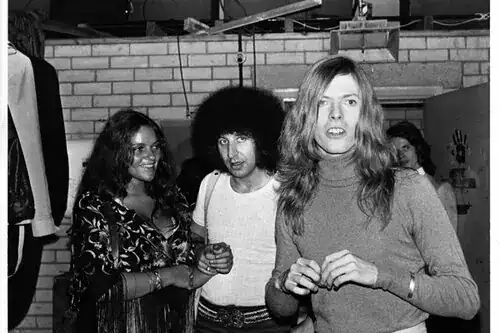
Bowie was already strongly interested in Andy Warhol, Lou Reed, The Velvet Underground and contemporary New York culture. His fascination existed before he personally knew most of the people associated with that scene.
Childers, meanwhile, had become aware of Bowie through the music press and particularly through the attention generated by the American cover of The Man Who Sold the World, which showed Bowie wearing a dress.
Leee Black Childers on discovering David Bowie
“All I know is I read somewhere that he wears dresses.”
Childers and members of the Pork company went to see Bowie perform at the Country Club on Haverstock Hill in London. Bowie did not appear in the dress they had expected, but the encounter brought the two groups together.
Childers and Cherry Vanilla invited Bowie to see Pork. Bowie subsequently attended the production, and contact developed between Bowie, Angie Bowie, Tony Defries and several members of the company.
This encounter became historically important not because Pork can simply be credited with creating Ziggy Stardust — such a claim would oversimplify Bowie’s development — but because Bowie now had direct contact with people who were active participants in the New York underground culture that had fascinated him.
From Pork to MainMan
The relationship continued after the Pork company returned to the United States.
Tony Defries was preparing a much larger organisation around Bowie as his career gathered momentum. Under the name MainMan, Defries developed a management and promotional operation intended to position Bowie as an international star.
Several people Bowie had encountered through Pork became part of MainMan’s New York operation. Tony Zanetta became president, Childers became vice-president, and Cherry Vanilla worked in publicity.
The grand corporate titles were part of MainMan’s style, but Childers’ involvement was real. He worked inside the organisation while it attempted to establish Bowie in a country where his reputation was growing rapidly but where he had not yet achieved the commercial status that would follow.
Breaking Bowie in America
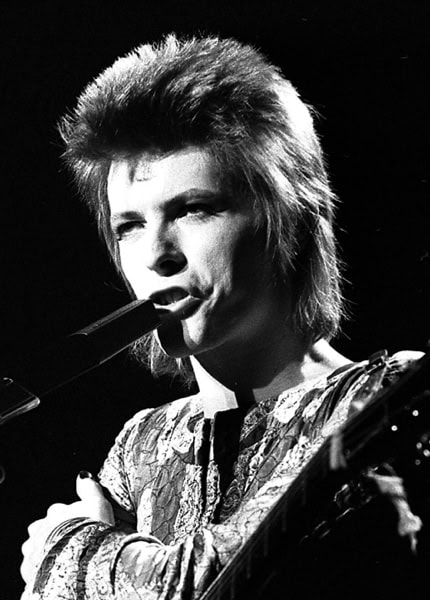
The release of The Rise and Fall of Ziggy Stardust and the Spiders from Mars in 1972 gave Bowie a powerful new musical and visual identity. In Britain his profile was increasing dramatically, but the United States remained an enormous and much more difficult market.
MainMan’s approach was unconventional. Rather than waiting for Bowie’s commercial success to justify the trappings of superstardom, the organisation deliberately presented him as though that level of fame had already been achieved.
Childers worked as an advance promotion man during the American Ziggy Stardust dates. His position involved more than photography: he was part of the MainMan operation responsible for creating attention around Bowie before and during his appearances.
Childers later gave a revealing description of the strategy.
Leee Black Childers on Bowie’s American breakthrough
“We were having to create this myth.”
Childers was referring to the way Bowie was presented during his early American breakthrough. Bodyguards, entourage, clothes, publicity and controlled access created the impression of an already established superstar.
The remark should not be interpreted as suggesting that Bowie’s success itself was manufactured. MainMan could create attention, but the strategy could only work if Bowie was able to justify it through his recordings and performances.
The distinction is important. Childers and the MainMan staff helped construct the circumstances in which Bowie was seen, while Bowie supplied the music, performance and continuing artistic development on which his reputation ultimately depended.
Photographing Ziggy Stardust
Alongside his MainMan duties, photography remained central to Childers’ work. The Andy Warhol Museum later described him as David Bowie’s official tour photographer for Ziggy Stardust.
Childers was not the only photographer with privileged access to Bowie. Mick Rock created many of the defining promotional, backstage and concert photographs of the Ziggy period, while other photographers also documented Bowie during these years.
Childers’ work nevertheless had its own character because he was operating within the MainMan environment rather than approaching Bowie only for an outside press assignment.
His access allowed him to photograph both the public spectacle and quieter moments surrounding it. This gives part of his archive the quality of an insider’s record rather than a sequence of isolated celebrity portraits.
Inside the MainMan world
MainMan during the early 1970s was more than a conventional management office. It operated as a mixture of management organisation, publicity machine and travelling creative environment.
Bowie’s presentation depended upon musicians, designers, photographers, publicists, assistants and management personnel as well as the artist himself. Childers belonged to this wider group.
His background in underground theatre was particularly suited to a period in Bowie’s career when the distinction between musical performance and visual presentation had become increasingly important.
Childers had spent years among performers who treated clothing, gender, appearance and personality as creative material. Bowie likewise understood that an artist could communicate through image, interviews and movement as powerfully as through a record sleeve or song.
That does not mean that Bowie’s identity was copied directly from Childers or the Pork company. Ziggy Stardust developed from numerous musical, theatrical, literary, fashion and personal influences.
Childers’ historical importance is more specific: he formed part of the cultural and professional bridge between Bowie’s developing world and the New York underground that Bowie had long admired.
Bowie and the New York underground
The wider connection between Bowie and the people around Pork had consequences beyond Childers’ own employment.
Tony Zanetta helped Bowie’s contact with Andy Warhol when Bowie visited New York in 1971. Cherry Vanilla became an important part of MainMan’s publicity operation. Childers moved into management and promotional work while continuing his photography.
Through them, Bowie was no longer simply admiring New York culture from overseas. He now knew people who had worked directly within its underground theatre and Warhol-associated circles.
These connections formed only one strand of Bowie’s artistic development, but they provide important context for the cultural exchange taking place around him immediately before and during the rise of Ziggy Stardust.
The private side of a public image
Ziggy Stardust was one of Bowie’s most carefully controlled public presentations. Hair, costumes, poses, interviews and stage movement all contributed to the character seen by audiences.
Childers’ photography is valuable partly because his camera could remain present when the formal performance had stopped. Travel, waiting, backstage time and encounters between destinations became part of his visual record.
These quieter photographs do not undermine the theatrical construction of Ziggy. Instead, they reveal the ordinary movement and human activity taking place around an extraordinary public image.
This distinction would become particularly important during one of Childers’ most remarkable journeys with Bowie.
Japan and the journey home
Bowie toured Japan in April 1973 during the final months of the Ziggy Stardust period. After the Japanese dates, he chose an unusual route back toward Europe.
Bowie had developed a strong dislike of flying and frequently used ships and trains where his schedule allowed. Following the Japanese tour, he travelled from Japan toward the Soviet Union and then continued westward by rail.
Geoff MacCormack, Bowie’s childhood friend and backing vocalist, travelled with him. Leee Black Childers also accompanied them for part of the journey and photographed Bowie and MacCormack during the trip.
The journey took them aboard the Trans-Siberian Railway across the Soviet Union and into Moscow at the height of the Cold War.
The Trans-Siberian Railway
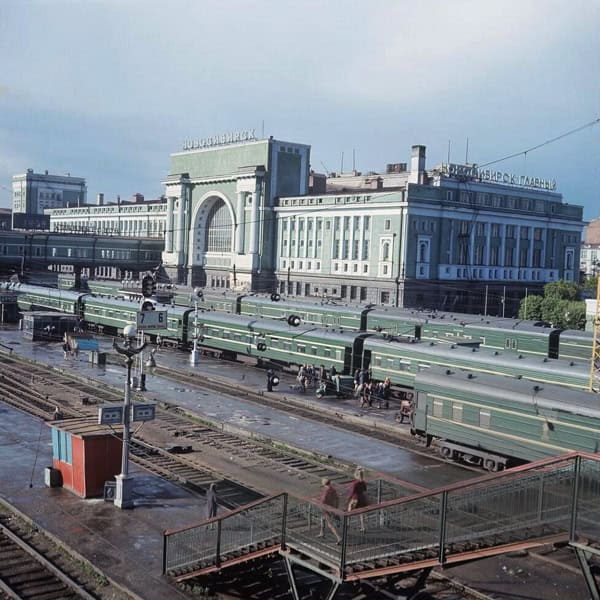
Childers’ photographs from the Soviet journey are among the most distinctive surviving images associated with his Bowie years.
Rather than presenting Bowie beneath stage lights or surrounded by a screaming audience, the photographs show him travelling through an immense landscape, standing with Geoff MacCormack and appearing within the everyday environment of trains and railway stations.
The setting gives the photographs significance beyond conventional music photography. Bowie was not performing concerts in the Soviet Union; he was travelling through it. For periods of the journey he could move through a country where many people had little or no knowledge of his growing fame in the West.
Childers also photographed Bowie and MacCormack in Moscow, including during their visit to the May Day celebrations in Red Square.
Geoff MacCormack made his own extensive photographic record of the journey, so photographs from this trip should always be credited carefully. Images by Childers and MacCormack are both known to survive, and authorship should not be assigned merely because Bowie appears in the photograph.
Childers remembers Bowie
Childers later looked back on his Bowie years through one of the photographs from the Trans-Siberian journey.
Leee Black Childers on his years with David Bowie
“I worked with David Bowie for a few of his most creative and adventurous years.”
The wording is useful because it describes Childers’ relationship with Bowie without exaggerating it. He did not claim responsibility for Bowie’s creativity. Instead, he identified himself as someone who had been present during several unusually important and adventurous years.
His photographs provide the surviving evidence of that position.
Beyond the first Ziggy Stardust tour
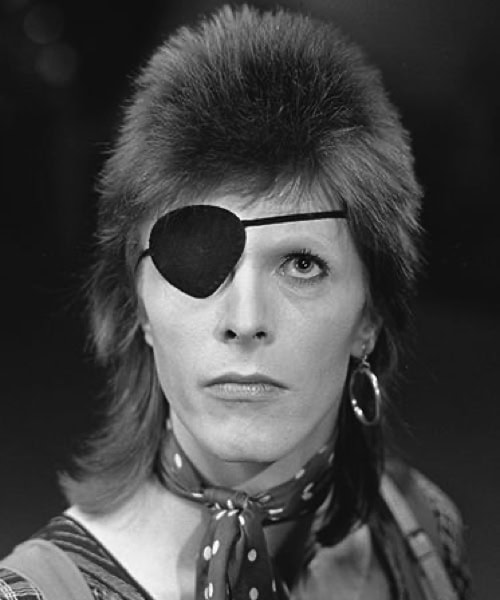
Childers’ association with MainMan continued beyond Bowie’s first American Ziggy Stardust dates.
He later wrote about photographing Bowie on tour and recalled that his position within MainMan allowed him photographic access that outside photographers could not automatically expect.
By 1974 Bowie had already moved significantly beyond the original Ziggy image. Aladdin Sane, Pin Ups and Diamond Dogs had followed in quick succession, while Bowie’s visual presentation and musical ambitions continued to change.
Childers’ most historically distinctive Bowie work nevertheless remains tied to the period when MainMan was building Bowie’s American profile and when Childers had particularly close access to the travelling environment around him.
Iggy Pop and the Stooges
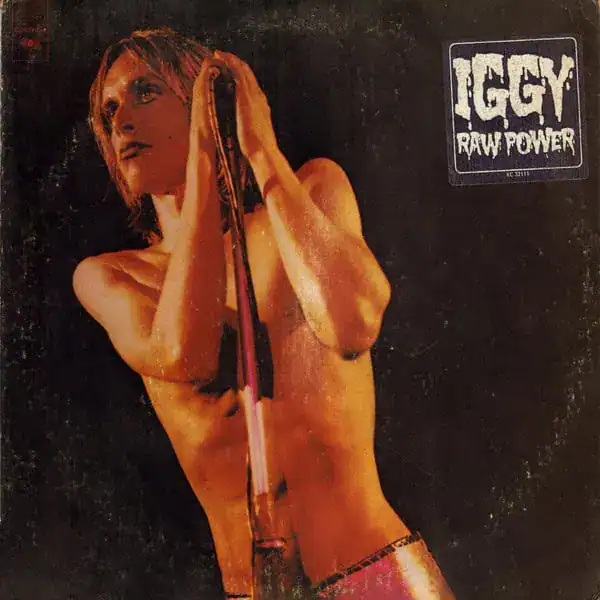
MainMan’s activities were not limited to Bowie. Tony Defries also became involved with Iggy Pop and the Stooges, while Bowie himself strongly supported Iggy and helped bring new attention to his work.
Childers spent a period in the Hollywood Hills keeping an eye on Iggy Pop and the Stooges. The experience placed him inside another volatile part of the MainMan story and produced further photographs.
Iggy was also part of the broader cultural landscape Childers understood instinctively: an artist whose behaviour and performance existed far outside conventional entertainment-industry expectations.
Childers’ Bowie and Iggy work consequently belongs to a much larger visual archive of outsiders, performers and musicians who reshaped popular culture during the 1970s.
Leaving MainMan
Childers did not remain permanently inside Bowie’s organisation. His MainMan years formed one important part of a career that had begun before Bowie and continued long after their closest professional association.
By the middle of the 1970s New York’s musical landscape was changing. Glam rock was giving way to a harder and less polished movement centred on clubs including CBGB and Max’s Kansas City.
Childers did not need to discover this emerging world from outside. Many of the musicians belonged to the same downtown social networks through which he had already moved for years.
Johnny Thunders and the Heartbreakers
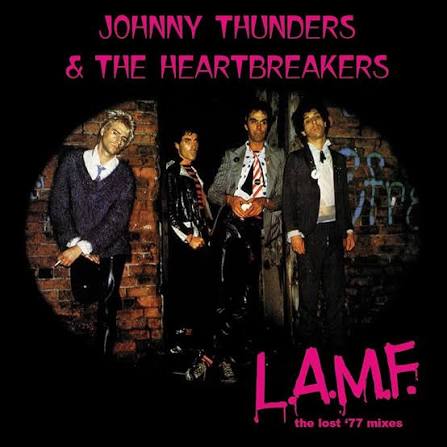
Childers became closely involved with Johnny Thunders and the Heartbreakers, one of the important groups to emerge from New York’s early punk scene.
Johnny Thunders and Jerry Nolan had previously been members of the New York Dolls. With Walter Lure, Richard Hell and later Billy Rath, the Heartbreakers developed a raw form of rock that placed them at the centre of the developing New York punk movement.
Childers became their manager and travelled with the group to Britain. The Heartbreakers joined the Sex Pistols, the Clash and the Damned on the notorious Anarchy Tour in late 1976.
Many of the scheduled concerts were cancelled following the national outrage generated by the Sex Pistols’ television appearance with Bill Grundy. Nevertheless, the Heartbreakers remained in Britain and became closely associated with the London punk scene.
Their studio album L.A.M.F. was released in 1977. Childers’ management of the band placed him at another important point of cultural exchange between New York and London, several years after his work with Bowie had done something comparable in the glam-rock era.
Photography and punk
Leee Black Childers discusses his life, photography and the New York underground (part 1).
Childers continued photographing throughout the punk period.
His archive includes performers and musicians associated with successive generations of New York culture, among them Lou Reed, Iggy Pop, the New York Dolls, Johnny Thunders, Patti Smith, Debbie Harry, the Sex Pistols and numerous figures from the Warhol and downtown scenes.
These photographs create a visual connection between movements that are often separated into different chapters of music history.
Childers had moved through the Factory-associated underground, experimental theatre, glam rock and punk as a participant rather than as a historian looking backwards.
His archive therefore records cultural continuity as well as change.
More than a rock photographer
Describing Childers only as a rock photographer would overlook much of what makes his work distinctive.
His subjects included drag performers, underground actors, musicians, friends and people living far outside mainstream celebrity culture.
Childers was particularly interested in people who constructed identities beyond conventional social expectations. His photographs often reflect the familiarity of somebody who knew the person in front of the lens rather than simply recognising their public reputation.
Bowie fits naturally into this larger archive. When Childers first saw him perform in London in 1971, Bowie was not yet the international superstar he would soon become. He was another unconventional artist attracting the attention of people interested in theatre, image and cultural experimentation.
Childers was therefore able to photograph Bowie’s transformation from a perspective shaped before that superstardom existed.
Leee – with three e’s
Childers became professionally known as Leee Black Childers, with three letters e in his first name.
Contemporary material sometimes shortened his name to Lee, and both spellings can therefore be encountered in books, newspapers and archives.
Major institutions documenting his work, including the Andy Warhol Museum, use the distinctive spelling Leee. This page follows that spelling throughout.
Returning to the Warhol world
Childers’ connection with the people and culture surrounding Andy Warhol continued long after Pork.
In the early 1980s he again worked around the Factory and continued to photograph visitors, musicians and countercultural figures.
As time passed, photographs originally made among friends and colleagues acquired increasing documentary importance. People who had once belonged to relatively small underground communities became recognised as major figures in twentieth-century cultural history.
Childers consequently became valuable not only for his negatives but also for his first-hand memories of the scenes in which those photographs had been made.
Preserving the history of Pork
The connection between Pork, Andy Warhol‘s world and the emergence of glam rock received renewed attention later in Childers’ life.
The Andy Warhol Museum presented Childers’ photographs from the production in the exhibition Warhol Live: Music and Dance in Warhol’s Work in 2009.
In 2011 Childers also participated with Cherry Vanilla and Tony Zanetta in the museum’s Talk on the Wild Side, which examined the 1971 productions of Pork and their place within the cultural history surrounding glam rock.
This later documentation is particularly useful because it confirms Childers’ actual professional role: he was the production’s stage manager and official photographer.
That documented role is strong enough without making the larger and much less defensible claim that Childers or Pork single-handedly created Ziggy Stardust.
Drag Queens, Rent Boys, Pick Pockets, Junkies, Rockstars & Punks
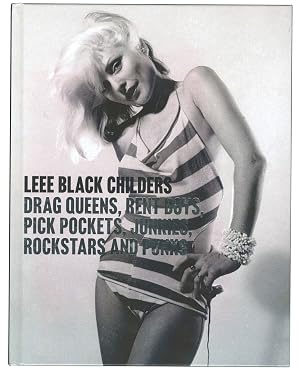
A major retrospective of Childers’ photography appeared in 2012 under the title Drag Queens, Rent Boys, Pick Pockets, Junkies, Rockstars & Punks.
The deliberately uncompromising title reflects the breadth of Childers’ archive. Internationally famous musicians appear alongside underground personalities and people from the social world in which he had lived.
His photographs of Bowie form part of this larger story rather than an isolated celebrity portfolio.
Seen in this context, Bowie’s presence beside figures associated with Warhol, Lou Reed, Iggy Pop, the New York Dolls and punk illustrates how closely connected these cultural scenes could be.
The historical value of his Bowie photographs
Childers’ Bowie photographs are important partly because of the circumstances in which they were created.
He was not simply an outside photographer who obtained temporary access. He worked for MainMan, participated in Bowie’s American promotional campaign and travelled within the organisation surrounding Bowie.
That relationship provided opportunities to photograph events and situations outside the normal boundaries of concert photography.
The Soviet photographs are a particularly clear example. They document Bowie between performances and countries during a period when his career was changing with extraordinary speed.
At the same time, they must be distinguished carefully from Geoff MacCormack‘s own photographs of the journey. Both men photographed Bowie during the trip, and both archives now contribute to our understanding of it.
Witnessing the creation of a public phenomenon
Childers’ recollection that MainMan was helping to “create this myth” remains one of his most revealing comments about the Bowie years.
Looking backwards from Bowie’s later status can make his international success seem inevitable. It was not.
In 1972 Bowie had already produced years of music and attracted serious critical attention, but MainMan was attempting to accelerate his transformation into a major American attraction.
Presentation therefore mattered. The organisation used theatre, scarcity, publicity and visible signs of celebrity to suggest a level of fame that was still being built.
Childers understood this type of image-making because his own background had been shaped by underground theatre and the Warhol world, where identity and self-presentation were themselves forms of performance.
What happened next depended on Bowie. The publicity could bring attention, but the artist’s songs, live performances and continuing ability to change determined whether that attention would last.
Childers’ precise place in the Bowie story
The historical significance of Leee Black Childers does not require exaggeration.
He did not create David Bowie and he did not single-handedly create Ziggy Stardust.
What can be documented is substantial enough.
Childers met Bowie through the Pork company in London. He joined MainMan’s American operation as vice-president. He worked on advance promotion during Bowie’s American breakthrough. He photographed Bowie during the Ziggy Stardust period. He travelled with Bowie during part of the extraordinary 1973 journey through the Soviet Union.
His photographs and recollections therefore come from somebody who was genuinely inside Bowie’s professional environment during a decisive period.
Later years and recognition
As interest in the cultural history of the 1960s and 1970s increased, Childers’ archive received greater recognition through exhibitions, publications and documentary projects.
His photographs were shown internationally, and institutions including the Andy Warhol Museum used his images when examining the history of underground theatre, Warhol’s circle and the relationship between those communities and popular music.
Childers was also an important first-hand storyteller. He had known many later icons before history transformed them into fixed public images.
His memories preserved the less formal side of that history: friendships, backstage work, travel and the practical circumstances surrounding people who later became famous.
Death in Los Angeles
In March 2014 Childers was in Los Angeles for an exhibition of his photography. He collapsed during the opening celebrations and was taken to hospital.
Leee Black Childers died in Los Angeles on 6 April 2014, aged 68.
The Andy Warhol Museum commemorated him as an essential figure in New York’s underground culture and specifically remembered both his work on Pork and his photography of David Bowie.
Legacy
Leee Black Childers left a photographic archive that reaches far beyond one artist or musical movement.
He documented the transition from the New York underground and Warhol-associated theatre through glam rock and into punk, often photographing people before their historical importance had become obvious.
His Bowie work occupies a particularly valuable place within that archive because Childers witnessed the period when Bowie was being transformed from a highly ambitious British artist into an international rock star.
He saw the process from inside MainMan. He participated in the promotional campaign, photographed Bowie during the Ziggy period and accompanied him through part of one of the most unusual journeys of his career.
Childers’ importance is therefore not based on mythology surrounding the Bowie entourage. It rests on documented work and surviving evidence.
His photographs preserve both sides of an extraordinary moment: the public construction of Ziggy Stardust and the quieter human reality that continued beyond the stage.
For David Bowie history, Leee Black Childers remains an important photographer, MainMan figure and first-hand witness to the years in which Bowie’s international reputation changed forever.
Article Origin
This article was researched and written for DavidBowieWorld.com as part of the David Bowie Collaborations & Creative Circle Archive.
The article is based on documented biographical material, institutional archive information and first-hand recollections by Leee Black Childers. Particular care has been taken to distinguish his confirmed positions within Pork and MainMan from later descriptions that sometimes reduce his Bowie connection to a single job title.
Childers’ documented Bowie roles include his work within MainMan’s American operation, advance promotion, photography during the Ziggy Stardust period and travel with Bowie during the 1973 journey through the Soviet Union.
© DavidBowieWorld.com — David Bowie Collaborations & Creative Circle Archive.
