
Keith Harwood – Bowie Engineering and Mixing
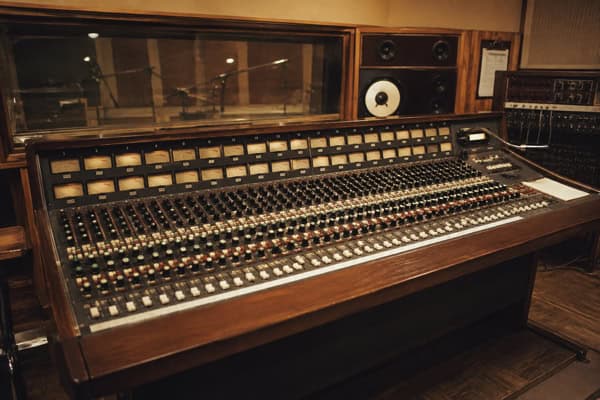
Keith Harwood was a British recording engineer whose work placed him at the centre of some of the most important British rock recordings of the 1970s. For David Bowie, Harwood is principally connected with two projects from 1974: the studio album Diamond Dogs and the live recordings that became David Live. His contribution was not that of a musician or producer, but of the person responsible for capturing performances on tape and, on selected material, helping shape the final mix.
Harwood belonged to the engineering community around Olympic Studios in Barnes, London, one of the defining recording facilities of the period. His wider credits included work with Led Zeppelin, the Rolling Stones, the Pretty Things, Thin Lizzy, Wishbone Ash, Humble Pie and Ron Wood. That background is important to the Bowie story because Diamond Dogs represented a major change in Bowie’s working methods: he had left behind the familiar Trident Studios environment associated with the Ziggy Stardust period and was taking greater direct control of both the music and its production.
This page concentrates on what can be documented. Harwood’s precise role is separated from that of Bowie and Tony Visconti, because the recording and mixing credits on Diamond Dogs are not identical from track to track. Where sources disagree, no unsupported conclusion is presented as fact.
- Name: Keith Harwood
- Profession: Recording engineer and mixing engineer
- Nationality: British
- Studio association: Olympic Studios, Barnes, London
- David Bowie studio connection: Diamond Dogs (1974)
- David Bowie live connection: David Live (1974)
- Confirmed Bowie roles: Recording engineer on Diamond Dogs; mixing credit on the album; live recording supervision for David Live
- Other major artists: Led Zeppelin, the Rolling Stones, the Pretty Things, Thin Lizzy, Wishbone Ash, Humble Pie and Ron Wood
- Died: September 3, 1977, following a road accident
Keith Harwood and the London Recording World
During the late 1960s and 1970s, the recording engineer occupied a crucial but often publicly invisible position. Album sleeves might give an engineer a single line of credit, yet the engineer was responsible for turning a performance in a room into a usable multitrack recording. Microphone choice and placement, signal level, tape-machine operation, routing, monitoring, overdubbing and the practical organisation of increasingly complex sessions all depended on the engineering team. The producer and artist could describe the sound they wanted, but the engineer had to make that sound technically possible.
Harwood developed his career in precisely this period of rapid change. British studios were moving from comparatively simple four-track working methods into eight-, sixteen- and eventually twenty-four-track recording. Rock musicians were becoming more ambitious in the studio, and albums were increasingly built through overdubbing, editing and detailed mixing rather than being straightforward documents of a band playing live. Engineers therefore became essential creative technicians. Their role was different from production, but at the best studios the boundary between technical execution and creative contribution could become very close.
Harwood’s name became associated with a remarkable range of records. His credits show him working not only on straightforward rock-band sessions but also on records involving extensive overdubbing, complicated arrangements and difficult mixes. This breadth of work helps explain why he was a suitable engineer for Bowie in late 1973 and early 1974. Bowie was entering a period in which he wanted to dismantle much of the working structure that had produced Hunky Dory, The Rise and Fall of Ziggy Stardust and the Spiders from Mars and Aladdin Sane. He needed an engineer who could work inside a less conventional and more self-directed process.
Harwood’s career is also a reminder that the history of a famous album is rarely only the history of the artist pictured on the sleeve. The sound heard by the listener is the result of musicians, arrangers, producers, engineers, assistants, tape operators and mastering engineers working at different stages. In Harwood’s case, his contribution to Bowie came at a particularly important transition: the moment when Bowie became the sole credited producer of a major studio album and began constructing a new musical identity after Ziggy Stardust.
Olympic Studios
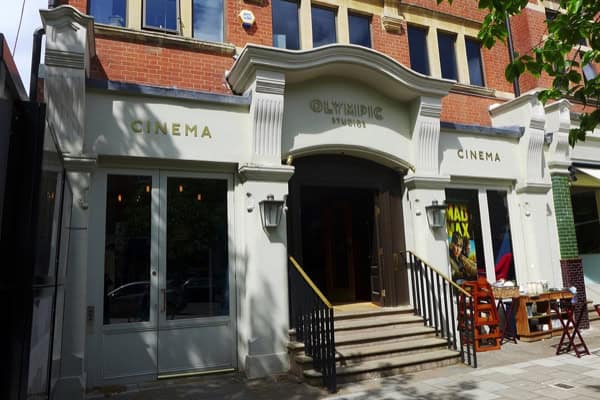
Olympic Studios in Barnes was one of the central institutions of British recording. The Barnes facility opened in 1966 and became known for a combination of technical quality, large recording spaces and an engineering staff capable of handling everything from orchestral work to experimental rock. The studio’s history includes sessions by the Rolling Stones, Jimi Hendrix, the Who, Led Zeppelin, the Beatles, Pink Floyd and many others.
Sound On Sound’s history of Olympic, based on the recollections of long-time studio head Keith Grant, lists Keith Harwood among the large group of engineers who worked there during the studio’s peak years. The significance of that environment should not be underestimated. Olympic operated as a professional community in which engineers learned from one another, shared techniques and were exposed to a constant flow of demanding sessions. Harwood was part of that culture rather than an isolated freelance figure who happened to appear on Bowie’s record.
For Bowie, moving work to Olympic represented a break with Trident Studios, the location strongly associated with his rise in the early 1970s. Trident had been the setting for much of the music made with producer Ken Scott and the musicians identified with the Spiders from Mars era. By the time of Diamond Dogs, that configuration had largely dissolved. Mick Ronson was no longer Bowie’s regular lead guitarist and arranger, Trevor Bolder and Woody Woodmansey were absent from the new album sessions, and Bowie himself assumed a far larger instrumental role.
Olympic therefore became more than simply a different building. It was part of a changed working method. Bowie arrived as an artist increasingly willing to construct recordings around his own guitar, saxophone, keyboards, vocals and ideas. Mike Garson remained an important musical presence, while players including Herbie Flowers, Aynsley Dunbar, Tony Newman and Alan Parker contributed to the sessions. Harwood’s responsibility was to record this changing combination of musicians and overdubs reliably while Bowie directed the project as producer.
The connection with Olympic also placed Bowie in a studio environment familiar to the Rolling Stones. Harwood had experience with that wider rock world, and the raw, rhythm-driven character of parts of Diamond Dogs sat comfortably within a studio accustomed to loud electric instruments and layered production. None of this means that Harwood independently determined Bowie’s sound; the album was produced by Bowie. What can be said is that Harwood provided the engineering framework within which Bowie’s ideas were captured.
David Bowie after Ziggy Stardust
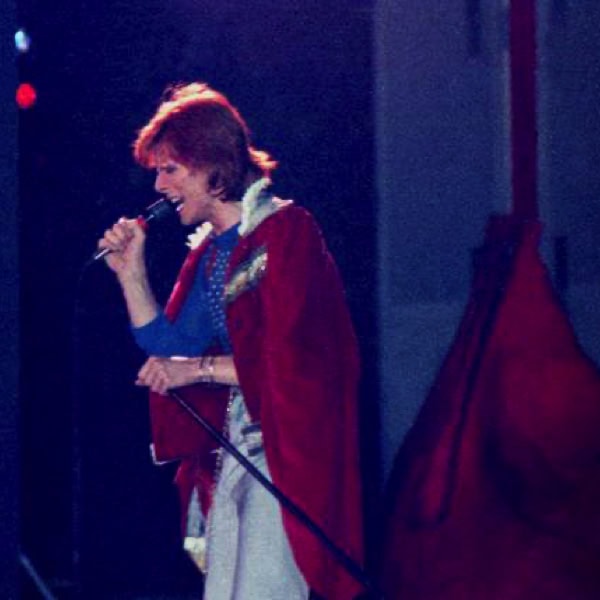
The sessions that became Diamond Dogs took place during one of the most important transitional moments in Bowie’s career. In July 1973, Bowie had famously announced the end of the Ziggy Stardust touring period at the Hammersmith Odeon. The statement did not mean the end of Bowie’s career, but it marked the end of a particular band identity and stage presentation. He then recorded the covers album Pin Ups, but his next collection of original songs had to establish a new direction.
Bowie was simultaneously developing ideas connected with George Orwell‘s Nineteen Eighty-Four and absorbing the influence of William S. Burroughs. The eventual Diamond Dogs album combined material originating in Bowie’s unrealised theatrical ideas with other songs and imagery built around his own dystopian Hunger City setting. The finished record is therefore not a straightforward adaptation of Orwell and not a conventional concept album in the strictest sense. It is a hybrid work in which several projects and creative impulses were fused.
Musically, Bowie also changed the balance of responsibility. He produced the album himself and played much of the guitar heard on the record, in addition to vocals, saxophone and keyboards. This is significant when considering Harwood’s role. The engineer was not documenting a stable touring band rehearsing and performing complete arrangements. He was helping record an artist who was increasingly building tracks through a mixture of core performances, overdubs and studio decisions.
The resulting album has a deliberately unusual character. Some tracks are hard and guitar-led; others depend on keyboards, saxophone, theatrical transitions or heavily shaped studio textures. The sequence from Sweet Thing through Candidate to Sweet Thing (Reprise) is constructed as a continuous dramatic passage, while 1984 points toward the soul and funk direction Bowie would pursue more fully later in 1974. Rebel Rebel, by contrast, is built around one of Bowie’s most immediate guitar riffs.
Harwood’s engineering credit sits across this diversity. His contribution should therefore be understood not simply as operating the tape machine, but as maintaining technical continuity across a record whose arrangements and textures could change dramatically from track to track. At the same time, historical accuracy requires a distinction: the final mixing was shared between Bowie, Harwood and Tony Visconti in different combinations, rather than being the work of one engineer alone.
The Diamond Dogs Recording Sessions
David Bowie – Rock ‘n’ Roll With Me studio sessions, Olympic Studios, January 1974
Recording for Diamond Dogs began in late 1973 and continued into early 1974, with Olympic Studios in Barnes serving as a principal location. Session documentation and later discographical research also identify Island Studios in London in connection with the album. Some sources additionally associate work on particular material with Studio L Ludolf in the Netherlands. Because different songs and later editions carry different location information, it is safest to describe the album as a multi-studio project centred on Olympic and Island rather than to claim that every track was recorded in exactly the same room.
Keith Harwood is consistently credited as engineer on the album. That is one of the strongest and least disputed facts in the documentation. Bowie was the producer, while Ray Staff handled mastering on the original album. Tony Visconti re-entered Bowie’s recording world primarily at the mixing stage and also arranged the strings for 1984. This division of labour matters because later summaries sometimes compress the story into a single phrase such as “engineered and mixed by Keith Harwood” or “mixed by Tony Visconti.” Neither phrase adequately describes the whole album.
The core sessions included Mike Garson on piano and keyboards, Herbie Flowers on bass, drummers Aynsley Dunbar and Tony Newman, and guitarist Alan Parker on selected material. Bowie himself covered an unusually large amount of instrumental ground. This gave Harwood a session environment that could move from rhythm-section recording to more solitary overdub work. The engineer had to preserve clarity while allowing Bowie to build the deliberately dense and sometimes abrasive sound of the project.
The final sound of Diamond Dogs combines dryness, distortion, theatrical atmosphere and carefully assembled detail. It would be misleading to credit all of these characteristics specifically to Harwood without session-by-session evidence. Bowie was producer and primary creative director. Nevertheless, Harwood’s central engineering credit establishes that the physical recording of those performances and overdubs depended heavily on his work.
What a Recording Engineer Did on a Bowie Session
Understanding Harwood requires some distinction between engineering, production and mixing. Bowie produced Diamond Dogs. As producer he determined the artistic direction of the recordings, made decisions about performances and arrangements and ultimately carried responsibility for the project. Harwood, as recording engineer, translated that direction into recorded sound.
In practical terms, a recording engineer in a major 1970s studio would supervise microphone and line inputs, set recording levels, route signals through the console, organise tracks on the multitrack tape, prepare for overdubs and make sure that technically usable takes were preserved. The engineer also worked closely with studio assistants, who handled many of the physical and organisational tasks needed to keep a session moving. When an artist wanted a sound to be brighter, darker, more distorted, more distant or more immediate, the engineer helped determine how that could be achieved.
Mixing was a separate stage. At mixdown, the many individual tracks recorded during the sessions were balanced and processed to create the final stereo master. Instruments could be made louder or quieter, placed within the stereo field, treated with equalisation or effects and blended into the finished performance. On Diamond Dogs, Bowie participated directly in this stage, and the credits show Harwood on some mixes and Visconti on others.
This is why Harwood should not be labelled the album’s producer and why Visconti should not be described as having engineered the original sessions as a whole. Their contributions overlapped with Bowie’s at different points. Harwood’s strongest overall credit is engineering; Visconti’s strongest album-wide contribution is associated with mixing and his string arrangement on 1984; Bowie is the sole credited producer and was involved in the mixes.
Such distinctions may appear technical, but for a historical account they are essential. Studio credits are part of the evidence. They tell us who was responsible for which stage of making the record, and they prevent later retellings from assigning creative responsibility to the wrong person.
Mixing Diamond Dogs

The mixing history of Diamond Dogs is more complicated than the album-wide engineering credit. Harwood receives both engineering and mixing credit on the project, while Tony Visconti later described his own return to Bowie as a mixing collaboration and arranged the strings for 1984. Release metadata can differ in the way individual track mixes are attributed, so this page does not force a track-by-track certainty where the surviving credit information is inconsistent.
Tony Visconti later explained that Bowie had already produced the album himself but was dissatisfied with aspects of the mixing. Visconti had recently established a home studio, and Bowie went there to try a mix. The collaboration worked well enough for further mixing to continue. Visconti’s later accounts are important because they establish both Bowie’s status as producer and Visconti’s specific return at the mixing stage.
“David had already produced Diamond Dogs by himself, but was frustrated with the mixes.”
The existence of both Harwood and Visconti in the mixing credits means that Diamond Dogs should be described as a record with a divided mixing history. Harwood remained part of the process after recording; he was not simply replaced when Visconti became involved. At the same time, the final album also bears the sound of Bowie’s renewed collaboration with Visconti.
Rebel Rebel
Rebel Rebel is one of the clearest examples of Harwood’s dual Bowie role because he is credited as engineer and, together with Bowie, as mixer on the track. Released as a single in February 1974, it became one of Bowie’s defining recordings of the period and later appeared on Diamond Dogs in a remixed form.
The song is built around its instantly recognisable guitar riff and a direct rock arrangement that differs from the more theatrical construction of parts of the album. For Harwood’s page, the important documented point is his engineering and mixing connection to the project rather than an attempt to assign undocumented individual studio decisions to him.
This is useful evidence against treating Harwood as merely a staff technician with no involvement beyond basic capture. Mixing required active decisions about balance, tone and presentation. Since Bowie was also credited as mixer, the most accurate description is a collaboration at mixdown between artist-producer and engineer.
The result is a record that sounds deliberately immediate. The riff dominates, the rhythm section remains forceful and Bowie’s vocal sits directly in front of the arrangement. It would be speculative to attribute a particular microphone, equaliser or processing decision to Harwood without documentation, so this page does not do so. The confirmed credit itself is sufficient: Harwood helped engineer and mix one of Bowie’s most enduring singles.
Rebel Rebel also illustrates the transitional nature of the whole album. Its glam-rock swagger connects it to the preceding era, yet it was created after the Spiders from Mars band structure had ended. Harwood was therefore recording Bowie at the moment when the artist was retaining some familiar rock language while reorganising how his records were made.
We Are the Dead and Rock ‘n’ Roll With Me
Track-level credits also connect Harwood to the mixes of We Are the Dead and Rock ‘n’ Roll With Me. These songs demonstrate how varied his work on the album could be. We Are the Dead is one of the record’s darkest and most explicitly dystopian performances, while Rock ‘n’ Roll With Me, written by Bowie with Warren Peace, points toward the more emotionally direct and rhythm-and-blues-influenced writing Bowie would explore further during the year.

We Are The Dead

Rock 'N' Roll With Me
-
We Are The Dead
-
Rock 'N' Roll With Me
On We Are the Dead, Harwood is credited as engineer and as a mixer with Bowie. The recording includes the album’s characteristic combination of Bowie’s vocal, guitar and saxophone-related textures with keyboards and rhythm-section elements. The song’s atmosphere depends on controlled layering rather than on the energy of a simple live-band performance. Again, the precise division of mixing decisions between Bowie and Harwood is not documented in enough detail to assign individual sonic choices, but the shared credit establishes that both participated.
Rock ‘n’ Roll With Me has a different emotional profile and became important again during Bowie’s 1974 American tour. Harwood’s connection to the song therefore extended indirectly from the studio album into the live project that followed. A live version appeared on David Live, the second major Bowie release with which Harwood was associated in 1974.
These credits show why “Bowie engineering and mixing” is an appropriate description of Harwood’s relationship with Bowie. Engineering was his consistent studio responsibility; mixing was a documented additional role on specific material. The phrase should not imply that he mixed the entire album alone, and the page deliberately keeps that distinction visible.
The Sweet Thing / Candidate / Sweet Thing (Reprise) Suite
David Bowie – Sweet Thing / Candidate / Sweet Thing (Reprise)
One of Diamond Dogs‘ most ambitious passages is the sequence formed by Sweet Thing, Candidate and Sweet Thing (Reprise). The three tracks run together to create a continuous dramatic section that moves through changes of tempo, vocal register, instrumental density and atmosphere. Harwood’s album-wide engineering credit places him at the recording stage of this material, while available mix documentation associates Tony Visconti with the final mixing of this part of the record.
This distinction is particularly useful for understanding collaboration in the studio. Harwood could be responsible for capturing the original performances and overdubs without necessarily being the person who later completed the stereo mix. The multitrack tapes created during the sessions were the raw material from which the final sequence was assembled. If those recordings had not been technically strong enough, later mixing would have had far fewer options.
The suite also demonstrates Bowie’s unusual instrumental role on the album. Without Mick Ronson as his principal guitarist and arranger, Bowie took on much of the guitar work himself. Mike Garson‘s keyboards supplied another defining element. The contrast between Bowie’s rough guitar textures and Garson’s more fluid piano language is one of the characteristics that separates Diamond Dogs from the preceding albums.
Harwood’s job was to record those elements in a way that allowed the album’s later dramatic construction. Although modern listeners encounter the suite as a seamless finished piece, it was the product of studio work carried out in stages. Recording and mixing were therefore distinct but connected acts, with Harwood important to the former and Visconti becoming especially important to the latter.
1984 and Tony Visconti‘s Return
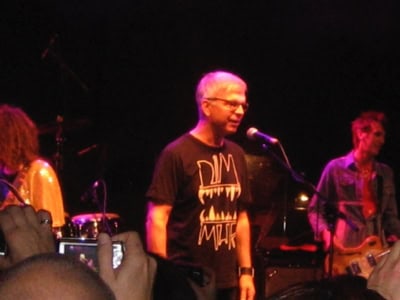
1984 occupies a special place on Diamond Dogs because it points most clearly toward Bowie’s next phase. Its rhythm, arrangement and use of strings move away from straightforward glam rock and toward the soul and funk interests that would dominate Young Americans. Keith Harwood engineered the recording, while Tony Visconti arranged the strings and is credited with Bowie in the mixing documentation.
Visconti’s reappearance was significant. He had played a major role in Bowie’s earlier career but had not produced the celebrated Ziggy-era albums with Ken Scott. Diamond Dogs brought Bowie and Visconti back into active studio collaboration, initially around mixing. The partnership would soon become much more important again, but on this particular album Bowie’s sole producer credit must remain clear.
Tony Visconti on the album’s sound
“Diamond Dogs was probably David’s most radical album to date.”
— Tony Visconti, 2016
For Harwood, 1984 confirms the importance of separating the recording stage from the mix. His engineering credit remains fundamental even where someone else later took responsibility for the final balance. The recording captured in the studio had to support the strings, rhythm section, guitar, keyboards and Bowie’s vocal while leaving sufficient separation for the later mix.
The track also helps place Harwood at the hinge between two Bowie periods. He recorded Bowie while the artist was finishing the dystopian world of Diamond Dogs, but the music already contained the rhythmic direction that would lead Bowie toward Philadelphia soul within months.
The Release of Diamond Dogs
Diamond Dogs was released by RCA in May 1974. Bowie was credited as producer, and the record represented his first studio album of original material after ending the Ziggy Stardust touring era. The official David Bowie website describes the album as one of the major works of the early 1970s and confirms its UK chart success, while later anniversary editions have continued to emphasise its importance in the catalogue.
For Keith Harwood, the album gave him a permanent place in Bowie’s discography. His name appears in the engineering credits beside a record that was both commercially successful and creatively transitional. The album’s legacy has often focused on Bowie’s imagery, the Guy Peellaert cover, the influence of Orwell and Burroughs, or the end of glam rock. Less public attention is usually paid to the engineering work required to turn Bowie’s rapidly changing ideas into a finished master.
Harwood’s credit is particularly significant because Diamond Dogs was not simply another session produced by an established external producer. Bowie was in direct control. The engineer therefore worked closely with an artist who was making production decisions himself. The success of that relationship is visible in Harwood’s continuation into Bowie’s next major recording project: the live tapes from the Diamond Dogs tour.
From Diamond Dogs to David Live
After completing the album, Bowie launched the elaborate Diamond Dogs tour in North America. The production was one of the largest theatrical undertakings of his career to that point, with sets and staging designed to recreate the dystopian imagery surrounding the album. The band included musicians such as Earl Slick, Mike Garson, David Sanborn, Herbie Flowers and Tony Newman, alongside additional keyboards, horns, percussion and backing vocals.
Performances at the Tower Theater in the Philadelphia area were recorded for what became Bowie’s first official live album, David Live. Official Bowie archive information states that the album was assembled from performances during the July 1974 Tower Theater run. Contemporary and later release documentation identifies Keith Harwood as the person responsible for live recording supervision.
This project placed Harwood in a very different engineering situation from Diamond Dogs. A studio recording can usually be stopped, repeated and adjusted. A live concert cannot. Microphones must capture the performance as it happens, often while stage volume, movement, audience noise and theatrical production create conditions far less controlled than a studio. A missed signal or an unsuitable microphone balance cannot simply be corrected by asking the entire concert to begin again.
The live tapes later required substantial work at the mixing stage, but Tony Visconti was careful in his sleeve notes to say that the technical problems were not a reflection on Harwood. That comment is unusually valuable because it is a direct statement by the producer who had to mix the tapes and understood the circumstances of live recording.
Tony Visconti on Keith Harwood
“There were some technical problems, which were no reflection on the engineer, Keith Harwood.”
Recording the Tower Theater Shows
David Bowie – Diamond Dogs Tour, 1974
The Tower Theater recordings are one of the most revealing episodes in Harwood’s Bowie work because later commentary explains the difficulties with unusual candour. Tony Visconti was not present to supervise the original live recording in the way that had been intended. Harwood therefore had responsibility for capturing a complicated concert production with a large group of musicians and singers.
When Visconti later listened to the multitracks at Electric Lady Studios in New York, he found both strengths and problems. The performances had energy, and Bowie’s lead vocals were strong, but there were issues involving instrument spill and the consistency of some microphones. The bass was difficult to work with, and some backing singers and horn players moved in and out of effective microphone position during performance. These problems illustrate the realities of live recording rather than evidence of careless engineering.
Visconti explicitly made that distinction in his later notes. Anything can happen during a concert, and there is no opportunity for a conventional second take. The final live album therefore required selection, repair and careful mixing. Some backing-vocal work had to be addressed because of lost microphone contact, and the finished release was constructed from available concert tapes rather than presented as an untouched single performance.
Harwood’s role should consequently be described as live recording supervisor/engineer, not as the final mixer of David Live. The mixing and post-production were carried out later, principally by Tony Visconti, with Eddie Kramer involved in the original 1974 work at Electric Lady. Later editions were revisited again by Visconti.
This separation is another example of why precise crediting matters. Harwood captured the raw live material. Visconti and others then turned that material into the album heard by the public. Both stages were essential, but they were not the same job.
David Live and Harwood’s Place in Bowie’s 1974 Story
David Live was released in October 1974 and documented Bowie at a moment of rapid artistic change. Although the staging and much of the repertoire came from the Diamond Dogs period, Bowie’s music was already moving toward soul. By the second half of 1974 he would be recording at Sigma Sound Studios in Philadelphia, developing the material that became Young Americans.

Harwood’s two Bowie credits therefore frame a very concentrated period. He engineered the studio album in London and then supervised the recording of the tour that took the album’s material onto the American stage. There is no need to extend his Bowie connection artificially into later studio albums to make his role important. His documented contribution to these two releases is substantial on its own.
The live album includes performances of 1984, Rebel Rebel, the Sweet Thing / Candidate / Sweet Thing (Reprise) sequence, Rock ‘n’ Roll With Me, Diamond Dogs and Big Brother, bringing much of the music Harwood had helped record in the studio into a new setting. In that sense, David Live allowed him to encounter the same material twice: first as carefully constructed studio recordings and then as part of a large theatrical concert.
What followed was different. Young Americans was created primarily at Sigma Sound in Philadelphia and later at Record Plant in New York, with engineering personnel associated with those sessions. Station to Station was made at Cherokee Studios in Los Angeles with Harry Maslin playing a central production and engineering role. Harwood should not be inserted into those projects without evidence, and this page does not do so.
Led Zeppelin
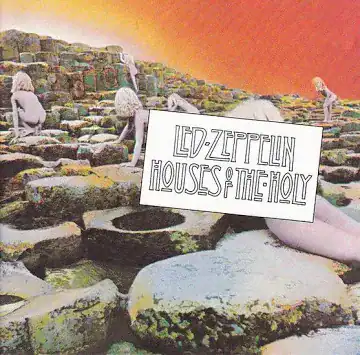
Harwood’s work with Led Zeppelin is one of the strongest indicators of his standing as an engineer. His connection with the group extended across several major projects during the 1970s. Official Led Zeppelin archival material documents him carrying out reduction-mix work during the Houses of the Holy period, while later sessions for Physical Graffiti and Presence brought him into some of the band’s most demanding studio work.
Sound On Sound’s detailed account of the recording of Kashmir states that sessions for Physical Graffiti continued at Olympic Studios in February 1974 with Keith Harwood brought in as engineer. The timing is striking: Harwood’s work with Led Zeppelin at Olympic overlapped the same general period in which he was involved with Bowie’s Diamond Dogs. This demonstrates how engineers at a major studio could move between landmark projects by different artists within a relatively short span of time.
Kashmir required a complex combination of Led Zeppelin’s core performance with additional orchestral and Mellotron elements. Harwood’s involvement in such work shows that he was trusted with sessions whose arrangements were considerably more elaborate than a basic guitar-band recording. He also received engineering and mixing-related credits across the Physical Graffiti project.
Harwood later worked on Presence, recorded during a concentrated period in 1975. The album is known for its dense guitar arrangements and for the speed at which it was completed under difficult circumstances. Again, his role was technical and collaborative rather than one of authorship: Jimmy Page was the producer, and Harwood served the recording process as engineer.
For a Bowie biography, these Zeppelin credits matter because they establish Harwood’s professional level. Bowie was not working with an inexperienced technician on Diamond Dogs. He was working with an engineer operating within the top tier of British rock recording.
The Rolling Stones
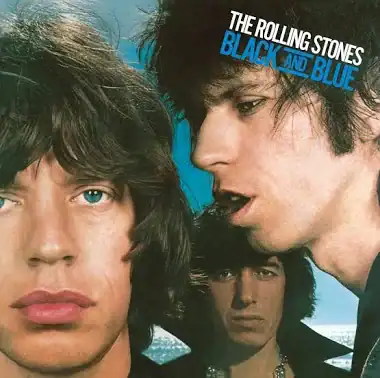
Harwood’s connection with the Rolling Stones is equally important to his career. He worked on recordings associated with It’s Only Rock ‘n’ Roll and Black and Blue, and his name remained connected with the Stones through the final years of his life. These sessions placed him alongside other major British engineers and producers and further strengthened his association with the hard-edged rock sound for which Olympic was famous.
The Rolling Stones connection also provides useful context for Diamond Dogs. Bowie was openly interested in the Stones as a musical reference point, and Rebel Rebel in particular has frequently been discussed in relation to Stones-style rock. That does not mean Harwood was brought in solely because of the Rolling Stones, and there is no need to invent such a motive. What can be said is that Bowie was recording in a studio and with an engineer deeply familiar with the British rock tradition the Stones helped define.
Harwood continued working with the Stones in the mid-1970s. His career was cut short in September 1977, shortly before the release of the live album Love You Live. The album was dedicated to his memory, an unusually visible acknowledgement for a recording engineer and evidence of the regard in which he was held by the group.
Published accounts disagree over some details of the fatal accident and over biographical information repeated in later reference works. For that reason this page does not present disputed claims about the exact circumstances as certainty. The secure historical point is that Harwood died in a road accident in September 1977 and that the Rolling Stones commemorated him on Love You Live.
Other Recording Work
Although Bowie, Led Zeppelin and the Rolling Stones provide the most famous names in Harwood’s discography, his professional range was much wider. Discographical sources credit him with work for the Pretty Things, Thin Lizzy, Wishbone Ash, Humble Pie, Ron Wood, Andy Fraser, the Winkies and other artists. The variety of those credits demonstrates that his career was not built around one band or one production method.
With Thin Lizzy, Harwood was involved during the period of Vagabonds of the Western World and later Fighting. With Wishbone Ash, his engineering and remixing credits include material from the early 1970s. He also worked with the Pretty Things during their later recording career and with Ron Wood on Now Look. These projects moved between hard rock, blues, progressive elements and more straightforward song-based recording.
Such diversity was typical of successful house and freelance engineers. Unlike an artist, whose discography may develop around a recognisable personal style, an engineer had to respond to the identity of whoever entered the studio. The best evidence for Harwood’s ability is therefore not a single signature effect that can be heard on every album, but the fact that very different major artists repeatedly trusted him with their recordings.
This also cautions against romantic claims about a unique “Keith Harwood sound.” Without detailed technical documentation, it would be wrong to attribute every sonic similarity between records to him. The engineer’s responsibility was partly to adapt. Bowie’s Diamond Dogs does not sound like Led Zeppelin’s Presence, and neither sounds like every Rolling Stones session Harwood touched. His professional achievement lay in helping each project become technically and musically workable on its own terms.
An Engineer Rather Than a Public Figure
One difficulty in documenting Harwood is the relative scarcity of interviews and first-person material. Musicians and producers were routinely interviewed by the music press, while engineers often remained behind the scenes. As a result, there are far fewer securely sourced Keith Harwood quotations than there are quotations from Bowie, Tony Visconti, Jimmy Page or members of the Rolling Stones.
For that reason, this page does not manufacture a personal philosophy for Harwood or place modern-sounding statements in his mouth. No quotation is included unless it can be traced to a reliable source. The quote boxes on this page therefore use Tony Visconti‘s documented comments where they directly illuminate Harwood’s Bowie work rather than pretending that Harwood himself left a large archive of published recollections.
This absence of personal testimony changes the way his history has to be written. Instead of relying on autobiography, the evidence comes primarily from album credits, studio histories, session documentation and recollections by colleagues. That kind of evidence can establish where he worked and what job he performed, but it cannot always tell us what he personally thought about Bowie, a particular song or a particular recording technique.
Maintaining that boundary is important. Harwood’s documented contribution is already significant. There is no historical need to make the story more dramatic by inventing a friendship with Bowie, claiming a specific creative decision without evidence, or describing conversations that have not been preserved.
Death in 1977
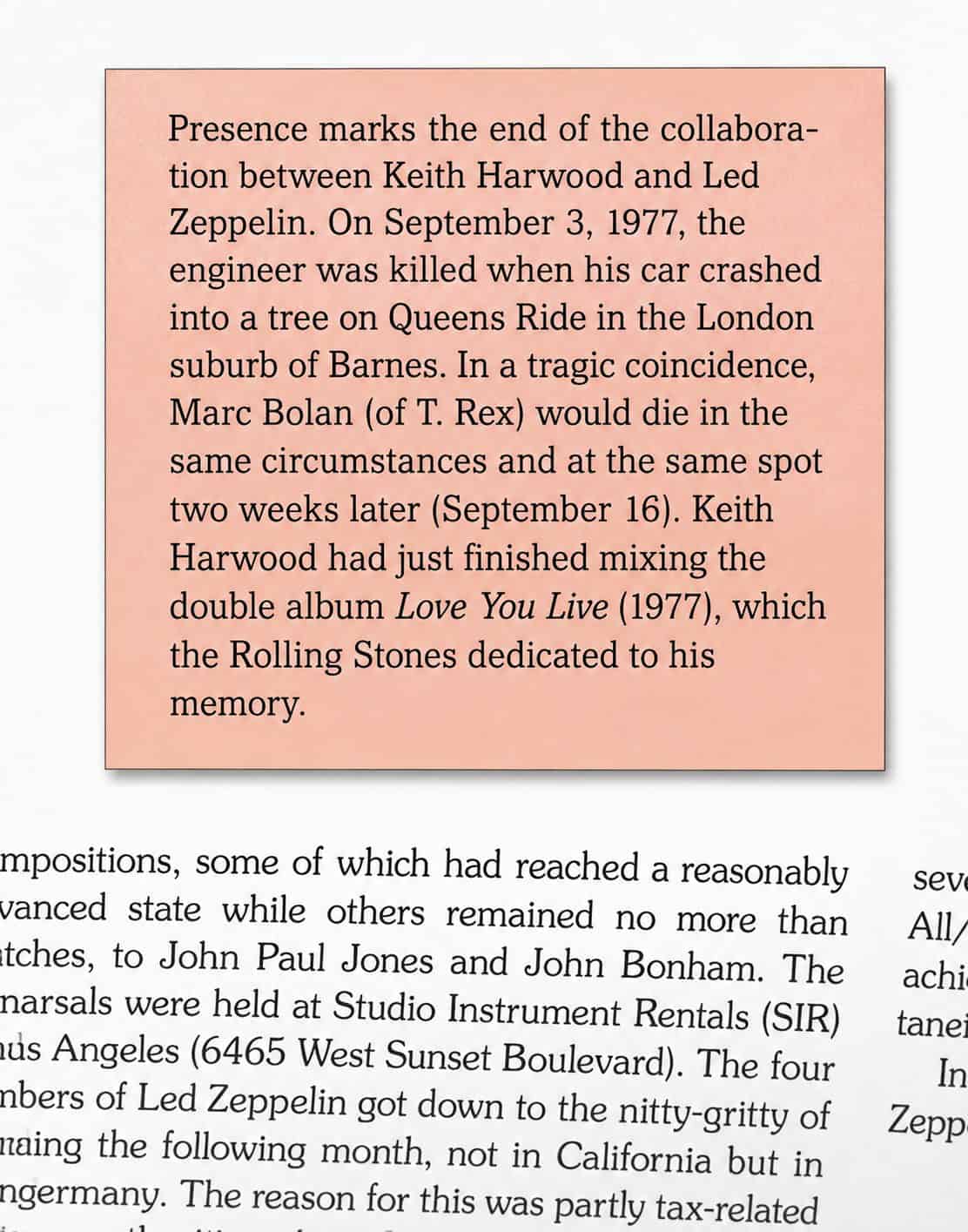
Keith Harwood died in a road accident on September 3, 1977. His death ended a career that had, within a relatively short period, accumulated credits on recordings by many of the most important British rock artists of the decade. Because secondary accounts differ on some additional circumstances, this page does not repeat those disputed details as established fact.
The Rolling Stones’ dedication of Love You Live to Harwood gave his death an enduring place in rock history. The gesture also demonstrates that an engineer who usually worked outside the spotlight could become an important member of an artist’s wider creative circle.
Keith Harwood‘s Legacy
Keith Harwood‘s legacy can be heard across an unusually concentrated body of 1970s recording. His credits connect Olympic Studios, David Bowie, Led Zeppelin, the Rolling Stones and a wide range of other artists. Yet his importance is easiest to understand when the word “engineer” is treated not as a minor technical footnote but as a profession central to the making of records.
For Bowie, Harwood arrived at exactly the moment when the old working structure was changing. Diamond Dogs was Bowie’s first self-produced album of original material and a record on which he assumed much more instrumental responsibility. Harwood gave that process an experienced technical foundation. He engineered the sessions, participated in selected mixes and then moved with Bowie into the very different challenge of recording the Diamond Dogs tour for David Live.
Those two projects are enough to secure his place in the Bowie story. The first captures Bowie inside the studio, constructing a new sound after Ziggy Stardust. The second captures the same material transformed into a large theatrical concert and preserved under difficult live-recording conditions. Together they show two sides of engineering: the controlled construction of a studio record and the irreversible act of capturing a live performance.
Harwood’s wider discography confirms that this was not accidental. Led Zeppelin trusted him with work connected to Houses of the Holy, Physical Graffiti and Presence. The Rolling Stones worked with him on major mid-1970s recordings and later dedicated Love You Live to his memory. Other artists across the British rock scene used his skills in the same period.
Because engineers were rarely photographed or interviewed as extensively as performers, Harwood remains less familiar to the general public than the albums he helped make. The records themselves are therefore his strongest archive. Every surviving original credit that names him provides a small piece of evidence for a career spent making other people’s music recordable, mixable and permanent.
Further Information and Sources
This article has been checked against official David Bowie archive material, Tony Visconti‘s published sleeve-note recollections, the official Led Zeppelin archive and established recording-history sources. Where later discographical databases differ on individual mix credits, the text keeps to the broader credit information that can be supported consistently.
David Bowie official archive:
Diamond Dogs – Tony Visconti liner-note extract
David Live – Tony Visconti sleeve-note extract
Recording history:
Sound On Sound – The Story of Olympic Studios
Sound On Sound – Classic Tracks: Led Zeppelin, Kashmir
Led Zeppelin official archive – Olympic Studio Sessions
Article Origin
This article was researched and written for DavidBowieWorld.com as part of the site’s David Bowie Collaborations & Creative Circle Archive. It focuses specifically on Keith Harwood‘s documented professional connection with David Bowie and places that work within the wider context of Harwood’s career as a recording engineer.
Where published sources disagree, disputed details have not been presented as established fact. No quotation has been attributed to Keith Harwood without a verifiable source, and no undocumented Bowie recording credit has been added.
© DavidBowieWorld.com — David Bowie Collaborations & Creative Circle Archive.
