
Helena Springs – Dancing in the Street and Live Aid with David Bowie
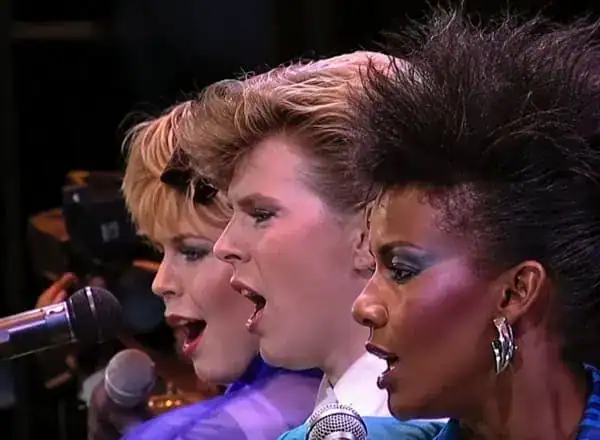
Helena Springs performing as part of David Bowie’s vocal ensemble during Live Aid at Wembley Stadium, London, on 13 July 1985.
Helena Springs is an American singer and songwriter whose professional career has included collaborations with artists including Bob Dylan, Bette Midler, Elton John, the Pet Shop Boys and many other leading performers. Within David Bowie’s career she is best known for her contribution to two closely connected projects in 1985: the charity single Dancing in the Street, recorded by David Bowie and Mick Jagger, and Bowie’s appearance at Live Aid at Wembley Stadium.
Together with fellow session vocalist Tessa Niles, Springs recorded the backing vocals for Dancing in the Street, a charity single released in support of the Live Aid famine relief appeal. Shortly afterwards she joined Bowie on stage during his Live Aid performance on 13 July 1985, providing backing vocals throughout his Wembley Stadium set.
Although Helena Springs‘ documented collaboration with David Bowie was limited to this period, it formed part of one of the most widely remembered moments of Bowie’s 1980s career. Her work on both the recording and the live performance reflects the important role played by experienced session vocalists in some of Bowie’s most significant projects.
- Name: Helena Springs
- Profession: Singer and songwriter
- Bowie connection: Backing vocalist on Dancing in the Street and during David Bowie’s Live Aid performance
- Recording with Bowie: Dancing in the Street (1985)
- Live performance with Bowie: Live Aid, Wembley Stadium, London, 13 July 1985
- Other notable collaborations: Bob Dylan, Bette Midler, Elton John and Pet Shop Boys
Early Life and Musical Beginnings
Helena Springs was born in 1961 in the United States. Compared with many of the internationally known artists with whom she later worked, relatively little verified information has been published about her childhood or early musical background. As a result, the years before the beginning of her professional career remain only sparsely documented.
What is well established is that Springs entered the professional music industry while still in her teens. At the age of seventeen, she successfully auditioned for Bob Dylan‘s touring band, an opportunity that marked the beginning of her international recording and touring career.
Working with Dylan introduced Springs to audiences across Japan, Australia, New Zealand, Europe and North America during the 1978 World Tour. It also established her as a professional vocalist at an unusually young age, laying the foundation for a career that would later include collaborations with David Bowie, Mick Jagger, Bette Midler, Elton John, the Pet Shop Boys and many other internationally recognised artists.
Working with Bob Dylan
Helena Springs‘ professional breakthrough came in 1978, when, at the age of seventeen, she joined Bob Dylan‘s touring band as a backing vocalist. For a young singer at the beginning of her career, the appointment provided an opportunity to work alongside one of the most influential recording artists of the twentieth century.
Dylan’s 1978 World Tour visited Japan, Australia, New Zealand, Europe and North America and featured one of the largest ensembles of his career. Springs became part of the backing vocal section, performing during a tour that combined material from throughout Dylan’s catalogue with songs from his recently released album Street-Legal.
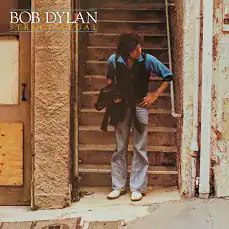
Alongside her live performances, Springs also contributed backing vocals to Street-Legal. The album’s expanded arrangements, incorporating horns, keyboards and layered vocal harmonies, gave the backing vocalists a more prominent role than on many of Dylan’s earlier studio recordings.
Springs remained associated with Dylan during the period surrounding Slow Train Coming, contributing to a significant transitional chapter in his career. In addition to touring and studio work, the two also collaborated as songwriters. Their compositions included Coming From the Heart (The Road Is Long), If I Don’t Be There by Morning and Walk Out in the Rain, the latter two later recorded by Eric Clapton. Several additional Dylan–Springs compositions remain officially unreleased.
Her years with Bob Dylan established Helena Springs within the international music industry and led to further work as both a touring and recording vocalist. During the following years she expanded her professional career through collaborations with a wide range of internationally recognised artists, eventually leading to her work with David Bowie during the summer of 1985.
Building a Career as a Session Vocalist
Following her years with Bob Dylan, Helena Springs continued developing her career as a professional recording and touring vocalist. Rather than remaining associated with a single artist, she established herself as a session singer, working on a variety of recording sessions, concert tours and television productions in both the United States and the United Kingdom.
One of the most significant stages of this period was her work with Bette Midler as a member of The Harlettes, Midler’s long-established backing vocal trio. The Harlettes combined close vocal harmonies with choreography and theatrical stage performance, making them an integral part of Midler’s live productions rather than simply accompanying singers.
Alongside her work with Midler, Springs continued accepting studio recording sessions for a variety of artists and producers. By the mid-1980s she had established a professional career that combined touring, studio recording and songwriting, leading to collaborations with an increasingly diverse range of performers.
This period of sustained session work brought Helena Springs into David Bowie’s professional circle during preparations for Dancing in the Street and Live Aid in 1985. Shortly afterwards she also continued her career through further touring and recording projects, including work with Elton John.
Joining David Bowie
By the summer of 1985, Helena Springs had established herself as an experienced session vocalist through years of touring, studio recording and television work. Her professional career brought her to one of the most ambitious charity projects of the decade when she became involved in David Bowie’s preparations for Live Aid.
In support of the forthcoming famine relief concert, Bowie and Mick Jagger agreed to record a new version of Martha and the Vandellas’ 1964 hit Dancing in the Street. An early proposal to perform the song simultaneously from London and Philadelphia via satellite was abandoned because of transmission delays, leading instead to the decision to record a charity single accompanied by a promotional video.
The principal London recording session took place at Westside Studios in Holland Park, where Bowie was also working on music for Julien Temple’s forthcoming film Absolute Beginners. With Live Aid only weeks away, the recording, filming and post-production all had to be completed within an exceptionally short period.
Helena Springs and Tessa Niles were engaged as the session’s backing vocalists. Both singers already possessed extensive experience in studio recording and live performance, allowing the vocal arrangements to be completed efficiently within the demanding production schedule.
Although Helena Springs‘ documented collaboration with David Bowie was concentrated within a relatively short period, it resulted in two projects that remain closely associated with Bowie’s career during 1985: the recording of Dancing in the Street and his appearance at Live Aid on 13 July.
Recording Dancing in the Street
The principal London recording session for Dancing in the Street took place at Westside Studios during the final weeks of June 1985. Recording engineer Mark Saunders, who worked on the session, later recalled that David Bowie had been recording music for Absolute Beginners before attention shifted to the Live Aid project later that day.
David Bowie and Mick Jagger – Dancing in the Street (1985)
The musicians assembled for the session included Neil Conti (drums), Matthew Seligman and John Regan (bass), Kevin Armstrong, Earl Slick and G.E. Smith (guitars), Steve Nieve (keyboards), Stan Harrison and Lenny Pickett (saxophones), Mac Gollehon (trumpet), together with percussionists Jimmy Maelen and Pedro Ortiz. Helena Springs and Tessa Niles completed the vocal line-up as the session’s backing vocalists.
A cassette of Martha and the Vandellas’ original recording was used as the musical reference while the band quickly developed a contemporary arrangement. Because the project had to be completed within an exceptionally limited timescale, there was little opportunity for extended rehearsal before recording began.
The initial performances were recorded with the musicians playing together while David Bowie, Mick Jagger, Helena Springs and Tessa Niles sang simultaneously in the studio. Although this approach captured the energy of a live performance, it also resulted in microphone spill between the vocalists, reducing the flexibility available during the final mix.
According to Mark Saunders, two complete takes of the song were recorded. After reviewing both performances, the production team selected the instrumental performance from the first take as the foundation for the finished master recording.
The vocal parts were then recorded again separately. Helena Springs and Tessa Niles completed the backing vocal overdubs first, followed by Mick Jagger and finally David Bowie. Re-recording the vocals individually preserved the energy of the original performance while giving the engineers far greater control during the final mix.
Completing the Recording
After Helena Springs and Tessa Niles had completed their backing vocal overdubs, Mick Jagger recorded his final lead vocal, followed by David Bowie. According to recording engineer Mark Saunders, Bowie approached the session methodically, recording and refining individual sections of the song where necessary before moving on to the next passage.
The session was recorded on analogue multitrack tape, requiring precise coordination between the performers and the engineering team. Unlike modern digital recording systems, each edit had to be carefully executed during the recording process, making accurate timing essential throughout the vocal overdubs.
Once the lead vocals had been completed, the engineers prepared a rough mix for immediate use during filming. Because the promotional video was scheduled to be shot later the same day, the recording had to be ready for playback before the musicians left the studio.
Following the London session, the multitrack master was taken to New York, where additional overdubs were recorded before the final mix was completed by Bob Clearmountain. These later production stages refined the recording while preserving the energy of the original studio performance.
Released in August 1985 in support of the Live Aid famine relief appeal, Dancing in the Street became an international commercial success, reaching number one on the UK Singles Chart. Royalties from the single were donated to the Live Aid charity appeal.
For Helena Springs, the recording represents her documented studio collaboration with both David Bowie and Mick Jagger. Although completed within an exceptionally compressed production schedule, the single remains one of the best-known charity recordings associated with Live Aid.
The Making of the Video
Immediately after the recording session had been completed, David Bowie and Mick Jagger travelled to Spillers Millennium Mills in London’s Docklands, where filming of the promotional video took place under the direction of David Mallet. Like the recording itself, the production was completed within an exceptionally limited timescale to ensure that both the single and the video could be released before Live Aid.
Rather than following a scripted storyline, the film concentrated on Bowie and Jagger performing together throughout the abandoned industrial complex. Their energetic performance and the deliberately informal style of the production became defining features of the finished video.
Although Helena Springs and Tessa Niles did not appear on screen, their backing vocals remained an integral part of the soundtrack. Their harmonies can be heard throughout the recording, supporting the lead vocals across the entire performance.
Following completion of filming, both the single and its promotional video were prepared for international release. Together they became an important part of the wider publicity surrounding Live Aid during the weeks leading up to the concert.
Live Aid
David Bowie performing at Live Aid, Wembley Stadium, London, 13 July 1985.
On 13 July 1985, Helena Springs appeared with David Bowie during Live Aid at Wembley Stadium in London. Organised by Bob Geldof and Midge Ure, the concert brought together many of the world’s leading musicians in support of famine relief efforts in Ethiopia and was broadcast internationally.
Springs formed part of Bowie’s backing vocal team alongside Tessa Niles. Having recently worked together during the recording of Dancing in the Street, the two singers again provided the harmony vocals for Bowie’s Wembley performance.
Bowie’s set consisted of four songs: TVC 15, Rebel Rebel, Modern Love and “Heroes“. Lasting just over twenty minutes, the performance has remained one of the most widely remembered appearances of Bowie’s career during the 1980s.
Following the musical performance, Bowie introduced the promotional film for “Drive” by the American group The Cars. Directed by David Mallet, the film incorporated footage highlighting the humanitarian crisis in Ethiopia and formed part of the wider Live Aid broadcast.
For Helena Springs, Live Aid represents her only documented live performance with David Bowie. Together with her contribution to Dancing in the Street, it forms the complete extent of her recorded collaboration with Bowie during the summer of 1985.
Solo Career

Following her work with David Bowie during the summer of 1985, Helena Springs continued her career as both a recording artist and a professional session vocalist. While remaining active in studio work, she also pursued solo recording projects under her own name.
In 1986, Springs released her debut album, Helena, on Arista Records. The album included several songs co-written by Springs and reflected the contemporary pop and soul production styles of the mid-1980s. Singles released from the album included I Want You and Paper Money.
Her second album, New Love, followed in 1987. Alongside her solo recordings, Springs continued writing songs and undertaking studio work while remaining active within the international music industry.
Continuing Session Work
Alongside her solo career, Helena Springs continued working as a session vocalist on recording projects for a variety of artists. Her professional experience in both studio recording and live performance led to further collaborations throughout the second half of the 1980s.
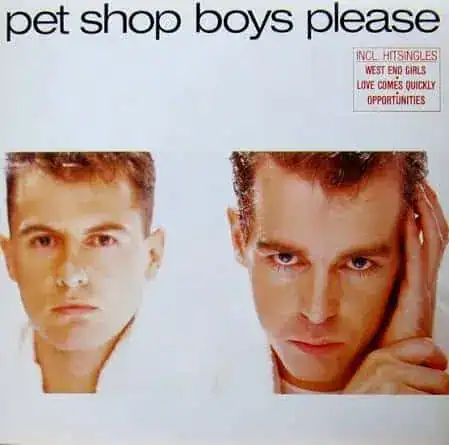
Among these projects was her work with the Pet Shop Boys, providing additional backing vocals on West End Girls and Violence, both released on the group’s debut album Please (1986). Her session career also continued through work with other artists and producers in both Europe and the United States.
Like many professional session singers, much of Helena Springs‘ work took place behind the scenes. Although her name was often less familiar than the artists with whom she recorded, her voice became part of numerous commercially released recordings during the 1980s.
Legacy
Helena Springs‘ career spans recording, touring and songwriting, bringing her into contact with many leading figures in popular music during the late twentieth century. Her professional credits include collaborations with artists such as Bob Dylan, David Bowie, Mick Jagger, Bette Midler, Elton John and the Pet Shop Boys.
Within David Bowie’s career, Springs is associated with two documented collaborations during the summer of 1985: the recording of Dancing in the Street and Bowie’s performance at Live Aid. Although her work with Bowie was limited to that period, both projects remain closely linked with one of the most widely recognised moments of Bowie’s career during the 1980s.
Her career also illustrates the important role played by session vocalists within the recording industry. While they rarely received the public recognition afforded to headline performers, their contributions formed an essential part of many successful recordings and live performances.
Helena Springs in Bowie’s Collaborative Universe
Helena Springs occupies a distinctive place within David Bowie’s collaborative history. Her documented work with Bowie was concentrated within a single period during the summer of 1985, when she participated in both the recording of Dancing in the Street and Bowie’s appearance at Live Aid.
Working alongside fellow backing vocalist Tessa Niles, Springs contributed to a charity single that became one of the best-known musical projects associated with Live Aid. Days later, both singers appeared as members of Bowie’s backing vocal team during his Wembley Stadium performance.
Although relatively brief, Helena Springs‘ collaboration with David Bowie forms part of two projects that continue to be revisited through documentaries, archive broadcasts and studies of Live Aid and Bowie’s career. Her contribution represents one chapter within the wider network of musicians and vocalists who worked alongside Bowie throughout his career.
Official Website & Further Information
At the time of writing, Helena Springs does not maintain a publicly available official website. Her recorded work continues to document a career that has encompassed recording, touring, songwriting and session work with a wide range of internationally recognised artists.
DavidBowieWorld.com is dedicated to documenting the careers of David Bowie’s collaborators through carefully researched historical information and, where available, first-hand contributions from the artists themselves. This page will continue to be updated as new verified information becomes available.
Article Origin
This article has been researched and written for DavidBowieWorld.com as part of the website’s ongoing project documenting the musicians, singers, producers, engineers and creative collaborators who contributed to David Bowie’s extraordinary career.
Particular attention has been given to Helena Springs‘ documented collaboration with David Bowie during the recording of Dancing in the Street and her appearance at Live Aid on 13 July 1985, placing those contributions within the wider context of her career as a recording artist, songwriter and professional session vocalist.
