
Lenny Pickett & David Bowie | Borneo Horns Saxophonist
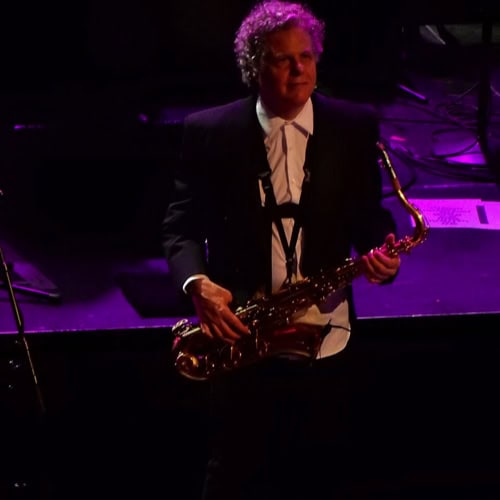
Lenny Pickett performing at the Tower of Power 50th Anniversary Concert, Oakland, California, 2 June 2018. Photograph by PaulHamaker / Wikimedia Commons / CC BY 4.0.
Lenny Pickett is an American saxophonist, composer and arranger whose remarkable career has moved between funk, rhythm & blues, rock, jazz, television, theatre and experimental music. To millions of television viewers he is familiar through the Saturday Night Live band, but his career also includes an important and distinctive association with David Bowie.
Pickett entered Bowie’s musical world in 1983, when he was recruited as one of three saxophonists for the Serious Moonlight Tour. Alongside Steve Elson and Stan Harrison, he became part of the horn section that accompanied Bowie during one of the largest tours of his career.
The relationship did not end with the tour. The three musicians became known as the Borneo Horns and subsequently appeared on Bowie recordings including Tonight and Never Let Me Down. Nearly two decades later, Bowie brought the trio together again for Heathen.
- Full name: Lenny Pickett
- Born: 10 April 1954, Las Cruces, New Mexico, USA
- Raised: Berkeley, California
- Profession: Saxophonist, composer, arranger and musical director
- Known for: Tower of Power, The Borneo Horns and Saturday Night Live
- First Bowie work: Serious Moonlight Tour, 1983
- Bowie studio work: Tonight (1984), Never Let Me Down (1987), Heathen (2002)
- Bowie associates: Steve Elson and Stan Harrison – The Borneo Horns
Early life and musical development
Lenny Pickett was born on 10 April 1954 in Las Cruces, New Mexico, and grew up in Berkeley, California. His musical education developed in an unconventional way. Although he took some clarinet lessons as a child and participated in school music, much of his later development came through listening, experimentation, jam sessions and contact with other musicians rather than prolonged formal conservatory training.
His stepfather played bebop trumpet, and Pickett grew up surrounded by different forms of music. Saxophonist Burt Wilson was another important early influence. Pickett absorbed music by listening closely and gradually taught himself not only how to play but also how to compose and arrange.
That independent approach remained fundamental to his musical personality. Rather than restricting himself to a single genre, he became comfortable moving between rhythm & blues, soul, funk, rock, jazz and experimental music.
Tower of Power
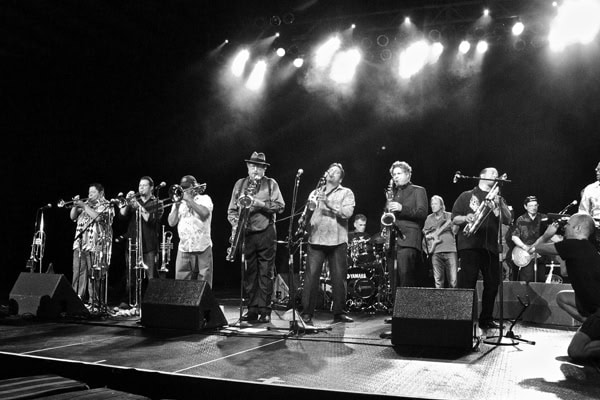
Pickett’s first major international platform came through Tower of Power. He joined the Oakland-based funk and soul group while still a teenager and became an important member of its celebrated horn section during the 1970s.
Tower of Power demanded much more than technical accuracy. Its horn arrangements depended on rhythmic precision, dynamics and the ability of several players to function as a tightly coordinated musical unit. Pickett developed as both a saxophonist and arranger in that environment, while his powerful tenor sound and command of the instrument’s extreme upper register became increasingly recognisable.
The Tower of Power horn section also worked outside the group’s own recordings, giving Pickett extensive experience as a session musician and exposing him to a wide variety of artists and musical situations.
Joining David Bowie’s musical world
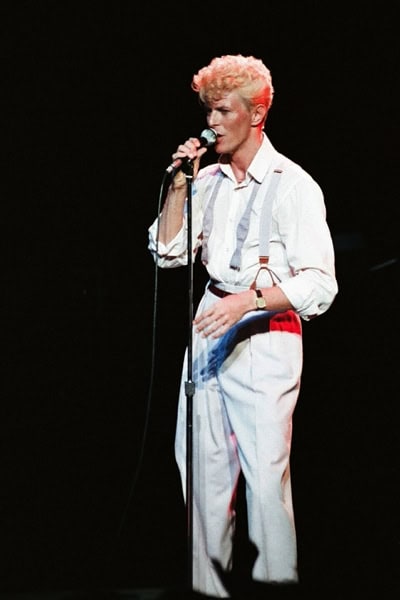
In 1983 David Bowie was preparing to take the enormous success of Let’s Dance onto the concert stage. The resulting Serious Moonlight Tour required a large and versatile band capable of performing the new material while also radically reworking songs from Bowie’s earlier catalogue.
Pickett had not played on the Let’s Dance studio album. Steve Elson and Stan Harrison had participated in the recording sessions, but Pickett’s Bowie connection began when he was recruited for the subsequent tour.
Pickett later described the beginning of the collaboration very simply:
Those two saxophonists were Steve Elson and Stan Harrison. Pickett had known Elson since their youth in Berkeley, while he had met Harrison after moving into the New York music world.
Rehearsing for the Serious Moonlight Tour
The preparations took place in New York in the spring of 1983. First-hand recollections preserved by DavidBowieWorld.com from backing vocalist Frank Simms place the band at Top Cat Rehearsal Studios in March.
According to Simms, the rhythm section had already been working for approximately two or three days when Bowie arrived. Bowie had recently returned from Australia, where the promotional films for Let’s Dance and China Girl had been made.
Simms remembered Bowie watching attentively while musical director Carlos Alomar worked with the musicians on the material. Bowie would then join the rehearsals with microphone in hand as the complete concert set gradually took shape.
It was within this large touring ensemble that Pickett, Elson and Harrison began developing the musical relationship that would eventually become the Borneo Horns.
The birth of the Borneo Horns
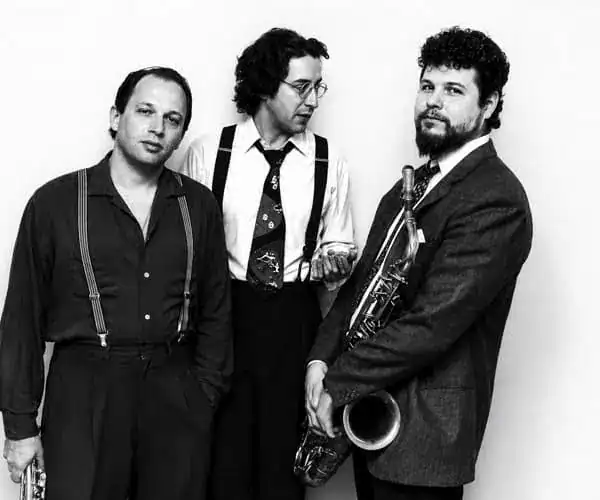
Photo by Keri Pickett. Reproduced with permission. Publication on DavidBowieWorld.com approved by Steve Elson.
The Borneo Horns did not simply arrive as an established group when Bowie assembled his touring band. Their identity developed during the Serious Moonlight Tour itself.
Pickett later explained that the tour contained considerable periods of downtime. During soundchecks, the rhythm section would often be checked before the horn players were required. Pickett began using that waiting time to write music for the three saxophonists.
Steve Elson has independently remembered the same period: Pickett was writing, Elson was also developing material, and the three musicians began playing together as a horn section during their time away from the actual Bowie performances.
What began informally on tour developed into a genuine musical project. Pickett, Elson and Harrison later performed independently in New York and recorded together as the Borneo Horns.
Their connection therefore grew directly out of Bowie’s 1983 touring environment, but the group ultimately established an identity extending beyond Bowie.
The Serious Moonlight Tour
The Serious Moonlight Tour opened in May 1983 and continued until December. It travelled through Europe, North America, Asia, Australia and New Zealand and was seen by more than two million people.
Pickett, Elson and Harrison were fully integrated into the touring band rather than being used merely as occasional decorative brass. The arrangements required them to move between the polished sound of Bowie’s new material and songs drawn from very different periods of his career.
The tour’s repertoire stretched across Bowie’s catalogue, placing songs from Let’s Dance beside material such as Heroes, Life on Mars?, Golden Years, Young Americans and other earlier works. That demanded considerable stylistic flexibility from every member of the band.
Frank Simms‘ first-hand recollections also provide a valuable picture of the working environment surrounding the musicians. He remembered Bowie as actively engaged with the rehearsals and described long periods in which the touring company worked together to develop both the musical and theatrical elements of the show.
For Pickett, the tour had another consequence that could not have been predicted when he was hired: the downtime between Bowie’s concerts provided the circumstances in which his own Borneo Horns project began to take shape.
Studio collaboration: Tonight (1984)
The Bowie connection continued after the Serious Moonlight Tour. Pickett, Elson and Harrison participated in the sessions for Tonight, released in 1984.
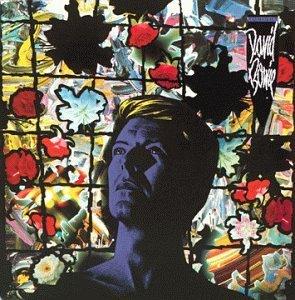
By this point the three musicians already had the experience of an entire Bowie world tour behind them. Their ability to work as a coordinated saxophone section could therefore be transferred naturally from the stage into the studio.
Pickett contributed tenor saxophone and clarinet to the album sessions, while Elson and Harrison supplied complementary saxophone parts. Their presence gave Bowie access to three musicians who could function as a tightly organised section while retaining strongly individual instrumental voices.
The sessions also placed Pickett within a broader group of musicians surrounding Bowie during this period, including Carlos Alomar, Carmine Rojas, Omar Hakim and other players involved in Bowie’s mid-1980s studio work.
Never Let Me Down (1987)
Three years later, the Borneo Horns again became part of a Bowie studio project with Never Let Me Down.
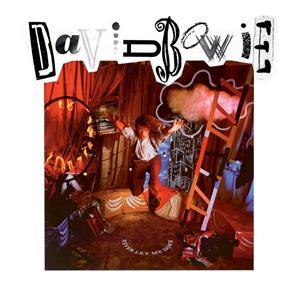
Pickett returned on tenor saxophone, with Stan Harrison and Steve Elson again contributing alongside him. Their appearance demonstrated that the musical partnership created during the 1983 tour had survived well beyond its original purpose.
By then Pickett’s career was moving simultaneously through several different musical worlds. He could work on a large-scale Bowie production while maintaining his own musical projects and developing what would become another major part of his professional life: Saturday Night Live.
Never Let Me Down marked the last Bowie studio appearance by the Borneo Horns for fifteen years.
The Borneo Horns beyond Bowie
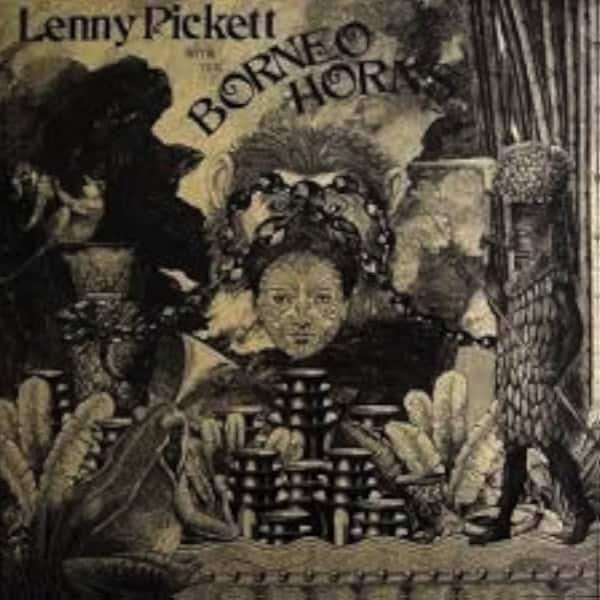
The Borneo Horns were never merely a name for Bowie’s backing section. The music Pickett had begun writing during the Serious Moonlight Tour eventually developed into an independent project.
After returning to New York, the musicians performed their own material. A radio performance attracted the attention of Geoff Muldaur, and the group subsequently recorded Lenny Pickett with the Borneo Horns.
The unusual instrumentation gave the project its distinctive character. Pickett was not trying simply to reproduce a conventional rock horn section. The music grew from three saxophonists exploring arrangements together, drawing on their different backgrounds and Pickett’s increasing interest in composition.
The project is therefore an important part of the Bowie story for an unusual reason: something created during idle moments on a Bowie world tour developed into an independent body of music.
Returning to David Bowie: Heathen
The Bowie–Borneo Horns connection appeared to have ended after Never Let Me Down, but in 2002 Bowie brought Pickett, Elson and Harrison together again during the making of Heathen.
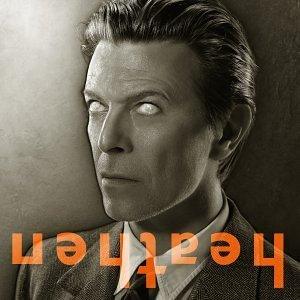
The reunion was historically significant. Almost nineteen years had passed since the three saxophonists first toured with Bowie, and fifteen years had passed since their previous Bowie studio appearance.
The Borneo Horns recorded saxophone overdubs during the Heathen sessions, reconnecting a musical relationship that had begun during the very different world of Serious Moonlight.
Their work can be heard particularly on Slow Burn, where the three-piece saxophone section appears alongside a recording that also features Pete Townshend on guitar.
The appearance of the Borneo Horns on Heathen created a direct musical bridge between Bowie’s enormous commercial period of the 1980s and one of the major albums of his twenty-first-century return.
A unique saxophone voice
Pickett’s importance extends far beyond the list of artists with whom he has performed. His playing is immediately recognisable, particularly because of his extraordinary command of the tenor saxophone’s altissimo register.
Those very high notes are not simply a technical trick. Pickett developed an individual vocabulary in which extreme register, rhythmic attack, tone and phrasing form part of a coherent musical voice.
His approach also reflects the unusually broad musical environment in which he developed. Rhythm & blues, soul, funk, jazz, popular music and experimental composition have never existed as completely separate worlds in his career.
Saturday Night Live
In 1985, Pickett joined the band of NBC’s Saturday Night Live. The position gave him a very different kind of musical platform from international rock touring: a permanent New York base combined with the requirement to respond every week to changing performers, musical guests and styles.
He became the programme’s musical director in 1995. His saxophone playing has consequently been heard by generations of television viewers, while his role behind the scenes has required him to lead an ensemble capable of moving rapidly between virtually every form of contemporary popular music.
Pickett has described the programme as an opportunity to remain connected to contemporary culture because each new episode brings different artists and musical demands into the studio.
Composer, arranger and educator
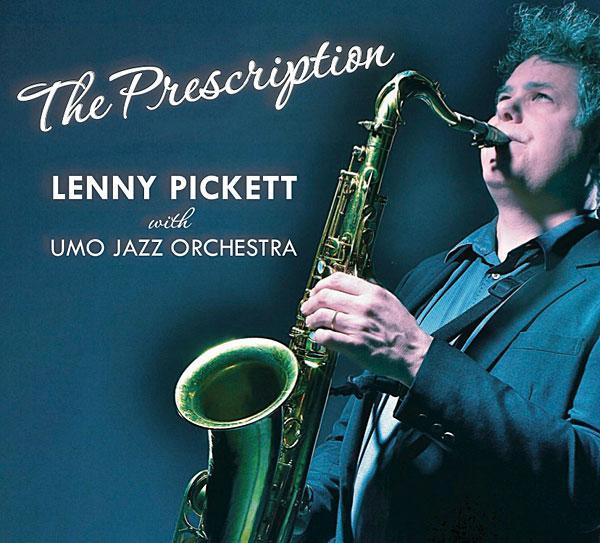
Pickett’s career cannot be understood solely through his work as a saxophone soloist. Composition and arranging have remained equally important.
He has written music for theatre and contemporary dance and has worked with choreographers and other artists outside conventional rock and jazz settings. His compositional interests also help explain why the downtime during Bowie’s 1983 tour became productive: when three saxophonists were available, Pickett instinctively began writing music for the combination.
He has also taught and shared his approach to saxophone playing with younger musicians, including through his association with New York University’s jazz programme.
Beyond David Bowie
Across his career Pickett has worked with an exceptionally broad range of musicians. His recording and performance history stretches from Tower of Power and Bowie to artists working in rock, soul, funk, jazz and experimental music.
That diversity is more revealing than any single list of famous names. Pickett has consistently resisted the idea that a musician must belong to only one musical category.
That description captures an important element of his career. Pickett’s musical identity was built not by remaining inside one genre but by moving freely between different traditions while retaining a recognisable personal sound.
Lenny Pickett‘s place in the Bowie story
Lenny Pickett‘s place in David Bowie’s history is specific and important. He did not play on Let’s Dance, and the Borneo Horns were not originally an established Bowie studio section. Pickett entered the story when Bowie hired him, Steve Elson and Stan Harrison for the Serious Moonlight Tour in 1983.
What happened afterwards gives the collaboration its particular significance. During the tour, Pickett began writing for the three saxophonists. Those experiments developed into the Borneo Horns, an independent musical partnership that Bowie subsequently used on Tonight and Never Let Me Down.
Then, after a fifteen-year absence from Bowie’s recordings, the same three musicians returned for Heathen in 2002.
Seen across that complete timeline, Pickett’s Bowie connection stretches from the stadium-scale world of Serious Moonlight to Bowie’s twenty-first-century work. More importantly, the collaboration produced something that existed independently of Bowie: a musical partnership whose origins can be traced directly to three saxophonists filling their spare time during the 1983 tour.
First-hand Serious Moonlight context
The history of Bowie’s 1983 touring band is further documented on DavidBowieWorld.com through first-hand material supplied by Frank Simms and George Simms.
Frank Simms‘ recollections and contemporary tour diary document the working environment surrounding the musicians from the New York rehearsals through the final concert in Hong Kong on 8 December 1983.
These eyewitness accounts provide valuable context for the period in which Pickett, Elson and Harrison first worked together with Bowie and in which the musical relationship that became the Borneo Horns was formed.
Official Website & Further Information
For more information about Lenny Pickett‘s music, compositions and career, visit his official website:
Official Website:
Lenny Pickett Music
Further Information:
Television Academy – Lenny Pickett
Article origin
This article has been researched and written for DavidBowieWorld.com as part of the website’s archive documenting the musicians, singers and creative collaborators who worked with David Bowie.
The article combines documented recording and touring information with published first-hand recollections from Lenny Pickett and historical context from material supplied directly to DavidBowieWorld.com by Frank Simms and George Simms concerning the 1983 Serious Moonlight Tour.
© DavidBowieWorld.com — David Bowie Collaborations & Creative Circle Archive.
