
Kevin Armstrong – Guitarist and David Bowie Collaborator
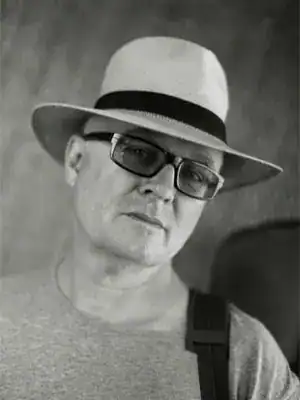
Photo: Stefan Brending / Wikimedia Commons / CC BY-SA 3.0 — Wikimedia file page
Kevin Armstrong is a British guitarist, songwriter, producer and musical director whose association with David Bowie began in the mid-1980s and continued, at intervals, into the 1990s.
Armstrong’s Bowie story encompasses several very different projects. He worked on Absolute Beginners, played on Bowie and Mick Jagger‘s Dancing in the Street, helped assemble and performed in Bowie’s band for Live Aid, became involved in the early period of Tin Machine, and later shared a songwriting credit with Bowie on the title track of 1. Outside.
Bowie also introduced Armstrong to Iggy Pop, beginning another major musical relationship in Armstrong’s career.
- Name: Kevin Armstrong
- Role: Guitarist, songwriter, producer and musical director
- Bowie association: Mid-1980s to 1995
- Key Bowie projects: Absolute Beginners, Dancing in the Street, Live Aid, Tin Machine and 1. Outside
- Live Aid: Guitarist and musical director for Bowie’s Wembley performance, 13 July 1985
- Tin Machine: Additional guitarist and keyboard player; co-writer of Run
- 1. Outside: Co-writer of the title track Outside and additional guitarist
- Related connection: Bowie introduced Armstrong to Iggy Pop
Before David Bowie
Kevin Armstrong‘s professional career had already begun before he entered Bowie’s musical circle. In the early 1980s he recorded with his own group Local Heroes SW9, associated with broadcaster, writer and independent record entrepreneur Charlie Gillett and his Oval Records label.
The group included bassist Matthew Seligman, who became a close friend and an important recurring musical colleague. Seligman would later join Armstrong in the band assembled for Bowie’s mid-1980s recordings and Live Aid appearance.
Armstrong also worked with Thomas Dolby, contributing guitar to Dolby’s recordings and live work. These associations established Armstrong as a versatile guitarist who could move comfortably between pop, rock and more experimental studio environments.
Rather than spending his career as a permanent member of a single successful group, Armstrong developed as a guitarist, songwriter, producer and bandleader. That flexibility would become particularly important once he began working with Bowie.
Meeting David Bowie
Armstrong’s official biography places his first meeting with Bowie in late 1984. Armstrong’s detailed recollections of their first substantial work together, however, centre on the sessions that developed into Absolute Beginners during 1985.
Armstrong has recalled being booked for a studio session without initially being told who the artist was. The musicians were effectively being brought in to work with a mysterious figure, only to discover that the artist was David Bowie.
It began a working relationship that would reappear in very different circumstances over approximately the next decade.
Kevin Armstrong on David Bowie
“He was very welcoming and encouraging to me always.”
Creating Absolute Beginners

Armstrong’s first major documented work with Bowie developed through the music being prepared for Julien Temple’s film Absolute Beginners, based on Colin MacInnes’s 1959 novel.
Armstrong has described an initial session in which Bowie was working on material for the film. Near the end of the available studio time, Bowie introduced the beginnings of another song.
That song was Absolute Beginners.
According to Armstrong, Bowie already had much of the song and some of its lyrics, but its final structure had not yet been established. Armstrong sat with Bowie and an acoustic guitar while the musicians helped develop the arrangement.
The process happened remarkably quickly. Within a short period the group had established the basic shape of the song and recorded a demo. Armstrong later remembered that the musicians immediately recognised that they had created something special.
Armstrong, bassist Matthew Seligman and drummer Neil Conti were subsequently invited to participate in the full recording session. Steve Nieve played keyboards, while Rick Wakeman contributed the prominent piano part to the finished recording. Percussion, brass and backing vocals expanded the arrangement further.
Armstrong also played a small but memorable role in the vocal sound of the record. When Bowie wanted a female voice with an ordinary, non-show-business quality, Armstrong suggested his sister Janet Armstrong. She subsequently contributed backing vocals to the recording.
Released in 1986, Absolute Beginners became one of Bowie’s most successful and enduring singles of the decade.
Dancing in the Street with Mick Jagger
David Bowie and Mick Jagger – Dancing in the Street (1985)
Armstrong’s next famous Bowie recording emerged directly from the same working period.
Bowie and Mick Jagger had agreed to record the Motown song Dancing in the Street as a charity release connected with Live Aid. Armstrong became involved before the band itself knew that the recording was going to happen.
He recalled being asked to attend a late-night meeting with Bowie and Jagger and to bring a guitar. Together they worked through the arrangement of the song in preparation for the recording.
The following day, the musicians who had been working on the Absolute Beginners material were unexpectedly asked to record Dancing in the Street. Armstrong played guitar alongside Matthew Seligman on bass, Neil Conti on drums and Steve Nieve on keyboards, with additional contributions subsequently becoming part of the finished record.
Armstrong later remembered the extraordinary speed of the process. The record was not the result of months of planning: it was assembled rapidly around musicians who were already working together.
After the recording, Bowie and Jagger filmed the famous video directed by David Mallet in London’s Docklands.
Kevin Armstrong on Dancing in the Street
“The band didn’t even know it was going to happen until minutes before we did it.”
Whatever later opinions of the song or video, the record became a major international hit and raised money for famine relief. For Armstrong it also formed part of an extraordinary sequence of events leading directly towards Live Aid.
Live Aid – Wembley Stadium, 13 July 1985

Video: TVC 15

Video: Rebel Rebel

Video: Modern Love

Video: Heroes
-
Video: TVC 15
-
Video: Rebel Rebel
-
Video: Modern Love
-
Video: Heroes
Armstrong’s most visible appearance with Bowie took place at Live Aid at Wembley Stadium in London on 13 July 1985.
His responsibility extended beyond playing guitar. Armstrong acted as musical director and was closely involved in putting together the musicians for Bowie’s performance.
The band drew heavily on Armstrong’s existing network. It included Matthew Seligman on bass, Neil Conti on drums, Thomas Dolby on keyboards, Clare Hirst on saxophone, Pedro Ortiz on percussion and backing vocalists Tessa Niles and Helena Springs, with Armstrong on guitar.
Kevin Armstrong on Bowie’s Live Aid band
“It was just a selection of friends and people who I was working with at that time.”
Bowie performed TVC 15, Rebel Rebel, Modern Love and “Heroes“. The compact set was broadcast as part of an event watched by an enormous international television audience.
Bowie also introduced the musicians individually from the stage. Armstrong later interpreted this as a generous acknowledgement of a band that had assembled quickly for a charity performance rather than as part of a conventional paid tour.
Live Aid is therefore central to Armstrong’s Bowie history. He was not a member of Bowie’s earlier Serious Moonlight touring band, nor of the later Glass Spider touring band. His role was different: helping construct and direct a new ensemble specifically for one of Bowie’s most widely seen performances of the 1980s.
From David Bowie to Iggy Pop
Bowie’s importance to Armstrong’s career extended beyond their own work together. Bowie introduced him to his longtime friend and collaborator Iggy Pop.
Armstrong played guitar on Iggy Pop‘s 1986 album Blah-Blah-Blah, which Bowie produced with David Richards, and became Iggy’s bandleader during touring in 1986 and 1987.
The professional relationship proved remarkably durable. Decades later Armstrong again assembled and led Iggy Pop‘s touring band, working with him from 2014 until 2019.
It was one of several important musical connections that grew out of Armstrong’s years within Bowie’s wider creative circle.
Joining the world of Tin Machine
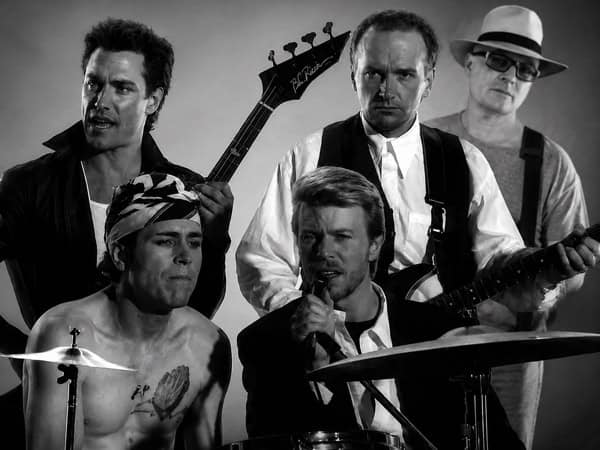
Armstrong returned to Bowie’s immediate musical circle during the development of Tin Machine, the group Bowie formed with guitarist Reeves Gabrels, bassist Tony Sales and drummer Hunt Sales.
Tin Machine marked a deliberate shift away from the polished solo productions and huge theatrical tours that had characterised much of Bowie’s mid-1980s career. Bowie wanted to work within the dynamics of a band, sharing the musical space with the other players.
Armstrong became an additional musician during the group’s early period and contributed to the self-titled Tin Machine album released in 1989.
His contributions included rhythm guitar and Hammond organ. He also shared a songwriting credit with Bowie on Run.
Run appeared on the CD and cassette versions of the original album but was omitted from the initial vinyl edition because of the limitations of the format’s running time.
Armstrong also performed with Tin Machine during the group’s early live activity. Although the official four members remained Bowie, Gabrels and the Sales brothers, Armstrong’s involvement was substantial enough that he has sometimes described his position during this period as that of an additional or fifth member.
Love Is Essential, Now and the road to Outside
Armstrong’s most unusual Bowie songwriting credit has roots that predate his first meeting with Bowie.
In 1980, Armstrong wrote a song called Love Is Essential while living in Brixton. The song contained a distinctive guitar figure that remained with him.
Years later, while Armstrong was playing the riff during a Tin Machine soundcheck, Bowie heard it and asked whether he could develop the idea.
The musicians subsequently worked the riff into an experimental Tin Machine piece called Now. Armstrong has recalled that Now was never fully developed into a permanent Tin Machine song, although it was performed live on a small number of occasions.
The crucial musical element survived.
Kevin Armstrong on the origin of Outside
“Bowie heard me playing it at a Tin Machine sound check and asked me if he could have it.”
After Tin Machine ended, Armstrong did not immediately know what had become of the idea. Bowie, however, retained it and eventually transformed the material again.
The lineage therefore runs from Armstrong’s Love Is Essential, through the Tin Machine experiment Now, to the song ultimately released as Outside.
1. Outside – 1995
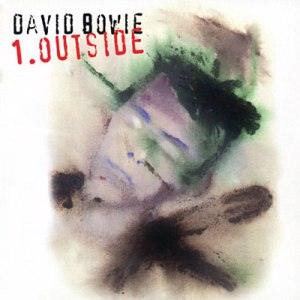
Several years after the Tin Machine period, Armstrong unexpectedly heard from Bowie again.
Bowie was working with Brian Eno on the project that became 1. Outside, released in September 1995. He telephoned Armstrong to tell him that the earlier musical idea had become the title track of the new album.
Kevin Armstrong recalling Bowie’s telephone call
“That song of yours is now the title track of my new album.”
— Kevin Armstrong, recalling David Bowie
The released composition Outside carries the songwriting credit David Bowie/Kevin Armstrong.
Bowie also invited Armstrong to contribute guitar during the project. Armstrong has recalled playing on The Heart’s Filthy Lesson and Thru’ These Architects Eyes. The released album personnel specifically credits him with additional guitar on Thru’ These Architects Eyes.
Armstrong has described the session with Bowie and Eno as relatively brief. Yet it brought a musical idea he had first written approximately fifteen years earlier into one of Bowie’s most ambitious albums of the 1990s.
Armstrong has also recalled that the Outside session was the final occasion on which he saw Bowie. There is an unusual symmetry to the story: his first substantial Bowie work centred on Absolute Beginners, while his final studio encounter involved an album whose title track grew partly from Armstrong’s own music.
David Bowie on Kevin Armstrong
Bowie himself left a characteristically humorous assessment of Armstrong’s musicianship, later used in connection with Armstrong’s memoir.
David Bowie on Kevin Armstrong
“Kevin does what I pretend to do. Kevin’s a proper musician.”
— David Bowie
Beneath the joke is a useful description of Armstrong’s role. His value was not tied to a single distinctive guitar sound. He could understand what a project required, contribute quickly and move between very different musical situations.
A career beyond Bowie
Armstrong’s work with Bowie forms only one part of a career extending across more than four decades.
As guitarist, songwriter, producer or musical director he has worked with artists including Thomas Dolby, Sandie Shaw, Grace Jones, Sinéad O’Connor, Morrissey, Prefab Sprout, Paul McCartney, Brian Eno, Keziah Jones and Iggy Pop.
That breadth also explains why his Bowie work is difficult to reduce to a single description. Across approximately a decade he could be a studio guitarist, arranger, musical director, additional band member or songwriter depending on what Bowie needed from the project.
Absolute Beginner – Armstrong’s memoir
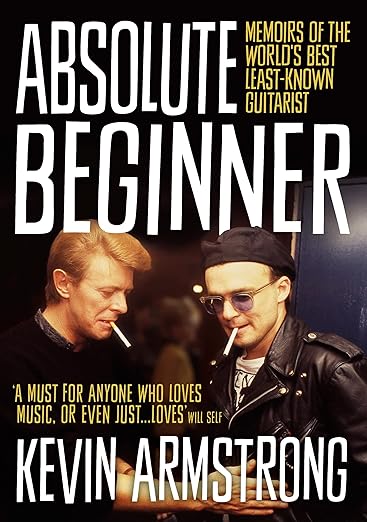
Armstrong later documented his career in the memoir Absolute Beginner: Memoirs of the World’s Best Least-known Guitarist.
The book tells the story of a self-taught musician moving from the London music scene into recording studios, international tours and collaborations with some of the best-known artists of his generation.
Bowie naturally occupies an important place in that history. Armstrong’s memories provide valuable first-hand testimony about the creation of Absolute Beginners, Dancing in the Street, Live Aid, Tin Machine and the origins of Outside.
Kevin Armstrong‘s place in David Bowie’s history
Kevin Armstrong discusses his career and his work with David Bowie
Kevin Armstrong‘s importance to Bowie’s story does not come from membership of one long-running Bowie touring band. Instead, his contribution appears at a series of significant turning points between the mid-1980s and the mid-1990s.
He helped develop Absolute Beginners, prepared and recorded Dancing in the Street, acted as musical director and guitarist at Live Aid, became part of Tin Machine‘s early working environment and ultimately shared the writing credit for Outside.
Those projects are strikingly different from one another. A film theme, a charity single, a worldwide television event, an experimental rock band and one of Bowie’s most ambitious 1990s albums required very different kinds of musicianship.
Armstrong’s ability to move between them explains the continuity of a Bowie association that otherwise appeared only intermittently.
His story also demonstrates how ideas could travel through Bowie’s creative world. A guitar figure Armstrong had written in Brixton in 1980 could reappear at a Tin Machine soundcheck, become Now, survive the end of that band and eventually emerge fifteen years later as part of Outside.
That journey — from an Armstrong composition written before the two men had even met to the title track of a David Bowie album — is perhaps the clearest illustration of Kevin Armstrong‘s distinctive place within Bowie’s extended musical circle.
Official website & further information
More information about Kevin Armstrong‘s music, recordings, current projects and memoir can be found on his official website: Kevin Armstrong – Official Website .
Article origin
This article was researched and compiled for the David Bowie Collaborations & Creative Circle Archive at DavidBowieWorld.com, documenting Kevin Armstrong‘s recorded, live and songwriting connections with David Bowie.
© DavidBowieWorld.com — David Bowie Collaborations & Creative Circle Archive.
