
George Murray – Bassist in David Bowie’s Legendary D.A.M. Trio

George Murray performing with David Bowie during the Station to Station / Isolar period. Image credit to be updated when the original photographer has been identified.
George Murray is an American bass guitarist whose powerful yet remarkably understated playing became one of the defining musical voices of David Bowie’s most adventurous period. Between 1975 and 1980, Murray appeared on five consecutive Bowie studio albums, performed on two major world tours and helped create some of the most influential recordings in modern popular music.
Working alongside guitarist Carlos Alomar and drummer Dennis Davis, Murray formed the rhythm section that Bowie relied upon throughout the second half of the 1970s. Often referred to as the D.A.M. Trio, the three musicians provided the musical foundation for Station to Station, Low, “Heroes“, Lodger and Scary Monsters (And Super Creeps), combining elements of funk, soul, art rock, ambient music and experimental electronics into a completely new musical language.
During his five-year collaboration with David Bowie, Murray appeared on an extraordinary succession of landmark recordings that reshaped the direction of popular music. From the elegant soul and funk of Station to Station to the experimental soundscapes of the Berlin Trilogy and the polished art rock of Scary Monsters (And Super Creeps), his bass playing provided a constant musical thread through one of the most innovative periods of Bowie’s career.
Unlike many celebrated rock bassists, George Murray achieved his reputation through musical restraint rather than virtuosity. His performances were built on impeccable timing, deep groove and an instinctive understanding of how to support a song without overwhelming it. Together with Carlos Alomar and Dennis Davis, he helped create a rhythm section whose influence can still be heard in rock, post-punk, new wave, alternative music and modern pop recordings today.
Although George Murray rarely sought the spotlight and remained one of the quieter personalities within Bowie’s circle, his disciplined musicianship, deep rhythmic feel and instinctive understanding of groove made him indispensable during one of the most creative periods of Bowie’s career. His bass lines continue to influence generations of musicians and remain an essential part of the sound that became known as Bowie’s Berlin era, even though his collaboration actually began before Bowie arrived in Berlin.
- Full name: George Murray
- Born: 12 October 1951, Jamaica, Queens, New York, USA
- Profession: Bass guitarist
- Bowie connection: Member of David Bowie’s band (1975–1980)
- First Bowie recording: Golden Years (1975)
- Key Bowie albums: Station to Station, Low, “Heroes“, Lodger, Scary Monsters (And Super Creeps)
- Tours: Isolar Tour (1976), Isolar II World Tour (1978)
- Known for: His work with the celebrated D.A.M. Trio alongside Carlos Alomar and Dennis Davis
- Rhythm section: D.A.M. Trio (Dennis Davis, Carlos Alomar and George Murray)
- Live recordings: Stage, Live Nassau Coliseum ’76
- Other notable work: Iggy Pop (The Idiot), Jerry Harrison (The Red and the Black)
Early Life
George Murray was born on 12 October 1951 in the Jamaica neighbourhood of Queens, New York City. Growing up during the remarkable musical explosion of the late 1950s and early 1960s, he absorbed an unusually wide range of influences. At home he heard the sophisticated swing of Count Basie and Frank Sinatra, while the arrival of rock and roll introduced an entirely different musical energy.
Like countless young musicians of his generation, Murray’s life changed dramatically after watching The Beatles on The Ed Sullivan Show. Their appearance inspired him to learn an instrument, although his first ambition was not to become a bassist.
From Drummer to Bass Guitarist
Murray originally wanted to become a drummer and even began taking drum lessons while still at school. Financial reality, however, forced him to reconsider. Professional drum kits were far beyond the family’s budget, while a bass guitar proved much more affordable. With money earned from mowing lawns and shovelling snow, he bought his first instrument—a short-scale Hagström bass—and unknowingly began the career that would eventually lead him to David Bowie.
From the very beginning, Murray developed a philosophy that placed rhythm above technical showmanship. Rather than treating the bass as a solo instrument, he became fascinated by its relationship with the drums, believing that the rhythm section should drive a song while leaving space for the vocalist and other musicians. This approach would later become one of the defining characteristics of Bowie’s late-1970s recordings.
Building a Reputation in New York
Throughout the early 1970s, Murray established himself within New York’s highly competitive professional music scene. After studying music and gaining experience with local groups, he worked with numerous artists in clubs, theatres and recording studios, steadily earning a reputation as a reliable, highly musical bassist capable of adapting to many different styles.
One of the most important developments in his early career was his growing musical relationship with guitarist Carlos Alomar and drummer Dennis Davis. The three musicians frequently worked together long before David Bowie entered the picture, developing a natural chemistry that combined funk, rhythm and jazz influences with exceptional musical discipline.
Their partnership also brought opportunities to work with artists including Luther Vandross and George McCrae, while Murray continued building experience as both a touring and session musician. By 1975 he had become a respected member of New York’s professional music community, even though his name remained largely unknown to the wider public.
Joining David Bowie
George Murray‘s career changed dramatically in September 1975 when Dennis Davis received a call from David Bowie’s organisation during the recording of Station to Station in Los Angeles. Davis recommended Murray for the bass position, inviting him to join rehearsals and recording sessions with Bowie, Carlos Alomar and producer Harry Maslin.
When Murray first met Bowie, the introduction was remarkably informal. Bowie greeted him with a handshake before presenting the song that would effectively become his audition: Golden Years. Rather than asking Murray to reproduce existing ideas, Bowie encouraged him to create his own bass parts. Murray later recalled that, apart from one specific figure suggested for the opening section of the title track Station to Station, he was given considerable freedom to develop his own bass lines throughout the album.
The sessions proved immediately successful. Within weeks Murray had become an integral member of Bowie’s band, beginning a professional relationship that would continue for the next five years and produce some of the most celebrated recordings of Bowie’s entire career.
Golden Years – George Murray‘s Audition
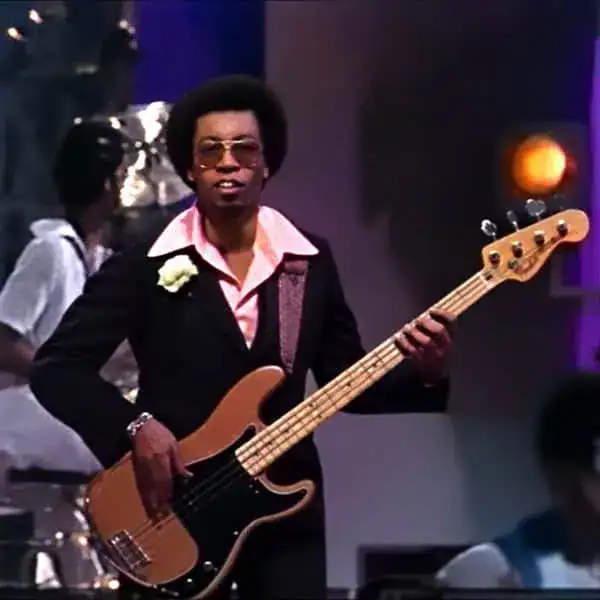
Although George Murray had already established himself as a respected bassist in New York, his career changed forever during the recording of Station to Station. Rather than attending a formal audition, he found himself effectively auditioning while the album was already being made. After arriving at the rehearsal studio in Los Angeles in September 1975, Murray was introduced to David Bowie for the first time.
The meeting was remarkably informal. Bowie greeted Murray with a handshake before immediately turning to the music. Without ceremony, he introduced the first song he wanted to work on: Golden Years. For Murray, the session became both his introduction to Bowie and his audition for one of the most sought-after positions in rock music.
Unlike many artists, Bowie did not expect his musicians simply to copy existing ideas. Murray later recalled that he was encouraged to create his own bass lines throughout the album. Apart from suggesting one specific figure for the opening section of the title track Station to Station, Bowie largely trusted his new bassist’s musical instincts. That creative freedom immediately established the collaborative atmosphere that would define their working relationship over the next five years.
Murray’s performance on Golden Years demonstrated exactly what Bowie was looking for. His bass playing combined deep funk influences with remarkable restraint, locking seamlessly with drummer Dennis Davis and guitarist Carlos Alomar while leaving plenty of space for Bowie’s vocals. The chemistry was obvious from the outset, and within weeks Murray had become a permanent member of Bowie’s band.
Looking back many years later, Murray described the experience with characteristic modesty. What many musicians would have regarded as the audition of a lifetime simply became the beginning of another professional collaboration. Yet that first performance on Golden Years marked the start of one of the most important partnerships in David Bowie’s musical history.
Recording Station to Station
George Murray entered David Bowie’s world at a remarkable moment in the singer’s career. During the autumn of 1975, Bowie was recording what would become Station to Station, an album that bridged the soulful sound of Young Americans with the more experimental direction he would soon explore in Europe.
Rather than receiving detailed written arrangements, Murray was encouraged to develop his own bass parts. Bowie valued originality and instinct, allowing musicians considerable creative freedom as long as their ideas served the music. Murray later recalled that he created virtually all of his own bass lines on the album, with Bowie only suggesting a specific figure for the opening section of the title track Station to Station.

Cover of David Bowie’s Station to Station (1976), the album that marked George Murray‘s first collaboration with Bowie and the beginning of the legendary D.A.M. Trio.
This approach suited Murray perfectly. His economical style avoided unnecessary technical display, concentrating instead on deep rhythmic grooves, carefully chosen notes and an instinctive understanding of how the bass should interact with Dennis Davis‘ drums and Carlos Alomar‘s rhythm guitar.
Although Station to Station is often remembered for the emergence of Bowie’s Thin White Duke persona, it also marked the beginning of one of the strongest rhythm sections in modern rock music. Murray’s understated but highly musical bass playing became an essential element of the album’s distinctive sound, particularly on songs such as Golden Years, Stay, TVC 15 and the monumental title track.
The Birth of the D.A.M. Trio
The collaboration between drummer Dennis Davis, guitarist Carlos Alomar and bassist George Murray soon developed into one of the most celebrated rhythm sections of David Bowie’s career. Because their surnames began with the letters D, A and M, the trio later became widely known among Bowie fans as the D.A.M. Trio.
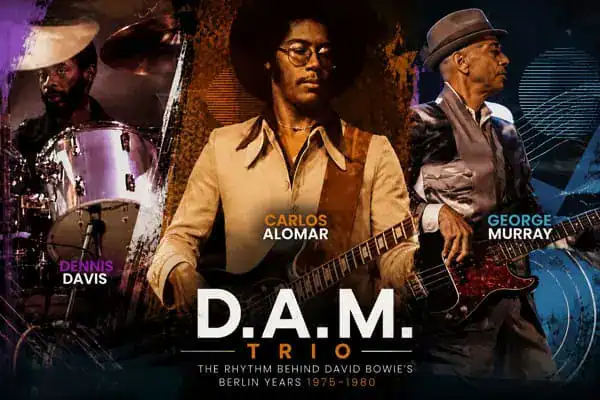
George Murray, Carlos Alomar and Dennis Davis formed the legendary D.A.M. Trio, the rhythm section behind many of David Bowie’s most influential recordings between 1975 and 1980.
Although the three musicians possessed very different musical personalities, they complemented one another perfectly. Dennis Davis brought extraordinary rhythmic imagination, Carlos Alomar combined funk, soul and rock guitar with remarkable precision, while George Murray provided the calm, deeply rooted bass playing that held everything together.
Unlike many rock rhythm sections of the period, the D.A.M. Trio rarely competed for attention. Their strength lay in restraint, subtle interaction and an almost telepathic understanding of each other’s playing. This musical chemistry gave Bowie the freedom to explore increasingly adventurous compositions without losing the rhythmic foundation that kept even his most experimental recordings accessible.
The partnership became one of the defining sounds of Bowie’s late-1970s work and remains highly respected by musicians today for its sophistication, discipline and originality.
Working with David Bowie
George Murray often described David Bowie as a musician who encouraged creativity rather than control. Unlike bandleaders who dictated every note, Bowie preferred to surround himself with exceptional players and trusted them to develop their own musical ideas. Murray later recalled that Bowie rarely gave detailed technical instructions, choosing instead to communicate the overall mood or direction of a song.
During the recording sessions, Bowie frequently shared ideas with guitarist Carlos Alomar, who acted as the band’s musical director, while producer Tony Visconti translated Bowie’s broader artistic vision into the recording process. Murray appreciated this collaborative atmosphere, which allowed each musician to contribute naturally without feeling restricted by rigid arrangements.
Rather than asking for technical perfection alone, Bowie searched for originality. He encouraged experimentation with rhythm, texture and feel, believing that unexpected musical ideas often produced the most memorable recordings. This creative freedom became one of the defining characteristics of the albums George Murray recorded with Bowie between 1975 and 1980.
Although Murray always regarded his relationship with Bowie as primarily professional, he remembered him as courteous, respectful and intensely focused whenever the music was being created. Personal conversations certainly took place, but once recording began, Bowie’s full attention shifted to the next song, the next arrangement and the next creative possibility.
That simple observation perhaps explains why the partnership proved so successful. Bowie was less interested in technical display than in musicians who could help create an atmosphere. George Murray‘s understated, deeply musical bass playing fitted that philosophy perfectly, becoming an essential ingredient of Bowie’s most adventurous recordings.
The Isolar Tour (1976)
Following the completion of Station to Station, George Murray joined David Bowie on the ambitious 1976 Isolar Tour, sometimes also referred to as the Station to Station Tour or Thin White Duke Tour. For Murray, it was his first experience performing in arenas before international audiences as part of one of the world’s biggest touring acts.
The concerts introduced audiences to the elegant, emotionally detached Thin White Duke character while presenting music that ranged from Bowie’s earliest hits to the new material from Station to Station. Murray’s precise, economical bass playing became an essential part of the tour’s sound, allowing Bowie’s increasingly theatrical performances to rest upon an exceptionally solid musical foundation.
Although the visual presentation often attracted the greatest attention, musicians have long regarded the 1976 touring band as one of the finest Bowie ever assembled. Murray’s performances throughout the tour demonstrated not only technical excellence but also remarkable consistency, delivering the same disciplined groove night after night under demanding touring conditions.
Moving Towards Berlin
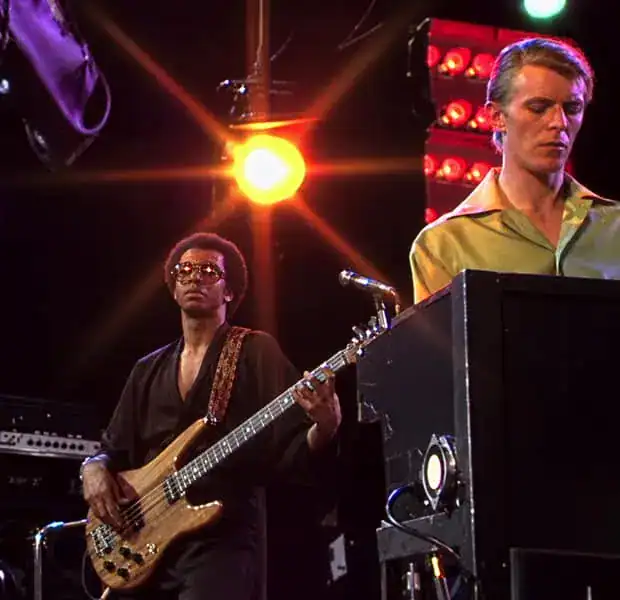
After the Isolar Tour, David Bowie began distancing himself from the excesses that had surrounded much of his life in Los Angeles. Seeking a quieter environment and new creative inspiration, he gradually relocated to Europe, eventually settling for extended periods in West Berlin alongside his friend Iggy Pop.
For George Murray, the geographical move changed little about the working relationship. Bowie continued relying on the same trusted rhythm section that had proven itself during Station to Station. Rather than replacing musicians as his musical direction evolved, Bowie chose to develop existing partnerships, believing that Murray, Alomar and Davis could adapt to virtually any stylistic challenge.
That confidence would soon be rewarded. Between 1977 and 1979, the D.A.M. Trio helped Bowie create three of the most influential albums in rock history, recordings that would later become collectively known as the Berlin Trilogy.
Recording Low
Released in January 1977, Low surprised both critics and audiences. Rather than continuing the polished soul-influenced sound of Station to Station, Bowie and producer Tony Visconti created an album that combined fragmented song structures, electronic textures, ambient soundscapes and tightly controlled rhythm-section performances.
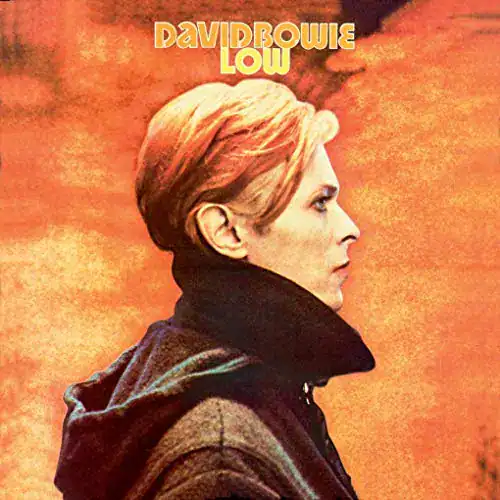
Cover of David Bowie’s Low (1977), the first album of the celebrated Berlin Trilogy and one of George Murray‘s finest studio performances.
George Murray‘s contribution was fundamental to this new musical direction. His bass playing became more spacious and economical than ever before, often relying on repetition, subtle rhythmic shifts and carefully judged note placement instead of conventional melodic lines. This disciplined approach allowed Brian Eno‘s electronic treatments and Bowie’s increasingly experimental ideas to coexist without overwhelming the music.
Tracks such as Breaking Glass, Sound and Vision, Be My Wife and Always Crashing in the Same Car demonstrate Murray’s remarkable ability to support complex arrangements through understatement rather than virtuosity. His bass rarely dominates the recordings, yet its presence is indispensable to the album’s hypnotic character.
Although Low initially divided opinion upon its release, it has since come to be regarded as one of the most influential albums of the twentieth century. George Murray‘s understated musicianship forms an essential part of that achievement.
Recording “Heroes“
Only a few months after the release of Low, David Bowie returned to Hansa Studio by the Wall in West Berlin to begin work on “Heroes“. Although often grouped together with Low, the second album reflected a growing confidence within Bowie’s band. The musicians were now thoroughly familiar with each other’s playing, allowing performances to become even more instinctive while retaining the discipline that had characterised their earlier work.
<
Cover of David Bowie’s “Heroes“ (1977), featuring George Murray‘s distinctive bass playing on one of the defining albums of the Berlin Trilogy.
George Murray once again formed the rhythmic backbone of the recordings alongside Carlos Alomar and Dennis Davis. Producer Tony Visconti and Brian Eno encouraged experimentation, yet the rhythm section remained remarkably tight throughout the sessions. Murray’s bass playing anchored songs that moved effortlessly between art rock, funk, ambient music and electronic experimentation without ever losing their sense of groove.
One of Murray’s best-known performances can be heard on the title track “Heroes“. For this recording he played a Rickenbacker bass with a pick rather than his more familiar Fender Precision, giving the song a distinctive attack that helped drive one of Bowie’s most celebrated recordings. The restrained yet purposeful bass line provides the perfect foundation for Robert Fripp‘s soaring guitar, Bowie’s increasingly emotional vocal performance and Tony Visconti‘s innovative multi-microphone production.
Murray has often cited another song from the album as one of his personal favourites: The Secret Life of Arabia. Built around an infectious funk-inspired groove, the closing track demonstrates the effortless interaction between Murray, Dennis Davis and Carlos Alomar. Rather than competing for attention, each musician leaves space for the others, creating a rhythm section that feels simultaneously relaxed, precise and irresistibly danceable.
George Murray on recording with David Bowie
“I was just reacting to the chords, and channeling everything I’d learned to that point.”
Released in October 1977, “Heroes“ has since become one of the defining albums of David Bowie’s career. While the title track achieved worldwide recognition, musicians have long admired the entire album for the subtle brilliance of its rhythm section. George Murray‘s contribution remains one of the finest examples of bass playing through taste, restraint and musical intelligence rather than technical excess.
The Secret Life of Arabia
Although the title track “Heroes“ became one of David Bowie’s best-known recordings, George Murray has often singled out another song from the album as one of his personal favourites: The Secret Life of Arabia. Closing the album with an infectious blend of funk, art rock and rhythmic precision, the track perfectly illustrates the musical chemistry that had developed within Bowie’s band by 1977.
Unlike many of the atmospheric recordings made during the Berlin sessions, The Secret Life of Arabia is driven by an energetic groove built around the interaction between Murray’s bass, Dennis Davis‘ drums and Carlos Alomar‘s rhythm guitar. Rather than competing for attention, the three musicians create a tightly woven rhythmic foundation that allows Bowie to move effortlessly between spoken phrases, melodic passages and playful vocal improvisations.
Looking back on the recording many years later, Murray explained that the bass line was not carefully planned in advance. Instead, it emerged naturally during the session as he responded to the song’s chord progression and the musical ideas developing around him. The performance demonstrates the creative freedom Bowie often gave his musicians, trusting them to shape arrangements through instinct as much as preparation.
George Murray on The Secret Life of Arabia
“I was just reacting to the chords, and channelling everything I’d learned to that point.”
Murray also recalled that his intention was to remain firmly “in the pocket”, allowing the rhythm section to propel the song forward without unnecessary embellishment. That philosophy—placing feel above virtuosity—became one of the defining characteristics of his work with David Bowie and remains one of the reasons why the D.A.M. Trio is still admired by musicians nearly fifty years later.
The Isolar II World Tour
In 1978, George Murray once again joined David Bowie for an ambitious world tour in support of Low and “Heroes“. Officially known as the Isolar II World Tour, the tour presented a far broader musical programme than its predecessor, combining material from Bowie’s newest recordings with songs spanning almost a decade of his career.
The touring band represented one of the strongest ensembles Bowie ever assembled. Alongside George Murray, Carlos Alomar and Dennis Davis, the line-up featured Adrian Belew, Roger Powell, Sean Mayes, Simon House and other exceptional musicians capable of recreating Bowie’s increasingly sophisticated studio recordings on stage.
Every evening Murray demonstrated the remarkable consistency that had made him indispensable to Bowie. Whether performing the dramatic title track from “Heroes“, the driving rhythms of Stay, the experimental textures of Breaking Glass or older songs from the Ziggy Stardust period, his bass playing remained calm, controlled and unwavering.
Many fans and critics continue to regard the 1978 band as one of the finest live groups Bowie ever led. Their performances were later documented on the live album Stage, while additional recordings from the tour—including Live Nassau Coliseum ’76 from the earlier tour and later archival releases—have further highlighted the extraordinary quality of Murray’s musicianship.
Stage – Capturing the 1978 Tour
The outstanding performances of the Isolar II World Tour were documented on the live album Stage, released in September 1978. Recorded during concerts in the United States, the album presented one of the strongest live bands David Bowie ever assembled and captured the remarkable musicianship that had developed during three years of touring and recording together.

Cover of David Bowie’s live album Stage (1978), documenting George Murray‘s performances during the acclaimed Isolar II World Tour.
Unlike many live albums of the period, Stage was not simply a greatest-hits collection. Bowie used the opportunity to showcase material from Station to Station, Low and “Heroes“, presenting his newer and more experimental music to audiences around the world with remarkable precision.
George Murray‘s bass playing is one of the album’s defining strengths. Whether performing the relentless groove of Stay, the atmospheric pulse of Breaking Glass, the emotional intensity of “Heroes“ or older classics such as Ziggy Stardust, Murray remained consistently understated, allowing the music to breathe while providing an unwavering rhythmic foundation.
For many listeners, Stage offers one of the clearest examples of Murray’s contribution to David Bowie’s live sound. Free from the layers of studio production, his precise timing, warm tone and effortless interaction with drummer Dennis Davis and guitarist Carlos Alomar become even more apparent, demonstrating why the D.A.M. Trio was regarded as one of the finest rhythm sections in rock music.
Although Stage received mixed reviews upon its original release, its reputation has grown considerably over the years. Today it is recognised as an important document of Bowie’s late-1970s concerts and an essential showcase for the musicians who helped bring his increasingly ambitious studio recordings to life on stage.
Recording Lodger
The final studio album of what later became known as the Berlin Trilogy was Lodger, released in 1979. Although much of the recording took place outside Berlin, the album continued Bowie’s collaboration with Brian Eno, Tony Visconti and the now firmly established D.A.M. Trio.

Cover of David Bowie’s Lodger (1979), the final studio album of the celebrated Berlin Trilogy, featuring George Murray‘s inventive and melodic bass playing.
Unlike the atmospheric instrumental pieces that dominated the second side of Low and parts of “Heroes“, Lodger returned to a more song-oriented approach while continuing to experiment with rhythm, structure and world music influences. George Murray adapted effortlessly to these changing musical demands, providing bass lines that remained melodic without ever becoming intrusive.
Throughout the sessions Bowie frequently encouraged unusual recording methods and spontaneous musical ideas. Murray’s ability to respond quickly to unexpected changes made him an invaluable member of the group. Whether the music moved towards African-inspired rhythms, angular art rock or straightforward rock and roll, he consistently found bass parts that strengthened the songs without distracting from the overall arrangement.
By the end of the Lodger sessions, George Murray had become one of the longest-serving members of Bowie’s band. His partnership with Carlos Alomar and Dennis Davis had now produced four consecutive studio albums and established one of the most respected rhythm sections in contemporary rock music.
Recording Scary Monsters (And Super Creeps)
By 1980, George Murray had become one of David Bowie’s most trusted musicians. After five years together, Bowie, Carlos Alomar, Dennis Davis and Murray had developed an almost instinctive understanding of one another’s playing. This musical chemistry reached its final studio chapter with Scary Monsters (And Super Creeps), an album widely regarded as the culmination of Bowie’s extraordinary creative run that had begun with Station to Station.

Cover of David Bowie’s Scary Monsters (And Super Creeps) (1980), George Murray‘s final studio album with Bowie and the last recording by the classic D.A.M. Trio.
Produced by Tony Visconti, the album combined the experimental spirit of the Berlin years with a renewed emphasis on memorable songs and commercial accessibility. Bowie reunited musicians from previous projects, including Carlos Alomar and Dennis Davis, while Robert Fripp returned to contribute his distinctive guitar work. George Murray once again anchored the recordings with his precise, deeply rhythmic bass playing.
Among his finest performances on the album is Ashes to Ashes, where Murray employed an expressive slap-style approach on his Fender Precision Bass. The performance demonstrated how naturally he could adapt his playing without sacrificing the musical restraint that had become his trademark. Rather than using slap bass as a display of virtuosity, Murray incorporated it into the song’s hypnotic groove, perfectly complementing Bowie’s reflective vocal and Tony Visconti‘s expansive production.
Across the album, Murray’s playing continued to demonstrate the qualities Bowie valued most: musical intelligence, consistency and an unwavering commitment to serving the song. Whether supporting the jagged energy of Scary Monsters (And Super Creeps), the emotional depth of Ashes to Ashes or the driving rhythms of Fashion, his bass lines remained an essential part of the album’s distinctive sound.
The End of an Extraordinary Collaboration
Following the completion of Scary Monsters (And Super Creeps), David Bowie gradually began moving in a different musical direction. As he prepared for the enormously successful Let’s Dance era, he assembled a new group of musicians rather than continuing with the band that had accompanied him throughout the second half of the 1970s.
For George Murray, the transition came quietly. There was no formal announcement and no dramatic farewell. Years later he reflected on the experience with characteristic honesty, explaining that he was never actually dismissed from the band.
George Murray on leaving David Bowie’s band
“I wasn’t fired, they just didn’t call me back.”
The remark perfectly reflects Murray’s understated personality. Rather than expressing bitterness, he accepted the realities of professional music, recognising that artists continually evolve and that touring and recording bands inevitably change. Nevertheless, his departure marked the end of one of the most important musical partnerships in David Bowie’s career.
Working with Iggy Pop
George Murray‘s collaboration with David Bowie naturally extended into Bowie’s work as a producer. When Bowie helped relaunch Iggy Pop‘s career in 1977, Murray joined several of the same musicians who had become central to Bowie’s own recordings.

George Murray also performed on Iggy Pop‘s landmark album The Idiot, produced by David Bowie. Replace with final gallery when available.
On The Idiot, Murray once again demonstrated his remarkable ability to adapt to Bowie’s constantly evolving musical ideas. The album’s darker, more mechanical atmosphere demanded a different approach from the soulful grooves of Station to Station, yet Murray’s disciplined bass playing proved equally effective.
Songs such as Sister Midnight and China Girl reveal many of the musical characteristics that would also define Bowie’s own Berlin-era recordings. Although released under Iggy Pop‘s name, The Idiot remains closely connected to Bowie’s creative development during this extraordinary period.
Murray’s participation demonstrated the confidence Bowie placed in his musicians. Rather than assembling new players for every project, Bowie repeatedly relied on trusted collaborators who understood his increasingly adventurous musical vision.
Working with Jerry Harrison
George Murray‘s reputation as a thoughtful and highly dependable bassist extended well beyond his years with David Bowie. After contributing to some of the most influential albums of the late 1970s, he was also invited to work with guitarist and songwriter Jerry Harrison, best known as a member of the Talking Heads.
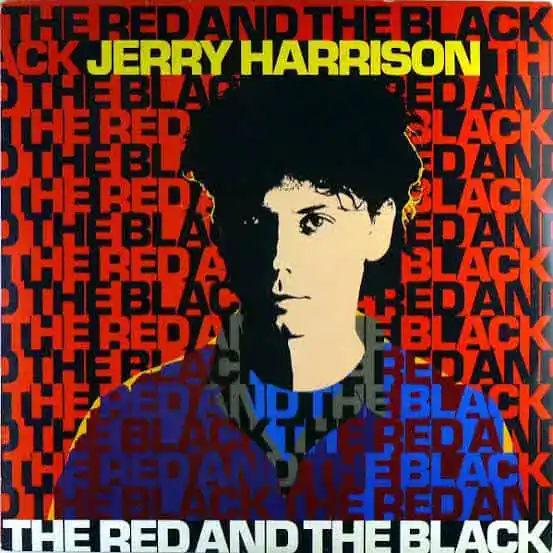
Cover of Jerry Harrison’s The Red and the Black (1981), featuring bass performances by George Murray.
Murray performed on Jerry Harrison’s 1981 solo album The Red and the Black, a record that blended elements of new wave, art rock, funk and experimental pop. Although stylistically different from David Bowie’s work, the album required the same musical qualities that had made Murray such an important member of the D.A.M. Trio: impeccable timing, tasteful restraint and an instinctive understanding of groove.
His appearance on the album demonstrated the respect he had earned within New York’s musical community. Producers and fellow musicians recognised Murray as far more than simply David Bowie’s bassist. He was a versatile session player whose musical judgement could strengthen a wide variety of recording projects.
Although his collaboration with Jerry Harrison was relatively brief compared with his five years alongside Bowie, it remains another example of the esteem in which George Murray was held by some of the most innovative artists of his generation.
Beyond David Bowie
Although George Murray will always be closely associated with David Bowie, his musical career extended beyond those five remarkable years. Before joining Bowie he had already established himself as an accomplished professional musician, and after leaving the band he continued to record and perform on selected projects, including work with guitarist and songwriter Jerry Harrison.
Unlike many musicians who remained permanently within the recording industry, Murray gradually chose a different path. After relocating to California, he stepped away from full-time professional performance and began building a career in education. Over the following decades he served in a variety of educational leadership roles, eventually becoming a respected school administrator and district superintendent.
For many years, colleagues, students and parents had little idea that the quiet educator leading their schools had previously performed on some of the most influential rock albums ever recorded. Murray rarely spoke publicly about his years with Bowie, preferring to let the music speak for itself.
George Murray‘s Bass Style
George Murray has never been a bassist who sought attention through technical excess. Instead, his reputation was built on musical discipline, exceptional timing and an instinctive understanding of how the bass should support a song. Throughout his years with David Bowie, Murray consistently chose the part that best served the music rather than the one that drew attention to himself.
His playing reflected influences from rhythm and blues, soul, jazz and funk, yet it always remained remarkably economical. Every note had a purpose. Rather than filling every available space, Murray understood that silence could be just as powerful as sound. This philosophy became one of the defining characteristics of David Bowie’s rhythm section during the second half of the 1970s.
In the recording studio Murray relied primarily on his trusted Fender Precision Bass, whose warm, punchy tone became closely associated with albums such as Station to Station, Low, “Heroes“, Lodger and Scary Monsters (And Super Creeps). For certain recordings he experimented with other instruments when the music demanded a different sound. During the recording of “Heroes“, for example, he used a Rickenbacker bass with a pick to achieve the distinctive attack heard on the album’s title track.
His partnership with drummer Dennis Davis became one of the most admired rhythm-section combinations of the era. Davis’ imaginative drumming and Murray’s deeply rooted grooves complemented one another perfectly, while Carlos Alomar‘s rhythm guitar completed the musical framework that supported Bowie’s increasingly adventurous songwriting.
Instruments and Playing Style
Throughout his years with David Bowie, George Murray relied primarily on the Fender Precision Bass, an instrument whose warm, solid tone became closely associated with many of Bowie’s most influential recordings. Murray preferred a sound that was powerful without becoming intrusive, allowing the bass to support the song rather than dominate it.
Although the Precision Bass remained his principal studio instrument, Murray occasionally selected other basses when a different character was required. During the recording of “Heroes“, for example, he used a Rickenbacker played with a pick to achieve the sharper attack heard on the title track. On stage during the late 1970s he was also seen performing with instruments including a Kramer bass and a Gibson Ripper, choosing each according to the musical demands of the performance.
Unlike many bassists who sought to impress through speed or technical complexity, Murray built his reputation on precision, consistency and feel. His lines rarely called attention to themselves, yet they became an essential part of David Bowie’s music by providing a deep rhythmic foundation that allowed the melodies, guitars and keyboards to develop naturally above them.
His close partnership with drummer Dennis Davis was particularly important. Together they created grooves that combined the discipline of funk with the openness of jazz and the directness of rock music. Supported by Carlos Alomar‘s rhythm guitar, the three musicians formed a rhythm section capable of adapting effortlessly to Bowie’s constantly changing musical direction.
Many musicians have since pointed to George Murray‘s performances as masterclasses in tasteful bass playing. His work demonstrates that musical intelligence, careful note selection and impeccable timing can have a greater impact than technical virtuosity alone, a philosophy that continues to influence bass players around the world.
Rediscovery
For many years after leaving the music business, George Murray lived largely outside the public eye. While David Bowie’s recordings continued to inspire new generations of musicians, Murray himself devoted his professional life to education rather than performance. As a result, many younger Bowie fans knew his bass playing without knowing much about the man behind it.
Following his retirement from education in 2022, Murray gradually returned to music and began participating in interviews reflecting on his remarkable career. His thoughtful recollections have provided valuable first-hand insights into the recording of some of Bowie’s most celebrated albums, helping historians better understand the creative atmosphere surrounding the Station to Station and Berlin-era sessions.
He has also reunited with longtime friend and fellow Bowie collaborator Carlos Alomar for performances celebrating the music they created together nearly half a century earlier. These appearances have introduced Murray to a new generation of audiences while reminding longtime fans of the enormous contribution he made to Bowie’s catalogue.
Returning to the Stage
After spending more than three decades working in education, George Murray gradually returned to the world of music following his retirement. Although he had largely stepped away from professional performance during the early 1980s, his contribution to David Bowie’s music had never been forgotten by musicians and dedicated fans. Renewed interest in Bowie’s late-1970s catalogue encouraged Murray to reflect on a remarkable chapter of his life that had remained largely private for many years.
In recent years, Murray has reunited with longtime friend and fellow Bowie collaborator Carlos Alomar for a series of special performances celebrating the music they created together. These concerts have introduced his playing to a new generation of audiences while giving longtime Bowie fans the rare opportunity to see one of Bowie’s most influential bassists perform once again.
Among the most notable projects has been the DAM Trilogy – Back to Berlin concerts, celebrating the extraordinary body of work created by Dennis Davis, Carlos Alomar and George Murray with David Bowie between 1975 and 1980. Rather than attempting to recreate the past, these performances honour the creativity, musicianship and innovation that defined one of Bowie’s greatest artistic periods.
For Murray, returning to the stage has also provided an opportunity to share first-hand memories of the recording sessions and tours that shaped his career. Through interviews and public appearances, he has offered valuable historical insights into Bowie’s working methods, the chemistry of the D.A.M. Trio and the creation of albums that continue to inspire musicians around the world.
His renewed visibility has helped ensure that George Murray‘s contribution is now recognised alongside those of Carlos Alomar and Dennis Davis, reaffirming his place as one of the key musicians behind David Bowie’s extraordinary run of albums during the second half of the 1970s.
Remembering David Bowie
Looking back on his years with David Bowie, George Murray has consistently spoken with admiration and respect rather than nostalgia. Although Bowie is now regarded as one of the most influential artists of the twentieth century, Murray remembers him first as a dedicated musician whose greatest strength was his willingness to explore new ideas without fear of failure.
Unlike many legendary performers, Bowie did not surround himself with musicians simply to reproduce his own ideas. Instead, he actively encouraged creativity, trusting experienced players to develop arrangements and discover musical directions that could not have been planned in advance. George Murray has often explained that Bowie was fascinated by new sounds, textures and unexpected musical possibilities, qualities that defined every recording they made together.
While their relationship remained primarily professional, Murray always appreciated Bowie’s respect for the musicians around him. Recording sessions were rarely dominated by lengthy instructions or rigid rules. Instead, Bowie assembled exceptional players, presented his creative vision and allowed the music to evolve naturally through collaboration.
George Murray on David Bowie
“Wherever he wanted the music to go, I tried to support that.”
That simple philosophy perhaps explains why Murray became such an important part of Bowie’s band. Rather than seeking recognition for himself, he concentrated on helping Bowie realise his musical ambitions. The result was a remarkable body of work whose influence continues to be felt across rock, pop, electronic and alternative music more than four decades later.
Today, George Murray‘s recollections provide historians and fans with valuable first-hand insight into one of the most creative periods of David Bowie’s career. His memories reveal not only the making of extraordinary albums, but also the professionalism, curiosity and collaborative spirit that lay behind them.
The Legacy of the D.A.M. Trio
Looking back at David Bowie’s extraordinary run of albums between 1975 and 1980, it becomes increasingly clear that much of their musical strength rested upon the remarkable partnership between guitarist Carlos Alomar, drummer Dennis Davis and bassist George Murray. Together they formed the rhythm section that Bowie relied upon throughout one of the most innovative periods of his career.
Although the name D.A.M. Trio was adopted retrospectively by fans and musicians, it perfectly describes the unique musical relationship between Dennis Davis, Alomar and Murray. Rather than functioning as three individual musicians, they performed as a single musical unit, anticipating one another’s ideas with exceptional precision while remaining completely responsive to Bowie’s constantly evolving artistic direction.
The trio proved remarkably versatile. During the Station to Station sessions they fused funk, soul and rock into a powerful new sound. On Low and “Heroes“ they adapted effortlessly to experimental structures, ambient textures and electronic influences. By the time of Lodger and Scary Monsters (And Super Creeps), they were equally comfortable supporting African-inspired rhythms, angular art rock and commercially accessible pop without ever losing their distinctive musical identity.
George Murray‘s contribution to this partnership was its quiet centre of gravity. While Carlos Alomar often provided rhythmic drive and Dennis Davis introduced remarkable rhythmic invention, Murray supplied the calm, unshakeable pulse that allowed Bowie’s increasingly adventurous compositions to remain grounded. His bass playing rarely demanded attention, yet its absence would fundamentally change the character of these recordings.
Today, musicians frequently cite the D.A.M. Trio as one of the finest rhythm sections ever assembled for a major rock artist. Their work continues to influence bassists, guitarists and drummers across many different musical genres, while the albums they recorded together remain among the most celebrated in David Bowie’s entire catalogue. George Murray‘s place within that remarkable partnership is both secure and richly deserved.
Legacy
George Murray occupies a unique position within David Bowie’s musical history. Although he rarely received the public recognition afforded to guitarists or frontmen, his bass playing became one of the defining voices of Bowie’s most creatively ambitious period. Between 1975 and 1980 he helped shape a remarkable sequence of recordings that fundamentally altered the direction of popular music.
His performances on Station to Station, Low, “Heroes“, Lodger and Scary Monsters (And Super Creeps) continue to influence bass players around the world. Rather than relying on technical virtuosity, Murray demonstrated the lasting power of musical restraint, impeccable timing and absolute commitment to the song.
Together with Carlos Alomar and Dennis Davis, he formed one of rock music’s finest rhythm sections. The D.A.M. Trio remains admired not simply because of technical excellence, but because its members understood how collective musicianship could elevate every composition they played.
George Murray in Bowie’s Collaborative Universe
Among the many exceptional musicians who worked with David Bowie, George Murray deserves recognition as one of the most important. His collaboration spanned five landmark studio albums, two major world tours and several of the most influential recordings in modern rock history. Quietly and without seeking personal acclaim, he helped create the rhythmic foundation upon which Bowie built some of his greatest artistic achievements.
Today, Murray’s work is rightly regarded as an essential part of David Bowie’s legacy. His recordings continue to be studied by musicians, celebrated by fans and recognised as outstanding examples of how thoughtful, intelligent bass playing can transform great songs into timeless classics.
Article Origin
This article has been researched and written for DavidBowieWorld.com as part of the site’s ongoing project documenting the musicians, artists, producers, designers, performers, tours and creative figures who helped shape David Bowie’s extraordinary career.
