
Masayoshi Sukita – David Bowie’s Photographer Across Four Decades
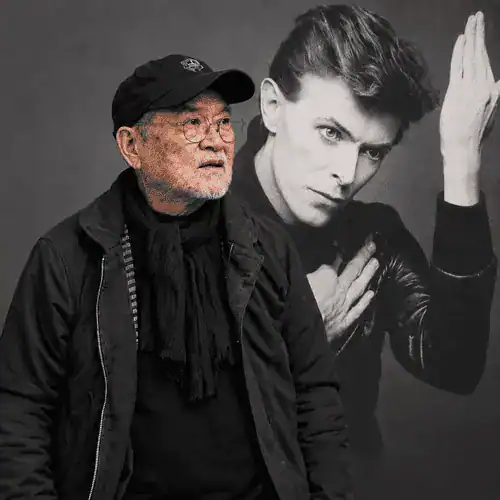
Masayoshi Sukita is a Japanese photographer whose portraits of David Bowie span several decades. His best-known Bowie photograph became the cover of “Heroes” in 1977. He had taken it months earlier, during a studio sitting in Tokyo; the music on the album was recorded elsewhere.
That distinction is a useful starting point for Sukita’s story. He photographed Bowie on stage, in formal sittings and during quieter moments in Japan and beyond. Bowie later worked with him on a book drawn from those photographs. The familiar “Heroes” sleeve represents a particularly visible result of a relationship that began five years before the album appeared.
- Name: Masayoshi Sukita
- Born: 1938, northern Kyushu, Japan; exact date not established by the sources used here
- Profession: Photographer
- First Bowie session: London, 1972
- Key Bowie image: “Heroes” cover portrait, photographed in Tokyo in April 1977
- Collaborative book: Speed of Life, with David Bowie (2012)
Before Bowie: learning to photograph people
Sukita was born in 1938 in a coal-mining area of northern Kyushu, according to a biographical account published for the Bowie 75 exhibition. In a later interview he remembered his mother giving him a camera when he was young and his family had little money after the Second World War. He said the gift helped turn an interest in images into a serious pursuit.
He recalled studying photography, learning from books and working as an assistant to photographer Shisui Tanahashi in Osaka. The stories he told about those early years concern ordinary people as well as famous ones. One of his first assignments involved a portrait commissioned by a woman for a prospective marriage match. Sukita said her satisfaction with the photograph stayed with him. It is a reminder that a portrait is made for, and seen by, people beyond the photographer.
He moved to Tokyo in 1965 and worked on fashion photography and television commercials. The exhibition biography says he became a freelance photographer in 1970. These assignments gave him experience with lighting, clothing and the decisions involved in making a person appear convincing in a still image. His later work with musicians grew from an established photographic practice; it did not begin with the Bowie sleeve.
1972: Bowie catches Sukita’s attention in London
In 1972 Sukita travelled to London with the intention of photographing T. Rex and Marc Bolan. His own account says he did not know Bowie’s work when he arrived. A poster advertising Bowie caught his eye, and he went to see him perform. The performance made Sukita want to take his portrait. This sequence is more precise than a story in which Bowie simply appointed a photographer he already knew.
According to the publisher of their later book, Sukita showed a portfolio to people around Bowie, including manager Tony Defries and photographer Mick Rock. A sitting was arranged at a London studio. Sukita’s interview describes Bowie appearing relaxed during their first work together. The resulting 1972 portraits give the collaboration a definite starting point, separate from the image for which Sukita later became most widely recognised.
“I was immediately interested and intrigued.”
— Masayoshi Sukita, recollection published by Genesis Publications with The Changes CollectionSukita had responded first as a photographer seeking an interesting subject. Bowie, already exploring stage presentation and visual identity, agreed to be photographed. The sitting established a working connection that both men would return to in later years.
The first London portraits and a working method
The 1972 London pictures belong to Bowie’s Ziggy Stardust period. Clothes, gesture and posture all matter in a photograph of a performer presenting a constructed character. Sukita’s images record the person who stood before the camera, but they also show how Bowie could use a sitting to create another version of his public appearance.
The photographer could decide on framing, moment and selection; the subject brought a look, a performance history and a willingness to work. The portraits document their joint presence in the studio while preserving Sukita’s particular role behind the camera.
Genesis Publications dates its London selection to August 1972. That dating separates the first sitting from the New York portraits made the following year. Sukita returned to photograph Bowie in changing circumstances over subsequent decades.
1973: New York portraits and Japanese fashion
In February 1973 Sukita photographed Bowie in New York. The publisher of their book places one session before a Radio City Music Hall performance. In Sukita’s own account, stylist Yasuko Takahashi suggested clothing by Kansai Yamamoto; he recalled using an RCA studio for photographs in which Bowie wore the designer’s outfits. The names matter because the visual result involved a photographer, a subject, a stylist and a designer.
Sukita also photographed Bowie in performance during this period. A stage photograph demands decisions different from those of a planned portrait: light and expression change while the photographer waits for a moment. The studio pictures, by contrast, offered time to consider how clothing and pose appeared within a controlled frame. Both kinds of work belong to Sukita’s documented association with Bowie.
The 1973 sittings also show the continuing role of Takahashi and Yamamoto in the pictures made at that time. A portrait can preserve their choice of clothes and styling while bearing Sukita’s photographic credit. Naming each contribution makes the visual history more precise.
Japan and a wider photographic record
Bowie performed in Japan in 1973, and Sukita remembered photographing him during that visit. His 2021 interview describes the arrival by ship at Yokohama and the audience’s response to the concerts. The photographs made in Japan sit alongside his studio portraits rather than replacing them. They show a touring performer in public spaces as well as a subject prepared for the camera.
Genesis Publications describes the larger archive as containing rehearsals, performances and informal moments, including a trip on public transport in Kyoto. Such details give the later book Speed of Life its range. A concert image can preserve stage lighting and audience context; a travel photograph can preserve a moment outside performance; a studio portrait can show a deliberately chosen pose. None of these types of photograph tells the whole story by itself.
Some of those photographs were first encountered as press images; others were seen later in books or exhibitions. Their uses changed as Bowie’s career continued. The variety helps explain why the archive supports more than a single chapter about album-cover design.
April 1977: Bowie and Iggy Pop in Tokyo
David Bowie and Iggy Pop interviewed in Tokyo
In April 1977 Bowie travelled to Japan with Iggy Pop during promotion for Iggy’s album The Idiot, which Bowie had produced. Sukita photographed the two musicians on that visit. Bowie’s official website and Snap Galleries identify the location of an additional studio sitting as Harajuku in Tokyo. Sukita arranged it at short notice; the artists were photographed separately.
Accounts from the gallery describe a small borrowed studio and a brief session in which each artist took a turn at a table. That is a different setting from Hansa Studios, the Berlin location associated with the recording of “Heroes”. The album cover photograph was not taken during the recording sessions, and a Berlin recording address must not be used as its photographic location.
At the time of the sitting, the photograph had not been commissioned as the cover of a finished Bowie album. Sukita made a group of images, reviewed his photographs and later sent selected prints to Bowie. This sequence matters: a photographer’s selection and an artist’s choice for an album can happen months apart. The picture acquired its most famous purpose after it had been taken.
How a Tokyo portrait became the “Heroes” cover
Snap Galleries published Sukita’s account of sending Bowie a selection of roughly ten photographs from the 1977 sitting. Bowie subsequently asked whether one of them could be used on his forthcoming album. Sukita recalled that the chosen portrait appealed to them both. The photographer’s testimony supports the order of events, while Bowie’s official album credits settle the published sleeve credit: photography by Masayoshi Sukita.
In the image Bowie faces the viewer with his hand held in a striking position near his face. The gesture and concentrated expression make the cover visually forceful even without a narrative scene behind him. That description concerns what a viewer can see; it does not establish that Sukita alone invented the pose, that Bowie had a single fixed meaning in mind or that one painting can explain every aspect of the result.
“Heroes” was released in October 1977. The recording was produced by Bowie and Tony Visconti, as the official album page states. Sukita’s contribution belongs to its visual presentation. It was important to the way listeners encountered the album, but a photograph credit must not be confused with a role in writing or recording its music.
The cover image and its visual references

The “Heroes” pose has often been discussed in relation to German Expressionist art. That comparison is useful as a visual reference: an angular hand and deliberately unusual posture invite the viewer to notice the shape of the figure as well as the face. A resemblance, however, should not automatically become an undocumented account of what Sukita saw or instructed Bowie to do during the sitting.
The cover also illustrates a distinction between a photograph and an album sleeve. Sukita made the portrait; the released record placed the selected photograph in a designed package with the album’s name and other release information. Both stages affect the final object. Describing him as the cover photographer gives him his documented credit without assigning him every later design decision.
A listener may associate the stark portrait with the record’s atmosphere or with the period in which Bowie recorded it. That association describes the finished album, while the documented photographic setting remains the short Tokyo sitting from earlier that year.
Beyond the familiar frame
The album sleeve uses one result of a wider shoot. Contact sheets and alternative portraits make that point especially clear: small changes in Bowie’s head, hand or expression could have produced a very different cover. Genesis Publications later presented photographs and a contact sheet from the session in the context of the book and its related print collection.
Looking at alternatives does not make the published choice accidental. Sukita has described selecting his preferred images before sending them on, and the final choice required Bowie to see a use for one photograph on a forthcoming release. The recognised cover emerged from an editorial chain: exposure, photographer’s review, sharing prints and selecting an image for an album.
The alternatives reveal the decisions behind an image that later seems inevitable. They also give Sukita’s editorial judgment a visible place in the account: he did not send every exposure to Bowie before narrowing down his selection.
Why Tokyo matters to the Bowie story
The Tokyo setting should not be treated as a footnote simply because “Heroes” is often associated with Berlin. Sukita already had a career in Japanese fashion, advertising and music photography. Bowie’s work with him took place during visits to Japan and in other international settings. The cover brings together those paths in one image.
Bowie’s interest in Japanese clothing, performance and visual design involved multiple collaborators. Sukita’s photographs document part of that exchange, and their later book makes the Bowie–Japan relationship a central thread. Still, a photographer should be credited for his own pictures, rather than made the sole explanation for Bowie’s wider engagement with Japanese artists and culture.
In this case, photography made during a promotional visit supplied the image for a later Bowie release. It is a concrete example of Sukita’s photographic work reaching audiences through an album that had its own separate musical production.
Portraits across decades
Sukita’s relationship with Bowie continued beyond 1977. The publisher’s account of Speed of Life describes an archive of formal sittings, live images and unguarded encounters from later years. A 2013 exhibition announced on Bowie’s official website presented work spanning 1972 to 2002. This documented exhibition span is more useful than guessing a final date for every session.
The photographs allow viewers to see changes in clothing, age and presentation without assuming that any one portrait reveals a permanent identity. Sukita could return to a subject he knew, but each sitting still involved a new occasion. The steadiness of the photographer’s name on the credit line should not flatten the differences between a 1972 Ziggy image, a 1977 album portrait and a later photograph.
In the publisher’s description, Sukita recorded Bowie both in planned settings and in less formal scenes. The variety matters to an account of his work. It distinguishes a sustained photographer–subject relationship from the isolated commission that the single “Heroes” sleeve might suggest.
1980: Kyoto away from the concert stage
David Bowie in a Japanese Crystal Jun Rock sake television commercial, 1980. This is not footage of Sukita’s Kyoto photo session.
Sukita gave a specific account of photographing Bowie in Kyoto in 1980. Bowie was in Japan to film a drinks commercial and contacted the photographer afterward. Sukita said he preferred everyday locations in the city to a series of familiar tourist landmarks. They travelled around, with Bowie driving a rented car, while Sukita made informal photographs.
The account gives the Kyoto images a place and a working method without pretending they were secretly made or candid images taken without Bowie’s involvement. He had asked Sukita to photograph him, but the surroundings and changing movements offered something different from a fixed studio backdrop. Genesis Publications identifies a subway ride in Kyoto among the moments preserved in their later book.
Tin Machine, Ki and a later sitting

In a published interview Sukita recalled photographing Tin Machine, the band Bowie formed with other musicians in the late 1980s. He said photographing a group required him to watch several people’s movements rather than wait only for Bowie’s expression. That observation shows a different photographic problem from making a single-subject album portrait.
The same interview discusses Sukita’s photographic book Ki, issued in the early 1990s, and his selection of an image of Bowie wearing glasses for its cover. It belongs to the history of Sukita’s own publishing as well as his relationship with Bowie. His work was not limited to pictures ultimately selected for Bowie record sleeves.
Sukita also described a brief session with Bowie at his New York office in 2009. He remembered that there was little time available, but that they made photographs, one of which later appeared in Speed of Life. The interview gives a documented later example of the two men meeting for a portrait, extending the photographic story well beyond the period covered by the 2013 Snap Galleries exhibition.
A remark from Bowie about Sukita
For Speed of Life, Bowie supplied words about working with Sukita. A short part of his published comment conveys the photographer’s manner:
“the sweet, creative big-hearted man”
— David Bowie, quoted by Genesis Publications for Speed of LifeBowie’s words speak to his experience of being photographed, not to a contractual arrangement or a detailed account of any particular shoot. He describes someone who made sittings comfortable. That is pertinent to a working relationship that lasted across changing locations and eras: trust can make it possible to return to the camera repeatedly, even when the photographs themselves look very different.
2012: Speed of Life

In 2012 Genesis Publications issued Speed of Life, a book made with Bowie and Sukita. The publisher describes a photographic account supported by recollections from both men, presented in English and Japanese. It covers more than the best-known record sleeves, using the archive to show Bowie at work, travelling and posing for portraits.
This was a direct collaboration on how the pictures would be presented to an audience. The two contributors supplied their own voices as well as the photographs selected from Sukita’s work. The book also returned attention to other images from the 1977 session, including portraits not chosen for the “Heroes” sleeve. A reader can therefore see the famous cover as one decision within a larger photographic history.
Genesis describes the original limited edition as numbered and signed by both Bowie and Sukita. That publication detail confirms their joint association with the book, but it should not be used to claim that every photographed moment was equally directed by both men. The camera, the subject and the later process of selecting and captioning images are related but different contributions.
2013: the image returns on The Next Day

The “Heroes” photograph reappeared prominently in 2013 when its album cover was used as the starting image for Bowie’s The Next Day. Bowie’s official album page credits the underlying “Heroes” portrait to Sukita. A large white square and altered text changed how viewers encountered the older sleeve. The new album’s use of the image made a previous Bowie portrait part of a new piece of design.
The underlying portrait was from 1977, and Bowie’s official credits name Barnbrook as the designer of the 2013 album sleeve. His treatment depends on a recognisable older image while changing what is visible, covered and named. The separate credits account for the photograph’s role in both Bowie releases.
“I was very surprised when I saw it for the first time!”
— Masayoshi Sukita, interview with David Bowie News, 2021Sukita said Bowie had not told him about the new cover in advance. He later described feeling honoured that one of his photographs had appeared on two Bowie album sleeves. His surprise helps date his own response to the design without making him its author.
Recognition is part of the effect. Someone familiar with “Heroes” can identify the older sleeve beneath the new treatment; someone encountering The Next Day first can still see that the cover has been deliberately interrupted. Sukita’s photograph remained legible enough to participate in both experiences.
Exhibitions and the archive
Bowie’s official website announced a Sukita retrospective at Snap Galleries in London in 2013. Its advertised photographs covered the years from 1972 to 2002. In 2014 the site also announced a Tokyo exhibition titled TIME: David Bowie by Masayoshi Sukita. These dates document opportunities for audiences to see Sukita’s Bowie photographs in curated settings beyond albums and books.
An exhibition can show scale, sequencing and prints that a record sleeve cannot. It also allows a photograph from a familiar session to stand next to another made years apart. The existence of these presentations supports a limited but significant conclusion: Sukita’s archive had an audience as photographic work in its own right, alongside its use in Bowie’s recorded releases.
Some exhibition prints, books and promotional items reproduce images under specific permissions. Their appearance on an official or gallery website does not by itself grant reuse rights for another website. Crediting the photographer accurately remains necessary whenever an image is shown; any additional publication permission depends on the particular picture and its source.
Sukita’s photographic contribution
What made Sukita a consequential Bowie collaborator was not only the taking of one recognised photograph. He first pursued a session because Bowie interested him as a subject. He kept photographing him in different countries and at different stages of his career. He selected images from a sitting that produced the “Heroes” portrait and later helped present their shared history in a book.
His photographs can be discussed in visual terms without pretending that their meaning is fixed. A portrait may seem direct because Bowie looks toward the viewer, yet the pose, framing and later album design are carefully chosen. A less formal picture may feel spontaneous while still depending on where Sukita stood and when he pressed the shutter. These are observations about photographic choices, not claims that he determined Bowie’s musical direction.
The strongest historical account gives each collaborator a specific role. Bowie is the musician and subject in these images. Sukita is their photographer. The people arranging a studio, clothing, publication or exhibition also belong to the finished visual history. Clear attribution lets the “Heroes” cover remain striking without turning its making into a misleading story about one person acting alone.
Historical legacy
Masayoshi Sukita’s Bowie photographs connect a series of real meetings: a London studio in 1972, New York portraits in 1973, a Tokyo sitting in April 1977 and later work assembled for publication and exhibition. The “Heroes” sleeve is the most familiar point in that chronology. Its photographic credit is secure; its place and date can be distinguished from the recording history of the album it came to represent.
The continued use of the image on The Next Day shows that a photograph can acquire another role long after its first release. Sukita’s wider archive, and the book he made with Bowie, show what lies around that single frame: other portraits, performances and occasions on which they worked together.
His place in Bowie’s history rests on identifiable work and on the value of seeing Bowie through a photographer’s sustained attention. The cover is a starting point, not the whole achievement. It remains possible to recognise the hand behind the camera while looking closely at the contributions of the person in front of it.
Official Website & Further Information
Bowie’s official “Heroes” album page lists Sukita’s photography credit and the album’s release information. Its The Next Day album page identifies the earlier Sukita portrait reused in the 2013 artwork.
Genesis Publications’ Speed of Life page describes the book made with Bowie and Sukita; its print collection dates selected sittings. Read Sukita’s first-hand account of the 1977 contact sheet at Snap Galleries and his published interview about his career for his own recollections.
Article Origin
This article was prepared for DavidBowieWorld.com using Bowie’s official album and exhibition information, Genesis Publications’ documentation, a published interview with Sukita and the photographer’s account presented by Snap Galleries. Dates, locations and credits are distinguished from interpretations of what the photographs convey. Quoted words are attributed to their speakers.
No personal review or endorsement by Masayoshi Sukita, David Bowie’s estate or another participant is claimed for this article.
© DavidBowieWorld.com — David Bowie Collaborations & Creative Circle Archive.
