The Manish Boys (1964–1965) – David Bowie’s Early R&B Band
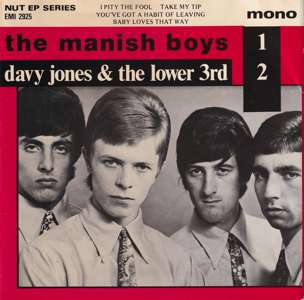
The Manish Boys and Davy Jones and The Lower Third on a 1979 UK reissue sleeve. Record cover artwork (editorial use).
The Manish Boys were an English rhythm-and-blues band from Maidstone, Kent, who became part of David Bowie’s early musical development during 1964 and 1965. Bowie was still performing as Davie Jones when he joined the established group after leaving The King Bees.
Their partnership produced one commercially released single: I Pity the Fool, backed with Bowie’s composition Take My Tip. The record was produced by Shel Talmy and featured session guitarist Jimmy Page. Although it failed to enter the charts, it became an important document of Bowie’s years before international recognition.
The Manish Boys also gave Bowie experience of intensive live performance, professional recording sessions, radio auditions and television promotion. These experiences formed part of the long apprenticeship through which he developed as a singer, songwriter and public performer.
- Band: The Manish Boys
- Origin: Maidstone, Kent, England
- Active with Bowie: 1964–1965
- Bowie’s professional name: Davie Jones
- Genres: Rhythm and blues, soul, jazz and beat music
- Manager: Leslie Conn
- Producer: Shel Talmy
- Released single: I Pity the Fool / Take My Tip
- Recording date: 15 January 1965
- Release date: 5 March 1965
- Record label: Parlophone
- Guest musician: Jimmy Page
- Historic importance: Bowie’s first released performance of one of his own compositions
Origins in Maidstone
The origins of The Manish Boys can be traced to a Maidstone group called Band Seven, formed around 1962. The musicians subsequently adopted the name The Manish Boys, inspired by Muddy Waters’ 1955 blues recording Mannish Boy, although they used a different spelling.
Like many young British groups of the early 1960s, they were strongly influenced by American blues, rhythm and blues and soul records. These recordings were becoming increasingly important to British musicians, even though many of the original American performers still received limited mainstream exposure in the United Kingdom.
The band developed around a comparatively large line-up. In addition to guitar, bass, drums and keyboards, it included saxophones and trumpet. This instrumentation allowed the group to move beyond the guitar-centred approach used by many beat bands and incorporate elements of soul and jazz.
By 1964, The Manish Boys were performing regularly and looking for greater opportunities in London. They already possessed an identity as a working group when the teenage Davie Jones was introduced to them.
From The King Bees to The Manish Boys
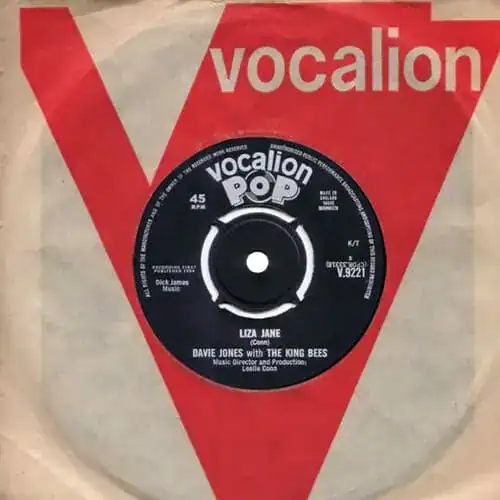
Bowie’s previous group, Davie Jones and The King Bees, had released Liza Jane in June 1964. The single was based upon the blues standard commonly known as Li’l Liza Jane and appeared on the Vocalion Pop label.
The record failed to become a commercial success, and Bowie’s relationship with The King Bees ended soon afterwards. Rather than abandoning music, he immediately searched for another group and was introduced to The Manish Boys through his manager, Leslie Conn.
The exact sequence of Bowie’s audition, initial rehearsal and final commitments with The King Bees has been dated differently in accounts of this period. It is therefore safer not to assign one definite date to his formal arrival. By August 1964, however, he was performing publicly with The Manish Boys as their featured singer.
The group was sometimes promoted as “Davie Jones and The Manish Boys,” drawing attention to the new vocalist. This did not mean Bowie had founded the band or reduced its experienced members to anonymous accompanists. It reflected a management strategy intended to give the group a recognisable frontman.
The Bowie-era line-up
The best-documented line-up associated with Bowie consisted of:
- Davie Jones — lead vocals and saxophone
- Johnny Flux — lead guitar
- Paul Rodriguez — tenor saxophone and trumpet
- Woolf Byrne — baritone saxophone and harmonica
- Bob Solly — keyboards and organ
- John Watson — bass guitar and vocals
- Mick White — drums
The instrumentation gave The Manish Boys a fuller sound than a conventional five-piece beat group. Saxophones, trumpet and organ allowed the musicians to approach arrangements associated with American soul, blues and jazz.
Bowie also played saxophone, fitting naturally into the existing line-up. His arrival changed the group’s public image, while its musicians provided him with a broader musical setting than he had experienced with The King Bees.
Later accounts naturally concentrated on Bowie because of his subsequent fame, but The Manish Boys should not be treated merely as an early Bowie backing band. They were an established working group whose musicianship, repertoire and experience contributed directly to his development.
Rhythm and blues influences
British rhythm and blues in the early 1960s drew upon a broad range of American sources. Muddy Waters, Howlin’ Wolf, Jimmy Reed, Bobby “Blue” Bland and many other performers supplied songs and musical approaches that British groups adapted for local clubs and dance halls.
The Manish Boys belonged to this wider movement, but their instrumentation gave them access to musical textures that were not available to every group. Organ, saxophones and trumpet could create arrangements closer to soul and jazz than to the raw guitar sound often associated with the British blues revival.
Bowie was particularly receptive to these influences. His early recordings demonstrate a young performer moving between blues, soul, jazz and beat music while searching for a voice of his own.
The influence of American soul did not disappear when Bowie later explored folk, theatrical pop, glam rock and electronic music. It remained part of his musical vocabulary and resurfaced prominently during the creation of Young Americans a decade later.
Life on the 1964 club circuit
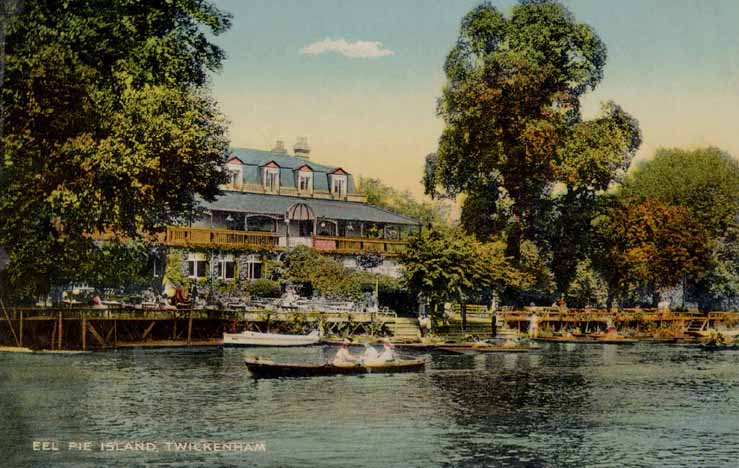
During the second half of 1964, The Manish Boys performed extensively in London, Kent and other parts of Britain. Their engagements included clubs, ballrooms, town halls, youth organisations, holiday venues and American military bases.
Locations associated with the group included Eel Pie Island in Twickenham, Studio 51 in Soho, the Marquee Club, The Scene, the Witch Doctor in St Leonards-on-Sea and the Royal Star Hotel in Maidstone.
The schedule placed Bowie within the competitive British R&B circuit. Groups travelled considerable distances, worked before changing audiences and frequently performed without the facilities later expected by established touring artists.
These engagements helped Bowie develop the confidence required to attract attention in rooms where the audience had not necessarily come to see him. They also brought him into contact with musicians, managers, promoters and other emerging groups active around London.
Some early concert dates remain difficult to verify completely. Advertisements, contracts, diaries and later research sometimes disagree, particularly when groups played more than one engagement on the same day. The surviving chronology should therefore be treated as a developing historical record rather than an infallible tour itinerary.
The long-haired men publicity campaign
Davie Jones discussing the treatment of long-haired men on the BBC programme Tonight, 12 November 1964.
One of the most memorable events of Bowie’s time with The Manish Boys was not a recording but a publicity campaign. On 12 November 1964, he appeared on the BBC television programme Tonight as spokesman for the Society for the Prevention of Cruelty to Long-Haired Men.
The organisation was essentially a publicity device rather than an established national society. Bowie defended young men who were insulted or mistreated because they wore their hair long. The appearance gave him national television exposure before any of his records had become successful.
Bowie spoke confidently to interviewer Cliff Michelmore. His hair became the subject through which he presented himself as articulate, distinctive and unwilling to conform to conventional expectations of male appearance.
Davie Jones defending long-haired men
“I think we’re all fairly tolerant, but for the last two years we’ve had comments like ‘Darling!’ and ‘Can I carry your handbag?’ thrown at us.”
— Davie Jones, interviewed on the BBC programme Tonight, 12 November 1964
The appearance did not directly produce a hit record, but it demonstrated that Bowie could communicate effectively in front of a television camera. Long before his mature stage identities appeared, he understood that a performer’s visual presentation could become part of the public story surrounding the music.
The Decca sessions
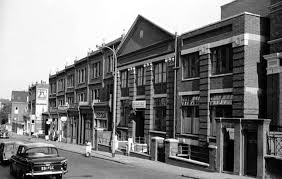
Before recording their Parlophone single, The Manish Boys entered Decca Studios in West Hampstead during October 1964. Working under producer Mike Smith, the group recorded versions of Hello Stranger and Love Is Strange.
Hello Stranger had been a hit for American singer Barbara Lewis, while Love Is Strange was associated with the duo Mickey & Sylvia. Both selections reflected the group’s continuing engagement with American rhythm-and-blues and soul material.
The recordings did not receive a commercial release. Their existence nevertheless demonstrates that The Manish Boys were being considered by professional record-company personnel before Shel Talmy became involved.
Surviving documentation from Bowie’s early recording career is not always complete, and unreleased sessions should be described cautiously. The Decca recordings form part of the group’s documented studio history, but they did not become part of Bowie’s contemporary released catalogue.
The BBC radio audition
On 23 November 1964, The Manish Boys attended a BBC radio audition at Aeolian Hall in London. Such auditions were important because successful groups could gain broadcast exposure at a time when British radio offered relatively limited opportunities for popular music.
The group performed material including I Pity the Fool, Take My Tip and Hoochie Coochie Man. The audition panel did not select them for further radio work.
The rejection is striking in retrospect, but it was not unusual. Bowie had not yet developed the voice, songwriting catalogue or public identity that would later distinguish him. The group was also competing with many British bands drawing upon similar American influences.
Bowie did not treat the decision as final. Within two months, The Manish Boys entered IBC Studios to make the record that became their only commercially released single.
Recording with Shel Talmy and Jimmy Page
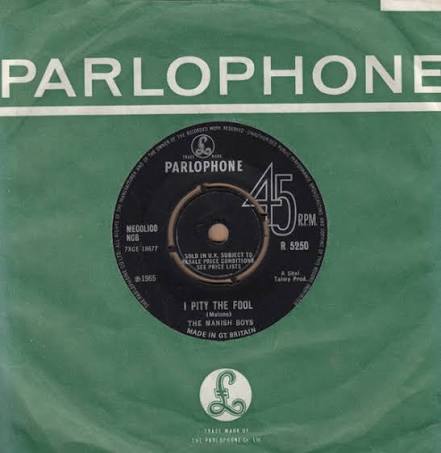
American producer Shel Talmy had become an important figure in British rock and pop. His work with The Kinks and The Who demonstrated his ability to capture forceful performances and give guitar-based records a distinctive impact.
Talmy produced The Manish Boys at IBC Studios in London on 15 January 1965. The musicians recorded I Pity the Fool and Take My Tip, presenting an established American R&B song alongside an original composition by their lead singer.
The session also featured guitarist Jimmy Page. Years before forming Led Zeppelin, Page was already establishing himself as a highly adaptable London studio musician. He was not a member of The Manish Boys but was brought into the session as an additional guitarist.
Page contributed the prominent guitar solo heard on I Pity the Fool. The recording brought together several musicians whose later careers became central to British rock, although none could have predicted the scale of their future reputations.
For Bowie, the session provided experience of working with a successful independent producer and a leading session musician. Talmy would subsequently produce Bowie’s recordings with The Lower Third, continuing their professional association beyond The Manish Boys.
I Pity the Fool
The Manish Boys featuring Davie Jones – I Pity the Fool, recorded in London on 15 January 1965 and featuring Jimmy Page on lead guitar.
The A-side was a version of I Pity the Fool, a song first made famous by Bobby “Blue” Bland in 1961. The composition was credited to Deadric Malone, a name used by music-business figure Don Robey.
Bland’s recording was built around the emotional authority of an experienced blues and soul vocalist. The Manish Boys approached the song as a young British R&B group, producing a harder and more compressed performance.
Bowie’s singing is forceful but still recognisably the work of a vocalist searching for his mature style. He does not yet possess the controlled theatrical phrasing heard on later recordings, but his confidence had developed considerably since Liza Jane.
The band’s brass, organ and rhythm section give the recording a substantial ensemble sound. Page’s guitar solo adds another distinctive element without replacing the musical identity of the group.
Take My Tip
The Manish Boys featuring Davie Jones – Take My Tip, written by Bowie and released as the B-side of I Pity the Fool in March 1965.
The B-side, Take My Tip, occupies a particularly important position in Bowie’s recording history. He wrote the song while still known professionally as Davie Jones, and The Manish Boys’ version became the first commercially released Bowie performance of one of his own compositions.
The song shows a strong soul-jazz influence. Its rhythmic movement and arrangement are closer to the sophisticated club sound associated with performers such as Georgie Fame than to the raw blues approach adopted by many British R&B bands.
Before the Parlophone single appeared, Scottish singer Kenny Miller released his own version of Take My Tip. Miller’s recording was therefore the first commercially issued interpretation of a Bowie composition.
The distinction is historically important: Kenny Miller made the first released recording of a song written by Bowie, while The Manish Boys made the first released record on which Bowie performed one of his own compositions.
The song remained closely tied to existing soul and jazz influences, but it marked an essential change. Bowie was beginning to present himself not only as a singer of established material but also as a songwriter.
Release and commercial response
Parlophone released I Pity the Fool backed with Take My Tip on 5 March 1965. The record was credited to The Manish Boys, although promotion naturally drew attention to Davie Jones as the featured vocalist.
The single did not enter the British charts. Its lack of success reflected the difficult position of a new R&B group in a market already crowded with established performers and rapidly changing musical fashions.
For Bowie, the failure was disappointing but not decisive. It was his second commercially released single and provided another practical lesson in recording, production, promotion and distribution.
The record later became highly collectable because of Bowie’s fame, Jimmy Page’s contribution and the historic position of Take My Tip. A release that initially attracted little public attention eventually became an essential part of Bowie’s documented discography.
Gadzooks! It’s All Happening
The Manish Boys recorded an appearance for the BBC television programme Gadzooks! It’s All Happening on 23 February 1965. The programme was broadcast on 8 March, three days after the single’s release.
The group performed I Pity the Fool, providing valuable national exposure. Television gave viewers an opportunity to encounter the band’s appearance and performance at the same time as hearing the song.
The broadcast did not turn the record into a hit, but it gave Bowie further experience in front of television cameras. Unlike the earlier Tonight interview, this appearance presented him within the musical setting of The Manish Boys.
Footage from many British television programmes of the period was not systematically preserved. Surviving fragments and archival references have consequently acquired considerable importance in documenting Bowie’s earliest screen appearances.
Final performances and departure
The Manish Boys continued performing while their single was being prepared and promoted. Early 1965 engagements took them to clubs, ballrooms, universities, hotels and local halls across England.
The group appeared at venues including the Marquee Club, Bromley Court Hotel, the California Ballroom in Dunstable, the Gliderdrome in Boston, the Pavilion Ballroom in Bournemouth and South Parade Pier in Southsea.
By the spring of 1965, Bowie’s association with the group was ending. The single had failed to chart, and tensions developed around management, direction and the growing emphasis placed upon the featured singer.
Bowie began working with The Lower Third, another rhythm-and-blues group whose members offered a different musical and personal partnership. His transition was part of the continuing instability that characterised his early career.
The final contractual engagements involving Bowie and The Manish Boys took place during the spring of 1965. By May, their partnership had ended and Bowie had committed himself to his next group.
The Lower Third and the next stage
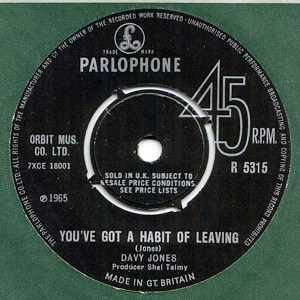
The Lower Third brought Bowie into a tighter, guitar-driven group. Their sound retained rhythm-and-blues influences but also moved towards the harder mod and beat music developing in London during 1965.
Shel Talmy produced Bowie and The Lower Third on You’ve Got a Habit of Leaving, backed with Baby Loves That Way. The association with Talmy therefore provides a direct professional connection between Bowie’s work with the two bands.
The transition did not produce an immediate commercial breakthrough. Bowie continued moving through groups, managers and record labels while searching for a distinctive style and a stable professional direction.
What changed gradually was his commitment to songwriting. The experience of recording Take My Tip had established that his own compositions could become part of his commercial identity, even when the records themselves failed to chart.
Reissues and archival importance
Original copies of I Pity the Fool and Take My Tip became valuable collectors’ items after Bowie achieved international fame. The recordings were subsequently reissued and included on authorised compilations devoted to his early career.
A 1979 UK reissue brought together recordings by The Manish Boys and Davy Jones and The Lower Third. Its sleeve is used as the hero image on this page and reflects the growing interest in Bowie’s pre-fame work during the late 1970s.
Later archival releases allowed the songs to be heard as more than curiosities. They document Bowie before he adopted his permanent professional surname, before his first album and before he had established a recognisable musical style.
The recordings also preserve the work of The Manish Boys themselves. Their place in history should not be reduced to having briefly employed a future star. They belonged to the British R&B movement that provided young musicians with a demanding live and studio education.
Selected Manish Boys chronology
- Summer 1964: Davie Jones joins The Manish Boys after leaving The King Bees.
- August 1964: Bowie begins performing publicly with the group.
- 6 October 1964: The band records Hello Stranger and Love Is Strange at Decca Studios with Mike Smith.
- 12 November 1964: Davie Jones appears on BBC television representing the Society for the Prevention of Cruelty to Long-Haired Men.
- 23 November 1964: The Manish Boys attend a BBC radio audition.
- 15 January 1965: I Pity the Fool and Take My Tip are recorded at IBC Studios with Shel Talmy.
- 23 February 1965: The band records an appearance for Gadzooks! It’s All Happening.
- 5 March 1965: Parlophone releases I Pity the Fool backed with Take My Tip.
- 8 March 1965: The group’s appearance on Gadzooks! It’s All Happening is broadcast.
- Spring 1965: Bowie’s association with The Manish Boys ends and he continues with The Lower Third.
Legacy
The Manish Boys did not achieve a chart hit, and their partnership with Bowie lasted less than a year. Their importance lies in the stage of development they represent.
The group placed Bowie within a broad instrumental R&B environment and gave him sustained experience as a working frontman. Their single also preserved the point at which his own songwriting first became part of a record carrying his performance.
Bowie’s emergence was gradual. He moved through bands, managers, auditions and unsuccessful singles while absorbing musical and professional knowledge from every project.
The Manish Boys represent one of the clearest stages in that process: an ambitious young Davie Jones learning how to become a professional singer, songwriter and public personality long before the name David Bowie became internationally recognised.
Official Website & Further Information
More information about David Bowie’s recordings and career can be found on the official David Bowie website .
The Manish Boys’ recording of I Pity the Fool, backed with Take My Tip, has appeared on authorised archival collections devoted to Bowie’s early recordings.
Article Origin
This article was researched and written for DavidBowieWorld.com as part of the David Bowie Collaborators archive. It documents Bowie’s work with The Manish Boys during 1964 and 1965, their recordings, performances and importance within his early development.
© DavidBowieWorld.com — Written and compiled for David Bowie World.
The Manish Boys Chronology
🏛️ 4 Heathside Avenue
🎤 Artist: The Manish Boys
🗒️ Notes: David Bowie auditions for The Manish Boys in the garage of band member Paul Rodriguez. Manager Leslie Conn had recommended the seventeen-year-old singer to the group.
🏛️ RAF Chicksands Air Base
🎤 Artist: Davie Jones & The Manish Boys
🗒️ Notes: David Bowie’s live debut with The Manish Boys, six days after his audition for the group.
🏛️ Eel Pie Island Jazz Club
🎤 Artist: Davie Jones & The King Bees
🗒️ Note: Final performance with The King Bees.
🏛️ BBC Two Television
📺 Event: TV Broadcast – The Beat Room
🎤 Artist: Davie Jones & The King Bees
🗒️ Notes: Davie Jones & The King Bees perform Liza Jane. By the time of the broadcast, Bowie had already begun performing with The Manish Boys.
🏛️ Marine Lake Bar
🎤 Artist: Davie Jones & The Manish Boys
🗒️ Notes: Official live debut with The Manish Boys. The band performed two separate shows (afternoon and evening sets) on this opening day of their summer residency.
🏛️ Marine Court
🎤 Artist: Davie Jones & The Manish Boys
🗒️ Notes: A performance at the Witch Doctor club.
🏛️ Little Canada Holiday Village
🎤 Artist: The Manish Boys
🗒️ Notes: A notoriously difficult gig where the band’s modern R&B style clashed with the expectations of the holiday camp audience.
🏛️ Studio 51, Great Newport Street
🎤 Artist: Davie Jones & The Manish Boys
🗒️ Notes: A Friday evening session at the renowned Ken Colyer Club in Soho.
🏛️ Studio 51, Soho
🎤 Artist: Davie Jones & The Manish Boys
🗒️ Notes: Another Friday session at the Ken Colyer Club, part of their ongoing London residency.
🏛️ Studio 51, Soho
🎤 Artist: Davie Jones & The Manish Boys
🗒️ Notes: The band continues their residency sessions at the Ken Colyer Club.
🏛️ Comet Hotel
🎤 Artist: Davie Jones & The Manish Boys
🗒️ Notes: Live performance / Second show same day
🏛️ The Willow Rooms
🎤 Artist: Davie Jones & The Manish Boys
🗒️ Notes: The Romford gig laid the foundation for future recordings; the band met Mike Smith of Decca Records here, which led to a studio session in October.
🏛️ Regent Sound Studio, 4 Denmark Street
🎤 Artist: Davie Jones & The Manish Boys
🎧 Recording Session: Hello Stranger, Duke Of Earl & Love Is Strange
🗒️ Notes: Decca Records recording session arranged following the band’s meeting with A&R man Mike Smith on 25 September. The three recordings are believed to be lost.
🏛️ Regent Sound Studio, 4 Denmark Street
🎤 Artist: Davie Jones & The Manish Boys
🎧 Recording Session: Hello Stranger, Duke Of Earl & Love Is Strange
🗒️ Notes: The band re-recorded the three songs originally recorded at Regent Sound on 6 October 1964.
🏛️ Regent Sound Studio, 4 Denmark Street
🎤 Artist: Davie Jones & The Manish Boys
🗒️ Notes: The band met television producer Barry Langford, a friend of manager Leslie Conn. Langford later featured The Manish Boys on the BBC television programme Gadzooks! It’s All Happening.
🏛️ Marquee Club
🎤 Artist: Davie Jones & The Manish Boys
🗒️ Notes: David meets Dana Gillespie for the first time; she would become a lifelong friend and collaborator.
🏛️ BBC Television Studios (Tonight Programme)
🎤 Artist: Davie Jones and members of The Manish Boys
🗒️ Notes: National TV debut as the founder of ‘The Society for the Prevention of Cruelty to Long-Haired Men’. A publicity stunt orchestrated by manager Leslie Conn.
🏛️ The Witch Doctor (Marine Court)
🎤 Artist: Davie Jones & The Manish Boys
🏛️ ABC Cinema
🎤 Artist: Davie Jones & The Manish Boys
🗒️ Notes: Two performances as the opening act on the Gerry and the Pacemakers–Gene Pitney tour. The Manish Boys performed at 6.30pm and 8.50pm.
🏛️ ABC Cinema
🎤 Artist: Davie Jones & The Manish Boys
🗒️ Notes: Two performances / Gene Pitney tour
🏛️ ABC Cinema (Lothian Road)
🎤 Artist: Davie Jones & The Manish Boys
🗒️ Notes: Two performances / Gene Pitney tour
🏛️ ABC Cinema (Globe Theatre)
🎤 Artist: Davie Jones & The Manish Boys
🗒️ Notes: Two performances / Gene Pitney tour
🏛️ City Hall
🎤 Artist: Davie Jones & The Manish Boys
🗒️ Notes: Two performances / Gene Pitney tour
🏛️ Futurist Theatre
🎤 Artist: Davie Jones & The Manish Boys
🗒️ Notes: Two performances / Gene Pitney tour
🏛️ Marquee Club
🎤 Artist: Davie Jones & The Manish Boys
🗒️ Notes: Opening act for The Moody Blues.
🏛️ Corn Exchange
🎤 Artist: Davie Jones & The Manish Boys
🗒️ Notes: Show moved to December 19.
🏛️ Chislehurst Caves
🎤 Artist: Davie Jones & The Manish Boys
🗒️ Notes: Live performance at Chislehurst Caves. This date is confirmed by the KentBeat historical venue archive.
🏛️ probably the J.Y.C. (Jewish Youth Center)
🎤 Artist: Davie Jones & The Manish Boys
🗒️ Notes: The band was asked to stop playing because they were considered too loud for the audience.
1965
🏛️ Hermitage Ballroom
🎤 Artist: Davie Jones & The Manish Boys
🗒️ Notes: The band’s first live booking of 1965. Their van broke down en route, but they eventually reached the venue and performed.
🏛️ IBC Studios (Portland Place)
🎤 Artist: The Manish Boys with Davie Jones
🎧 Recording Session: Recordings of “I Pity the Fool” and “Take My Tip.”
🗒️ Notes: Produced by Shel Talmy. Session guitarist Jimmy Page played lead guitar on I Pity the Fool.
🏛️ The Royal Star Hotel (Star Ballroom)
🎤 Artist: Davie Jones & The Manish Boys
🏛️ Bromel Club (Bromley Court Hotel)
🎤 Artist: Davy Jones & The Manish Boys
🗒️ Notes: Performance at the popular Bromley venue located within the Bromley Court Hotel.
🏛️ Technical School (Old Boys’ Association Dance)
🎤 Artist: Davy Jones & Manish Boys
🏛️ Marquee Club
🎤 Artist: Davie Jones & The Manish Boys
🗒️ Notes: Supporting The Moody Blues.
🏛️ Gliderdrome
🎤 Artist: Davie Jones & The Manish Boys
🗒️ Notes: Performance at the famous Starlight Room within the Gliderdrome.
🏛️ BBC Television Centre
🎤 Artist: Davie Jones & The Manish Boys
📺 Event: TV Recording for ‘Gadzooks! It’s All Happening’
🗒️ Notes: Performance of ‘I Pity The Fool’. The show aired on March 8, 1965.
💿 Release: “I Pity The Fool” / “Take My Tip”
🎤 Artist: The Manish Boys
🗒️ Notes: First released song written by Bowie (“Take My Tip”). Featuring Jimmy Page on lead guitar.
🏛️ BBC TV
📺 TV: Broadcast of ‘Gadzooks! It’s All Happening’ (recorded Feb 23).
🎤 Artist: Davie Jones & The Manish Boys (broadcast)
🏛️ Unknown Venue
🎤 Artist: Davie Jones & The Manish Boys
🗒️ Notes: David Bowie’s final live performance with The Manish Boys. The precise venue is unknown.
🏛️ Shel Talmy’s Office, Dean Street
🎤 Artist: Davie Jones
🗒️ Notes: Bob Solly and Paul Rodriguez encountered Davie Jones at producer Shel Talmy’s office. During the meeting, Jones informed them that he was leaving The Manish Boys. The band continued for a short time without him, while Jones joined The Lower Third shortly afterwards.
