
Gary Kemp – Spandau Ballet Songwriter and the Influence of David Bowie
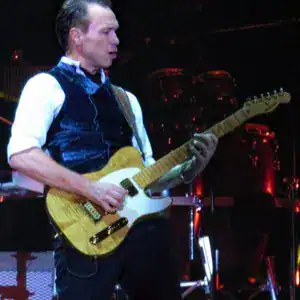
Photo: Andrew D. Hurley / Wikimedia Commons / CC BY-SA 2.0 — Wikimedia file page
Gary Kemp is one of Britain’s most accomplished songwriters, best known as the guitarist and principal composer of Spandau Ballet. Although he never became a member of David Bowie’s band, Bowie played a profound role in shaping Kemp’s musical ambitions, artistic identity and approach to songwriting. Throughout his career Kemp has openly acknowledged Bowie as one of his greatest creative influences.
From the moment he watched David Bowie perform Starman on Top of the Pops in July 1972, Kemp realised that popular music could be theatrical, intelligent and visually daring. That revelation would help shape not only his own career but also the emergence of Spandau Ballet as one of the defining British bands of the New Romantic movement.
- Born: 16 October 1959, London, England
- Profession: Guitarist, songwriter, singer, actor and producer
- Best known for: Principal songwriter and guitarist of Spandau Ballet
- David Bowie connection: One of the musicians most openly inspired by Bowie’s work during the 1970s
- Other projects: Solo artist, actor, Nick Mason’s Saucerful of Secrets and co-host of the Rockonteurs podcast
Growing Up in North London
Gary James Kemp was born on 16 October 1959 in Islington, North London, an area that would remain central to both his identity and his songwriting throughout his life. Raised in a working-class family, he developed an interest in music at an early age after receiving a guitar as a Christmas present from his parents. By the age of eleven he was already teaching himself to play and beginning to write original songs, discovering that composition fascinated him just as much as performance.
Alongside his growing love of music, Kemp also developed an interest in acting. As a child he appeared in stage productions and television work before landing a leading role in the 1972 British film Hide and Seek. Although acting remained an important part of his career, music increasingly became his primary ambition as he entered his teenage years.
Discovering David Bowie
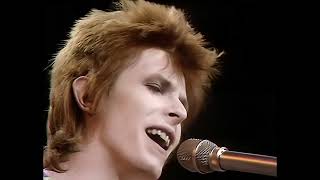
VIDEO: Live on Top Of The Pops
-
VIDEO: Live on Top Of The Pops
Watch the performance that launched David Bowie to stardom. Thursday 6th July, 1972 is said to be 'the day that invented the 80’s’ as so many musicians who went on to be household names saw the performance and it changed their lives. Those watching that night included U2’s Bono, The Cure’s Robert Smith, Boy George, Adam Ant, Mick Jones of the Clash, Gary Kemp of Spandau Ballet, Morrissey and Johnny Marr of the Smiths, Siouxsie Sioux, Toyah Willcox, John Taylor and Nick Rhodes of Duran Duran, Dave Gahan of Depeche Mode and many more. Recorded on 5 July 1972 at the BBC Television Centre in White City, London, the performance is undoubtedly one of the most essential pieces of music television ever broadcast. It has influenced generations of musicians, artists and writers who saw it at the time and countless others who have since seen it over the decades, from bootleg VHS copies to YouTube clips.
Gary Kemp has often described two defining musical moments that changed the direction of his life. The first came on 6 July 1972 when David Bowie performed Starman on BBC television’s Top of the Pops. Watching Bowie place his arm around guitarist Mick Ronson while performing the song convinced the young Kemp that popular music could combine great songwriting with theatrical performance, fashion and artistic imagination.
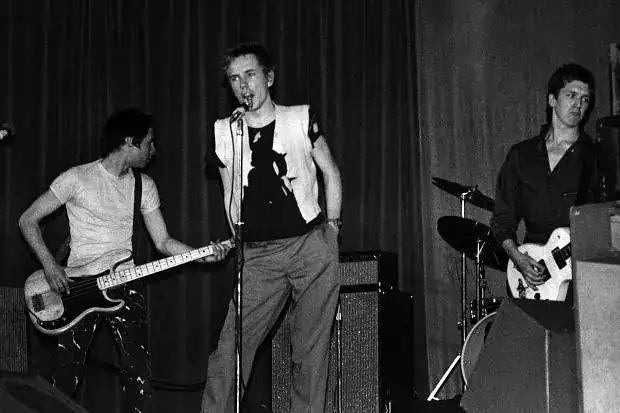
Photo: Sex Pistols, 1976. Safe image from Wikimedia Commons: Wikimedia file page (editorial use).
The second pivotal moment arrived four years later when he witnessed the Sex Pistols performing at Islington’s Screen on the Green in 1976. If Bowie had shown him that music could be transformed into art, punk demonstrated that anyone with enough determination could start a band. Together, those two experiences inspired Kemp to pursue a career as a songwriter and performer.
Forming Spandau Ballet
Inspired by the creative possibilities opened up by both David Bowie and the emerging punk movement, Gary Kemp began forming bands with friends from Dame Alice Owen’s School in North London. Together with Tony Hadley, Steve Norman and John Keeble, the group experimented with several different names and musical styles before eventually becoming Spandau Ballet. Gary’s younger brother, Martin Kemp, later joined as bassist, completing the classic line-up.
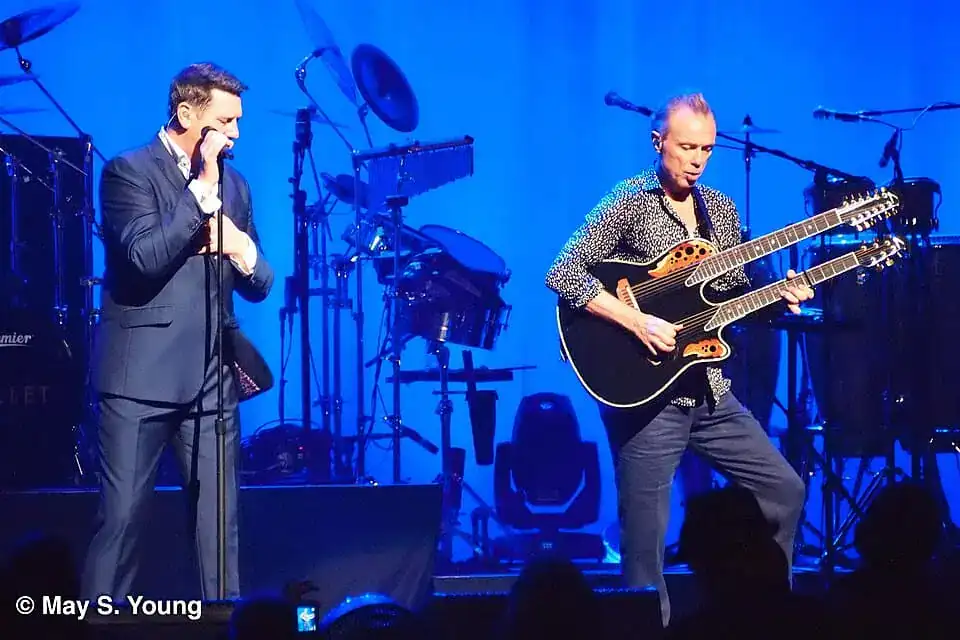
Photo: Spandau Ballet in concert. Safe image from Wikimedia Commons: Wikimedia file page (editorial use).
The band’s fortunes changed dramatically when they became closely associated with London’s fashionable Blitz Club, the birthplace of the New Romantic movement. While many groups embraced the visual style of the scene, Kemp believed that appearance alone was never enough. Like Bowie before him, he wanted image, music and songwriting to form a complete artistic identity. This philosophy became one of the defining characteristics of Spandau Ballet throughout the 1980s.
The Songwriter Behind the Band
Unlike many successful pop groups of the era, Spandau Ballet relied almost entirely on one songwriter. Gary Kemp wrote the music and lyrics for virtually all of the band’s original material, including international hits such as To Cut a Long Story Short, Chant No. 1 (I Don’t Need This Pressure On), True, Gold, Only When You Leave and Through the Barricades. His ability to combine memorable melodies with sophisticated arrangements established him as one of Britain’s most successful songwriters of the decade.
The band’s musical development reflected Kemp’s own broad listening habits. Early recordings combined electronic instrumentation with funk rhythms and dance music, while later albums increasingly incorporated guitars, orchestral arrangements and classic pop songwriting. Although these stylistic changes were uniquely his own, Kemp has frequently acknowledged that Bowie’s willingness to reinvent himself encouraged him to avoid repeating the same creative formula.
David Bowie’s Influence
Throughout numerous interviews, Gary Kemp has spoken openly about David Bowie’s importance to his artistic development. Rather than simply admiring Bowie as a successful rock star, Kemp was fascinated by the way Bowie continually reinvented himself without abandoning his commitment to strong songwriting. The balance between musical ambition, visual presentation and artistic freedom became an enduring source of inspiration.
Kemp has often highlighted the significance of guitarist Mick Ronson within Bowie’s early 1970s work. Watching Bowie and Ronson perform together during the Ziggy Stardust era demonstrated that a guitarist could contribute far more than technical skill alone. Ronson’s arrangements, stage presence and musical partnership with Bowie helped shape Kemp’s own understanding of how a creative partnership within a band could function.
He has also described Bowie’s 1973 album Pin Ups as particularly influential. Hearing Bowie’s interpretation of Pink Floyd’s See Emily Play introduced Kemp to Syd Barrett’s songwriting and encouraged him to explore a much wider range of British music from the late 1960s and early 1970s. In later interviews he has remarked that almost everything Bowie recorded during that decade left a lasting impression on his own writing.
Beyond Spandau Ballet
Following Spandau Ballet’s split in 1990, Gary Kemp deliberately broadened his creative horizons. Rather than focusing solely on music, he returned to acting, appearing alongside his brother Martin in the acclaimed British crime film The Krays (1990), in which the brothers portrayed the notorious Kray twins. He later appeared in films including The Bodyguard (1992) and Killing Zoe (1993), while continuing to work in television and on the London stage.
Although acting occupied much of the early 1990s, songwriting remained central to Kemp’s identity. In 1995 he released his debut solo album, Little Bruises, produced with Leigh Gorman, formerly of Bow Wow Wow. The album presented a far more personal musical direction than his work with Spandau Ballet, blending reflective songwriting with sophisticated pop arrangements. Although it achieved only modest commercial success, it demonstrated Kemp’s desire to develop beyond the sound that had made him internationally famous.
A Lifelong Admiration for Bowie
Unlike many musicians who simply cite David Bowie as an influence, Gary Kemp has consistently spoken in detail about Bowie’s impact on his own artistic development. In interviews throughout his career he has described Bowie as one of the defining creative figures of his generation, praising not only his songwriting but also his willingness to embrace change, experiment with different musical styles and challenge audiences’ expectations.
Kemp has often explained that Bowie’s greatest lesson was the importance of artistic freedom. Every major reinvention—from Ziggy Stardust and the Berlin Trilogy to the experimental work of the 1990s—demonstrated that commercial success should never prevent an artist from taking creative risks. That philosophy encouraged Kemp to continue writing new music throughout his career rather than simply relying on Spandau Ballet’s catalogue of classic hits.
Nick Mason’s Saucerful of Secrets
In 2018 Kemp accepted an invitation from Pink Floyd drummer Nick Mason to join Nick Mason’s Saucerful of Secrets, a project dedicated to performing Pink Floyd’s early music from the Syd Barrett era through to the band’s pre-Dark Side of the Moon period. Sharing guitar and vocal duties alongside longtime session bassist Guy Pratt and guitarist Lee Harris, Kemp became an important member of the group, helping introduce this historic repertoire to a new generation of audiences.
The project also reflected another indirect connection with Bowie. Kemp has often recalled that Bowie’s recording of See Emily Play on the 1973 album Pin Ups first introduced him to Syd Barrett’s songwriting. Decades later, performing Barrett-era Pink Floyd material alongside Nick Mason represented an unexpected continuation of a musical journey that had begun with Bowie’s interpretation of one of Barrett’s most celebrated songs.
Rockonteurs
In 2020 Gary Kemp and bassist Guy Pratt launched the Rockonteurs podcast, quickly establishing it as one of the most respected interview series devoted to popular music. Rather than focusing on celebrity gossip, the programme explores the creative process through in-depth conversations with songwriters, producers and performers from across the history of rock and pop.
Guests have included musicians such as Alice Cooper, Peter Frampton, Billy Idol, Joe Elliott, Boy George, Adam Clayton, Phil Manzanera, David Coverdale, Mick Fleetwood and many others. Kemp’s own experience as a songwriter enables him to ask detailed questions about composition, recording techniques and artistic development, making the discussions particularly valuable for anyone interested in the craft of making music.
Later Solo Career
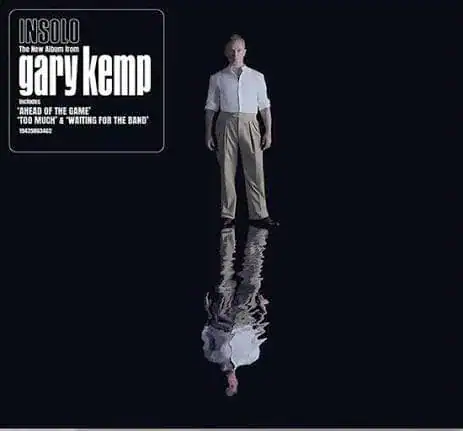
After many years balancing music, acting and broadcasting, Gary Kemp returned to solo recording with INSOLO in 2021. Produced with longtime collaborator Toby Chapman, the album revealed a more reflective songwriter exploring themes of family, ageing, identity and creativity. Critics praised its mature songwriting and understated production, demonstrating that Kemp had developed far beyond the polished pop sound of the 1980s.

He continued this creative resurgence with This Destination (2025), an album influenced by the sophisticated songwriting of artists such as Steely Dan while remaining unmistakably personal in tone. The record explores mortality, acceptance and the passage of time, subjects that Kemp has said become increasingly important as artists grow older and gain more life experience.
David Bowie’s Lasting Influence
Although Gary Kemp never worked directly with David Bowie, Bowie’s influence can be traced throughout Kemp’s musical career. From the theatrical ambition of the early Spandau Ballet years to his later appreciation for artistic reinvention, Kemp has repeatedly acknowledged Bowie as one of the musicians who showed him that popular music could be both intellectually ambitious and commercially successful.
Kemp has often pointed out that Bowie’s willingness to change direction from one album to the next gave younger musicians permission to take creative risks of their own. Rather than remaining tied to one successful formula, Bowie demonstrated that artistic curiosity could become a career-long philosophy. That lesson remained with Kemp throughout his work as a songwriter, performer and recording artist.
Legacy
Today Gary Kemp is recognised as one of Britain’s most accomplished songwriters, responsible for many of the defining pop songs of the 1980s while also building respected careers as an actor, solo artist, broadcaster and live performer. His work with Spandau Ballet continues to influence new generations of musicians, while his later projects demonstrate an artist who has never stopped evolving creatively.
Within David Bowie’s wider creative universe, Gary Kemp represents something particularly significant. He belongs to the generation of British musicians whose artistic identities were profoundly shaped by Bowie’s groundbreaking work during the early 1970s. Rather than becoming a collaborator, Kemp became one of the clearest examples of Bowie’s enduring influence on British songwriting, proving that Bowie’s legacy extended far beyond his own recordings to inspire countless artists who followed.
