
Ralph Horton – Managing David Bowie and The Buzz
Ralph Horton was one of the managers involved in David Bowie’s development before his first chart success. His association with Bowie encompassed the later Lower Third period, the adoption of the professional name David Bowie, the Pye recording contract and the formation of The Buzz. His work belongs principally to the transitional years of 1965–1966, followed by the completion of the managerial handover to Kenneth Pitt in 1967.
Horton’s contribution was organisational rather than instrumental. He helped place the young singer before record companies and industry contacts, participated in reshaping his professional presentation and sought a more experienced managerial partner. These activities took place while Bowie was still moving between bands, testing material and attempting to establish himself through singles and club appearances.
The surviving history is uneven. Contemporary correspondence provides a firm connection with the name change, while musicians’ later recollections describe the practical experience of working under his management. A reliable account therefore centres on those documented activities, without inventing an extensive private biography or assigning him responsibility for creative decisions that belonged to Bowie and his musicians.
- Name: Ralph Horton
- Role: Early manager of David Bowie
- Principal documented period: 1965–1966, with the transition to Kenneth Pitt completed in 1967
- Associated bands: The Lower Third and The Buzz
- Important document: Letter to Kenneth Pitt dated 17 September 1965, announcing the name David Bowie
- Recording connection: Bowie’s move to Pye Records and the Tony Hatch-produced singles
- First Pye single: Can’t Help Thinking About Me / And I Say to Myself, released 14 January 1966
- First single credited to Bowie alone: Do Anything You Say / Good Morning Girl, released 1 April 1966
- Important live setting: The Marquee Club, London
- Management successor: Kenneth Pitt, following an overlapping period of involvement
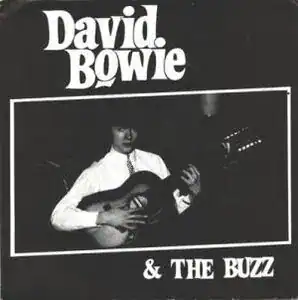
- Hero image: David Bowie and The Buzz; not a portrait of Horton
Before the Bowie association: a limited biographical record
Ralph Horton‘s place in music history is documented mainly through his work with Bowie. The available accounts provide substantially more information about that professional relationship than about his childhood, education or family background. Those gaps are important boundaries for a biography: a missing birth date cannot be supplied from an unrelated person with the same name.
His emergence in the Bowie story places him within the London music business of the mid-1960s, where booking, personal management, publicity and informal introductions often overlapped. He was sufficiently connected to approach established professionals and to pursue opportunities for an artist whose records had not yet reached the charts.
That position differs from the later image of a manager directing an internationally successful act. Horton was working with a developing singer, a succession of backing musicians and a relatively small number of releases. His immediate task concerned access: finding ways for performances and songs to reach people able to offer work, recording opportunities or financial support.
The most useful starting point is consequently the period in which his actions become traceable. By 1965, Bowie had already made records, but his professional identity and working arrangements remained unsettled. Horton entered that process before the familiar name had appeared on a commercial single.
1964–1965: David Jones before David Bowie
Before working under the name Bowie, David Jones had performed with several groups and made unsuccessful attempts to establish a recording career. Liza Jane, released in 1964 under the name Davie Jones with the King Bees, preceded his association with the Manish Boys and then The Lower Third.
These were distinct musical partnerships. Moving between them changed the musicians around him, the repertoire he performed and the way he was presented. The sequence should not be reduced to one band gradually acquiring different names: Bowie was learning through successive groups with their own backgrounds and expectations.
Leslie Conn was involved in the earlier management history. Horton became important during the subsequent Lower Third period, when the singer was developing original songs and seeking another opportunity after previous releases had failed commercially. The later success of Bowie can make these changes appear inevitable, but the contemporary career was much less secure.
For a prospective manager, the challenge was to make a persuasive case for an artist without an established hit. A record company needed material it could release, venues needed a viable act and the musicians needed a working arrangement. Those demands converged during Horton’s association with the young singer.
1965: working with The Lower Third
The Lower Third connected Bowie with guitarist Denis Taylor, bassist Graham Rivens and, in the later line-up, drummer Phil Lancaster. Their performances belonged to the club-based environment from which many British groups sought a route into recording and wider recognition.
The band’s earlier single, You’ve Got a Habit of Leaving backed with Baby Loves That Way, appeared in 1965 under the Davie Jones name. It established a recorded example of the partnership before its next release introduced a new professional identity and a different record label.
Horton’s association with Bowie developed within this existing group setting. He was not assembling the singer’s first band or discovering someone who had never entered a studio. His work concerned a musician already attempting to move from local performance towards a sustainable recording career.
Stage clothes and professional presentation
Phil Lancaster‘s later recollections describe Horton taking an active interest in the group’s appearance, including arranging new clothes. Such practical interventions belonged to an environment in which a band’s visual presentation could influence publicity photographs, stage impact and its perceived readiness for professional work.
Clothing could communicate a shared identity before an audience knew the songs. It could also distinguish the singer from the musicians around him. For a group competing for attention in London, appearance was part of how an act presented itself to promoters and record-company staff as well as to paying customers.
This does not make Horton the creator of Bowie’s later visual imagination. The clothes associated with The Lower Third belonged to a specific mid-1960s context, long before Ziggy Stardust. Their historical interest lies in the early attention given to presentation while the singer was still establishing his professional position.
Horton’s role at this stage can therefore be understood through concrete activity rather than retrospective mythology. He was concerned with the appearance of the act being promoted. The later transformation of Bowie into an artist celebrated for changing images grew through many additional experiences and collaborators beyond this period.
September 1965: approaching Kenneth Pitt
One of Horton’s most consequential actions was approaching Kenneth Pitt about Bowie. Pitt brought experience in publicity and artist representation, offering the possibility of contacts and support beyond the resources of the existing arrangement.
The surviving account of their communication places discussions in September 1965. At that point, an approach did not immediately become a complete transfer of management. Horton remained involved, while Pitt’s eventual commitment developed through further contact and his experience of seeing Bowie perform.
The episode illustrates an important feature of the relationship: Horton was seeking assistance rather than simply attempting to maintain exclusive control. Introducing another professional could change the distribution of responsibility, but it could also increase the chances of securing opportunities for the artist.
Pitt later became more prominent in the narrative because his management continued into the period of Bowie’s first album and Space Oddity. Horton’s earlier approach nevertheless formed part of the route by which that relationship began. The two management histories overlap, rather than meeting at a single abrupt dividing line in 1965.
17 September 1965: the letter announcing David Bowie
A letter from Horton to Pitt dated 17 September 1965 provides contemporary evidence for the adoption of the professional name David Bowie. Its significance is documentary: it demonstrates that the change was being communicated within the singer’s business relationships before the first record bearing the name appeared.
Ralph Horton announcing the new name
“I have now changed Davie’s name to David Bowie.”
— Ralph Horton, excerpt from his letter to Kenneth Pitt, 17 September 1965, reproduced in David Bowie’s official archive
The wording is assertive, but it does not establish that Horton invented the name. Bowie’s own interest in alternative names and the Bowie knife belongs to the broader account of how the identity developed. Announcing a decision and originating it are different contributions.
The letter also provides a firmer historical anchor than selecting an exact day for every private conversation surrounding the change. By its date, Horton was presenting the name to Pitt as an established decision. That is the specific fact the document supports.
A new name within an existing musical partnership
The adoption of Bowie did not immediately remove The Lower Third from the public identity of the act. The first Pye release was credited to David Bowie with The Lower Third, preserving the band’s name alongside that of the newly renamed singer.
That billing captures a transitional arrangement. The professional name had changed, while the musical partnership continued long enough to produce another single. The development of a recognisable solo identity therefore happened through an existing band relationship rather than outside one.
The record label, publicity and performance billing are useful evidence because they show how the act was actually presented. Later descriptions of Bowie as a solo artist can obscure the musicians who supplied the sound of those early records and appearances.
Horton’s letter and the subsequent single belong to different stages of the same process. The first concerns communication between professionals; the second places the new name before record buyers. Together they show a business decision becoming a public identity, although neither event by itself produced the commercial breakthrough that the singer was seeking.
Late 1965: the Pye opportunity and Tony Hatch
Horton helped bring Bowie to the attention of Tony Hatch, whose work as a producer and songwriter gave him an established position at Pye. Hatch had already enjoyed major success through his association with Petula Clark, including Downtown.
For Bowie, the Pye agreement offered another opportunity to release original material through a professional recording organisation. For Horton, securing access to a producer with commercial experience was a substantial practical advance over simply continuing to seek attention through club performances.
The arrangement also introduced another authority into the musical process. A producer could make decisions about arrangements, performance and the musicians required to complete a recording. Management could help secure the opportunity, but the sound of the record would depend on work in the studio.
This division of responsibility is important throughout the Pye period. Horton belongs to its managerial history; Hatch belongs to its production history; Bowie wrote and sang the songs; the musicians supplied the performances. Their contributions intersected without becoming interchangeable, and the resulting releases reflect those different professional roles.
December 1965: recording Can’t Help Thinking About Me
Can’t Help Thinking About Me and its B-side, And I Say to Myself, were recorded with The Lower Third in December 1965. The single brought together the existing band, the new Bowie identity and Hatch’s production within the Pye arrangement.
The A-side centres on a young narrator leaving home after bringing trouble upon his family. Its setting combines departure, embarrassment and anticipation, making it an early example of Bowie’s interest in a character negotiating the distance between a familiar environment and the wider world.
The recording remains rooted in a group performance. Guitar, bass and drums support a vocal that moves between storytelling and an emphatic refrain. Its energy belongs to the mid-1960s band setting, even as the lyric gives the singer a narrative position different from a straightforward declaration of romantic desire.
The B-side explores another aspect of his contemporary writing, with a more overtly soul-influenced approach. Together the songs show an artist still working through available styles. Horton had helped secure a platform for that work, but the material itself was the product of Bowie’s developing songwriting rather than a finished version of his later musical identity.
14 January 1966: the first single under the Bowie name
Pye released Can’t Help Thinking About Me / And I Say to Myself in the United Kingdom on 14 January 1966. It was the first commercial single released under the name David Bowie, with The Lower Third included in the artist credit.
The release made the change visible in a concrete form: the name appeared on a record that could be reviewed, broadcast and stocked. It also placed the act within Pye’s catalogue, connecting the managerial effort with a product intended for a national market.
The single did not become a UK chart hit. That result left the essential problem unresolved: a professional agreement and a completed record had not created a substantial buying audience. There was still a need for performances, promotion and further material.
The recording’s later appearance in the United States extended its release history, but it should not be confused with the beginning of Bowie’s American success. In the immediate context, it was another attempt by a developing British artist to establish himself. Its historical prominence grew afterwards because it carried a name that would become internationally familiar.
January 1966: the break with The Lower Third
The Lower Third‘s association with Bowie ended soon after the Pye single appeared. Accounts of the split describe a dispute over money and the musicians’ working arrangements, with Horton occupying a central managerial position in the disagreement.
The episode exposes the practical instability behind the emerging recording career. A release could exist while the people who had made it were unable to sustain their professional relationship. The musicians’ income, expenses and expectations mattered alongside the ambitions surrounding the singer.
Later accounts do not describe every aspect of the separation in identical terms. The secure outline is that Taylor, Rivens and Lancaster ceased to be Bowie’s continuing band, and a new group was required for the next stage. The split belongs to the history of the working partnership, not simply to the succession of record labels.
For Horton, replacing the musicians became an immediate organisational task. For Bowie, it created another break between the performers heard on a record and those who would accompany subsequent appearances. The opportunity at Pye continued, but the band structure around the singer had to be rebuilt.
February 1966: assembling The Buzz
The Buzz was assembled in early 1966 as Bowie’s new backing group. Advertisements and auditions formed part of the recruitment process, with the Marquee environment and Horton’s involvement providing connections between the singer and prospective musicians.
The familiar early line-up comprised John “Hutch” Hutchinson on guitar, Derek Fearnley on bass, Derek Boyes on keyboards and John Eager on drums. Bowie occupied the lead-vocal position, working with a group that had a different instrumental balance from The Lower Third.
The keyboard part gave the ensemble another resource for supporting the contemporary mixture of pop, rhythm and blues and original songs. The change was therefore more than a replacement of individual players: it altered the practical possibilities of the backing group.
Horton’s management belongs directly to the formation of this working environment. Recruitment helped keep Bowie’s career active after the Lower Third split, giving him musicians with whom he could rehearse, fulfil appearances and prepare further material. The Buzz emerged from that immediate need rather than as a retrospective stepping stone towards a career whose later direction was already known.
The Buzz as a working ensemble
The Buzz supplied the musical setting for much of Bowie’s live work during 1966. Their responsibilities extended beyond playing the tracks that reached record shops. A club appearance required a programme, transitions between songs and the ability to support the singer across the material chosen for the performance.
Hutchinson later recalled both the audition process and the band’s appearances, providing a musician’s perspective on a period that survives unevenly in recorded form. His memories describe a young Bowie who already appeared organised and experienced, although commercial recognition remained elusive.
The distinction between a working ensemble and a named recording act is particularly important here. The Buzz could accompany Bowie on a release without receiving an artist credit alongside him. They could also remain his live group while a producer used other musicians for a studio session.
That flexibility placed the singer at the centre of the public identity while making the band’s work essential to day-to-day performance. Horton’s management operated within that arrangement, supporting an act whose continuity increasingly rested on the name David Bowie rather than on the permanence of a particular group line-up.
March 1966: television and the problem of visibility
Bowie appeared on Ready Steady Go! in March 1966, performing Can’t Help Thinking About Me. The television appearance carried a song recorded with The Lower Third into the period in which The Buzz had become his working band.
Such an appearance created a different form of visibility from a club booking. Viewers could encounter the singer through his appearance and performance without having attended a concert or bought the single. Television therefore offered another way to place the new professional identity before an audience.
Exposure and commercial success were nevertheless separate outcomes. A broadcast could bring attention without producing a chart entry, just as a record contract could produce releases without establishing a lasting market. Bowie’s early career contains several examples of professional opportunities that did not immediately accumulate into a breakthrough.
1 April 1966: Do Anything You Say
Bowie’s next Pye single, Do Anything You Say, appeared on 1 April 1966, backed with Good Morning Girl. Both songs were written by Bowie and produced by Tony Hatch, with The Buzz contributing to the recordings.
The release introduced an important change in billing: it was credited to David Bowie alone. The musicians remained present in the sound, but the label no longer paired the singer’s name with that of his backing group. This made the record a clear stage in the establishment of a solo recording identity.
Musically, the A-side works through a direct appeal to another person, using repetition and vocal responses within a compact arrangement. Its ambitions differ from the narrative movement of Can’t Help Thinking About Me, showing another possible approach to a contemporary pop single.
Good Morning Girl: another side of the new group
The B-side, Good Morning Girl, gives a different impression of Bowie’s work with The Buzz. Its jazz-inflected character and vocal movement create a lighter, more rhythmically mobile setting than the A-side’s repeated declaration.
Hearing both sides together helps recover the range of ideas being tried during the Pye period. The single was a commercial unit with a lead track, but the reverse side could preserve another approach to singing and arrangement. The full release therefore offers more evidence than judging the period through its A-side alone.
The band setting is also relevant. The presence of keyboards and the interaction between the instruments support a musical character different from the more guitar-centred identity of some earlier performances. The songs demonstrate how a new ensemble could affect the sound around Bowie’s voice.
Spring 1966: the Marquee and the Bowie Showboat
The Marquee Club was an important setting for Bowie and The Buzz. The Sunday-afternoon appearances promoted as the Bowie Showboat gave the singer a recurring London platform during the spring of 1966, with Radio London associated with the shows.
A recurring engagement offered something different from a succession of unrelated bookings. The same act could return to a recognisable venue, developing its presentation within a continuing relationship with the club and its audience. For musicians still seeking wider recognition, that kind of platform could be valuable even without a hit record.
The Showboat name also placed Bowie prominently within the promotion. It linked the performances to an individual identity while The Buzz supplied the live ensemble. This relationship between frontman and band echoed the direction already visible in the billing of the April single.
The Marquee’s significance to the management story was especially concrete: it provided an opportunity for interested professionals to see Bowie in action. A manager could describe an artist or circulate recordings, but a performance allowed another potential representative to assess stage presence, repertoire and the response within a room.
April 1966: Kenneth Pitt sees Bowie perform
Pitt’s involvement deepened after seeing Bowie perform at the Marquee in the spring of 1966. Horton’s efforts to interest him had continued beyond their earlier correspondence, turning an initial approach into an opportunity for direct assessment.
Bowie’s repertoire at the time was broader than the sound of one recent single. The performance history includes material drawn from established popular entertainment as well as contemporary band music and his own writing. That breadth helps explain why an experienced publicist could see possibilities beyond the immediate problem of a charting record.
The encounter should be understood as part of an evolving arrangement. Pitt’s interest did not erase Horton’s existing role at the moment he entered the venue. Rather, the two men’s involvement overlapped as further opportunities and responsibilities developed.
Horton’s introduction had consequences that outlasted his own central position. Pitt subsequently became a major figure in Bowie’s early solo career. The route into that relationship remains an important part of Horton’s contribution, even though its later achievements and difficulties belong to Pitt’s management rather than to an indefinitely extended Horton era.
A musician’s memory of Horton’s protective role
Hutchinson’s recollections offer a more personal description of the working arrangement. He remembered Horton treating Bowie with particular care and maintaining some distance between the singer and the other musicians. The observation comes from someone who experienced the band from within.
John Hutchinson on Ralph Horton
“He was protected by his manager, Ralph Horton, who treated him like a precious piece of china”
— John Hutchinson, excerpt from his recollections in Classic Rock, 22 January 2016
The image describes a relationship rather than a formal job specification. It suggests how the hierarchy around the singer felt to one band member, while leaving room for other participants to remember the period differently.
It also adds a human dimension to the business chronology. Letters and record labels establish dates and credits; a musician’s memory describes how the people involved interacted. Both forms of evidence contribute to the picture, provided the later recollection remains identified as that speaker’s perspective.
Changes within The Buzz
The Buzz‘s personnel changed during the year. Hutchinson left the group in the summer of 1966, and Billy Gray subsequently occupied the guitar position. The continuing members included Boyes, Fearnley and Eager.
A change of guitarist altered the immediate working ensemble without ending Bowie’s use of The Buzz name. The band history therefore contains more than one configuration, and photographs or recollections need to be placed within the relevant part of the year where possible.
This is particularly useful when considering the group’s later reputation. Hutchinson became familiar through subsequent work with Bowie, but that later prominence should not erase the musicians who continued after his departure. The Buzz was a working band whose membership could change in response to ordinary professional circumstances.
For management, replacing a player meant preserving continuity while rehearsals and appearances continued. Such tasks rarely leave the same documentary trace as a record contract or a published letter, yet they belong to the conditions under which an artist could remain active. The changes demonstrate how much of the 1966 career depended on maintaining practical arrangements between people whose ambitions and opportunities were also changing.
Summer 1966: a live band and a changing studio approach
During 1966, Bowie’s recording and performing arrangements did not always use the same musicians. The clearest example is I Dig Everything, for which Hatch used session players on the released recording rather than simply carrying The Buzz‘s live line-up into the studio.
This decision belongs to the production history of the single. A producer seeking a particular sound or a completed master could choose musicians for that session independently of the personnel required to keep a live act working. The result was a continuing solo identity supported by different musical resources in different settings.
The distinction prevents the Buzz period from being treated as a single block of identical credits. A band can define an artist’s concerts without playing on every record released during those months. The name on a single is not, by itself, a complete personnel list.
I Dig Everything and I’m Not Losing Sleep
The third Pye single paired I Dig Everything with I’m Not Losing Sleep. It completed the sequence of six tracks released on Bowie’s three Pye singles in 1966, all produced by Hatch.
The A-side gives its narrator an expansive relationship with the city around him. Its musical surface is brighter and more relaxed than the tension of departure in Can’t Help Thinking About Me. Organ and percussion help establish a different rhythmic setting for Bowie’s voice.
The B-side presents another kind of assertion, built around a narrator resisting the judgement of others. Heard alongside the earlier singles, it contributes to a picture of a writer trying out different voices and positions rather than repeating one settled persona.
Neither side established Bowie as a chart artist. By the end of the Pye association, the recordings showed considerable activity but no decisive commercial result. For a manager, that was the practical limit of the agreement: access to a label had produced released work, yet the relationship had not delivered the public breakthrough needed to transform the artist’s circumstances.
Tony Hatch and the challenge of finding a market
Hatch’s later response to Bowie’s early material combined recognition of his writing with reservations about its subject matter. The contrast is revealing: originality could interest a producer while leaving the question of commercial placement unresolved.
Tony Hatch on Bowie’s early songwriting
“his material was good although I thought he wrote too much about London dustbins.”
— Tony Hatch, quoted by Chris O’Leary in Pushing Ahead of the Dame
The remark belongs to Hatch’s assessment of the songs, rather than evidence that he or Horton dictated all their subjects. It captures a difficulty faced by a developing songwriter whose interests did not yet translate into a consistent commercial identity.
The Pye period consequently resists a simple verdict of either success or failure. The singles failed to chart, but the sessions created a recorded body of original work. Horton helped secure an opportunity that had real limits, while Bowie continued developing material that would take him beyond the relationship.
Autumn 1966: towards Rubber Band and Deram
After the Pye period, Bowie moved towards a new recording opportunity with Deram, part of Decca. A session at R G Jones in Morden on 18 October 1966 produced recordings including the single version of Rubber Band and The London Boys.
Pitt’s involvement was increasingly important to this next stage. The material offered a different presentation of Bowie, with character, setting and theatrical elements becoming more prominent than on some of the earlier singles. The change involved both new opportunities and a continuing development in the songs themselves.
Rubber Band uses a story and musical setting drawn from an older entertainment vocabulary, while The London Boys presents a darker account of youthful urban experience. The contrast expands the range of voices audible within the year’s work.
This transition belongs in Horton’s biography because it marks the changing boundaries of his role. He had helped initiate the relationship with Pitt, but the later manager became central to the recording path that followed. The movement towards Deram was therefore part of a handover already developing through the year, rather than evidence that Horton remained the sole architect of every subsequent decision.
Late 1966: the end of the regular Buzz partnership
Bowie’s regular partnership with The Buzz came to an end in late 1966. His emerging solo direction increasingly involved arrangements and recording contexts that did not depend on retaining the group as a permanent public unit.
The end of the band partnership did not erase the individual musicians from his story. Fearnley’s later contribution to arrangements and Hutchinson’s subsequent collaborations demonstrate that a group’s dissolution and the end of every personal working relationship are different events.
The Deram release of Rubber Band, backed with The London Boys, placed another version of Bowie before record buyers in December 1966. The singer was now being heard in material whose presentation differed from the early Pye singles, while his managerial arrangements were also moving towards a new structure.
The year’s conclusion therefore contains several overlapping changes: a different label, a developing repertoire, alterations in personnel and Pitt’s growing involvement. Horton’s central contribution belongs to the process leading into those changes. The history is clearer when those developments are distinguished, rather than treated as one simultaneous transformation from band member to fully established solo star.
1967: Kenneth Pitt becomes the principal manager
By April 1967, Pitt had become Bowie’s sole manager, completing the transition from the earlier arrangement involving Horton. Bowie’s self-titled debut album appeared on Deram that June, opening another chapter in his recording history.
The album’s mixture of character songs, pop arrangements and theatrical influences belonged to the environment developing during Pitt’s involvement. It should not be retrospectively assigned to Horton simply because his management had preceded it or because some musicians had connections with the Buzz period.
Pitt continued managing Bowie through later projects and the breakthrough of Space Oddity. Those events extend beyond the period in which Horton can be securely presented as the central manager. Keeping that boundary clear allows both men’s contributions to be understood on their own terms.
For Horton, the important link is the introduction and the overlapping period that followed. Helping to bring another representative into an artist’s career can be a consequential contribution even when it ultimately reduces the first manager’s role. The eventual prominence of Pitt’s work makes that earlier connection more significant, without extending Horton’s credit into projects he did not direct.
After the handover: the limits of the surviving account
Horton’s later life is much less clearly documented in the sources used for this article than his association with Bowie. There is no reliable basis here for constructing a detailed subsequent career, assigning him an unverified death date or connecting him with people who merely share his name.
The absence of a full later biography should not be turned into a dramatic disappearance. It describes a limitation of the available account, not proof of what happened to him after his work with Bowie ended. Those are different historical claims.
A further archive discovery could add to that picture, particularly correspondence, business records or clearly identified contemporary photographs. Until such material is established, the responsible ending to the personal chronology is the handover itself, followed by the later ways in which his contribution has been remembered and documented.
The records as evidence of a developing career
The six Pye tracks offer a compact musical record of the period associated with Horton. They preserve different approaches to songwriting, singing and accompaniment, from the departure narrative of Can’t Help Thinking About Me to the urban enthusiasm of I Dig Everything.
They also document changing professional relationships. The first release names The Lower Third; the next credits Bowie alone while featuring The Buzz; the final single uses session players. Those differences make the records useful evidence for more than a simple sequence of songs.
Later compilations have made this material easier to encounter as a group. Hearing the tracks together can reveal continuity in Bowie’s voice and interests that was less apparent when the records appeared separately, amid personnel changes and unsuccessful attempts to secure a hit.
The recordings cannot explain every management decision, but they establish what the professional work produced. They are tangible outcomes of a period otherwise often described through anecdotes. Their credits and release sequence give the Horton story a musical framework, connecting the manager’s organisational activity with performances that listeners can still examine directly.
1999–2000: Bowie returns to the early repertoire
Decades later, Bowie returned to songs from this early period in performance and during the Toy project. Can’t Help Thinking About Me re-entered his live repertoire in 1999, and other early compositions also received renewed attention around the turn of the millennium.
Those performances changed the circumstances in which the songs were heard. Material first released by an unknown or developing singer was now being interpreted by an artist with an extensive catalogue and an audience familiar with his subsequent career.
The later versions do not add Horton to the personnel of a new project. Their relevance lies in the survival of work first brought into public circulation during the earlier management period. A song could acquire another life without recreating the original musicians, producer or business arrangement.
That return also complicates the idea that the early singles mattered only because they failed. Bowie found material worth revisiting within them. The later interest does not change their original commercial reception, but it shows that an unsuccessful release could contain creative work whose value was not exhausted by its first attempt to reach the charts.
Legacy: a manager within Bowie’s pre-breakthrough history
Ralph Horton‘s contribution is best understood at the scale of the career he actually helped manage. He worked with Bowie before an enduring audience had formed, when a record contract, a new band or an introduction could offer progress without guaranteeing financial stability or public recognition.
The strongest evidence connects him with practical turning points. His letter records the communication of a new professional name; the Pye releases show a recording opportunity becoming actual work; The Buzz provided a continuing live ensemble; and his approach to Pitt helped establish a relationship that would carry into another phase.
These achievements coexist with difficulty. The Lower Third split exposed tensions over money and expectations, and the Pye singles did not produce a hit. Horton’s place in the story does not depend on transforming those outcomes into successes they were not. It rests on the opportunities created and the problems encountered within a genuinely uncertain period.
Nor does his importance require a claim that he invented Bowie’s talent or mapped out the later career. The singer’s writing, performance and changing interests developed through many relationships. Horton’s role was one part of the professional setting in which those abilities could be tested, recorded and presented to others.
Within David Bowie’s wider creative circle, he represents the work that precedes recognition: organising, introducing, promoting and rebuilding when an arrangement breaks down. Preserving that contribution gives the early history its proper human scale. The artist who later became internationally familiar first had to negotiate these smaller, less secure structures, and Horton was among the people involved in that process.
Official Website & Further Information
No verified official website for Ralph Horton has been identified for this article. The principal routes into his work are therefore the documented history of Bowie’s early career, the recordings made during the period and recollections from the musicians involved.
David Bowie’s official website contains archive features concerning the professional name change and the Pye singles. These provide useful starting points for the contemporary documents and releases associated with Horton’s management.
Official David Bowie website:
www.davidbowie.com
For the related band history within this archive, visit the David Bowie and The Buzz page.
Article Origin
This article has been independently researched and written exclusively for DavidBowieWorld.com as part of its archive of David Bowie’s collaborators, managers and creative relationships. It examines Ralph Horton‘s documented professional association with Bowie and places that work within the chronology of The Lower Third, The Buzz and the early solo recordings.
The quotations identify their speakers and the publications through which they are available. The article does not claim direct contributions, approval or endorsement from Horton, his relatives, the musicians discussed or David Bowie’s representatives.
The hero photograph shows David Bowie and The Buzz as historical context for the management period. It is not presented as a photograph of Ralph Horton.
© DavidBowieWorld.com — David Bowie Collaborations & Creative Circle Archive.
