
Jon Carin – Keyboards, Guitar and Vocals with David Bowie

Jon Carin is an American multi-instrumentalist, singer, songwriter and producer whose career has been closely connected with Pink Floyd, David Gilmour and Roger Waters. His work has included keyboards, synthesizers, guitar, lap steel guitar, vocals, songwriting, programming and production.
His documented live connection with David Bowie came on 29 May 2006, when Bowie appeared as a surprise guest during David Gilmour‘s concert at the Royal Albert Hall in London. Carin was a member of Gilmour’s touring band, officially listed for the concert on keyboards, vocals and slide guitar.
During the encore, Bowie joined Gilmour and his band for two songs: Syd Barrett’s Arnold Layne and Pink Floyd’s Comfortably Numb. On the officially released performance of Arnold Layne, Carin is credited with keyboards and backing vocals.
Carin was not a member of Bowie’s regular studio or touring bands. Their documented collaboration was brief but significant: two performances during one of Bowie’s increasingly rare live appearances after the end of A Reality Tour.
Key Facts
- Name: Jon Carin
- Born: 21 October 1964
- Birthplace: New York City, United States
- Occupation: Musician, singer, songwriter and producer
- Instruments: Keyboards, synthesizers, guitar, lap steel guitar, bass, drums and vocals
- Early band: Industry
- Major associations: Pink Floyd, David Gilmour, Roger Waters, The Who, Pete Townshend, Kate Bush and Richard Butler
- Pink Floyd songwriting credit: Learning to Fly
- David Bowie collaboration: Royal Albert Hall, London
- Date: 29 May 2006
- Role at the concert: Keyboards, vocals and slide guitar
- Songs performed with Bowie: Arnold Layne and Comfortably Numb
Early Life
Jon Carin was born in New York on 21 October 1964. Unlike the later stages of his career, relatively little detailed and independently verifiable information has been published about his childhood and earliest musical development.
What is firmly documented is that Carin had entered professional music by the early 1980s. His first significant recorded work came with the American group Industry, where he developed as a singer, keyboard player and songwriter before his career brought him into contact with Bryan Ferry and, eventually, David Gilmour.
Those early professional years became the starting point for a career in which Carin would work not only as a keyboard player, but also as a vocalist, guitarist, songwriter, producer and multi-instrumentalist.
Early Career – Industry
Industry – State of the Nation
Jon Carin‘s first significant professional work came with the American new-wave band Industry. The group had originally been formed in New York in the late 1970s and went through personnel changes before Carin joined the line-up that recorded its best-known material.
In the band’s early-1980s line-up, Carin performed lead vocals, keyboards and synthesizers, alongside guitarist Brian Unger, bassist and guitarist Rudy Perrone and drummer Mercury Caronia.
Carin was also one of Industry’s principal songwriters. The band’s breakthrough recording, State of the Nation, was written by Jon Carin and Mercury Caronia. Recorded in 1983, the anti-war song became Industry’s best-known release and reached the charts in the United States and several European countries, with particularly strong success in Italy and Sweden.
Industry subsequently released its only full-length studio album, Stranger to Stranger, on Capitol Records in 1984. The album was produced and engineered by Rhett Davies, whose previous work included a long association with Bryan Ferry and Roxy Music.
Carin’s creative contribution to Stranger to Stranger was substantial. He wrote or co-wrote eight of the album’s ten songs, including Still of the Night, Until We’re Together, Romantic Dreams, What Have I Got to Lose, State of the Nation, Communication, All I Need Is You and Stranger in a Strange Land.
His instrumental contribution was also broader than keyboards alone. Album credits list Carin on lead vocals, keyboards and synthesizer, with additional acoustic guitar and bass contributions on Until We’re Together.
Industry did not become a long-term vehicle for Carin, but the group established him professionally as a singer, keyboard player and songwriter. Just as importantly for the next stage of his career, working with producer Rhett Davies created the connection that would soon bring Carin into the recording world of Bryan Ferry.
Working with Bryan Ferry
Bryan Ferry – Slave to Love, Live Aid, Wembley Stadium, 13 July 1985
After his work with Industry, Jon Carin became involved in the recording of Bryan Ferry’s sixth solo studio album, Boys and Girls. Released in 1985, the album was produced by Ferry together with Rhett Davies, the producer and engineer who had previously worked with Industry.
Carin contributed keyboards to the album. The sessions brought together an unusually large and distinguished group of musicians, including guitarists David Gilmour, Mark Knopfler and Nile Rodgers, bassists Tony Levin and Marcus Miller, drummer Andy Newmark and saxophonist David Sanborn.
For Carin, the project represented an important step beyond his work as a member of Industry. Instead of recording within a fixed band, he was now contributing to a major studio production assembled from musicians working in different combinations across the album.
David Gilmour was among those musicians, contributing lead guitar to Windswept and the album’s title track, Boys and Girls. Carin and Gilmour were therefore both contributors to the same Bryan Ferry album, although this should not be confused with their first documented personal meeting.
That meeting came in 1985, when Carin joined Ferry’s live band and rehearsed for Live Aid. Carin later specifically identified those rehearsals as the occasion on which he first met David Gilmour.
First Meeting with David Gilmour – Live Aid 1985
On 13 July 1985, Bryan Ferry performed at Live Aid at Wembley Stadium in London. The globally broadcast benefit concert brought together many of the leading artists of the period and became one of the defining music events of the 1980s.
Jon Carin performed keyboards in Ferry’s band. The ensemble also included David Gilmour on guitar, Neil Hubbard and Chester Kamen on guitar, Marcus Miller on bass, Andy Newmark on drums, Jimmy Maelen on percussion, and backing vocalists Michelle Cobbs, Ednah Holt and Fonzi Thornton.
Ferry’s set consisted of Sensation, Boys and Girls, Slave to Love and his version of John Lennon‘s Jealous Guy.
Although Carin and Gilmour had both contributed to Ferry’s Boys and Girls album, Carin later specifically identified the Live Aid rehearsals as the occasion on which he first met Gilmour.
Jon Carin on first meeting David Gilmour
“I met David at the Live Aid rehearsals in 1985.”
— Jon Carin, Brain Damage interview, August 2007
Carin remembered taking an immediate liking to Gilmour. He described him as having a quiet confidence and warmth, and was particularly impressed by the apparent ease and natural quality of his musicianship.
The meeting proved decisive for Carin’s subsequent career. What began with two musicians working in Bryan Ferry’s Live Aid band soon developed into a long professional association involving David Gilmour‘s work, Pink Floyd recordings and some of the largest concert tours of the following decade.
Carin later recalled that both men were at transitional points in their careers when they met. Industry was no longer providing Carin with his previous band identity, while Pink Floyd was undergoing the major internal changes surrounding Roger Waters’ departure.
Within a relatively short period, Carin and Gilmour began working together on music that would eventually become part of Pink Floyd’s first studio album after Waters’ departure: A Momentary Lapse of Reason.
Pink Floyd and A Momentary Lapse of Reason
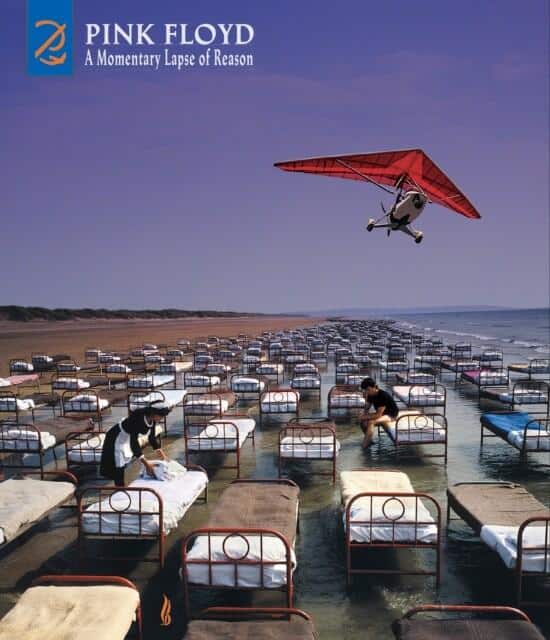
Following his work with Bryan Ferry and his meeting with David Gilmour during the Live Aid rehearsals in 1985, Jon Carin became involved in the recordings that developed into Pink Floyd’s 1987 album A Momentary Lapse of Reason.
The album marked a major turning point in Pink Floyd’s history. Roger Waters had left the group, while David Gilmour and Nick Mason continued under the Pink Floyd name. Richard Wright also participated in the sessions and was credited as an additional musician on the original release before later editions restored his status within the band’s personnel.
The recordings were produced by David Gilmour and Bob Ezrin and involved a substantial group of additional musicians. Carin was among them and is officially credited with keyboards.
His contributions can be heard across several tracks on the album. Detailed recording credits identify Carin on keyboards or synthesizer on material including Signs of Life, Learning to Fly, The Dogs of War and Round and Around.
Carin’s involvement was particularly important on Learning to Fly. The finished composition carries four official songwriting credits: David Gilmour, Jon Carin, Anthony Moore and Bob Ezrin.
That credit distinguished Carin’s role from that of an additional session keyboard player. He had contributed to the creation of one of the central songs of Pink Floyd’s new era as well as participating in the recording of the album itself.
Released in September 1987, A Momentary Lapse of Reason established the Gilmour-led Pink Floyd as an active recording and touring group. Carin’s participation in the album would lead directly to an even larger role when Pink Floyd returned to the concert stage.
Learning to Fly
Pink Floyd – Learning to Fly
Jon Carin‘s most important songwriting contribution to Pink Floyd is Learning to Fly, one of the central songs on A Momentary Lapse of Reason. The finished composition is officially credited to David Gilmour, Anthony Moore, Bob Ezrin and Jon Carin.
The origins of the song can be traced to the period shortly after Carin and Gilmour had worked together with Bryan Ferry at Live Aid in 1985. Gilmour subsequently invited Carin to work with him at his home studio.
During one of those early sessions, Carin developed an instrumental sequence while Gilmour was temporarily away from the studio. Gilmour later recalled hearing what Carin had created when he returned and incorporating part of the idea into the developing composition.
A portion of Carin’s early instrumental demo was later made public, providing direct evidence of material that preceded the completed Pink Floyd recording. The demo contains elements of the rhythmic and harmonic foundation from which the song subsequently developed, but it should not be described as identical to the finished composition.
The final version evolved through additional work by Gilmour, Carin, lyricist Anthony Moore and producer Bob Ezrin. The official four-way songwriting credit reflects that collaborative development.
Carin also performed keyboards on the finished recording. David Gilmour provided lead vocals and guitars, while Nick Mason contributed drums and spoken material connected with aviation. Richard Wright also contributed keyboards, with additional musicians participating in the studio recording.
The title and lyrics drew upon the idea of flight on more than one level. Gilmour was learning to fly aircraft during this period, while the song could also be understood in the context of Pink Floyd moving forward following Roger Waters’ departure.
Released as the first single from A Momentary Lapse of Reason in September 1987, Learning to Fly became one of the best-known songs of Pink Floyd’s post-Waters period. In the United States it reached number one on Billboard’s Album Rock Tracks chart and remained there for three weeks.
The song remained in Pink Floyd’s live repertoire during both the A Momentary Lapse of Reason and The Division Bell touring eras. Live versions were subsequently released on Delicate Sound of Thunder and PULSE.
For Carin, Learning to Fly remains particularly significant because his contribution is formally recognised not only through his performance on the recording but through an official Pink Floyd songwriting credit.
The A Momentary Lapse of Reason Tour
Following the release of A Momentary Lapse of Reason, Pink Floyd returned to the concert stage for its first major tour since The Wall. The tour began on 9 September 1987 in Ottawa, Canada, and developed into an extensive international production that continued through 1988 and into 1989.
Jon Carin joined the expanded touring ensemble alongside the three musicians then performing under the Pink Floyd name: David Gilmour, Nick Mason and Richard Wright. Carin’s documented responsibilities during the tour included keyboards, sound effects, vocals and additional percussion.
The supporting band also included Guy Pratt on bass and vocals, Tim Renwick on guitars and backing vocals, Gary Wallis on percussion and additional keyboards, and Scott Page on saxophones and additional guitar. Backing singers were used throughout the tour, with the personnel changing during different stages of the itinerary.
Carin worked alongside Richard Wright in recreating the extensive keyboard and synthesizer layers required by both the new material and Pink Floyd’s earlier catalogue. His role also extended beyond keyboards: he contributed vocals, sound effects and, where required, additional percussion.
The concerts combined songs from A Momentary Lapse of Reason with established Pink Floyd material including Shine On You Crazy Diamond, Wish You Were Here, Time, Money, Comfortably Numb and Run Like Hell.
Carin also performed Learning to Fly, the song he had co-written with David Gilmour, Anthony Moore and Bob Ezrin. Performing the composition night after night gave Carin a continuing live role in material to which he had already contributed as both musician and songwriter.
The scale of the tour established Carin as an important member of Pink Floyd’s expanded live ensemble. What had begun with his meeting with Gilmour during the Live Aid rehearsals in 1985 had, within little more than two years, developed into a position in one of the world’s largest touring productions.
Delicate Sound of Thunder
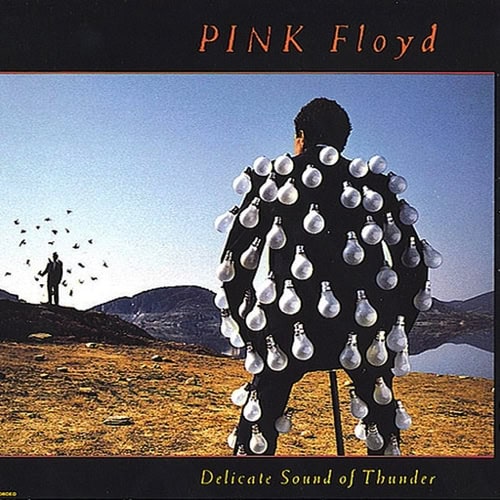
Pink Floyd’s performances during the tour were documented on Delicate Sound of Thunder. The live recordings were drawn principally from concerts at the Nassau Veterans Memorial Coliseum in Uniondale, New York, in August 1988.
Carin is credited on the live release with keyboards and vocals, alongside Richard Wright on keyboards and vocals. The other principal touring musicians represented on the recording include Guy Pratt, Tim Renwick, Scott Page and Gary Wallis.
The release preserved Carin’s contribution to Pink Floyd’s first major touring period after Roger Waters’ departure and provided the first substantial officially released live documentation of his work with the band.
The tour continued beyond the Nassau recordings and concluded in 1989. By then Carin had progressed from a young musician working with Bryan Ferry to a songwriter on a Pink Floyd album and a regular member of Pink Floyd’s touring ensemble.
Pink Floyd Through the Early 1990s
Jon Carin‘s association with Pink Floyd and David Gilmour continued after the end of the A Momentary Lapse of Reason tour. During the early 1990s he remained part of the circle of musicians called upon for Pink Floyd-related recordings and performances.
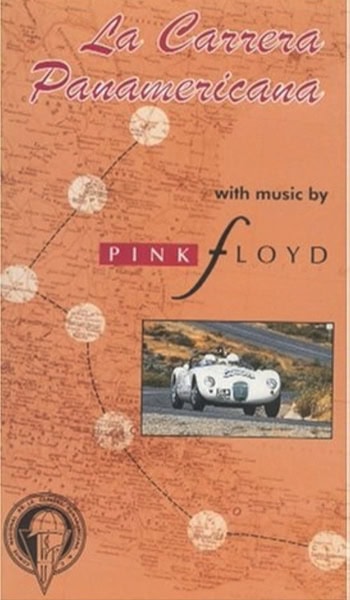
One of the most notable projects from this period was La Carrera Panamericana, a film documenting the historic Mexican road race in which David Gilmour, Nick Mason and Pink Floyd manager Steve O’Rourke participated in 1991.
Pink Floyd supplied the music for the film. The soundtrack combined previously released material with a group of new instrumental recordings created specifically for the project.
The new music was recorded at Olympic Studios in London in November 1991. Nick Mason later recalled that the sessions were deliberately collaborative, with the musicians working together in the studio rather than constructing the recordings through isolated overdubs.
Alongside Gilmour, Mason and Richard Wright, the sessions included musicians from Pink Floyd’s 1987–1989 touring ensemble. Mason specifically identified Jon Carin, Guy Pratt and Gary Wallis as participants, while guitarist Tim Renwick also contributed.
The newly recorded pieces included Country Theme, Small Theme, Big Theme, Mexico ’78, Carrera Slow Blues and Pan Am Shuffle. Carin contributed additional keyboards to the soundtrack sessions.
The project is historically significant within Pink Floyd’s later career because it brought Gilmour, Mason and Wright together in the studio again between A Momentary Lapse of Reason and The Division Bell. Pan Am Shuffle and Carrera Slow Blues also carried joint writing credits for Gilmour, Wright and Mason.
The film was first broadcast on BBC2 on 24 December 1991 and subsequently released on home video in 1992. No official standalone soundtrack album was issued.
For Carin, the sessions demonstrated that his relationship with the Pink Floyd organisation had continued beyond the enormous world tour. He was again contributing in the studio alongside musicians with whom he had spent several years performing live.
That continuing association would lead directly into Pink Floyd’s next major studio and touring period: The Division Bell.
The Division Bell
Pink Floyd – High Hopes, PULSE
Jon Carin returned to the studio with Pink Floyd during the sessions that produced The Division Bell, the band’s fourteenth studio album. Recorded principally during 1993 and released in 1994, the album brought David Gilmour, Nick Mason and Richard Wright into a more collaborative working environment than on A Momentary Lapse of Reason.
The album was produced by David Gilmour and Bob Ezrin, with engineer Andrew Jackson. Much of the early work took place aboard Gilmour’s recording studio Astoria, with additional recording and mixing carried out at other studios.
Carin was again one of the additional musicians involved in the project. The detailed album credits document him contributing keyboards, piano and programming across several recordings.
On Marooned, Carin is credited with additional keyboards. He also contributed additional keyboards to Coming Back to Life and Keep Talking, while the latter additionally includes programming by Carin and Gary Wallis.
For Lost for Words, Carin is credited with programming. On the album’s closing track, High Hopes, his documented contribution includes piano.
These credits demonstrate that Carin’s studio role extended beyond providing a single layer of additional synthesizer. Depending on the composition, he contributed keyboards, piano or programming within arrangements that also featured Richard Wright’s keyboards and David Gilmour‘s own instrumental work.
Carin later gave more detailed accounts of the sessions and described playing additional keyboard and piano parts during the making of the album. Some of those later recollections go beyond the way individual contributions were identified in the original published credits. Where such accounts differ, the distinction between the contemporary album credits and later first-hand recollections should be preserved.
Released in the United Kingdom on 28 March 1994, The Division Bell became a major international success and was followed by an extensive world tour.
For Carin, the album continued a Pink Floyd studio relationship that had begun with A Momentary Lapse of Reason and had continued through the La Carrera Panamericana sessions. He would again become part of the expanded live band when Pink Floyd returned to the road in 1994.
The 1994 Tour and PULSE
Following the release of The Division Bell, Pink Floyd returned to large-scale touring in 1994. Jon Carin again joined the expanded live band, continuing the touring role he had first established during the A Momentary Lapse of Reason era.
The touring line-up centred on David Gilmour on guitars and vocals, Richard Wright on keyboards and vocals, and Nick Mason on drums and percussion. The additional musicians included Jon Carin on keyboards and vocals, Guy Pratt on bass and vocals, Tim Renwick on guitars and backing vocals, Gary Wallis on percussion and drums, and Dick Parry on saxophone.
Backing vocals were provided during the tour by Durga McBroom and Claudia Fontaine, with Sam Brown joining for the European dates.
The tour began in North America in the spring of 1994 before moving to Europe during the summer. The European leg began on 22 July 1994 at the Estádio José Alvalade in Lisbon and continued through September.
The final part of the tour took place at Earls Court in London, where Pink Floyd played a remarkable series of concerts in October 1994. The planned opening performance on 12 October was postponed after a seating stand collapsed before the concert; no serious injuries were reported. The residency subsequently continued with fifteen performances.
Carin worked alongside Richard Wright throughout the concerts, providing the additional keyboards, synthesizers and vocal parts required by Pink Floyd’s increasingly complex live arrangements. His role allowed multiple keyboard textures to be performed simultaneously while also enabling Carin to contribute backing and occasional additional vocals.
The concerts combined material from The Division Bell with songs drawn from throughout Pink Floyd’s catalogue. During selected Earls Court performances, the band performed The Dark Side of the Moon in its entirety, something Pink Floyd had not regularly done for many years.
Carin also continued to perform Learning to Fly, giving him the unusual position of performing each night on a Pink Floyd world tour a song for which he held an official songwriting credit.
PULSE
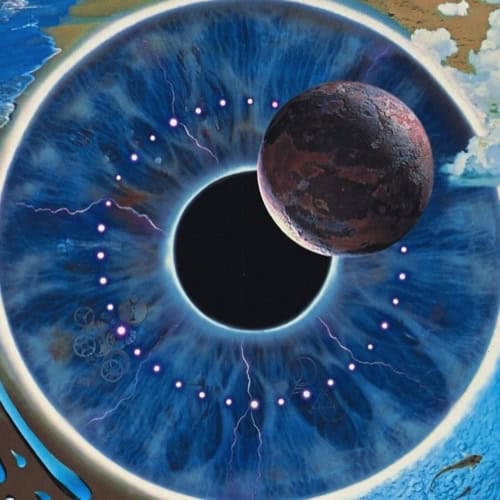
The 1994 tour was documented on the live album and concert film PULSE. The principal concert footage was recorded during Pink Floyd’s October residency at Earls Court in London.
Carin is credited on PULSE with keyboards and vocals. Detailed recording credits also identify his use of synthesizers and his contribution to the backing vocals alongside Richard Wright, Guy Pratt, Tim Renwick and the dedicated backing singers.
His vocal contribution was not restricted to background harmonies. During Hey You, Carin sang the final verse, taking the section originally sung by Roger Waters on Pink Floyd’s 1979 studio recording.
The performance illustrates the breadth of Carin’s role in the touring ensemble. Although primarily positioned alongside Richard Wright as an additional keyboard player, he was also trusted with a prominent vocal passage from one of Pink Floyd’s best-known songs.
The PULSE concert programme also preserved the band’s complete live performance of The Dark Side of the Moon, together with material from The Division Bell and earlier Pink Floyd albums.
The tour concluded at Earls Court on 29 October 1994. It proved to be Pink Floyd’s final full concert tour.
For Carin, the end of the tour marked the completion of a remarkable period. Between 1987 and 1994 he had contributed to two Pink Floyd studio albums, co-written Learning to Fly, participated in the La Carrera Panamericana sessions and performed on both of the band’s enormous post-Roger Waters world tours.
His professional relationship with the individual members of Pink Floyd, however, was far from over.
The Who and Quadrophenia
In 1996, Jon Carin became part of another major touring production when Pete Townshend, Roger Daltrey and John Entwistle revived The Who’s 1973 rock opera Quadrophenia for the concert stage.
The project began with a special performance on 29 June 1996 at Hyde Park in London, staged as part of the Prince’s Trust Masters of Music concert. Townshend, Daltrey and Entwistle were supported by a large ensemble assembled to reproduce the complex arrangements of Quadrophenia.
Carin performed keyboards alongside long-time Who keyboard player John “Rabbit” Bundrick. The band also included Zak Starkey on drums, Simon Townshend and Geoff Whitehorn on guitars, percussionist Jody Linscott, backing vocalists and a horn section.
The Hyde Park production also featured several guest performers. Phil Daniels, who had played Jimmy in the 1979 film Quadrophenia, appeared as narrator, while actors and performers were used to represent characters within the story.
Another guest musician was David Gilmour. Gilmour played electric guitar and appeared within the theatrical presentation as the bus driver. His participation meant that Carin was again working in the same ensemble as the musician with whom he had already recorded and toured extensively through Pink Floyd.
The Hyde Park performance proved successful enough to lead to a much larger revival of Quadrophenia. Beginning in July 1996, Townshend, Daltrey and Entwistle presented the work during a series of concerts at Madison Square Garden in New York, followed by further performances across North America and Britain.
Carin remained part of the touring ensemble, performing keyboards and backing vocals. His role alongside Bundrick helped reproduce the synthesizer, piano and other keyboard textures that had been fundamental to the original Quadrophenia recordings.
The production continued into 1997. Between April and May, the Quadrophenia tour visited thirteen cities in continental Europe before reaching Wembley Arena in London. A further North American leg followed between July and August 1997.
Carin’s involvement therefore extended well beyond a single guest appearance with The Who. He participated in the Quadrophenia production across its 1996–1997 touring period, adding another major international concert project to a career that had already included two Pink Floyd world tours.
The work also demonstrated how Carin’s reputation had developed beyond the Pink Floyd organisation. He was increasingly employed in large-scale productions that required a musician capable of combining detailed keyboard work with vocals and an understanding of complex pre-existing arrangements.
Working with Roger Waters
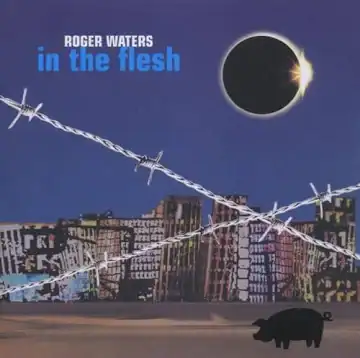
In 1999, Jon Carin began another major chapter of his career when he joined Roger Waters for the In the Flesh tour. The association was particularly notable because Carin had already spent more than a decade recording and touring with the David Gilmour-led Pink Floyd.
Waters had not undertaken a full concert tour since the Radio K.A.O.S. tour of 1987. His return to the road began with a North American tour in the summer of 1999, opening on 23 July 1999 in Milwaukee, Wisconsin.
The touring band included Roger Waters on vocals, bass and guitar, Andy Fairweather-Low on guitar and bass, Snowy White on guitar, Doyle Bramhall II on guitar and vocals, Graham Broad on drums, Andy Wallace on keyboards, and Jon Carin on keyboards, additional instruments and vocals. P.P. Arnold and Katie Kissoon provided backing vocals.
Carin’s role was considerably broader than keyboards alone. During the In the Flesh performances he also played lap steel guitar, contributed vocals and played acoustic guitar on Dogs.
The move placed Carin in an unusual position within the extended history of Pink Floyd. He had performed the group’s repertoire extensively with David Gilmour, Nick Mason and Richard Wright during Pink Floyd’s 1987–1989 and 1994 tours. He was now performing many compositions from the same catalogue under the direction of the man who had written much of their lyrical and conceptual material.
Waters’ set drew heavily upon Pink Floyd’s catalogue, including material from The Dark Side of the Moon, Wish You Were Here, Animals and The Wall, alongside songs from Waters’ solo career.
Carin was given particularly prominent responsibilities during several performances. On Dogs, he not only played instruments but also shared lead-vocal duties, taking vocal passages originally associated with David Gilmour on Pink Floyd’s 1977 recording.
The success of the 1999 concerts led Waters to extend In the Flesh into 2000. Carin remained with the band for that tour, which expanded across North America and Europe.
In the Flesh – Live
Waters’ 2000 tour was professionally recorded for the concert album and film In the Flesh – Live. The principal recording was made at the Rose Garden Arena in Portland, Oregon, on 27 June 2000.
The official recording documents the breadth of Carin’s contribution. He is credited with keyboards, programming and lap steel guitar, as well as vocals.
Carin also performs lead vocals on parts of the concert repertoire, demonstrating that his role in Waters’ band extended substantially beyond providing additional keyboard textures.
The album and concert film created an official record of the first phase of Carin’s long professional relationship with Roger Waters.
Carin did not participate in the 2002 continuation of the In the Flesh tour. For that touring period, Waters’ son Harry Waters took over the principal keyboard position previously occupied by Carin.
Carin’s absence proved temporary. He would return to Waters’ touring organisation in 2006 and subsequently become one of the longest-serving musicians in Waters’ later live bands.
The Concert for New York City

On 20 October 2001, Jon Carin returned to the stage with The Who for The Concert for New York City at Madison Square Garden in New York.
Organised in the aftermath of the terrorist attacks of 11 September 2001, the benefit concert honoured the victims, their families, New York’s firefighters, police officers and other first responders, while raising money for relief efforts.
The event brought together an exceptional group of performers, including David Bowie, Paul McCartney, The Who, Elton John, Eric Clapton, Billy Joel, Mick Jagger and Keith Richards, Bon Jovi and many others.
Bowie opened the musical performances with a deliberately understated version of Paul Simon’s America, accompanying himself on a small keyboard before performing “Heroes”. His appearance took place separately from The Who’s performance later in the concert.
Carin joined Roger Daltrey, Pete Townshend, John Entwistle and Zak Starkey for The Who’s set. The band’s official history specifically records that Jon Carin played keyboards in place of long-time keyboard player John “Rabbit” Bundrick.
The Who performed four songs:
- Who Are You
- Baba O’Riley
- Behind Blue Eyes
- Won’t Get Fooled Again
Their performance became one of the most widely remembered musical moments of the evening, particularly because much of the audience consisted of New York firefighters, police officers, rescue workers and their families.
The appearance also had historical significance within The Who’s history. It proved to be John Entwistle’s final performance in the United States with the band. Entwistle died in June 2002, eight months after the concert.
For Carin, the event represented a return to musicians with whom he had already worked during the 1996–1997 Quadrophenia production. On this occasion, however, he was not part of a large theatrical ensemble: he was the keyboard player supporting The Who during their four-song set.
The concert was subsequently released officially on both audio and video, preserving Carin’s performance with The Who.
The evening also provides an interesting early point of intersection between Carin’s career and David Bowie’s later history. Both men performed at Madison Square Garden on 20 October 2001, but they did not perform together. Their documented collaboration on the same stage would come almost five years later, at David Gilmour‘s Royal Albert Hall concert on 29 May 2006.
Live 8 – Pink Floyd Reunited
Pink Floyd – Comfortably Numb, Live 8, Hyde Park, London, 2 July 2005
On 2 July 2005, Jon Carin took part in one of the most historically significant performances of Pink Floyd’s later history when David Gilmour, Roger Waters, Richard Wright and Nick Mason reunited for Live 8 in Hyde Park, London.
The reunion brought Waters back onto a Pink Floyd stage with Gilmour, Wright and Mason after more than two decades of separation. In preparation for the appearance, the musicians assembled for three days of rehearsals at Black Island Studios in West London.
Carin was one of only a small number of additional musicians selected to support the four principal members. Pink Floyd’s official archive lists Jon Carin as additional keyboard player, together with Tim Renwick on guitar and Carol Kenyon on backing vocals. Saxophonist Dick Parry also appeared during Money.
Carin’s contribution extended beyond conventional keyboards during the performance. Detailed concert documentation records him contributing keyboards, vocals and slide or lap steel guitar, including slide guitar during Breathe.
Pink Floyd performed:
- Speak to Me / Breathe / Breathe (Reprise)
- Money
- Wish You Were Here
- Comfortably Numb
For Carin, the reunion was particularly remarkable because of his professional history with the musicians on stage. He had spent years recording and touring with the Gilmour-led Pink Floyd and had subsequently worked in Roger Waters’ touring band. At Live 8, those separate branches of his career came together in a single performance.
The final song was Comfortably Numb, with Waters and Gilmour again sharing the contrasting vocal roles associated with the original recording. Carin supported the performance as part of the small additional ensemble.
At the conclusion of the set, the four principal members appeared together at the front of the stage. The reunion proved to be the final public performance by David Gilmour, Roger Waters, Richard Wright and Nick Mason together as Pink Floyd. Wright died in 2008.
Carin’s presence at Live 8 also provides an important chronological link to his later David Bowie collaboration. Less than eleven months after supporting Gilmour and Waters on Comfortably Numb in Hyde Park, Carin would perform the same composition in David Gilmour‘s touring band at the Royal Albert Hall — this time with David Bowie taking Waters’ vocal role.
Richard Butler – A Bowie Connection Before the Royal Albert Hall
Before Jon Carin and David Bowie actually performed together, Bowie had already occupied a small but personal place in Carin’s musical life through his friendship and creative partnership with Richard Butler, lead singer of The Psychedelic Furs.
Carin and Butler were close friends as well as musical collaborators. Carin later recalled a period when Butler was living on St. Mark’s Place in Manhattan. The building contained an old racquetball court that was usually empty, and the two friends would sometimes take a guitar there and sing together.
The songs they chose included material by David Bowie. Carin remembered that they particularly returned to songs from Bowie’s 1971 album Hunky Dory.
Jon Carin on singing David Bowie songs with Richard Butler
“Usually David Bowie songs from Hunky Dory.”
— Jon Carin, Brain Damage interview, August 2007
Carin was particularly struck by the sound of Butler’s voice when he sang quietly at close range. He later explained that hearing Butler in that informal setting gave him the idea of creating a record built around that intimate vocal quality.
After Butler moved out of New York City to an area closer to where Carin was living, the two began writing together at Carin’s home. What initially developed simply for enjoyment gradually became a complete recording project.
Their collaboration resulted in Butler’s self-titled first solo album, Richard Butler, released on 18 April 2006.
Carin’s role in the project was extensive. He later explained that the songs initially began with acoustic guitar and Butler’s voice. Carin wrote the music while Butler wrote the lyrics; Carin then constructed the finished arrangements around Butler’s recorded vocals.
Carin played the album’s instrumental parts and also handled production, engineering and mixing. The project therefore revealed a different side of his work from the large touring productions associated with Pink Floyd, David Gilmour and Roger Waters.
The Bowie connection in Carin’s recollection is modest but important. It does not represent a professional collaboration with Bowie, and it should not be presented as one. Instead, it provides first-hand evidence that Bowie’s music — specifically songs from Hunky Dory — formed part of Carin’s private musical life with Butler.
The timing is particularly striking. Richard Butler appeared in April 2006. Only weeks later, Carin was touring with David Gilmour and would finally share a stage with David Bowie himself at the Royal Albert Hall on 29 May 2006.
David Gilmour‘s On an Island Tour
In 2006, Jon Carin returned to David Gilmour‘s touring band for the concert tour supporting Gilmour’s third solo studio album, On an Island.
The tour reunited Carin with musicians from different periods of his career. Most significantly, Richard Wright joined Gilmour on keyboards and vocals. The touring band also included Phil Manzanera on guitars and vocals, Guy Pratt on bass and vocals, Steve DiStanislao on drums and vocals, and Dick Parry on saxophones and keyboards.
Carin performed keyboards, vocals and lap steel or slide guitar. His multi-instrumental role allowed him to move between keyboard textures, vocal parts and guitar-related sounds according to the requirements of the arrangements.
The concerts were divided between Gilmour’s new solo work and music from his Pink Floyd career. On an Island was performed as a major part of the programme, while the second half of the concerts drew heavily upon Pink Floyd material.
For Carin, the tour continued a professional relationship with Gilmour that had begun more than twenty years earlier. They had first met during rehearsals for Bryan Ferry’s Live Aid performance in 1985, after which Carin contributed to A Momentary Lapse of Reason, Pink Floyd’s subsequent tours, The Division Bell, the 1994 tour and the Pink Floyd reunion at Live 8 in 2005.
The On an Island tour was also notable for the presence of Richard Wright. Carin and Wright had previously worked together in Pink Floyd’s expanded live band, and the 2006 concerts again placed two keyboard players on stage to reproduce the layered arrangements required by both Gilmour’s solo material and the Pink Floyd catalogue.
During the tour, Gilmour’s band was joined at selected concerts by guest musicians and singers. David Crosby and Graham Nash contributed backing vocals at several performances, while other special guests appeared during the tour.
The most important stop on the tour for Carin’s connection with David Bowie came at the end of May, when Gilmour began a three-night residency at London’s Royal Albert Hall.
The concerts took place on 29, 30 and 31 May 2006. Carin was part of Gilmour’s regular touring band throughout the residency.
On the opening night, 29 May 2006, the concert would produce the moment at the centre of Carin’s place in David Bowie history. Bowie appeared as a surprise guest during the encore and performed with Gilmour, Carin and the rest of the band.
Royal Albert Hall – 29 May 2006
David Gilmour – Royal Albert Hall, London, 29 May 2006
On Monday, 29 May 2006, David Gilmour opened a three-night residency at the Royal Albert Hall in London as part of his On an Island tour. The concert began at 7:30 p.m. and became particularly significant because of the special guests who joined Gilmour and his touring band during the evening.
The documented core band for the concert consisted of:
- David Gilmour – guitar and vocals
- Richard Wright – keyboards and vocals
- Phil Manzanera – guitar and vocals
- Jon Carin – keyboards, vocals and slide guitar
- Guy Pratt – bass guitar and vocals
- Steve DiStanislao – drums and vocals
- Dick Parry – saxophone and keyboards
Carin was therefore not appearing as a guest. He was a regular member of Gilmour’s touring band and performed throughout the concert, moving between keyboards, vocals and slide-guitar duties as required by the arrangements.
Several special guests appeared during the Royal Albert Hall performances. On the opening night, David Crosby and Graham Nash contributed vocals, while Robert Wyatt also made a guest appearance.
The most unexpected guest of the evening, however, appeared during the encore.
David Bowie walked onto the Royal Albert Hall stage to join Gilmour and his band.
Bowie’s appearance was especially notable because by 2006 his public concert performances had become increasingly rare. His extensive A Reality Tour had ended prematurely in 2004, and he had subsequently made only a limited number of live appearances.
Bowie first joined the band for Arnold Layne, the Syd Barrett composition released as Pink Floyd’s debut single in 1967. Bowie took the lead vocal, with Gilmour and members of the touring band supporting him.
For Jon Carin, this was the first firmly documented occasion on which he and David Bowie performed together.
Carin’s role on the performance is particularly well documented because Arnold Layne was subsequently officially released. On that recording, Carin is credited with keyboards and backing vocals.
Bowie then remained on stage for the concert’s closing number, Comfortably Numb.
The song had traditionally depended upon the contrasting vocal roles of Roger Waters and David Gilmour. At the Royal Albert Hall, Bowie sang the verse sections associated with Waters, while Gilmour retained his own vocal passages and lead-guitar role.
Carin again performed as part of Gilmour’s band. The moment carried an unusual historical symmetry for him: less than eleven months earlier, at Live 8 in Hyde Park, he had supported Roger Waters and David Gilmour performing Comfortably Numb together. Now he was performing the same composition with Gilmour while David Bowie occupied the contrasting vocal role.
The collaboration was brief — two songs during one concert — and should not be expanded into a longer Bowie-Carin working relationship for which there is no evidence.
Its historical importance is nevertheless clear. On 29 May 2006, Jon Carin and David Bowie shared the Royal Albert Hall stage for Arnold Layne and Comfortably Numb, with Carin performing as a member of David Gilmour‘s band.
The evening also became part of the permanent official record of Bowie’s later live career. The performance of Arnold Layne was subsequently released officially, while footage from the Royal Albert Hall concerts became part of David Gilmour‘s Remember That Night project.
David Bowie Joins David Gilmour‘s Band
David Bowie’s appearance at the Royal Albert Hall was not simply a chance encounter. David Gilmour later explained that the invitation developed through his tour manager, who also worked with Bowie and was due to meet him in New York.
Gilmour asked whether Bowie might be interested in appearing at one of the concerts. The invitation was passed on, and Bowie accepted. According to Gilmour, Bowie was enthusiastic about performing Arnold Layne and also wanted to sing Comfortably Numb.
The choice of Arnold Layne was particularly appropriate. Written by Syd Barrett and released in 1967, it was Pink Floyd’s first single. Barrett had been an important influence on Bowie from the 1960s onward.
Bowie had seen Barrett-era Pink Floyd perform in London and later recorded Barrett’s See Emily Play for his 1973 covers album Pin Ups. His connection with Barrett’s music therefore stretched back decades before the Royal Albert Hall performance.
The connection extended even to Bowie’s own early-1970s history. In 1971, Bowie used the name Arnold Corns for the group associated with early recordings of Moonage Daydream and Hang On to Yourself; the name was inspired by Arnold Layne.
When Gilmour introduced the surprise guest during the encore on 29 May 2006, Bowie walked onto the stage and went directly into Arnold Layne. He then remained for the closing performance of Comfortably Numb.
For Jon Carin, Bowie’s arrival did not alter his position within the ensemble: he remained a member of Gilmour’s touring band. What changed was the singer standing in front of that band. Carin was suddenly performing behind an artist whose songs he had previously sung informally with Richard Butler and whose music had formed part of his own musical background.
Bowie’s appearance also became historically important within his later career. The Royal Albert Hall archive identifies the concert as Bowie’s only confirmed performance at the venue and his final public performance in the United Kingdom.
Arnold Layne – Jon Carin Performing with David Bowie
The first song David Bowie performed with David Gilmour‘s band at the Royal Albert Hall on 29 May 2006 was Arnold Layne, written by Syd Barrett and originally released as Pink Floyd’s debut single in 1967.
Bowie took the lead vocal, while Gilmour and his regular touring musicians — including Jon Carin — provided the musical backing. Carin was part of the established On an Island touring ensemble and performed keyboards and vocals as part of his duties during the Royal Albert Hall concerts.
For Bowie, the choice of Arnold Layne carried particular significance. He had admired Syd Barrett since the 1960s and had seen him perform with Pink Floyd in London. Bowie later recorded Barrett’s See Emily Play for his 1973 album Pin Ups.
Only weeks after the Royal Albert Hall concert, Barrett died on 7 July 2006. Bowie subsequently described Barrett as a major inspiration and recalled the lasting impression made on him by seeing Barrett perform during the 1960s.
The Royal Albert Hall performance consequently acquired an additional poignancy. What had been a celebration of one of Bowie’s formative musical influences became, within months, part of an official release dedicated to Barrett’s memory.
The Official Recording
The performance of Arnold Layne with Bowie was professionally recorded. Later in 2006, it was selected for release as part of a special three-track David Gilmour EP dedicated to the memory of Syd Barrett.
The release contained:
- Arnold Layne – David Gilmour featuring David Bowie
- Arnold Layne – David Gilmour featuring Richard Wright
- Dark Globe – David Gilmour
The Bowie performance was first made available digitally on 25 December 2006. Physical editions followed on 26 December 2006 in Europe, including a limited CD single and seven-inch vinyl release. A limited ten-inch edition was subsequently issued in North America.
The vinyl editions also preserved David Gilmour‘s on-stage introduction of Bowie, while that introduction was omitted from the European CD edition.
The performance was later included in David Gilmour‘s concert film Remember That Night: Live at the Royal Albert Hall, where both Arnold Layne and Comfortably Numb featuring Bowie are preserved as part of the Royal Albert Hall material.
The recording has subsequently remained part of Bowie’s official catalogue history. It was later included as Arnold Layne (Live At The Royal Albert Hall, 29/05/06) – David Gilmour Featuring David Bowie in the retrospective Bowie box-set programme.
For Jon Carin, the recording is particularly important within his connection to Bowie. Their collaboration was not a studio partnership or a Bowie tour engagement; it arose because Carin was a member of Gilmour’s band when Bowie appeared as a guest. Nevertheless, the professionally recorded and officially released Arnold Layne provides a permanent document of Jon Carin performing on stage with David Bowie.
Comfortably Numb
David Bowie and David Gilmour – Comfortably Numb, Royal Albert Hall, London, 29 May 2006
After performing Arnold Layne, David Bowie remained on stage for the final song of the concert, Comfortably Numb.
Originally released on Pink Floyd’s 1979 album The Wall, Comfortably Numb was written by David Gilmour and Roger Waters. The original recording is built around the contrast between Waters’ verse vocals and Gilmour’s vocal sections and guitar solos.
At the Royal Albert Hall on 29 May 2006, Bowie took the vocal passages originally sung by Waters, while Gilmour sang his own sections and performed the song’s celebrated guitar solos.
Jon Carin performed as part of Gilmour’s regular touring band, bringing him and Bowie together for a second song on the same evening immediately following Arnold Layne.
The performance also connected several strands of Carin’s career. He had previously performed Comfortably Numb with Pink Floyd and had worked extensively with Roger Waters. Less than eleven months earlier, Carin had also supported David Gilmour and Roger Waters together when the reunited Pink Floyd closed its Live 8 set with the song in Hyde Park.
The Bowie Collaboration in Perspective
Jon Carin‘s professional connection with David Bowie should be defined precisely. Carin was never a member of Bowie’s regular touring band and there is no documented evidence that he participated in a Bowie studio recording session.
Their documented performance collaboration centres on a single evening: 29 May 2006 at the Royal Albert Hall in London. Carin was there as a regular member of David Gilmour‘s On an Island touring band, while Bowie appeared as a special guest during the encore.
Bowie and Carin performed together on two songs: Arnold Layne and Comfortably Numb.
The distinction between Carin’s general role at the concert and his documented role with Bowie is important. For the Royal Albert Hall concert as a whole, Carin is listed on keyboards, vocals and slide guitar. On the officially released Bowie performance of Arnold Layne, he is specifically documented on keyboards and backing vocals.
The collaboration was therefore brief, but it is unusually well documented. The Royal Albert Hall archive records Carin and Bowie as participants in the same concert, while the officially released Arnold Layne provides an audio document of their performance together. Both Bowie’s Arnold Layne and Comfortably Numb performances were also preserved in David Gilmour‘s Remember That Night concert film.
There is no need to extend that evidence into a broader working relationship. What can be stated with certainty is already significant: Jon Carin performed on stage with David Bowie at the Royal Albert Hall on 29 May 2006, accompanying him during two songs as a member of David Gilmour‘s band.
Remember That Night
David Gilmour‘s 2006 Royal Albert Hall concerts were professionally filmed for Remember That Night: Live at the Royal Albert Hall, directed by David Mallet and released in 2007.
The concert film documents Gilmour’s On an Island touring band, including Jon Carin, together with the special guests who appeared during the Royal Albert Hall performances.
For David Bowie history, the release is particularly important because it preserves both songs Bowie performed on 29 May 2006.
On the main concert programme, the closing sequence includes:
- Find the Cost of Freedom – featuring David Crosby and Graham Nash
- Arnold Layne – featuring David Bowie
- Comfortably Numb – featuring David Bowie
The film therefore provides the principal official visual document of Bowie’s appearance with Gilmour’s band. Unlike the 2006 Arnold Layne single, which officially released only one of Bowie’s two performances from the evening, Remember That Night preserves both Arnold Layne and Comfortably Numb.
Carin appears throughout the concert as a member of Gilmour’s touring ensemble. His presence in the Bowie performances consequently forms part of the same professionally filmed concert record rather than a separately assembled later collaboration.
The release is especially valuable in documenting the circumstances of the collaboration: Bowie was the guest, while Carin was already on stage as part of the established band supporting Gilmour.
For Jon Carin‘s place in David Bowie history, Remember That Night is therefore an essential document. Together with the officially released audio recording of Arnold Layne, it preserves the brief but clearly documented occasion on which Jon Carin and David Bowie performed together at the Royal Albert Hall on 29 May 2006.
David Gilmour – Live in Gdańsk
On 26 August 2006, Jon Carin performed with David Gilmour in Gdańsk, Poland, during the final concert of Gilmour’s On an Island tour.
The concert took place at the Gdańsk Shipyard and formed part of celebrations marking the anniversary of the founding of the Solidarity movement. It was one of the largest and most historically significant performances of Gilmour’s 2006 tour.
Carin performed as part of the same core touring band that had appeared with Gilmour throughout the On an Island tour. The ensemble included Richard Wright, Phil Manzanera, Guy Pratt, Steve DiStanislao, Dick Parry and Carin alongside Gilmour.
For the Gdańsk concert, the band was additionally joined by the Baltic Philharmonic Symphony Orchestra, conducted by Zbigniew Preisner. Preisner had written the orchestral arrangements for On an Island.
Carin continued his multi-instrumental role within Gilmour’s band, contributing keyboards, vocals and lap steel guitar.
The concert programme combined Gilmour’s solo work with material from Pink Floyd. On an Island was performed in full, while the Pink Floyd repertoire included songs such as Shine On You Crazy Diamond, Astronomy Domine, High Hopes, Echoes, Wish You Were Here and Comfortably Numb.
The Gdańsk performance is especially interesting in the chronology of Carin’s career because it occurred only three months after the Royal Albert Hall concert with David Bowie.
On 29 May, Carin had accompanied Bowie during Arnold Layne and Comfortably Numb. On 26 August, he was again performing those parts of Gilmour’s concert repertoire as the On an Island tour reached its conclusion.
Live in Gdańsk
David Gilmour – Echoes, Live in Gdańsk
The concert was professionally recorded and later became the centrepiece of David Gilmour‘s Live in Gdańsk, released in 2008.
The release documents Carin as a member of Gilmour’s touring ensemble and preserves the final concert of a tour that had also produced his brief but documented collaboration with David Bowie.
The project acquired additional historical significance following the death of Richard Wright on 15 September 2008. The Gdańsk concert became one of the major official documents of Wright’s final touring period with Gilmour.
For Carin, Live in Gdańsk therefore documents the closing point of an important chapter: the 2006 Gilmour tour that had taken him through Europe and North America, reunited him on stage with Richard Wright and, at the Royal Albert Hall, placed him on stage with David Bowie.
From Gilmour Back to Roger Waters
During 2006, Jon Carin‘s work with David Gilmour and Roger Waters overlapped within a remarkably concentrated period. While remaining part of Gilmour’s On an Island touring ensemble, Carin also returned to the live organisation of Roger Waters, continuing his unusual long-term association with both former Pink Floyd colleagues.
Beginning in June 2006, Carin joined Waters for The Dark Side of the Moon Live tour. The production combined material from Waters’ solo career and the Pink Floyd catalogue with a complete performance of Pink Floyd’s 1973 album The Dark Side of the Moon.
The touring band included Roger Waters, guitarists Snowy White, Andy Fairweather-Low and Dave Kilminster, drummer Graham Broad, keyboard player Harry Waters, saxophonist Ian Ritchie and backing vocalists including P.P. Arnold, Katie Kissoon and Carol Kenyon.
Carin again worked as a multi-instrumentalist. Across the 2006–2007 touring period his documented duties included synthesizer, piano, guitar, lap steel guitar and vocals.
The timing created an unusual transition in Carin’s career. On 29 May 2006 he had been on stage at the Royal Albert Hall as a member of David Gilmour‘s band, performing Arnold Layne and Comfortably Numb with David Bowie. Only a short time later, he was performing Pink Floyd material on tour with Roger Waters.
Carin’s role with Waters was not limited to reproducing keyboard parts. The tour made use of his ability to move between several instruments and vocal roles, particularly when recreating music originally recorded by the different members of Pink Floyd.
This was especially evident during the complete performance of The Dark Side of the Moon, where the expanded band was required to reproduce overlapping keyboard, guitar, vocal and sound-effect parts from the original album in a live setting.
The tour continued through 2007 and returned for further performances in 2008. Carin remained part of Waters’ touring organisation, continuing a professional association that had begun with the In the Flesh concerts in 1999.
The rapid movement between Gilmour’s and Waters’ bands underlines an unusual aspect of Carin’s career. Few musicians have worked so extensively with both men after their separation, while also having performed with Pink Floyd itself.
The Syd Barrett Tribute – 10 May 2007
Arnold Layne – Syd Barrett tribute, Barbican Centre, London, 10 May 2007
On 10 May 2007, Jon Carin took part in Madcap’s Last Laugh, a major tribute to Syd Barrett held at the Barbican Centre in London.
The concert brought together musicians from different generations who had been influenced by Barrett, including Roger Waters, David Gilmour, Richard Wright, Nick Mason, Chrissie Hynde, Robyn Hitchcock, Captain Sensible, Kevin Ayers, Damon Albarn and John Paul Jones.
For Carin, the evening was particularly unusual because he performed with musicians from both sides of Pink Floyd’s post-1985 history.
Roger Waters – Flickering Flame
Near the end of the first half of the concert, Roger Waters appeared with Jon Carin to perform Flickering Flame, a Waters composition originally released in 2002.
Rather than performing one of Barrett’s songs, Waters chose his own composition for his contribution to the tribute. Contemporary documentation identifies the performance specifically as Roger Waters and Jon Carin.
The appearance continued Carin’s work with Waters during the The Dark Side of the Moon Live touring period.
Captain Sensible – Astronomy Domine
Carin also appeared elsewhere in the tribute programme. During the second half of the concert, he joined Captain Sensible for a performance of Astronomy Domine, another Syd Barrett composition dating from Pink Floyd’s first album, The Piper at the Gates of Dawn.
Gilmour, Wright and Mason – Arnold Layne
Towards the end of the evening, David Gilmour, Richard Wright and Nick Mason appeared as surprise guests and performed Arnold Layne.
They were joined by Jon Carin and bassist Andy Bell. Detailed credits for the performance identify Carin on keyboards and vocals, Wright on keyboards and vocals, Gilmour on electric guitar and vocals, Mason on drums and Bell on bass.
The performance created a direct connection with Carin’s David Bowie collaboration eleven months earlier. At the Royal Albert Hall on 29 May 2006, Carin had accompanied Bowie singing Arnold Layne with David Gilmour‘s band. Now Carin was performing the same Barrett composition with Gilmour, Wright and Mason at a concert specifically dedicated to Barrett’s memory.
Roger Waters did not join Gilmour, Wright and Mason for Arnold Layne. Although all four surviving members of Pink Floyd’s classic line-up appeared during the same tribute concert, Waters performed separately.
At the end of the evening, many of the participating musicians returned to the stage for a collective performance of Bike. Carin was among the performers; Waters did not participate in the finale.
The Barbican performance of Arnold Layne subsequently acquired additional historical importance. It was the final live performance by David Gilmour, Richard Wright and Nick Mason together before Wright’s death in September 2008.
For Jon Carin, Madcap’s Last Laugh brought several strands of his career together on a single evening: he performed with Roger Waters, with Gilmour, Wright and Mason, and on music written by Syd Barrett — including the same song he had performed with David Bowie the previous year.
Live Earth – 7 July 2007
On 7 July 2007, Jon Carin performed with Roger Waters at Live Earth, the international series of concerts organised to raise awareness of climate change.
Waters appeared at the American Live Earth concert at Giants Stadium in East Rutherford, New Jersey. The event formed part of a worldwide programme of concerts staged on the same day in cities across several continents.
Carin was part of Waters’ touring band during this period and performed keyboards, guitar and vocals during the Live Earth appearance.
Waters presented a compact set drawn almost entirely from the Pink Floyd catalogue:
- In the Flesh
- Money
- Us and Them
- Brain Damage
- Eclipse
- The Happiest Days of Our Lives
- Another Brick in the Wall, Part 2
The performance reflected the repertoire Carin was already playing with Waters during The Dark Side of the Moon Live tour, including the sequence of Brain Damage and Eclipse that closes Pink Floyd’s 1973 album.
For Another Brick in the Wall, Part 2, Waters was joined on stage by a group of young singers, reinforcing the large-scale presentation of the final number.
Carin’s Live Earth appearance came less than two months after the Syd Barrett tribute at the Barbican, where he had performed separately with Waters and with David Gilmour, Richard Wright and Nick Mason.
It also illustrates the direction Carin’s career had taken following his performance with David Bowie at the Royal Albert Hall the previous year. By July 2007 he was again firmly established within Waters’ touring ensemble, continuing the unusual professional relationship that had allowed him to work extensively with both sides of Pink Floyd’s post-1985 history.
David Gilmour – Rattle That Lock
Nearly a decade after the On an Island tour, Jon Carin again worked with David Gilmour during the period surrounding Gilmour’s fourth solo studio album, Rattle That Lock.
Released on 18 September 2015, the album was produced by Gilmour and Phil Manzanera. Carin made a specific studio contribution to the recording, playing electric piano on Today.
Carin then joined Gilmour’s touring band for the Rattle That Lock tour. The initial 2015 line-up included Phil Manzanera on guitar, Guy Pratt on bass, Steve DiStanislao on drums and percussion, Kevin McAlea on keyboards, and Carin alongside Gilmour. Saxophone and backing-vocal personnel varied during different stages of the tour.
As in 2006, describing Carin simply as a keyboard player understates his role. During the tour he performed keyboards, guitar, lap steel guitar and vocals, moving between instruments according to the arrangements.
The concerts combined material from Rattle That Lock with songs from Gilmour’s earlier solo career and the Pink Floyd catalogue. The repertoire included Wish You Were Here, Money, Us and Them, High Hopes, Astronomy Domine, Shine On You Crazy Diamond, Time and Comfortably Numb.
The tour also returned Carin to the Royal Albert Hall, the venue where he had performed with David Bowie as a member of Gilmour’s band on 29 May 2006.
The circumstances were very different in 2015. Bowie was not involved in these concerts, but Carin’s return to the venue provides a chronological link with the brief Bowie collaboration documented earlier on this page.
By this point, approximately thirty years had passed since Carin and Gilmour first worked together during the Live Aid period in 1985. Their professional association had encompassed Pink Floyd recordings and world tours, Live 8, Gilmour’s solo projects and tours, and the 2006 Royal Albert Hall performance with David Bowie.
Later Work with Roger Waters
Following his work with David Gilmour during the Rattle That Lock period, Jon Carin continued his long professional association with Roger Waters.
Mexico and Desert Trip – 2016
In the autumn of 2016, Carin joined Waters for a series of concerts in Mexico and for the high-profile Desert Trip festival at the Empire Polo Club in Indio, California.
Desert Trip brought together six major artists from the rock generation: The Rolling Stones, Bob Dylan, Paul McCartney, Neil Young, Roger Waters and The Who. Waters and The Who closed each of the festival’s two weekends.
The concerts served as an important bridge between Waters’ earlier touring productions and the large-scale tour that followed.
Us + Them – 2017–2018
Roger Waters – Us + Them
Carin remained in Waters’ band for the Us + Them tour, which began in 2017 and continued through 2018.
The production combined Pink Floyd material with songs from Waters’ 2017 solo album Is This the Life We Really Want?. The repertoire included music from The Dark Side of the Moon, Wish You Were Here, Animals and The Wall.
Carin again functioned as a multi-instrumentalist rather than simply as an additional keyboard player. His duties during the tour included piano, keyboards, programming, lap steel guitar, acoustic and electric guitars, and backing vocals.
The Us + Them tour ultimately comprised 157 concerts, taking Waters and his band through North America, Oceania, Europe and Latin America before concluding in December 2018.
The tour was subsequently documented in the concert film Roger Waters: Us + Them, providing another official record of Carin’s long-running work within Waters’ touring organisation.
This Is Not a Drill – 2022–2023
Carin returned to Waters’ touring band for This Is Not a Drill. Originally planned for 2020, the tour was postponed and eventually began in North America in 2022, followed by an extensive European itinerary in 2023.
The touring ensemble included Jonathan Wilson, Dave Kilminster, Gus Seyffert, Robert Walter, Joey Waronker, Shanay Johnson, Amanda Belair and saxophonist Seamus Blake alongside Waters and Carin.
Carin was officially listed on keyboards, guitar and vocals, once again demonstrating the multi-instrumental role he had developed during decades of work with Pink Floyd-related projects.
By the end of the 2023 touring period, Carin’s professional association with Waters stretched back nearly a quarter of a century, beginning with the In the Flesh tour in 1999.
That longevity forms one of the most unusual aspects of Carin’s career. He had recorded and toured extensively with the David Gilmour-led Pink Floyd, worked repeatedly with Gilmour as a solo artist, and at the same time became one of the longest-serving musicians in Roger Waters’ later touring bands.
Within that long history, Carin’s performance with David Bowie at the Royal Albert Hall in 2006 remains a brief but particularly well-documented intersection with another major strand of British rock history.
Other Collaborations
Although Pink Floyd, David Gilmour and Roger Waters form the most continuous thread through Jon Carin‘s career, his work as a session musician, touring musician, producer and arranger has extended far beyond the Pink Floyd musical family.
His early professional career brought him into contact with Bryan Ferry, initially through producer Rhett Davies. Carin contributed to Ferry’s Boys and Girls period and subsequently performed in Ferry’s band at Live Aid in 1985, the appearance that led to his first work with David Gilmour.
Carin also developed a substantial connection with The Psychedelic Furs and their singer Richard Butler. His work with the Furs included the Midnight to Midnight period, while his later collaboration with Butler developed into the singer’s self-titled 2006 solo album. Carin wrote the music, created the instrumental arrangements, performed the instrumentation, and produced, engineered and mixed the record.
His association with The Who and Pete Townshend formed another significant strand of his career. In addition to the 1996–1997 Quadrophenia production and The Who’s appearance at The Concert for New York City, Carin worked separately with Townshend, including the 1998 Maryville Academy benefit concert and related recordings.
During the 1990s, Carin also contributed to recordings by a wide variety of artists. His credits include work with The Dream Academy, Fields of the Nephilim, Gipsy Kings and Soul Asylum.
On Soul Asylum’s 1998 album Candy from a Stranger, for example, Carin’s credited instruments included lap steel guitar, piano, harmonium, organ, Wurlitzer and mellophonium, illustrating the range of instruments he could contribute within a studio environment.
Kate Bush – Before the Dawn
One of Carin’s most notable later projects outside the Pink Floyd circle came in 2014, when he joined Kate Bush for Before the Dawn at London’s Hammersmith Apollo.
The residency consisted of 22 concerts and marked Bush’s return to full-length live performance after thirty-five years. Carin was part of the band throughout the production.
The subsequent official Before the Dawn release documents Carin contributing keyboards, guitars, programming and vocals.
Other projects across his career have connected Carin with musicians including Eddie Vedder and Martha Wainwright, alongside numerous recording, benefit and live-performance projects.
Taken together, these collaborations demonstrate why describing Carin solely as a Pink Floyd keyboard player gives an incomplete picture of his career. Depending on the project, he has worked as a keyboard player, guitarist, lap steel guitarist, vocalist, programmer, songwriter, arranger, producer and engineer.
A Multi-Instrumentalist Rather Than Only a Keyboard Player
Jon Carin is frequently described as a keyboard player because keyboards and synthesizers have been central to some of his best-known work with Pink Floyd, David Gilmour and Roger Waters. That description, however, represents only part of his musical role.
Across his career, Carin has worked as a genuine multi-instrumentalist. In addition to keyboards and synthesizers, his documented instruments include guitar, lap steel guitar, bass and drums. He has also contributed vocals and programming and has worked as a songwriter, arranger, producer and engineer.
That versatility became particularly valuable in large-scale live productions. Rather than remaining at a single keyboard position throughout a concert, Carin could move between keyboards, guitars and lap steel while also contributing vocals and electronic or programmed elements.
His work with David Gilmour provides a clear example. On the 2006 On an Island tour, Carin performed keyboards, vocals and lap steel or slide guitar. The official Royal Albert Hall archive lists him for the concert of 29 May 2006 on keyboards, vocals and slide guitar.
That distinction is particularly relevant to his place in David Bowie history. Carin was not merely an additional keyboard player brought in for Bowie’s appearance. He was already an established multi-instrumental member of Gilmour’s touring band when Bowie joined them at the Royal Albert Hall.
During the officially documented performance of Arnold Layne, Carin contributed keyboards and backing vocals. Across the concert as a whole, his responsibilities extended further, reflecting the broader musical role he occupied throughout Gilmour’s 2006 tour.
Carin’s ability to combine traditional instruments with programming and electronic sound has remained one of the defining characteristics of his career. It helps explain how he was able to work across projects ranging from Pink Floyd and Roger Waters to The Who, Kate Bush, Richard Butler and David Gilmour.
Jon Carin and the Pink Floyd Musical Family
The Man Who Saved Pink Floyd – Jon Carin
Jon Carin occupies an unusual position within the extended history of Pink Floyd. Although he was never a member of the group itself, his professional association with its music has continued across several decades and has involved Pink Floyd as well as the later careers of David Gilmour and Roger Waters.
His connection began during the development of A Momentary Lapse of Reason, where he contributed keyboards and received a songwriting credit on Learning to Fly. He subsequently became part of Pink Floyd’s expanded touring ensemble and returned for later recordings, tours and special performances.
Carin’s career became particularly distinctive because his work did not remain confined to one branch of Pink Floyd’s history. He toured and recorded with Gilmour while also developing a long working relationship with Waters, contributing keyboards, programming, guitars, lap steel and vocals in different combinations across their respective projects.
That ability to work within both musical worlds gave Carin a perspective shared by relatively few musicians associated with Pink Floyd after the departure of Waters. His participation in the group’s Live 8 reunion in 2005 brought those strands together when Gilmour, Waters, Richard Wright and Nick Mason appeared on stage together again.
Carin’s place within this wider musical family also created the circumstances for his connection with David Bowie. As a member of Gilmour’s touring band in 2006, he was on stage when Bowie joined the ensemble at the Royal Albert Hall — linking Carin’s long Pink Floyd-related career directly, if briefly, with Bowie’s live history.
Jon Carin and David Bowie
Within Jon Carin‘s much larger career, his professional connection with David Bowie was brief but clearly documented.
The central event took place on 29 May 2006 at the Royal Albert Hall in London. Carin was a regular member of David Gilmour‘s On an Island touring band, performing keyboards, vocals and slide guitar across the concert. Bowie appeared as a surprise guest during the encore.
Bowie performed two songs with Gilmour’s band:
- Arnold Layne
- Comfortably Numb
On Arnold Layne, Bowie took the lead vocal on Syd Barrett’s composition. He then remained on stage for Comfortably Numb, singing the verse sections originally associated with Roger Waters while Gilmour performed his own vocal sections and guitar parts.
Carin performed as part of Gilmour’s established band during Bowie’s appearance. The collaboration therefore did not arise because Carin had been recruited by Bowie; their professional paths crossed because Bowie joined the Gilmour ensemble in which Carin was already performing.
The encounter was brief, but it became part of the official record. The Royal Albert Hall performance of Arnold Layne featuring Bowie was professionally recorded and released later in 2006 as part of David Gilmour‘s Syd Barrett memorial EP.
Both Bowie performances — Arnold Layne and Comfortably Numb — were also preserved in David Gilmour‘s concert film Remember That Night: Live at the Royal Albert Hall.
The appearance has additional significance within Bowie’s own live history. The Royal Albert Hall identifies 29 May 2006 as the only confirmed occasion on which Bowie performed at the venue, while Bowie’s official website later described it as his final public performance in the United Kingdom.
There is no documented evidence that Carin became a member of Bowie’s touring band or participated in a Bowie studio recording. Their documented professional performance connection therefore centres on this one evening and these two songs.
That limited scope should not diminish its historical value. Jon Carin and David Bowie performed together at the Royal Albert Hall on 29 May 2006, on Arnold Layne and Comfortably Numb, as part of David Gilmour‘s concert.
Legacy
Jon Carin‘s professional career spans more than four decades and encompasses songwriting, studio recording, production and some of the largest concert productions in modern rock music.
Beginning as a teenage musician with Industry, he moved into Bryan Ferry’s musical circle during the 1980s and subsequently became closely associated with Pink Floyd. His co-writing credit on Learning to Fly remains one of the clearest examples of his creative contribution to the band’s recorded catalogue.
His importance, however, extends well beyond a single composition. Carin became a recurring presence in Pink Floyd’s later history, participating in studio recordings and major world tours and returning for the group’s historic Live 8 reunion in 2005.
At the same time, he developed long and remarkably different working relationships with David Gilmour and Roger Waters. His ability to move between those musical worlds — while contributing keyboards, guitars, lap steel, programming and vocals — gave him an unusual position within the extended Pink Floyd musical family.
His wider career also connected him with artists including Bryan Ferry, The Who, Pete Townshend, Richard Butler, The Psychedelic Furs and Kate Bush, demonstrating that his professional identity cannot be reduced simply to that of a Pink Floyd keyboard player.
Within David Bowie history, Carin’s place is far more specific. His extensive career intersected directly with Bowie’s on just one documented occasion: the Royal Albert Hall concert of 29 May 2006.
Brief though that collaboration was, its preservation on official releases gives it a lasting place in Bowie’s live history. It also provides a fitting connection between Carin’s much larger career within the Pink Floyd musical world and one of the final periods of David Bowie’s public performing life.
Official Website & Further Information
More information about Jon Carin and his career can be found through his official website:
Jon Carin Official Website:
joncarin.com
Primary documentation of Carin’s performance with David Bowie is preserved in the Royal Albert Hall archive. The official concert record for 29 May 2006 lists Jon Carin as a member of David Gilmour‘s band and David Bowie as a guest vocalist, with Arnold Layne and Comfortably Numb included in the encore.
Royal Albert Hall Performance Archive:
David Gilmour – On An Island World Tour, 29 May 2006
David Gilmour‘s official archive also documents the concert film Remember That Night: Live at the Royal Albert Hall, which preserves Bowie’s performances of both Arnold Layne and Comfortably Numb.
David Gilmour Official Website:
Remember That Night
David Bowie’s official archive provides further contemporary documentation of his Royal Albert Hall appearance and the subsequent release of Arnold Layne in memory of Syd Barrett.
David Bowie Official Website:
David Bowie – 2006 Archive
Article Origin
This article was researched and written for DavidBowieWorld.com as part of the site’s archive documenting musicians, singers, producers and other artists whose professional careers crossed with David Bowie.
The central Bowie connection documented in this article is Jon Carin‘s appearance as a member of David Gilmour‘s touring band at the Royal Albert Hall in London on 29 May 2006, when David Bowie joined the ensemble for Arnold Layne and Comfortably Numb.
The wider biographical material places that performance within Carin’s much longer career, including his work with Pink Floyd, David Gilmour, Roger Waters, Bryan Ferry, The Who, Pete Townshend, Richard Butler, Kate Bush and other artists.
Particular care has been taken to distinguish Carin’s documented collaboration with Bowie from his wider career. There is no intention to imply that Carin was a member of Bowie’s touring band or that the two musicians had a longer studio or touring partnership for which reliable evidence has not been established.
The quotations attributed to Jon Carin in this article are taken from his first-hand 2007 interview with Brain Damage. Quotations have been used only where their wording and context could be reliably established.
No quotation has been attributed to Carin specifically describing his experience of performing with David Bowie at the Royal Albert Hall because no sufficiently reliable first-hand statement of that kind has been identified during the research for this article.
Additional photographs, gallery material and video documentation will be added separately after their content, dates and credits have been verified.
© DavidBowieWorld.com — David Bowie Collaborations & Creative Circle Archive.
