
Dick Parry & David Bowie – Royal Albert Hall 2006 with David Gilmour

Photo: Stephen D. Strowes / Wikimedia Commons / CC BY-SA 2.0 (editorial use)
Dick Parry (22 December 1942 – 22 May 2026) was a British saxophonist best known for his unforgettable work with Pink Floyd and his long musical friendship with David Gilmour.
His direct connection to David Bowie comes from one specific and historically important evening: 29 May 2006, when Bowie appeared as a surprise guest during David Gilmour’s concert at the Royal Albert Hall in London.
Parry was a member of Gilmour’s touring band for the On an Island period. That meant he shared the stage with Bowie during the performances of Arnold Layne and Comfortably Numb, later preserved on the live release Remember That Night.
- Name: Dick Parry
- Full name: Richard Parry
- Born: 22 December 1942, Kentford, Suffolk, England
- Died: 22 May 2026, aged 83
- Role: Saxophone
- Main association: Pink Floyd and David Gilmour
- Bowie link: Shared the stage with David Bowie at the Royal Albert Hall, London, 29 May 2006
- Concert release: Remember That Night
- Important songs that evening: Arnold Layne, Comfortably Numb
Who was Dick Parry?
Dick Parry was one of the most recognisable saxophone voices in British rock. Although he was never a formal member of Pink Floyd, his playing became inseparable from some of the band’s most famous recordings.
He is best remembered for the saxophone parts on Money and Us and Them from The Dark Side of the Moon, and for his lyrical playing on Shine On You Crazy Diamond from Wish You Were Here.
Parry’s Bowie connection was brief, but unusually significant: he was on stage with Bowie during one of Bowie’s final full public concert appearances.
Cambridge, David Gilmour and the early years
Parry came from the same broad Cambridge music environment that helped produce David Gilmour and the pre-Pink Floyd circle around Syd Barrett and Roger Waters.
His friendship with Gilmour reached back to their youth. Gilmour later remembered playing with Parry from the age of seventeen, a connection that lasted across decades and eventually brought Parry into Pink Floyd’s studio and live world.
Parry began as a working saxophonist in rhythm-and-blues and soul-influenced settings. That background gave him a direct, vocal quality: he could play with technical control, but his most famous lines feel sung rather than merely performed.
The Dark Side of the Moon
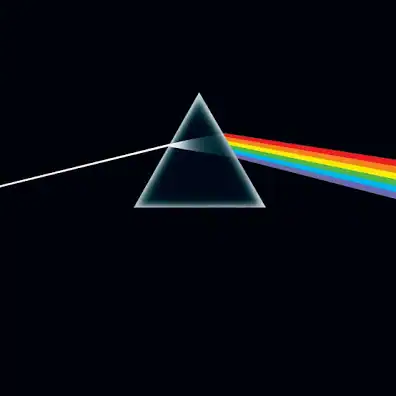
Image: David Bowie World collection / editorial use
Parry’s place in rock history was secured by The Dark Side of the Moon, released in 1973. His saxophone work on Money and Us and Them became part of the album’s identity.
On Money, Parry’s playing gives the song a brassy, jazz-inflected lift after the angular opening groove. On Us and Them, his saxophone moves more gently, deepening the song’s melancholy atmosphere.
These performances explain why Parry was never just a decorative session player. His saxophone could change the emotional temperature of a track.
Wish You Were Here
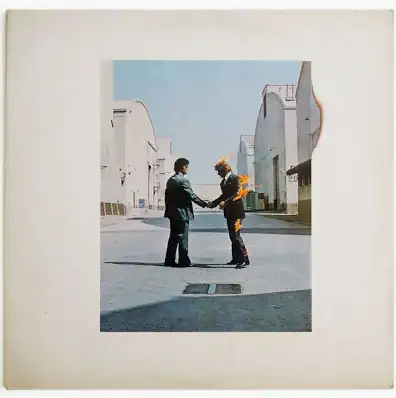
Image: David Bowie World collection / editorial use
Parry returned for Wish You Were Here, released in 1975, contributing to the long emotional architecture of Shine On You Crazy Diamond.
His saxophone on the album does not dominate the music. Instead, it enters like a human breath inside Pink Floyd’s vast, reflective sound world.
This ability to play with space, tone and restraint made Parry a natural partner for David Gilmour, whose guitar phrasing also depended on patience, melody and emotional control.
The long partnership with David Gilmour
Parry’s most important musical relationship was with David Gilmour. Their friendship and musical partnership stretched from the Cambridge years into Pink Floyd’s classic period and then into Gilmour’s later solo work.
Parry toured with Pink Floyd during the 1970s and later returned for the Gilmour-led Pink Floyd era, including the The Division Bell period and the 1994 tour.
He also appeared with Gilmour during the 2000s, including the On an Island tour. This is the tour that created Parry’s direct stage connection to David Bowie.
Royal Albert Hall, 29 May 2006
On 29 May 2006, David Gilmour performed at the Royal Albert Hall in London as part of the On an Island tour.
Dick Parry was part of Gilmour’s band for these concerts. The line-up also connected several major figures from the Pink Floyd and wider British rock world, including Richard Wright, Guy Pratt, Phil Manzanera and others.
That evening became especially important for Bowie history because David Bowie appeared as a guest during the encore.
Bowie joins Gilmour on stage
Bowie performed two songs with Gilmour at the Royal Albert Hall: Arnold Layne and Comfortably Numb.
Arnold Layne, written by Syd Barrett, connected Bowie to the earliest Pink Floyd period and to Barrett’s influence on British psychedelic songwriting. Bowie had long admired Barrett, and his presence on the song gave the performance additional historical weight.
On Comfortably Numb, Bowie sang the verses associated with Roger Waters, while Gilmour handled the choruses and guitar parts. It was a rare and powerful meeting between Bowie’s theatrical vocal authority and Gilmour’s emotional guitar language.
Dick Parry’s importance in this context is precise: he was not a Bowie studio collaborator, but he was part of the Gilmour band that shared this historic stage with Bowie on 29 May 2006.
Remember That Night and David Bowie
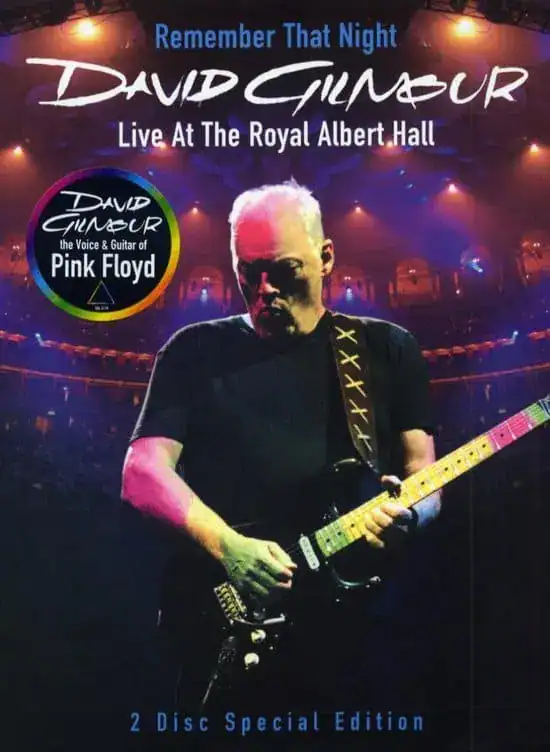
Image: David Bowie World collection / editorial use
The Royal Albert Hall performances were later released as Remember That Night, David Gilmour’s live concert film documenting the 2006 shows.
Bowie’s guest appearance on Arnold Layne and Comfortably Numb became one of the most treasured parts of the release for Bowie fans.
For a Dick Parry page, Remember That Night is the key Bowie document. It preserves the evening on which Parry, Gilmour and Bowie occupied the same stage in one of Bowie’s final full public concert settings.
Why the 2006 appearance matters
Bowie’s Royal Albert Hall appearance gained greater significance over time because it became his final full public concert performance.
Although he made a small number of later public appearances, Bowie did not return to full concert performance after this period. That makes the Gilmour appearance a major late-career event.
Dick Parry’s link to Bowie is therefore brief but meaningful. It places him inside the musical environment of one of Bowie’s last major live moments.
Beyond Pink Floyd
Parry’s work extended beyond Pink Floyd. He recorded or performed with artists including Rory Gallagher, John Entwistle, The Who and others, building a reputation as a musician who could serve the song without overwhelming it.
He was respected not only for the famous solos, but for his ability to understand atmosphere. In rock music, saxophone can easily become excessive. Parry’s best work avoided that problem by playing with restraint, patience and tone.
That is why his playing remained powerful across decades: it was memorable, but not showy for its own sake.
Death in 2026
Dick Parry died on 22 May 2026 at the age of 83. His death was announced by David Gilmour, who paid tribute to his lifelong friend and musical partner.
Gilmour remembered Parry’s feel and tone as unmistakable, and described his saxophone playing as a signature of enormous beauty known to millions through songs such as Shine On You Crazy Diamond, Wish You Were Here, Us and Them and Money.
The tribute underlined what listeners already knew: Parry’s sound had become part of the emotional identity of Pink Floyd’s music.
Video: Dick Parry remembered — saxophonist associated with Pink Floyd and David Gilmour.
Dick Parry remembered — saxophonist associated with Pink Floyd and David Gilmour.
This video is included as a tribute to Dick Parry’s wider musical legacy. His Bowie connection is specifically tied to the David Gilmour concert at the Royal Albert Hall on 29 May 2006.
For Bowie listeners, Parry’s importance lies in the way that concert connected Bowie, Gilmour, Pink Floyd history and one of Bowie’s final live appearances.
Legacy within Bowie’s universe
Within David Bowie’s collaboration history, Dick Parry should be remembered carefully and accurately. He was not a long-term Bowie collaborator and did not play on Bowie studio albums.
His Bowie significance is focused on one documented event: the Royal Albert Hall concert of 29 May 2006, when he performed as part of David Gilmour’s band on the night Bowie appeared as a guest.
That single evening is enough to make the connection historically meaningful. It links Bowie’s late-career live legacy to Pink Floyd’s world, to David Gilmour’s long musical circle, and to a saxophonist whose sound had already become part of rock history.
