
Hunt Sales – Drummer, Vocalist and David Bowie Collaborator
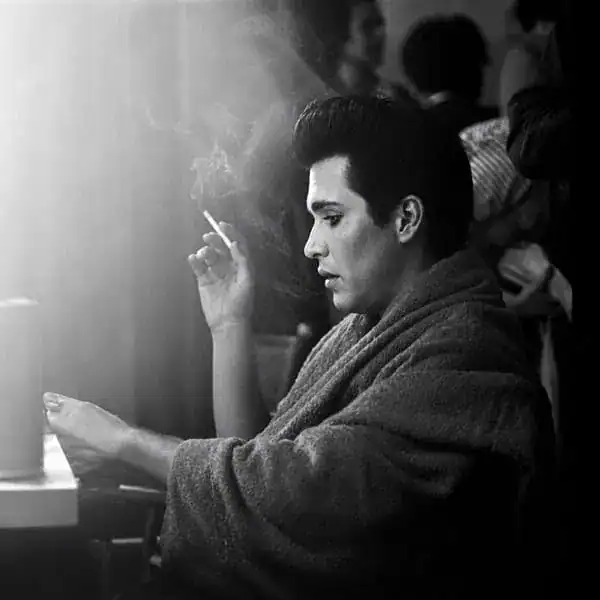
Hunt Sales backstage after the show at Magic Mountain, 1981, during the period of Hunt Sales and The Big Nine.
Photograph by Rich Hall / RichHallReps. Source:
Wikimedia Commons.
Licensed under
CC BY 3.0.
Hunt Sales (born 2 March 1954) is an American drummer, songwriter and vocalist whose professional career began while he was still a child. The son of comedian and television entertainer Soupy Sales, he developed a long musical partnership with his older brother, bassist Tony Sales.
Hunt first entered David Bowie’s working world through Iggy Pop‘s 1977 album Lust for Life. Bowie co-produced the record, played keyboards and sang backing vocals, while Hunt supplied drums and backing vocals and Tony played bass. More than a decade later, Bowie brought the Sales brothers together with guitarist Reeves Gabrels to form Tin Machine.
Within Tin Machine, Hunt was not treated as a hired backing musician. He played drums and percussion, contributed backing vocals, wrote material and sang lead on Stateside and Sorry. His later project, Hunt Sales Memorial, placed his own songwriting and lead voice at the centre of a full-length album.
- Name: Hunt Sales
- Born: 2 March 1954
- Profession: Drummer, songwriter and vocalist
- Family: Son of Soupy Sales; younger brother of bassist Tony Sales
- Early career: Tony and the Tigers; Todd Rundgren’s Runt
- Iggy Pop connection: Lust for Life and the 1977 touring band
- David Bowie connection: Founding member of Tin Machine
- Tin Machine role: Drums, percussion, backing vocals, lead vocals and songwriting
- Later project: Hunt Sales Memorial
Early Life and the Discovery of Drumming
Hunt Sales grew up in a household closely connected to American entertainment. His father, Soupy Sales, became widely known through radio and television comedy, but Hunt and his older brother Tony followed a musical path. Hunt began playing drums at approximately six or seven years old and later identified one childhood visit to a recording studio as the decisive moment in his development.
During that visit, Hunt watched New Orleans-born drummer Earl Palmer at work. Palmer had played on recordings by artists including Little Richard and Fats Domino and was already one of the most influential studio drummers in American popular music. For the young Hunt, seeing Palmer behind the drum kit made professional musicianship feel immediate and possible.
Hunt Sales on discovering the drums
“I started on drums when I was six or seven. I went to a recording session and saw Earl Palmer playing drums. In that instant, I knew what I wanted to do.”
Through his father’s professional circle, Hunt also encountered leading jazz and rhythm-and-blues drummers. He later named Art Blakey, Elvin Jones and Buddy Rich among the musicians who encouraged him and shared practical knowledge. Hunt did not follow a conservatory route. His education came through listening, observation, rehearsals, recording studios and live work.
Hunt Sales on learning from established drummers
“Those people helped me out. They schooled me as a kid and shared their groove with me.”
That early exposure gave him a broad rhythmic vocabulary. Jazz, rhythm and blues, early rock and roll, blues and popular song all formed part of the musical environment in which he learned. This breadth remained visible throughout his career: the same drummer who powered Iggy Pop and Tin Machine later worked in blues, funk, Tex-Mex, organ-trio and Dixieland settings.
Tony and the Tigers
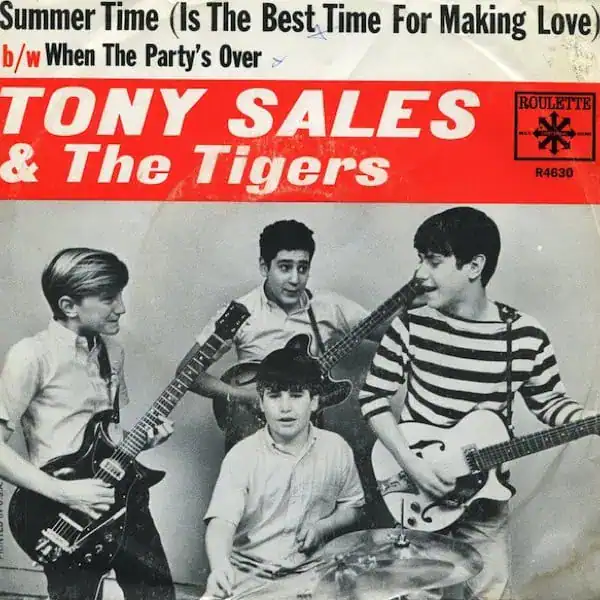
Hunt began working professionally at a very young age with his brother Tony. During the 1960s they performed in Tony and the Tigers, a teenage beat group whose television appearances and recordings gave both brothers experience well before adulthood.
The partnership established a pattern that continued for decades. Tony’s bass and Hunt’s drums operated as a closely connected rhythm section rather than as two unrelated session parts. Their shared background allowed them to react quickly to one another, change direction during a performance and maintain a strong groove without over-arranging the music.
Hunt later recalled leaving junior high school after the group began finding success. His professional education therefore took place on the road and in studios. By his teens he was already experiencing the practical realities of the music business: travel, short recording schedules, changing bands, small venues and larger stages.
The Sales brothers would separate for some projects, but their combined rhythm section became central to the best-known chapters of Hunt’s career. Their later work with Todd Rundgren, Iggy Pop and David Bowie all drew upon the musical connection first established during these early years.
Todd Rundgren and Runt
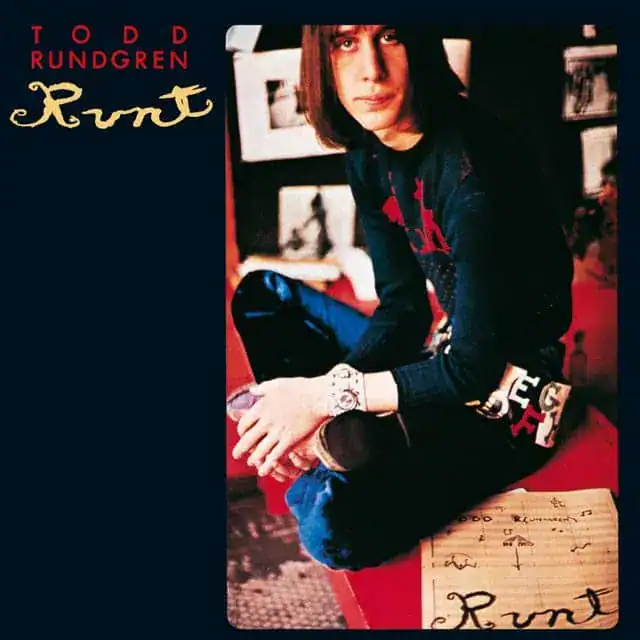
In 1970, Hunt and Tony Sales became associated with Todd Rundgren through the project Runt. Rundgren had recently left the Nazz and was beginning the solo career that would establish him as a songwriter, performer, producer and studio innovator.
The first Runt album was presented under a group identity built around Rundgren and the Sales brothers. Hunt contributed drums and percussion, while Tony contributed bass and percussion. The album included We Gotta Get You a Woman, which became Rundgren’s first major solo hit in the United States.
The Sales brothers also appeared on Runt: The Ballad of Todd Rundgren in 1971, although Rundgren used additional musicians and played much of the instrumentation himself. Hunt’s participation was more limited on the second album than on the first, while Tony remained more extensively involved on bass.
Working with Rundgren placed Hunt inside an ambitious studio environment. Rundgren combined direct pop songwriting with unusual arrangements, layered recording and rapid shifts between styles. For Hunt, the experience reinforced a principle that later remained important: a rhythm player could serve the song without becoming anonymous, and strong individual character did not need to undermine ensemble playing.
The Runt period also brought the Sales brothers to a wider audience. It connected their teenage professional experience with the more demanding world of nationally released albums and touring, and it established a documented association with one of the major American studio figures of the 1970s.
A Musician Across Styles
Hunt Sales‘ career cannot be reduced to the three names most often attached to him. Between and after his best-known projects, he worked in a wide range of musical settings. His later label biography documents work with blues singer and guitarist Lowell Fulson, recordings with funk musician Bootsy Collins and performances with Tex-Mex collective Los Super Seven.
He also devoted time to organ-trio music and Dixieland jazz and contributed music for film and television. These activities reflected the range of styles he had encountered from childhood onward. Hunt did not describe himself as a drummer restricted to one branch of rock music; he continued to sing, write, arrange and play several instruments.
This broader career is important to understanding his later role in Tin Machine. David Bowie did not recruit a drummer whose experience was confined to straightforward hard rock. Hunt brought decades of listening and playing across jazz, rhythm and blues, blues, funk and rock, together with the directness of someone who had been performing professionally since childhood.
Iggy Pop, David Bowie and Lust for Life
<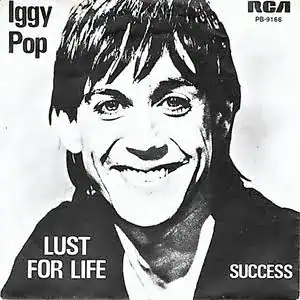
In 1977, Hunt and Tony Sales joined Iggy Pop for the recording of Lust for Life. The album followed The Idiot, Iggy’s first solo album, and continued the close creative partnership between Iggy and David Bowie during their European period.
Lust for Life was recorded at Hansa Studio by the Wall in West Berlin. Production was credited to the Bewlay Bros., the name used for David Bowie, Iggy Pop and recording engineer Colin Thurston. Bowie contributed keyboards and backing vocals. Hunt played drums and backing vocals, while Tony played bass and backing vocals. On Fall in Love with Me, the musicians changed instruments during the studio jam from which the song developed: Hunt played bass, Tony played guitar and Bowie played drums.
The title track became one of the most recognisable performances of the Sales brothers’ career. Its opening rhythm is built from Tony’s bass and Hunt’s forceful, repetitive drum pattern. Hunt’s playing throughout the album remains direct and physical, but the record also demonstrates control and responsiveness. Songs such as Some Weird Sin, Tonight, Success and The Neighborhood Threat required different balances between drive, space and vocal support.
Iggy Pop & David Bowie- Funtime (Live 1977.
Hunt and Tony also joined Iggy Pop‘s touring band in 1977. David Bowie played keyboards and sang backing vocals during the tour, deliberately taking a supporting role while Iggy occupied the centre of the stage. Recordings from the touring period were later assembled for TV Eye Live 1977.
The 1977 work established direct musical experience between Bowie and the Sales brothers. It also gave Bowie the opportunity to hear how Hunt and Tony functioned as a rhythm section under live and studio pressure. When Bowie later searched for musicians for a new band, he returned to that earlier relationship.
Hunt Sales on working with David Bowie
“I did not work for David Bowie, I worked with him. It’s a different dynamic.”
The Years Before Tin Machine
After the Iggy Pop period, Hunt continued working in different bands and recording situations. His career did not follow a simple progression from one internationally famous artist to another. It included periods of touring, sessions, songwriting and production, as well as work outside the most visible part of the record industry.
That irregular path is part of the documented reality of Hunt’s career. He had already experienced hit records, large stages and major artists, but he also continued to play smaller venues and less publicised projects. In later interviews he described a life that had moved between station wagons and Lear jets, reflecting the contrast between different levels of professional music work.
Hunt Sales on a lifetime of performing
“I’ve been playing every dive and arena in America since I was a kid. I’ve toured in station wagons and Lear jets. I’ve done it all.”
By the late 1980s, David Bowie was completing the cycle that had followed the commercial success of Let’s Dance. Bowie had become dissatisfied with aspects of his mid-1980s work and wanted a setting in which he would not be surrounded by musicians expected simply to follow his instructions. The Sales brothers’ independence and strong personalities made them suitable for a project based on interaction rather than obedience.
Reuniting with David Bowie
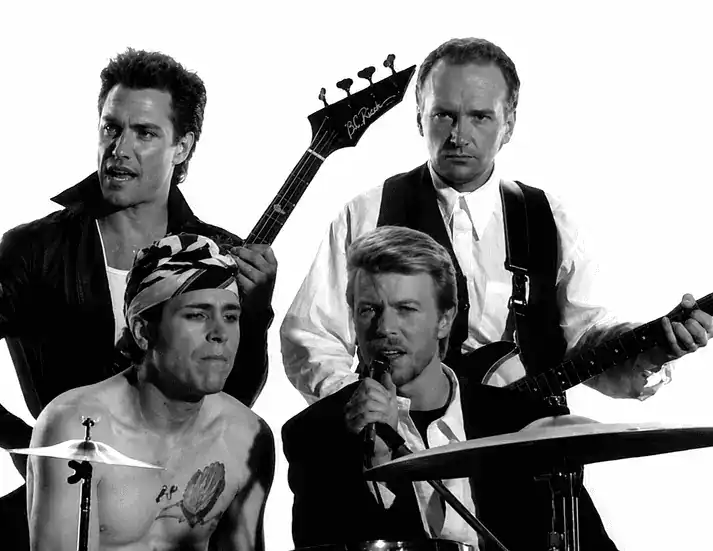
Bowie reconnected with Tony Sales in Los Angeles after the Glass Spider Tour. Tony later recalled that Bowie was considering putting a band together and wanted Hunt and Tony to meet guitarist Reeves Gabrels so that the four musicians could write and play together.
Gabrels had entered Bowie’s circle through Sara Terry, Bowie’s publicist during the Glass Spider period and Gabrels’ wife at the time. Bowie heard Gabrels’ guitar work and began writing with him. When the question of a rhythm section arose, Bowie’s previous experience with the Sales brothers on the Iggy Pop project offered an existing point of reference.
The four musicians did not begin with a fully defined band plan. Bowie later explained that he had initially been prepared to make another solo album. The identity of Tin Machine emerged through the experience of playing together and recognising that the combination worked as a group.
Hunt and Tony brought a forceful rhythmic approach and a refusal to behave like anonymous employees. Gabrels contributed a guitar language built around distortion, feedback, unconventional textures and sudden structural shifts. Bowie brought songs, vocals, guitar and saxophone, while also embracing a collaborative approach in which his ideas were open to challenge and development by the other members.
This working method was not merely a promotional description. The four members shared the band identity, writing contributions, interviews and financial structure. Bowie repeatedly rejected the description of the other musicians as his backing band. Tin Machine would continue only while all four considered it a worthwhile musical experience.
The Formation and Identity of Tin Machine
Tin Machine was formed in 1988 by David Bowie, Reeves Gabrels, Tony Sales and Hunt Sales. The group name came from one of the songs developed during the early sessions and suited the hard, mechanical edge of the band’s sound.
The band offered Bowie a way to step away from solo presentation, but for Hunt Sales it was equally important that the project did not become a disguised Bowie album. Hunt’s later statement that he worked with Bowie rather than for him accurately expresses the distinction on which the group was built.
Bowie sang most of the lead vocals and remained the most famous member, but he did not place the others on salary as a conventional touring unit. The four musicians divided the band income and expenses and presented interviews together. They could disagree with Bowie, redirect arrangements and contribute their own material.
The democratic structure did not mean that every contribution was identical or that conflict disappeared. Tin Machine depended upon strong personalities. Hunt’s drumming could force a song forward before its final structure had been settled; Tony’s bass could alter the weight of an arrangement; Gabrels could destabilise familiar chord shapes; and Bowie could respond by changing melody, lyrics or performance.
Recording Tin Machine (1989)
<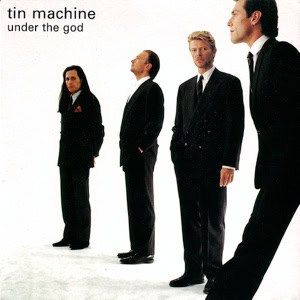
Tin Machine‘s self-titled debut album was released on 22 May 1989 by EMI. It was produced by the band together with Tim Palmer. The official line-up consisted of David Bowie on lead vocals and rhythm guitar, Reeves Gabrels on lead guitar, Tony Sales on bass and backing vocals, and Hunt Sales on drums and backing vocals. Kevin Armstrong contributed additional rhythm guitar and organ and later joined the band for its live performances.
The album was recorded to capture the energy of four musicians performing together in the studio. Its sound is built around the interaction between Hunt’s powerful drumming, Tony’s driving bass lines and Gabrels’ heavily processed guitar textures. Rather than smoothing away imperfections, the production deliberately retained feedback, abrupt dynamic shifts, vocal intensity and rhythmic tension.
Hunt’s drumming is prominent throughout the album. Heaven’s in Here opens the record with an expansive live-band arrangement in which the rhythm section drives the music beneath extended guitar passages. The title track adopts a tighter, more urgent structure, while Crack City and Under the God use direct rock arrangements to reinforce lyrics addressing drug abuse, racism and far-right extremism.
The record also contained quieter or more measured material. Amazing and Prisoner of Love showed that the band was not limited to continuous volume, while the version of John Lennon‘s Working Class Hero placed the group inside a clear tradition of politically direct rock songwriting.
Hunt’s contribution was not based on decorative fills or technical display. His playing supplied momentum and physical weight. He could hold a repeated figure for long stretches and then disrupt it with sudden accents, cymbal crashes or changes in density. That approach gave the album much of its live character.
The album entered the United Kingdom chart at number three and remained in the Top 40 for seven weeks. Its reception was mixed, particularly because many reviewers and listeners remained uncertain whether Tin Machine should be treated as a genuine band or as Bowie’s latest strategy. Whatever the interpretation, the released credits and the group’s working arrangements confirm that Hunt Sales was a full member rather than a session drummer.
The 1989 Tin Machine Tour
Tin Machine promoted the first album through performances in smaller venues than Bowie had used during his stadium years. The decision placed the band close to its audience and allowed the music to be presented without the large theatrical production associated with the Glass Spider Tour.
Tin Machine “Heaven’s In Here” live Rock Awards NYC 1989
In April 1989, director Julien Temple filmed the band performing nine songs from the album at The Ritz in New York. The resulting promotional film included Pretty Thing, Tin Machine, Prisoner of Love, Crack City, Bus Stop, Video Crime, I Can’t Read, Working Class Hero and Under the God.
The tour began in June 1989 and concentrated on Tin Machine material rather than David Bowie’s solo catalogue. On 25 June the band played La Cigale in Paris, a venue with a capacity of approximately one thousand. The officially released selection from that concert documents Hunt on drums alongside Bowie, Gabrels, Tony Sales and Kevin Armstrong.
The La Cigale material includes songs from the debut album and versions of Bob Dylan‘s Maggie’s Farm and John Lennon‘s Working Class Hero. The performance demonstrates the group’s early live identity: compact venues, no elaborate stage narrative and an emphasis on the band operating in real time.
For Hunt, the tour returned the music to the kind of immediate performance conditions he had known since childhood. The venues were professional and the audience attention was intense, but the group had less protection from the room than a stadium production provided. The success or failure of an arrangement was audible immediately.
Writing, Rhythm and Vocals within Tin Machine
Hunt Sales‘ role expanded beyond drumming as Tin Machine continued. He contributed to songwriting discussions, supplied vocal parts and developed material of his own. This was consistent with the group’s stated structure: members were expected to bring ideas rather than wait for Bowie to provide every finished element.
His vocal style differed sharply from Bowie’s. Hunt sang with a rough, blues-based delivery that retained the grain of his speaking voice. On the second album, this contrast became part of the sequencing, giving the record sections in which the identity of the lead singer changed completely.
The combination of drummer and vocalist also affected performance. Singing lead from behind the kit required Hunt to maintain rhythmic force while phrasing independently across the beat. It emphasised that he was not simply being given a novelty vocal appearance; the songs reflected his own writing and musical personality.
The Sales brothers’ relationship remained central. Tony’s bass often followed the shape and impact of Hunt’s kick drum, but the two musicians did not play rigidly identical patterns. Their familiarity allowed one brother to leave space while the other pushed forward, giving Tin Machine a rhythm section capable of sounding both heavy and loose.
Tin Machine II (1991)
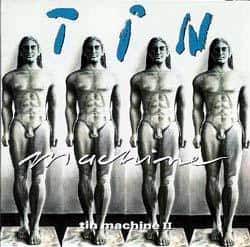
Tin Machine‘s second studio album, Tin Machine II, was released on 2 September 1991 by Victory Music. The material had been developed across sessions held over an extended period, including work in Sydney. Tim Palmer again worked with the band on production.
The album retained the four-member identity but broadened the musical range. Baby Universal, You Belong in Rock ‘n’ Roll and One Shot were released as singles. The album also included Tin Machine‘s version of Roxy Music’s If There Is Something, the quieter Amlapura, the direct social commentary of Shopping for Girls and the unlisted instrumental Hammerhead.
Hunt played drums, percussion and backing vocals and took lead vocals on Stateside and Sorry. Stateside was credited to David Bowie and Hunt Sales. Sorry was written by Hunt and gave him a complete writing and lead-vocal feature within the album.
These tracks are essential to understanding his place in Tin Machine. The group did not merely allow Hunt to sing a Bowie composition. His own material entered the official studio record, and his lead voice changed the balance of the album. The decision made the democratic claim audible rather than leaving it as an interview statement.
Tin Machine II did not match the commercial position of the first album and received divided reviews. Its later reissues nevertheless preserved it as the second and final studio statement by the group. The official David Bowie site has subsequently described it as an album whose reputation increased after its original release.
The It’s My Life Tour
Tin Machine returned to the road in 1991 for the It’s My Life Tour, which continued into 1992. The live group included the four core members, with guitarist Eric Schermerhorn expanding the arrangements on stage.
The concerts again focused on Tin Machine material, including songs from both studio albums and selected covers. Hunt’s dual function as drummer and occasional lead vocalist gave the performances a different stage balance from conventional Bowie tours. During his featured songs, the lead voice came from the drum position rather than the front of the stage.
The tour documented a band that had moved beyond the initial experiment of 1989. The musicians now had two albums of material and a clearer understanding of how the songs changed in performance. Arrangements could be extended, compressed or made heavier according to the room and the momentum of the set.
Tin Machine Live: Oy Vey, Baby
The live album Tin Machine Live: Oy Vey, Baby was released in 1992. Recorded during the It’s My Life Tour, it captured the later touring version of the band and included Eric Schermerhorn alongside Bowie, Gabrels, Tony Sales and Hunt Sales.
The album title continued Tin Machine‘s mixture of seriousness and deliberate provocation. Its existence also completed the group’s core discography: two studio albums and one official live album, together with singles, B-sides, promotional films and later archival live releases.
For Hunt Sales, the live album preserved the environment in which his contribution was most direct. Studio recordings could be edited and mixed, but the concerts depended on the rhythm section establishing the force and pace of each performance in real time.
The End of Tin Machine
Tin Machine ceased operating after the second album and tour. Although a third album was discussed, it was not recorded. Bowie returned to solo work, releasing Real Cool World in 1992 and then Black Tie White Noise in 1993.
Bowie later referred to personal problems within the band and said that continuing had become physically impossible. He did not publicly provide a detailed account of another member’s private circumstances. For that reason, the end of Tin Machine should not be reduced to a single speculative explanation.
The group nevertheless remained important in Bowie’s own assessment of his career. Bowie later said that the band had charged him up and had been useful in helping him regain musical momentum after a period in which he believed he had compromised too much of his own artistic strength.
Hunt’s relationship to that change was practical rather than symbolic. His drumming, songwriting, vocals and willingness to disagree formed part of the daily working environment that made Tin Machine different from a solo Bowie project.
Production Work and Other Projects
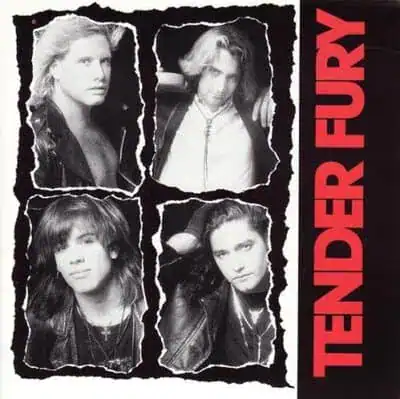
After Tin Machine, Hunt continued writing, performing and producing. In a 2019 interview he discussed production work for projects including Tender Fury, associated with Jack Grisham after T.S.O.L., and Daucus Karota, the post-Christian Death project led by Rozz Williams.
His work during these years remained varied and was not always released under his own name. As throughout his career, he moved between playing drums, writing songs, arranging, producing and performing other instruments.
This period also included serious personal and financial difficulties. Hunt later spoke openly about long-term heroin addiction, crack use and periods of criminal activity. These statements came from Hunt himself and form part of the public account he chose to give of his life.
Hunt Sales on surviving addiction
“The life expectancy for the typical addict is 10 or 15 years. I lived way longer because I was a professional junkie. But after so many decades I finally had to stop. I outlived my addiction.”
He also described undertaking painting work when music did not provide sufficient income. The contrast between gold records on the wall and returning home from manual work appeared in his own reflections on the instability of a professional music career.
Sobriety and a New Beginning
Hunt eventually stopped using heroin after approximately four decades of addiction. In interviews surrounding his 2019 album, he described sobriety not as a final chapter but as the beginning of renewed creative activity.
He was living in Austin, Texas, when guitarist Will Sexton invited him to Memphis in 2017. Sexton introduced Hunt to Bruce Watson of Big Legal Mess Records, the label associated with Fat Possum Records.
Watson initially offered Hunt the opportunity to record a single. Hunt responded by writing and preparing more material, and the plan expanded from two tracks to four, then six, and finally to a full-length album.
Hunt Sales on writing new material
“I worked 80 hours a week for months — the shit just poured out. I wrote hundreds of songs.”
The work gave Hunt the chance to place his own voice, songs and rhythmic identity at the centre of a record. He did not present the project as an attempt to recreate Iggy Pop, Tin Machine or Todd Rundgren. The new material drew upon the full range of his interests, including blues, rhythm and blues, rock, country, reggae and New Orleans music.
Hunt Sales Memorial
The project was named Hunt Sales Memorial. Hunt explained that the name developed after the death of drummer Buddy Miles. He had observed people gathering for the memorial and joked that he preferred the idea of holding his own memorial while he was still alive.
The name confused some early audiences, who assumed that Hunt had died. That reaction became part of the dark humour behind the project, but the music itself represented survival and renewed activity rather than commemoration.
The band brought together musicians from Austin and Memphis. The recording personnel included guitarist Tjarko Jeen, bassist Alexander Lynch, keyboard players Billy Young and Pat Fusco, horn players Jim Spake and Art Edmaiston, and additional bass from Mark Stuart on Ties That Bind.
Hunt played drums, sang lead and also contributed guitar. His description of the recording process emphasised live performance: tracks were cut with the band, followed by vocals and limited additional work rather than prolonged reconstruction.
Get Your Shit Together (2019)
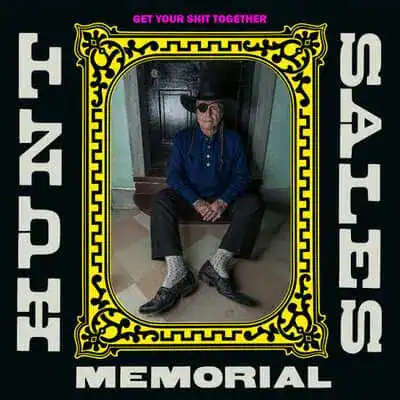
Get Your Shit Together was released by Big Legal Mess through Fat Possum Records on 25 January 2019. It was produced by Hunt Sales and Bruce Watson.
The album moved across several styles. Here I Go Again used a hard, angular rock approach; Angel of Darkness combined country and reggae elements; Sorry Baby drew upon rhythm and blues; and tracks such as I Can’t Stop and It Ain’t Easy reflected Hunt’s blues interests.
The record was significant because it reversed the usual presentation of Hunt’s career. Instead of being introduced primarily as the drummer behind another singer, he appeared as the writer, lead vocalist, drummer and bandleader responsible for the overall direction.
Hunt did not reject his earlier work. He acknowledged what he had brought to Iggy Pop, Bowie and Rundgren, but described the album as the point at which he brought the same energy to his own songs. The result was not a retrospective collection; it was newly written material created after sobriety and recorded with a working band.
Hunt Sales as a Songwriter and Singer
Hunt had written songs long before the Hunt Sales Memorial album. Tin Machine had already brought his writing and lead vocals to a large international audience, particularly through Stateside and Sorry. The 2019 album expanded that role from selected tracks within a group record to an entire project.
His songwriting is direct and economical. Rather than relying on long narrative lyrics, he often uses short phrases, repeated images and rhythmic language. The words are designed to sit inside the groove rather than above it.
His singing carries the same roughness as his drumming. It is not presented as a polished contrast to the rhythm section; the voice is another part of the band sound. Hunt has explained that he dislikes mixes in which the vocal is placed so far forward that the remaining musicians sound like backing tracks.
That view connects his solo work to Tin Machine‘s ensemble principle. Even when Hunt is the named leader, the feeling of the whole performance remains more important than treating one element as separate from the others.
Legacy
Hunt Sales‘ documented career spans childhood television and recording work, Todd Rundgren’s Runt, Iggy Pop‘s Lust for Life, the 1977 touring band, Tin Machine, production work and Hunt Sales Memorial.
His partnership with Tony Sales links several of those chapters. Their rhythm section helped shape recordings by Rundgren and Iggy Pop before becoming one of the foundations of Tin Machine. The brothers’ shared musical language allowed them to produce a forceful sound without needing every detail to be fixed in advance.
Within David Bowie’s history, Hunt occupies two distinct positions. In 1977 he played behind Iggy Pop while Bowie worked as producer, musician and touring keyboard player. In Tin Machine he became Bowie’s fellow band member, contributing to the writing, recordings, interviews and live identity of the group.
Tin Machine‘s reception remains debated, but the factual importance of the band in Bowie’s chronology is clear. It ended the sequence of Bowie’s mid-1980s solo albums, introduced Reeves Gabrels as a long-term collaborator and gave Bowie an environment in which he worked as part of a fixed band. Hunt Sales was central to that environment.
His later career also prevents the Bowie and Iggy Pop periods from becoming the end of his story. Get Your Shit Together documented Hunt as a songwriter, lead singer and bandleader after sobriety, drawing together musical interests developed across more than five decades.
Hunt Sales on continuing to create
“I’m not one to rest on my laurels or old glories. I don’t care what I did last month, much less 30 years ago. I only care about what I’m doing right now.”
Hunt Sales in Bowie’s Collaborative Universe
David Bowie repeatedly worked with musicians who challenged established arrangements rather than simply reproducing them. Hunt Sales belonged firmly to that category. His value to Tin Machine came from his musical identity, independence and willingness to contribute beyond the drum kit.
The phrase Hunt used to describe the relationship remains the clearest summary: he worked with Bowie, not for him. That distinction was consistent with Bowie’s own insistence that Tin Machine was a band and with the released evidence of Hunt’s lead vocals and songwriting.
Hunt’s contribution can therefore be heard on several levels: the physical force of the drums, the interaction with Tony’s bass, the vocal contrast he brought to Tin Machine II, and the songs that carried his own writing credit. Together these elements make him a documented creative participant in one of the most unusual periods of Bowie’s career.
Official Website & Further Information
Hunt Sales Memorial’s album Get Your Shit Together was released by Big Legal Mess Records through Fat Possum Records. The official label page contains album information, release details and purchasing options:
Get Your Shit Together – Big Legal Mess Records
DavidBowieWorld.com is dedicated to documenting the careers of David Bowie’s collaborators through carefully researched historical information and, where available, first-hand contributions from the artists themselves. This page will continue to be updated as new verified information becomes available.
Article Origin
This article has been researched and written for DavidBowieWorld.com as part of the site’s ongoing series documenting the musicians, producers, engineers, designers and creative collaborators who contributed to David Bowie’s career. Particular attention has been given to Hunt Sales‘ documented work on Iggy Pop‘s Lust for Life, his role as a founding member of Tin Machine, his songwriting and lead vocals on Tin Machine II, and his later work with Hunt Sales Memorial.

Met Hunt once in Dublin
.A gentleman with no illusions of grandeur
Fantastic musician as is his brother Tony