
Tessa Niles – Live Aid and Dancing in the Street with David Bowie
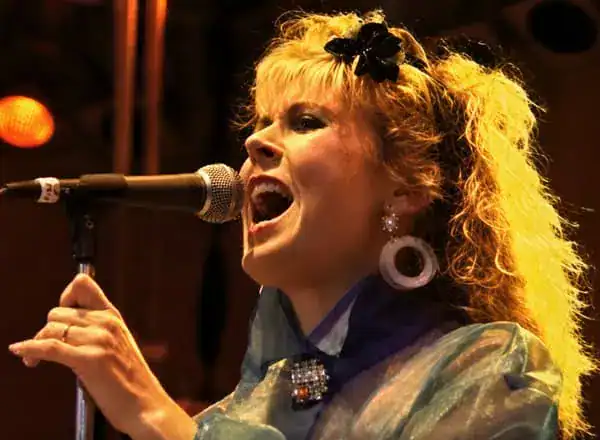
Tessa Niles performing as part of David Bowie’s vocal ensemble during Live Aid at Wembley Stadium, London, 13 July 1985.
Tessa Niles is a British vocalist, session singer and author whose career has included studio recordings, television appearances and international concert tours with a wide range of artists.
Within David Bowie’s career, Niles is associated with two closely connected projects from 1985. Together with fellow backing vocalist Helena Springs, she recorded backing vocals for Dancing in the Street, the charity single performed by Bowie and Mick Jagger. Shortly afterwards, Niles and Springs joined Bowie during his performance at Live Aid at Wembley Stadium.
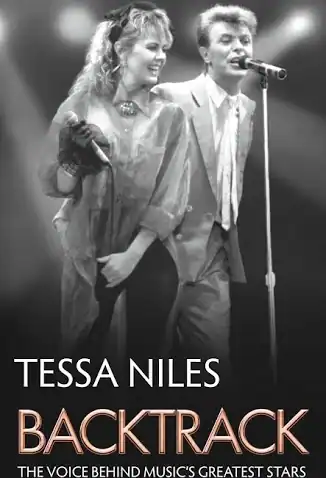
Beyond her work with Bowie, Niles has recorded or performed with artists including Eric Clapton, Tina Turner, The Police, George Harrison, Paul McCartney, Duran Duran, Pet Shop Boys, The Rolling Stones and Robbie Williams. She later documented her experiences as a professional vocalist in her memoir Backtrack – The Voice Behind Music’s Greatest Stars.
- Birth name: Tessa Margaret Webb
- Professional name: Tessa Niles
- Born: 27 January 1961, Ilford, Essex, England
- Profession: Vocalist and author
- Bowie recording: Dancing in the Street with David Bowie and Mick Jagger, 1985
- Live performance with Bowie: Live Aid, Wembley Stadium, London, 13 July 1985
- Memoir: Backtrack – The Voice Behind Music’s Greatest Stars
- Official website: www.tessaniles.com
Early Life and Musical Beginnings
Tessa Margaret Webb was born on 27 January 1961 in Ilford, Essex, England. During her childhood she sang in a church choir and participated in school productions.
At the age of thirteen, she began singing after school at a nearby recording studio, providing backing vocals for local performers. The work gave her early practical experience of constructing and recording vocal harmonies.
Niles began her professional singing career in 1979, working as both a lead and backing vocalist. Originally from Essex, she moved to London in the early 1980s and developed a career within the city’s recording and live-music industry.
The Police and the Synchronicity World Tour
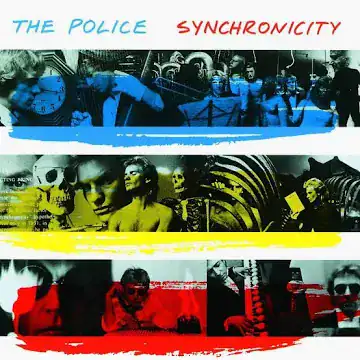
Tessa Niles‘ first major international engagement came in 1983, when Sting asked her to join The Police as a backing vocalist for the Synchronicity World Tour.
The tour supported The Police’s album Synchronicity and ran from July 1983 until March 1984. Niles performed alongside fellow backing vocalists Dolette McDonald and Michelle Cobb.
The additional singers reproduced the layered vocal arrangements used on the album while Sting, Andy Summers and Stewart Copeland performed as the group’s principal live trio.
Niles can be heard on the officially released Atlanta concert recording from the tour, later included on Live!. Her work with The Police became an important early international credit and preceded an expanding series of studio recordings and touring engagements.
Building a Career as a Session Vocalist
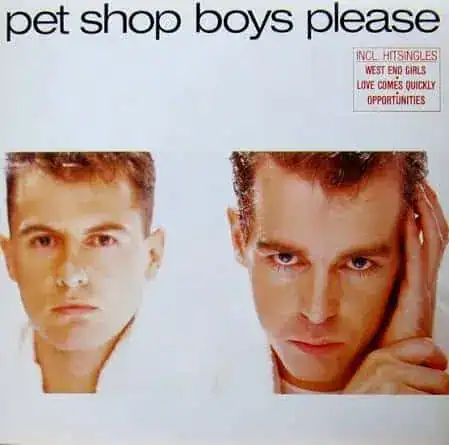
Following the Synchronicity World Tour, Tessa Niles became increasingly active as a freelance session vocalist within the British recording industry. During the mid-1980s she combined studio work, television appearances and international touring, developing a reputation for precise vocal harmonies and stylistic versatility.
Her recording credits expanded rapidly and included sessions for artists such as ABC, Tina Turner, Grace Jones, Duran Duran, Pet Shop Boys, The Rolling Stones, George Harrison, Tom Jones, Seal and many others. She also worked with producers including Trevor Horn, Nile Rodgers, Phil Ramone and Russ Titelman.
Alongside her studio career, Niles established herself as a touring vocalist. One of her longest professional associations was with Eric Clapton, with whom she toured for more than twelve years and appeared on numerous recordings and concert performances, including MTV Unplugged.
Unlike many session singers whose work remained largely anonymous, Niles’ extensive recording and touring credits established her as one of Britain’s best-known professional session vocalists. Her ability to move between different musical styles and work with a wide variety of artists led to a continuous stream of recording sessions throughout the 1980s.
By the summer of 1985, Tessa Niles had become an established figure within London’s recording community. It was during this exceptionally busy period that her career intersected with David Bowie through the recording of Dancing in the Street and, shortly afterwards, Bowie’s appearance at Live Aid.
Joining David Bowie
During the summer of 1985, David Bowie and Mick Jagger agreed to record a new version of Martha and the Vandellas’ classic Dancing in the Street in support of the forthcoming Live Aid famine relief appeal. Artist royalties from the single were donated to the charity.
An early proposal to perform the song simultaneously from London and Philadelphia using satellite technology was abandoned because transmission delays made a live performance impractical. Instead, the recording and accompanying promotional video were both completed in London.
Tessa Niles and Helena Springs were selected as the session’s backing vocalists. Both singers were already highly experienced studio professionals, making them well suited to a recording project that had to be completed within an exceptionally short timescale.
The recording of Dancing in the Street marked Tessa Niles‘ documented studio collaboration with David Bowie. Together with her appearance during Bowie’s Live Aid performance, it represents her direct contribution to two of the most recognisable Bowie projects of 1985.
Recording Dancing in the Street
The principal London session for Dancing in the Street took place at Westside Studios in Holland Park in late June 1985. Recording engineer Mark Saunders, who worked on the session, later recalled that David Bowie had been recording music for Absolute Beginners before work shifted to the Live Aid charity single.
David Bowie and Mick Jagger – Dancing in the Street (1985).
The musicians who created the basic London performance were Neil Conti on drums, Matthew Seligman on bass, Kevin Armstrong on guitar and Steve Nieve on keyboards. Tessa Niles and Helena Springs provided the backing vocals.
A cassette of Martha and the Vandellas’ original 1964 recording was used as a reference while the musicians worked out a new arrangement. The limited schedule left little time for extended rehearsal before recording began.
The band played together while David Bowie, Mick Jagger, Tessa Niles and Helena Springs initially sang in a shared vocal booth. This captured a complete performance, but the proximity of the four singers caused their voices to spill onto one another’s microphones.
According to Mark Saunders, two complete takes were recorded. The first take was selected as the basis of the finished recording because it contained the preferred instrumental performance.
The vocal parts were subsequently recorded again to provide greater control during mixing. Niles and Springs completed the replacement backing-vocal parts first, followed by Jagger and then Bowie.
Completing the Recording
After the backing vocals had been completed, Mick Jagger recorded his final lead parts. David Bowie recorded his lead vocal afterwards, working through individual passages and replacing selected lines where necessary.
The session was recorded on analogue multitrack tape. Vocal corrections therefore required accurately timed punch-ins and punch-outs by the engineering team rather than the non-destructive digital editing used in later recording systems.
A rough mix was prepared for use during the promotional video shoot. Bowie and Jagger then travelled to London’s Docklands, where the video was filmed under the direction of David Mallet.
Further work was subsequently undertaken in New York. Additional instrumental overdubs were added, including guitar, percussion and brass parts, before Bob Clearmountain completed the final mix.
The complete recording credits also include guitarists Earl Slick and G.E. Smith, bassist John Regan, percussionists Jimmy Maelen and Pedro Ortiz, trumpeter Mac Gollehon, and saxophonists Stan Harrison and Lenny Pickett.
Released in August 1985, Dancing in the Street reached number one on the UK Singles Chart and raised money for the Live Aid famine-relief appeal.
For Tessa Niles, the single documented her studio collaboration with David Bowie and Mick Jagger. Her Bowie connection continued shortly afterwards when she joined Bowie as a backing vocalist at Live Aid.
The Making of the Video
After the recording session, David Bowie and Mick Jagger travelled to Spillers Millennium Mills in London’s Docklands, where the promotional video for Dancing in the Street was filmed under the direction of David Mallet.
The video was created within the same compressed production schedule as the recording. It focused on Bowie and Jagger performing together inside and around the disused industrial complex, without an elaborate narrative or a large supporting cast.
Tessa Niles and Helena Springs did not appear in the video, but their backing vocals remained part of the finished soundtrack. The completed film was shown during the Live Aid broadcast on 13 July 1985 and was subsequently used to promote the charity single.
Live Aid
David Bowie performing at Live Aid, Wembley Stadium, London, 13 July 1985.
On 13 July 1985, Tessa Niles performed with David Bowie during Live Aid at Wembley Stadium in London. She appeared as part of Bowie’s backing vocal team alongside Helena Springs.
Bowie performed four songs: TVC 15, Rebel Rebel, Modern Love and “Heroes“. Niles and Springs provided backing vocals throughout the set.
The performance brought Niles back together with Bowie and Springs only weeks after the recording of Dancing in the Street. It remains Tessa Niles‘ only documented live appearance with David Bowie.
After completing his four-song set, Bowie introduced a film showing the effects of famine in Ethiopia. The footage was accompanied by Drive by The Cars and redirected attention to the humanitarian purpose of the concert.
“Walking towards the stage the sound of the crowd was electrifying – just something indescribable because I had never experienced anything like that before.”
Niles later described Live Aid as an experience whose scale became even clearer with the passing of time. Her participation in the concert at the age of twenty-four remains one of the best-documented moments of her association with David Bowie.
Career Beyond David Bowie
Although Tessa Niles‘ documented collaboration with David Bowie was confined to 1985, her wider career continued to expand over the following decades. She remained active as both a studio and touring vocalist, contributing to recordings, television productions and international concert tours with a diverse range of artists.
Among the artists with whom she worked were Eric Clapton, Tina Turner, George Harrison, Paul McCartney, The Rolling Stones, Duran Duran, Pet Shop Boys, Tom Jones, Seal, Sarah Brightman, Robbie Williams and Kylie Minogue. Her recording career also included collaborations with producers such as Trevor Horn, Nile Rodgers, Phil Ramone and Russ Titelman.
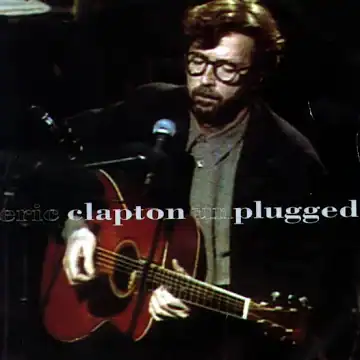
One of her longest professional associations was with Eric Clapton. Niles toured with Clapton for more than twelve years and contributed to numerous live performances and recordings, including his celebrated MTV Unplugged project.
Alongside her recording and touring work, Niles became an author with the publication of her memoir Backtrack – The Voice Behind Music’s Greatest Stars in 2015. The book provides a first-hand account of life as a professional session vocalist and documents many of the artists, producers and recording sessions that shaped her career.
Legacy
Across more than four decades, Tessa Niles has built a career that reflects the importance of professional session vocalists within the recording industry. While backing singers often remained less visible than the artists they supported, their performances formed an essential part of countless studio recordings, concert tours and television productions.
Within David Bowie’s career, Niles is associated with two significant projects from 1985: the recording of Dancing in the Street with David Bowie and Mick Jagger, and Bowie’s appearance at Live Aid. Although her documented work with Bowie was limited to those projects, they remain an important part of her extensive professional career.
Tessa Niles Looking Back on Live Aid
“I recently saw the West End theatre production of Live Aid, Just For One Day, and it brought it home. I went with my two daughters and they both turned to me and said, ‘Gosh Mum, we had no idea. We really didn’t know it was this seismic.’ They said how lucky we were to have experienced it – and that’s exactly how I feel.”
Tessa Niles in Bowie’s Collaborative Universe
Tessa Niles occupies a distinctive place within David Bowie’s collaborative history. Her contributions to Dancing in the Street and Live Aid connected her with two of the most recognisable projects of Bowie’s mid-1980s career, documenting her work alongside Bowie, Mick Jagger and fellow backing vocalist Helena Springs.
Although her documented collaboration with Bowie was relatively brief, it forms part of a much broader career that has seen her work with many of the leading artists of the modern recording era. Her professionalism and adaptability enabled her to move successfully between studio recording, concert touring and television performances throughout her career.
Official Website & Further Information
Official website:
www.tessaniles.com
Tessa Niles continues to perform, teach and speak about her career as one of Britain’s most respected professional session vocalists. Through concerts, workshops, interviews and her autobiography, she continues to share first-hand insights into the recording industry and the many artists with whom she has worked throughout her career.
DavidBowieWorld.com is dedicated to documenting the careers of David Bowie’s collaborators through carefully researched historical information and, where available, first-hand contributions from the artists themselves. This page will continue to be updated as new verified information becomes available.
Article Origin
This article has been researched and written exclusively for DavidBowieWorld.com as part of the website’s continuing project documenting the musicians, singers, producers, engineers and creative collaborators who contributed to David Bowie’s career.
Particular attention has been given to Tessa Niles‘ documented collaboration with David Bowie during the recording of Dancing in the Street and her appearance during Live Aid on 13 July 1985, placing those projects within the wider context of her professional career.
