
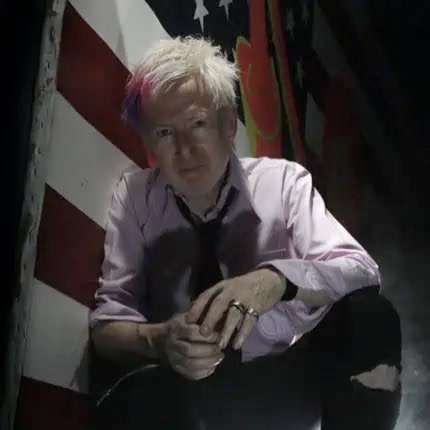
Gerry Leonard – Guitarist and Musical Director for David Bowie
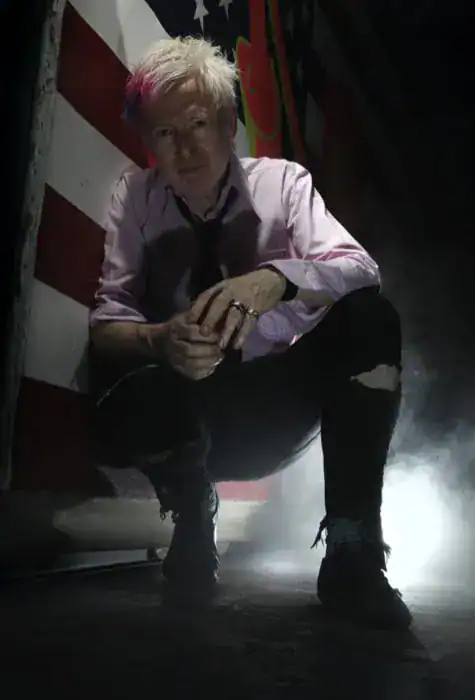
Photograph by Formento2. Courtesy of Gerry Leonard’s personal archive. Reproduced with the kind permission of Gerry Leonard.
Gerry Leonard is an Irish guitarist, songwriter, producer and musical director whose atmospheric guitar style became an important part of David Bowie’s later musical world. Known for his ambient textures, looping techniques and highly individual harmonic approach, Leonard helped Bowie move through the Toy, Heathen, Reality and The Next Day years with a sound that was modern, flexible and emotionally rich.
Leonard did not belong to Bowie’s 1990s Outside or Earthling bands. His Bowie connection belongs to the early 2000s and beyond, beginning through producer Mark Plati and the New York studio environment surrounding the Toy project. From there, Leonard became one of Bowie’s trusted late-career musicians, later serving as musical director for A Reality Tour in 2003–2004.
His role was never limited to guitar parts alone. Leonard helped translate Bowie’s complex catalogue into a powerful live language, preparing arrangements, shaping transitions and supporting a band capable of moving from deep catalogue material to new songs with confidence and precision.
Leonard’s later contribution to The Next Day gave his Bowie story a final and highly significant chapter. He played guitar on the album and shared writing credits with Bowie on “Boss Of Me” and “I’ll Take You There”, placing him among the small group of musicians who helped shape Bowie’s final studio period.
- Full name: Gerry Leonard
- Born: 26 February 1962, Clontarf, Dublin, Ireland
- Profession: Guitarist, songwriter, producer and musical director
- Bowie connection: Guitarist, musical director and later co-writer
- First Bowie connection: Through Mark Plati and the Toy project
- Major Bowie albums: Toy, Heathen, Reality, The Next Day
- Major Bowie live work: 2002 live performances and A Reality Tour 2003–2004
- Musical director: A Reality Tour
- Bowie co-writes: “Boss Of Me” and “I’ll Take You There”
- Solo project: Spooky Ghost
- Other artists: Suzanne Vega, Laurie Anderson, Rufus Wainwright, Duncan Sheik, Roger Waters, David Byrne and others
Early Life in Dublin
Gerry Leonard was born on 26 February 1962 in Clontarf, a coastal suburb on the north side of Dublin, Ireland. Growing up in a family that encouraged music, he was introduced to the piano as a child before discovering the guitar, the instrument that would ultimately define his career.
Unlike many aspiring rock guitarists of his generation, Leonard quickly became interested in far more than speed or technical virtuosity. He was fascinated by melody, harmony and the emotional character of sound itself. While listening to artists such as The Beatles, Simon & Garfunkel, Irish folk music and later progressive rock musicians, he also studied classical guitar, an experience that profoundly influenced the way he approached composition and arrangement.
Classical training taught Leonard to think beyond riffs and solos. It introduced him to counterpoint, dynamics and musical structure, while his growing interest in contemporary rock encouraged him to experiment with unusual chord voicings and atmospheric textures. Those two worlds—classical discipline and musical experimentation—would eventually become the foundation of his distinctive guitar style.
As a teenager he played in several local Dublin bands, steadily building experience as both a performer and songwriter. Even then, friends and fellow musicians recognised that Leonard approached the guitar differently. Rather than competing to play louder or faster than everyone else, he preferred creating mood, space and colour, treating the instrument almost like an orchestra rather than a conventional rock guitar.
Learning the Recording Studio
Soon after leaving school, Leonard began working at Lombard Sound Studios, one of Ireland’s leading recording facilities. Starting as a tape operator, he found himself surrounded by professional engineers, producers and musicians on a daily basis. It proved to be an education that no music school could have provided.
Working behind the scenes allowed him to observe every stage of the recording process. He learned microphone techniques, tape editing, mixing, arrangement and the importance of listening carefully to how individual instruments interacted within a recording. Rather than seeing the guitar as an isolated instrument, Leonard increasingly viewed music as a carefully balanced combination of sound, texture and space.
His time at Lombard also introduced him to many established Irish musicians and recording professionals. Watching experienced artists work inside the studio reinforced his belief that great records were built through imagination, collaboration and attention to detail rather than technical showmanship alone.
The experience would later prove invaluable when he entered New York’s highly competitive studio scene. Long before meeting David Bowie, Leonard already possessed an unusually broad understanding of both the artistic and technical sides of music-making.
Hinterland
During the late 1980s Gerry Leonard formed Hinterland with singer and songwriter Donal Coghlan. The band developed a distinctive sound that combined atmospheric guitars, thoughtful songwriting and subtle arrangements, standing apart from many of the more commercial rock acts of the period.
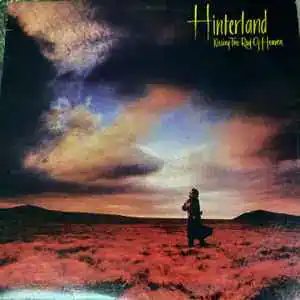
Hinterland signed with Island Records, an important milestone that gave Leonard his first experience of recording for an international label. Their debut album, Kissing the Roof of Heaven, released in 1990, attracted critical praise for its originality, cinematic atmosphere and carefully crafted production.
Although the album never became a commercial breakthrough, it revealed many of the qualities that would later define Leonard’s career. His guitar work focused on creating emotion through texture rather than volume, while his growing interest in production and arrangement demonstrated that he was becoming much more than simply a guitarist.
The years spent with Hinterland also taught Leonard the realities of professional touring, recording and the international music business. While the band eventually came to an end, it provided him with the confidence and experience needed for the next major step in his career.
A New Beginning in New York
By the early 1990s Leonard felt that he needed a fresh challenge. Ireland had given him an excellent musical education, but New York offered opportunities that were impossible to ignore. In late 1994 he relocated to New York City, arriving with little more than his guitars, a determination to succeed and a clear vision of developing his own musical identity.
The move proved transformative. New York exposed Leonard to an extraordinary range of musicians, producers and recording sessions spanning rock, folk, jazz, avant-garde music and experimental sound design. Rather than adapting his style to fit commercial expectations, he continued refining the atmospheric guitar language that would soon become his trademark.
Within only a few years, Leonard had established himself as one of the city’s most respected session musicians. Producers valued not only his technical ability but also his imagination. He approached every recording as an opportunity to add colour, texture and emotion rather than simply another guitar part—a philosophy that would eventually attract the attention of one of New York’s most creative recording artists: David Bowie.
Spooky Ghost – Creating a Personal Musical Identity
While establishing himself in New York, Gerry Leonard also pursued his own artistic ambitions. Rather than simply becoming another highly skilled session guitarist, he wanted to develop a musical identity that was unmistakably his own. The result was Spooky Ghost, a solo project that allowed him complete creative freedom and became the perfect vehicle for his increasingly distinctive approach to the guitar.
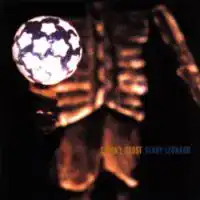
Performing under the name Spooky Ghost, Leonard explored a musical landscape built on ambience, looping, harmonic movement and subtle melodic development. Instead of treating the guitar as a traditional rock instrument, he used it almost like a painter uses colour, constructing rich sonic textures that gradually evolved throughout each performance. Live looping became an important part of his performances, allowing him to build layers of sound in real time without relying on pre-recorded backing tracks.
His first Spooky Ghost album, released in 1998, attracted attention within New York’s close-knit community of musicians and producers. Rather than aiming for commercial success, the recordings demonstrated Leonard’s growing confidence as both a composer and sonic architect. His music blended elements of ambient, rock, folk and cinematic sound design into something that felt both intimate and adventurous.
The project also established Leonard as far more than a guitarist. He became recognised as a songwriter, producer and arranger whose greatest strength lay in creating atmosphere and emotional depth. Those qualities would later become invaluable when working with David Bowie, whose own career had always been driven by curiosity and artistic reinvention.
The Light Machine
In 2002 Leonard released his second Spooky Ghost album, The Light Machine, a deeply personal work that further expanded his exploration of texture, harmony and mood. The record showcased his ability to combine delicate guitar layers with memorable melodies, creating music that was both emotionally engaging and sonically adventurous.
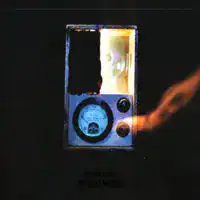
Unlike many instrumental guitar albums, The Light Machine avoided displays of technical virtuosity for their own sake. Instead, Leonard concentrated on composition, atmosphere and storytelling, allowing every sound to serve the emotional character of each piece. The album reflected his belief that the guitar could function as an instrument of colour and feeling rather than simply a vehicle for solos.
The record received enthusiastic praise from fellow musicians and quickly became one of the defining releases of Leonard’s solo career. It also attracted the admiration of David Bowie, who recognised both the originality of Leonard’s playing and the emotional depth that characterised the album.
David Bowie on The Light Machine
“Quite the most beautiful and moving pieces of work I have possessed in a long time.”
Coming from an artist who rarely offered such public praise, the statement meant a great deal to Leonard. More importantly, it demonstrated that Bowie recognised exactly what made his music special. Leonard was not trying to emulate famous guitarists or recreate familiar sounds; he was creating an entirely personal musical language. That originality would soon become one of the reasons Bowie wanted him within his own creative circle.
A Reputation Grows in New York
By the end of the 1990s Gerry Leonard had quietly established himself as one of New York’s most respected guitarists. His work as a session musician continued to expand, while his reputation as Spooky Ghost attracted audiences interested in adventurous music that blurred the boundaries between rock, ambient composition and improvisation.
He also developed close working relationships with several influential producers and musicians, among them Mark Plati, whose association with David Bowie would soon change the direction of Leonard’s career. Although Gerry could not yet have known it, the combination of his studio reputation, his live performances and the originality of his solo work had already placed him on a path that would lead directly into Bowie’s musical world.
Meeting Mark Plati
One of the most important turning points in Gerry Leonard‘s career came through his friendship with producer, engineer and songwriter Mark Plati. By the late 1990s both men had become respected figures within New York’s recording community, frequently working in the same studios and sharing an enthusiasm for music that constantly pushed creative boundaries.
Plati had become one of David Bowie’s closest collaborators after working on Earthling and was heavily involved in Bowie’s recording projects around the turn of the century. Having seen Leonard perform and worked with him in the studio, Plati recognised that the Irish guitarist possessed something Bowie always valued in his musicians: originality. Leonard was not trying to imitate famous guitar heroes. Instead, he approached the instrument as a source of atmosphere, colour and emotion.
As Leonard’s reputation continued to grow, Plati became convinced that Bowie would appreciate his unique musical voice. Rather than arranging a formal audition, the opportunity developed naturally through the close-knit network of musicians working in New York’s recording studios.
Neither man realised it at the time, but that professional friendship would become the bridge that connected Gerry Leonard to one of the most rewarding collaborations of his career.
The Toy Sessions
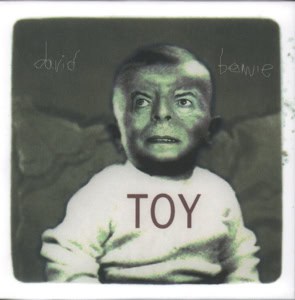
Gerry Leonard‘s first contribution to David Bowie’s music came during sessions for the album that eventually became known as Toy. In 2000 Bowie entered Looking Glass Studios in New York with producer Mark Plati to record fresh versions of songs he had originally written during the 1960s. Although the album would remain officially unreleased for many years, the sessions marked the beginning of Leonard’s relationship with Bowie.
At the time, Leonard happened to be working elsewhere in the same studio complex. Knowing the guitarist’s distinctive style, Mark Plati approached him with an unusual request. He handed Leonard a rough mix of one of Bowie’s recordings and asked whether he would be interested in taking it home, experimenting with it and adding whatever guitar ideas came naturally.
Leonard later recalled taking the recording back to his apartment in Brooklyn, where he carefully listened to Bowie’s vocal before adding his own atmospheric guitar textures. Rather than trying to impress Bowie with flashy solos, he decided to trust his instincts and simply play what he felt the music needed.
The following day he returned the recording to Mark Plati. Both Plati and Bowie were immediately impressed. Leonard had instinctively understood the emotional space within the song and contributed something fresh without distracting from Bowie’s performance. It was exactly the kind of thoughtful musicianship Bowie admired.
Although Toy would remain unreleased until many years later, those sessions established a relationship built on mutual respect and creative curiosity. Bowie had discovered a guitarist who thought like an arranger and producer rather than simply a soloist, while Leonard found himself working with one of the most adventurous artists in popular music.
First Meeting with David Bowie
Not long afterwards Gerry Leonard was introduced to David Bowie in person. Like many musicians who first encountered Bowie professionally, Leonard expected to meet one of the world’s biggest rock stars. Instead, he found someone who was approachable, quietly spoken and genuinely interested in exchanging musical ideas.
There was no formal audition and no attempt to test Leonard’s technical ability. Bowie had already heard enough to know that the guitarist possessed an individual musical voice. Their first conversations centred on music, sound and creativity rather than fame or reputation, establishing the relaxed working relationship that would continue throughout the years that followed.
For Leonard the experience was both exciting and surreal. Bowie had been one of the artists who expanded his own understanding of what popular music could be, and he suddenly found himself not only meeting his hero but becoming part of Bowie’s creative circle.
The first meeting marked the beginning of a collaboration that would eventually include studio recordings, major international tours and some of the final live performances of David Bowie’s extraordinary career.
“Can Gerry Rock?”
Although David Bowie admired the atmospheric quality of Gerry Leonard‘s guitar playing, he still wanted to know one important thing before inviting him into his band. Leonard’s work as Spooky Ghost demonstrated remarkable imagination and subtlety, but Bowie’s music also demanded power, energy and the ability to command a large stage.
According to Gerry Leonard, Bowie turned to Mark Plati with a simple question that would later become one of the best-known stories surrounding Leonard’s arrival in Bowie’s musical world.
Mark Plati knew there was only one way to answer the question. Rather than trying to describe Leonard’s versatility, he suggested that Bowie should come and hear him perform live. Seeing Gerry on stage would tell Bowie far more than any recommendation ever could.
Bowie Visits a Spooky Ghost Performance
Soon afterwards Bowie attended one of Gerry Leonard‘s intimate Spooky Ghost performances at a small New York venue. Unlike the arenas Bowie himself was accustomed to filling, the audience consisted of only about 50 people, creating an atmosphere in which every musical detail could be heard.
Earlier that day, Mark Plati told Leonard that David Bowie intended to come to the performance. Suddenly the evening took on an entirely different significance. There was no turning back. Leonard and the other musicians found Bowie a chair that was actually not broken, set up their equipment and performed a Spooky Ghost set with scenes from Fantasia projected onto the back wall of the venue.
Knowing that Bowie would be in the audience inevitably added to the pressure, but Leonard remained focused on the performance. Throughout the evening he presented the atmospheric, loop-based music that had become his signature, moving between delicate ambient passages and more forceful rock-oriented playing whenever the music required it.
The performance gave Bowie the opportunity to hear that Leonard was not simply an inventive ambient guitarist. His playing moved naturally between texture, melody, rhythm and powerful rock guitar without sacrificing his own artistic identity.
During the set, Bowie joined in the between-song banter, calling out jokes from the audience and good-naturedly heckling Leonard. Rather than increasing the tension, his humour immediately broke the ice. It offered an early glimpse of the warmth and playfulness that Gerry would later experience during their years of working together.
The evening marked a turning point in Leonard’s career. Bowie had now heard at first hand a guitarist capable of creating distinctive sonic landscapes while also delivering the power and spontaneity required of a live rock band. It became the beginning of a professional relationship built on mutual respect, creativity and a shared interest in exploring new musical possibilities.
Preparing for a New Chapter
Following the Toy sessions and their first meetings, Gerry Leonard became part of Bowie’s growing circle of trusted musicians. Over the next two years he would contribute to new recording sessions while preparing for what proved to be one of the most creative periods of Bowie’s later career.
Those collaborations would soon lead to the recording of Heathen, David Bowie’s celebrated 2002 reunion with producer Tony Visconti. For Leonard, it represented the true beginning of a partnership that would continue through Reality, A Reality Tour and eventually The Next Day, establishing him as one of the defining musical voices of Bowie’s final touring era.
Recording Heathen
After the Toy sessions, Gerry Leonard remained connected to David Bowie’s evolving musical world. When Bowie reunited with producer Tony Visconti for Heathen, released in 2002, Leonard became part of the group of musicians contributing to Bowie’s renewed studio sound.
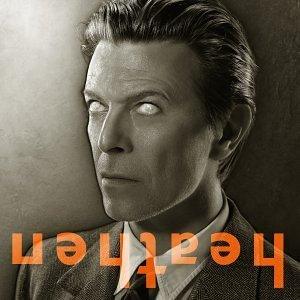
Heathen marked an important turning point in Bowie’s later career. The album balanced reflective songwriting, modern production and a renewed sense of emotional depth. Leonard’s contribution should be understood within that wider sound world: not as the sole architect of the album’s guitar atmosphere, but as one of the musicians who helped Bowie shape this new phase.
This distinction is important. Some of the most recognisable atmospheric guitar textures on Heathen were created by other guitarists, including David Torn. Leonard’s importance lies not in claiming every atmospheric sound on the record, but in the way his own musical language fitted naturally into Bowie’s later work and, crucially, in how he helped translate this material for live performance.
Leonard’s ability to combine discipline with imagination made him especially useful to Bowie. He could create soundscapes, play supportive guitar parts, understand arrangements and respond quickly to the demands of complex material. Those qualities would become even more important once Bowie began performing the new songs live.
Meltdown and the 2002 Performances
In 2002 David Bowie curated the Meltdown Festival at London’s Royal Festival Hall. As part of this period, Bowie and his band performed material from Heathen and also presented Low in full, giving audiences a rare opportunity to hear one of Bowie’s most influential albums reimagined by a later band.
For Gerry Leonard, the 2002 performances were a major step into Bowie’s live world. He was no longer simply a studio contributor; he was now part of a band expected to handle both new material and some of the most demanding music in Bowie’s catalogue.
The challenge was not to copy the past mechanically. Bowie rarely wanted his musicians to turn old songs into museum pieces. Instead, he encouraged arrangements that respected the original recordings while allowing the band to bring new energy, new textures and new emotional emphasis to the songs.
Leonard’s atmospheric style was particularly well suited to this approach. His guitar could add colour and tension without overwhelming the songs, and his experience with looping and sound design allowed him to help recreate complex textures in a live setting without reducing the performances to simple nostalgia.
Preparing for Reality
The experience of working with Bowie during the Heathen period helped establish Leonard as a trusted member of Bowie’s later musical circle. By the time Bowie moved toward Reality, Leonard’s role had grown beyond that of a guitarist who simply arrived to play his parts.
His background as a producer, arranger and bandleader made him a natural organiser within the group. He understood how musicians worked, how arrangements needed to be prepared, and how complex songs could be made practical for the stage without losing their character.
Those qualities became central when Bowie prepared for A Reality Tour. Leonard would serve as musical director for the tour, helping organise arrangements and prepare a large body of Bowie material for one of the most ambitious live projects of Bowie’s later career.
Recording Reality
After Heathen, Gerry Leonard remained closely involved in David Bowie’s late-career work. He contributed guitar to Reality, released in 2003, an album that combined direct rock energy with reflective songwriting and the restless musical curiosity that continued to define Bowie’s final active years as a touring artist.

For Leonard, Reality was not simply another studio credit. It formed the bridge between his work as a guitarist on Bowie recordings and his much larger responsibility on the road. The album would become the foundation for Bowie’s final world tour, and Leonard’s understanding of both studio sound and live arrangement made him especially valuable as the project moved from recording sessions into rehearsals.
Reality also placed Leonard within a band that combined long-standing Bowie collaborators with musicians from Bowie’s more recent creative circle. His ability to move effortlessly between atmosphere, rhythm, texture and direct rock playing complemented an album that was deliberately more immediate than Heathen, while still retaining the emotional depth and subtle ambiguity that characterised Bowie’s later songwriting.
Becoming Musical Director
When Bowie prepared A Reality Tour, Gerry Leonard took on one of the most demanding roles of his career: musical director. This position required far more than learning guitar parts. Leonard had to help organise a large body of Bowie material, prepare arrangements, support rehearsals and make sure the band could respond quickly to Bowie’s changing ideas.
The scale of the task was enormous. Bowie’s catalogue stretched across decades, and the tour drew from famous songs, deep cuts, recent material and rarely performed pieces. Leonard later recalled that the band had a catalogue of around sixty-four songs ready for the tour, allowing Bowie to vary the setlist and keep performances alive from night to night.
As musical director, Leonard became the person who helped make that flexibility possible. He worked with musicians whose approaches were very different from one another: Mike Garson could read and interpret complex musical information with extraordinary freedom, while Earl Slick brought instinctive rock authority and a deep personal history with Bowie. Gail Ann Dorsey, Sterling Campbell and Catherine Russell each added their own musical character to the band.
Leonard’s role was to help those different strengths meet in a single live sound. He needed to understand the songs, the personalities, the arrangements and the practical demands of a major international tour. The job required patience, organisation and musical intelligence, but also the ability to preserve the sense of spontaneity that Bowie valued on stage.
A Reality Tour
A Reality Tour began in 2003 and continued into 2004. It would become David Bowie’s final world tour and one of the most celebrated live chapters of his later career. The tour presented Bowie not as a distant theatrical character, but as a relaxed, direct and highly engaged performer, revisiting his catalogue with confidence and humour.
Leonard stood at the centre of that live sound. On stage he provided guitar, backing vocals, textures, loops and arrangement support, helping the band move between recent songs and older material without the performances feeling trapped in the past.
The tour also demonstrated Bowie’s trust in Leonard. Preparing such a wide-ranging setlist required someone who could honour the original recordings while also allowing the songs to breathe in a modern live setting. Leonard’s musical direction helped make that balance possible.
For many fans, A Reality Tour now carries additional historical weight because it became Bowie’s last major tour. The concerts captured a performer still vocally strong, musically curious and visibly enjoying his band. Gerry Leonard‘s contribution was central to that final live identity.
Returning for The Next Day
After David Bowie suffered a heart attack in June 2004, his public appearances became increasingly rare. As the years passed, many fans assumed that Bowie had quietly retired from recording. Behind closed doors, however, he continued writing new material, working in complete secrecy with producer Tony Visconti and a small circle of trusted musicians.
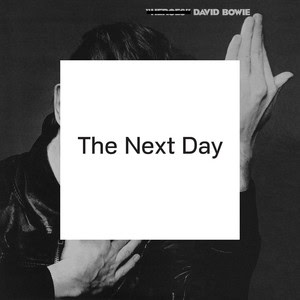
When David Bowie finally announced The Next Day in January 2013, its release surprised both the music industry and fans around the world. Recorded in complete secrecy over an extended period, the album demonstrated that Bowie had lost none of his creative ambition. Among the musicians invited back into the studio was Gerry Leonard, whose creative relationship with Bowie had continued long after A Reality Tour had come to an end.
Leonard contributed guitar to the album and became one of the very few musicians to receive songwriting credits alongside Bowie. His involvement reflected the deep level of musical trust that had developed between the two men since their first meeting more than a decade earlier. By this stage, Leonard was no longer simply a guitarist in Bowie’s band, but a respected creative partner whose musical ideas contributed directly to Bowie’s final studio work.
Writing “Boss Of Me”
The story behind “Boss Of Me” offers a fascinating insight into David Bowie’s creative process. Rather than beginning with finished lyrics or a carefully structured composition, the song developed naturally from an informal writing session at Gerry Leonard‘s home studio in upstate New York.
One day Bowie visited Leonard for coffee and asked a simple question that immediately suggested he wanted to work.
Gerry Leonard remembers the beginning of “Boss Of Me”
“He asked if I had a drum machine.”
After Bowie left, Leonard continued experimenting with an idea that had emerged during their session. He developed a guitar riff, programmed a simple rhythm and recorded a rough demo. When Bowie returned some time later, Leonard played the recording for him.
Gerry Leonard on David Bowie’s reaction
“He said, ‘Play it again.’ That was the moment ‘Boss Of Me’ began.”
Leonard later explained that Bowie responded instinctively to music rather than following a rigid songwriting method. Almost immediately Bowie began developing melodies and arrived at the phrase “Boss Of Me”. Much of the lyric would evolve later, but the musical foundation and central idea emerged during those early writing sessions.
The finished song became one of two Bowie compositions on The Next Day that carried Gerry Leonard‘s co-writing credit, reflecting the confidence Bowie placed in him as both a guitarist and creative partner.
“I’ll Take You There”
Leonard also shared a songwriting credit with Bowie on “I’ll Take You There”, another track from The Next Day. Together with “Boss Of Me”, it demonstrated that Leonard’s role had evolved far beyond that of a touring guitarist. By this stage he had become a trusted creative collaborator whose musical ideas could develop into fully realised Bowie songs.
Receiving songwriting credits on a David Bowie album was a rare distinction. Bowie remained one of popular music’s most accomplished writers and collaborated selectively when it came to composition. Leonard’s presence alongside Bowie in the album credits reflected more than technical ability; it reflected years of mutual trust, shared musical language and genuine artistic respect.
Although The Next Day would become Bowie’s final album to feature Gerry Leonard, it provided a fitting conclusion to a collaboration that had begun quietly in a New York recording studio and grown into one of the most important musical partnerships of Bowie’s later career.
Beyond David Bowie
Although Gerry Leonard will always be closely associated with David Bowie’s later career, his work extends far beyond that remarkable collaboration. Throughout more than three decades, he has established himself as one of the most respected guitarists, producers and musical directors working in contemporary music.
Leonard has enjoyed long and successful collaborations with numerous internationally acclaimed artists, including Suzanne Vega, Rufus Wainwright, Laurie Anderson, Duncan Sheik, Roger Waters, David Byrne and many others. Whether performing on stage, producing records or arranging live performances, he has consistently brought the same musical sensitivity that made him such a valuable collaborator for David Bowie.
His own recording project, Spooky Ghost, has continued to evolve alongside his session work. Through a series of solo albums and live performances, Leonard has explored the expressive possibilities of the electric guitar, combining looping techniques, ambient textures and lyrical songwriting into a highly personal musical language.
In addition to recording and touring, Leonard has become a respected educator and speaker, regularly discussing songwriting, creativity, production and his experiences working alongside some of modern music’s most influential artists. His interviews provide valuable first-hand insight into David Bowie’s creative process and the collaborative atmosphere that surrounded Bowie’s later work.
Remembering David Bowie
Following David Bowie’s death on 10 January 2016, Gerry Leonard has continued to speak warmly and thoughtfully about their years together. Rather than focusing solely on Bowie’s fame, he frequently remembers the generosity, humour and musical curiosity that characterised him as both a colleague and a friend.
That curiosity shaped every aspect of Bowie’s career. Leonard has often explained that Bowie encouraged musicians to contribute ideas rather than simply reproduce existing arrangements. Rehearsals were creative conversations, with every member of the band invited to help shape the music. It was an environment that perfectly suited Leonard’s own collaborative approach.
Today, Gerry Leonard remains one of the most articulate first-hand witnesses to David Bowie’s final creative decade. Through interviews, performances and public appearances, he continues to preserve the story of Bowie’s later work while sharing memories of a friendship built on mutual respect and a shared love of musical exploration.
Leonard has often explained that one of Bowie’s greatest strengths was his ability to make every musician feel like an important part of the creative process. Although Bowie arrived at rehearsals with clear ideas, he never expected his band simply to copy the original recordings. Instead, he encouraged discussion, experimentation and individual interpretation, believing that songs should continue to evolve every time they were performed.
Those experiences left a lasting impression on Leonard. In interviews he has frequently described Bowie not only as an extraordinary artist, but also as a generous bandleader who listened carefully to the musicians around him. The atmosphere Bowie created allowed creativity to flourish, giving every member of the band the confidence to contribute ideas while always keeping the songs themselves at the centre of the performance.
Today, Leonard continues to celebrate Bowie’s musical legacy through interviews, concerts and special events around the world. By sharing first-hand memories of their years together, he offers audiences a rare insight into Bowie’s final creative decade and helps preserve the spirit of collaboration that defined those remarkable years.
Legacy
Within David Bowie’s extraordinary history of collaborators, Gerry Leonard occupies a unique position. He arrived during the final chapter of Bowie’s active touring career and quickly became one of the musicians Bowie trusted most. His contribution reached far beyond guitar performance, encompassing arranging, production, songwriting and musical direction.
As musical director of A Reality Tour, Leonard helped oversee the musical preparation for what would become Bowie’s final world tour. He also contributed to Bowie’s last two completed studio albums released during Bowie’s lifetime and shared songwriting credits on The Next Day, underlining the confidence Bowie placed in his musical judgement.
Perhaps Leonard’s greatest achievement lies in the way he helped David Bowie continue looking forward. Rather than recreating the past, he supported Bowie’s desire to reinterpret older material while embracing new ideas, ensuring that Bowie’s final years as a recording and touring artist remained as adventurous and creatively rewarding as any earlier period of his remarkable career.
Place within Bowie’s Collaborative Universe
Gerry Leonard belongs among the most significant musicians of David Bowie’s later career. Alongside fellow collaborators including Tony Visconti, Mark Plati, Gail Ann Dorsey, Mike Garson, Earl Slick, Sterling Campbell and Catherine Russell, he helped define the sound of Bowie’s final decade as a live performer and recording artist.
His work demonstrates that Bowie’s creative partnerships did not end with the classic line-ups of the 1970s. Leonard became part of a later generation of collaborators who enabled Bowie to continue evolving well into the twenty-first century, contributing fresh ideas while respecting the extraordinary musical legacy that had come before.
Official Website & Further Information
Gerry Leonard continues to record, produce, compose and perform internationally while also developing his own music through Spooky Ghost. He remains an active participant in concerts, festivals and events celebrating David Bowie’s music, while continuing to collaborate with leading artists across a wide range of musical styles.
For more information about Gerry Leonard‘s career, recordings and current projects, please visit his official website: www.gerryleonard.com
Article Origin
This article has been researched and written for DavidBowieWorld.com as part of the site’s ongoing project documenting the musicians, artists, producers, designers, performers, tours and creative figures who helped shape David Bowie’s extraordinary career.
This page has been reviewed by Gerry Leonard, who kindly provided historical corrections, additional first-hand information and the hero photograph used on this page. His generous assistance has helped ensure the accuracy of this article.
