
Kraftwerk and David Bowie – Autobahn, Berlin and V-2 Schneider
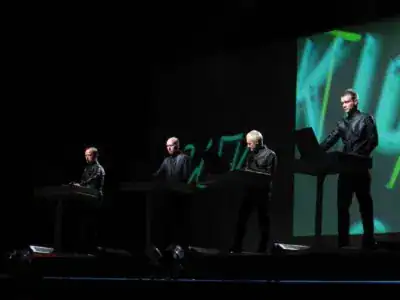
Kraftwerk performing in Kyiv, 27 September 2008.
Photo: Andriy V. Makukha / Wikimedia Commons /
CC BY-SA 3.0
Kraftwerk occupy a distinctive place in the musical history of David Bowie. The Düsseldorf group helped redirect Bowie’s attention towards contemporary European music during the mid-1970s and encouraged his growing interest in electronic instruments and new approaches to composition.
Their importance, however, is more complicated than the familiar claim that Kraftwerk provided a blueprint for Bowie’s so-called Berlin period. Bowie himself rejected such a simple interpretation and stressed that Kraftwerk’s controlled, machine-like approach differed considerably from his own methods.
The connection was instead one of artistic influence, mutual recognition and shared interest in developing new forms of modern European music.
Kraftwerk and a new European music
How Kraftwerk Influenced Modern Electronic Music – Video Essay
Kraftwerk emerged in Düsseldorf at the beginning of the 1970s around Ralf Hütter and Florian Schneider. Their early experimental work gradually developed into a distinctive musical language built around electronic instruments, repetition, controlled rhythms and technology.
Equally important was the identity behind the music. Kraftwerk increasingly created music that presented modern European life on its own terms rather than simply following established British or American rock conventions.
This independence would become particularly significant to Bowie. His interest extended beyond Kraftwerk‘s use of synthesisers to the broader possibilities represented by their music.
Autobahn turns Bowie’s attention towards Europe
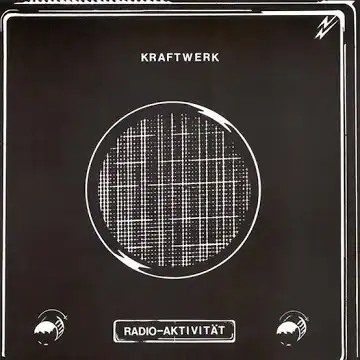
Kraftwerk achieved an international breakthrough with Autobahn, released in 1974. Its extended title track transformed motorway travel into a carefully constructed electronic musical environment.
Bowie later identified the album as an important moment in his changing musical outlook. At a time when he was moving beyond the world associated with glam rock, Kraftwerk demonstrated possibilities that existed outside conventional Anglo-American rock.
Los Angeles, 1975
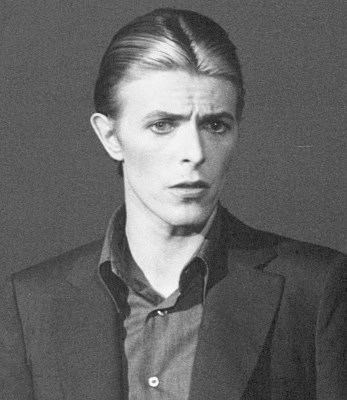
Bowie’s enthusiasm for Kraftwerk was firmly established before he moved to Europe. He later confirmed that he listened to Autobahn while travelling through Los Angeles in 1975.
This chronology is important. Bowie’s engagement with Kraftwerk did not suddenly begin when he arrived in Berlin. Their music was already part of the changing cultural and musical landscape surrounding him in the United States.
Station to Station – the transition before Berlin
![David Bowie Station To Station [Special Edition, 3CD] (2010)](https://www.davidbowieworld.com/wp-content/uploads/2014/08/david-bowie-station-to-station-special-front.jpg "David Bowie Station To Station [Special Edition, 3CD] (2010)")
The next stage of Bowie’s transformation can be heard on Station to Station, recorded in Los Angeles in 1975 and released in January 1976.
Bowie was beginning to combine the physical power of his rhythm-and-blues musicians with increasingly experimental ideas. He later described the title track as an important bridge towards the music that followed on Low.
The chronology also prevents a common misunderstanding. Bowie’s Station to Station appeared before Kraftwerk‘s Trans-Europe Express, which was released in 1977. Kraftwerk‘s later song would itself refer back to Bowie.
Bowie and Kraftwerk meet
Bowie eventually met members of Kraftwerk socially. The relationship never developed into a formal musical partnership, but the encounters reflected the mutual awareness that had developed between them.
Bowie spoke warmly about the musicians themselves and particularly about Florian Schneider. His recollections reveal that the connection was not merely an abstract admiration for Kraftwerk‘s records.
No Bowie–Kraftwerk studio collaboration
Stories later circulated suggesting that Bowie and Kraftwerk had intended to record together. Bowie explicitly rejected this version of events.
They met socially, but no serious recording project was planned.
Kraftwerk‘s place in Bowie’s history should therefore be understood as influence, mutual respect and artistic dialogue rather than direct collaboration.
Trans-Europe Express – Kraftwerk acknowledge Bowie
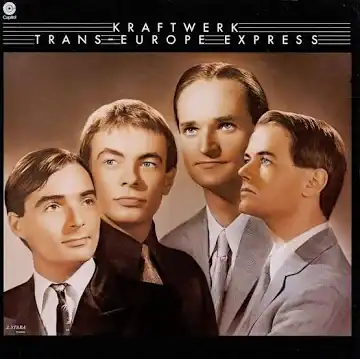
In 1977, Kraftwerk released Trans-Europe Express, extending their fascination with technology, movement, transport and European identity.
The title track made the Bowie connection explicit. Its words refer to travelling from station to station, returning to Düsseldorf and encountering Iggy Pop and David Bowie.
The reference was particularly striking because Bowie had already spent years publicly expressing his enthusiasm for contemporary German music. Kraftwerk now placed Bowie and Iggy inside their own musical vision of modern Europe.
Low – influence without imitation
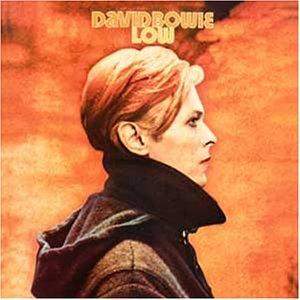
Low, released in January 1977, is frequently discussed in relation to Kraftwerk. Bowie accepted Kraftwerk’s importance but believed that comparisons between their methods and his own were often too simplistic.
Kraftwerk pursued remarkable control and precision. Bowie’s recordings operated differently. Musicians including Dennis Davis, George Murray and Carlos Alomar provided a powerful human rhythm section, while electronic treatments and experimental studio techniques were placed around and within those performances.
Low was therefore not an attempt to reproduce Kraftwerk. Bowie was creating his own hybrid language from rhythm and blues, electronic sound, improvisation and experimental composition.
The wider Düsseldorf influence
Kraftwerk were only one part of Bowie’s growing engagement with experimental German music. He was also strongly interested in NEU! and knew Edgar Froese of Tangerine Dream socially.
Bowie later recalled introducing Brian Eno to music from the Düsseldorf scene, including the work surrounding producer Conny Plank. This broader context is important because it prevents Kraftwerk from being treated as the sole German influence on Bowie’s experimental work.
Bowie also revealed that Michael Rother of NEU! had been his first choice of guitarist for Low. Bowie contacted him during the early stages of the project, but the proposed involvement did not happen.
Berlin and different creative methods
Kraftwerk remained an important reference point as Bowie entered the period associated with Low and “Heroes“, but Bowie stressed the differences between their creative methods.
He regarded Kraftwerk‘s music as carefully controlled and prepared, whereas much of his own experimental work depended upon spontaneity, unexpected studio decisions and the personalities of the musicians involved.
Bowie’s work during this period also drew upon expressionist art and film, Brian Eno, European electronic music and his longstanding relationship with rhythm and blues. Kraftwerk were an important element within that transformation, not its single cause.
V-2 Schneider – Bowie’s tribute to Florian Schneider
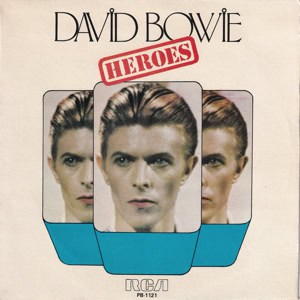
David Bowie on V-2 Schneider
“Of course.”
— David Bowie
The timing created a remarkable exchange. During the same year that Kraftwerk referred to Bowie and Iggy Pop on Trans-Europe Express, Bowie placed Schneider’s name within his own work.
A relationship of mutual recognition
The Bowie–Kraftwerk connection never required a joint recording to become historically significant.
Bowie publicly championed Kraftwerk and absorbed ideas from the wider German experimental scene. Kraftwerk, in turn, acknowledged Bowie and Iggy Pop within Trans-Europe Express, while Bowie paid his own direct tribute to Florian Schneider with V-2 Schneider.
Their relationship is best understood as an artistic conversation between musicians who remained stylistically distinct but recognised important qualities in each other’s work.
Kraftwerk‘s place in David Bowie’s history
Kraftwerk‘s importance to Bowie extends beyond synthesisers, repetitive rhythms or the convenient label of the “Berlin Trilogy“.
Their music helped turn his attention towards a contemporary European musical landscape in which technology, modernity and experimentation could exist outside conventional rock traditions.
Bowie did not simply imitate that model. He combined what he encountered with rhythm and blues, expressionist ideas, electronic experimentation, improvisation and the distinctive abilities of his own musicians.
Kraftwerk therefore did not provide Bowie with a formula to copy. They formed part of the wider European musical awakening that helped him imagine a different direction for his own work.
Article origin
This article was researched and compiled for the David Bowie Collaborations & Creative Circle Archive at DavidBowieWorld.com, documenting the influence, mutual recognition and artistic dialogue between David Bowie and Kraftwerk.
© DavidBowieWorld.com — David Bowie Collaborations & Creative Circle Archive.
