
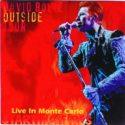


David Bowie 1996-07-16 Rotterdam ,Sportpaleis Ahoy (RAW) - SQ -7.
Label: No label
Audio Source: Audience recording
Lineage: Unknown
Taping Gear: Unknown
Taper: Unknown
Recording Location: Unknown
Total running time: 1:57:24
Sound Quality: Poor. Considerable background noise and a very dull sound.
Attendance: Approximately 9,000 (reported)
Artwork: None
Note: This is a separate RAW audience source of the same concert documented by the 1:49:06 ManOfStealth recording. The identity of the taper, recording equipment and exact recording position are unknown. The longer running time does not by itself establish that this version contains more music.
David Bowie 1996-07-16 Rotterdam, Sportpaleis Ahoy – RAW Audience Recording
David Bowie – Rotterdam, Sportpaleis Ahoy (RAW), 16 July 1996 is an unofficial audience recording of Bowie's concert during the Outside Summer Festivals Tour. This version documents the same Rotterdam performance as other circulating recordings but represents a separate audio source with its own running time, sound characteristics and incomplete recording history.
Running for 1 hour, 57 minutes and 24 seconds, the RAW recording preserves the concert in an unindexed presentation without individual track markers. Its sound is noticeably noisy and dull, making it less comfortable to listen to than some alternative sources from the same evening. Nevertheless, it remains an interesting collector's document of Bowie's 1996 performances, when the experimental music of 1. Outside was being combined with older material and songs pointing towards the forthcoming Earthling album.
Sound Quality Rating
Recorded: 16 July 1996
Venue: Sportpaleis Ahoy, Rotterdam, Netherlands
Tour: Outside Summer Festivals Tour
Track Splitting: No individual track markers
Concert Setlist
The following sequence represents the songs performed at Sportpaleis Ahoy on 16 July 1996. Because this RAW recording has no individual track markers, the numbers identify the concert's running order rather than separate audio files or indexed tracks.
01. The Motel
02. Baby Universal (Tin Machine song)
03. Look Back In Anger
04. We Prick You
05. Scary Monsters (And Super Creeps)
06. The Hearts Filthy Lesson
07. Outside
08. Aladdin Sane (1913-1938-197?)
09. The Voyeur Of Utter Destruction (As Beauty)
10. The Man Who Sold The World
11. Hallo Spaceboy
12. Breaking Glass
13. Telling Lies
14. Jump They Say
15. Under Pressure (Queen & David Bowie song)
16. "Heroes"
17. Moonage Daydream
Encore
18. A Small Plot Of Land
19. Strangers When We Meet
20. Lust For Life (Iggy Pop song)
21. White Light/White Heat (The Velvet Underground song)
22. All The Young Dudes
Rotterdam – 16 July 1996
On Tuesday, 16 July 1996, David Bowie performed at Sportpaleis Ahoy in Rotterdam during the European summer section of his 1996 tour. The concert followed the main Outside Tour, which had ended earlier that year, and featured a smaller band assembled around several musicians who had already worked with Bowie during the previous tour.
The Rotterdam performance came during an unusually productive period. Bowie had released 1. Outside in September 1995 and was continuing to develop the darker, more experimental musical direction associated with that album. At the same time, he was exploring new rhythmic approaches that would become important to Earthling in 1997.
The concert combined material from different periods of his career. Songs from the early 1970s appeared alongside compositions from the Berlin period, the Tin Machine years and his more recent albums. Rather than presenting these songs in their familiar studio arrangements, the touring group adapted them to the harder and more experimental sound of 1996.
The Outside Summer Festivals Tour
The Outside Summer Festivals Tour began at the Nippon Budokan in Tokyo on 4 June 1996. Following performances in Japan, Bowie continued through Russia and Europe, including appearances at major summer festivals and individual concerts.
The tour followed the larger production that had accompanied 1. Outside during 1995 and early 1996. For the summer performances, Bowie retained a compact five-piece band consisting of himself, Reeves Gabrels, Gail Ann Dorsey, Zachary Alford and Mike Garson.
This smaller line-up placed greater emphasis on the interaction between the musicians. Gabrels' guitar supplied abrasive textures and unusual sounds, while Garson's keyboards could move between atmospheric passages and free-form improvisation. Dorsey and Alford provided a powerful rhythmic foundation, giving the band the flexibility to perform both experimental compositions and more familiar rock songs.
The Rotterdam concert demonstrates how effectively the group could move between these different musical styles without abandoning the distinctive character of Bowie's mid-1990s performances.
The RAW Recording – A Different Audience Source
The most important distinction between this release and the other known Rotterdam recording is the audio source itself.
This version is identified as a RAW audience recording with a total running time of 1:57:24. Its lineage, original recording equipment, taper and exact recording location have not been established.
The recording is described as having considerable background noise and a very dull sound. Such limitations can obscure instrumental details and make individual voices or instruments difficult to distinguish, particularly during louder passages.
The absence of individual track markers is another important characteristic. Instead of being divided into separate songs, the surviving audio is presented without indexed track boundaries. The concert setlist therefore serves as a listening guide rather than a list of separate audio tracks.
Although the sound quality is limited, recordings of this kind can still be valuable historical documents. They preserve the atmosphere of an actual concert and may retain audience reactions, stage announcements and other details that are absent from professionally produced live albums.
Comparing the Two Rotterdam Recordings
At least two differently described audience sources of Bowie's Rotterdam performance are represented in this collection.
The other version has a running time of 1:49:06 and is credited to ManOfStealth, with mastering by Dennis Orr. Its documented recording equipment includes a Sony WM-D3 cassette recorder, and its stated lineage begins with the original master cassettes.
By contrast, the RAW version runs for 1:57:24 but has no confirmed recording equipment, taper identification or transfer lineage. Its sound is also described as substantially poorer.
The difference in running time is 8 minutes and 18 seconds. This may reflect differences in the amount of audience noise, pauses or other material retained, but the precise reason cannot be determined without comparing the recordings directly.
The longer duration should therefore not automatically be interpreted as proof that the RAW source is more complete. Similarly, the absence of track markers does not establish whether it is closer to the original cassette recording or has undergone less processing.
For collectors, the two versions are best treated as separate sources until their relationship can be established through direct audio comparison.
The Opening Songs – The Motel and Baby Universal
The concert began with The Motel, one of the most atmospheric compositions from 1. Outside. Its restrained opening and gradual musical development made it an unconventional choice for the beginning of a rock performance.
Rather than immediately presenting a familiar hit, Bowie established the darker atmosphere associated with his contemporary music. The song allowed the musicians to introduce the sound of the band through subtle instrumental passages before moving into more forceful sections.
Baby Universal, originally recorded by Tin Machine for Tin Machine II in 1991, followed. Its inclusion showed that Bowie continued to incorporate material from the Tin Machine period into his solo performances.
The contrast between these two opening songs demonstrated the range of the 1996 group, moving from an atmospheric composition to a more direct guitar-driven arrangement.
Look Back In Anger and We Prick You
Look Back In Anger, originally released on Lodger in 1979, was well suited to the aggressive sound of the Outside Summer Festivals band. Its strong rhythmic structure and energetic vocal delivery allowed the musicians to reinterpret the composition within a contemporary rock setting.
The following performance of We Prick You brought the concert back to 1. Outside. The song's mechanical rhythms, repeated vocal phrases and industrial influences reflected Bowie's interest in contemporary electronic and alternative music.
The two songs illustrate an important aspect of the 1996 repertoire: older compositions were not treated as isolated nostalgic moments but were placed alongside new material in arrangements that emphasised their musical connections.
Scary Monsters and The Hearts Filthy Lesson
Scary Monsters (And Super Creeps), released in 1980, was another composition that benefited from the band's unconventional guitar sound. Its original recording had already featured experimental textures, making it a natural fit for Reeves Gabrels' approach.
The Hearts Filthy Lesson, one of the principal songs from 1. Outside, followed. Its distorted sounds, fragmented lyrics and unsettling atmosphere made it central to the musical identity of Bowie's mid-1990s concerts.
Together, the performances connected two different stages of Bowie's experimentation with aggressive guitar music and unusual arrangements.
Outside and the Nathan Adler Concept
The title track Outside belonged to the fictional world developed for Bowie's 1995 album. The project centred on the character Nathan Adler and a fragmented narrative involving art, crime and disturbing psychological themes.
Although the complete narrative was primarily presented through the album and its accompanying material, the live songs retained their musical identity outside that conceptual framework.
The Rotterdam performance placed Outside among older compositions and newer experimental pieces, demonstrating that the album's material had become an important part of Bowie's regular concert repertoire.
Aladdin Sane – Mike Garson's Musical Signature
Aladdin Sane (1913-1938-197?) was originally released in 1973 and remains one of the compositions most closely associated with pianist Mike Garson.
Garson's original studio performance introduced an extraordinary free-jazz piano solo into a rock recording. His return to Bowie's touring group in the 1990s allowed him to revisit the composition while continuing to explore new approaches to its improvisational sections.
Within the Rotterdam setlist, Aladdin Sane connected Bowie's glam-rock years with the experimental character of his contemporary performances.
The Voyeur Of Utter Destruction (As Beauty)
The Voyeur Of Utter Destruction (As Beauty) was among the most confrontational songs from 1. Outside. Its shifting musical textures, aggressive guitar sounds and unsettling lyrical imagery made it particularly effective in a live setting.
The song allowed the musicians to explore the harder side of the album's arrangements. Its placement between Aladdin Sane and The Man Who Sold The World also demonstrated the wide chronological range of the concert.
The Man Who Sold The World
Originally released in 1970, The Man Who Sold The World had gained renewed attention during the 1990s, particularly following Nirvana's performance on MTV Unplugged.
Bowie continued to reinterpret the song in his own live performances, adapting its arrangement to the musicians and musical direction of the period.
Its inclusion at Rotterdam connected one of his earliest major compositions with the darker experimental sound of the Outside band.
Hallo Spaceboy – Industrial Rock and Electronic Music
Hallo Spaceboy was one of the best-known songs from 1. Outside. Its combination of powerful rhythms, electronic textures and forceful vocals made it a particularly effective live performance.
The song received additional attention in 1996 through Bowie's collaboration with the Pet Shop Boys, who worked on a revised version released as a single.
Its presence in the Rotterdam concert reflected Bowie's continuing interest in combining rock music with electronic dance influences.
Breaking Glass – Revisiting Low
Breaking Glass originally appeared on Low in 1977. Its compact arrangement and strong rhythmic foundation made it suitable for reinterpretation by the five-piece touring band.
The song also connected Bowie's electronic experiments of the late 1970s with the musical developments he was exploring during the mid-1990s.
The RAW recording's source information does not identify any specific cut during this performance. The presence or absence of such interruptions would require direct examination of the audio.
Telling Lies – The Road to Earthling
Telling Lies is one of the most historically interesting songs in the Rotterdam setlist because it belonged to the new material Bowie was developing during 1996.
The song would subsequently appear on Earthling, released in February 1997. Its electronic rhythms and contemporary production influences pointed towards a musical direction that would become increasingly important during the following year.
The Rotterdam performance therefore captures Bowie during the transition between 1. Outside and Earthling, making the concert especially interesting for listeners studying the development of his mid-1990s work.
Jump They Say and Under Pressure
Jump They Say, originally released in 1993 on Black Tie White Noise, brought another period of Bowie's solo career into the performance.
Under Pressure, the 1981 collaboration between Bowie and Queen, gave Gail Ann Dorsey an important vocal role. During Bowie's 1990s concerts, Dorsey performed the part associated with Freddie Mercury while continuing to play bass guitar.
Her contribution became one of the most recognisable features of the touring group's performances of the song.
"Heroes" and Moonage Daydream
The main set concluded with two compositions representing very different stages of Bowie's career.
"Heroes", released in 1977, had become one of his most enduring concert songs. Its gradual development and emotional intensity offered a strong contrast to the darker material from 1. Outside.
Moonage Daydream, originally released on The Rise and Fall of Ziggy Stardust and the Spiders from Mars in 1972, returned the concert to the glam-rock era.
The song's dramatic arrangement and prominent guitar passages allowed Reeves Gabrels to bring his own approach to material originally associated with Mick Ronson.
The Encore – A Small Plot Of Land
The encore began with A Small Plot Of Land, one of the more experimental compositions from 1. Outside.
Its complex structure and atmospheric passages made it an unconventional choice for the final section of a concert. Rather than immediately returning with a familiar hit, Bowie continued to emphasise the music that represented his contemporary artistic direction.
Mike Garson's keyboard playing was particularly important to the composition's musical character, linking its unpredictable passages with the wider experimental approach of the band.
Strangers When We Meet
Strangers When We Meet first appeared on The Buddha Of Suburbia in 1993 before being re-recorded for 1. Outside in 1995.
The song provided a more melodic contrast to the darker material performed earlier in the concert. Its inclusion also demonstrated Bowie's continuing interest in compositions that could evolve through different studio and live arrangements.
Lust For Life – The Iggy Pop Connection
Lust For Life was originally recorded by Iggy Pop for his 1977 album of the same name. Bowie co-wrote the song and played an important role in the recording project during their period of collaboration in Europe.
Its performance at Rotterdam recalled one of the most important musical partnerships of Bowie's career.
The song's driving rhythm and energetic arrangement also provided a direct contrast to the more atmospheric compositions heard earlier in the evening.
White Light/White Heat – The Velvet Underground
White Light/White Heat was originally released by the Velvet Underground in 1968. The group had been an important influence on Bowie during the period before his international breakthrough.
Bowie had performed the composition during earlier stages of his career, including the Ziggy Stardust years.
Its return to the 1996 repertoire connected the raw experimental rock of the Velvet Underground with the aggressive guitar sound of Bowie's contemporary touring group.
All The Young Dudes – The Concert Finale
The final song of the Rotterdam concert was All The Young Dudes, written by Bowie for Mott The Hoople in 1972.
The composition became one of the defining songs of the glam-rock era and remained closely associated with Bowie's songwriting.
Ending the concert with All The Young Dudes provided a familiar and energetic conclusion to a performance that had otherwise concentrated heavily on experimental material.
The 1996 Touring Band
The Rotterdam concert featured the five-piece line-up of the Outside Summer Festivals Tour.
David Bowie – Lead vocals
Reeves Gabrels – Guitar, backing vocals
Gail Ann Dorsey – Bass guitar, vocals
Zachary Alford – Drums
Mike Garson – Keyboards, backing vocals
Reeves Gabrels had been associated with Bowie since the Tin Machine period. His experimental guitar playing contributed strongly to the abrasive sound of the Outside performances.
Gail Ann Dorsey supplied bass guitar and vocals, taking a particularly prominent role during Under Pressure.
Zachary Alford provided the rhythmic foundation, while Mike Garson brought his distinctive piano and keyboard style to both the older compositions and the contemporary material.
The smaller touring line-up gave the musicians considerable freedom to reinterpret songs from different periods of Bowie's career while maintaining a consistent musical identity.
Sportpaleis Ahoy and Bowie's Dutch Audience
Sportpaleis Ahoy was one of the Netherlands' major indoor concert venues, hosting international artists and large-scale live productions.
The Rotterdam concert formed part of Bowie's long history of performances in the Netherlands, a country closely connected with his career since his earliest visits during the 1960s.
By 1996, his concerts had moved away from the large theatrical productions associated with some earlier tours. The emphasis was now on musical experimentation and the interaction between a small group of highly experienced performers.
The reported attendance of approximately 9,000 reflects the scale of the event, although the exact audience figure has not been independently confirmed.
The Historical Value of an Imperfect Recording
Not every audience recording is preserved in ideal sound quality. Some survive with substantial background noise, limited frequency range or an unfavourable balance between the musicians and the surrounding audience.
The Rotterdam RAW recording is an example of these limitations. Its dull sound and noticeable noise make it less suitable for casual listening than a clearer source from the same performance.
However, sound quality is only one aspect of a concert recording's historical value. The preservation of the event itself, the order of the songs and the atmosphere of the performance can remain important even when the recording is technically imperfect.
The absence of a documented taper or transfer history also makes it important to distinguish established information from assumptions. Without further evidence, the original recording format and subsequent handling of the source cannot be reconstructed.
About David Bowie – Rotterdam, Sportpaleis Ahoy (RAW)
The RAW audience recording of David Bowie's 16 July 1996 concert at Sportpaleis Ahoy is a separate source from the better-documented 1:49:06 ManOfStealth recording of the same performance.
With a stated duration of 1:57:24, this version preserves the concert in an unindexed presentation. Its original recording equipment, taper, lineage and recording position remain unknown.
The sound quality is poor, with substantial noise and a very dull tonal character. These limitations are important for collectors to understand, particularly when comparing this version with other circulating recordings from Rotterdam.
Musically, the concert documents a fascinating stage in Bowie's career. The repertoire combined songs from 1. Outside with earlier material from the Ziggy Stardust, Berlin and Tin Machine periods, while Telling Lies pointed towards the forthcoming Earthling album.
For collectors interested in preserving different audience sources, this RAW version remains a worthwhile historical document. Its importance lies not in superior sound quality but in its survival as another recording of a distinctive performance from Bowie's Outside Summer Festivals Tour.
