
Lulu – David Bowie Collaborator and The Man Who Sold the World

Lulu. Photo: Phil Guest / Wikimedia Commons / CC BY-SA 2.0 (editorial use).
Lulu is a Scottish singer, actress and television personality whose career has extended across more than six decades. First recognised internationally during the 1960s, she built a distinctive public identity around a powerful voice that could move between pop, rhythm and blues, soul and theatrical performance.
Her connection with David Bowie began during a decisive period in both their careers. Bowie had recently ended the Ziggy Stardust era and was exploring new possibilities as a songwriter, producer and arranger for other performers. Lulu, already an established star, was looking for material and musical direction that could reveal a different side of her voice.
Their collaboration produced Lulu’s 1974 recording of The Man Who Sold the World, written by Bowie and produced by Bowie and Mick Ronson. The single reached number three on the UK Singles Chart. They intended to continue working together, but their proposed album was never completed.
- Professional name: Lulu
- Birth name: Marie McDonald McLaughlin Lawrie
- Born: 3 November 1948, Scotland
- Profession: Singer, actress and television presenter
- Bowie collaboration: 1973–1974
- Released recordings: The Man Who Sold the World and Watch That Man
- Other recorded Bowie songs: Dodo and Can You Hear Me
- UK chart peak: Number 3 with The Man Who Sold the World
- Production: David Bowie and Mick Ronson
Early life in Scotland
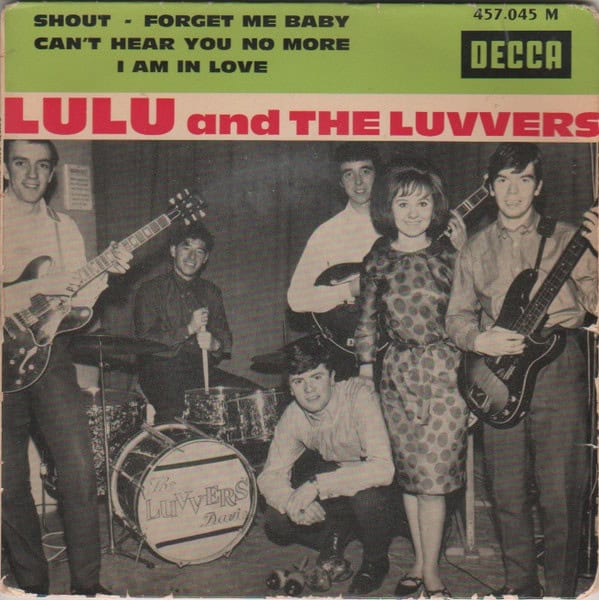
Lulu was born Marie McDonald McLaughlin Lawrie on 3 November 1948. She grew up in Scotland and began singing publicly while still a child. Her naturally forceful voice immediately distinguished her from many of the carefully polished young pop singers who were appearing in Britain during the early 1960s.
As a young performer, she sang with local groups before joining the Gleneagles, who were subsequently renamed the Luvvers. Her stage name, Lulu, became permanent as her professional career began. Despite her youth, her vocal delivery already drew heavily upon American rhythm and blues rather than conventional British light entertainment.
Lulu did not sing with the restraint commonly expected of teenage female performers at the time. Her voice could be rough, urgent and rhythmically direct. Those qualities would later attract Bowie when he considered how her recording career might be developed beyond the material usually chosen for her by record companies.
Breakthrough with Shout
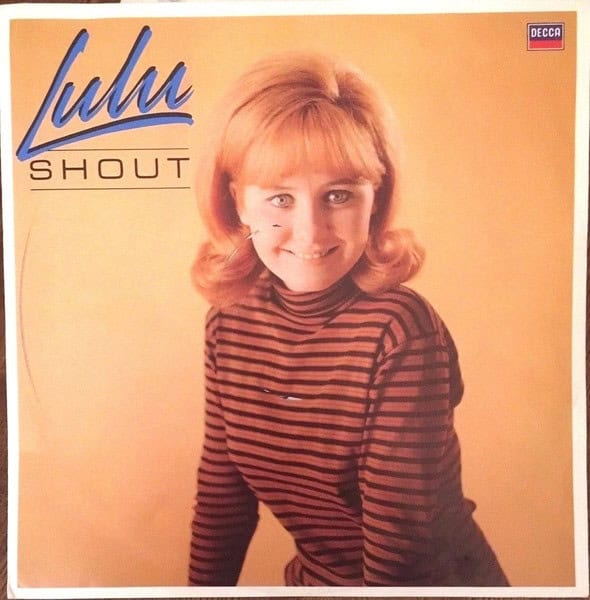
Lulu and the Luvvers achieved their first major success in 1964 with Shout, a song originally recorded by the Isley Brothers. Lulu’s recording reached number seven on the UK Singles Chart and established her as one of the most recognisable new voices in British pop.
The performance captured the youthful intensity that became her early trademark. Although she was only fifteen when the record became a hit, she delivered the song with the authority of a far more experienced rhythm-and-blues singer. Television appearances helped transform her from a Scottish club performer into a national star.
During the remainder of the decade, Lulu developed a career encompassing records, film and television. Her success was not limited to Britain. She appeared in the 1967 film To Sir, with Love alongside Sidney Poitier and sang its title song. The recording reached number one in the United States, giving her a major American success.
Television and Eurovision
Lulu performing Boom Bang-a-Bang at the Eurovision Song Contest in Madrid, 1969.
Lulu’s personality and confidence in front of a camera made television an important part of her career. She appeared regularly on British programmes and became a television host in her own right. This placed her within mainstream family entertainment while she continued to work with musicians from the pop and rock worlds.
One particularly famous broadcast occurred during Happening for Lulu in January 1969. Jimi Hendrix interrupted the planned performance of Hey Joe and led his group into Cream’s Sunshine of Your Love as a tribute to the recently separated band. Lulu watched as the live programme moved beyond its carefully controlled running order.
Later in 1969, Lulu represented the United Kingdom at the Eurovision Song Contest in Madrid with Boom Bang-a-Bang. The contest ended in an unprecedented four-way tie between the United Kingdom, Spain, France and the Netherlands. Because no tie-breaking procedure existed, all four countries were declared winners.
By the beginning of the 1970s, Lulu was therefore much more than a recording artist. She was an international entertainer with experience in pop music, film, television and live performance. That success also presented a difficulty: her accessible public image sometimes obscured the rawer and more soulful qualities that had first made her voice remarkable.
A changing musical landscape
British popular music changed rapidly during the early 1970s. The direct pop sound with which Lulu had first become famous was increasingly competing with singer-songwriters, progressive rock, heavy rock and the theatrical presentation of glam. Performers were expected not only to sing but also to project a clearly defined musical and visual identity.
Bowie was central to this transformation. During 1972 and 1973, the Ziggy Stardust concerts and the success of The Rise and Fall of Ziggy Stardust and the Spiders from Mars and Aladdin Sane had made him one of Britain’s most influential performers.
He had also demonstrated that his work could succeed in the hands of other artists. Bowie wrote and produced All the Young Dudes for Mott the Hoople and co-produced Lou Reed’s album Transformer with Mick Ronson. His interest in Lulu belonged to this wider period of writing, arranging and producing beyond his own records.
Meeting David Bowie
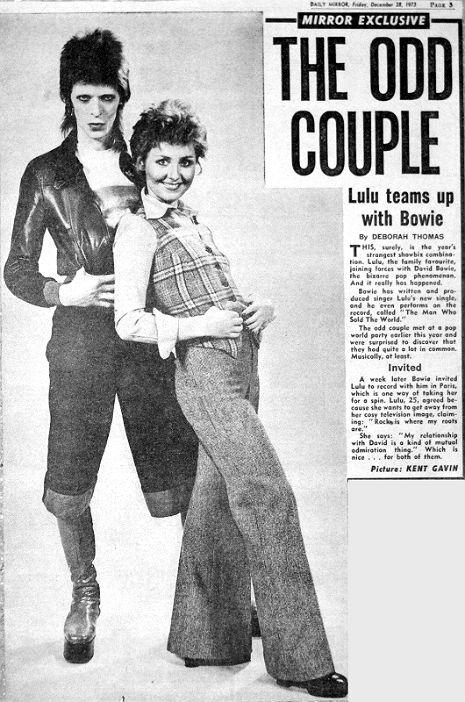
Lulu later recalled meeting Bowie after he invited her to one of his concerts. They subsequently spoke in a hotel, where Bowie proposed making a record with her. Lulu was already familiar with his work and admired the creative control he exercised over his music, appearance and changing public identity.
Bowie believed that Lulu possessed qualities as a rock singer that her existing recordings had not fully revealed. Her record-company image often emphasised accessible pop and television entertainment, while Bowie heard greater dramatic and emotional possibilities in her voice.
Their connection became personal as well as creative. Lulu has spoken openly about their brief romantic involvement, but the lasting historical importance of their relationship lies in the recordings they made and the more extensive project they hoped to complete.
Lulu on David Bowie’s understanding of her voice
“The record company wanted me to be a little pop diva but he said: ‘They don’t get your voice.’”
— Lulu
Choosing The Man Who Sold the World
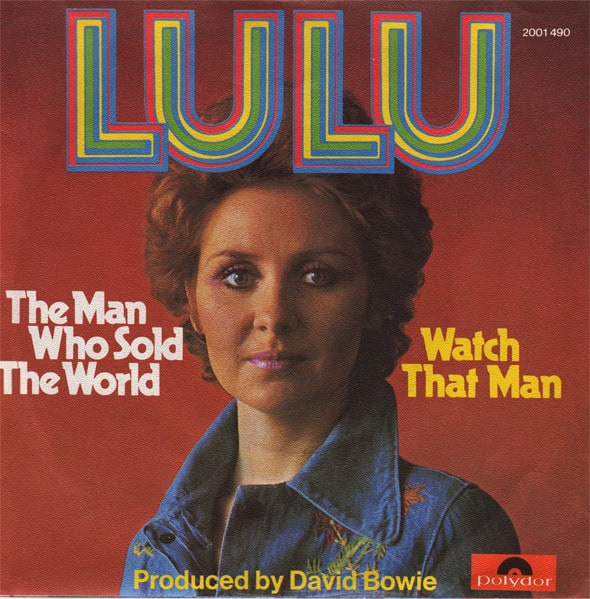
Bowie and Lulu selected The Man Who Sold the World, the title song from Bowie’s 1970 album, as the centrepiece of their first project. Bowie’s original recording had not been released as a British single and was not yet regarded as one of his universally recognised standards.
The song presents a disturbing encounter between a narrator and an apparently familiar figure. Its shifting identities and dreamlike conversation have encouraged many interpretations, but Bowie never supplied a single explanation capable of resolving all its imagery.
Lulu later acknowledged that she was not initially convinced the song was ideally suited to her voice. She also made no claim to understand its complete meaning. Nevertheless, she recognised the strength of the composition and trusted Bowie’s judgement about the direction of the recording.
Instead of asking Lulu to reproduce his original performance, Bowie helped construct a substantially different arrangement. The 1970 version had been built around an ominous guitar figure and a relatively restrained vocal. Lulu’s recording placed her voice inside a brighter, louder and more theatrical production.
The choice was important because it did not depend upon Lulu imitating Bowie. It depended upon the song remaining strong while its arrangement, vocal character and commercial presentation were changed. Bowie treated his composition as material that could acquire a new identity through another singer.
The recording sessions in France
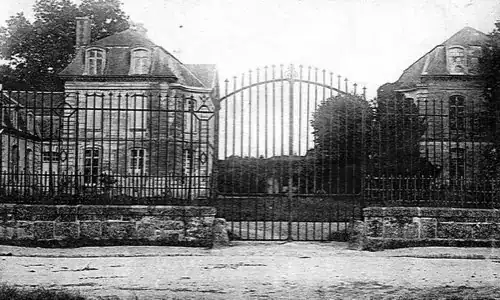
The principal work took place in July 1973 at the Château d’Hérouville in France, where Bowie was recording Pin Ups. These sessions followed his final Ziggy Stardust concert at London’s Hammersmith Odeon on 3 July 1973 and marked a period of rapid transition in his career.
Bowie and Mick Ronson produced Lulu’s recording. The musicians associated with the sessions included Ronson on guitar, Trevor Bolder on bass, Mike Garson on piano and Aynsley Dunbar on drums. Bowie contributed saxophone and backing vocals, ensuring that his involvement extended well beyond supplying the composition.
The recording was therefore made with musicians central to Bowie’s work during this period, but Lulu was not treated merely as a substitute voice. Her assertive phrasing gave the performance its own identity and separated it from the darker, more withdrawn quality of Bowie’s original.
Lulu later recalled that Bowie encouraged her to roughen the sound of her voice during the sessions. The finished vocal has a deliberately hardened edge. At quieter moments she sounds controlled and mysterious; as the arrangement expands, her delivery becomes increasingly forceful.
Bowie’s saxophone helps push the recording towards glam rock and theatrical pop, while Ronson’s guitar reshapes the musical surface of the song. The arrangement retains the composition and lyric but does not attempt to preserve every detail of the 1970 recording.
This approach reflected Bowie’s developing abilities as a producer. He understood that working with another singer required more than placing a new vocal over an established backing track. The sound, arrangement and performance had to be reorganised around the individual qualities of the featured artist.
Watch That Man
Lulu’s recording of Watch That Man, produced by David Bowie and Mick Ronson and released in 1974.
The collaboration also produced Lulu’s version of Watch That Man, a Bowie composition that had opened his 1973 album Aladdin Sane. It was released as the B-side of The Man Who Sold the World, making both sides of the single part of the Bowie and Lulu project.
Watch That Man required a different performance from Lulu. Its crowded rock arrangement and driving rhythm placed greater emphasis on energy than mystery. Where the A-side allowed her to alternate between restraint and drama, the B-side demanded that her voice remain audible and authoritative against a dense instrumental backing.
The two recordings demonstrated the range Bowie heard in her. The Man Who Sold the World depended upon atmosphere and controlled tension, while Watch That Man drew more directly upon the attack and rhythmic strength that had characterised Lulu’s singing since Shout.
Release and chart success
Polydor released The Man Who Sold the World, backed with Watch That Man, in January 1974. The single entered the UK chart on 26 January and climbed to number three in February. It remained on the chart for nine weeks.
The result was especially significant for Lulu because it marked her return to the upper reaches of the British chart after several years without a comparable UK hit. According to Lulu’s official biography, it was her first appearance on the UK chart for five years.
The single also performed successfully outside Britain. It reached the top ten in Ireland and the Netherlands and entered the chart in Belgium, demonstrating that the collaboration attracted an audience beyond the British market.
For Bowie, the record provided another important commercial success as a songwriter, producer and participating musician on another singer’s work. The single appeared while he was moving away from the Ziggy Stardust period and towards the musical and theatrical world of Diamond Dogs.
Lulu’s interpretation brought the song to listeners who may not have known Bowie’s 1970 album. Nearly twenty years before Nirvana performed it for MTV Unplugged, her recording had already shown that the composition could survive a substantial change of singer, arrangement and musical atmosphere.
Television promotion
Lulu performing The Man Who Sold the World during a television appearance in 1974.
Television played an important role in the single’s success. Lulu performed the song on Top of the Pops during its chart run. Her visual presentation reflected the dramatic character of the recording and differed noticeably from the bright pop image often associated with her earlier television appearances.
The performances showed that the collaboration involved presentation as well as sound. Bowie understood that a record could not easily be separated from the image surrounding it. Lulu’s clothing, controlled movements and direct delivery helped place the single within the visual language of contemporary glam rock.
Bowie did not appear alongside Lulu in these established Top of the Pops performances. His role was concentrated in the writing, arrangement, recording and production of the single, while Lulu promoted it on television as the featured artist.
The proposed Lulu and Bowie album
The success of the single was not intended to mark the end of the partnership. Bowie and Lulu discussed making a complete album together, and Lulu later confirmed that they planned considerably more work than the two sides of the released single.
The project could have provided Lulu with a sustained rock and soul direction while giving Bowie another opportunity to develop as a producer for a powerful female vocalist. It is important, however, not to describe it as a completed or lost album. Further recordings were attempted, but there is no evidence that a complete album was assembled.
The project developed while Bowie was undergoing another major musical transformation. During 1974 he moved away from the sound and personnel of the Spiders period, created Diamond Dogs, mounted an elaborate American tour and became increasingly interested in American soul, funk and rhythm and blues.
Lulu remained committed to her own recording, television and live work. Their schedules and locations made a sustained partnership difficult. The increasingly troubled personal circumstances surrounding Bowie during this period also made the continuation of the project uncertain.
Dodo and Can You Hear Me
An unreleased recording of Dodo attributed to Lulu and David Bowie. Lulu’s version was never officially issued.
Lulu has publicly identified two additional Bowie songs that she recorded: Dodo and Can You Hear Me. Neither recording was included on the 1974 single, and Lulu’s versions were not commercially released as part of the proposed album.
Dodo originated in Bowie’s developing material connected with ideas that eventually surrounded Diamond Dogs. Bowie recorded versions of the song during the 1973–1974 period, but it was not included on the original Diamond Dogs album.
Can You Hear Me belonged to Bowie’s growing interest in soul music and was subsequently recorded for his 1975 album Young Americans. Lulu’s recollection places their unfinished project close to Bowie’s transition from glam rock into the soul-oriented work he pursued in the United States.
The precise session histories and present archival status of Lulu’s recordings are not as fully documented as those of the released single. They should therefore not be presented as a finished sequence of album masters. What they establish is that Bowie and Lulu continued experimenting after their initial recordings and were considering a broader musical direction.
Why the collaboration ended
There was no single public dispute that abruptly ended Lulu and Bowie’s work. Instead, the partnership became increasingly difficult to sustain as their professional and personal lives moved in different directions.
Lulu had substantial television and performance commitments in Britain. Bowie increasingly concentrated on recording and touring in the United States, where his musical interests were rapidly changing. The stable circumstances required for a carefully developed joint album never materialised.
Lulu has described this as a difficult period and recalled feeling uneasy about the darker circumstances surrounding Bowie’s life while he was developing Young Americans. Her later accounts combine admiration for his creative understanding with regret that their work did not continue.
Lulu on her connection with David Bowie
“I’m a very private person, and most people only know a piece of me, but Bowie got me.”
— Lulu
The 1974 James Bond theme
Lulu performing The Man with the Golden Gun on her BBC television series Lulu, broadcast on 4 January 1975.
Later in 1974, Lulu recorded the title song for the James Bond film The Man with the Golden Gun. The composition was written by John Barry and Don Black and was unrelated to her Bowie recording despite the similarity between the two titles.
The Bond theme confirmed Lulu’s continuing visibility as an international entertainer, but it did not extend the musical direction Bowie had begun to explore with her. Her career continued to move between pop recording, television, acting and live entertainment rather than following a single stylistic path.
Career after the Bowie sessions
Lulu remained active throughout the following decades. Her ability to work across different areas of entertainment helped sustain a career that had begun during the first wave of 1960s British pop. She continued to record, perform on television and appear on stage while periodically returning to the charts.
Her recordings during the 1970s and 1980s moved between pop, soul and adult contemporary music. Although not every release matched the chart impact of her earliest hits, she retained a substantial public profile through concerts, television appearances and acting work.
Take That featuring Lulu performing Relight My Fire, released in 1993. The single became Lulu’s first UK number-one hit.
In 1993, Lulu joined Take That for a recording of Dan Hartman’s Relight My Fire. The single reached number one in the United Kingdom and remained there for two weeks. It gave Lulu her first UK number-one single and introduced her voice to another generation of listeners.
Her later work also included songwriting. Lulu was among the writers of I Don’t Wanna Fight, recorded by Tina Turner and released as a successful single in 1993. This demonstrated that her musical contribution extended beyond performing material selected by producers.
In 2000, Lulu was appointed an Officer of the Order of the British Empire for her contribution to music. She continued recording and performing in the decades that followed, maintaining one of the longest careers of any British singer to have emerged during the 1960s.
Remembering David Bowie
Lulu reflects on her friendship and musical collaboration with David Bowie.
Lulu and Bowie did not resume the large-scale partnership they had imagined in the 1970s, but Lulu has said that they remained in contact over the years. Her later reflections express gratitude for the way Bowie recognised possibilities in her voice that others had overlooked.
Following Bowie’s death in January 2016, Lulu continued to speak about the personal and artistic significance of their time together. Her memories provide a first-hand perspective on Bowie as a producer who could listen beyond another performer’s established image.
His approach to The Man Who Sold the World also demonstrated his willingness to reconsider his own work. He did not demand that Lulu preserve the mood or arrangement of his original recording. Instead, he actively participated in transforming the song into a record built around her vocal power and public presence.
Legacy of the collaboration
Lulu’s The Man Who Sold the World remains one of the earliest commercially successful reinterpretations of a Bowie composition. It appeared before the song had become a universally recognised part of his catalogue and long before Nirvana brought it to another international audience.
The 1970 Bowie recording is controlled, unsettling and inward-looking. Lulu’s version is brighter, more forceful and consciously theatrical. The contrast between them shows how an arrangement can change the emotional surface of a composition without removing the mystery at the centre of its lyric.
The single also captures Bowie at a transitional moment. Its personnel and glam-rock character connect it with the final period of the Spiders from Mars, while the further material considered for Lulu points towards the soul music he would pursue during the creation of Young Americans.
Lulu occupies a distinctive position among Bowie’s collaborators. She was neither a permanent member of his band nor simply an artist who independently covered one of his songs. Bowie selected the material, co-produced the recordings, performed on them and intended to develop the partnership into a larger project.
Their work belongs alongside Bowie’s early-1970s collaborations with artists such as Mott the Hoople, Lou Reed and Dana Gillespie, although each partnership had its own creative balance. In Lulu’s case, two already established British performers entered the studio from very different career positions and produced a recording neither would have made independently.
The unfinished nature of the proposed album remains part of the story. Dodo and Can You Hear Me suggest possible directions without allowing the project to be reconstructed as a finished work. The evidence supports a developing collaboration, not the existence of a completed album waiting to be recovered.
What survives is concise but substantial: a top-three British hit, a second Bowie composition on its B-side, additional studio work and Lulu’s first-hand recollections of an artist who understood her voice. Together, these elements secure her place within the history of Bowie’s most intriguing outside productions.
Official Website & Further Information
Lulu continues to be represented through her official website, which contains information about her career, recordings and current activities.
Official website:
www.lulu.co.uk
Article Origin
This article has been researched and written exclusively for DavidBowieWorld.com. It is based on verified recording information, official chart data and Lulu’s first-hand recollections of her work and personal connection with David Bowie.
The article distinguishes between the two recordings released on Lulu’s 1974 single, the additional songs she has confirmed recording, and the proposed collaborative album that was discussed but never completed.
© DavidBowieWorld.com — Original research and editorial text created exclusively for DavidBowieWorld.com.
