Gary Oldman – Actor and David Bowie Collaborator
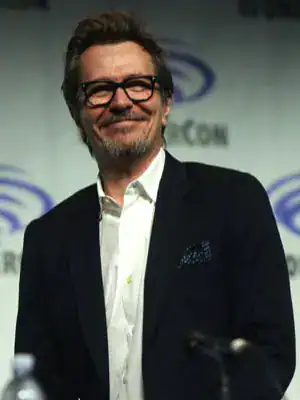
Photograph: Gage Skidmore / Wikimedia Commons / CC BY-SA 2.0 (editorial use).
Gary Oldman is one of Britain’s most acclaimed actors and a long-time friend of David Bowie. Although best known for his remarkable film career, Oldman also occupies a unique place within Bowie’s creative universe through their artistic collaborations, their enduring personal friendship and his continuing role in preserving Bowie’s legacy after his death.
Their relationship extended far beyond celebrity acquaintanceship. Over several decades Bowie and Oldman developed a friendship built on mutual admiration, shared South London roots and a fascination with artistic reinvention. They eventually worked together on film, appeared together in one of Bowie’s most talked-about music videos and remained close until Bowie’s death in January 2016.
Following Bowie’s passing, Oldman became one of the public figures most closely associated with celebrating his friend’s life and work. His moving acceptance of Bowie’s posthumous BRITs Icon Award, his performances during David Bowie tribute concerts and his many personal recollections have helped preserve an important chapter of Bowie’s history for future generations.
- Full name: Gary Leonard Oldman
- Born: 21 March 1958, London, England
- Profession: Actor, filmmaker and producer
- Bowie connection: Actor, collaborator and close personal friend
- Major Bowie collaborations: Basquiat (1996), The Next Day (2013)
- Later Bowie involvement: BRIT Awards tribute (2016), Celebrating David Bowie concerts, narrator of the David Bowie Is mobile app
Early Life
Gary Leonard Oldman was born in New Cross, South London, on 21 March 1958. Raised in a working-class family, he developed an interest in acting while still at school and later studied at the Rose Bruford College of Speech and Drama, graduating in 1979. His early years in South London gave him a background remarkably similar to David Bowie’s own upbringing a decade earlier, something both men would later recognise as one of the many experiences they shared.
Before achieving international fame, Oldman gained extensive experience on the British stage, performing in repertory theatre and with the Glasgow Citizens Theatre. His performances quickly established him as one of Britain’s most gifted young actors, admired for his emotional intensity and extraordinary ability to transform himself for each role.
Becoming One of Britain’s Finest Actors
Oldman’s breakthrough came during the 1980s with a succession of critically acclaimed performances in both theatre and film. His portrayal of Sex Pistols bassist Sid Vicious in Sid and Nancy (1986) announced him as one of the most fearless actors of his generation, while films such as Prick Up Your Ears, JFK, Bram Stoker’s Dracula, The Fifth Element and later the Harry Potter and Dark Knight series confirmed his remarkable versatility.
Throughout his career Oldman became known for disappearing completely into his characters. Whether portraying historical figures, villains or deeply sympathetic protagonists, he approached every performance with extraordinary commitment. This willingness to embrace creative risk was something David Bowie admired deeply, reflecting Bowie’s own lifelong determination never to repeat himself artistically.
The Beginning of a Creative Friendship
Gary Oldman and David Bowie first became acquainted during the 1990s, discovering not only shared professional interests but also remarkably similar personal backgrounds. Both had grown up in South London, both were fascinated by art, literature, film and theatre, and both believed that creative people should constantly challenge themselves rather than remain within familiar territory.
Oldman has often recalled that conversations with Bowie ranged far beyond music or film. They discussed books, painting, politics, cinema and the creative process itself, forming a friendship based as much on intellectual curiosity as professional admiration. Bowie admired Oldman’s fearless acting, while Oldman regarded Bowie as one of the most innovative artists of the twentieth century.
One of Bowie’s most enduring pieces of advice remained with Oldman throughout his career. Bowie encouraged him always to push beyond the point of comfort, explaining that the best creative work happens “where your feet don’t quite touch the bottom.” Oldman has frequently cited this philosophy as one of the most valuable lessons he ever received from his friend.
Basquiat (1996)
The first major public collaboration between Gary Oldman and David Bowie came in Julian Schnabel’s acclaimed 1996 film Basquiat, a biographical drama exploring the life of American artist Jean-Michel Basquiat. The film brought together an exceptional cast of actors and artists, including Jeffrey Wright, Dennis Hopper, Christopher Walken, Willem Dafoe, Benicio del Toro, Courtney Love and David Bowie.
David Bowie delivered one of the film’s most memorable performances as legendary Pop Art pioneer Andy Warhol. Rather than presenting Warhol as a caricature, Bowie portrayed him with remarkable restraint, humour and quiet intelligence, earning widespread praise from critics and audiences alike. His performance remains one of the most admired portrayals of Warhol ever committed to film.
Gary Oldman appeared as Albert Milo, a fictional painter inspired by several artists from New York’s downtown art scene. Although Oldman and Bowie did not share extensive screen time, Basquiat marked the first occasion on which they worked together professionally, bringing two of Britain’s most respected creative figures onto the same production.
The film itself reflected many themes that fascinated Bowie throughout his career: artistic ambition, fame, identity, creativity and the often-destructive relationship between the art world and commercial success. These subjects resonated deeply with both Bowie and Oldman, making Basquiat a particularly fitting project for their first collaboration.
Released in August 1996, Basquiat has since become regarded as one of the finest films about the New York art scene of the late 1970s and early 1980s. For Bowie fans, it also represents the beginning of a creative partnership that would continue over the following two decades.
A Friendship Beyond the Cameras
Following Basquiat, Gary Oldman and David Bowie grew increasingly close away from film sets and recording studios. Their friendship developed naturally through shared interests, similar life experiences and a mutual admiration for each other’s work.
Both men had grown up in South London and understood what it meant to build an artistic career from modest beginnings. Despite achieving worldwide fame in different fields, neither lost the curiosity that had driven them as young artists. Conversations frequently ranged from cinema and literature to painting, theatre, politics and contemporary culture.
Oldman has often described Bowie as one of the funniest people he ever knew. Behind the public image of the sophisticated rock icon was someone with a sharp sense of humour, a quick wit and an endless fascination with ideas. Those qualities helped form a friendship that lasted for many years and continued until Bowie’s death in January 2016.
One piece of advice from Bowie remained with Oldman throughout his career. Bowie encouraged him never to stay within his comfort zone, explaining that the best creative work begins when an artist moves beyond the point where they feel completely safe. Oldman has frequently recalled this philosophy as one of the most valuable lessons he ever received from his friend.
Reeves Gabrels and You’ve Been Around
Another, often overlooked, connection between Gary Oldman and David Bowie came through guitarist Reeves Gabrels, one of Bowie’s closest musical collaborators during the late 1980s and 1990s.
Oldman contributed guest vocals to Reeves Gabrels‘ solo album The Sacred Squall of Now, appearing on the track You’ve Been Around. The song had originally been written by David Bowie and Reeves Gabrels during the Tin Machine period before later being re-recorded by Bowie for the 1993 album Black Tie White Noise.
Oldman’s appearance on Gabrels’ version created another direct artistic link with Bowie’s catalogue. Rather than simply paying tribute, Oldman became part of the continuing creative life of one of Bowie’s own compositions, working alongside one of Bowie’s longest-serving musical partners.
Although his contribution was relatively brief, it demonstrated how closely connected Oldman remained to Bowie’s extended creative family, even outside their better-known collaborations in film and video.
The Next Day (2013)
Seventeen years after appearing together in Basquiat, Gary Oldman and David Bowie reunited for one of the most talked-about projects of Bowie’s later career: the promotional video for the title track of The Next Day. Released in May 2013, the short film immediately attracted worldwide attention for its powerful imagery, religious symbolism and controversial subject matter.
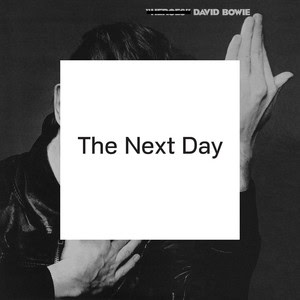
Gary Oldman and David Bowie in The Next Day promotional video (2013).
Directed by acclaimed filmmaker Floria Sigismondi, the video starred David Bowie alongside Academy Award-winning actress Marion Cotillard and Gary Oldman. Bowie personally approved the project’s creative direction, once again demonstrating his willingness to challenge expectations through provocative visual storytelling.
Oldman portrayed a charismatic but deeply flawed priest presiding over a mysterious religious institution, while Bowie appeared as an enigmatic outsider whose presence disrupts the established order. Cotillard played a woman whose ecstatic, almost mystical performance became one of the video’s most memorable visual elements.
Rather than following a conventional narrative, the film explored themes of faith, hypocrisy, redemption, guilt and spiritual authority. These subjects had long fascinated Bowie, whose work frequently examined organised religion, personal identity and the tension between public morality and private behaviour.
Within hours of its release, The Next Day became the subject of international debate. Religious organisations criticised several scenes, while others praised the film as a bold piece of artistic expression. YouTube briefly introduced age restrictions in some territories, further increasing public interest in the video.
For Bowie, controversy itself was never the objective. Instead, the film reflected his longstanding belief that art should provoke discussion and encourage audiences to question accepted ideas. Gary Oldman‘s commanding performance perfectly complemented Bowie’s own understated presence, creating one of the most memorable music videos of Bowie’s later career.
The project also demonstrated the trust that existed between the two men. Bowie rarely cast internationally recognised actors simply because they were famous; he preferred people whose artistic instincts aligned with his own. Oldman’s intelligence, theatrical background and willingness to embrace unconventional material made him an ideal collaborator for one of Bowie’s most ambitious visual works.
A Friendship Built on Mutual Respect
Away from cameras and recording studios, Gary Oldman and David Bowie maintained a warm friendship that lasted for many years. Although both enjoyed international fame, their conversations rarely centred on celebrity. Instead, they shared a fascination with literature, painting, theatre, cinema and the creative process itself.
Oldman has frequently described Bowie as exceptionally funny, recalling that their time together was filled with laughter as much as serious artistic discussion. Having grown up in neighbouring parts of South London during similar periods, they recognised many of the same cultural references and experiences, creating an immediate sense of understanding between them.
Perhaps the most enduring lesson Bowie shared with Oldman concerned the importance of creative risk. Bowie encouraged him never to remain where he felt completely comfortable, explaining that the most rewarding work begins when an artist ventures beyond familiar ground. Oldman has often credited this philosophy with influencing his own approach to acting throughout the later stages of his career.
Their friendship was built on genuine admiration rather than professional necessity. Even when they were not working together, they remained in regular contact, supporting one another’s creative projects and celebrating each other’s achievements.
David Bowie’s Final Messages
Gary Oldman was among the relatively small circle of friends who knew that David Bowie was seriously ill during the final months of his life. Bowie chose to keep his diagnosis private, sharing the news only with close family members and a handful of trusted friends.
Oldman later recalled receiving an email from Bowie that perfectly captured his remarkable sense of humour in the face of adversity. Bowie wrote that he had “some good news and some bad news.” The bad news, he explained, was that he had “the big C.” The good news, he joked, was that he had “got my cheekbones back.” The message reflected the wit and courage that friends admired throughout his life.
The two also remained in contact through regular Skype conversations. In later interviews Oldman remembered that even their final call ended with laughter, illustrating that Bowie’s humour never deserted him, even during the most difficult period of his life.
These deeply personal memories have become some of the most revealing accounts of Bowie’s final months, offering a glimpse of the private man behind the public icon. Rather than dwelling on illness, Oldman has consistently remembered his friend for his intelligence, kindness, generosity and irrepressible sense of humour.
David Bowie Is Honoured with the BRITs Icon Award (2016)
Just six weeks after David Bowie’s death on 10 January 2016, the British music industry gathered at London’s O2 Arena for the annual BRIT Awards. One of the evening’s most emotional moments came when Bowie was posthumously honoured with the prestigious BRITs Icon Award, recognising his extraordinary influence on music, culture and the arts.
Gary Oldman accepted the award on behalf of David Bowie’s family. Speaking with warmth and genuine emotion, he reflected not only on Bowie’s immense artistic achievements but also on the generosity, humour and humanity that defined him away from the public spotlight.
During his speech, Oldman described Bowie as “the very definition, the living embodiment, of that singular word: icon.” His tribute resonated deeply with the audience, many of whom rose to their feet in a prolonged standing ovation.
Oldman then introduced a moving performance of Life on Mars? by Lorde, accompanied by members of Bowie’s final touring band, including Mike Garson, Gail Ann Dorsey, Earl Slick, Gerry Leonard, Catherine Russell and Sterling Campbell. The performance became one of the defining moments of the 2016 BRIT Awards and an unforgettable tribute to Bowie’s life and music.
Celebrating David Bowie
Gary Oldman continued to honour his friend in the years following Bowie’s death by taking part in several major tribute events celebrating Bowie’s life and artistic legacy. Rather than appearing simply as a celebrity guest, Oldman participated as someone who had known Bowie personally for many years.
In January 2017, Oldman appeared at the Celebrating David Bowie concert held at London’s Brixton Academy to mark what would have been Bowie’s seventieth birthday. During the evening he performed Dead Man Walking and The Man Who Sold the World, demonstrating both his admiration for Bowie and his willingness to step outside his usual acting career.
Oldman returned for later Bowie celebrations, including performances of Tin Machine‘s I Can’t Read. Although not a professional singer, he approached these performances with sincerity and obvious affection, offering audiences a deeply personal tribute to one of his closest friends.
His appearances became a reminder that Bowie’s influence extended far beyond music, inspiring artists from many different disciplines to celebrate his work in their own way.
Narrating the David Bowie Is App
Gary Oldman‘s connection with Bowie’s legacy extended beyond concerts and public tributes. In 2019 he became the narrator of the official David Bowie Is mobile application, created to accompany the internationally acclaimed exhibition organised by London’s Victoria and Albert Museum.
Oldman’s narration guided users through Bowie’s extraordinary creative journey, exploring his music, stage costumes, handwritten lyrics, photographs, artwork and personal archive. His distinctive voice and long friendship with Bowie made him an especially appropriate choice for the project.
The app introduced a new generation of fans to Bowie’s remarkable career while preserving the spirit of one of the most successful museum exhibitions ever devoted to a popular musician.
Later Career
While maintaining his connection with David Bowie’s legacy, Gary Oldman continued to build one of the most distinguished acting careers of his generation. His portrayal of Winston Churchill in Darkest Hour earned him the Academy Award for Best Actor in 2018, while his acclaimed performance as Jackson Lamb in the television series Slow Horses introduced him to a new generation of viewers.
Despite his many achievements, Oldman has continued to speak warmly and openly about David Bowie in interviews, often describing him as one of the most inspiring people he ever knew.
Legacy
Gary Oldman occupies a distinctive place within David Bowie’s collaborative history. Although their professional collaborations were relatively few, they were consistently significant, ranging from Basquiat and The Next Day to later projects celebrating Bowie’s life and work.
Even more important was the friendship that developed between the two men. Built on shared cultural interests, artistic curiosity and mutual respect, their relationship endured for more than two decades and continued until Bowie’s death in January 2016.
Oldman’s memories have provided fans with some of the most personal and revealing insights into Bowie’s character. His recollections describe not only an extraordinary artist but also a generous, humorous and endlessly curious individual whose influence continues to inspire musicians, actors and creative people around the world.
Gary Oldman within Bowie’s Collaborative Universe
Gary Oldman‘s place within David Bowie’s collaborative universe is unlike that of any musician or producer. He represents the intersection of cinema, theatre and music, demonstrating how Bowie’s creativity reached far beyond the recording studio and into the wider artistic world.
Through their collaborations, their friendship and his continuing commitment to preserving Bowie’s legacy, Oldman remains one of the most respected members of Bowie’s extended creative circle. His contributions illustrate the deep admiration that existed between two artists who continually challenged themselves and encouraged each other to pursue new creative possibilities.
Article Origin
This article has been researched and written for DavidBowieWorld.com as part of the site’s ongoing project documenting the musicians, actors, producers and creative figures who contributed to David Bowie’s remarkable career. The page combines documented historical sources with verified interviews given by Gary Oldman over many years to present an accurate overview of his friendship and collaborations with David Bowie.
