
Neil Conti – David Bowie’s Live Aid Drummer and Studio Collaborator

Neil Conti played drums behind David Bowie at Live Aid in Wembley Stadium on 13 July 1985. His participation in the four-song set, ending with “Heroes”, placed the Prefab Sprout drummer inside one of the most widely remembered occasions in Bowie’s live history. Yet the concert was only one part of their collaboration.
Conti also contributed to “Absolute Beginners”, “That’s Motivation”, the Bowie–Mick Jagger charity single “Dancing in the Street”, and “Chilly Down” from Labyrinth. Those credits connect his playing with new studio work, cinema and the fundraising activity surrounding Live Aid.
His wider career includes the classic Prefab Sprout line-up, touring with Level 42, numerous recording sessions and a later move into production in Montpellier, France. Published interviews reveal a musician interested in songs, interaction and the character of a performance, as well as the sound of the drum kit itself.
Behind the familiar Wembley footage lies a more detailed story: earlier musical connections, quickly changing recording plans, demanding concert preparations and Conti’s own memories of playing before a worldwide television audience. This page follows those events within the larger course of his career.
- Name: Neil Conti
- Born: 12 February 1959
- Nationality: English
- Roles: Drummer, percussionist, producer and musical collaborator
- Principal band association: Prefab Sprout
- Bowie concert: Live Aid, Wembley Stadium, London, 13 July 1985
- Live Aid set: “TVC 15”, “Rebel Rebel”, “Modern Love” and “Heroes”
- Bowie-related recordings: “Absolute Beginners”, “That’s Motivation”, “Dancing in the Street” and “Chilly Down”
- Later career: Session work, live musical direction, drum-sample libraries and record production
- French studio association: Magic Circle, subsequently known as Minimoon, Montpellier
Early life: classical piano and a family connection to rock
Born on 12 February 1959, Conti grew up with music already occupying a substantial place in his life. His formal training began at the piano at approximately six years old. Classical music was an important part of the sound world he encountered as a child, before the drum kit became his main professional instrument.
In his interview with Ben Gott for Mouthy in September 2003, he described the attraction of watching his cousin Morgan Fisher perform. Fisher’s career included the Love Affair and Mott the Hoople, bringing the excitement of a working rock band unusually close to the young musician.
Mott’s drummer, Dale “Buffin” Griffin, made a particular impression. Conti remembered the energy and appearance of the performance, including Griffin’s Ludwig kit. The appeal was immediate and physical: music was happening before an audience, with the drummer visibly participating in its movement.
His change of instrument did not erase the earlier piano education. It gave him another means of participating in music. That background would become useful again when production and collaboration with singer-songwriters occupied more of his career.
Finding a place in London’s musical life
Conti’s publisher’s biography places his move to London in 1979. Before Prefab Sprout brought him a recognisable band identity, he developed practical experience across different kinds of live and recorded music. His early associations included Kokomo, Linx and the Tropicana Steel Band.
That varied apprenticeship exposed him to styles in which rhythm worked differently. Rock, funk, reggae and calypso did not ask for interchangeable drum parts. Each involved a particular relationship between the instruments, the singer and the movement of the song.
The London work also placed him among musicians moving between clubs, bands and studios. Some engagements offered continuity; others demanded that an unfamiliar repertoire be learned quickly. This was the working environment from which his later band and session career developed.
Conti’s subsequent opportunities make more sense against that background. By the time Bowie appeared in his professional history, he had already spent years playing with others. The famous engagement did not create the musician from nothing; it brought his existing experience into a highly visible setting.
Joining Prefab Sprout: an opportunity heard on the radio
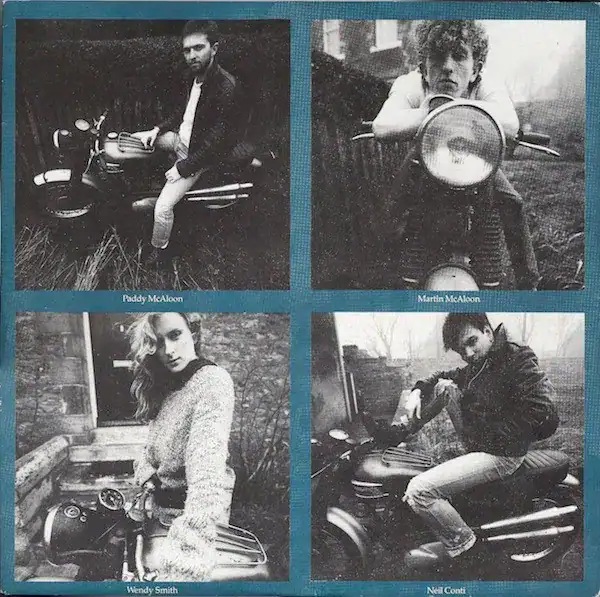
Prefab Sprout’s familiar quartet brought Conti together with Paddy McAloon, his brother Martin McAloon and vocalist Wendy Smith. Paddy supplied the songwriting and lead voice, Martin the bass, and Smith a vocal presence closely associated with the group’s recorded identity.
A contemporary interview with Martin, originally published in International Musician in July 1985, described the drummer’s recruitment. After hearing a radio interview mentioning that the band needed a permanent drummer, Conti contacted them and put himself forward.
The account presents him as an active participant in finding the opportunity. He recognised a possible place for himself and made the approach. His arrival helped establish the line-up associated with the group’s best-known run of albums.
The band’s first album, Swoon, belongs to an earlier stage of its recording history. Conti’s sustained album association begins with the period leading to Steve McQueen. Describing him as a member of the classic quartet is more precise than calling him a founder of the original group.
Steve McQueen: the record that connected Conti and Dolby
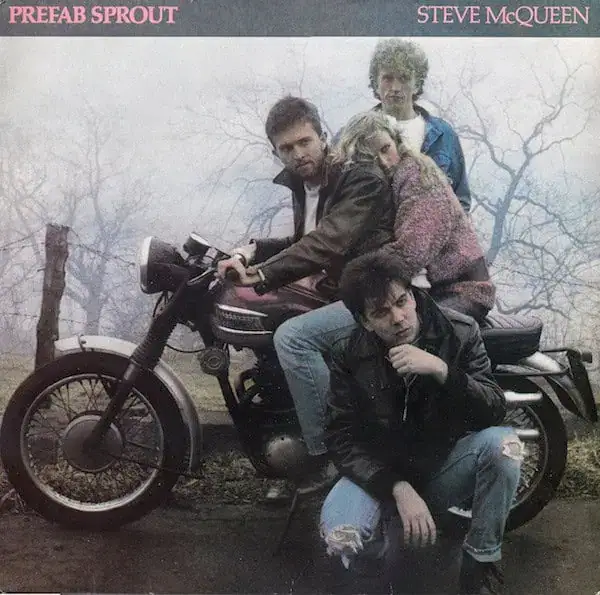
Steve McQueen, released in 1985, united the band with producer Thomas Dolby. Its songs include “Faron Young”, “Bonny”, “Appetite” and “When Love Breaks Down”, providing a substantial introduction to the quartet’s sound.
The record also created an important professional link in Conti’s Bowie story. Dolby and the drummer were already working together before the Live Aid ensemble was assembled. Their association had a concrete musical basis, grounded in making an album rather than simply sharing a place in the 1980s pop landscape.
In a Record Mirror interview published on 31 August 1985, Paddy explained his interest in Dolby’s technical knowledge and different perspective on arrangement. He wanted someone who could contribute ideas about the recorded presentation of his songs.
Martin’s contemporary account gives another view of the collaboration. He described the importance of the atmosphere Dolby created and the band’s willingness to retain a performance with a convincing feel. The group’s developing sound was therefore a matter of playing and judgement as well as equipment.
A drummer who thought in terms of music
Conti’s own description of his identity is a useful guide to the priorities behind his work. In his published interview with Ben Gott, he placed his interest in music above a narrow identification with the drum kit.
Neil Conti on being a musician
“I’ve never felt like a natural drummer, just a musician.”
— Neil Conti, interview by Ben Gott, Mouthy, September 2003. Read the interview.
It is an explanation of how he saw himself, rather than a dismissal of drumming. His instrument remained central to his professional life, but he understood its contribution within a song and a group of musicians.
This perspective gives a useful distinction between musical identity and a list of credits. The credits establish where he played. His words help explain what interested him about playing: responding to a voice, a melody or the combined performance.
From soundtrack sessions to Bowie’s creative circle
Conti’s work with Bowie included the development and recording of material for Absolute Beginners. The project brought him into a group with guitarist Kevin Armstrong, bassist Matthew Seligman and keyboard player Steve Nieve.
The history involved more than a single studio visit. Accounts of the earlier work identify Abbey Road, while later recording and production activity took place at Westside Studios. Treating the entire project as one uninterrupted session would conceal that development.
In a public comment signed with his name on Chris O’Leary’s Pushing Ahead of the Dame website, Conti identified Andy Ferguson as the person who assembled the Abbey Road band. Ferguson was associated with Dolby’s management and EMI. The comment also clarified Armstrong’s status as a guest musician with Prefab Sprout.
That correction helps explain the overlapping connections. Armstrong and Conti had musical contact through the Sprout setting, while Seligman and Dolby were part of another established relationship. Those links provided a practical route into the Bowie work.
“Absolute Beginners”: making a new Bowie recording
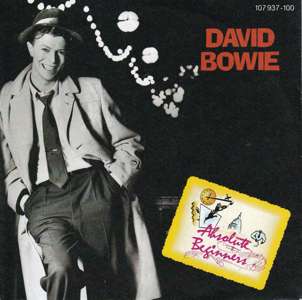
Conti played drums on the title song for Julien Temple’s Absolute Beginners, the film adapted from Colin MacInnes’s novel about late-1950s London. Bowie appeared in the film as Vendice Partners and contributed music to its soundtrack.
The recording’s personnel place Conti alongside the musicians involved in the earlier sessions, with additional contributions helping develop the finished arrangement. Rick Wakeman supplied additional piano, Luis Jardim percussion and Janet Armstrong backing vocals.
The presence of both drums and separate percussion gives a fuller picture of the rhythm section. Conti’s credit identifies his role, while the other instruments help explain how the finished recording was assembled around Bowie’s voice.
“Absolute Beginners” also had several public forms: the extended soundtrack recording, a shorter single presentation and versions serving the film. The song could be encountered as part of the cinema experience or independently on a record.
Its importance to Conti’s Bowie history is straightforward. This was participation in a new recording, with his drumming forming part of the released performance. It adds a substantial studio contribution to a biography otherwise easily dominated by the Wembley appearance.
“That’s Motivation” and Bowie’s musical film role
David Bowie as Vendice Partners performing “That’s Motivation” in Absolute Beginners (1986). Neil Conti played drums on the recording.
Conti’s soundtrack work also included “That’s Motivation”, another number associated with Bowie’s character in the film. It belongs to the same project but has a different dramatic purpose from the romantic title song.
The film uses musical numbers to present character and action. The recorded performance is part of the scene’s construction, supplying movement and emphasis beneath what the audience sees. Conti’s work therefore participates in a combination of music and cinema.
This aspect of his credit deserves its own place. A soundtrack musician can be present in a film’s musical identity while remaining invisible on screen. The featured performer and the instrumental ensemble contribute in different ways to the finished sequence.
The song also helps establish the scope of the collaboration. Conti was involved in more than one item recorded for Absolute Beginners. Those contributions should be retained even when the title track receives most of the attention in accounts of Bowie’s 1980s work.
29 June 1985: “Dancing in the Street”
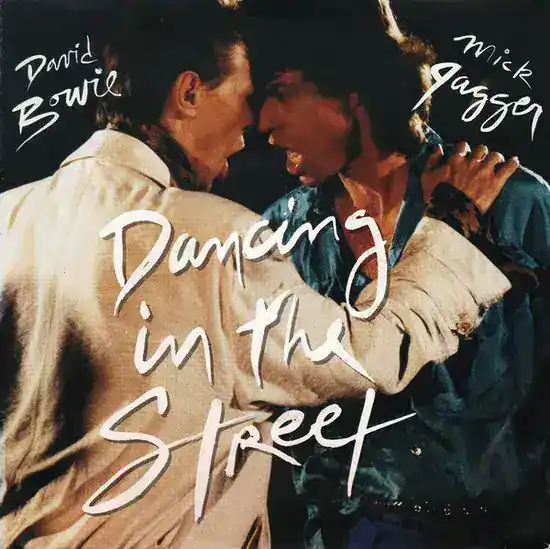
On 29 June 1985, Bowie and Mick Jagger recorded their version of “Dancing in the Street” at Westside Studios in London. The project supported the Live Aid fundraising cause and drew on the musicians working around the Absolute Beginners sessions.
Conti played drums, Seligman bass, Armstrong guitar and Nieve keyboards. Clive Langer and Alan Winstanley were the producers. The new recording took a song already associated with Martha and the Vandellas and placed it inside a rapidly organised charity project.
The production history explains why the studio and concert stories overlap. These musicians had already worked together around Bowie before the Wembley event. The charity recording was a further engagement within that active circle.
Langer and Winstanley later discussed the session in an interview with SuperDeluxeEdition. Their account confirms that the title song and the Jagger collaboration were part of a notably productive period of work. It also places Conti among musicians known to the production team.
Mark Saunders remembers Conti organising the band
Engineer Mark Saunders left an eyewitness account of the recording. He described the musicians listening to the song and developing their parts, with Conti helping focus the work before the performance was recorded.
Mark Saunders on Neil Conti in the studio
“I remember Neil Conti, confidently taking on the role as bandleader”
— Mark Saunders, session recollection reproduced by David Bowie News, 2 January 2023. Short excerpt. Read the account.
This is a specific observation about what Conti did during the session. It adds something that a conventional personnel list cannot show: his participation in bringing the musicians together around an arrangement.
Saunders also remembered the excitement of recording the group with the singers present. His account places the performance inside a busy studio day, as plans for the recording and the subsequent film shoot came together.
A broken snare and Conti’s memory of Bowie
In his interview with Graham Findlay, Conti recalled a promising performance interrupted by a broken snare cord. The repair allowed recording to continue. He also remembered Bowie’s courtesy in the studio.
Neil Conti remembers Bowie
“Bowie was also, as always, very polite, a real gentleman.”
— Neil Conti, interview by Graham Findlay, reproduced by Sproutology. Read the interview.
The recollection brings a practical studio incident into the record’s history, alongside the public image of two famous singers working together.
From the studio to the Docklands video
David Bowie and Mick Jagger in the “Dancing in the Street” video (1985), directed by David Mallet and filmed in London’s Docklands. Neil Conti played drums on the recording.
The record was accompanied by a video directed by David Mallet and filmed at Millennium Mills in London’s Docklands. The production company’s account describes the rapid assembly of a crew and location for the two singers.
The film gave the collaboration a readily recognisable public form. Bowie and Jagger performed for the cameras while the recorded track supplied the musical accompaniment. Conti’s contribution was principally heard rather than presented as an on-screen performance.
The original idea of a live transatlantic collaboration had encountered the practical problem of transmission delay. A prerecorded presentation provided another way for the duet to participate in the event, allowing the singers to make their contribution together in advance.
The single subsequently reached number one in the UK. Its chart success extended the project beyond the day of Live Aid, while the video remained a distinctive visual record of the pairing.
Thomas Dolby assembles the Wembley ensemble
Dolby’s account of preparations for Live Aid supplies the clearest published explanation of how Conti entered the concert band. In an interview with The Quietus, published on 5 June 2009, he described being asked to help put the musicians together.
Thomas Dolby on recruiting the drummer
“I recruited Neil Conti the Prefab Sprout drummer”
— Thomas Dolby, interview with The Quietus, 5 June 2009. Short excerpt. Read the interview.
The appointment connected with a working relationship already established through Prefab Sprout. Seligman and Armstrong were also part of the group, bringing further continuity from the recording activity around Bowie.
Other players and backing singers completed the ensemble. The aim was to create a band for the occasion, with enough instrumental and vocal range to support a short selection of songs from different parts of the catalogue.
Rehearsals between film commitments
Dolby remembered preparations taking place around Bowie’s filming commitments on Labyrinth at Elstree. Available rehearsal time was limited, and the choice of repertoire continued to change before the appearance.
His recollection identifies “Loving the Alien” as material Bowie initially considered. The eventual set drew on other songs, with Dolby remembering the final sequence being settled close to the concert.
The preparation therefore involved more than learning four fixed numbers from the outset. The musicians had to respond as the performance developed, fitting the work around the singer’s other activities.
For a short televised engagement, beginnings and endings are part of the arrangement as much as the music within each song. The band needed a shared understanding of how one number would finish and the next would start, keeping the appearance within its allotted space.
Live Aid, Wembley Stadium, 13 July 1985
Live Aid‘s principal concerts took place at Wembley Stadium in London and John F. Kennedy Stadium in Philadelphia on 13 July 1985. The event grew from the famine-relief campaign associated with Bob Geldof and Midge Ure.
Bowie’s contribution at Wembley consisted of “TVC 15”, “Rebel Rebel”, “Modern Love” and “Heroes”. The sequence brought material from several periods into one compact appearance, with Conti on drums throughout the set.
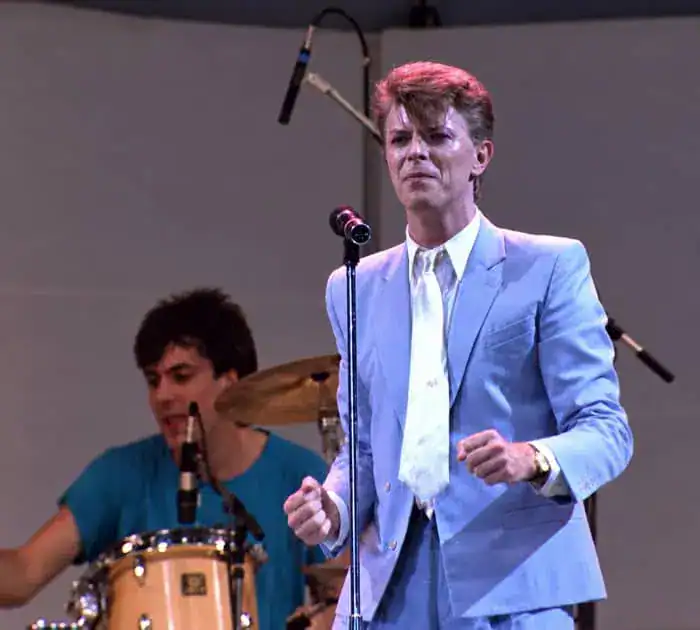
The complete line-up was:
- David Bowie: vocals
- Kevin Armstrong: guitar
- Thomas Dolby: keyboards
- Matthew Seligman: bass
- Neil Conti: drums
- Pedro Ortiz: percussion
- Clare Hirst: saxophone
- Tessa Niles and Helena Springs: backing vocals
This was an event-specific ensemble. Its combination of guitar, keyboards, saxophone, percussion and backing voices gave Bowie different musical resources from a simple guitar–bass–drums group.
Four songs from different chapters of Bowie’s career
“TVC 15”
David Bowie performing “TVC 15” at Live Aid, Wembley Stadium, London, 13 July 1985, with Neil Conti on drums.
The opening song came from Station to Station, released in 1976. Its presence established that the appearance would reach beyond Bowie’s most recent singles. Dolby’s keyboard role and the rhythm section formed part of the new live presentation of an older composition.
“Rebel Rebel”
David Bowie performing “Rebel Rebel” at Live Aid, Wembley Stadium, London, 13 July 1985, with Neil Conti on drums.
The second number brought the Diamond Dogs period into the set. Its central riff provided an immediate point of recognition. At Wembley, that familiar material was delivered by the 1985 group, with the instrumental colours available in this particular line-up.
“Modern Love”
David Bowie performing “Modern Love” at Live Aid, Wembley Stadium, London, 13 July 1985, with Neil Conti on drums.
The third song connected the performance with Let’s Dance and the recent period in which Bowie had reached a wider mainstream audience. It supplied another change of character before the closing number.
“Heroes”
David Bowie performing “Heroes” at Live Aid, Wembley Stadium, London, 13 July 1985, with Neil Conti on drums.
The final song originated in 1977, but its place at Live Aid gave it a different public setting. Its performance became connected with a day devoted to collective action and famine relief, extending the composition’s meaning through the occasion.
Across the four numbers, Conti was participating in the live history of existing songs. The Wembley credit belongs to these performances. His drumming on new Bowie-related recordings is a separate part of the collaboration, with its own personnel and dates.
Heat and slippery drumsticks at Wembley
Conti remembered the stage heat and his sticks slipping. He associated those difficulties with the break towards the end of “Heroes”.
Neil Conti remembers the heat at Live Aid
“I was drenched by the time we got to Heroes.”
— Neil Conti, interview by Graham Findlay, reproduced by Sproutology. Read the interview.
His account adds the player’s physical experience to a performance usually remembered through its music and public setting.
The famine film changes the atmosphere backstage
David Bowie introduces the CBC film about the Ethiopian famine at Live Aid, Wembley Stadium, London, 13 July 1985.
After the set, Bowie introduced footage of Ethiopian famine victims accompanied by the Cars’ “Drive”. His official website confirms that he gave up space in his programme to allow the film to be shown.
Conti remembered returning to a dressing room where the broadcast was playing on television. The exhilaration of coming offstage gave way to the impact of the footage. His account places the humanitarian purpose of the event inside the musicians’ own experience of the day.
The transition is an important part of the appearance’s history. The musical performance drew attention; the film redirected that attention towards the crisis behind the fundraising. Remembering the concert without this ending leaves out a deliberate part of Bowie’s contribution.
Promoter Harvey Goldsmith’s recollection, reproduced on Bowie’s official site, also connects the singer with the decision to show the footage. It supports the historical sequence without assigning a specific amount of money raised to one song or musician.
The title song becomes a major single
“Absolute Beginners” entered the UK singles chart in March 1986 and reached number two. Its success gave the recording a wide public presence beyond the film and made it another important release in Conti’s session history.
The result also complicates a simple description of Bowie’s mid-1980s career. Much of the period’s retrospective attention centres on albums and large tours, but soundtrack work produced music that had its own commercial and artistic identity.
For Conti, the single joined a growing body of performances heard by audiences who might never have known his name. Record sleeves and personnel information make that contribution visible within a release promoted primarily through its lead artist.
Later Bowie performances gave the composition an additional live history. Those renditions involved other musicians and arrangements; they extended the song’s life without changing the personnel of the original recording.
“Chilly Down”: returning to Bowie-related film music
“Chilly Down” from Labyrinth (1986), written by David Bowie and performed by the voices of the Fireys, with Neil Conti on drums.
The Labyrinth soundtrack, released in 1986, includes Conti’s drumming on “Chilly Down”. The credited instrumental group brings him together again with Seligman and Armstrong, alongside keyboard player Nick Plytas.
Bowie wrote the song, but the released vocals were performed by Charles Augins, Richard Bodkin, Kevin Clash and Danny John-Jules, associated with the film’s Firey creatures. The track consequently connects Conti to a Bowie composition without presenting Bowie as its finished lead singer.
The distinction is important to the soundtrack’s character. Its songs serve different scenes and performers within Jim Henson’s fantasy film. The music is part of the fictional world as well as a separately released album.
The recording also extends the history of this instrumental partnership. The musicians who had worked around Absolute Beginners and Live Aid were involved in another film-related song, now serving a very different scene and group of voices.
1987: taking over drums for Level 42
Level 42 performing “Children Say” on TopPop, 2 November 1987, featuring Neil Conti on drums.
In 1987, Conti joined Level 42 for touring work following Phil Gould’s departure. A contemporary notice in Making Music announced the change and identified the band’s forthcoming American dates with Tina Turner.
The appointment took him into a different established ensemble. Level 42 already had a recognisable live identity, with bassist Mark King and keyboard player Mike Lindup central to its sound.
His Bowie work and Prefab Sprout association were mentioned in the period reporting, showing that both had become useful points of identification. By then, the Wembley appearance was already part of the public description of his career.
Touring with Level 42 did not replace every other engagement. Conti was still moving between projects, and the contemporary press described a player whose schedule included sessions, promotional appearances and live work with more than one group.
Individuality and the relationship between players and machines
A December 1987 interview by Geoff Nicholls explored Conti’s ideas about drumming at the time of the Level 42 engagement. He discussed the importance of individuality and the way a rhythm section should be heard together.
Neil Conti on individuality
“I like the idea of people not knowing the rules. Then they’re more individual.”
— Neil Conti, interview by Geoff Nicholls, Making Music, December 1987. Read the interview.
The interview placed those views within the recording technology of the period. Click tracks and sequencers could help organise a performance, but Conti questioned assessing every instrument only by its exact alignment with a reference pulse.
His point concerned the musical result: whether the combined rhythm section worked. The small accents and variations within a human performance could form part of its character rather than simply being faults to remove.
From Langley Park to Memphis: Prefab Sprout in 1988
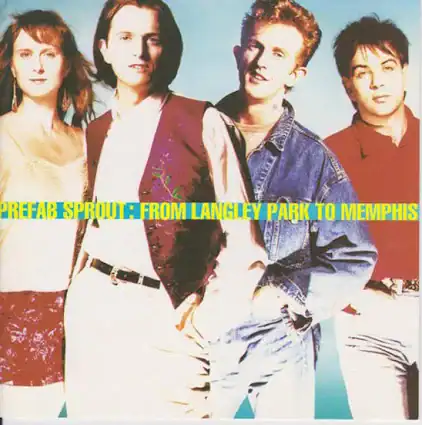
Prefab Sprout released From Langley Park to Memphis in 1988, with Conti remaining part of the quartet. The record broadened the group’s public reach through songs including “Cars and Girls” and “The King of Rock ’n’ Roll”.
The album also featured contributions from Stevie Wonder and Pete Townshend. Wonder played harmonica on “Nightingales”, while Townshend supplied acoustic guitar on “Hey Manhattan!”. The guest appearances sat within a record whose main identity remained the band’s own songs and performances.
For Conti, the album represents an important distinction from his outside session work. Here he was part of a continuing band, contributing to another stage in the development of a familiar musical partnership.
Its place in the chronology also corrects occasional confusion in abbreviated credit lists. The album’s public release belongs to 1988. Dating a recording only by a year attached to a session listing can otherwise give a misleading picture of when audiences first encountered it.
Protest Songs: the delayed release of an earlier recording
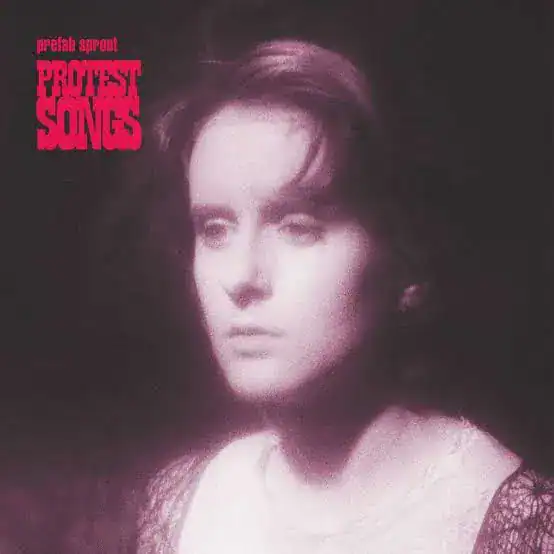
Protest Songs reached listeners in 1989, although Prefab Sprout had recorded it in 1985. The delay places the album after From Langley Park to Memphis in release order but before it in the band’s recording history.
That difference is relevant to Conti. The performances belong to the same broad period as Steve McQueen and the Bowie work, even though their public appearance came several years later.
The album preserved the quartet in a recording setting with a different scale from the more elaborate presentation of Langley Park. Its songs include “Dublin”, “Life of Surprises” and “The World Awake”, extending the available picture of the band’s writing and playing.
Release history can hide this kind of relationship. A listener receiving the albums in sequence might reasonably assume the musicians had made them in that order. The earlier recording date restores the proper context without treating the later release as a new 1989 session.
Backstage: creating a live meeting place
Conti and Raye Cosbert established the Backstage club project in 1989. Its history includes activity at the Borderline in Soho and subsequently the Jazz Café in Camden.
The project provided a setting in which musicians and singers could play together with a house band. Conti’s publisher identifies his musical leadership as a central part of the enterprise, alongside its presentation of emerging performers.
This was a different form of professional activity from making an album with an established group. A continuing club night required a musical framework that could accommodate changing participants and material. The house band helped give those performances shape.
Conti’s involvement therefore belongs to his work as an organiser as well as an instrumentalist. It placed him in a position to bring other musicians into a shared setting, applying experience gained through years of band and session work.
Jordan: The Comeback and the band’s wider ambitions
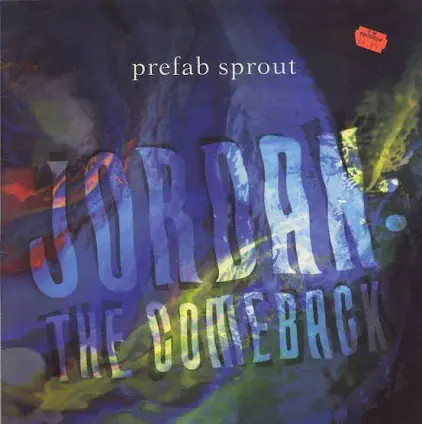
Prefab Sprout’s Jordan: The Comeback was released in 1990, with Dolby returning as producer and Conti credited on drums and percussion. The album contains nineteen songs, giving the quartet a broader canvas than a compact collection of singles.
Its programme moves through contrasting material, including “Looking for Atlantis”, “Machine Gun Ibiza”, “We Let the Stars Go” and the title song. The sequence demonstrates the range of Paddy McAloon’s writing within one project.
For Conti, the album extends a musical relationship already established on earlier records. It brings the same central players into a collection whose changes of character require the ensemble to move between different kinds of arrangement.
The return of Dolby also reconnects a professional relationship important to the Bowie story. Their work together was not confined to the album preceding Live Aid. It continued within the band’s later catalogue.
Funky Drums from Hell: grooves for other producers
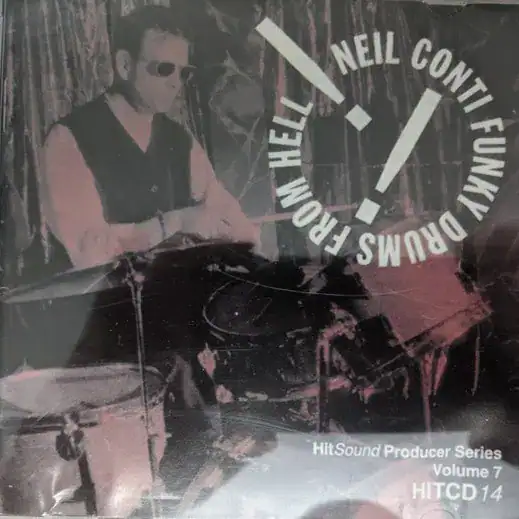
Conti’s playing also became material for a drum-sample collection. Funky Drums from Hell was reviewed by Nigel Lord in Music Technology in March 1993.
The review described a collection divided between developing grooves and shorter loops, with different recorded drum sounds and additional hi-hat patterns. It offered producers rhythmic material rather than complete songs.
The publisher’s product information identifies recording at Metropolis Studios with engineer Daniel Lazerus. The collection included longer performances from which users could select passages, as well as individual hits for further adaptation.
This gave Conti’s drumming another route into record-making. Instead of attending every eventual session personally, he supplied performances that other producers could place within new material. A recorded groove could be edited, repeated or combined with instruments he had never heard.
Session records in the 1990s

Conti’s outside recording work continued alongside and beyond Prefab Sprout. His documented credits include Paul Young, Alison Moyet, Sandie Shaw, Jean-Louis Murat and Deep Forest, among a wider range of artists.
Annie Lennox‘s Medusa, released in 1995, supplies a specific later example. Conti is listed among the album’s drummers, within a personnel group that also includes programming and other percussion contributions.
The credit establishes participation without assigning every drum part on the album to him. This is important in productions where different musicians and methods can be used across the same release.
Such sessions placed him in projects with their own lead voices, production teams and musical priorities. The work required the ability to contribute within an unfamiliar setting, while leaving the artist’s identity at the centre of the recording.
Leaving the regular line-up and returning in 2000
Prefab Sprout performing “When Love Breaks Down” at the Fleadh Festival in 2000, with Neil Conti back on drums.
Conti’s regular period with Prefab Sprout ended during the 1990s. He did not play on Andromeda Heights, released in 1997, but returned for the band’s live appearances in 2000.
The returning line-up included Paddy and Martin McAloon, with Jess Bailey on keyboards. Wendy Smith was absent from these shows. This was a later live configuration rather than a complete restoration of the classic quartet.
Martin’s subsequent interview with Bluebird Reviews provides first-hand context. He remembered Paddy unexpectedly proposing a return to the stage and described the group’s comparatively stripped-down approach. The intention included revisiting songs through arrangements that did not always reproduce the records exactly.
That account places Conti’s return within a practical musical decision. The drummer was part of a renewed live group built around songs the musicians already knew, with room to alter their presentation.
The return did not lead to his participation in The Gunman and Other Stories, released in 2001. A reunion for live work and the personnel of a subsequent album were separate developments in the band’s later history.
Montpellier: a new production base
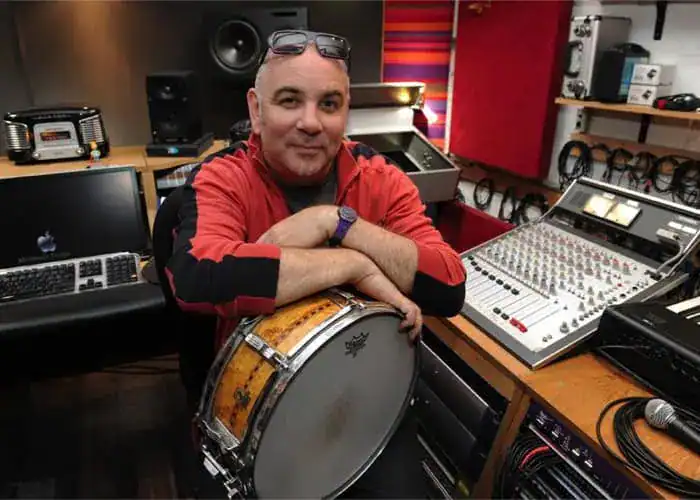
Conti moved to France and developed a studio career in Montpellier. His publisher dates the opening of Magic Circle Studio, subsequently known as Minimoon, to 2002.
The studio created a different working environment from touring and visiting recording sessions. Conti could become involved with the development of an artist’s project over a longer period, contributing to its arrangements and recorded presentation.
In a French-language interview published by Anglais Montpellier, he described the work as collaborative, supporting musicians through the different stages of making an album. The account connects his later activity with the experience accumulated through earlier engagements.
Engineer Jeff Fernandez appears in published accounts of the studio’s work. The partnership is also mentioned by artists who recorded there, offering evidence of the practical team behind the productions.
The Lazy Sundaze and a continuing live community
Neil Conti & Lazy Sundaze featuring Jimmy Elms performing “Use Me” at Plan de l’Om, Montpellier, May 2025.
Conti’s French activity included The Lazy Sundaze, a group associated with musicians from Montpellier and its region. Professional listings describe its music through funk, soul and jazz.
The project provided a continuing setting for ensemble playing alongside studio production. Its public identity centred on Conti bringing musicians together, giving this later period a live dimension as well as a recording one.
Concert documentation from Le Jam records appearances by the group, including a performance with British singer Katherine Ellis. The venue’s listings establish named engagements rather than leaving the project as a general biographical reference.
The group’s setting differs considerably from the Wembley appearance, but it belongs to the same musician’s continuing work. Smaller venues allow another relationship between players and audience, with the ensemble rather than an international broadcast defining the occasion.
Justine Blue: an artist describes the studio collaboration

Singer Justine Blue supplied a later perspective on working with Conti and Fernandez. Material published by her label describes an initial EP, subsequent album work and appearances with The Lazy Sundaze.
Her account identifies Conti’s assistance with backing-vocal arrangements, percussion and aspects of English-language delivery. It presents the relationship through practical contributions rather than a list of famous names associated with the producer.
The recording work therefore involved more than placing microphones around a drum kit. Conti could help with the shape of a song and the way its voices were presented, applying experience from earlier musical settings to another artist’s material.
This is a useful example because the evidence comes from a collaborator describing her own project. It supplies a view of the producer’s work from the person receiving that support.
Official releases preserve the Live Aid performance
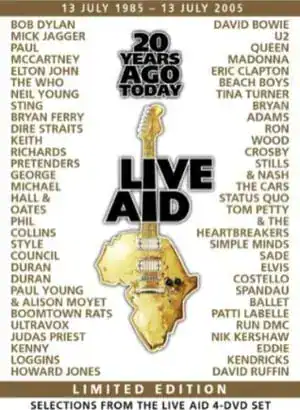
The official Live Aid four-DVD collection released in 2004 included Bowie’s Wembley set. His website confirmed the presence of all four songs, alongside other material connected with his contribution to the event.
The release gave the performance a new audience. People who had not watched the original transmission could encounter it as archived concert footage, while returning viewers could examine the complete sequence more closely.
For Conti, the film is an enduring record of his place in the ensemble. It preserves the occasion more directly than a later list of engagements, showing the band at work around the singer.
Bowie’s official website returned to the performance for its fortieth anniversary in July 2025. That notice again identified the date, four-song programme and famine film, confirming the continuing place of the appearance in the artist’s official history.
Neil Conti in Bowie’s collaborative universe
Conti’s Bowie association was concentrated but varied. It includes new recordings, music for cinema, a charity single and a stadium appearance whose broadcast became part of an international public memory.
The work places him among musicians brought into Bowie’s projects through overlapping professional relationships. Dolby, Seligman and Armstrong are important to that setting, while the producers and engineers supply further perspectives on how the recordings were made.
His contribution becomes clearer when those projects are considered individually. “Absolute Beginners” establishes a major studio performance. “Dancing in the Street” documents participation in a charity recording and its quickly assembled band. Live Aid preserves his work inside an event-specific ensemble. “Chilly Down” connects him with another piece of film music.
The wider career gives those engagements their proper context. Prefab Sprout was a substantial continuing relationship, and the later sessions, club work, sample collection and productions were parts of an independent musical life.
Conti’s own recollections add the human detail: the sound of a promising take interrupted by an equipment problem, the physical difficulty of holding sticks in the heat, and the emotional change when the famine footage followed the concert. These memories make the drummer more than a name beside a famous performance.
Official Website & Further Information
Conti’s later studio work is associated with Minimoon in Montpellier. Professional biographies and artist accounts document its role in his move into production, while regional listings record his live work with The Lazy Sundaze.
For an overview of his professional background, Jacobs Ladder Music maintains a biography covering band work, sessions, the Backstage project and the French studio. This is a publisher’s professional profile, rather than a personal website operated by Conti.
Professional biography:
Neil Conti — Jacobs Ladder Music
An extended published conversation is also available as episode 50 of Let Christy Take It, released on 26 June 2021. It offers another route into the career through an interview with the musician himself.
Interview:
Let Christy Take It — Neil Conti
These resources let readers explore Conti’s work beyond Bowie, including the production and live projects associated with his later career.
First-Hand Contributions
This page uses published first-hand testimony. Conti’s interviews describe his musical background, working ideas and memories of recording and performing. Dolby’s account explains his involvement in assembling the Live Aid group. Saunders’s recollection supplies a perspective from inside Westside Studios.
Those sources are identified where their words are quoted. The different recollections were published after the events, and each describes the experience of its speaker. They complement the recordings and contemporary documentation rather than replacing them.
The use of these interviews does not imply that the participants have personally assisted DavidBowieWorld.com with this article. No direct correspondence, private photographs or unpublished material from Neil Conti is claimed here.
If he or another participant provides material directly in the future, that contribution can be identified separately. An archive photograph, contemporary document or new recollection would be added with its source and context, preserving the distinction between published research and personal collaboration.
That approach allows the page to develop while keeping its origin clear. Readers should be able to distinguish what survives in a recording, what a participant later remembered and what has been established through documentary research.
Article Origin
This article has been researched and written for DavidBowieWorld.com as part of its David Bowie Collaborations & Creative Circle Archive. Its purpose is to document Neil Conti‘s Bowie-related work within the wider course of his musical career.
The research draws on contemporary music-press material, release and personnel information, Bowie’s official archive notices, professional biographies and attributed interviews. Principal witnesses include Conti, Thomas Dolby, Mark Saunders and Martin McAloon, whose published accounts illuminate different parts of the history.
Recording activity has been distinguished from release dates where the two describe different moments. The account also separates Conti’s studio credits from his participation in later performances of previously recorded Bowie songs.
Published reminiscences are presented as their speakers’ recollections. General claims about permanent band membership, uncredited recordings or personal relationships have not been added where the available evidence does not establish them.
Further verified material can be incorporated as it becomes available. The aim is a useful, readable historical account that gives the drummer’s actual work its proper place, from the recordings preceding Live Aid to the continuing musical activity that followed.
© DavidBowieWorld.com — David Bowie Collaborations & Creative Circle Archive.

Leave a comment