
Stan Harrison – Saxophonist and Woodwind Player for David Bowie
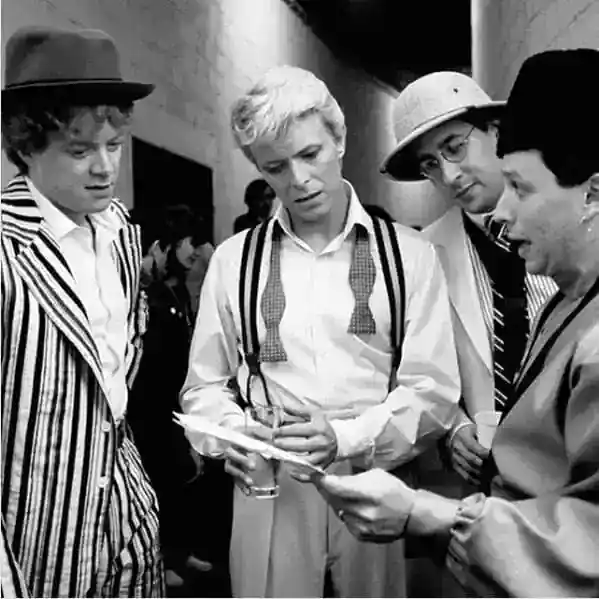
Frank Simms, David Bowie, Stan Harrison and Steve Elson during the Serious Moonlight Tour, 1983. Photograph courtesy of Frank and George Simms.
Stan Harrison is an American saxophonist, woodwind player, arranger and composer whose work with David Bowie became an important part of Bowie’s early 1980s sound. Best known to Bowie fans for his contribution to the Let’s Dance album and the Serious Moonlight Tour, Harrison brought a sophisticated combination of jazz training, rock energy and studio discipline to one of the most commercially successful periods of Bowie’s career.
Harrison was not simply a saxophone player added for colour. His command of saxophones, flute, clarinet and other woodwind instruments made him a highly flexible musician, capable of supporting Bowie’s songs with precision, warmth and restraint. His playing helped give the Let’s Dance era its bright, polished and rhythmically powerful character.
His Bowie connection continued beyond 1983. Harrison is associated with several Bowie studio projects, including Let’s Dance, Tonight, Never Let Me Down and Heathen. This places him among the musicians whose work with Bowie crossed more than one creative period.
- Name: Stan Harrison
- Born: December 8, 1953
- Nationality: American
- Profession: Saxophonist, woodwind player, arranger and composer
- Main instruments: Saxophones, flute, clarinet and additional woodwinds
- Bowie connection: Musician on Let’s Dance, Tonight, Never Let Me Down and the Serious Moonlight Tour
- Known for: Versatile woodwind playing, horn arrangements, jazz-rooted improvisation and professional studio work
- Other artists: Bruce Springsteen, Talking Heads, Radiohead, Serge Gainsbourg, Duran Duran, Diana Ross, Southside Johnny, Little Steven, They Might Be Giants, Mick Jagger and others
Early Life and Musical Background
Stan Harrison was born on December 8, 1953, in the United States. He developed into a highly skilled multi-instrumentalist, best known for saxophone but also accomplished on flute, clarinet and other woodwind instruments. This broad instrumental background became central to his later work as a recording and touring musician.
Unlike musicians who specialise in one narrow style, Harrison built his career on musical flexibility. His playing reflects a strong understanding of jazz, rhythm and blues, rock, soul and contemporary composition. That wide foundation allowed him to move easily between studio sessions, concert tours, horn sections and more composition-based projects.
This versatility would later make him especially valuable to David Bowie. Bowie often worked with musicians who could bring more than technical ability to a session. He needed players who could understand mood, arrangement, atmosphere and the emotional purpose of a song. Harrison’s background made him well suited to that kind of work.
Early Career
Before working with David Bowie, Stan Harrison had already developed a strong reputation as a professional saxophonist and woodwind player. He became part of the New York music world, where musicians were expected to adapt quickly to very different artists, producers and recording situations.
Harrison’s career placed him alongside a remarkable range of performers. Over the years he has played, recorded or performed with artists including Bruce Springsteen, Talking Heads, Radiohead, Serge Gainsbourg, Duran Duran, Diana Ross, Southside Johnny and the Asbury Jukes, Little Steven and the Disciples of Soul, They Might Be Giants, Mick Jagger, Stevie Ray Vaughan and many others.
His work with such different artists shows why he became a musician Bowie’s circle could rely on. Harrison was not tied to one genre or one musical identity. He could bring intensity to rock music, warmth to soul-influenced arrangements, discipline to studio recordings and imagination to jazz-rooted compositions.
As his reputation grew, Harrison also became recognised for arranging and composing. This was important because his contribution to a recording was rarely limited to simply playing a written part. He understood how horn and woodwind colours could shape the feel of a song, support a vocal line and add movement without overwhelming the arrangement.
The Borneo Horns
One of the most important developments in Stan Harrison‘s career was his involvement with The Borneo Horns, an outstanding horn section that became widely respected throughout the music industry during the 1980s. Alongside fellow saxophonists Steve Elson and Lenny Pickett, Harrison helped create a powerful and versatile horn sound that could move effortlessly between rock, soul, funk, jazz and contemporary pop.
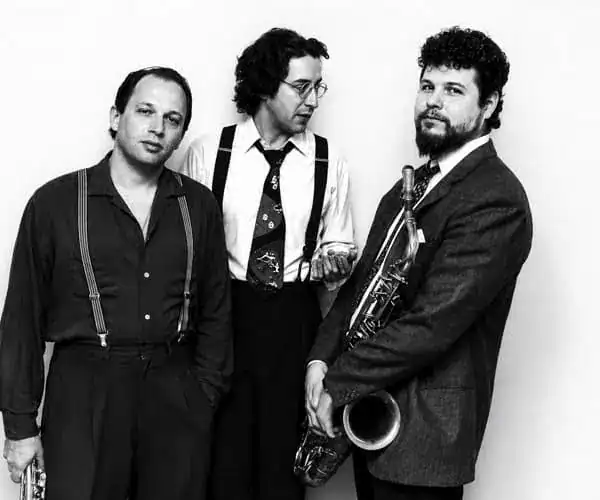
Photo by Keri Pickett. Reproduced with permission. Publication on DavidBowieWorld.com approved by Steve Elson.
Unlike many traditional horn sections, The Borneo Horns were not built around flashy solo performances. Their reputation was based on precision, musical intelligence and the ability to create arrangements that perfectly supported an artist’s songs. Each member brought a different musical personality, allowing the section to produce rich harmonies, driving rhythmic lines and subtle woodwind textures whenever required.
For Stan Harrison, The Borneo Horns provided the ideal environment in which to combine his skills as both performer and arranger. His ability to move between tenor saxophone, soprano saxophone, flute and additional woodwind instruments gave the section enormous flexibility, something that quickly attracted the attention of leading producers and artists.
Joining David Bowie
Stan Harrison entered David Bowie’s musical world during preparations for what would become one of the most important albums of Bowie’s career. In late 1982 Bowie joined forces with producer Nile Rodgers to create Let’s Dance, an album that deliberately combined contemporary dance rhythms, rock, rhythm & blues and sophisticated pop production.
Rodgers assembled an exceptional group of musicians capable of bringing this new musical direction to life. Alongside guitarist Stevie Ray Vaughan, bassist Carmine Rojas, drummer Tony Thompson, keyboard players Robert Sabino and Rob Yale, percussionist Sammy Figueroa, backing vocalists Frank Simms, George Simms and others, Stan Harrison became part of the remarkable ensemble that would help transform Bowie’s sound for the MTV generation.
For Harrison this was more than another recording session. It placed him at the centre of one of the biggest artistic reinventions of Bowie’s career. While Bowie remained instantly recognisable as both songwriter and performer, the surrounding musicians helped create a fresh sonic landscape that was brighter, more rhythmically direct and more commercially accessible than anything Bowie had previously released.
Recording Let’s Dance
Released in April 1983, Let’s Dance became David Bowie’s biggest-selling studio album and introduced his music to millions of new listeners around the world. Stan Harrison contributed tenor saxophone and flute, adding important musical colours to an album whose production depended upon clarity, precision and carefully balanced arrangements.
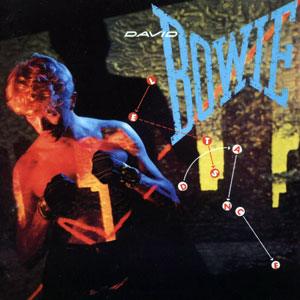
Unlike heavily orchestrated recordings where horns dominate the mix, the arrangements on Let’s Dance were designed to strengthen the rhythm and create space around Bowie’s vocals. Harrison understood exactly how to fulfil that role. His playing never distracted from the songs, yet it added warmth, movement and sophistication throughout the album.
The recording sessions brought together musicians from very different musical backgrounds. Nile Rodgers contributed his distinctive rhythmic approach developed with Chic, Stevie Ray Vaughan added fiery blues guitar, while Harrison and the other woodwind players introduced subtle jazz and soul influences that enriched the overall sound without overwhelming it.
This combination of musical personalities became one of the defining characteristics of Let’s Dance. Every player served the songs rather than individual virtuosity, something Bowie always encouraged. Harrison’s disciplined musicianship made him an ideal contributor to that philosophy.
The Sound of the Album
Stan Harrison‘s contribution to Let’s Dance was based on musical restraint rather than showmanship. Whether playing saxophone or flute, he concentrated on supporting the arrangement, reinforcing the rhythmic pulse and adding carefully judged melodic colours that blended naturally with the work of the other musicians.
This approach can be heard throughout the album. The horn and woodwind parts provide brightness and energy while allowing David Bowie’s vocals, Nile Rodgers‘ guitar and Stevie Ray Vaughan‘s expressive lead playing to remain at the centre of each recording. Harrison’s understanding of balance and texture helped create an album that still sounds remarkably fresh more than four decades after its release.
The commercial success of Let’s Dance led directly to the worldwide Serious Moonlight Tour, where Harrison would become one of the most visible members of Bowie’s live band and bring these arrangements to audiences across Europe, North America, Asia, Australia and New Zealand.
The Serious Moonlight Tour
Following the unprecedented success of Let’s Dance, David Bowie embarked on the Serious Moonlight Tour, his first world tour in five years. Opening in Brussels on 18 May 1983, the tour would eventually visit Europe, North America, Asia, Australia and New Zealand before concluding in Auckland on 8 December 1983. With ninety-six concerts and an audience exceeding two million people, it became the largest and most successful tour of Bowie’s career to that point.

VIDEO: Modern Love (live)
-
VIDEO: Modern Love (live)
The official music video for David Bowie - Modern Love from Bowie's 'Let's Dance' album released in 1983, which featured the singles Let's Dance, China Girl, Modern Love and Without You.
For Stan Harrison, the Serious Moonlight Tour marked the most visible chapter of his collaboration with David Bowie. Night after night he brought the sophisticated horn and woodwind arrangements from Let’s Dance to life while also helping reinterpret many of Bowie’s classic songs from the previous decade.
A Vital Member of Bowie’s Live Band
Although Harrison had already established an impressive reputation as a studio musician, the Serious Moonlight Tour introduced his playing to enormous live audiences around the world. Bowie assembled a band of exceptional musicians whose task was not simply to reproduce the studio recordings but to create exciting live performances that balanced musical precision with theatrical energy.
Harrison’s principal instruments were tenor saxophone and flute, although his experience on additional woodwind instruments provided the band with greater flexibility whenever different musical textures were required. His playing became an important part of the powerful sound that characterised Bowie’s concerts throughout 1983.
Rather than dominating the stage with extended solos, Harrison concentrated on serving the songs. His performances reflected the qualities that had already made him one of New York’s most respected session musicians: excellent timing, musical sensitivity and the ability to strengthen an arrangement without distracting attention from the artist.
The Touring Band
The Serious Moonlight Tour featured one of the strongest line-ups of Bowie’s career. Carlos Alomar returned as musical director and guitarist, joined by Earl Slick on lead guitar, Carmine Rojas on bass, Tony Thompson on drums, Dave Lebolt and Kevin Jones on keyboards, Sammy Figueroa on percussion, Frank Simms, George Simms and Lani Groves on backing vocals, Steve Elson on saxophone and Stan Harrison on saxophone and woodwinds.
Each musician brought a different background and musical personality, yet together they formed an exceptionally disciplined ensemble. Bowie encouraged every member of the band to contribute creatively while maintaining complete commitment to the overall performance. Harrison fitted naturally into this philosophy, understanding that technical excellence meant little unless it served the music.
Performing the New Material
Songs from Let’s Dance naturally formed the centrepiece of the concerts. Harrison helped recreate the album’s distinctive sound on stage, supporting performances of Let’s Dance, Modern Love, China Girl, Cat People (Putting Out Fire) and other recent material with carefully balanced horn and woodwind parts.
The transition from studio to stage required considerable musical skill. Recording sessions allow unlimited opportunities for refinement, whereas live concerts demand consistency under constantly changing conditions. Harrison’s experience as a touring musician ensured that the arrangements retained their clarity and excitement throughout nearly one hundred performances.
Reinventing the Classics
One of the greatest strengths of the Serious Moonlight Tour was the way Bowie revisited songs from throughout his career. Rather than attempting exact recreations of earlier recordings, many classics were given fresh arrangements that reflected the sound of Bowie’s early 1980s band.
Songs such as “Heroes“, Golden Years, Life on Mars?, Young Americans, Star and Station to Station all benefited from the expanded instrumentation. Harrison’s saxophone and woodwind parts added new colours while respecting the character of the original recordings.
This approach reflected Bowie’s belief that live performance should remain a creative process rather than a nostalgic exercise. Harrison’s flexibility as a musician made him particularly well suited to this constantly evolving repertoire.
Working Alongside Steve Elson
During the tour, Stan Harrison worked closely with fellow saxophonist and woodwind player Steve Elson. Together they formed the core of Bowie’s live horn section, creating powerful ensemble passages while also providing subtle musical details that often went unnoticed by casual listeners but contributed greatly to the overall sound.
Their contrasting musical personalities complemented one another perfectly. Harrison’s lyrical, jazz-influenced style blended naturally with Elson’s powerful stage presence, resulting in a horn section capable of moving effortlessly between energetic rock songs, soulful ballads and funk-influenced grooves.
Life on the Road
Touring on the scale of Serious Moonlight required exceptional stamina and professionalism. Travelling continuously between continents while maintaining consistently high musical standards presented enormous challenges for every member of Bowie’s band.
For Harrison, each evening involved much more than simply playing the correct notes. Every performance demanded concentration, adaptability and the ability to respond instantly to the subtle changes that occur during live concerts. His reliability became one of the reasons Bowie continued to value his contribution long after the tour had ended.
The Serious Moonlight Tour remains one of the defining periods of Stan Harrison‘s career. It placed his musicianship before millions of concertgoers worldwide and established him as an important member of one of David Bowie’s most celebrated touring bands.
Continuing the Collaboration: Tonight (1984)
The enormous success of Let’s Dance naturally influenced David Bowie’s next studio project. Rather than completely changing direction, Bowie chose to build on the sound that had brought him worldwide commercial success. When work began on Tonight, released in September 1984, several musicians from the Let’s Dance sessions returned, including Stan Harrison.
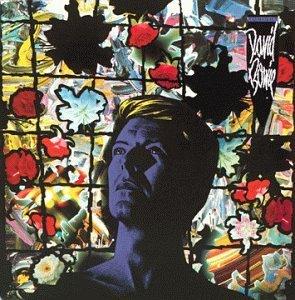
Although Tonight explored a wider variety of musical influences—including rhythm and blues, reggae and contemporary pop—Bowie again relied on experienced session musicians who understood his evolving musical direction. Harrison’s ability to move comfortably between powerful saxophone passages and more subtle woodwind textures made him an obvious choice for the project.
His contribution to Tonight reinforced the trust that Bowie and his production team had developed in his musicianship. Rather than being brought in for a single successful album, Harrison had become one of the professional musicians Bowie knew he could rely upon in the recording studio.
Expanding Bowie’s Studio Sound
By 1984 Bowie had established a production style that combined polished arrangements with strong rhythm sections and carefully balanced horn and woodwind parts. Harrison’s playing complemented this approach perfectly. He understood how to add musical colour without overwhelming the song, a quality that remained one of his greatest strengths throughout his career.
Unlike many saxophonists whose performances focus on extended solos, Harrison consistently approached recordings from the perspective of the arrangement as a whole. Every phrase was designed to support the composition, strengthening the atmosphere while leaving space for Bowie’s vocals and the other musicians.
Never Let Me Down (1987)
Stan Harrison reunited with David Bowie once again during the recording of Never Let Me Down, released in April 1987. By this point Bowie had entered another creative phase, exploring a more guitar-driven style while continuing to incorporate sophisticated brass and woodwind arrangements into selected recordings.

The album featured another impressive collection of musicians, and Harrison’s continued involvement demonstrated the lasting professional relationship that had developed since the Let’s Dance sessions. Although the musical direction differed from Bowie’s 1983 recordings, Harrison adapted effortlessly to the new material, once again showing the versatility that had made him one of the most respected woodwind players in the industry.
His return for another Bowie project illustrates an important aspect of Bowie’s working methods. Throughout his career Bowie often reassembled musicians whose creativity, reliability and musical judgement he respected. Harrison clearly belonged to that trusted circle.
A Musical Chameleon
One of the qualities Bowie admired in musicians was their willingness to evolve. Harrison never became associated with a single style of playing. Instead, he adapted naturally to changing musical environments, whether performing contemporary pop, rhythm and blues, jazz, experimental music or mainstream rock.
This ability to reinvent his approach from one project to the next closely reflected Bowie’s own artistic philosophy. Both musicians believed that creativity depended upon exploration rather than repetition, and Harrison’s flexibility enabled him to remain an effective collaborator regardless of how Bowie’s music changed over the years.
More Than a Saxophonist
Although Stan Harrison is most widely recognised as a saxophonist, that description only tells part of the story. Throughout his career he has demonstrated remarkable skill on flute, clarinet and other woodwind instruments, while simultaneously developing an impressive reputation as an arranger, composer and musical director.
His understanding of orchestration and instrumental colour allowed him to contribute in ways that went far beyond individual performances. Harrison consistently thought about the overall shape of a recording, carefully considering how each musical part could strengthen the final arrangement.
This broader musical perspective explains why so many leading artists sought his services. Whether recording with David Bowie, Bruce Springsteen, Talking Heads, Radiohead, Serge Gainsbourg or numerous other performers, Harrison brought intelligence, sensitivity and exceptional professionalism to every project.
Beyond David Bowie
Although David Bowie remains one of the artists most closely associated with Stan Harrison, his professional career extends far beyond a single collaboration. Over more than five decades he has established himself as one of America’s most versatile saxophonists, woodwind players, arrangers and composers, building a reputation for musical excellence across an extraordinary range of genres.
Throughout his career Harrison has recorded or performed with an impressive list of internationally acclaimed artists, including Bruce Springsteen, Mick Jagger, Paul McCartney, Talking Heads, Radiohead, Serge Gainsbourg, Diana Ross, Duran Duran, Stevie Ray Vaughan, Southside Johnny & The Asbury Jukes, Little Steven & The Disciples of Soul, They Might Be Giants, Jewel and many others. His ability to move effortlessly between rock, soul, jazz, rhythm & blues and contemporary music has made him one of the industry’s most respected session musicians.
Rather than becoming known for a single signature style, Harrison built his career on adaptability. Producers valued his technical skill, reliability and instinctive understanding of how to enhance a recording without drawing unnecessary attention to himself. Those qualities ensured that he remained in demand throughout changing musical fashions and across several generations of artists.
Composer and Arranger
Alongside his performing career, Stan Harrison has developed an equally impressive reputation as a composer and arranger. His work demonstrates a deep understanding of harmony, orchestration and instrumental colour, allowing him to create music that combines elements of jazz, chamber music, contemporary classical composition and modern improvisation.
Fellow musicians have often praised Harrison’s arranging abilities. Rather than writing unnecessarily complex parts, he focuses on clarity, balance and emotional impact, carefully shaping each arrangement to serve the music as a whole. This approach closely reflects the philosophy that also characterised his work with David Bowie.
His compositions reveal another side of his creativity, one that extends beyond the role of session musician and highlights his ability to develop complete musical narratives built on atmosphere, texture and sophisticated harmonic language.
The Mud Music Ensemble
One of Harrison’s most personal artistic projects is the Mud Music Ensemble, a group dedicated to performing his original compositions. Bringing together woodwinds, strings, bass and percussion, the ensemble explores the meeting point between contemporary jazz, chamber music and free improvisation.
The music performed by the ensemble reflects Harrison’s lifelong interest in composition as well as performance. Rather than relying on conventional jazz structures, many pieces develop gradually through changing textures, unexpected harmonic movement and cinematic atmospheres, creating a musical language that is unmistakably his own.
The Mud Music Ensemble demonstrates that Harrison’s artistic ambitions extend well beyond the recording studio. While many listeners first encountered him through collaborations with famous artists, his own projects reveal an imaginative composer continually exploring new musical possibilities.
Solo Albums
The Ties That Blind (2000)
Stan Harrison released his debut solo album, The Ties That Blind, in 2000 on his own record label. The album introduced audiences to his highly individual compositional style, blending jazz improvisation, chamber music, cinematic influences and contemporary instrumental writing. Rather than showcasing technical virtuosity alone, the recording emphasised atmosphere, storytelling and carefully constructed arrangements.
The Optimist (2007)
His second solo album, The Optimist, was produced by G TOM MAC and released in 2007. The recording broadened Harrison’s musical palette even further, incorporating elements of world music, jazz, sophisticated pop and contemporary rhythm while featuring guest vocalists including Phoebe Snow, Najma Akhtar and Philip Bailey. Critics particularly praised the album’s inventive arrangements and emotional depth.
Some Poor Soul Has a Fire (2024)
Released in 2024 on Adhyâropa Records, Some Poor Soul Has a Fire demonstrates that Harrison’s creativity remains as strong as ever. The album combines chamber jazz, progressive composition and adventurous improvisation into a deeply personal body of work that reflects decades of musical experience.
Reviewers highlighted the recording’s originality, sophisticated writing and exceptional ensemble playing. Rather than looking back nostalgically on his work with internationally famous artists, Harrison continued exploring fresh ideas, confirming his reputation as an artist who has never stopped evolving.
Television and Other Projects
Away from the concert stage, Harrison has also composed music for television and has participated in numerous recording, arranging and production projects. His experience across so many different musical disciplines has given him a remarkably broad perspective, enabling him to contribute equally effectively as performer, composer or arranger.
This diversity has been one of the defining characteristics of his career. Whether writing for television, recording with internationally recognised artists or developing his own compositions, Harrison approaches every project with the same attention to musical detail that first established his reputation in New York’s recording community.
Legacy
Stan Harrison occupies a distinctive place within David Bowie’s musical history. Although he was never promoted as one of Bowie’s highest-profile collaborators, his contribution to the Let’s Dance era was both significant and enduring. His performances on Let’s Dance, Tonight, Never Let Me Down and Heathen, together with his work throughout the Serious Moonlight Tour, demonstrate a professional relationship that spanned almost twenty years.
His importance lies not in dramatic solos or public recognition but in the exceptional consistency of his musicianship. Harrison understood how to strengthen a recording, support a live performance and enrich an arrangement while always serving the music itself. These qualities earned the respect of David Bowie, fellow musicians and producers throughout the international music industry.
Beyond Bowie, Harrison has built one of the most varied careers of any American woodwind player of his generation. As performer, arranger, composer and bandleader, he has continually demonstrated that versatility and imagination are among the most valuable qualities a professional musician can possess.
Stan Harrison in Bowie’s Collaborative Universe
Among the many musicians who contributed to David Bowie’s remarkable career, Stan Harrison represents the ideal collaborator. Technically accomplished, musically adventurous and completely committed to the needs of each song, he helped shape one of Bowie’s most commercially successful periods while remaining a trusted contributor decades later.
From the recording sessions for Let’s Dance to the worldwide Serious Moonlight Tour, and from later albums including Tonight, Never Let Me Down and Heathen, Harrison consistently demonstrated the qualities Bowie valued most in the musicians around him: professionalism, creativity, flexibility and impeccable musical judgement.
Although audiences naturally remember David Bowie as the central figure, collaborators such as Stan Harrison played an essential role in transforming Bowie’s ideas into unforgettable recordings and performances. His contribution deserves recognition as an important part of the story of David Bowie’s ever-evolving musical universe.
