
Dave LeBolt – Keyboardist, Synthesizer Specialist and David Bowie’s Serious Moonlight Tour Musician
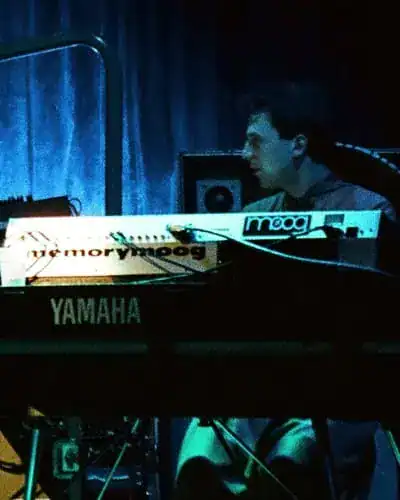
Photo: Jeffchat1 / Wikimedia Commons / CC BY-SA 3.0 (editorial use)
Dave LeBolt is an American keyboardist, synthesizer specialist, composer, arranger and producer best known to David Bowie fans as a member of the Serious Moonlight Tour band in 1983. During Bowie’s most commercially successful period, LeBolt helped recreate the sophisticated keyboard textures and electronic layers that defined the sound of Let’s Dance.
Although he was only part of Bowie’s touring organisation for a relatively brief period, LeBolt played a significant role in one of the biggest concert tours of Bowie’s career. His musicianship helped bridge traditional keyboards and emerging synthesizer technology during an era when electronic sounds were becoming increasingly important in mainstream music.
Beyond Bowie, LeBolt developed an impressive career as a composer, arranger, producer and technology executive, eventually becoming one of the figures involved in the evolution of Pro Tools and modern digital audio production.
- Profession: Keyboardist, composer, arranger, producer
- Bowie connection: Serious Moonlight Tour (1983)
- Instruments: Keyboards, synthesizers
- Known for: Serious Moonlight Tour, studio work, Pro Tools development
- Other artists: Laurie Anderson, Billy Joel, Chaka Khan, Roberta Flack, Julian Lennon, Foreigner
Early musical career
Before joining David Bowie’s touring band, Dave LeBolt had already established himself as a highly respected keyboard player in New York’s professional music scene. His musical interests ranged from traditional keyboard performance and orchestration to emerging synthesizer technologies that were transforming popular music during the late 1970s and early 1980s.
Working as both a touring and studio musician, LeBolt developed a reputation for versatility. He could comfortably move between pop, rock, R&B, film music and orchestral arrangements, making him a valuable collaborator for a wide variety of artists.
Joining David Bowie
In 1983 David Bowie assembled a large touring ensemble to support the global success of Let’s Dance. The album had become Bowie’s biggest commercial triumph, producing major international hits including Let’s Dance, China Girl and Modern Love.
To reproduce the album’s sophisticated sound on stage, Bowie required musicians capable of handling both traditional performance and increasingly complex electronic arrangements. Dave LeBolt was recruited as the band’s principal keyboard and synthesizer specialist.
The Serious Moonlight Tour
The Serious Moonlight Tour became the largest and most commercially successful tour Bowie had undertaken up to that point. Running from May to December 1983, it visited Europe, North America, Asia, Australia and New Zealand, attracting millions of fans worldwide.
LeBolt’s role was essential to the live presentation of Bowie’s music. The setlist combined contemporary hits from Let’s Dance with classic material spanning more than a decade of Bowie’s career. This required constant movement between piano, keyboards and synthesizers.
His playing helped provide the atmospheric textures behind songs such as Modern Love, China Girl, Young Americans, Golden Years and Heroes.
The 1983 touring band
Dave LeBolt performed alongside one of the strongest touring bands Bowie ever assembled. The line-up included Carlos Alomar, Earl Slick, Carmine Rojas, Tony Thompson, Steve Elson, Stan Harrison, Lenny Pickett, George Simms and Frank Simms.
Together these musicians balanced precision with spontaneity, allowing Bowie to revisit older material while embracing the contemporary sound of the early 1980s.
LeBolt’s keyboard work formed a crucial link between the rhythm section, horn section and backing vocalists, helping unify the band’s expansive sound.
Young Americans and the band introductions
David Bowie introducing members of the Serious Moonlight band during “Young Americans”, Vancouver 1983.
During performances of Young Americans, Bowie often introduced members of the touring band, highlighting the musicians who helped bring the concert production to life each night.
These moments reveal the respect Bowie had for his musicians and provide a rare glimpse into the personalities behind one of the most successful touring ensembles of the decade.
Dave LeBolt’s contribution may have been less visually prominent than the guitarists or horn players, but his keyboard and synthesizer work remained vital to the sound of the show.
Beyond Bowie
Following the Serious Moonlight era, LeBolt continued an exceptionally varied career. He worked with artists including Laurie Anderson, Billy Joel, Chaka Khan, Roberta Flack, Foreigner, Julian Lennon and many others.
He also contributed to film scores and television projects, collaborating with respected composers such as John Barry, Michel Colombier and Marvin Hamlisch. His work expanded into arranging, composing and producing, demonstrating a musical range far beyond live performance.
Technology and Pro Tools
Alongside his musical career, LeBolt developed a deep interest in audio technology. This eventually led him to California and to Digidesign, the company behind Pro Tools.
Over the following years he became a major figure in the development and growth of digital audio production technology. His work contributed to tools that transformed the recording industry and became standard equipment in professional studios worldwide.
Through this work, LeBolt influenced not only musicians and producers but also the technical infrastructure of modern recording itself.
Legacy
Dave LeBolt occupies a distinctive place within David Bowie history. He was part of Bowie’s largest and most commercially successful touring production, helping bring the sound of Let’s Dance to audiences around the world.
At the same time, his achievements extend far beyond his association with Bowie. As a composer, producer, arranger, technologist and executive, he helped shape both modern music production and the tools used to create it.
Within Bowie’s extended creative universe, Dave LeBolt represents the meeting point between musicianship and technology — a combination that would become increasingly important throughout the remainder of Bowie’s career and the music industry as a whole.
