
Freddie Burretti & David Bowie | The Designer Behind Early Ziggy Stardust
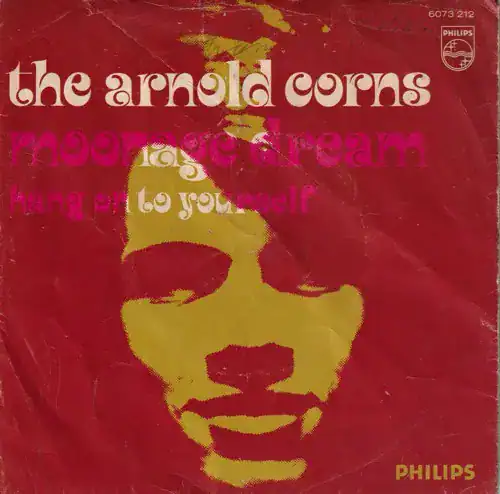
Image: David Bowie World collection / editorial use.
Freddie Burretti was one of the most influential creative figures of David Bowie’s early 1970s career. Although his name is less familiar than designers such as Kansai Yamamoto or Alexander McQueen, Burretti helped shape the visual language that accompanied Bowie’s transformation into Ziggy Stardust. Working as a tailor, designer, stylist and trusted creative partner, he translated Bowie’s ideas into clothing that became inseparable from one of the most revolutionary periods in rock history.
Born Frederick Burrett, he adopted the professional name Freddie Burretti during the early 1970s. Bowie later described him as “the ultimate co-shaper of the Ziggy look”, acknowledging the extraordinary role Burretti played in developing the costumes, tailoring and visual identity that helped define Ziggy Stardust before the arrival of Kansai Yamamoto‘s more theatrical creations.
Their collaboration extended far beyond costume design. Burretti became part of Bowie’s close Haddon Hall circle, participated in the Arnold Corns project, helped prepare photo sessions, sourced fabrics and clothing, supervised fittings, coordinated seamstresses and worked closely with Angie Bowie and Daniella Parmar to build the distinctive visual world surrounding Bowie during one of the most creative periods of his career.
- Birth name: Frederick Burrett
- Professional name: Freddie Burretti
- Profession: Tailor, fashion designer, stylist and creative collaborator
- Bowie collaboration: Approximately 1971–1974
- Best known for: Co-creating the earliest Ziggy Stardust image and designing numerous costumes for David Bowie and the Spiders from Mars
- Musical project: Arnold Corns (1971)
- Notable design: The powder-blue suit worn in the Life On Mars? promotional film
- Died: Paris, France, 2001
Meeting David Bowie
Freddie Burretti first entered David Bowie’s world during the closing years of the 1960s, at a time when Bowie was searching for new artistic directions following the commercial disappointment of his early recordings. Burretti was then employed by a Greek tailor on London’s King’s Road, where he had developed impressive tailoring skills despite his young age.
The introduction came through London’s vibrant nightlife. David and Angie Bowie met Burretti at the El Sombrero club in Kensington, where his striking appearance immediately caught their attention. Angie later recalled being fascinated by both his exceptional sense of style and his ability to create entirely new outfits almost every day using fabrics and techniques learned through his tailoring work.
The friendship developed quickly. Burretti soon became a regular visitor to Haddon Hall in Beckenham, the large Victorian house where Bowie, Angie and an ever-changing circle of musicians, artists, designers and friends gathered. Before long he was spending so much time there that he effectively became part of Bowie’s immediate creative circle.
Haddon Hall was far more than a shared house. It functioned as an informal creative workshop where music, fashion, theatre, photography and design merged naturally into Bowie’s rapidly evolving artistic vision. Within that environment, Burretti found the ideal setting to combine his technical skills as a tailor with Bowie’s increasingly ambitious ideas about image, performance and identity.
Haddon Hall: The Ziggy Workshop
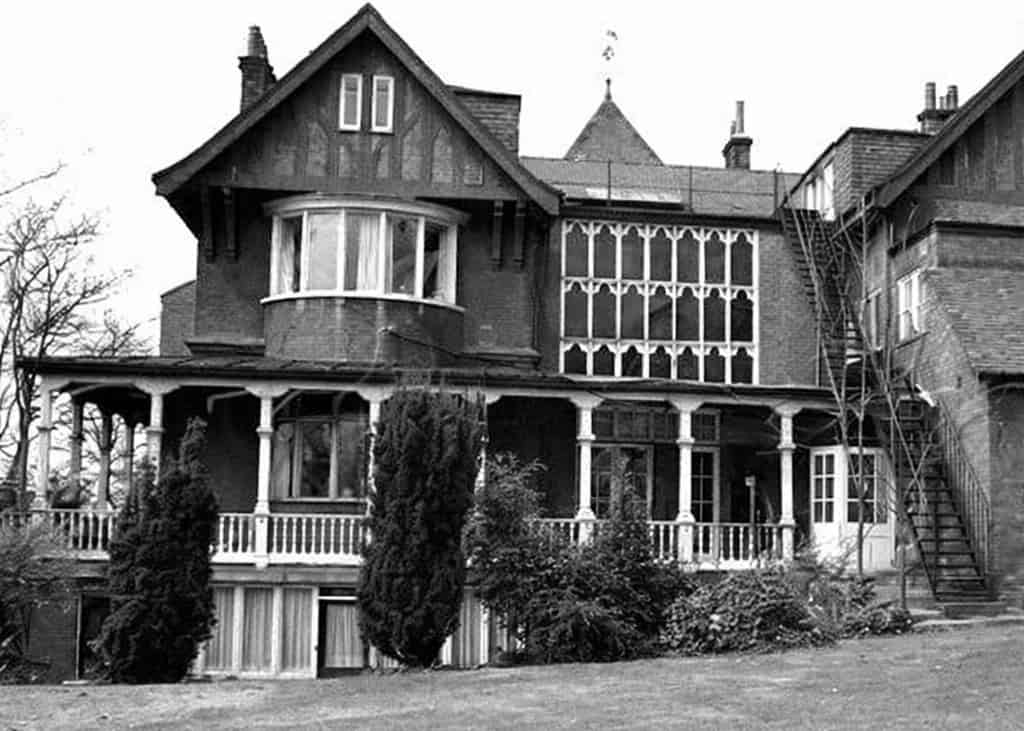
Photo: Unknown photographer / Wikimedia Commons / CC BY-SA 4.0 (editorial use)
As Freddie Burretti became more deeply involved in David Bowie’s circle, Haddon Hall evolved into far more than a shared house. Located in Beckenham, it became the creative headquarters where many of the ideas that would eventually define Ziggy Stardust first took shape. Musicians rehearsed in one room while photographers, artists, designers and friends gathered elsewhere to exchange ideas, experiment with fashion and discuss Bowie’s rapidly developing artistic vision.
Burretti soon became one of the central figures within this environment. Bowie recognised that his young friend possessed not only exceptional tailoring skills but also an instinctive understanding of theatrical image and silhouette. Their working relationship developed quickly into one of constant collaboration, with Bowie describing Burretti as having “a sort of telepathy” because he seemed able to transform ideas into finished garments almost as quickly as Bowie imagined them.
Unlike many costume designers who simply worked from finished sketches, Burretti became involved throughout the creative process. He discussed ideas directly with Bowie, translated rough concepts into practical designs, altered garments during rehearsals and continually refined costumes as Bowie’s stage persona evolved. This close collaboration allowed the visual identity of Ziggy Stardust to develop naturally alongside the music rather than being imposed afterwards.
The work at Haddon Hall was rarely carried out alone. Burretti worked closely with Angie Bowie, who frequently helped source fabrics and clothing, while his partner Daniella Parmar became another important member of the creative circle. Daniella regularly searched London’s markets for unusual textiles and materials, helping Burretti create costumes unlike anything then seen in British rock music.
As preparations for the Ziggy Stardust stage show gathered pace during 1972, Haddon Hall increasingly resembled a working costume department. Trevor Bolder later recalled visiting the house for repeated fittings while Burretti and a group of seamstresses altered costumes for both Bowie and the Spiders from Mars. Rather than designing only for Bowie himself, Burretti developed a coordinated visual identity for the entire band, ensuring that every member contributed to the illusion of Ziggy’s fictional universe.
This collaborative approach reflected Bowie’s growing belief that rock music should be experienced visually as well as musically. He often explained that he wanted the music to “look like it sounded.” Burretti became the designer most responsible for transforming that ambitious concept into reality during the earliest years of Ziggy Stardust.
Creating the Early Ziggy Stardust Look
Long before Kansai Yamamoto‘s dramatic creations appeared on stage, Freddie Burretti established many of the visual foundations that audiences first associated with Ziggy Stardust. Drawing inspiration from contemporary fashion, theatrical costume, science fiction, haute couture and Stanley Kubrick’s A Clockwork Orange, he developed clothing that appeared both futuristic and strangely elegant.
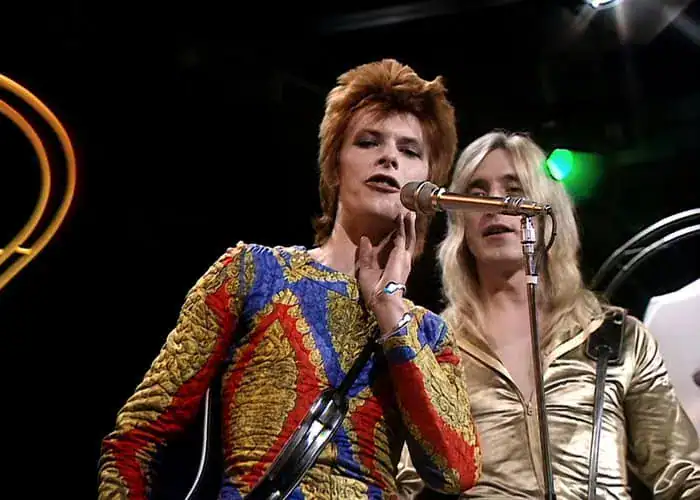
One of Burretti’s greatest strengths was his ability to combine apparently contradictory influences. Bowie later explained that they deliberately softened the aggressive appearance of Kubrick’s Droogs by using luxurious fabrics purchased from Liberty of London. Violence was transformed into glamour through quilted satins, vivid colours and highly tailored silhouettes, producing costumes that looked unlike anything previously seen in rock performance.
Rather than creating one iconic outfit, Burretti produced an entire wardrobe that continually evolved throughout 1972 and 1973. Different quilted suits, stage costumes, jackets, trousers and experimental garments appeared as Bowie’s concerts became increasingly theatrical. Only a handful of these original costumes survive today, reflecting the heavy wear they received during extensive touring.
The collaboration also extended beyond the sewing room. Burretti frequently purchased clothing on Bowie’s behalf, searched for unusual fabrics throughout London and prepared garments before photography sessions and television appearances. He often arrived ahead of Bowie to assist photographers with fittings and lighting, ensuring that every visual detail supported the image they were creating together.
Arnold Corns: A Brief Musical Experiment
Freddie Burretti‘s involvement with David Bowie extended briefly into music as well as fashion. In 1971, Bowie assembled a short-lived side project called Arnold Corns, intended both as a creative outlet and as a way of releasing new material while contractual complications limited the use of his own name.
The group grew out of the young band Rungk, whose members included guitarist Mark Carr-Pritchard, bassist Peter DeSomogyi and drummer Tim Broadbent. Bowie admired the band’s raw energy and saw an opportunity to develop the project further. Looking for a striking frontman, he invited Freddie Burretti to take the role, believing his appearance perfectly suited the image Bowie wanted to create.
For the project Burretti adopted the stage name Rudi Valentino. Although publicity photographs presented him as the group’s lead singer, the recordings themselves told a different story. When the time came to record vocals, Burretti found himself unable to perform confidently in the studio. Bowie therefore sang the lead vocals himself, although contractual issues with Philips Records meant that his own name could not be prominently associated with the releases.

BOOTLEG: Freddi And The Dreamer
-
BOOTLEG: Freddi And The Dreamer
David Bowie - Freddi And The Dreamer The Arnold Corn Sessions Tracklisting: 1.Lady Stardust - Radio Luxembourg Studios on 10 March 1971 2.Right On Mother - Radio Luxembourg Studios on 10 March 1971 3.Moonage Daydream - Radio Luxembourg Studios on 10 March 1971 4.Looking For A Friend - Rough mono mix, Trident Studios on 4 June 1971 5.Man In The Middle - Mono mix, Trident Studios on 4 June 1971 6.Looking For A Friend - Mono mix, Trident Studios on 4 June 1971 7.Moonage Daydream - Arnold Corns single A-side, UK in April 1971 8.Hang On To Yourself - Arnold Corns single B-side, UK in April 1971 9.Looking For A Friend - Arnold Corns single A-side, Norway in May 1985 (from the vaults) 10.Man In The Middle (part) - Arnold Corns single B-side, UK in September 1971 11.Man In The Middle (rest) - Arnold Corns single B-side, UK in September 1971 12.Looking For A Friend - Alternate version 13.Hang On To Yourself - Live version with Gene Vincent in February 1971 14.Looking For A Friend - Alternate take 15.How Lucky You Are (Miss Peculiar) - Outtake from 1971 16.Shadow Man - Outtake from 1971 17.Lightning Frightening - Outtake from 1971 18.Rupert The Riley - Outtake from 1971 19.Looking For A Friend - BBC John Peel Show on 20 June 1971 A very nice disc with songs recorded during the short Arnold Corns era in 1971. The things that are "new" on this CD are three new versions of LOOKING FOR A FRIEND, one of MOONAGE DAYDREAM and one of HANG ON TO YOURSELF (with Gene Vincent!). The rest of the songs have been released on other discs. The sound quality is excellent, except for the Gene Vincent track. That track is only good!
The Arnold Corns sessions produced early recordings of Moonage Daydream and Hang On to Yourself, together with songs including Looking for a Friend, Man in the Middle and Rupert the Riley. Although the project achieved little commercial success, it proved historically important. Several songs would later be completely reworked for The Rise and Fall of Ziggy Stardust and the Spiders from Mars, while Burretti’s growing involvement brought him even closer to Bowie’s expanding creative circle.
In retrospect, Arnold Corns demonstrated that Freddie Burretti‘s greatest talent lay not as a performer but as a designer. His contribution to Bowie’s visual identity would prove vastly more influential than his brief appearance as a would-be frontman, and both he and Bowie quickly recognised where his real strengths lay.
Designing Ziggy Stardust
Following Arnold Corns, Burretti devoted almost all of his creative energy to clothing design. As Bowie refined the Ziggy Stardust character during late 1971 and early 1972, Burretti became the principal designer responsible for translating those ideas into wearable stage costumes. Their collaboration was exceptionally close, with Bowie later describing Burretti as possessing an almost instinctive understanding of his creative thinking.
Rather than simply making clothes, Burretti helped establish the visual language that defined the earliest Ziggy period. He experimented with exaggerated tailoring, narrow waists, broad shoulders, luxurious fabrics and vivid colour combinations, creating garments that blurred traditional distinctions between masculine and feminine fashion. These designs perfectly complemented Bowie’s increasingly theatrical stage performances.
One of Burretti’s signatures was his remarkable ability to combine precise tailoring with bold artistic imagination. Costumes were individually made, repeatedly altered and constantly refined as Bowie developed Ziggy’s stage persona. This was a collaborative process rather than a conventional designer-client relationship, with Bowie contributing concepts and Burretti transforming them into practical garments capable of surviving the demands of touring.
The partnership reached far beyond Bowie himself. Burretti also designed coordinated stage clothing for Mick Ronson, Trevor Bolder and Mick Woodmansey, ensuring that the Spiders from Mars projected a unified visual identity. The result was one of the first rock bands whose appearance formed an integral part of the overall artistic concept rather than simply reflecting contemporary fashion.
The Top of the Pops Appearance
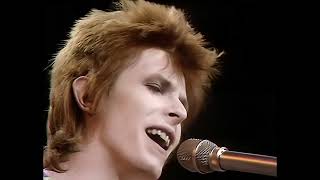
For millions of British television viewers, their first encounter with Ziggy Stardust came on Top of the Pops on 5 July 1972. Bowie’s unforgettable performance of Starman transformed him almost overnight from an admired cult artist into one of Britain’s most talked-about performers. While the music was extraordinary, the visual impact of the performance was equally revolutionary, and Freddie Burretti played a central role in creating that image.
VIDEO: Starman (Live on TOTP)
-
VIDEO: Starman (Live on TOTP)
Watch the performance that launched David Bowie to stardom. Thursday 6th July, 1972 is said to be 'the day that invented the 80’s’ as so many musicians who went on to be household names saw the performance and it changed their lives. Those watching that night included U2’s Bono, The Cure’s Robert Smith, Boy George, Adam Ant, Mick Jones of the Clash, Gary Kemp of Spandau Ballet, Morrissey and Johnny Marr of the Smiths, Siouxsie Sioux, Toyah Willcox, John Taylor and Nick Rhodes of Duran Duran, Dave Gahan of Depeche Mode and many more. Recorded on 5 July 1972 at the BBC Television Centre in White City, London, the performance is undoubtedly one of the most essential pieces of music television ever broadcast. It has influenced generations of musicians, artists and writers who saw it at the time and countless others who have since seen it over the decades, from bootleg VHS copies to YouTube clips.
Burretti designed coordinated stage costumes for Bowie and the Spiders from Mars, ensuring that the entire band appeared as part of the same imagined world rather than as individual musicians wearing fashionable clothes. Inspired in part by the white outfits worn by the Droogs in Stanley Kubrick’s A Clockwork Orange, Burretti softened their aggressive appearance through the use of richly coloured quilted fabrics, luxurious textures and highly individual tailoring.
Working closely with Angie Bowie, he sourced many of the materials from Liberty of London, whose colourful fabrics helped transform the severe Droog-inspired silhouette into something playful, theatrical and unmistakably glamorous. Bowie’s orange-and-blue quilted suit became one of his favourite stage outfits during the early Ziggy period, while Burretti produced several variations of the design as the tour progressed.
The performance has since become one of the defining moments in British popular culture. Although Bowie naturally occupied the centre of attention, Burretti’s contribution was fundamental. The costumes immediately communicated that audiences were witnessing something entirely different from conventional rock performance. Fashion, theatre and music had merged into a single artistic statement.
The Life On Mars? Suit
Among Freddie Burretti‘s most celebrated creations is the powder-blue suit worn by David Bowie in the promotional film for Life On Mars?, filmed in 1973. Today it is regarded as one of the most recognisable costumes associated with Bowie’s entire career and remains one of the finest surviving examples of Burretti’s craftsmanship.
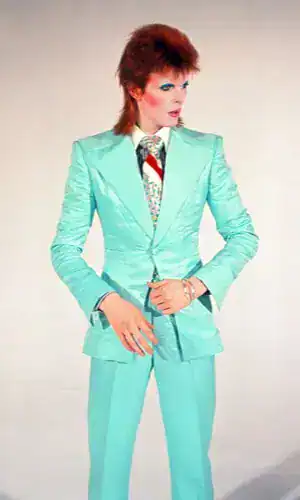
The suit perfectly demonstrates Burretti’s distinctive approach to tailoring. Although based on traditional suiting techniques, its sharply defined shoulders, narrow waist and elegant proportions drew heavily on contemporary women’s couture rather than conventional menswear. Burretti frequently studied women’s fashion when developing designs for Bowie, believing that its silhouettes offered far greater dramatic possibilities than standard men’s tailoring.
Research carried out through the David Bowie Archive and the David Bowie Centre has shown that Burretti owned pattern books for women’s clothing and frequently adapted those ideas for Bowie. The Life On Mars? suit is now understood to have been influenced by Yves Saint Laurent’s celebrated Libération haute couture collection of 1971, which explored exaggerated shoulders, dramatic make-up and striking reinterpretations of 1940s fashion.
Combined with Bowie’s vivid blue eye shadow and carefully controlled body language, the suit created one of the defining visual images of the Glam Rock era. More than fifty years later it remains an enduring symbol of Bowie’s artistic ambition and of Freddie Burretti‘s remarkable ability to translate fashion into performance art.
A Creative Partnership Built on Trust
David Bowie rarely described his collaborators in sentimental terms, making his comments about Freddie Burretti especially revealing. Reflecting on their partnership in 1974, Bowie explained that Burretti possessed “a sort of telepathy,” observing that almost every visual idea he imagined seemed to be realised effortlessly by the young designer.
That remarkable level of understanding developed because the two men approached creativity in similar ways. Bowie supplied ambitious concepts, references and ideas, while Burretti possessed the technical knowledge to convert those abstract thoughts into beautifully tailored garments that could withstand the realities of rehearsals, photography sessions and lengthy concert tours.
Rather than functioning as a conventional fashion designer working for a celebrity client, Burretti became one of Bowie’s closest creative partners during the formative years of Ziggy Stardust. Their collaboration demonstrates that the character’s extraordinary visual identity emerged through constant dialogue between artist and designer, each inspiring the other throughout the creative process.
Beyond Ziggy: 1973–1974
As David Bowie’s career expanded internationally during 1973, Freddie Burretti‘s responsibilities also grew. By this stage he was no longer creating only individual stage costumes but was producing complete wardrobes for Bowie while continuing to design clothing for members of the Spiders from Mars. Surviving invoices and design material show that Burretti was responsible for numerous bespoke garments produced for concert tours, promotional appearances and television performances.
During preparations for the 1973 American and Japanese tours, Burretti supplied more than twenty individually tailored garments for Bowie together with additional clothing for the band. His work had developed from creating experimental costumes at Haddon Hall into managing the wardrobe requirements of one of the world’s fastest-rising rock stars. Contemporary invoices preserved within the Bowie archive demonstrate both the scale of this work and the confidence placed in Burretti’s craftsmanship.
Despite Bowie’s growing international success, Burretti remained remarkably hands-on. He continued fitting garments personally, adjusting costumes between performances and ensuring that Bowie’s rapidly expanding wardrobe maintained the high standard of tailoring for which he had become known. Every costume had to balance dramatic visual impact with the practical demands of touring, where garments were worn repeatedly under intense stage lighting and constant travel.
The Diamond Dogs Period
Freddie Burretti continued working with Bowie into the early stages of the Diamond Dogs era. Although Bowie’s visual style was beginning to move away from the brightly coloured glamour of Ziggy Stardust towards the darker, dystopian imagery inspired by George Orwell‘s Nineteen Eighty-Four, Burretti remained involved in producing tailored clothing and stage garments during this transitional period.
By now Bowie’s creative ambitions had grown considerably. Album concepts, theatrical stage productions, photography, fashion and graphic design all developed simultaneously, requiring close cooperation between numerous creative specialists. Burretti’s experience and understanding of Bowie’s working methods allowed him to contribute effectively as those visual ideas became increasingly sophisticated.
The David Bowie Archive contains unfinished jackets, tunics, capes and working pattern books dating from this period. These surviving pieces demonstrate that many more designs were planned than ultimately reached the stage, offering a fascinating glimpse into creative directions that Bowie and Burretti explored but never fully realised.
The End of Their Partnership
By the middle of 1974, the close professional relationship between Bowie and Burretti had come to an end. Contemporary accounts suggest that financial disagreements surrounding Bowie’s management organisation contributed to the separation, although relatively little contemporary documentation survives describing the circumstances in detail. For that reason, the precise reasons behind the end of their collaboration remain only partially documented.
After leaving Bowie’s immediate circle, Burretti gradually disappeared from public view. Unlike many designers who continued to build prominent fashion careers, he chose a far more private life. Reports place him in Israel during the late 1970s before he eventually settled in Paris, where he spent much of his remaining life.
Although their professional partnership lasted only a few years, the influence of Burretti’s work endured long after their collaboration ended. Many of the visual ideas developed between 1971 and 1974 became permanently associated with David Bowie and remain among the most recognisable images in the history of popular music.
Later Life
Compared with his years alongside David Bowie, Freddie Burretti‘s later life remains relatively undocumented. Unlike many of Bowie’s other collaborators, he rarely gave interviews and seldom sought public recognition for his achievements. As a result, much of what is known about his later years comes from the recollections of friends, colleagues and family members rather than from extensive contemporary documentation.
Burretti spent much of his later life in Paris, where he continued to work privately before his death in 2001. Only after his passing did wider recognition begin to grow for the remarkable contribution he had made to David Bowie’s early visual identity. The preservation of his drawings, pattern books, unfinished garments and correspondence within the David Bowie Archive has since enabled historians to understand the true scale of his creative partnership with Bowie.
Freddie Burretti‘s Legacy
For many years Freddie Burretti remained one of the least recognised figures behind David Bowie’s rise during the early 1970s. While designers such as Kansai Yamamoto became internationally celebrated for their spectacular stage creations, Burretti’s quieter but equally important contribution often received far less attention. Modern research, together with the opening of the David Bowie Centre and continued study of the David Bowie Archive, has significantly expanded our understanding of his role.
Today Burretti is increasingly recognised not simply as Bowie’s tailor but as one of the principal architects of Ziggy Stardust’s earliest visual identity. His work helped establish the character before the arrival of the famous Kansai Yamamoto costumes, creating the distinctive silhouettes, quilted suits and carefully tailored stage clothing that first introduced Ziggy to audiences during 1972.
His surviving sketches, measurement books, unfinished garments, invoices and pattern books reveal a designer whose contribution extended far beyond making clothes. They document a remarkably close creative partnership in which Bowie and Burretti developed ideas together, constantly refining costumes as the music, performances and visual presentation evolved side by side.
Many of Burretti’s most important creations have now entered museum collections, ensuring that future generations can appreciate his contribution to one of the most influential visual transformations in the history of popular music. His work is now recognised not only as stage costume but also as an important chapter in twentieth-century fashion and design history.
Freddie Burretti in David Bowie’s Collaborative Universe
Among all of David Bowie’s collaborators, Freddie Burretti occupies a unique position. He was not simply a fashion designer commissioned to produce costumes, nor was he merely a member of Bowie’s early entourage. During the formative years of Ziggy Stardust he became one of Bowie’s closest creative partners, helping translate abstract artistic ideas into a coherent visual language that audiences immediately recognised.
Working alongside Bowie, Angie Bowie, Daniella Parmar, photographers such as Brian Ward and Mick Rock, and later designers including Kansai Yamamoto, Burretti contributed to an extraordinary period of artistic collaboration in which music, fashion, theatre and photography became inseparable. His influence can be seen not only in individual costumes but throughout the complete visual identity that transformed Bowie into an international icon.
Although his collaboration with Bowie lasted only a few years, its influence continues to shape how the Ziggy Stardust era is remembered. Every carefully tailored jacket, quilted suit, dramatic silhouette and stage costume reflected Burretti’s exceptional craftsmanship and his rare ability to understand Bowie’s imagination almost instinctively.
David Bowie once remarked that Freddie Burretti possessed “a sort of telepathy” because he could transform ideas into reality with remarkable ease. More than fifty years later, that observation remains perhaps the finest description of Burretti’s importance. He was not simply the man who made the clothes; he was one of the key creative minds who helped give Ziggy Stardust a physical form.
The Documentary: The Man Who Sewed the World
Although Freddie Burretti remained largely unknown to the general public during his lifetime, his contribution to David Bowie’s early career has received increasing recognition in recent years. One of the most significant tributes is the documentary The Man Who Sewed the World, which explores the remarkable story of the designer whose work helped shape the earliest visual identity of Ziggy Stardust.
The film examines Burretti’s close friendship and creative partnership with Bowie, from their first meeting at London’s El Sombrero club and the Haddon Hall years to Arnold Corns, the creation of the iconic Ziggy Stardust costumes and the celebrated Life On Mars? suit. Drawing on archive material, interviews and historical research, it highlights Burretti’s often overlooked role as one of Bowie’s most important early collaborators.
Rather than presenting Freddie Burretti simply as Bowie’s tailor, the documentary shows him as a gifted designer whose imagination, craftsmanship and instinctive understanding of Bowie’s ideas helped create one of the most influential visual identities in the history of popular music. Together with the continued research carried out through the David Bowie Archive and the David Bowie Centre, the film has played an important part in restoring Burretti’s rightful place in Bowie’s creative story.
Article Origin
This article has been compiled using verified historical research from the David Bowie Archive, the David Bowie Centre at the V&A East Storehouse, published research by Nicholas Pegg and Kevin Cann, contemporary interviews with David and Angela Bowie, documented archive material, surviving costume records and additional historically verifiable sources. Every effort has been made to distinguish documented fact from later interpretation, ensuring that Freddie Burretti‘s remarkable contribution to David Bowie’s career is presented as accurately and completely as possible.
