
Phil Manzanera – Roxy Music, David Bowie and the Royal Albert Hall
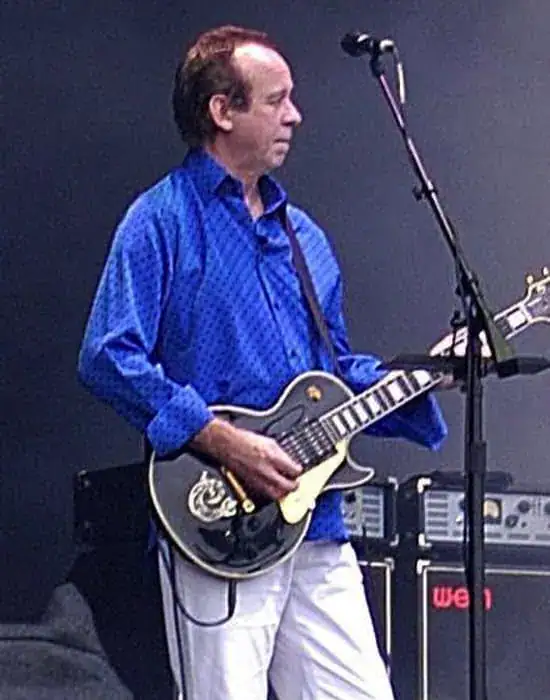
Phil Manzanera performed alongside David Bowie at the Royal Albert Hall in London on 29 May 2006. Playing guitar as a member of David Gilmour’s touring band, he participated in the concert at which Bowie sang Arnold Layne and shared the vocals on Comfortably Numb. The appearance would become Bowie’s final public performance in the United Kingdom.
Their connection began much earlier. In 1972, Manzanera was the newly recruited guitarist in Roxy Music, the band that supported Bowie during the emergence of Ziggy Stardust. Those early encounters placed him close to one of the most conspicuous transformations in British popular music, while Roxy Music were developing an equally distinctive identity of their own.
The years between those shared stages brought solo albums, experimental ensembles, international production work and a lasting partnership with Gilmour. Manzanera’s career connects Roxy Music with Brian Eno, Robert Wyatt, John Cale, Tim Finn and Pink Floyd. His appearance with Bowie belongs within that wider history: a meeting between established musicians whose paths had first crossed more than three decades earlier.
- Name: Phil Manzanera
- Born: 31 January 1951, London, England
- Principal work: Guitarist, songwriter, record producer and solo artist
- Best-known band: Roxy Music, which he joined in 1972
- Early Bowie connection: Roxy Music supported Bowie at the Greyhound, Croydon, on 25 June 1972 and at the Rainbow Theatre later that year
- Shared performance: Royal Albert Hall, London, 29 May 2006
- Concert: David Gilmour’s On an Island Tour
- Band credit: Guitar and vocals
- Bowie’s repertoire: Arnold Layne and Comfortably Numb
- Related releases: Gilmour’s Arnold Layne single and Remember That Night concert film
- Historical significance: Participation in Bowie’s final public UK performance
Early life: London, Latin America and the first guitar
Born in London on 31 January 1951, Manzanera grew up with family connections extending well beyond Britain. His mother was Colombian and his father English, and his childhood included periods in Cuba, Venezuela and Hawaii. Movement between countries brought different musical environments into his life before he began thinking about a professional career.
His introduction to the guitar came through his mother’s Spanish instrument and the Cuban songs she knew. Music was initially something encountered within family life, rather than through the demands of a band or the machinery of the recording industry. That early experience gave him a foundation involving rhythm, melody and the practical pleasure of playing.
His years in Cuba coincided with the revolutionary upheaval of the late 1950s. Memories of that period later entered his interviews, autobiographical writing and musical projects. The relationship between personal history and music became particularly explicit in recordings that revisited the places and experiences of his childhood.
1960s London and the discovery of electric music
In Britain, Manzanera encountered the rapidly changing music of the 1960s. The Beatles, the Rolling Stones and Jimi Hendrix offered successive demonstrations of what a group and an electric guitarist could achieve. London provided access to records, performances and musicians at a time when established distinctions between pop, blues and experimental music were becoming increasingly permeable.
His interests also included early Pink Floyd and Soft Machine. Those groups suggested that a performance could develop through unusual sounds, instrumental interplay and structures extending beyond the familiar verse and chorus. Such possibilities became relevant to the music he made before Roxy Music and to the independent projects that followed.
The electric guitar offered several potential identities. It could provide a memorable melodic phrase, contribute to a rhythmic pattern or create a sound whose texture mattered as much as its notes. Manzanera’s later career would involve all these functions, sometimes within the same recording.
This period also brought an early encounter with David Gilmour. Their subsequent professional relationship grew from a connection established before either musician had reached his later position. Decades afterwards, the association would lead from songwriting and record production to the touring band that accompanied Bowie at the Royal Albert Hall.
Quiet Sun: the instrumental foundations
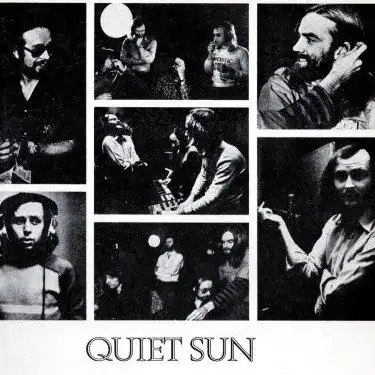
Before joining Roxy Music, Manzanera developed his playing in Quiet Sun, a group associated with friendships formed around Dulwich College in south London. Its musicians included bassist Bill MacCormick, keyboard player Dave Jarrett and drummer Charles Hayward. Their shared interests encouraged a form of music built around detailed ensemble arrangements.
Quiet Sun drew on progressive rock, jazz and experimental approaches. Compositions could move through changes of metre, contrasting sections and instrumental exchanges, giving each player responsibilities that extended beyond accompanying a lead singer. The guitar operated within a closely interconnected group rather than simply occupying the front of the arrangement.
The band’s original period together did not produce a commercially released album. Its material nevertheless survived, as did the relationships between its musicians. This distinction between the lifetime of a band and the later life of its compositions became important when Manzanera acquired access to professional recording opportunities.
Early 1972: becoming Roxy Music’s guitarist
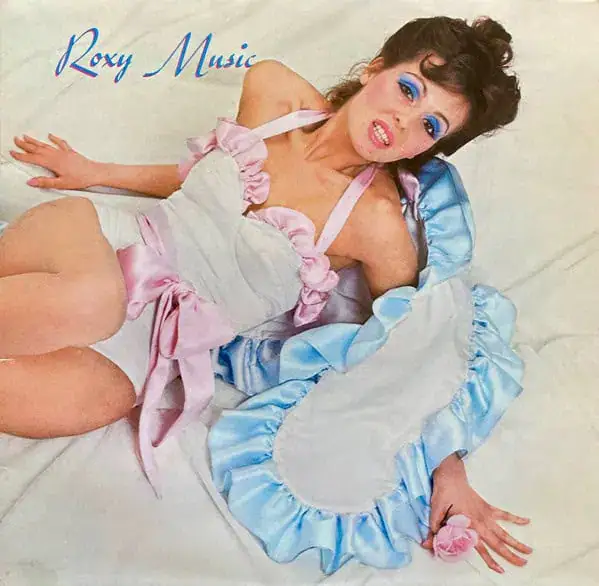
Manzanera joined Roxy Music in early 1972, following an earlier audition that had initially resulted in the position going to David O’List. He remained close to the group, and when O’List departed, he became the replacement guitarist. His arrival came shortly before the band entered the recording industry with its first contract and album.
The central personalities included Bryan Ferry, Brian Eno, Andy Mackay and Paul Thompson. Their different contributions gave Manzanera an unusual musical setting: Ferry’s songs and singing, Eno’s electronic treatments, Mackay’s reeds and Thompson’s drumming left room for a guitar voice that could be pointed, atmospheric or disruptive.
The pace accelerated quickly. Joining the band meant moving almost immediately into recording and public appearances, rather than spending years developing a professional identity in private. Roxy Music’s debut brought the new guitarist into a group whose music and appearance attracted attention together.
For Manzanera, the transition was substantial. Quiet Sun had encouraged intricate instrumental development; Roxy Music placed unusual ideas within songs that could reach television audiences and the singles market. His task was to contribute to this particular combination, bringing his own vocabulary into a band with a strong collective identity.
25 June 1972: Bowie and Roxy Music at the Greyhound
Roxy Music supported Bowie at the Greyhound in Croydon on 25 June 1972. The date belongs to the early public history of both Roxy Music and Ziggy Stardust, before their subsequent fame transformed small-venue appearances into episodes discussed by generations of listeners.
Manzanera later recalled arriving for the soundcheck in jeans and finding Bowie and the Spiders already dressed in their stage clothes. Roxy Music’s musicians generally changed before performing. His memory preserves a practical detail of the encounter, showing two groups approaching presentation differently even while both were becoming associated with striking visual identities.
Phil Manzanera on supporting Bowie
“We supported David at the Croydon Greyhound, too. It was a great gig.”
Phil Manzanera, interviewed by Michael Bonner for Uncut, 2015. Read the interview.
This was a shared concert bill, with each act presenting its own music. Its importance lies in bringing their developing identities into direct proximity. Manzanera encountered Bowie’s working band at a moment when the relationship between songs, costume and performance was becoming central to Ziggy Stardust’s impact.
The Greyhound also places the connection in a tangible location. Before the international tours and major album retrospectives, these musicians occupied the same modest backstage world of soundchecks, equipment and changing clothes. That scale is an essential part of the event’s historical character.
1972: the Rainbow Theatre and a larger audience
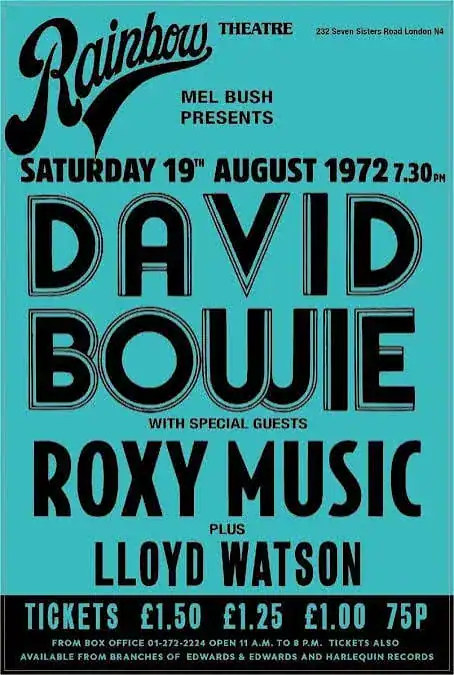
Roxy Music subsequently supported Bowie at London’s Rainbow Theatre during 1972. The larger venue offered a more prominent setting for the bands’ contrasting combinations of music and visual presentation. Their presence on the same programme also brought Roxy Music to an audience gathering around Bowie’s developing stage identity.
The two acts shared an interest in presentation without becoming interchangeable. Bowie worked through the relationship between an individual performer, a fictional identity and a supporting band. Roxy Music presented a collection of visibly distinct personalities gathered around Ferry’s songs and a group sound shaped by unusual instrumental combinations.
Manzanera’s guitar occupied a specific place within that mixture. The presence of saxophone, oboe, piano and electronic treatments meant that a conventional guitar-led arrangement was only one possibility. Short interventions and unfamiliar textures could contribute as much to a song’s identity as a prominently featured solo.
1973: Roxy Music changes and the Eno relationship continues
Roxy Music released For Your Pleasure in 1973, followed later that year by Stranded. Between them came Brian Eno’s departure, a change that altered the group’s personnel while leaving its musical development open. Manzanera remained part of the band as its arrangements and working relationships evolved.
His songwriting role also became more visible. Amazona, co-written with Ferry for Stranded, demonstrated a contribution extending beyond the performance of guitar parts. Musical ideas originating with the guitarist could become part of the band’s recorded repertoire through collaboration with its principal songwriter.
Eno’s departure did not end his association with Manzanera. Their work continued outside Roxy Music, creating an additional route for experimentation. The relationship illustrates how a change in band membership could produce new combinations rather than a complete separation between former colleagues.
This continuing connection later intersected with Bowie’s musical world through Eno’s work on Low, “Heroes”, Lodger and 1. Outside. Manzanera’s own collaborations with Eno followed a separate course, but both histories demonstrate how relationships established within one group could contribute to music made elsewhere.
1974: Country Life, John Cale and Nico
Roxy Music’s Country Life appeared in 1974 and included Out of the Blue, another Ferry–Manzanera composition. The song became an enduring part of their shared repertoire, returning in later performances and projects involving members of the band.
During the same period, Manzanera expanded his studio experience through work with John Cale. His involvement in Fear extended into the organisation of musicians and recording activity. He later recalled bringing Eno into the sessions, connecting the project with another of his established working relationships.
He also contributed guitar to Nico’s The End…, produced by Cale. The recording required participation in an atmosphere substantially different from Roxy Music’s current albums and concert repertoire. It demonstrated his ability to work within another artist’s musical world while contributing his own instrumental character.
1975: Diamond Head and a solo identity
Manzanera released his first solo album, Diamond Head, in 1975. Its participants included Brian Eno, Robert Wyatt and Paul Thompson, placing familiar collaborators within a project shaped around the guitarist’s own musical interests. It established a recording identity that could develop alongside Roxy Music.
The album combined songs and instrumental pieces rather than requiring its named artist to perform every lead vocal. Different voices could carry different parts of the record, while the guitar and the choice of material provided continuity. This made collaboration part of the album’s structure, rather than merely an addition to a conventional solo showcase.
Wyatt sang on Frontera, while Eno’s vocal appearances included Big Day and Miss Shapiro. These combinations gave individual tracks distinct personalities. Manzanera could organise a record around the abilities of particular musicians while retaining the freedom to move between contrasting musical forms.
1975: Quiet Sun records Mainstream
The Diamond Head period also created an opportunity to record Quiet Sun’s earlier material. Manzanera, Bill MacCormick, Dave Jarrett and Charles Hayward reunited at Basing Street, producing Mainstream, the group’s sole studio album. Music developed before Manzanera’s fame finally reached a released recording.
The projects were connected through personnel, studio activity and elements of their material, but they retained distinct identities. Mainstream concentrated on the original group’s instrumental relationships, while Diamond Head assembled a broader variety of songs, singers and musical settings.
Brian Eno and Ian MacCormick also contributed to the Quiet Sun recording. The album therefore joined an earlier band history with the professional network surrounding Manzanera’s current work. Older compositions could be revisited by their original players while benefiting from the involvement of other collaborators.
1975–1976: Siren and the formation of 801
Roxy Music’s Siren appeared in 1975, continuing the band’s first sequence of studio albums. During the following year, Manzanera also became involved in a temporary ensemble whose short live history would produce one of his most enduring records: 801.
The musicians included Manzanera, Eno, Bill MacCormick, keyboard player Francis Monkman, drummer Simon Phillips and slide guitarist Lloyd Watson. Their repertoire brought together material from different sources, including music associated with Eno, Manzanera and Quiet Sun, alongside reinterpretations of other writers’ songs.
The resulting 801 Live preserved an ensemble assembled for a limited series of performances. Its identity depended on how those particular musicians combined their skills, rather than on the expectation of a permanent band with an expanding sequence of conventional studio albums.
For Manzanera, 801 provided another setting in which guitar could work within a detailed arrangement involving keyboards, voices and an active rhythm section. It also showed how older compositions could acquire a different life through new personnel. The project’s small number of performances did not prevent its recording from becoming a substantial part of his legacy as a bandleader and collaborator.
1977–1978: Listen Now and K-Scope
The albums Listen Now in 1977 and K-Scope in 1978 extended Manzanera’s independent work. They followed the collaborative approach established by Diamond Head and 801, while responding to a musical environment changing rapidly around British rock.
Listen Now included contributions from Eno and from Kevin Godley and Lol Creme. Its place in the catalogue reflects an interest in records assembled through interacting musical personalities, with production decisions helping connect the parts. The named artist’s identity could emerge through the organisation of the whole rather than a uniform voice on every song.
K-Scope involved Tim and Neil Finn, developing relationships associated with Manzanera’s work with Split Enz. Those connections would prove remarkably durable. Tim Finn returned in later projects, eventually becoming Manzanera’s partner on albums made decades after their first collaborations.
1979–1983: Roxy Music’s final studio period
Roxy Music returned with Manifesto in 1979, followed by Flesh + Blood in 1980 and Avalon in 1982. The recordings extended the group’s interest in rhythm, atmosphere and carefully constructed production, taking its music into a different period from the early Eno-era albums.
Manzanera remained involved as guitarist and songwriter. His collaborations with Ferry included Over You and Take a Chance with Me, demonstrating continued participation in the creation of the repertoire. The changing sound required responses appropriate to each arrangement rather than a fixed approach carried unchanged from the debut.
Alongside this work, he released Primitive Guitars in 1982. An instrumental project could foreground interests that operated differently from the demands of a Roxy Music song, allowing his independent catalogue and band commitments to coexist during the same period.
After the touring associated with Avalon, the members pursued separate activities. By then, Manzanera had already established several professional routes beyond the group. The change therefore expanded an existing independent career, built through solo records, production work and collaborations, rather than forcing him to begin again without a musical framework.
The 1980s: The Explorers, John Wetton and One Slip
Manzanera continued working with Andy Mackay in The Explorers, maintaining a relationship established within Roxy Music while developing a separate group identity. He also collaborated with John Wetton, another musician whose career moved between prominent bands and independent projects.
His association with Gilmour produced a particularly visible songwriting credit on One Slip. Co-written by Gilmour and Manzanera, the song appeared on Pink Floyd’s 1987 album A Momentary Lapse of Reason. It established a direct creative contribution to the band’s recorded catalogue.
The credit is distinct from his later production work. It identifies participation in the composition of a particular song, illustrating how his relationship with Gilmour could operate through several different professional roles over time. Later collaborations built on an association that already had a tangible recorded history.
The 1990s: production across Spain and Latin America
During the 1990s, Manzanera’s production work became an increasingly substantial part of his professional life. His credits included albums by Héroes del Silencio, Fito Páez, Draco Rosa and Aterciopelados, placing him within recording cultures beyond the British market that first knew him through Roxy Music.
His work with Héroes del Silencio included Senderos de traición and El espíritu del vino. He subsequently worked with Enrique Bunbury on Radical Sonora, continuing a relationship that moved from a band into its singer’s independent recording career.
These productions should be understood within the artists’ own histories. Manzanera brought experience and musical judgment, but the recordings were not extensions of his solo catalogue. A producer’s contribution involved helping realise the identity of another project, including its arrangements, performances and overall presentation.
His own releases during the broader period included Southern Cross and Vozero, while collaborations also connected him with musicians in Cuba and Brazil. The combination of production and personal recording made his international background an active part of his working life, rather than simply a biographical detail attached to a British rock guitarist.
2001–2005: Roxy Music returns and new recordings continue
Roxy Music returned to touring in 2001, reuniting Ferry, Manzanera, Mackay and Thompson after a lengthy interval. The performances brought the repertoire to audiences who had experienced the original band and to listeners discovering it through recordings made before they began attending concerts.
The reunion restored the group as a performing presence without adding another studio album to the eight already released. Familiar compositions could be revisited by musicians whose intervening careers had continued in different directions. The event was therefore both a return and a meeting of players with additional experience behind them.
Manzanera maintained his independent recording activity, releasing 6PM in 2004 and 50 Minutes Later in 2005. These albums placed new work alongside the revival of Roxy Music’s older repertoire, preserving the distinction between his current creative projects and the band’s concert history.
2006: making David Gilmour’s On an Island
Gilmour’s On an Island was produced by David Gilmour, Phil Manzanera and Chris Thomas. Released in 2006, it established the musical centre of the touring project that subsequently reached the Royal Albert Hall. Manzanera’s involvement began in the recording process, before the concerts.
The album’s credits identify contributions from Richard Wright, David Crosby, Graham Nash and Robert Wyatt, among others. Its musical world brought together people with long and varied histories, allowing familiar professional relationships to serve a new collection of songs.
Manzanera’s own instrumental credits included keyboards on Take a Breath and This Heaven, and piano on Then I Close My Eyes. These details demonstrate that his participation was broader than the guitar role most audiences associated with him. Studio work could require the contribution appropriate to a particular arrangement, regardless of an artist’s best-known instrument.
His production credit also represents work that cannot be reduced to a list of played notes. The album resulted from decisions involving performances, recorded material and the relationship between tracks. When he joined the touring band, he therefore brought direct knowledge of the new recordings as well as decades of experience performing other music.
The 2006 band and Manzanera’s responsibilities
Gilmour’s touring musicians included Richard Wright on keyboards and vocals, Jon Carin on keyboards, guitar and vocals, Guy Pratt on bass and vocals, Steve DiStanislao on drums and vocals, and Dick Parry on saxophone. Manzanera was credited with guitar and vocals.
The instrumentation allowed the programme to move between newly recorded songs and material from several Pink Floyd albums. Multiple keyboard and vocal contributions were available, while different guitar responsibilities could be distributed across the ensemble. Such flexibility was useful in music whose original recordings involved detailed layering.
Gilmour remained the central artist and principal featured guitarist. Manzanera’s position was part of the working ensemble surrounding him, with responsibilities supporting the arrangements rather than replacing the identity of the host. His familiarity with the studio project connected that supporting role to the music’s preparation.
This distinction defines his participation when Bowie appeared. Bowie entered as a guest vocalist; Manzanera was already performing with the regular band. Their encounter resulted from a guest joining an established concert programme, with the other musicians continuing the roles developed across the tour.
29 May 2006: the concert before Bowie’s entrance
Gilmour’s Royal Albert Hall engagement began on Monday 29 May 2006, opening a run of three concerts. The programme placed music from On an Island beside Pink Floyd repertoire, with additional guests appearing at specific points during the evening.
The opening sequence included Breathe, Time and the reprise of Breathe, followed by the new album’s material. Crosby and Nash contributed vocals, while Wyatt played cornet on Then I Close My Eyes. These appearances extended relationships already represented on the studio recording.
The second set included Shine On You Crazy Diamond, Wot’s… Uh the Deal, Wearing the Inside Out, Coming Back to Life, High Hopes and Echoes. The selection ranged across different periods of Pink Floyd, giving the band a substantial programme before Bowie’s arrival.
The encores began with Wish You Were Here and Crosby and Nash’s Find the Cost of Freedom. Gilmour then introduced Bowie. His appearance therefore followed two sets and the first encore selections, arriving as an additional surprise near the end of an already extensive concert.
The invitation: how Bowie joined Gilmour’s show
Gilmour later explained that the invitation developed through a member of his touring organisation who also worked with Bowie. During the American part of the tour, the possibility of asking Bowie to sing was raised. Bowie agreed to perform Arnold Layne and Comfortably Numb.
The account places the collaboration within ordinary professional relationships. A shared contact created an opportunity, and the musicians agreed on suitable material. The audience’s surprise should therefore be distinguished from the preparation required to bring a guest into an existing band’s programme.
David Gilmour on Bowie’s interpretation
“he just takes the song, you know, grabs it, and does it his own special way”
David Gilmour, interview with Jérôme Soligny; extract published on DavidBowie.com, December 2007. Read the interview extract.
Arnold Layne: Bowie returns to Syd Barrett’s songwriting
Bowie’s first number was Arnold Layne, written by Syd Barrett and released as Pink Floyd’s debut single in 1967. It brought the evening back to the earliest recorded identity of the group, before Gilmour had become a member.
Barrett’s work had long mattered to Bowie. His recording of See Emily Play on Pin Ups in 1973 already demonstrated that interest in a released performance. Singing Arnold Layne continued an established relationship with the songs rather than introducing a newly discovered influence.
The performance joined Bowie with a band containing Richard Wright, whose involvement in Pink Floyd reached back to the original recording era. Manzanera brought a different connection: an early interest in psychedelic music and a later professional partnership with Gilmour. The arrangement gathered several musical histories around Barrett’s compact song.
Comfortably Numb: Bowie’s verses and Gilmour’s guitar
The final Bowie number was Comfortably Numb, originally released on Pink Floyd’s The Wall in 1979. Bowie sang the verses, while Gilmour supplied the contrasting vocal sections and the lead guitar playing associated with the song’s live performances.
This gave Bowie a different task from fronting Arnold Layne. The vocal arrangement depends on an exchange between contrasting sections, allowing two singers to occupy distinct positions within the same composition. Bowie’s contribution could be recognisable without requiring a complete reworking around his own concert style.
Manzanera remained within the accompanying ensemble. The distinction between the featured soloist and the supporting musicians is especially clear in a song whose extended guitar passages attract so much attention. The surrounding accompaniment provides the harmonic and rhythmic setting in which the lead performance develops.
Bowie’s response and the concert’s later significance
Bowie confirmed the appearance in a message to his online community, expressing his enjoyment of singing with Gilmour and the band. The comment belongs to the immediate aftermath of the event, before its place within the history of his final public performances had become clear.
David Bowie on the Royal Albert Hall appearance
“I had a ball tonight singing with David Gilmour and the band.”
David Bowie, BowieNet message following the concert, May 2006. Read the contemporary report.
The evening subsequently became Bowie’s final public performance in the United Kingdom. It was not presented as a farewell, and he made further live appearances in the United States later in 2006. Its particular historical status emerged retrospectively rather than through an announcement made that night.
For Manzanera, this places a specific performance within an unusually significant event. His participation can be described through the documented date, repertoire and band personnel, while preserving the distinction between what the concert meant to its audience at the time and what later history would make of it.
July 2006: Barrett’s death and Bowie’s tribute
Syd Barrett died in July 2006, after the Royal Albert Hall appearance. The chronology matters: the May performance took place while he was alive, whereas the later release of the recording acquired an additional commemorative context.
Bowie’s published tribute described Barrett as an important influence and recalled seeing him perform in London during the 1960s. He drew attention to Barrett’s songwriting, charisma and recognisably British singing voice, identifying qualities that had affected his own understanding of popular music.
David Bowie on Syd Barrett
“Syd was a major inspiration for me.”
David Bowie, tribute published on 11 July 2006. Read Bowie’s tribute.
The tribute provides context for his earlier choice of repertoire without turning the May concert into an event organised after Barrett’s death. It also reinforces a connection already present in Pin Ups: Bowie’s interest in revisiting the work of musicians who had helped shape his musical imagination.
December 2006: the official Arnold Layne single
The live Arnold Layne featuring Bowie received an official release in December 2006. It appeared with a version of the same song sung by Richard Wright and Gilmour’s acoustic performance of Barrett’s Dark Globe. The programme therefore presented three performances connected with Barrett’s writing.
The digital release became available on Christmas Day, followed by the European physical formats on 26 December 2006. These included a limited CD single and a seven-inch record. The release extended the life of the Royal Albert Hall performance beyond the concert audience and contemporary news reports.
There were differences between formats. The vinyl releases included Gilmour’s introduction of Bowie, while the CD versions omitted it. Such details matter when identifying a recording, since the same musical performance can appear with different surrounding material on separate editions.
Only the first of the three tracks featured Bowie as lead singer. Wright’s interpretation and Gilmour’s acoustic song formed the remainder, giving the release a broader commemorative purpose. Manzanera’s connection with Bowie thus entered an officially issued recording within a collection devoted to the work of another important musician.
2007: Remember That Night
Remember That Night, released in 2007, preserved Gilmour’s Royal Albert Hall engagement on film. Drawn from the concerts of 29, 30 and 31 May 2006, it includes Bowie’s performances of Arnold Layne and Comfortably Numb within the main concert programme.
The release documents the engagement as an assembled concert film rather than an unedited presentation of the first evening alone. Its sequence should therefore be distinguished from the precise setlist of 29 May. Additional songs and performances were included among the supplementary material.
The extras also explored the wider touring project, including rehearsal and backstage activity. They provide another perspective on the work surrounding a finished concert: musicians preparing material, travelling and maintaining the practical relationships required for repeated performances.
For Manzanera’s Bowie connection, the film supplies a visual document of the ensemble behind the guest appearance. It allows the personnel credit to be understood within an actual stage setting, preserving the contribution of the band alongside the two prominently featured singers. The event remains accessible as a performance, not merely as a frequently repeated anecdote.
2008: Live in Gdańsk
The 2006 tour concluded with a concert in the Gdańsk shipyards, subsequently issued as Live in Gdańsk in 2008. Gilmour and Manzanera shared the production credit for the live album, extending their partnership into the preparation of another major concert release.
The performance included orchestral accompaniment conducted by Zbigniew Preisner, giving portions of the repertoire a larger instrumental setting. The project demonstrated another way of presenting music associated with On an Island and Pink Floyd, using the touring band alongside additional musicians.
Bowie did not take part in this concert. Its place in Manzanera’s story concerns the continuation of his work with Gilmour, showing that the Royal Albert Hall appearance belonged to an extensive commitment involving studio recordings, international touring and subsequent live releases.
2011: K-Scope reaches another generation
A guitar figure from Manzanera’s K-Scope found a new audience through Jay-Z and Kanye West’s No Church in the Wild, released on Watch the Throne in 2011. Sampling moved part of a 1978 recording into a substantially different musical context.
The connection did not arise through a conventional new guitar session. An existing recorded passage became material for another production, demonstrating how a musician’s catalogue can acquire a continuing life through the decisions of later artists and producers.
For listeners unfamiliar with Manzanera’s independent recordings, the sample created a route back to music outside Roxy Music’s better-known albums. It also challenged the idea that an older solo record belongs only to the period and audience for which it was first made.
The episode became part of Manzanera’s own later musical autobiography. His subsequent interpretation of No Church in the Wild responded to the song that had reused his earlier work, creating a further exchange between the original guitar recording and its unexpected afterlife.
2014–2015: The Endless River and Rattle That Lock
Manzanera became one of the producers of Pink Floyd’s The Endless River, released in 2014, working alongside Gilmour, Youth and Andy Jackson. The album drew on recordings originating in the period of The Division Bell, with Richard Wright’s playing occupying a central place.
His role included reviewing existing material and helping assemble it into a coherent form. This involved a different kind of production work from recording a new set of songs from the beginning: the possibilities had to be recognised within performances already captured years earlier.
In 2015, Manzanera also co-produced Gilmour’s Rattle That Lock. The album continued a partnership established publicly through On an Island, but it belonged to a later collection of compositions and another stage of Gilmour’s solo career.
2015: The Sound of Blue as a musical memoir
Manzanera released The Sound of Blue in March 2015, giving an explicitly autobiographical purpose to a largely instrumental project. Memories of childhood, family and musical experiences helped shape the material, connecting the record with places and events from his life.
The project also included short films drawing on personal footage, giving its musical memories a visual counterpart. That approach differed from a conventional written autobiography: an instrumental passage could suggest an atmosphere or recollection without explaining every detail through a narrated sequence of events.
His version of No Church in the Wild linked the project with the unexpected reuse of K-Scope. The newer song entered his own catalogue after part of an earlier recording had helped create it. This made the record a response to continuing events as well as a reflection on childhood.
2018–2019: Roxymphony and recognition for Roxy Music
Manzanera and Andy Mackay brought Roxy Music material into an orchestral setting through Roxymphony. Their Queen Elizabeth Hall concert in November 2018 involved an orchestra and choir, with subsequent releases and performances extending the project’s life.
The arrangements revisited songs including Love Is the Drug, More Than This and In Every Dream Home a Heartache. The presence of musicians associated with the original recordings connected the reinterpretations with the band’s history, while the expanded instrumentation changed the setting around them.
In 2019, Roxy Music were inducted into the Rock & Roll Hall of Fame. The recognition brought renewed attention to a catalogue that had remained influential long after the band’s final studio album, with Manzanera’s guitar and songwriting forming part of that recorded history.
The period illustrates two different approaches to an established musical past. An induction recognises work already completed, while a project such as Roxymphony subjects familiar material to new performance decisions. Manzanera participated in both the public celebration of Roxy Music and the practical exploration of what its songs could become in another arrangement.
2021–2022: new albums with Tim Finn
Manzanera’s partnership with Tim Finn produced Caught by the Heart in 2021 and The Ghost of Santiago in 2022. Their relationship reached back to earlier collaborations, but these recordings developed through a working process shaped by the restrictions of the pandemic.
The musicians worked from separate home studios, exchanging ideas across a considerable geographical distance. More than twenty songs emerged from the collaboration, demonstrating how established musical understanding could continue through recording methods that did not require both participants to remain in the same room.
The material drew on several styles, including rock, pop and Latin influences. That range suited Manzanera’s background and experience, while Finn’s voice and songwriting gave the partnership another clear identity. The projects joined long-standing familiarity with the practical discovery of new arrangements.
Roxy Music also returned to touring for its fiftieth anniversary in 2022. Manzanera’s activities therefore continued along parallel paths: revisiting songs associated with his earliest international success while releasing new work with a collaborator whose own relationship with him had developed over several decades.
2024: Revolución to Roxy and Fifty Years of Music
Manzanera’s memoir Revolución to Roxy received its general release in March 2024. It connected his musical life with family history and childhood experiences, broadening the perspective beyond the familiar photographs and public narrative of Roxy Music.
The book’s title captures that span, moving from the world of his early years to the band through which he became internationally recognised. It gives personal recollection a different form from the instrumental memories explored on The Sound of Blue, while sharing an interest in the relationship between origin and later work.
The same year brought 50 Years of Music, an extensive collection of his independent recordings accompanied by archival material. Its inclusion of an early recording connected with One Slip provided another perspective on the musical development behind an established Pink Floyd song.
2025–2026: AM PM Soho Live and the return to Quiet Sun
AM PM Soho Live, released in 2025, documented performances involving Manzanera, Andy Mackay and guests including Paul Thompson. Recorded at intimate London shows in March 2024, it connected newer collaborative material with selections from Manzanera’s solo catalogue and Roxy Music.
The programme brought several parts of his history into a single setting without requiring them to become a conventional greatest-hits presentation. Instrumental exploration could sit beside songs carrying decades of associations, with the musicians responding to the possibilities of the ensemble assembled for those performances.
In 2026, a new edition of Quiet Sun’s Mainstream returned attention to the music recorded in 1975. New mixes and archival presentation offered another encounter with work whose origins preceded Manzanera’s first solo album and international recognition.
Phil Manzanera in Bowie’s Collaborative Universe
Phil Manzanera’s place in Bowie’s history joins two distinct periods. Roxy Music’s support appearances in 1972 placed him alongside Bowie during the emergence of Ziggy Stardust. The Royal Albert Hall concert in 2006 brought him into direct musical participation when Bowie joined Gilmour’s band for two Pink Floyd songs.
Between those occasions, Manzanera developed a career that repeatedly crossed parts of Bowie’s wider musical environment. Eno provides an especially clear connection, while work involving John Cale, Nico and other collaborators places him within a broader history of artists exploring the possibilities of studio sound, instrumental texture and performance.
His contribution at the Royal Albert Hall was specific: guitar within an established touring ensemble, whose overall personnel credits also included his vocals. The significance of that appearance comes from the music performed and the occasion’s subsequent place in Bowie’s live history.
Manzanera’s presence also helps restore the full ensemble to an event frequently remembered through its two most prominent names. Gilmour and Bowie supplied the central public encounter, but the performance took place within the arrangements and professional relationships of an experienced band. Recognising that setting gives a fuller account of how the evening worked musically.
From the Greyhound to the Royal Albert Hall, the connection spans a substantial part of both musicians’ careers. It preserves an early shared stage and a later collaboration, linked by the independent paths through which each artist continued developing. Manzanera belongs in this archive as both a contemporary of Bowie’s transformation and a participant in one of his final public performances.
Official Website & Further Information
Phil Manzanera’s official website provides information about his recordings, production projects, collaborations and archival releases. It also includes material connected with his memoir and later performance activities, offering a starting point for exploring a career extending across several musical communities.
Listeners discovering him through the Bowie appearance can follow different routes through the catalogue. Diamond Head introduces his collaborative solo approach, Mainstream documents Quiet Sun’s instrumental music, and 801 Live preserves a temporary ensemble whose recorded performance became a lasting work. The albums with Tim Finn provide examples of much later songwriting partnerships.
For the direct Royal Albert Hall connection, Gilmour’s Remember That Night and the official Arnold Layne release preserve the relevant performances. They allow the personnel information to be connected with the music itself, while the wider catalogue explains the experience Manzanera brought to Gilmour’s band.
Official website:
www.manzanera.com
The official site is also useful for distinguishing original albums from expanded editions, new mixes and limited archival packages. Those differences can affect the material included, particularly in a catalogue that has continued to be revisited through anniversary editions and collections of previously unreleased recordings.
Article Origin
This article has been researched and written exclusively for DavidBowieWorld.com as part of the David Bowie Collaborations & Creative Circle Archive. It follows Phil Manzanera’s musical development from his early bands and Roxy Music through his production career, partnership with David Gilmour and participation in the Royal Albert Hall concert on 29 May 2006.
The narrative distinguishes between shared concert bills, songwriting and production relationships, and directly documented performance with Bowie. Dates, personnel, repertoire and related releases have been checked to maintain a clear account of how those connections developed. Published first-person quotations are identified individually and linked to their original published context.
The purpose is to place a brief but historically significant Bowie encounter within the working life of the musician involved. Future additions will follow the same approach, with photographs, recollections and archival material assessed for accurate identification and a clear relationship to the events described.
© DavidBowieWorld.com — David Bowie Collaborations & Creative Circle Archive.
