
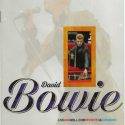
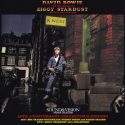
David Bowie Live In Japan - Rare 7 CD Box Set Japan '73 - SQ -8
Label: ARC Records / Hive – HIVE DBX1
Audio Source: Audience recordings
Lineage: Unknown; individual source histories are not documented
Total running time: 7:43:07 (combined stated disc durations)
Sound Quality: Variable audience sound, ranging from reasonably listenable to noisy and very dull
Attendance: Reportedly sold out in advance
Artwork: Yes – individual disc sleeves, inserts and illustrated outer box
Format: 7 × CD, Box Set, Unofficial Release
Note: The seven discs are presented in their original box-set order, which is not completely chronological. CD 6 contains only the surviving second portion of the Osaka concert.
David Bowie Live In Japan – Rare 7 CD Box Set Japan '73
David Bowie – Live In Japan is an unofficial seven-CD box set issued by ARC Records under the Hive designation HIVE DBX1. Dedicated to Bowie's first Japanese concert tour in April 1973, the collection brings together seven audience recordings from Tokyo, Nagoya, Hiroshima and Osaka, capturing David Bowie and the Spiders from Mars during the final months of the Ziggy Stardust era.
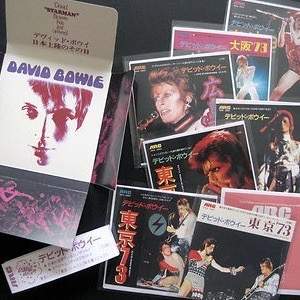
The box is distinguished by its elaborate Japanese-inspired packaging. Each CD is presented in the style of a period Japanese seven-inch single, with an individual textured insert, a black vinyl-style disc, a paper sleeve and a protective clear bag. The outer packaging uses a cruciform design accompanied by a paper Glam Rock obi strip. Although the sound quality varies considerably between the recordings, the collection is an impressive physical archive of Bowie's historic 1973 Japanese performances.
Sound Quality Rating
Title: Live In Japan – Rare 7 CD Box Set Japan '73
Recorded: 8–20 April 1973
Locations: Tokyo, Nagoya, Hiroshima and Osaka, Japan
Tour: Ziggy Stardust Tour – Japanese leg
Packaging: Cruciform outer box with Glam Rock obi, seven-inch single-style CD sleeves and black vinyl-style discs
Live In Japan – Seven Concert Recordings from 1973
David Bowie's first Japanese tour took place during the international success of The Rise and Fall of Ziggy Stardust and the Spiders from Mars and shortly after the release of Aladdin Sane. By April 1973, the Ziggy Stardust character had become internationally recognisable, and Bowie was performing with the musicians who had helped establish his distinctive early-1970s sound.
The Japanese concerts represented an important expansion of Bowie's international audience. The performances combined the theatrical presentation of Ziggy Stardust with a repertoire that was already evolving to include songs from Aladdin Sane.
The seven discs in this box document different nights of that tour. Although the basic concert arrangements remained consistent, the surviving recordings reveal changes in song selection, performance length and the atmosphere of individual venues.
The collection is particularly valuable because professionally recorded documentation of these specific Japanese performances is limited. Audience tapes therefore remain important sources for understanding how Bowie and the Spiders from Mars sounded during the Japanese leg of the tour.
The Seven-CD Box – Design and Presentation
The physical presentation is one of the most distinctive aspects of Live In Japan. Rather than using conventional CD jewel cases, ARC Records adopted a design inspired by Japanese seven-inch singles from the early 1970s.
Each disc is accompanied by its own sleeve artwork and textured insert. The CDs themselves are styled to resemble black vinyl records, reinforcing the visual connection with the original period.
The discs are housed in individual paper sleeves and protective clear bags. The outer box uses a cruciform construction, with a paper obi strip carrying the words Glam Rock.
An obi strip is a familiar feature of Japanese record packaging, traditionally wrapped around an album or sleeve to display release information and promotional details. Its use here strengthens the Japanese presentation of the collection.
The elaborate packaging makes the set interesting not only as a collection of concert recordings but also as an example of the visual culture surrounding unofficial Bowie releases.
CD 1 – Tokyo, Shinjuku Koseinenkin Kaikan – 8 April 1973
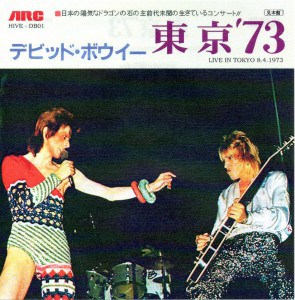
The first disc documents Bowie's concert at Shinjuku Koseinenkin Kaikan in Tokyo on 8 April 1973. It is identified as HIVE-DB01 and has a stated running time of 1 hour, 8 minutes and 37 seconds.
The recording opens with Beethoven's Ode To Joy, used as introductory music, before the band launches into Hang On To Yourself. This opening sequence immediately establishes the theatrical atmosphere associated with the Ziggy Stardust performances.
The set includes familiar songs such as Ziggy Stardust, Changes, Moonage Daydream and Space Oddity, alongside newer material including Panic In Detroit, Aladdin Sane and Time.
The recording also includes Starman, which does not appear on every disc in this collection. Its presence makes the 8 April recording particularly interesting when comparing the surviving Japanese concert setlists.
CD 1 Tracklisting – HIVE-DB01
101. Ode To Joy
102. Hang On To Yourself
103. Ziggy Stardust
104. Changes
105. Moonage Daydream
106. Panic In Detroit
107. Aladdin Sane
108. The Width Of A Circle
109. Space Oddity
110. The Jean Genie
111. Time
112. Five Years
113. Let's Spend The Night Together
114. Starman
115. Suffragette City
116. Rock 'N' Roll Suicide
Label: Hive – HIVE-DB01
Audio Source: Audience
Lineage: Unknown
Total running time: 1:08:37
Sound Quality: Noticeable noise and dullness, but still listenable
Artwork: Yes
CD 2 – Tokyo, Shinjuku Koseinenkin Kaikan – 10 April 1973
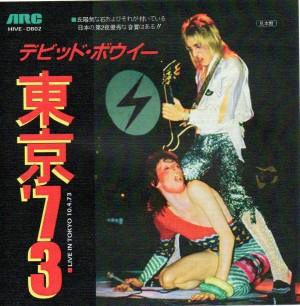
The second disc returns to Shinjuku Koseinenkin Kaikan for Bowie's performance on 10 April 1973. Released within the box as HIVE-DB02, it preserves another evening of the Japanese tour.
The concert follows a broadly similar structure to the first disc, beginning with Ode To Joy, Hang On To Yourself, Ziggy Stardust and Changes.
However, the repertoire is not identical. John, I'm Only Dancing and Watch That Man appear in this recording, while Panic In Detroit and Aladdin Sane, present on the first disc, are absent from its listed sequence.
The recording illustrates how the Japanese concerts retained a recognisable overall structure while allowing some variation in the songs performed.
CD 2 Tracklisting – HIVE-DB02
201. Ode To Joy
202. Hang On To Yourself
203. Ziggy Stardust
204. Changes
205. Moonage Daydream
206. John, I'm Only Dancing
207. Watch That Man
208. The Width Of A Circle
209. Space Oddity
210. The Jean Genie
211. Five Years
212. Let's Spend The Night Together
213. Suffragette City
214. Rock 'N' Roll Suicide
Label: Hive – HIVE-DB02
Audio Source: Audience
Lineage: Unknown
Total running time: 1:08:37
Sound Quality: Considerable noise and dullness, but still listenable
Attendance: Reportedly sold out
Artwork: Yes
CD 3 – Nagoya, Nagoya-shi Kokaido – 12 April 1973
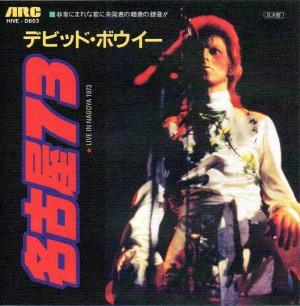
The third disc moves away from Tokyo to Nagoya, documenting Bowie's performance on 12 April 1973. The recording is identified as HIVE-DB03.
The supplied recording information names the venue as Nagoya-shi Kokaido, while the earlier image description refers to a different Nagoya venue. The distinction should be checked against original concert documentation rather than treating the two names as interchangeable.
The recording is described as a mono audience source with substantial noise and a very dull tonal balance. Its sound quality is noticeably weaker than that of some of the Tokyo recordings.
Despite these limitations, the disc preserves a substantial selection of the Ziggy Stardust repertoire, including John, I'm Only Dancing, Watch That Man, Time and Rock 'N' Roll Suicide.
CD 3 Tracklisting – HIVE-DB03
301. Ode To Joy
302. Hang On To Yourself
303. Ziggy Stardust
304. Changes
305. Moonage Daydream
306. John, I'm Only Dancing
307. Watch That Man
308. The Width Of A Circle
309. Space Oddity
310. The Jean Genie
311. Time
312. Five Years
313. Let's Spend The Night Together
314. Suffragette City
315. Rock 'N' Roll Suicide
Label: ARC / Hive – HIVE-DB03
Audio Source: Audience, mono
Lineage: Unknown
Total running time: 1:13:51
Sound Quality: Poor; considerable noise and very dull sound
Attendance: Approximately 1,000 (reported, unverified)
Artwork: Yes
CD 4 – Tokyo, Shinjuku Koseinenkin Kaikan – 11 April 1973
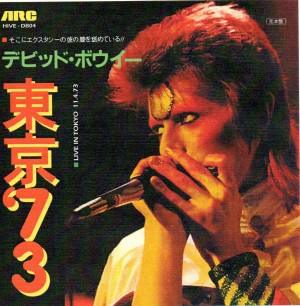
Although presented as the fourth disc, HIVE-DB04 documents the Tokyo concert of 11 April 1973, one day before the Nagoya performance included on CD 3.
This difference between disc order and concert chronology is part of the original box-set presentation and has been retained here.
The recording runs for 1 hour, 17 minutes and 46 seconds, making it one of the longer discs in the collection.
The listed repertoire includes John, I'm Only Dancing, Watch That Man, The Width Of A Circle, Time and The Jean Genie.
The audience recording contains considerable noise and dullness, although the performance remains listenable. As with the other Tokyo recordings, its principal value lies in preserving a specific evening of Bowie's first Japanese tour.
CD 4 Tracklisting – HIVE-DB04
401. Ode To Joy
402. Hang On To Yourself
403. Ziggy Stardust
404. Changes
405. Moonage Daydream
406. John, I'm Only Dancing
407. Watch That Man
408. The Width Of A Circle
409. Space Oddity
410. Let's Spend The Night Together
411. Time
412. Five Years
413. The Jean Genie
414. Suffragette City
415. Rock 'N' Roll Suicide
Label: Hive – HIVE-DB04
Audio Source: Audience
Lineage: Unknown
Total running time: 1:17:46
Sound Quality: Considerable noise and dullness, but still listenable
Attendance: Reportedly sold out
Artwork: Yes
CD 5 – Hiroshima, Yubinchokin Kaikan – 14 April 1973
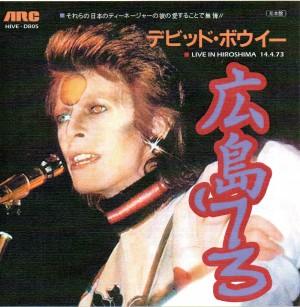
The fifth disc documents Bowie's concert at Yubinchokin Kaikan in Hiroshima on 14 April 1973. Identified as HIVE-DB05, the recording has a stated running time of 1 hour, 17 minutes and 24 seconds.
The Hiroshima performance is particularly interesting because its listed repertoire includes Starman, a song absent from several of the other recordings in the box.
The concert follows the established Ziggy Stardust structure, moving from the introductory music into Hang On To Yourself, Ziggy Stardust, Changes and Moonage Daydream.
Later selections include John, I'm Only Dancing, Watch That Man, The Width Of A Circle and Time, before the performance reaches its closing sequence.
The supplied tracklisting identifies Rock 'N' Roll Suicide as the encore. The audience recording contains noticeable noise and dullness, but it remains an important document of this particular Japanese concert.
CD 5 Tracklisting – HIVE-DB05
501. Ode To Joy
502. Hang On To Yourself
503. Ziggy Stardust
504. Changes
505. Moonage Daydream
506. John, I'm Only Dancing
507. Watch That Man
508. The Width Of A Circle
509. Space Oddity
510. The Jean Genie
511. Time
512. Five Years
513. Let's Spend The Night Together
514. Starman
515. Suffragette City
Encore
516. Rock 'N' Roll Suicide
Label: Hive – HIVE-DB05
Audio Source: Audience
Lineage: Unknown
Total running time: 1:17:24
Sound Quality: Considerable noise and dullness, but still listenable
Attendance: Reportedly sold out
Artwork: Yes
CD 6 – Osaka, Koseinenkin Kaikan – 17 April 1973
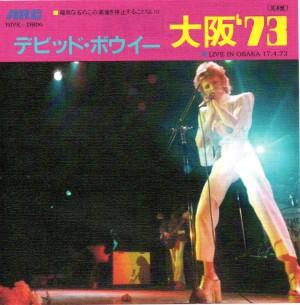
The sixth disc is unusual because it contains only the second portion of Bowie's concert at Koseinenkin Kaikan in Osaka on 17 April 1973.
Identified as HIVE-DB06, the recording has a running time of just 31 minutes and 12 seconds, substantially shorter than the other discs in the box.
The surviving sequence begins with The Jean Genie and continues through Time, Five Years, Let's Spend The Night Together and Suffragette City.
The final track contains Rock 'N' Roll Suicide, followed by an outro identified as Land Of Hope And Glory.
Because the disc begins partway through the concert, it should not be described as a complete recording of the Osaka performance. Its value lies in preserving the surviving closing section of the show.
The sound is described as poor, with substantial noise and a very dull tonal balance. These limitations are important when assessing the recording, but they do not diminish its significance as documentation of the Japanese tour.
CD 6 Tracklisting – HIVE-DB06
601. The Jean Genie
602. Time
603. Five Years
604. Let's Spend The Night Together
605. Suffragette City
606. Rock 'N' Roll Suicide / Land Of Hope And Glory (Outro)
Label: Hive – HIVE-DB06
Audio Source: Audience
Lineage: Unknown
Total running time: 0:31:12
Sound Quality: Poor; considerable noise and very dull sound
Attendance: Reportedly sold out
Artwork: Yes
Note: Partial concert recording – second portion only
CD 7 – Tokyo, Shibuya Kokaido – 20 April 1973
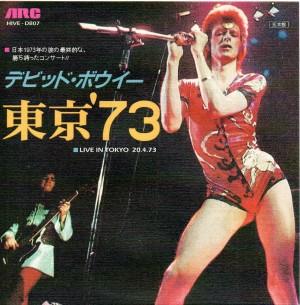
The seventh and final disc documents Bowie's performance at Shibuya Kokaido in Tokyo on 20 April 1973. Identified as HIVE-DB07, it concludes the box with another recording from the Japanese leg of the Ziggy Stardust Tour.
The supplied recording is described as mono and has a running time of 1 hour, 5 minutes and 40 seconds.
The setlist includes the familiar opening sequence of Ode To Joy, Hang On To Yourself, Ziggy Stardust and Changes, followed by selections from Bowie's early-1970s repertoire.
The disc is particularly notable for its closing track, Round And Round, a Chuck Berry composition that Bowie had recorded during the Ziggy Stardust period.
Its inclusion distinguishes the final disc from the other recordings in the collection and provides an additional example of the rock-and-roll influences that remained part of Bowie's live repertoire.
The recording is described as noisy and very dull, making it one of the weaker audio sources in the set. Nevertheless, its repertoire and historical setting make it an important conclusion to the collection.
CD 7 Tracklisting – HIVE-DB07
701. Ode To Joy
702. Hang On To Yourself
703. Ziggy Stardust
704. Changes
705. Moonage Daydream
706. John, I'm Only Dancing
707. Watch That Man
708. The Jean Genie
709. Time
710. Five Years
711. Let's Spend The Night Together
712. Starman
713. Suffragette City
714. Rock 'N' Roll Suicide
715. Round And Round
Label: Hive – HIVE-DB07
Audio Source: Audience, mono
Lineage: Unknown
Total running time: 1:05:40
Sound Quality: Poor; considerable noise and very dull sound
Attendance: Reportedly sold out
Artwork: Yes
David Bowie's First Japanese Tour
The Japanese concerts of April 1973 formed an important part of Bowie's international breakthrough. Following the success of The Rise and Fall of Ziggy Stardust and the Spiders from Mars, he had become one of the most visually distinctive performers in British rock music.
His appearance in Japan brought the Ziggy Stardust character to an audience that had previously experienced much of Bowie's work through records, photographs and music publications.
The tour also coincided with the release of Aladdin Sane, an album that expanded the musical language of the Ziggy Stardust period while retaining its theatrical identity.
The Japanese performances therefore document a transitional moment. Bowie was still appearing as Ziggy Stardust, but the repertoire and arrangements were already moving beyond the original 1972 album.
The Spiders From Mars in Japan
The Japanese concerts featured the musicians most closely associated with Bowie's Ziggy Stardust performances, together with pianist Mike Garson.
David Bowie – Lead vocals, guitar, saxophone
Mick Ronson – Lead guitar, backing vocals
Trevor Bolder – Bass guitar
Mick Woodmansey – Drums
Mike Garson – Piano, keyboards
Mick Ronson played a central role in the band's sound, contributing powerful guitar arrangements and backing vocals. His musical partnership with Bowie had been fundamental to the development of the Ziggy Stardust repertoire.
Trevor Bolder and Mick Woodmansey provided the rhythm section, giving the performances their distinctive combination of precision and rock-and-roll energy.
Mike Garson added a new musical dimension through his piano playing. His experimental approach was especially important to compositions such as Aladdin Sane, while his presence broadened the band's instrumental possibilities.
The Ziggy Stardust Stage Presentation
The Japanese concerts took place during the height of Bowie's Ziggy Stardust stage persona. His appearance combined elaborate costumes, striking makeup, brightly coloured hair and theatrical gestures.
The visual presentation was closely connected with the music. Songs such as Ziggy Stardust, Moonage Daydream and Rock 'N' Roll Suicide were performed as part of a larger theatrical identity that had developed throughout the preceding year.
The Japanese tour provided an opportunity to present this concept to audiences outside Europe and North America, extending the international reach of the Ziggy Stardust phenomenon.
The surviving audience recordings preserve the musical side of those performances, although they cannot fully reproduce the visual impact of the original concerts.
The Repertoire – Ziggy Stardust and Aladdin Sane
The seven recordings demonstrate the importance of the Ziggy Stardust repertoire during the Japanese tour. Songs such as Hang On To Yourself, Ziggy Stardust, Moonage Daydream, Five Years, Suffragette City and Rock 'N' Roll Suicide appear repeatedly.
At the same time, material from Aladdin Sane was becoming part of the concerts. Watch That Man, Panic In Detroit, Time and the title track reflect Bowie's developing musical direction.
The presence of older compositions, including Space Oddity, Changes and The Width Of A Circle, also demonstrates how Bowie combined his recent success with material from earlier albums.
The result was a repertoire that represented several stages of his career while remaining strongly associated with the Ziggy Stardust identity.
Ode To Joy – The Concert Introduction
Several discs begin with Ode To Joy, the familiar theme from the final movement of Beethoven's Ninth Symphony.
The use of this music as an introduction helped establish a dramatic atmosphere before the band began playing.
It was followed by Hang On To Yourself, a fast and energetic composition that provided an effective opening to the rock portion of the performance.
This contrast between classical introductory music and amplified rock was consistent with the theatrical presentation of Bowie's early-1970s concerts.
The Width Of A Circle – A Live Centrepiece
The Width Of A Circle, originally released on The Man Who Sold The World in 1970, became one of the most substantial live performances in Bowie's early-1970s repertoire.
The composition offered extended instrumental passages and opportunities for Mick Ronson to demonstrate his guitar playing.
Its appearance on several discs in this collection illustrates the importance of the song within the Japanese concert arrangements.
The live versions also demonstrate how Bowie and the Spiders from Mars could transform an earlier studio composition into a dramatic stage performance.
Rock 'N' Roll Suicide – The Ziggy Stardust Finale
Rock 'N' Roll Suicide served as the closing song on most of the recordings in this collection.
Originally released as the final track of The Rise and Fall of Ziggy Stardust and the Spiders from Mars, the composition had become closely associated with the emotional climax of Bowie's Ziggy Stardust concerts.
Its gradual musical development and dramatic vocal delivery made it particularly effective as a final performance.
The repeated appearance of the song across the Japanese recordings demonstrates how firmly it had become established as part of the concert structure.
Audience Recordings – Sound Quality and Limitations
All seven discs are described as audience recordings, although their original tape sources and transfer histories are not documented in the supplied release information.
The sound quality varies considerably. Some recordings remain reasonably listenable despite background noise and dullness, while others are substantially more difficult to hear clearly.
The Nagoya recording and the partial Osaka recording are described as particularly noisy and dull. The final Tokyo recording also has significant limitations.
These differences are important because the box does not represent a collection of uniform professional recordings. Instead, it brings together separate surviving audience sources, each with its own technical characteristics.
For historical research, such recordings can still be valuable. They preserve song sequences, performances and elements of the concert atmosphere that might otherwise have disappeared.
The Historical Importance of the Japanese Concerts
The April 1973 Japanese tour occurred only a few months before Bowie announced the retirement of the Ziggy Stardust stage persona at London's Hammersmith Odeon on 3 July 1973.
The recordings therefore document one of the final international phases of the original Ziggy Stardust presentation.
They also preserve performances by the band that had helped establish Bowie's breakthrough sound. The combination of Bowie, Mick Ronson, Trevor Bolder, Mick Woodmansey and Mike Garson represents an important chapter in his live history.
The Japanese concerts are particularly interesting because they took place outside the British and American settings most frequently associated with the Ziggy Stardust period.
Their survival through audience tapes provides additional evidence of the international reach of Bowie's music during 1973.
Original Box Set Artwork
The following two photographs show the distinctive packaging of the ARC Records / Hive seven-CD edition, including its elaborate outer construction and internal presentation.


About Live In Japan – Rare 7 CD Box Set Japan '73
David Bowie – Live In Japan is an elaborate unofficial seven-CD collection documenting performances from Bowie's first Japanese tour in April 1973.
Issued by ARC Records under the Hive designation HIVE DBX1, the box brings together recordings from Tokyo, Nagoya, Hiroshima and Osaka, including a partial recording of the Osaka concert on 17 April.
The seven discs have a combined stated running time of 7 hours, 43 minutes and 7 seconds. Their sound quality varies, and the absence of documented source lineages limits what can be established about the original recordings.
The physical presentation is one of the collection's strongest features. Its individual Japanese seven-inch-style sleeves, black vinyl-style discs, textured inserts and cruciform outer box with Glam Rock obi make it a distinctive collector's edition.
Historically, the recordings capture Bowie and the Spiders from Mars during the final months of the Ziggy Stardust era, as the repertoire expanded to incorporate material from Aladdin Sane.
For collectors interested in Bowie's 1973 live performances, Live In Japan offers a substantial archive of surviving Japanese audience recordings, presented in packaging that reflects the visual culture of the period.

where can i buy
Hi, is this item for sale? Thanks.