
Luther Vandross – David Bowie Collaborator on Young Americans
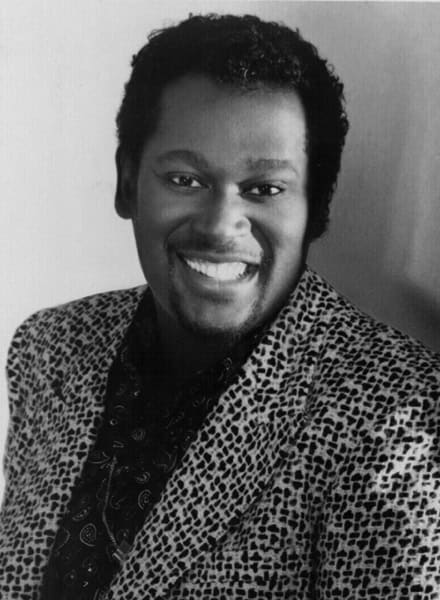
Luther Vandross in 1985. Photo: John Mathew Smith / Celebrity-Photos.com / Wikimedia Commons / CC BY-SA 2.0 (editorial use).
Luther Vandross was an American singer, songwriter, producer and vocal arranger whose work with David Bowie became an important early chapter in one of the most celebrated careers in modern soul music. Before becoming an international star in his own right, Vandross contributed background vocals and vocal arrangements to Bowie’s transition from glam rock towards American soul.
Their collaboration developed during 1974, when Bowie began working closely with musicians and singers associated with the soul scenes of New York and Philadelphia. Vandross participated in Bowie’s later 1974 concerts and in the sessions that produced the 1975 album Young Americans.
Vandross also received a songwriting credit for Fascination, which grew from his composition Funky Music (Is a Part of Me). Bowie recognised him not simply as a background singer but as a musician capable of shaping harmonies, arrangements and original material.
- Full name: Luther Ronzoni Vandross Jr.
- Born: 20 April 1951, New York City, United States
- Died: 1 July 2005, Edison, New Jersey, United States
- Profession: Singer, songwriter, producer and vocal arranger
- Bowie collaboration: 1974–1975
- Tour: Bowie’s later 1974 North American concerts
- Bowie album: Young Americans (1975)
- Songwriting credit: Fascination
- Original Vandross composition: Funky Music (Is a Part of Me)
- Main contributions: Background vocals, vocal arrangements and songwriting
- Solo breakthrough: Never Too Much (1981)
- Major awards: Eight Grammy Awards
Early life in New York
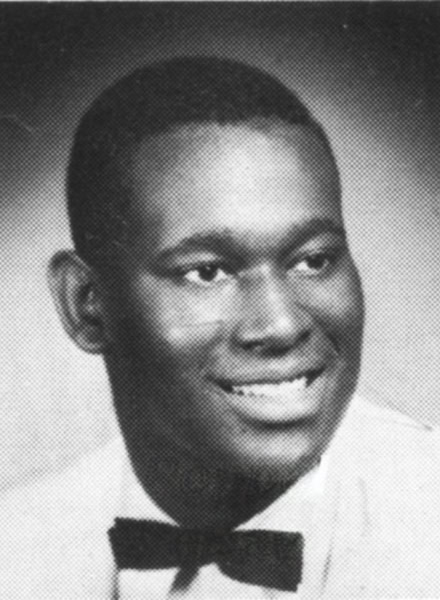
Luther Ronzoni Vandross Jr. was born in New York City on 20 April 1951. He was the youngest of four children and grew up in a home where music was an important part of family life. His father died when Luther was eight, after which his mother, Mary Ida Vandross, continued raising the family.
Vandross became fascinated by the records of singers such as Aretha Franklin, Dionne Warwick and Diana Ross. He paid attention not only to the featured performers but also to the harmonies and arrangements supporting them. This ability to hear how individual voices could be combined later became central to his professional work.
As a teenager, Vandross began writing songs and forming vocal groups. He briefly attended Western Michigan University but left to pursue music. Success was far from guaranteed, and he developed his craft through live performances, auditions and studio opportunities while learning how the professional music industry operated.
Listen My Brother and the Apollo Theater
Luther Vandross performing with Listen My Brother during the early years of Sesame Street.
One of Vandross’ earliest important groups was Listen My Brother, a vocal ensemble based in New York. The group performed at Harlem’s Apollo Theater and appeared during the first season of the children’s television programme Sesame Street.
These appearances did not immediately make Vandross a star, but they gave him practical experience of ensemble singing and professional performance. Listen My Brother depended upon coordinated voices rather than a single featured vocalist, encouraging the kind of musical discipline Vandross later brought to recording sessions.
His development differed from the familiar story of a singer who was immediately promoted as a solo attraction. Vandross spent years learning how to strengthen another performer’s music. He could identify the notes, textures and rhythmic placement needed to make an intricate vocal arrangement sound natural.
Songwriting and session work
Examples of Luther Vandross’ commercial jingle work before his breakthrough as a solo artist.
During the early 1970s, Vandross gradually established himself as a studio singer, songwriter and arranger. He sang commercial jingles and worked on sessions where accuracy, speed and versatility were essential. Advertising work required vocalists to create memorable performances within a tightly controlled amount of time.
He also continued writing his own material. Vandross wanted to become a featured artist, but background singing provided employment and access to professional studios. It brought him into contact with musicians who understood that his abilities extended beyond the quality of his voice.
Among his important musical connections were guitarist Carlos Alomar and singer Robin Clark. Alomar and Clark would both become closely associated with Bowie’s developing soul sound. Through this circle of New York musicians, Vandross entered the environment in which Bowie was building a new musical identity.
Meeting David Bowie
Bowie arrived in the United States in 1974 at a moment of rapid artistic change. The elaborate stage production created for the opening part of the Diamond Dogs tour was becoming difficult to sustain, while his listening and songwriting were moving increasingly towards American rhythm and blues and soul.
Vandross became involved as Bowie expanded the vocal dimension of his music. Accounts of the period describe an environment in which musicians, singers and musical ideas circulated around Bowie’s sessions. Bowie heard Vandross and recognised his exceptional understanding of harmony, rhythm and vocal construction.
Vandross was not yet known to the general public, but Bowie treated his musical judgement seriously. The relationship gave Vandross a significant professional opportunity while giving Bowie direct access to a singer with a deep understanding of American soul vocals.
Joining Bowie’s 1974 touring band
David Bowie with Luther Vandross during the soul-oriented phase of Bowie’s 1974 North American tour.
Vandross did not participate in the creation of the original theatrical Diamond Dogs production. He joined Bowie’s touring organisation later in 1974, during the period in which the concerts were being reorganised around a more soul-oriented musical presentation.
The original production had been designed around large scenery, choreographed movement and a carefully controlled visual narrative. As the tour progressed, Bowie reduced the staging and placed greater emphasis on the band, the rhythm section and the singers.
Vandross performed within a group of background vocalists that also included Robin Clark and Ava Cherry. Their voices created a fuller and more flexible sound, allowing older Bowie compositions to be rearranged instead of presented as fixed reproductions of their studio versions.
For Vandross, touring with Bowie provided experience on major concert stages before large audiences. For Bowie, the singers offered a way to place harmony, rhythm and vocal responses at the centre of the changing performance.
From the Diamond Dogs Tour to the Soul Tour
David Bowie performing with Luther Vandross and the backing vocalists during The Dick Cavett Show in 1974.
The later 1974 concerts are commonly identified as the Soul Tour, while the name Philly Dogs Tour has also been used by listeners and collectors. These concerts remained part of Bowie’s broader North American touring programme, but their musical identity differed noticeably from the original production.
Songs from Diamond Dogs and earlier albums were reshaped by a band increasingly centred upon rhythm, keyboards, saxophone and layered vocals. The performances pointed directly towards the music Bowie was recording for Young Americans.
Vandross understood how voices could become part of the rhythm rather than functioning merely as decoration behind a lead singer. Repeated phrases, responses and harmonies could drive a performance and alter the emotional character of familiar material.
The tour therefore documents a genuine period of transformation. Bowie was dismantling part of the theatrical structure associated with his previous work and rebuilding the music around a different set of performers and musical relationships.
Creating the tour’s vocal sound
Vocal arranging involves more than selecting attractive harmonies. It requires choosing notes, assigning individual parts and deciding where voices should enter, pause, repeat or respond to the featured singer.
Vandross possessed both the technical ear and the performance discipline required to translate these decisions into convincing concert performances. A carefully placed response could make a line feel conversational, while a sustained harmony could add emotional weight to an arrangement.
Bowie remained responsible for the overall artistic direction, but he gave individual musicians room to contribute specialist knowledge. Vandross’ work in the touring ensemble showed how substantially a group of background singers could change the structure and atmosphere of a performance.
Recording Young Americans
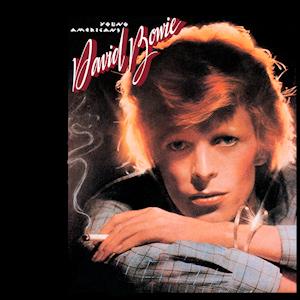
The principal Philadelphia sessions began in August 1974 at Sigma Sound Studios. The studio was closely associated with the development of Philadelphia soul and offered Bowie an environment very different from the British studios in which much of his earlier work had been created.
Tony Visconti worked with Bowie as producer. The musicians included Carlos Alomar on guitar, Mike Garson on keyboards, David Sanborn on saxophone, Willie Weeks on bass and Andy Newmark on drums. Robin Clark, Ava Cherry and Vandross were among the singers contributing to the vocal arrangements.
Bowie was not attempting to reproduce the sound of one existing Philadelphia group. He combined soul instrumentation and vocal techniques with his own melodies, lyrics and outsider’s perspective. The resulting music drew upon American traditions while retaining the uncertainty and theatrical awareness that characterised his writing.
Vandross contributed to the six songs on the released album that came principally from the Philadelphia sessions: Young Americans, Win, Fascination, Right, Somebody Up There Likes Me and Can You Hear Me. The album’s remaining tracks, Across the Universe and Fame, originated during later sessions in New York.
Life inside Sigma Sound Studios
The history and musical legacy of Sigma Sound Studios in Philadelphia, where David Bowie recorded much of Young Americans in 1974.
The Sigma Sound sessions became famous partly because local Bowie admirers gathered outside the studio. Their presence contributed to the atmosphere surrounding the recordings and reflected Bowie’s growing American audience. At the end of the Philadelphia sessions, a group of fans was invited inside to hear material from the work in progress.
Within the studio, songs developed through rehearsal and repeated performance. The rhythm section established a foundation while guitars, saxophone, keyboards and vocals were shaped around it. Vandross could contribute both as a singer and as someone capable of hearing the structure of the complete vocal arrangement.
The sessions placed Bowie in close contact with musicians whose musical experience differed from his own. Rather than concealing those differences, the recordings draw energy from them. Bowie’s lead vocals sometimes sound deliberately tense against the fluidity of the instrumental and vocal arrangements.
This contrast helped prevent Young Americans from becoming a conventional soul album. The musicians supplied precision and authority, while Bowie’s writing continued to address fame, identity, desire, power and disappointment from a distinctly personal position.
From Funky Music to Fascination
Luther Vandross performing Funky Music (Is a Part of Me) with the Mike Garson Band on 28 October 1974.
The clearest evidence of Vandross’ creative importance is Fascination. The song developed from his composition Funky Music (Is a Part of Me). Bowie adapted the material, wrote new lyrics and recorded it for Young Americans.
Vandross received an official co-writing credit on Fascination, an important acknowledgement for a musician who was still years away from his solo breakthrough. The credit distinguishes this collaboration from a situation in which a background singer contributed only a performance created entirely by someone else.
Vandross later recorded Funky Music (Is a Part of Me) with the group Luther. It appeared on the group’s self-titled 1976 album. Comparing the two compositions reveals their shared musical foundation while showing how Bowie transformed Vandross’ original idea into a song suited to the atmosphere of Young Americans.
Fascination is built upon desire, repetition and rhythmic momentum. Its identity depends upon the interaction between the lead vocal, instrumental groove and background singers. Vandross’ songwriting is therefore part of the musical foundation rather than an incidental addition to the recording.
Vandross’ voice on Young Americans
On the finished album, Vandross’ voice forms part of a carefully integrated ensemble. Listeners should not expect every contribution to resemble the romantic lead performances of his later solo career. His role was to strengthen the complete arrangement rather than compete with Bowie’s lead vocal.
The title track provides one of the clearest examples of this method. Bowie’s narrative is surrounded by responses and repeated phrases that make the song feel simultaneously public and intimate. The background singers sometimes sound like witnesses commenting upon the central character’s experience.
On Right and Somebody Up There Likes Me, layered voices help sustain the groove and organise the movement of the arrangements. On Can You Hear Me, the singers support a more restrained and vulnerable performance.
Vandross’ later fame can make these recordings sound like a meeting between two established stars. In 1974, however, their positions were very different. Bowie was internationally recognised, while Vandross was a highly skilled professional whose name remained largely unfamiliar outside the music industry.
The Gouster and the developing album
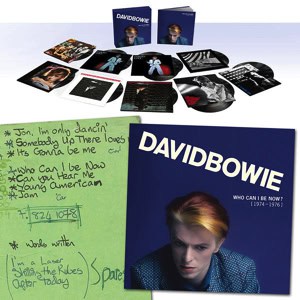
Before Young Americans reached its released form, Bowie considered an album sequence known as The Gouster. This version represented an earlier stage of the soul project and included several recordings that were subsequently removed or rearranged when the final album was assembled.
The proposed sequence contained John, I’m Only Dancing (Again), Somebody Up There Likes Me, It’s Gonna Be Me, Who Can I Be Now?, Can You Hear Me, Young Americans and Right. These recordings preserve the work of the musicians and singers involved in the Philadelphia sessions.
The project changed after Bowie worked with John Lennon in New York in January 1975. Fame and Bowie’s interpretation of the Beatles’ Across the Universe entered the final album, while other completed recordings were set aside.
The official release of The Gouster within the 2016 box set Who Can I Be Now? (1974–1976) allowed listeners to examine this transitional album configuration. It also provided a broader context for the creative environment in which Vandross worked with Bowie.
Bowie’s description of Young Americans
Bowie later used the expression “plastic soul” when discussing the music he had created during this period. The phrase acknowledged his position as a British artist drawing upon Black American musical traditions while also recognising the deliberately constructed character of the finished album.
David Bowie on Young Americans
“The definitive plastic soul record.”
— David Bowie, describing Young Americans in his 1976 Playboy interview
The description should not be mistaken for a denial of the musicians’ abilities. The performances by Vandross and the other American participants were grounded in extensive professional experience. The tension arose from Bowie placing his own voice and writing inside a musical language he approached as both an admirer and an outsider.
Working with other major artists
Luther Vandross singing lead vocals on Change’s The Glow of Love, released in 1980 shortly before his solo breakthrough.
After his work with Bowie, Vandross continued building a formidable reputation as a studio vocalist and arranger. He contributed to recordings by numerous major performers and became one of the most dependable voices in New York session work.
His credits included work with artists such as Bette Midler, Roberta Flack, Donna Summer, Chaka Khan, Ben E. King and the Chic organisation. These projects placed him across soul, pop, disco and rhythm and blues while allowing him to refine his approach to recording.
Vandross also sang lead vocals for the studio group Change. His performances on the 1980 recordings The Glow of Love and Searching attracted considerable attention. They demonstrated that the background singer heard on other artists’ records possessed a lead voice capable of carrying an entire project.
The Change recordings became an important bridge between Vandross’ session career and his emergence as a solo star. They displayed the smooth tone, control and emotional directness that would define his most successful work.
Solo breakthrough
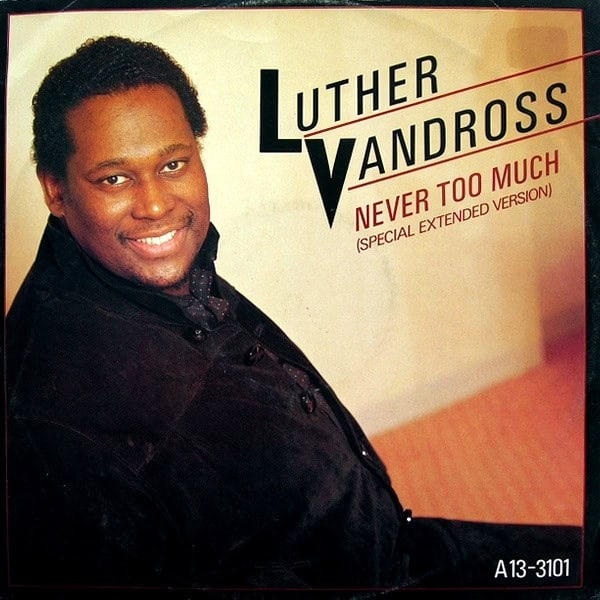
In 1981, Vandross released Never Too Much, his first solo album for Epic Records under his own name. Two albums credited to the vocal group Luther had already appeared on Cotillion Records during the 1970s, but Never Too Much established the solo career for which he became internationally known.
Vandross wrote and produced the title song, which became one of his defining recordings. His solo identity was based upon more than vocal ability. He exercised substantial control over production, arrangements and song selection.
Albums including Forever, for Always, for Love, Busy Body, The Night I Fell in Love, Give Me the Reason and Any Love consolidated his reputation. His interpretations of romantic material combined technical discipline with an immediately recognisable emotional warmth.
Although ballads became central to his public image, Vandross was equally capable of handling faster material. His sense of rhythm remained essential, connecting his solo success to the musical qualities already audible during his work with Bowie.
An award-winning career
Vandross became one of the most influential soul vocalists of his generation. His phrasing, breath control and ability to move between softness and power influenced many singers who followed him.
He received eight Grammy Awards during his career. Among his best-known recordings were Never Too Much, Here and Now, Power of Love/Love Power, Any Love, Give Me the Reason and his interpretation of Superstar.
His concerts reinforced his reputation as a meticulous performer. Arrangements, lighting, clothing and vocal presentation were treated as parts of one complete experience. His years of studio work had taught him how every element of a production could be used to support a featured voice.
Vandross continued writing, arranging and producing as his career developed. The skills he had once applied to the music of other performers became the foundation of his own distinctive musical world.
Later years and final recordings
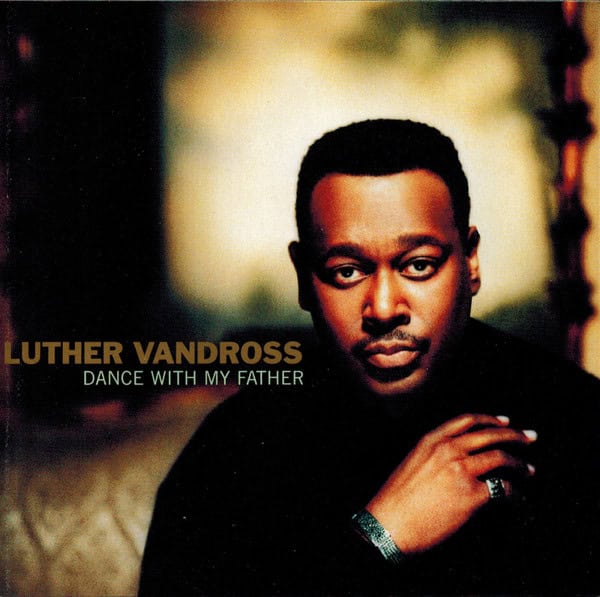
In 2003, Vandross released Dance with My Father. The title song, written with Richard Marx, reflected upon childhood memories of his parents and became one of his most personal recordings.
Vandross suffered a severe stroke in April 2003, shortly before the album’s release. His illness prevented him from promoting the record in the usual way, but Dance with My Father became a major commercial and critical success.
At the Grammy Awards in February 2004, Dance with My Father received the award for Song of the Year. Vandross was unable to attend the ceremony, but a recorded video message allowed him to address the audience.
Luther Vandross in his Grammy message
“When I say goodbye, it’s never for long, because I believe in the power of love.”
— Luther Vandross, recorded message shown at the 2004 Grammy Awards
The success of the album demonstrated the depth of his connection with audiences. A career that had begun through vocal groups, jingles and background sessions ended with recognition for an intensely personal composition carrying his own name and family history.
Death and tributes
Luther Vandross died on 1 July 2005 at the age of 54. His death followed the serious health problems that had affected him after his stroke. Musicians, singers and listeners paid tribute to a performer whose voice had become inseparable from several decades of soul and rhythm and blues.
The tributes focused naturally upon his solo recordings, but they also brought renewed attention to his earlier work. His contributions to Bowie, Change and numerous studio projects revealed how long he had been helping to shape important music before becoming widely famous.
Vandross left behind recordings that demonstrated extraordinary control without losing emotional immediacy. He could make complex vocal decisions sound effortless, a quality already present during his collaboration with Bowie.
Legacy of the Bowie collaboration
The partnership between Luther Vandross and David Bowie was relatively brief, but it was important to both artists. Vandross helped Bowie work within a new musical environment shaped by singers and musicians with direct experience of American soul.
His background vocals and arrangements contributed substantially to the identity of Young Americans. His composition Funky Music (Is a Part of Me) also provided the musical foundation for Fascination, making his authorship a permanent part of Bowie’s catalogue.
For Vandross, the collaboration brought experience on a major tour, recognition for his arranging abilities and an important album credit. It did not create his later solo success by itself, but it revealed abilities that the wider public had not yet been given the opportunity to hear.
The story also challenges the idea that background singers occupy a minor position in recording history. Vandross was a vocalist, arranger and songwriter whose decisions helped determine how the music sounded. Bowie’s willingness to use those abilities strengthened both the concerts and the album.
When Young Americans is heard today, it captures Bowie between identities while preserving the contributions of the American musicians who helped him make that transition. Among them, Luther Vandross stands out as a future star whose voice and musical intelligence were already fully developed.
Official Website & Further Information
More information about Luther Vandross, his recordings and continuing legacy can be found on the official Luther Vandross website .
For more about Bowie’s 1974 concerts and the transformation of the Diamond Dogs production into the soul-oriented later tour, visit: David Bowie Soul Tour 1974 .
Article Origin
This article was researched and written for DavidBowieWorld.com as part of the David Bowie Collaborators archive. It documents Luther Vandross’ work with David Bowie during the later 1974 tour and the creation of Young Americans, together with the wider career that followed.
© DavidBowieWorld.com — Written and compiled for David Bowie World.
