
Denis Taylor & David Bowie – Guitarist in The Lower Third
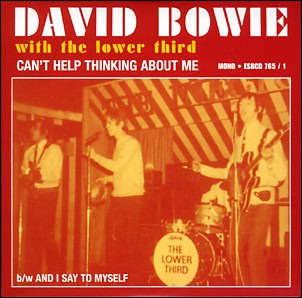
Image: David Bowie World collection / editorial use
Denis “Tea-Cup” Taylor was the guitarist of The Lower Third, the London mod group that worked with David Bowie during one of the most important early turning points in Bowie’s career.
Taylor was not the drummer of The Lower Third. The drummer was Phil Lancaster. Taylor’s confirmed role was guitar, with backing vocals also credited on You’ve Got a Habit of Leaving.
The Lower Third helped Bowie move away from straight rhythm and blues toward a sharper, more self-written mod-pop identity. Their records did not become hits, but they mark the moment when Bowie began moving more clearly toward authorship, image control and a recognisable artistic direction.
- Name: Denis “Tea-Cup” Taylor
- Died: October 2024 (aged 83)
- Band: The Lower Third
- Role: Guitar, backing vocals
- With Bowie: 1965–1966 period
- Important correction: Taylor was guitarist; Phil Lancaster was drummer
- Key releases: You’ve Got a Habit of Leaving; Can’t Help Thinking About Me
- Era: Mod, post-R&B, early Bowie songwriting period
Who was Denis Taylor?
Denis Taylor, sometimes credited or remembered as Denis “Tea-Cup” Taylor, was the guitarist in The Lower Third, the group that worked with David Bowie during 1965 and into the beginning of 1966.
Because Bowie’s early career passed through several short-lived bands, names and record labels, the details can easily become confused. For historical accuracy, Taylor should be identified as the guitarist of The Lower Third, not as the drummer.
His place in Bowie’s story is brief but significant. The Lower Third were one of the first groups through which Bowie began to sound less like a young R&B imitator and more like an ambitious songwriter trying to shape his own identity.
The Lower Third before Bowie
The Lower Third existed before Bowie joined them. The band was formed in Margate in the early 1960s and later moved toward London, where they became part of the club and mod circuit.
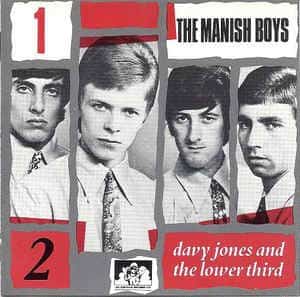
When Bowie joined, he was still using the name Davy Jones. He had already recorded with earlier groups including The King Bees and The Manish Boys, but those records had not brought him a breakthrough.
The Lower Third gave Bowie a new vehicle. The group’s sharper mod direction suited his growing desire to move beyond blues-based material and into more personal, contemporary songwriting.
Bowie joins the band
Bowie joined The Lower Third in 1965 after leaving The Manish Boys. The band became part of his continuing attempt to find the right musical identity in a fast-changing London scene.
The group’s line-up during the important recording period included David Bowie on vocals and harmonica, Denis Taylor on guitar, Graham Rivens on bass guitar and Phil Lancaster on drums.
On You’ve Got a Habit of Leaving, the recording was also strengthened by Nicky Hopkins on piano. Hopkins would later become one of the most respected session pianists in British rock history.
The Lower Third and the mod sound
The Lower Third represented Bowie’s move toward a sharper mod identity. The band’s sound drew from the energy of groups such as The Who and The Kinks, rather than the more straightforward American rhythm and blues influences of Bowie’s earlier records.
This shift mattered. Bowie was not yet the fully formed artist he would become, but he was beginning to understand how style, image, songwriting and sound could work together.
Denis Taylor’s guitar role was central to that sound. The guitar on the Lower Third recordings helped give Bowie’s songs a harder, sharper edge than his earlier singles.
You’ve Got a Habit of Leaving
You’ve Got a Habit of Leaving was released in 1965 under the name Davy Jones. Although The Lower Third played on the record, the single itself was credited only to Bowie’s earlier performing name rather than to the full group.
The track marked a clear move away from Bowie’s earlier R&B style. Its aggressive mod attack, sharp guitar sound and Who-like energy show Bowie trying to align himself with the more modern sound of London youth culture.
Denis Taylor played guitar and backing vocals on the recording. The confirmed personnel for the 1965 version include Bowie on vocals and harmonica, Taylor on guitar and vocals, Nicky Hopkins on piano, Graham Rivens on bass guitar and Phil Lancaster on drums.
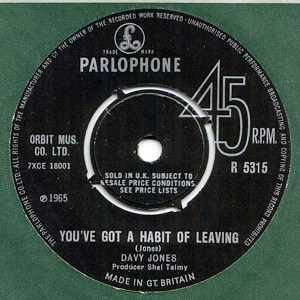
The single did not chart, but it remains important because it gave Bowie another opportunity to record his own songs. It also shows him moving closer to the self-written material that would define his later career.
Baby Loves That Way
The B-side of You’ve Got a Habit of Leaving was Baby Loves That Way, another Bowie composition from the same early period.
Although less forceful than the A-side, the song is still historically useful because it shows Bowie experimenting with pop structure and melody. The Lower Third’s involvement helped frame the material within a band sound rather than a purely solo performance.
Shel Talmy and the London mod connection
The producer of You’ve Got a Habit of Leaving was Shel Talmy, one of the key producers of the British beat and mod era.
Talmy had worked with The Who and The Kinks, which places the Lower Third recordings directly inside the same London guitar-pop world Bowie was trying to enter.
This connection is important because Bowie was not developing in isolation. In 1965 he was watching the market, absorbing sounds around him and trying to position himself within a scene that was changing almost month by month.
The Who influence
You’ve Got a Habit of Leaving is often discussed in relation to The Who. Its guitar attack and mod energy show Bowie and The Lower Third moving toward a sound that was much closer to contemporary London rock than to the R&B of his first singles.
This influence should not be exaggerated into originality that was not yet fully there. Bowie was still learning and borrowing from current trends. But the song is valuable precisely because it captures him in that process of transformation.
Denis Taylor’s guitar was part of that transformation. His role helped give the recording its sharper and more modern edge.
Can’t Help Thinking About Me
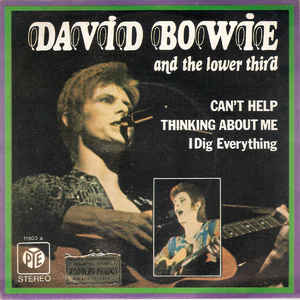
Can’t Help Thinking About Me was recorded in December 1965 and released in January 1966 as David Bowie with The Lower Third.
This single is historically crucial because it was the first release issued under the name David Bowie, after he moved away from the name Davy Jones.
The recording was produced by Tony Hatch, best known for his work in British pop. The line-up included Bowie on vocals, Denis Taylor on guitar, Graham Rivens on bass and Phil Lancaster on drums.
Compared with You’ve Got a Habit of Leaving, Can’t Help Thinking About Me shows Bowie moving toward more personal songwriting. It is still a modest 1960s pop record, but it contains early signs of Bowie’s interest in outsider identity, social discomfort and self-dramatisation.
And I Say to Myself
The B-side of Can’t Help Thinking About Me was And I Say to Myself. Like many early Bowie B-sides, it is not usually treated as a major creative breakthrough, but it belongs to the same transitional period.
Together, the two singles with The Lower Third show Bowie trying to move beyond the limitations of the small London group scene while still depending on bands to carry his songs.
The breakup of The Lower Third
The Lower Third broke up shortly after Can’t Help Thinking About Me was released.
The split is generally linked to disputes over money, management and direction. The other members of the group felt that Bowie was not fully supporting their side of the argument, and Taylor, Rivens and Lancaster left.
This breakup was another important early lesson for Bowie. Again, he had passed through a band without achieving commercial success, but each group had moved him closer to a more independent artistic identity.
Bowie after The Lower Third
After The Lower Third, Bowie continued searching for a breakthrough. He would soon work with The Buzz and then move further toward solo recording, theatrical presentation and increasingly ambitious songwriting.
The Lower Third period did not make Bowie famous, but it helped prepare him for the next steps. The records are not masterpieces, yet they show the outline of a young artist learning how to lead, write and shape a public identity.
Why Denis Taylor matters
Denis Taylor matters because he was part of one of Bowie’s first serious attempts to move beyond imitation. His guitar helped give Bowie’s 1965 recordings a sharper mod edge.
Taylor was not a long-term collaborator and should not be overstated. But he was present during an essential transition: Bowie’s move from young R&B singer to emerging songwriter and self-conscious image-maker.
For that reason, Taylor’s role belongs in Bowie’s collaboration history. He represents the short, formative band phase that helped Bowie learn what he did and did not want to become.
Video
David Bowie with The Lower Third — early mod-era recording
This video is included as a historical example of Bowie’s Lower Third period. The group belongs to the short but important phase in which Bowie was still moving through the London band circuit while beginning to assert himself more clearly as a songwriter.
Death
Denis “T-Cup” Taylor died in early October 2024 at the age of 83.
Although his period with David Bowie was relatively brief, Taylor remained an important figure in Bowie’s early history. As guitarist of The Lower Third, he helped shape the sound of Bowie’s final years as a band frontman before the future star moved fully into his solo career.
News of Taylor’s passing prompted renewed interest in The Lower Third and their place in Bowie’s development. For many Bowie historians and collectors, the group remains one of the key stepping stones between Bowie’s rhythm-and-blues beginnings and the emergence of the artist who would soon record under the name David Bowie.
Legacy within Bowie’s universe
Within David Bowie’s wider story, Denis Taylor represents a brief but important early collaborator. His guitar work belongs to the moment when Bowie was shifting from R&B imitation toward mod pop, original songwriting and a more controlled artistic image.
The Lower Third did not last long, and their records did not bring Bowie commercial success. But they helped him move one step closer to becoming David Bowie in the full artistic sense.
That is why Denis Taylor’s role, though modest, deserves to be remembered accurately: not as a drummer, but as the guitarist who helped give Bowie’s Lower Third recordings their mod-era edge.
Following Taylor’s death in October 2024, interest in The Lower Third increased once again, reminding Bowie fans of the important role the band played during one of the most formative periods of his career.
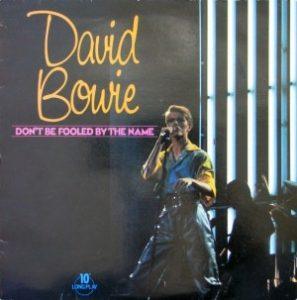
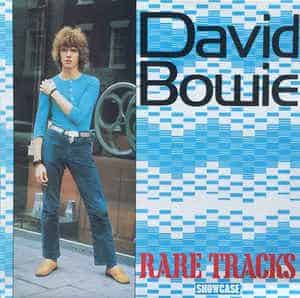
David Bowie & The Lower Third Bootlegs
David Bowie & And The Lower Third Chronology
🏛️ La Gioconda / Soho Rehearsal Rooms
🤝 Event: Audition and First Meeting
🗒️ Notes: David Jones meets and auditions with The Lower Third. He decides to join them immediately, seeking a tougher Mod-oriented sound.
🏛️ Working Men’s Club (Isle of Sheppey)
🎤 Artist: Davie Jones & The Lower Third
🗒️ Notes: Debut performance of The Lower Third. They replaced the originally booked Manish Boys.
🏛️ Management Office
🤝 Event: Departure from Leslie Conn
🗒️ Notes: David officially terminates his association with manager Leslie Conn. This move paves the way for Ralph Horton to take over his affairs.
🏛️ Unknown Location
📸 Event: First official photo session
🎤 Artist: The Lower Third
🗒️ Notes: The band takes their first professional publicity photos to promote the new line-up and their Mod image.
🏛️ Gateway Club (Seymour Street)
🎤 Artist: Davie Jones & The Lower Third
🗒️ Notes: One of the first performances of the new line-up in the capital. The band was rapidly building their reputation in the London Mod scene.
🏛️ Bromel Club (Bromley Court Hotel)
🎤 Artist: Davie Jones & The Lower Third
🗒️ Notes: Another performance where the new band replaced the originally booked Manish Boys. This gig in Bromley solidified the new line-up’s reputation.
🏛️ La Gioconda Coffee Bar
🎤 Artist: Davie Jones & The Lower Third
🗒️ Notes: Intensive rehearsal session following their successful show at the Bromel Club. The band continues to refine their R&B and Mod repertoire.
🏛️ Unknown Venue
🎤 Artist: Davie Jones & The Lower Third
🗒️ Notes: Transitional booking during the switch from The Manish Boys to The Lower Third.
🏛️ Shel Talmy’s Office
🎤 Artist: Davie Jones
🗒️ Notes: The formal end of The Manish Boys. Davie meets the band members to officially announce his departure. From this point on, he commits fully to his new group, The Lower Third.
🏛️ Witch Doctor
🎤 Artist: Davie Jones & The Lower Third
🗒️ Notes: One of the first Saturday night performances after the formal split from The Manish Boys.
🏛️ The Scene
🎤 Artist: Davie Jones & The Lower Third
🗒️ Notes: A technical rehearsal session to test the band’s new equipment in a club environment.
🏛️ Bromley Technical High School
🎤 Artist: Davie Jones & The Lower Third
🗒️ Notes: David returns to his former school for the ‘Old Boys’ Association Dance’.
🏛️ Grand Hotel
🎤 Artist: Davie Jones & The Lower Third
🗒️ Notes: First performance with new drummer Phil Lancaster. The band used the hotel (owned by Phil’s father) for intensive rehearsals.
🏛️ California Ballroom
🎤 Artist: Davie Jones & The Lower Third
🗒️ Notes: Often mislisted as The Manish Boys.
🏛️ IBC Studios (Portland Place)
🎤 Artist: Davie Jones & The Lower Third
🎧 Recording Session: Demos for Shel Talmy
🗒️ Notes: The band records early versions of ‘You’ve Got A Habit Of Leaving’. These sessions were crucial in securing their future deal with Pye Records.
🏛️ Starlight Rooms (Montpelier Hotel)
🎤 Artist: Davie Jones & The Lower Third
🗒️ Notes:
🏛️ Marquee Club
🎤 Artist: Davie Jones & The Lower Third
🗒️ Notes: Supporting The Who. A major milestone in gaining recognition within the London Mod scene.
🏛️ Town Hall
🎤 Artist: Davie Jones & The Lower Third
🗒️ Notes: Second night supporting The Who.
🏛️ Town Hall
🎤 Artist: Davie Jones & The Lower Third
🗒️ Notes: Third consecutive night supporting The Who. Due to the success of the previous evening, the band was retained for an additional performance.
🏛️ Pye Records Studios (ATV House)
🤝 Event: Audition for Pye Records
🗒️ Notes: Following the buzz from the Marquee shows, the band auditions for the Pye label. Their performance impresses the staff, securing the follow-up meeting with Tony Hatch in July.
🏛️ Starlight Rooms (Montpelier Hotel)
🎤 Artist: Davie Jones & The Lower Third
🏛️ Pye Records Studios (ATV House)
🤝 Event: Meeting with producer Tony Hatch.
🗒️ Notes: A pivotal meeting at Pye’s Marble Arch headquarters. Hatch was impressed by David’s potential, eventually leading to the recording of ‘You’ve Got A Habit Of Leaving’.
🏛️ London Studio (Unknown)
🎤 Artist: The Lower Third
🗒️ Notes: David Bowie signs management deal with Ralph Horton
🏛️ Unknown Studio
📸 Event: Professional Publicity Photoshoot
🎤 Artist: Davie Jones & The Lower Third
🗒️ Notes: A crucial session to capture the band’s sharpened Mod image following their deal with Tony Hatch and Pye Records.
🏛️ IBC Studios, Portland Place
🎤 Artist: Davie Jones & The Lower Third
🎧 Recording Session: ‘You’ve Got A Habit Of Leaving’ & ‘Baby Loves That Way’
🗒️ Notes: Produced by Shel Talmy.
🏛️ Marquee Club
🎤 Artist: Davie Jones & The Lower Third
🗒️ Notes: Performance at the legendary Marquee Club.
🏛️ Starlight Rooms (Montpelier Hotel)
🎤 Artist: Davie Jones & The Lower Third
🏛️ Winter Gardens
🎤 Artist: Davie Jones & The Lower Third
🗒️ Notes:
🏛️ Flamingo Jazz Club
🎤 Artist: Davie Jones & The Lower Third
🗒️ Notes: An “All-Nighter” performance at one of Soho’s most famous jazz and R&B venues.
🏛️ Marquee Club
🎤 Artist: Davie Jones & The Lower Third
🗒️ Notes: Supporting The Boz. Verified via the [Marquee Club Archives](https://www.themarqueeclub.net).
🏛️ Starlight Rooms (Montpelier Hotel)
🎤 Artist: Davie Jones & The Lower Third
🏛️ Marquee Club
🎤 Artist: Davie Jones & The Lower Third
🗒️ Notes: Supporting The Boz (featuring Boz Burrell). Verified via the [Marquee Club Archives](https://www.themarqueeclub.net).
🏛️ Unknown Venue
🤝 Event: Press Preview for ‘You’ve Got A Habit Of Leaving’
🗒️ Notes: A promotional meeting with music journalists a day before the single’s official release.
💿 Release: ‘You’ve Got A Habit Of Leaving’
🎤 Artist: Davie Jones & The Lower Third
🗒️ Notes: Official release of the single on Pye Records. This was the final release under the name “Davie Jones” before the transition to “David Bowie”.
🏛️ Pavilion Ballroom
🎤 Artist: Davie Jones & The Lower Third
🗒️ Notes: Live performance on the same day as the single release.
🏛️ Marquee Club
🎤 Artist: Davie Jones & The Lower Third
🗒️ Notes: First Marquee performance following the release of ‘You’ve Got A Habit Of Leaving’. Supporting The Boz.
🏛️ 100 Club
🎤 Artist: Davie Jones & The Lower Third
🗒️ Notes: The final London performance under the name ‘Davie Jones‘.
🏛️ Marquee Club
🎤 Artist: David Bowie & The Lower Third
🗒️ Notes: Historic Milestone: Start of the band’s Thursday night residency. Support for The T-Bones.
🏛️ Pavilion Ballroom
🎤 Artist: Davie Jones & The Lower Third
🗒️ Notes: The first gig played after the official name change announcement on the 16th, though still billed under the old name.
🏛️ Witch Doctor
🎤 Artist: Davie Jones & The Lower Third
🗒️ Notes: Last ever show billed as ‘Davie Jones‘ (posters were printed before the name change announcement).
🏛️ 100 Club
🎤 Artist: David Bowie & The Lower Third
🗒️ Notes: Early London performance under the new name David Bowie.
🏛️ Marquee Club
🎤 Artist: David Bowie & The Lower Third
🗒️ Notes: Supporting The Steampacket (featuring Long John Baldry, Rod Stewart, and Julie Driscoll).
🏛️ Marquee Club
🎤 Artist: David Bowie & The Lower Third
🗒️ Notes: Supporting The Boz.
🏛️ Marquee Club
🎤 Artist: David Bowie & The Lower Third
🗒️ Notes: Thursday night residency session. Supporting The T-Bones.
🏛️ Dreamland Amusement Park – Ballroom
🎤 Artist: David Bowie & The Lower Third
🗒️ Notes: A “homecoming” gig for the band members, who were originally from the Margate area.
🏛️ La Gioconda Coffee Bar
🎤 Artist: David Bowie & The Lower Third
🗒️ Notes: Intensive pre-production rehearsal for the upcoming Pye recording sessions. The band finalizes the arrangements for ‘Can’t Help Thinking About Me’.
🏛️ Marquee Club
🎤 Artist: David Bowie & The Lower Third
🗒️ Notes: Thursday night residency session. Supporting The Steampacket.
🏛️ Gladstone Hall
🎤 Artist: David Bowie & The Lower Third
🗒️ Notes: Live performance during their regional autumn tour.
🏛️ Marquee Club
🎤 Artist: David Bowie & The Lower Third
🗒️ Notes: Thursday night residency session. Supporting The Boz.
🏛️ Marquee Club
🎤 Artist: David Bowie & The Lower Third
🗒️ Notes: Final Thursday residency session of the month. Supporting The T-Bones.
🏛️ BBC Aeolian Hall
🎤 Artist: David Bowie & The Lower Third
🗒️ Notes: BBC Radio Audition: David Bowie & The Lower Third audition for the BBC’s Talent Selection Group but are unsuccessful.
🏛️ Town Hall
🎤 Artist: David Bowie & The Lower Third
🗒️ Notes: Live performance.
🏛️ Marquee Club
🎤 Artist: David Bowie & The Lower Third
🗒️ Notes: Supporting The Steampacket (featuring Rod Stewart and Long John Baldry). Part of their regular Thursday night residency sessions.
🏛️ Marble Arch Studios
🎤 Artist: David Bowie & The Lower Third
🎧 Recording Session: The London Boys
🗒️ Notes: An early version of The London Boys was recorded as a potential Pye single. The recording was rejected for release and is now considered lost.
🏛️ Marquee Club
🎤 Artist: David Bowie & The Lower Third
🗒️ Notes: Supporting The T-Bones.
🏛️ Marquee Club
🎤 Artist: David Bowie & The Lower Third
🗒️ Notes: Supporting The Steampacket (featuring Rod Stewart).
🏛️ Pye Studios, Marble Arch
🎤 Artist: David Bowie & The Lower Third
🎧 Recording Session: Can’t Help Thinking About Me & And I Say To Myself
🗒️ Notes: Produced by Tony Hatch. Hatch also played piano on the recording.
🏛️ Marquee Club
🎤 Artist: David Bowie & The Lower Third
🗒️ Notes: Supporting The Boz.
🏛️ Marquee Club
🎤 Artist: David Bowie & The Lower Third
🗒️ Notes: Supporting The T-Bones.
🏛️ The Scene
🎤 Artist: David Bowie & The Lower Third
🗒️ Notes: A legendary Christmas Eve Mod performance at David’s favorite Soho club.
🏛️ Marquee Club
🎤 Artist: David Bowie & The Lower Third
🗒️ Notes: Final Marquee performance of the year, supporting The Steampacket.
🏛️ Witch Doctor
🎤 Artist: David Bowie & The Lower Third
🗒️ Notes: New Year’s Eve performance. The band ends the year at their regular seaside residency.
1966
🏛️ Gaiety Bar, Victoria Tavern
🎤 Artist: David Bowie & The Lower Third
🗒️ Notes: Record Launch
🏛️ Marquee Club
🎤 Artist: David Bowie & The Lower Third
🗒️ Notes: Supporting The Boz.
🏛️ BBC Playhouse Theatre
🎤 Artist: David Bowie & The Lower Third
📻 Event: Radio Session for ‘Saturday Club’
🗒️ Notes: First national radio session. They recorded ‘Can’t Help Thinking About Me’. The show aired on January 15.
🏛️ Marquee Club
🎤 Artist: David Bowie & The Lower Third
🗒️ Notes: Supporting The T-Bones. This performance is notable as the first time he is billed as ‘David Bowie’ at the Marquee.
💿 Release: “Can’t Help Thinking About Me” / “And I Say To Myself”
🎤 Artist: David Bowie with The Lower Third
🗒️ Notes: First single released under the name David Bowie. Released on Pye Records (7N 17020).
🏛️ Marquee Club
🎤 Artist: David Bowie & The Lower Third
🗒️ Notes: Supporting The Steampacket.
🏛️ Rediffusion TV Studios
📺 TV Appearance: Ready, Steady, Go!
🗒️ Notes: TV appearance. Bowie is interviewed; the single is featured on the programme.
🏛️ Marquee Club
🎤 Artist: David Bowie & The Lower Third
🗒️ Notes: Supporting The Boz.
🏛️ Marquee Club, Soho (Afternoon show)
🎤 Artist: David Bowie & The Lower Third
🗒️ Notes: Believed to be one of the final performances of the original Lower Third lineup.
🏛️ Bromel Club (Bromley Court Hotel)
🎤 Artist: David Bowie & The Lower Third
🗒️ Notes: Cancelled. The band refused to play after a dispute with manager Ralph Horton.
