
The Jean Genie — The Story Behind the Song
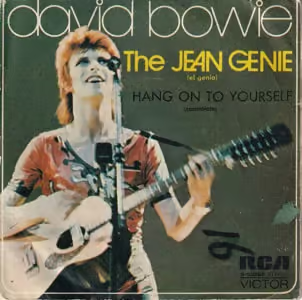
“The Jean Genie” catches David Bowie at a moment when the Ziggy Stardust phenomenon was moving across the Atlantic. Released as a single in 1972 and included on Aladdin Sane the following year, it combines a grinding guitar riff with a restless outsider character and a chorus built for the stage.
Its story reaches beyond the record: Cyrinda Foxe helped inspire its creation, Mick Rock gave it a striking filmed identity, and a live Top of the Pops performance survived outside the BBC archive for almost four decades.
When that footage returned in 2011, viewers could once again see Bowie and the Spiders from Mars performing the song together. Its recovery added a remarkable chapter to the history of one of Bowie’s best-known singles.
- Song: The Jean Genie
- Songwriter: David Bowie
- Recorded: 6 October 1972, RCA Studios, New York City
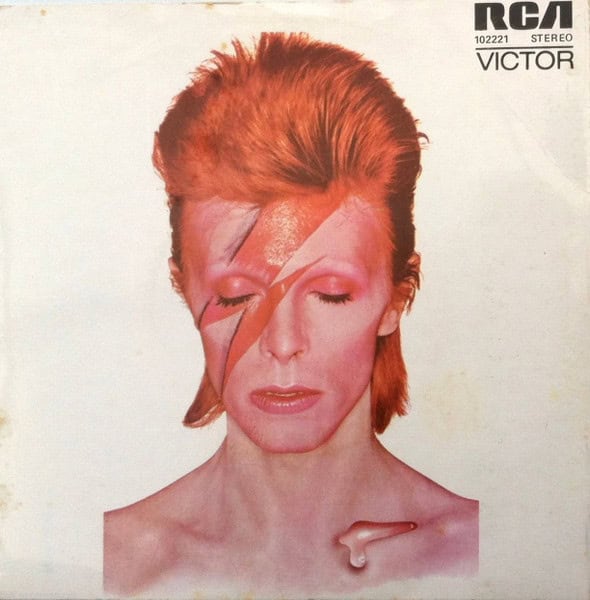
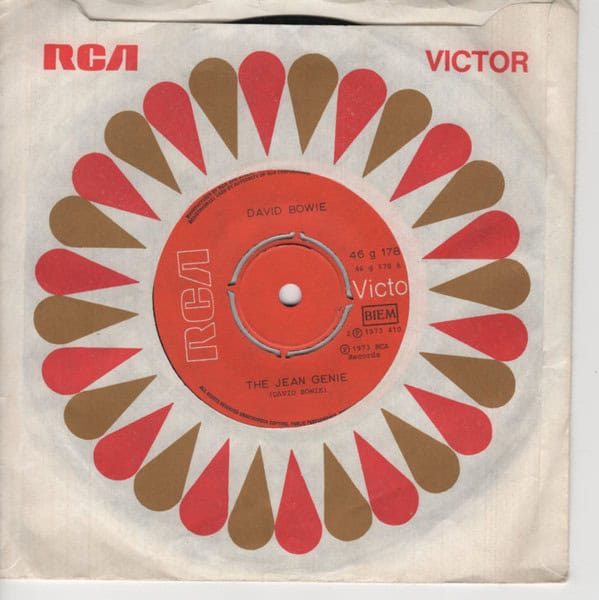
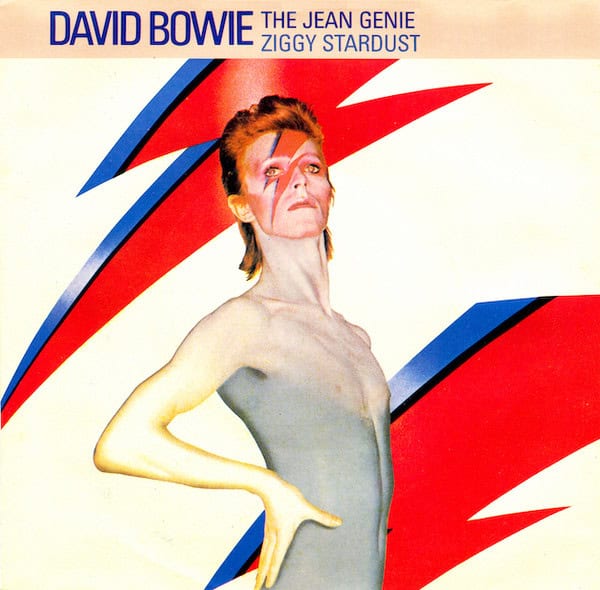
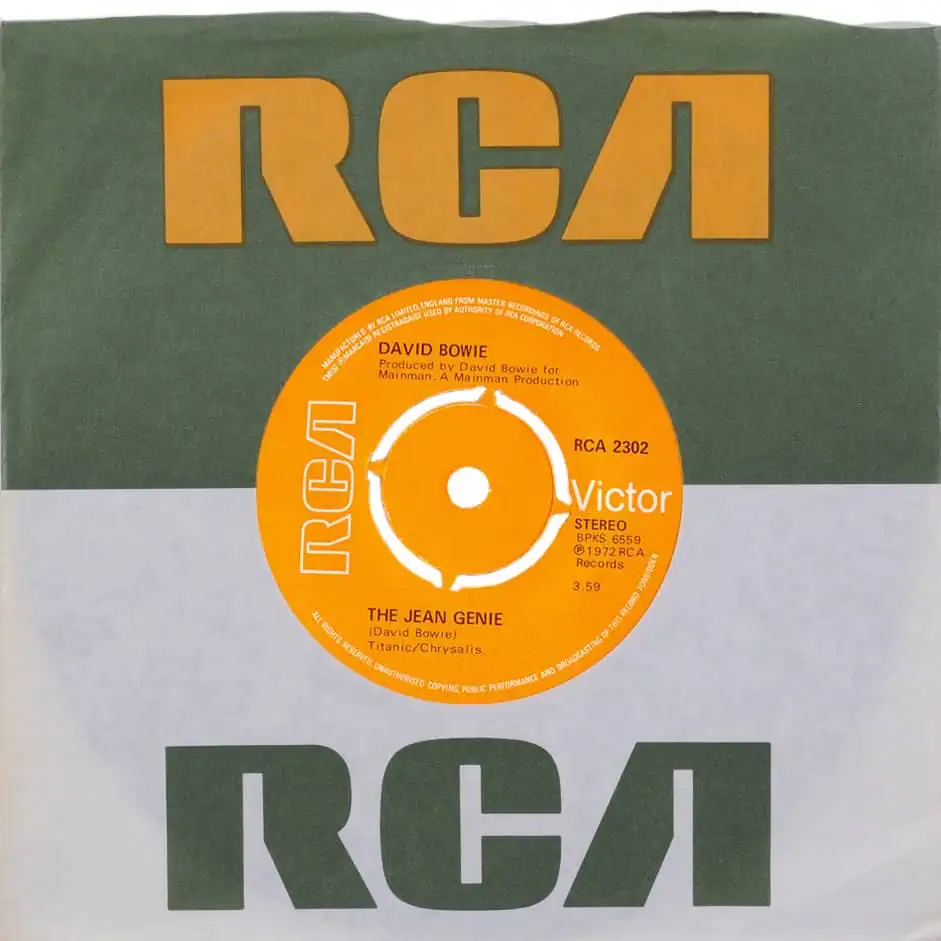
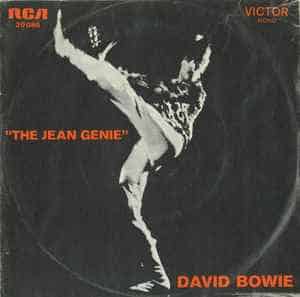
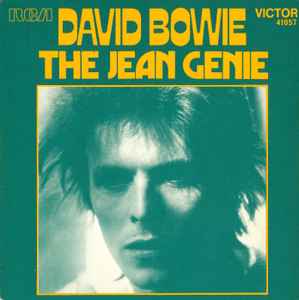
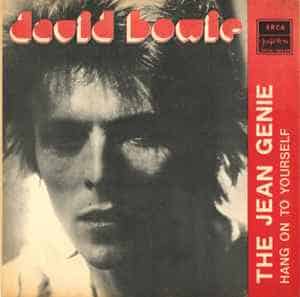
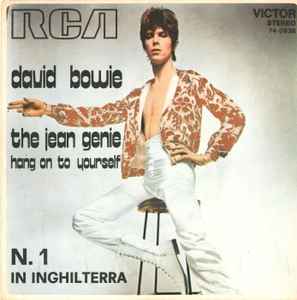
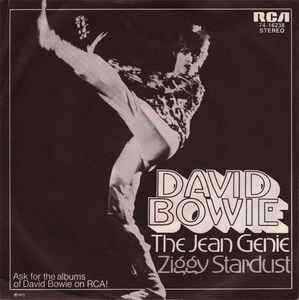
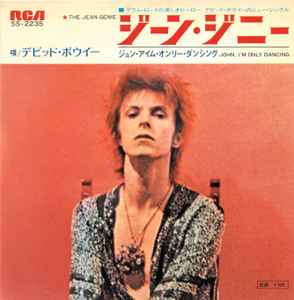
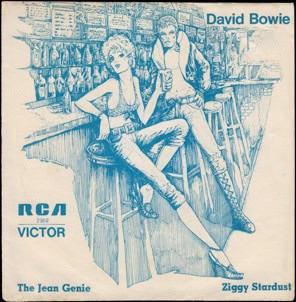
- UK single release: 24 November 1972, RCA
- Album: Aladdin Sane (1973)
- Producers: David Bowie and Ken Scott
- Musicians: David Bowie, Mick Ronson, Trevor Bolder and Mick “Woody” Woodmansey
- UK singles chart peak: No. 2
- Promotional film: Directed by Mick Rock; filmed in San Francisco in October 1972
- Top of the Pops: Recorded 3 January 1973; broadcast 4 January 1973
- Recovered BBC footage: Returned to BBC television on 21 December 2011
Writing the song in America
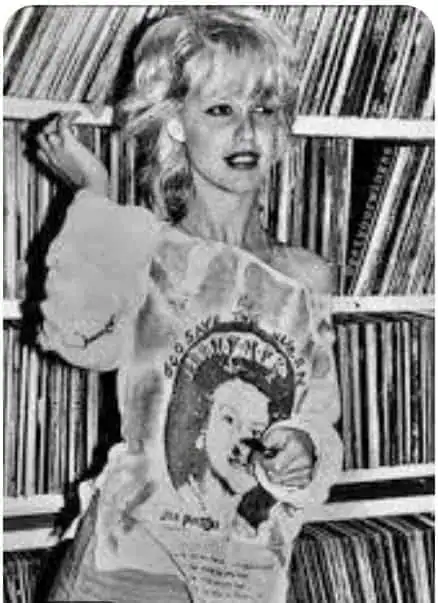
“The Jean Genie” took shape during Bowie’s American touring period in 1972. Its development is commonly traced to a touring jam before Bowie completed the words in New York. The combination suits the finished recording: a direct musical foundation supports a lyric full of movement, appetite and strange urban images.
Cyrinda Foxe belongs to the writing story as well as the later video. In a 2002 interview with Entertainment Weekly, Bowie recalled writing the song to amuse her in her apartment. That recollection gives the song a personal setting within the larger American journey that fed into Aladdin Sane.
“for her amusement in her apartment”
David Bowie, Entertainment Weekly interview, 2002; quoted by Rhino.
The character and the Jean Genet connection
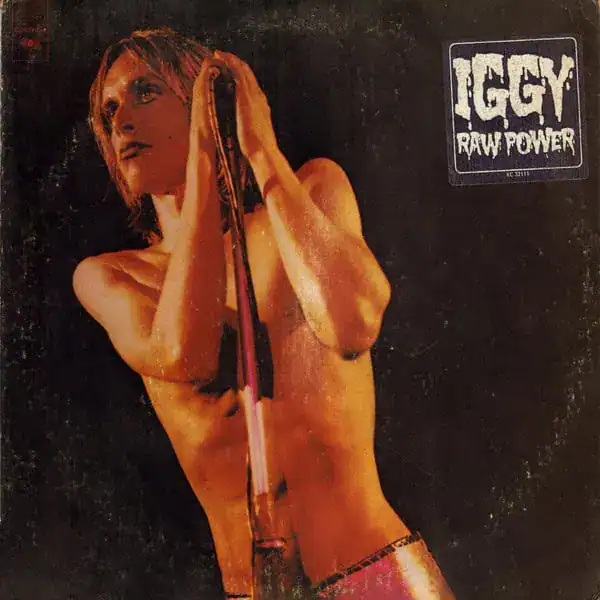
Iggy Pop was an inspiration for the song’s central character, but the lyric should not be read as a straightforward biography of him. Bowie built an exaggerated outsider figure: drawn towards the city, outrageous in behaviour and caught between glamour and roughness.
The title also plays on the name of the French writer Jean Genet. This literary connection and the Iggy-inspired persona work at different levels: one helps explain the name, while the other helps explain the character. Together they show how Bowie could combine references without turning a song into a literal portrait of one person.
Recording “The Jean Genie”

The recording session took place at RCA Studios in New York on 6 October 1972. Bowie and Ken Scott shared the production credit, with the Spiders from Mars supplying the instrumental core: Mick Ronson on guitar, Trevor Bolder on bass and Woody Woodmansey on drums. Bowie contributed vocals, rhythm guitar and harmonica.
Ronson’s guitar gives the recording its muscular centre. Bolder and Woodmansey keep the repeating figure moving, while the harmonica adds a rough edge to Bowie’s vocal. Listening to the record, much of its force comes from that interaction: the riff establishes the pattern, and the playing and singing keep disturbing its surface.
The riff, the words and the atmosphere
Musically, “The Jean Genie” sits close to blues and rhythm-and-blues traditions. Its repeating riff has often been compared with “I’m a Man” and the Yardbirds’ approach to that material. Those comparisons place the sound in a musical tradition; they should not be treated as proof of one exclusive source.
In the lyric, the character is introduced through fragments rather than a complete life story. Clothing, appetite, performance and unfamiliar technology all contribute to his identity. Read as an interpretation, the song presents someone who is both magnetic and unstable, with the city offering a stage for his excesses.
The contrast is central to its appeal. The musical pattern is easy to recognise, while the words leave room for uncertainty. Bowie gives the listener a character to imagine and a chorus to join.
Mick Rock’s film: Bowie, Cyrinda Foxe and San Francisco
David Bowie — “The Jean Genie”. Promotional film directed by Mick Rock, San Francisco, 1972.
Mick Rock filmed and directed the promotional clip in San Francisco in October 1972. It combines live footage from Winterland with scenes of Bowie and Cyrinda Foxe outside the Mars Hotel, alongside studio footage of Bowie miming with the Spiders from Mars.
The different settings give the film its rhythm. The band scenes connect the song with the touring musicians, while the street footage lets Bowie and Foxe play out a more informal encounter. Foxe’s presence also links the visual presentation with the person Bowie remembered when discussing the song’s creation.
The official video received a 4K upgrade presented in January 2023. This is Mick Rock’s promotional film from 1972; it is a separate production from the BBC performance recovered in 2011.
Release and chart success
The UK single was released on 24 November 1972. Official Charts records its first UK chart appearance on 9 December 1972, followed by a climb to No. 2. It spent thirteen weeks on the chart, including five weeks in the Top 10.
The song subsequently appeared on Aladdin Sane, released in April 1973. It therefore reached listeners as a successful single before becoming part of the album’s broader picture of Bowie’s American experiences.
Top of the Pops: the Spiders playing live
David Bowie and the Spiders from Mars — “The Jean Genie”. Top of the Pops, broadcast 4 January 1973.
On 3 January 1973, Bowie and the Spiders from Mars recorded “The Jean Genie” for BBC television’s Top of the Pops. The performance was broadcast the following day, 4 January. These are the recording and transmission dates of the same appearance.
The group performed live, rather than simply miming to the single. Bowie sang and played harmonica, with Ronson, Bolder and Woodmansey beside him. The surviving footage captures a distinct television rendition of the song.
How a fisheye lens helped save the recording
The story behind the surviving “The Jean Genie” Top of the Pops recording.
The BBC’s archive copy was later wiped. However, cameraman John Henshall had requested his own copy on two-inch broadcast videotape. He wanted a record of his work with a Telefex fisheye lens; he even appeared in the camera coverage himself.
That professional interest proved decisive. Henshall kept the tape without realising that the BBC no longer held its own copy or that collectors were searching for the performance. Its survival depended on a copy made to preserve his camerawork.
“So I went down to VTR and asked them to make me a copy”
John Henshall, account reproduced on David Bowie’s official website, November 2011.
2011: the missing performance returns
The tape’s existence became public in 2011. Henshall’s account describes visiting the specialist company Westpoint Television with BBC producer Richard Turley. There, the old tape was played again after more than thirty-eight years.
The complete performance was screened at the BFI’s Missing Believed Wiped event on 11 December 2011. The announced screening featured take three, introduced by Henshall. Bowie’s official website described Ronson’s playing and Bowie’s harmonica, including a reference to the Beatles’ “Love Me Do”.
On 21 December 2011, BBC Two broadcast the recovered footage in its Top of the Pops Christmas special. For fans, the return restored a moving record of the four musicians together at the height of the Ziggy period.
“The Jean Genie” on stage
David Bowie with Jeff Beck — “The Jean Genie/ Love Me Do”. Hammersmith Odeon, 3 July 1973.
The song also became a vehicle for extending a performance beyond the studio arrangement. A notable example came at the final Ziggy Stardust concert at Hammersmith Odeon on 3 July 1973, when Jeff Beck joined Bowie and the band on guitar.
The medley of “The Jean Genie / Love Me Do / The Jean Genie” from that concert was included on the Moonage Daydream soundtrack in 2022. It offers another way to hear the song’s possibilities: the familiar riff becomes a meeting point for the musicians and the music they bring into it.
A song with more than one history
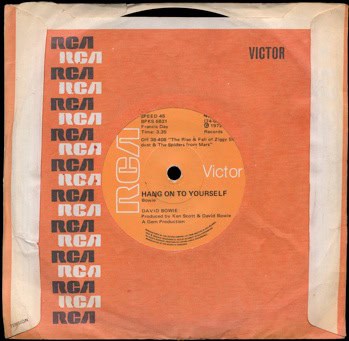
“The Jean Genie” can be followed through several connected objects: the original single, its place on Aladdin Sane, Mick Rock’s promotional film and the live BBC recording. Each preserves a different aspect of the song.
Henshall’s tape adds a particularly human chapter. A cameraman wanted to keep an example of his own work; decades later, that decision allowed an audience to see Bowie and the Spiders again. The performance’s return became part of the song’s history in its own right.
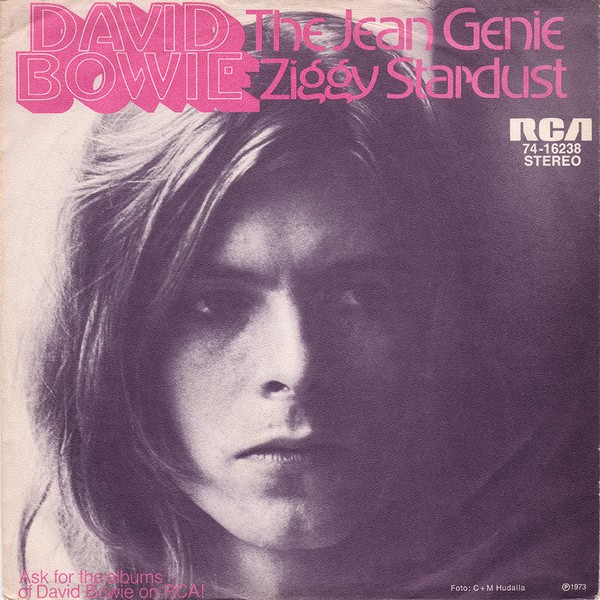
Single releases and editions


Sources and further reading
- Rhino — recording anniversary and Bowie’s recollection of Cyrinda Foxe.
- The Jean Genie — reference overview, recording details and bibliography.
- Official Charts — original UK chart history.
- David Bowie — Mick Rock’s promotional film and Aladdin Sane.
- David Bowie — official video 4K upgrade.
- David Bowie — John Henshall’s account of the surviving tape.
- David Bowie — BFI screening announcement.
- BBC statement reproduced by David Bowie — recording dates and 2011 rebroadcast.
- David Bowie — Moonage Daydream soundtrack and Jeff Beck medley.
Original article text © DavidBowieWorld.com — Diedrich Streuper. Quoted material belongs to its respective rights holders.
← Back to Song Stories