
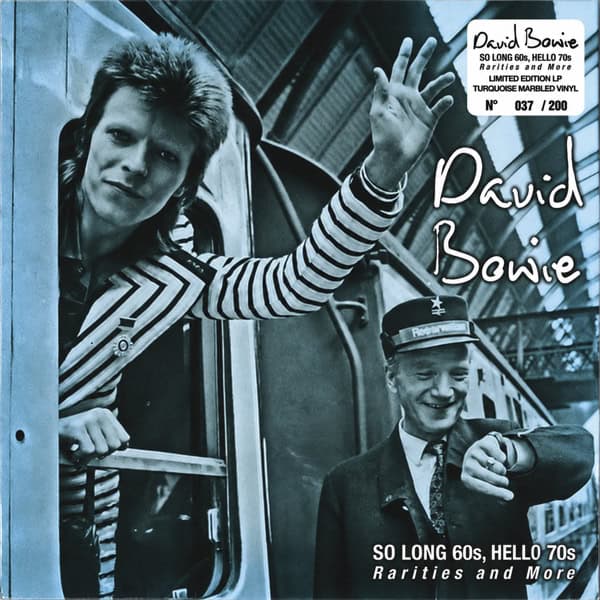
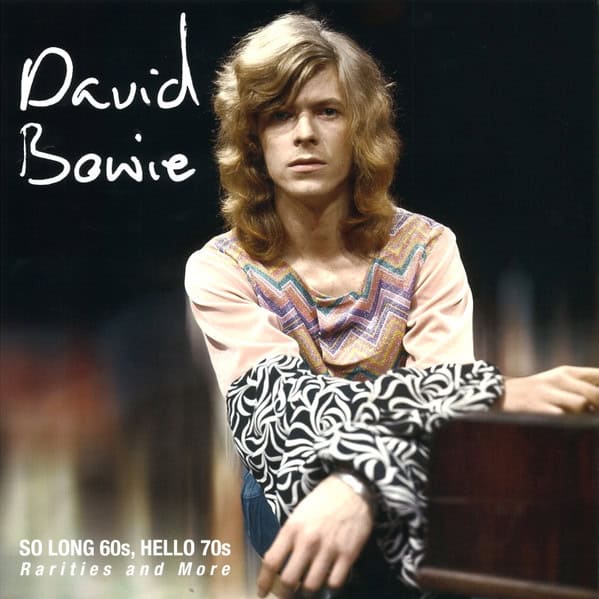
David Bowie So Long 60s, Hello 70s (Rarities And More) (Compilation, Limited Edition) - SQ 8-9 ,Estimated value € 30
Label: Casino Records Entertainment
Audio Source: Demo
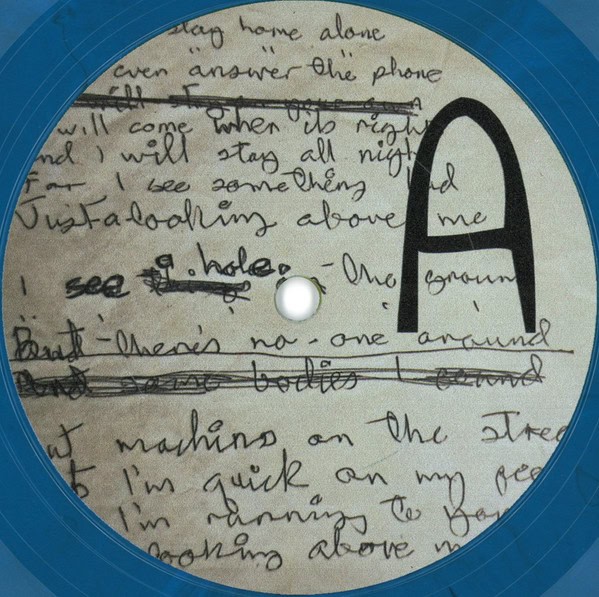
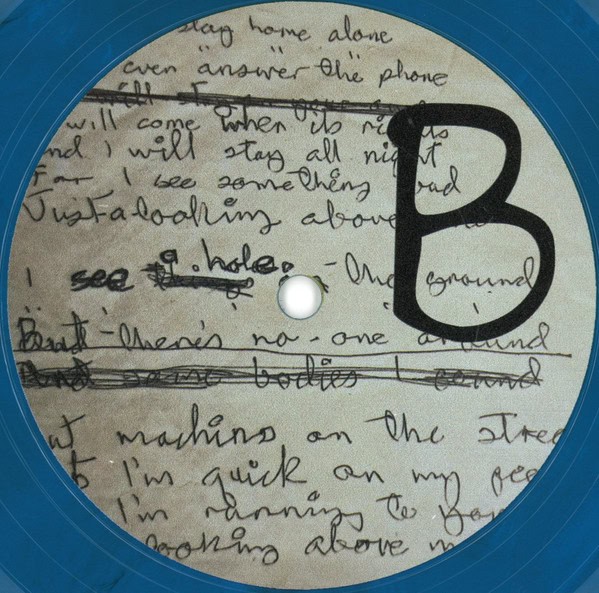
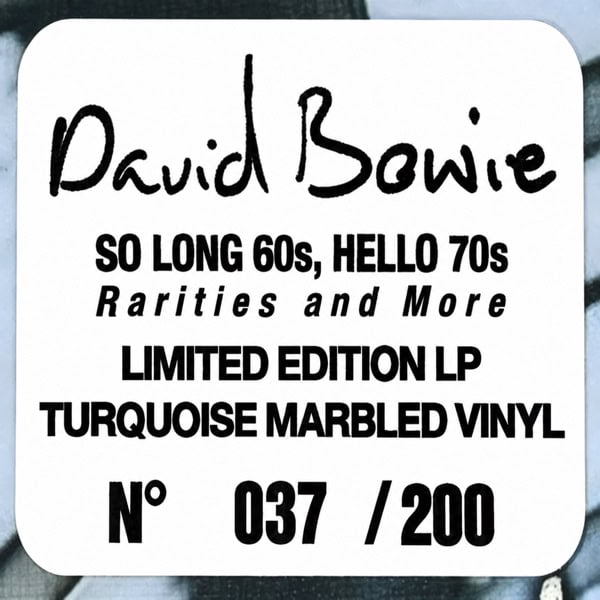
Lineage: Vinyl, LP, Limited Edition, Numbered (037/200), Unofficial Release, Turquoise Marbled
Total running time: Unknown
Sound Quality: Very good. Equals record or radio apart from slight noise and some dullness.
Artwork: Yes
Released: 2025
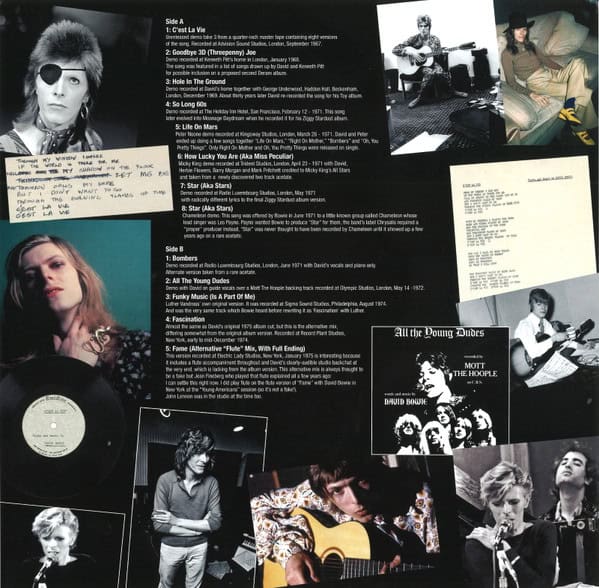
Note: A1: Take 3, September 1967 / A2: Demo, January 1968 / A3: Demo, December 1969 / A4: Demo, February 1971 / A5: With Peter Noone, March 1971 / A6: Micky King demo, April 1971 / A7: Demo, May 1971 / A8: Chameleon demo, June 1971 / B1: Demo, June 1971 / B2: Demo, May 1972 / B3: Luther Vandross demo, August 1974 / B4: Alternative mix, December 1974 / B5: Flute version, January 1975
David Bowie So Long 60s, Hello 70s (Rarities And More)
David Bowie – So Long 60s, Hello 70s (Rarities And More) is an unofficial limited-edition vinyl compilation bringing together demos, alternative versions and other rare recordings from an important period in David Bowie’s development.
Spanning recordings from 1967 to 1975, the collection follows Bowie from the final years of his first recording period through the emergence of the songwriter behind Hunky Dory and The Rise and Fall of Ziggy Stardust and the Spiders from Mars, before moving into the soul and funk-influenced music of the mid-1970s.
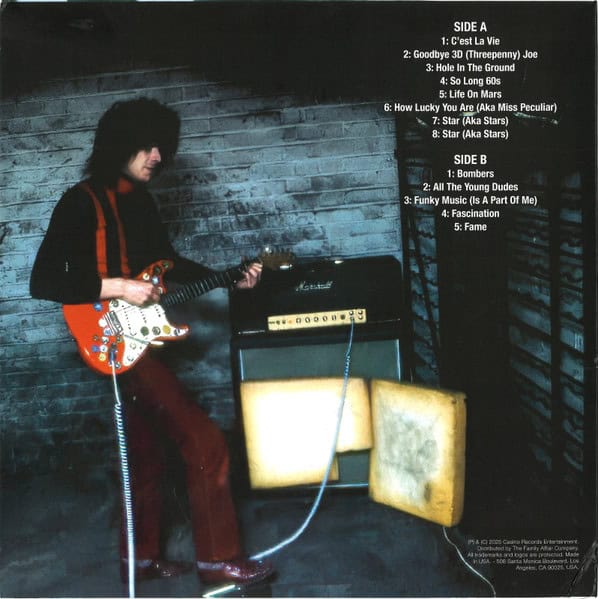
Tracklisting
Side A
A1. C'est La Vie
A2. Goodbye 3D (Threepenny) Joe
A3. Hole In The Ground
A4. So Long 60s
A5. Life On Mars
A6. How Lucky You Are (Aka Miss Peculiar)
A7. Star (Aka Stars)
A8. Star (Aka Stars)
Side B
B1. Bombers
B2. All The Young Dudes
B3. Funky Music (Is A Part Of Me)
B4. Fascination
B5. Fame
From the 1960s into the 1970s
The title So Long 60s, Hello 70s neatly describes the period represented by this collection. Side A begins in 1967, when Bowie was still several years away from establishing the musical identity that would make him internationally famous, and gradually moves into the highly creative songwriting period of the early 1970s.
Rather than concentrating on commercially released master recordings, the album focuses on works in progress, demos and alternative versions. As a result, it offers a different perspective on Bowie’s development, showing songs before they reached their familiar finished form as well as compositions that followed very different paths.
C'est La Vie – September 1967
The collection begins with C'est La Vie, represented here by a third take dating from September 1967. The recording belongs to Bowie’s early songwriting period, when he was still experimenting with styles far removed from the rock music with which he would later become associated.
Its position as the opening track makes it an appropriate starting point for a compilation intended to trace Bowie’s journey out of the 1960s.
Goodbye 3D (Threepenny) Joe – January 1968
Goodbye 3D (Threepenny) Joe is presented as a January 1968 demo. It comes from a period in which Bowie was writing prolifically while exploring theatrical, narrative and character-based approaches to songwriting.
Recordings such as this are particularly interesting because they preserve material from the relatively sparsely documented period between Bowie’s 1967 debut album and the recordings that would eventually lead to Space Oddity.
Hole In The Ground – December 1969
By the time of the December 1969 demo Hole In The Ground, Bowie had already experienced his first major breakthrough with Space Oddity.
Yet his musical direction remained far from settled. The surviving demos from this period reveal a songwriter continuing to produce material outside the boundaries of his commercially released albums, making them valuable documents of his creative development.
So Long 60s – February 1971
The title track, So Long 60s, is represented by a demo dated February 1971. The title is particularly appropriate for this collection because Bowie was entering one of the most important transitional periods of his career.
The following months would produce a remarkable concentration of new songs and ideas as Bowie moved towards Hunky Dory and, soon afterwards, Ziggy Stardust.
Life On Mars – With Peter Noone
Life On Mars appears here in connection with Peter Noone and is dated March 1971. Before Bowie’s own version became one of the defining recordings on Hunky Dory, Noone recorded the Bowie composition Oh! You Pretty Things, with Bowie contributing piano to the session.
This period illustrates Bowie’s growing confidence not only as a performer but also as a songwriter whose compositions could be offered to and recorded by other artists.
How Lucky You Are – April 1971
How Lucky You Are, also known as Miss Peculiar, is represented here by a demo associated with Micky King and dated April 1971.
The song belongs to the extraordinary group of compositions Bowie was developing during 1971. Although it did not become part of one of his contemporary studio albums, it provides another glimpse into the volume and variety of material Bowie was producing at the time.
The Evolution of Star
Side A concludes with two versions of Star, originally known as Stars. The first is listed as a May 1971 demo, while the second is identified as a Chameleon demo from June 1971.
The song would eventually find its place on The Rise and Fall of Ziggy Stardust and the Spiders from Mars in 1972. Hearing earlier versions provides an opportunity to follow the development of a composition before it became part of the finished Ziggy Stardust album.
Bombers – June 1971
Side B begins with a June 1971 demo of Bombers. The song was recorded during the period surrounding Hunky Dory but did not appear on the original album.
It nevertheless became one of the better-known Bowie rarities from the era and demonstrates how much material was being written and recorded during his exceptionally productive 1971 sessions.
All The Young Dudes – May 1972
All The Young Dudes represents another side of Bowie’s songwriting. Written in 1972 and given to Mott the Hoople, the song became closely associated with the glam-rock era and one of the best-known compositions Bowie wrote for another artist.
The demo included here is dated May 1972, placing it directly within the period when Bowie was creating and developing the Ziggy Stardust persona.
From Glam Rock to Soul and Funk
The final three tracks move the collection into 1974 and 1975, when Bowie’s music was changing dramatically once again. The rock-oriented sound of the Ziggy Stardust period was giving way to the soul, R&B and funk influences that would shape Diamond Dogs, Young Americans and eventually Station to Station.
Funky Music (Is A Part Of Me)
The August 1974 recording of Funky Music (Is A Part Of Me) is associated with Luther Vandross, who became an important member of Bowie’s musical circle during the development of his new soul-influenced sound.
The musical relationship is particularly significant because material from Funky Music (Is A Part Of Me) would become connected with the development of Bowie’s Fascination.
Fascination – Alternative Mix
The compilation follows this with an alternative mix of Fascination, dated December 1974. The song would appear on Young Americans in 1975 and reflects Bowie’s deep immersion in American soul and funk during this period.
Fame – Flute Version
The album concludes with a January 1975 version of Fame, described on this release as the Flute Version.
Fame would become one of the defining recordings of the Young Americans period and Bowie’s first number-one single in the United States. Its appearance at the end of this collection creates a striking contrast with the tentative 1967 recordings that open Side A.
About So Long 60s, Hello 70s
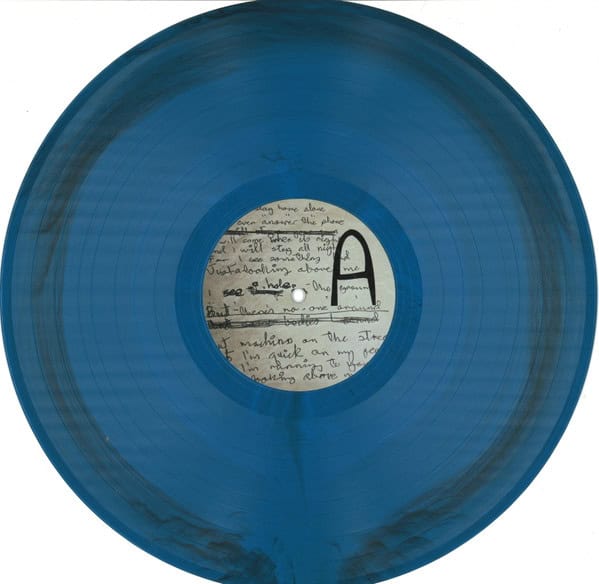
Released in 2025 by Casino Records Entertainment, So Long 60s, Hello 70s (Rarities And More) is an unofficial limited edition of 200 numbered copies. This copy is numbered 037/200 and was issued on turquoise marbled vinyl.
The strength of the compilation lies in its chronology. Across thirteen tracks it moves from Bowie’s relatively obscure late-1960s compositions through the extraordinary songwriting period of 1971–72 and finally into the soul and funk experiments of 1974–75.
Rather than documenting one concert or studio album, So Long 60s, Hello 70s presents a series of snapshots from a career in constant motion – from the young songwriter still searching for his direction to the artist behind Hunky Dory, Ziggy Stardust and Young Americans.
