

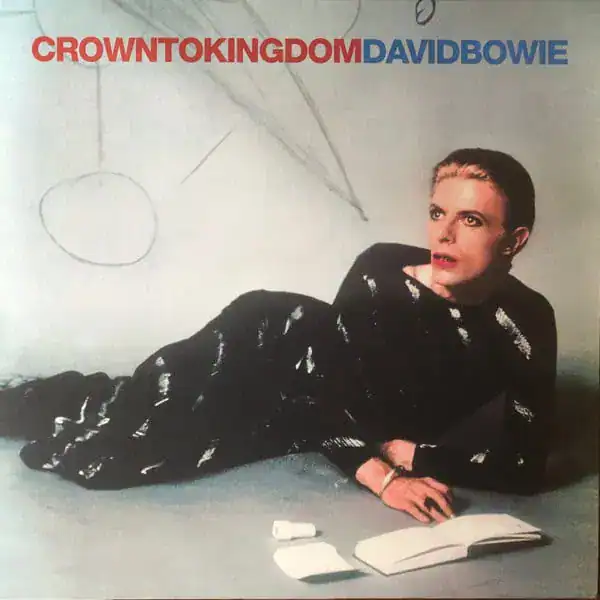
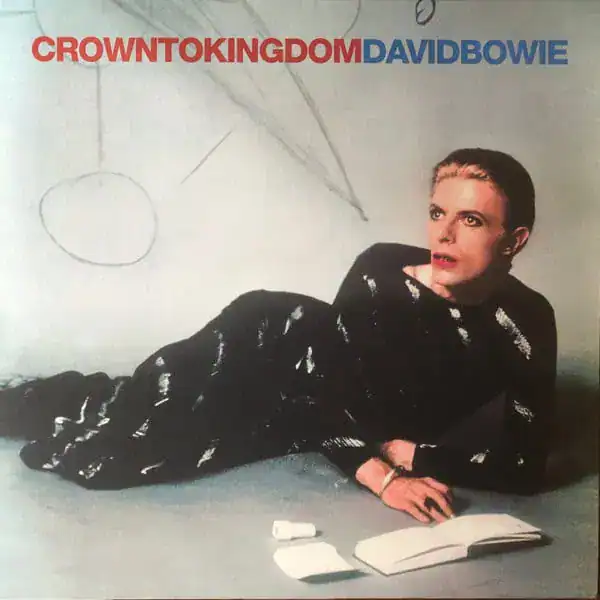
David Bowie Crown To Kingdom (1976 - 1978) (Compilation, Limited Edition) - SQ 8-9 ,Estimated value € 30
Label: Not On Label (David Bowie) – BOWIE76-78
Audio Source: Audience, Broadcast, Soundboard
Lineage: Vinyl, LP, Unofficial Release, White
Total running time: Unknown
Sound Quality: Very good. Equals record or radio apart from slight noise and some dullness.
Artwork: Yes
Released: 2023
Note: Tracks A1 & A2: May 13, 1976, Ahoy Hall, Rotterdam, The Netherlands / Tracks A3 & A4: January 3, 1976, The Dinah Shore Show, CBS-TV, USA / Tracks B1 to B6: April 10, 1978, Dallas Convention Center Arena, Dallas, USA.
David Bowie – Crown To Kingdom (1976–1978) is an unofficial vinyl compilation bringing together live and television recordings from two very different periods in David Bowie’s career. The album moves from the stark, powerful sound of the 1976 Isolar Tour to performances from the 1978 Isolar II world tour.
The recordings come from Rotterdam, an American television appearance and Dallas, offering a compact overview of Bowie on stage during the years between Station to Station and “Heroes”. The contrast between the 1976 and 1978 performances also makes this an interesting document of how rapidly Bowie’s live sound changed during this period.
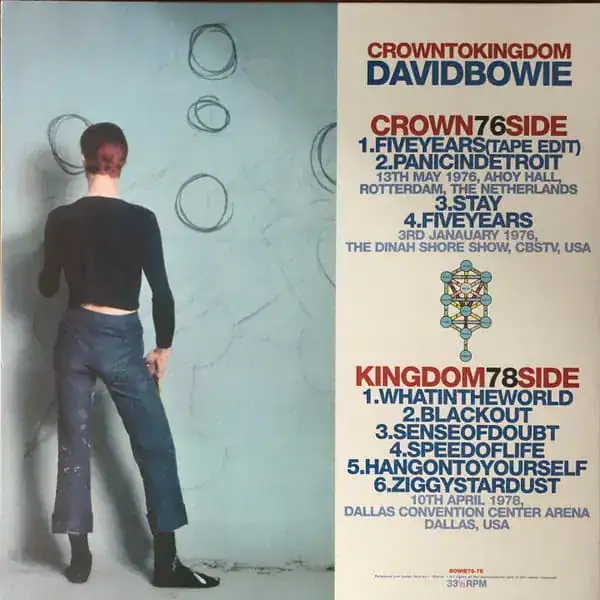


Tracklisting
Crown 76 Side
A1. Five Years (Tape Edit)
A2. Panic In Detroit
A3. Stay
A4. Five Years
Crown 78 Side
B1. What In The World
B2. Blackout
B3. Sense Of Doubt
B4. Speed Of Life
B5. Hang On To Yourself
B6. Ziggy Stardust
The Crown 76 Side
Side A concentrates on Bowie in 1976, during the period surrounding Station to Station and the Isolar Tour. The performances capture the dramatic change that had taken place since the end of the Ziggy Stardust and Diamond Dogs years.
Ahoy Hall, Rotterdam – May 13, 1976
The first two tracks are connected with Bowie’s concert at the Ahoy Hall in Rotterdam, The Netherlands, on May 13, 1976.
The opening Five Years is presented as a tape edit, followed by Panic In Detroit. Bowie’s 1976 concerts were visually and musically very different from his earlier tours, with a deliberately stark presentation accompanying the material from Station to Station and his earlier albums.
The Dinah Shore Show – January 3, 1976
The remaining two recordings on Side A are credited to Bowie’s appearance on The Dinah Shore Show in the United States on January 3, 1976.
They feature Stay, one of the key tracks from Station to Station, followed by Five Years, originally released as the opening song of The Rise and Fall of Ziggy Stardust and the Spiders from Mars in 1972.
Together, the four tracks on the Crown 76 side combine Bowie’s then-current musical direction with material reaching back to the Ziggy Stardust period.
The Crown 78 Side
Dallas Convention Center Arena – April 10, 1978
Side B jumps forward almost two years to Bowie’s Isolar II Tour, often known as the Stage Tour. These recordings are credited to the Dallas Convention Center Arena in Dallas, Texas, on April 10, 1978.
By 1978 Bowie’s live repertoire had changed substantially. The tour drew heavily from the albums Low and “Heroes”, while also revisiting important songs from earlier periods of his career.
What In The World represents the experimental world of Low, while Blackout and the instrumental Sense Of Doubt come from “Heroes”. Speed Of Life, another instrumental, returns to the first side of Low.
The side concludes by reaching further back into Bowie’s catalogue with Hang On To Yourself and Ziggy Stardust. Their inclusion demonstrates how songs associated with the Spiders from Mars had been reshaped within the very different sound of Bowie’s 1978 touring band.
From Station to Station to “Heroes”
The concept behind Crown To Kingdom is particularly interesting because its two sides document Bowie only two years apart, yet represent markedly different stages of his musical development.
The 1976 material belongs to the period of Station to Station and the Isolar Tour, while the 1978 recordings come after Bowie’s work on Low and “Heroes”. During those two years his music moved through funk, soul, electronic experimentation and increasingly atmospheric compositions.
At the same time, songs such as Five Years, Hang On To Yourself and Ziggy Stardust show that Bowie continued to reinterpret earlier parts of his catalogue rather than simply leaving them behind.
About Crown To Kingdom
Released as an unofficial white-vinyl LP in 2023, Crown To Kingdom (1976–1978) combines recordings from different sources rather than documenting a single concert.
Its appeal lies in the contrast between the two sides: Bowie in 1976 during the Station to Station era and Bowie in 1978 performing material from the Berlin-period albums alongside songs from his Ziggy Stardust years.
For collectors, the album provides a compact snapshot of one of the most rapidly changing periods in David Bowie’s live career.
