
George Butcher – Keyboard Player with David Bowie and The Riot Squad
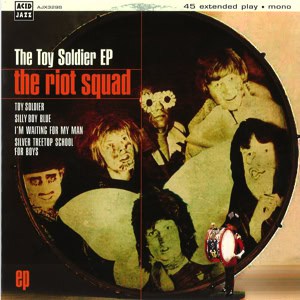
David Bowie with The Riot Squad, 1967. Editorial use.
George Butcher was the keyboard player in the short-lived 1967 line-up of The Riot Squad that worked with David Bowie during one of the most experimental moments of Bowie’s early career. Although Butcher is not one of the widely documented figures in Bowie history, his place in this line-up makes him part of the small group of musicians who performed and recorded with Bowie before his solo identity had fully taken shape.
Bowie’s involvement with The Riot Squad was brief, but historically important. In spring 1967 he joined an already existing London band at a moment when he was moving away from conventional mod and rhythm-and-blues group work towards a more theatrical, provocative and self-directed artistic approach.
As keyboard player, George Butcher formed part of the musical framework around Bowie during this transitional period. His contribution should be understood carefully: not as a long-term Bowie partnership, but as a real and documented role within one of Bowie’s final pre-fame group settings.
- Name: George Butcher
- Profession: Keyboard player
- Bowie connection: Member of The Riot Squad line-up that worked with David Bowie in 1967
- Band: The Riot Squad
- Instrument: Keyboards
- Bowie period: Spring 1967
- Known Bowie-era recordings: Toy Soldier, I’m Waiting for the Man, Silly Boy Blue and other archival Riot Squad material
- Historical significance: Part of Bowie’s brief but important transitional band period before his solo career became more clearly defined
Background
Very little reliable biographical information about George Butcher has been published. Unlike many later David Bowie collaborators, he did not become a widely profiled musician in Bowie literature, and most surviving references to him appear in connection with The Riot Squad and the band’s brief association with Bowie in 1967.
For that reason, any account of George Butcher must be careful not to overstate what is known. What can be said with confidence is that he was the keyboard player in the Bowie-era Riot Squad line-up and therefore contributed to one of the most intriguing transitional episodes in Bowie’s early career.
His importance lies not in fame or later visibility, but in his position within a documented group of musicians around Bowie at a moment when Bowie was testing new sounds, images and performance ideas.
The Riot Squad Before David Bowie
The Riot Squad existed before David Bowie joined them. The London-based band had emerged during the mid-1960s and had already gone through several changes before Bowie became involved. Their earlier work belonged to the wider British beat, mod and pop scene of the period.
By the time Bowie entered the picture in 1967, The Riot Squad were not a new band formed around him. Instead, Bowie stepped into an existing group whose line-up already included musicians capable of supporting a more experimental live and studio direction.
This makes The Riot Squad different from several of Bowie’s earlier groups. With The King Bees, The Manish Boys and The Lower Third, Bowie had been closely identified with the formation and presentation of the band. With The Riot Squad, he entered a pre-existing unit and briefly reshaped its direction through his own songs, stage ideas and increasingly theatrical instincts.
The Bowie-Era Riot Squad Line-Up
The best-documented Riot Squad line-up associated with David Bowie in 1967 consisted of:
David Bowie – vocals, guitar, harmonica
Rod “Rook” Davies – guitar
Brian “Croak” Prebble – bass, vocals
Bob Evans – saxophone, flute, vocals
George Butcher – keyboards
Derek “Del” Roll – drums
Within this line-up, George Butcher‘s role was clearly musical rather than theatrical or promotional. As keyboard player, he helped provide harmonic support and texture in a band that combined guitar, bass, drums, saxophone, flute and Bowie’s increasingly distinctive vocal presence.
Because detailed individual accounts from Butcher himself are not widely available, his precise working relationship with Bowie is difficult to reconstruct in detail. However, his inclusion in this line-up places him directly within Bowie’s short but significant Riot Squad period.
George Butcher‘s Role as Keyboard Player
In a mid-1960s pop and rhythm-and-blues group, keyboards could serve several different functions. They might reinforce the harmony, add a sharper rhythmic attack, provide organ or piano colour, or help broaden the sound beyond a standard guitar-based arrangement.
The Riot Squad‘s Bowie-era recordings and reported live work suggest a band moving beyond straightforward club-band material. Bowie was introducing songs and ideas that were darker, stranger and more theatrical than much of his earlier rhythm-and-blues work. Within that setting, the keyboards helped form part of a fuller ensemble sound around Bowie’s voice.
It would be inaccurate to describe George Butcher as a major long-term Bowie collaborator. His documented Bowie connection appears to belong specifically to the 1967 Riot Squad period. Even so, that brief involvement places him within a small and historically important group of musicians who accompanied Bowie at a moment of rapid artistic change.
David Bowie’s Arrival in The Riot Squad
David Bowie joined The Riot Squad during spring 1967, while he was also working within the orbit of his first solo album period. This was an unstable and highly experimental moment in his career. He had not yet found commercial success, but he was already moving away from the more conventional R&B and mod styles of his earlier bands.
The Riot Squad gave Bowie another outlet for performance and recording at a time when he was trying out new material, new presentation ideas and more provocative lyrical themes. His involvement appears to have been short, but it left behind recordings that later became valuable to historians because they show Bowie testing ideas that did not fit neatly into his official debut album.
For George Butcher and the other musicians, Bowie’s arrival seems to have pushed the band towards a more theatrical and experimental identity. Bowie brought not only songs, but also ideas about staging, image and dramatic presentation.
Recordings with David Bowie
The Riot Squad‘s recordings with Bowie were not released commercially at the time. They later became important archival material because they captured Bowie during a moment of transition between his early band years and his emerging solo identity.
Among the best-known Bowie-era Riot Squad recordings are I’m Waiting for the Man, Toy Soldier or Little Toy Soldier, and versions of Silly Boy Blue. These tracks show Bowie moving towards darker, more unusual material and engaging early with the influence of The Velvet Underground.
George Butcher‘s keyboard role should be understood as part of the ensemble contribution to these recordings. The surviving material is generally discussed in relation to Bowie because of his later fame, but the recordings were created by a working band, not by Bowie alone.
I’m Waiting for the Man
One of the most historically significant Riot Squad recordings from this period is their version of I’m Waiting for the Man, written by Lou Reed and associated with The Velvet Underground.
Bowie’s interest in The Velvet Underground would become one of the important threads in his later artistic development. The Riot Squad version therefore provides early evidence of Bowie looking beyond British pop convention towards more confrontational, urban and avant-garde material.
For George Butcher, the recording places him inside one of the earliest documented examples of Bowie engaging directly with Velvet Underground material. That makes his contribution historically notable, even if the details of his individual keyboard part are not always singled out in surviving commentary.
Toy Soldier
Another important Riot Squad recording is Toy Soldier, sometimes listed as Little Toy Soldier. The song is one of Bowie’s more provocative early compositions and shows him experimenting with themes and imagery far removed from conventional mid-1960s pop songwriting.
The recording has often attracted attention because of its darker subject matter and its relationship to the influence of The Velvet Underground. It is not a polished commercial single from Bowie’s official catalogue, but an archival document showing how far his imagination was already moving beyond the expectations of the British pop market.
George Butcher‘s presence on keyboards within the Riot Squad line-up connects him to this strange and revealing early Bowie recording. It remains one of the reasons the 1967 Riot Squad line-up continues to interest Bowie historians.
Silly Boy Blue
The Riot Squad also recorded versions of Silly Boy Blue, one of Bowie’s most important early songs. The song had a very different character from the more aggressive or transgressive material associated with Toy Soldier, showing another side of Bowie’s developing songwriting.
Its inclusion in the Riot Squad material suggests that Bowie was using the band not only for live appearances, but also as a space to explore songs that belonged to his broader creative development. In that sense, George Butcher and the other musicians formed part of a workshop environment in which Bowie could test different approaches.
The surviving recordings are valuable because they document Bowie before fame, before Ziggy Stardust and before the more clearly defined artistic identities of the 1970s. They show an artist still searching, but already willing to take unusual risks.
Live Performances and Stage Presentation
Bowie’s time with The Riot Squad was brief, but accounts of the period suggest that he brought a stronger sense of theatre to the group. He was already interested in make-up, mime, staging and visual impact, all of which would later become central to his work.
The Riot Squad period therefore matters not only because of the recordings, but because it shows Bowie beginning to use a band as a platform for broader performance ideas. The stage was becoming more than a place to sing songs. It was becoming a place where image, character and music could be combined.
As keyboard player, George Butcher was part of the musical support system for that experimentation. The available evidence does not allow us to describe his individual stage presence in detail, but he belonged to the band at the moment Bowie was pushing it into more theatrical territory.
Posthumous and Archival Releases
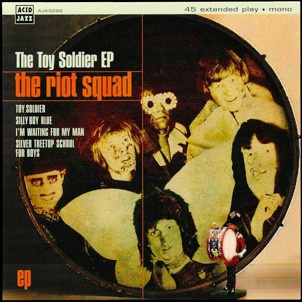
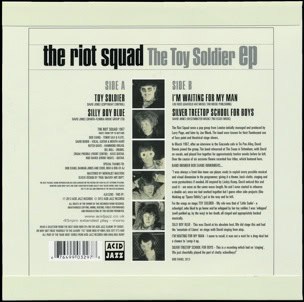
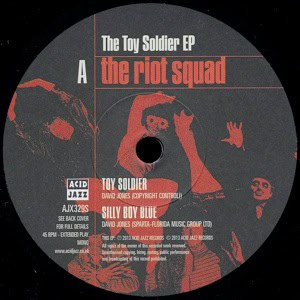
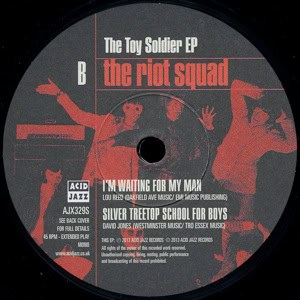
The recordings made by David Bowie with The Riot Squad in 1967 were not issued as mainstream releases at the time. They remained part of Bowie’s early archive for decades, circulating among collectors before later receiving more formal archival attention.
Releases such as The Toy Soldier helped bring this material to a wider audience, allowing listeners to hear Bowie at a point when his songwriting and performance style were moving rapidly beyond the boundaries of his earlier bands.
For George Butcher, these archival releases are important because they preserve the only widely known recordings connected to his brief Bowie association. Without them, his role in Bowie’s story would be far harder to document.
Not a Long-Term Bowie Collaborator
It is important to describe George Butcher‘s Bowie connection accurately. He was not a member of Bowie’s later studio bands, did not tour with Bowie during the 1970s, and is not associated with Bowie’s major albums after the Riot Squad period.
His Bowie connection belongs specifically to the 1967 Riot Squad line-up. That does not make it unimportant. On the contrary, it places him at a fascinating moment when Bowie was moving between his early group work and the more individual artistic direction that would define his future.
For DavidBowieWorld.com, this distinction is essential. George Butcher deserves inclusion as a genuine Bowie collaborator, but the page must remain historically measured and avoid turning a brief documented association into a larger relationship than the evidence supports.
After The Riot Squad
Reliable information about George Butcher‘s later career is limited. The Riot Squad themselves continued through different forms and eventually became part of the wider story of London’s mid-1960s pop and mod scene, but Butcher’s post-Riot Squad activities are not well documented in commonly available Bowie sources.
Because of this, it would be misleading to invent a detailed later biography. His strongest documented historical connection remains his role as keyboard player in the Bowie-era Riot Squad line-up.
This page therefore focuses on what can be verified: his place in the band, his role on keyboards, and the significance of the 1967 Riot Squad material within David Bowie’s early development.
Legacy
George Butcher‘s place in David Bowie history is small but real. He was part of the band that briefly accompanied Bowie during a crucial year, when the young artist was testing ideas that were more theatrical, more experimental and more provocative than much of his earlier work.
The Riot Squad recordings did not make Bowie famous in 1967, and they were not intended as polished statements of the kind he would later create. Their value lies in what they reveal: Bowie experimenting before success, using musicians around him to explore new forms of performance and songwriting.
As the keyboard player in that line-up, Butcher belongs to the early collaborative network that helped Bowie move from conventional group formats towards the more imaginative and self-directed artist he would soon become.
George Butcher in Bowie’s Collaborative Universe
Within Bowie’s collaborative universe, George Butcher represents one of the lesser-known but historically valid early contributors. His role was brief, and the surviving documentation is limited, but he was present during a revealing transitional phase.
The importance of figures like Butcher lies in showing that Bowie’s evolution was not a sudden transformation. It passed through many short-lived groups, temporary alliances, rehearsal rooms, club performances and experimental recordings. Each of these moments helped Bowie refine what he did and did not want to become.
George Butcher‘s contribution belongs to that early, restless period. He was there before the breakthrough, before the Spiders from Mars, before Haddon Hall became legendary and before Bowie had fully become the artist the world would later recognise.
Official Website & Further Information
No official website for George Butcher has been identified. Publicly available information about his later career remains limited, and most reliable references to him appear in connection with The Riot Squad and David Bowie’s brief 1967 involvement with the band.
This page is therefore based only on documented information and avoids unsupported claims about his personal life or later musical activities.
Article Origin
This article was written for DavidBowieWorld.com as part of the Bowie collaborators archive. It is based on documented Bowie-era Riot Squad line-up information, archival release history and historically cautious interpretation of George Butcher‘s verified role as keyboard player during David Bowie’s brief 1967 association with the band.
