
Moby and David Bowie: Remixes, Shared Stages and a New York Friendship

Moby, born Richard Melville Hall on 11 September 1965 in New York City, is an American musician, songwriter, producer and DJ. His connection with David Bowie brought together professional collaboration, shared performances and a friendship rooted in their lives in New York. For Moby, it also meant becoming a colleague of an artist whose records had mattered to him since adolescence.
The musical relationship has identifiable landmarks: the “Dead Man Walking” remixes, guitar appearances at the 2001 Tibet House benefit, the studio “Silly Boy Blue” Tibet version, a remix of “Sunday”, the Area2 festival tour in 2002 and a joint appearance on The Tonight Show with Jay Leno. Later, Moby‘s own recording of “Heroes” carried the memory of playing the song privately with Bowie into another phase of his career.
- Name: Richard Melville Hall, professionally known as Moby
- Born: 11 September 1965, New York City, USA
- Roles: Musician, songwriter, producer, DJ and remix artist
- Bowie recordings: “Dead Man Walking” remixes; “Sunday” remix; guitar on “Silly Boy Blue” (Tibet version)
- Shared stages: Tibet House, Area2 and The Tonight Show
- Personal connection: New York neighbour and friend
A young listener discovering David Bowie
Long before a remix commission or a festival invitation, Bowie belonged to Moby‘s life as a listener. In his 2021 interview with Paul Cashmere for Noise11, Moby recalled working as a thirteen-year-old golf caddy in Connecticut and saving enough money to buy two Bowie albums. Carrying the clubs was difficult for a small teenager, but the records gave the job a purpose. His account locates the beginning of the attachment in an ordinary exchange of effort for music.
Guitar, punk and the foundations behind the electronics
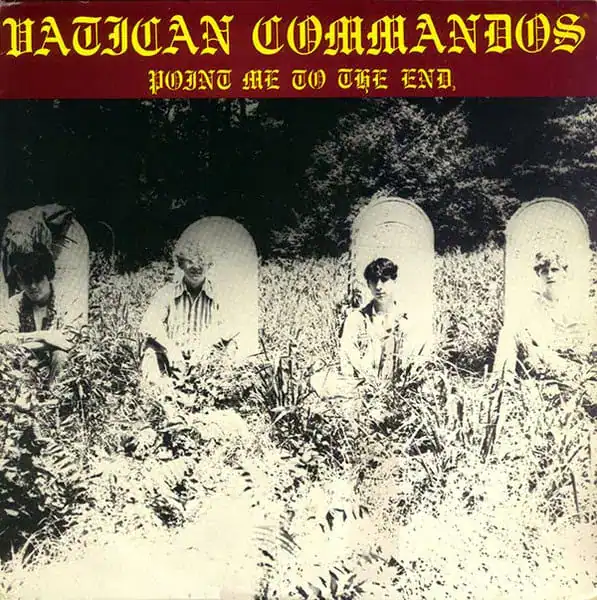
Moby‘s reputation as an electronic musician can obscure the instrumental experience behind it. He played guitar in punk bands before becoming widely known through dance music. In his own journal, he recalled playing guitar in the Connecticut hardcore band Vatican Commandos in the early 1980s. His account of the band documents that background. His later label biography also describes an early background in classical music, followed by punk and electronic work.
Low and “Heroes”: the Bowie records Moby valued
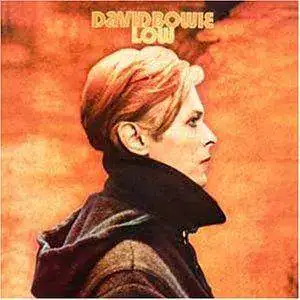
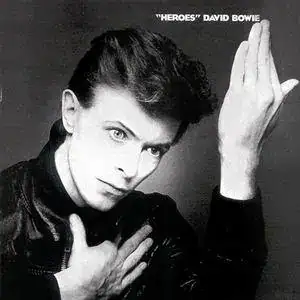
In his 2002 conversation with Hot Press, Moby singled out Low and “Heroes” as exceptionally influential records. Asked about Bowie’s personae, he chose the Thin White Duke. The answers show an attachment extending beyond one famous single: he was interested in particular phases of Bowie’s work and in the relationship between the music and its presentation.
Low, released in January 1977, places concise songs such as “Sound and Vision” and “Be My Wife” alongside instrumental pieces, including “Warszawa”, credited to Bowie and Brian Eno. Its sequence allows a record to move between a recognisable song format and music whose effect depends more heavily on atmosphere, repetition and instrumental colour.
That combination offers a useful listening comparison with Moby‘s own movement between songs and ambient work. His published admiration establishes that these albums mattered to him; the resemblance between particular musical approaches remains something a listener can explore. The comparison is strongest when attached to the records themselves, rather than used to explain every feature of his subsequent career. Read Moby‘s contemporary interview.
“Go” and the arrival of an international dance audience
Moby — “Go”, his breakthrough single in 1991.
“Go” became Moby‘s breakthrough in 1991. Its best-known form drew on music associated with Twin Peaks, connecting an atmospheric source with the physical momentum of a dance track. The single reached the British top ten and established him with an audience beyond the clubs in which his work had begun to circulate. Universal Music’s biography identifies it as a crucial step in his emergence.
Everything Is Wrong and Animal Rights: an unsettled musical identity
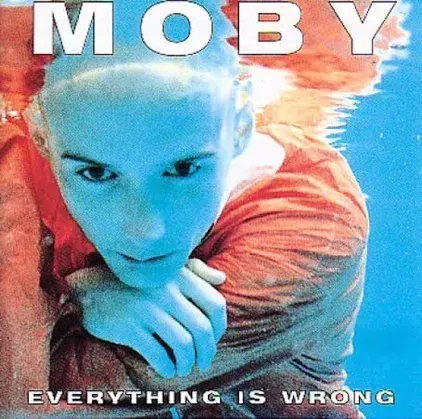
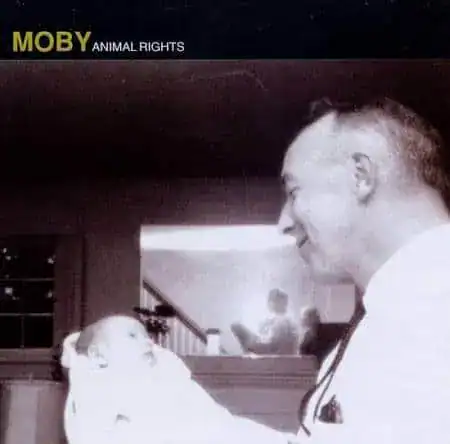
Moby‘s album sequence did not follow a single comfortable formula. Everything Is Wrong appeared in 1995, followed by Animal Rights in 1996. The latter foregrounded his attachment to guitar music and punk, challenging an audience accustomed to identifying him with electronic dance records. The contrast belongs to his own history of moving between musical interests rather than maintaining one fixed public sound.
1997: “Dead Man Walking” and Bowie’s Earthling period
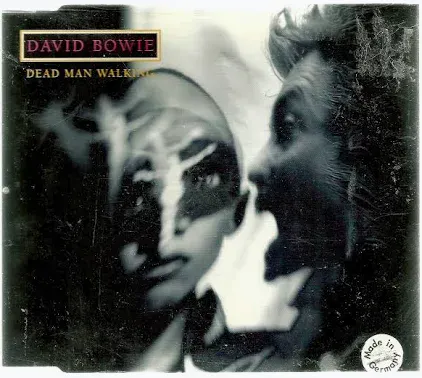
The released Bowie connection reaches back into the 1990s. “Dead Man Walking”, written by Bowie and Reeves Gabrels, appeared on Earthling in 1997. Bowie’s official discography credits the album’s production to Bowie, Mark Plati and Gabrels. Moby‘s work concerned remixes of the song, providing another treatment of material from an album that already engaged with electronic rhythms and processed sound.
That distinction places his involvement accurately. He entered the history of the recording through its subsequent versions. A remix gives access to an existing performance and allows selected elements to be rearranged, emphasised or placed against a different musical background. The songwriter’s voice remains a point of continuity while the surrounding architecture can change substantially.
Moby‘s remixes and Bowie’s own assessment
David Bowie — “Dead Man Walking” (Moby Mix 2), 2022 remaster. Official audio.
Released versions include “Dead Man Walking” (Moby Mix 1), Moby Mix 2 and the Moby House Mix. Their titles attach Moby‘s name to particular treatments of the song and help listeners distinguish them from the album performance. The existence of several mixes makes this a substantial discographical connection, with more than one route through the same source material.
Bowie’s assessment supplies unusually direct evidence of the value he placed on the work. In a 2002 interview published by MAGNET, he linked the remix to their friendship. The statement matters because it comes from Bowie himself, rather than from a later description of Moby as someone merely associated with his musical world.
David Bowie on Moby
“Moby’s a true mate of mine. He did the finest remix of one of my songs, ‘Dead Man Walking.’”
Source: David Bowie, MAGNET, “David Bowie: Heathen Or Hero?”, 13 July 2002. Read the interview.
Play: the scale of Moby‘s own breakthrough
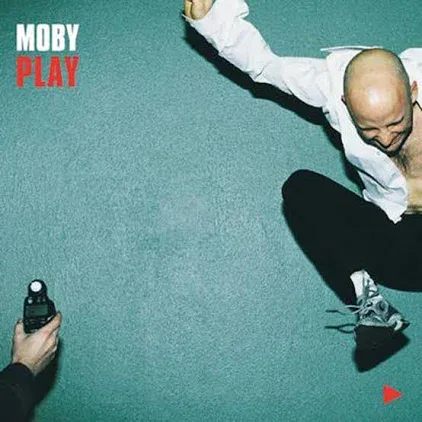
Play, released in 1999, transformed the scale of Moby‘s career. Songs including “Honey”, “Natural Blues”, “Porcelain” and “Why Does My Heart Feel So Bad?” brought his work to a large international audience. The album combined electronic production with older vocal recordings and with melodies and instrumental settings capable of carrying their own emotional weight.
Its use of blues and gospel sources gave the music a relationship with recordings from another era. A sampled voice could become the centre of a new composition while retaining traces of its earlier performance. The juxtaposition invited listeners to hear the human presence within a record assembled through contemporary technology. This helped make the album accessible to people who did not ordinarily follow club music.
Moby‘s official announcement for the next album described Play as having sold ten million copies by early 2002. That contemporary figure gives a useful sense of the position he occupied when Area2 was being organised. He could invite Bowie as a successful artist with his own substantial audience and touring infrastructure. The festival encounter therefore brought together two established careers, even as Moby continued to speak with the excitement of a longtime admirer.
New York neighbours and an established friendship
By the early 2000s, proximity in New York helped sustain their friendship. Contemporary accounts describe them as living close to one another, and both musicians spoke publicly about the relationship. Bowie’s 2002 MAGNET interview confirms friendship following the remix work; Moby‘s later recollections describe the neighbourhood connection as part of their everyday social lives.
In his 2021 Noise11 interview, Moby placed their friendship and neighbourly connection in 1999. He recalled touring and going on holidays together, as well as making music. His account adds everyday companionship to the professional connection already documented by the 1997 remixes. Read Moby‘s recollection.
Living nearby gave meetings a different character from a scheduled studio session or a backstage introduction. A friendship could develop through time spent together without a record to finish or an audience to address. That part of the story broadens the musical relationship: it explains how a collaborator could become someone with whom Bowie shared ordinary moments away from the machinery of a public career.
Humour and the person behind the famous image
Moby‘s recollections also preserve a playful side of Bowie. In his 2021 interview with Rob Tannenbaum for GQ, he remembered Bowie teasing him about their contrasting hair and sometimes calling him the disco king. These are Moby‘s descriptions of private exchanges, offering a modest glimpse of the humour he associated with their friendship. Read the interview.
Such details matter because the public image of a famous artist can make every encounter seem solemn. A person admired for transformative records can also make an affectionate joke. For Moby, that ordinary behaviour existed alongside a continuing awareness of Bowie’s importance. Familiarity did not remove the earlier admiration; it gave that admiration a new setting.
A concert memory discussed in Entertainment Weekly
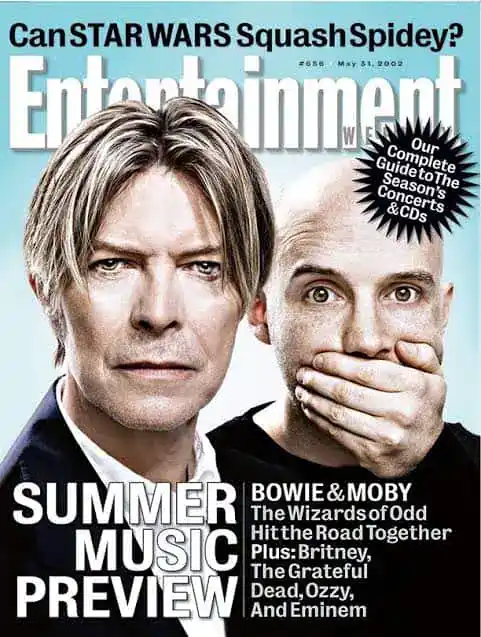
The 31 May 2002 issue of Entertainment Weekly featured Bowie and Moby together. An excerpt preserved on Bowie’s official website records Moby recalling a performance of “Young Americans” at Giants Stadium. He remembered Bowie prolonging a moment on the stage floor until the crowd’s initial excitement became uncertainty. Bowie recognised the incident and explained his interest in testing its limits.
David Bowie on taking a stage moment further
“Just seeing how far I could take it.”
Source: Bowie and Moby‘s Entertainment Weekly interview, excerpt reproduced on Bowie’s official website.
The exchange is revealing because Moby‘s enthusiasm concerns performance technique, not simply a favourite song. He remembered the management of audience expectation: recognition, repetition and then an unexpected interruption. The precise duration belongs to his recollection, rather than to a timed concert record. What the conversation establishes is that an unusual piece of stage behaviour had remained with him and could later be discussed with the performer who created it.
The Bowie/Moby X-Change: a conversation beyond the stage
In July 2001, BowieNet and Moby‘s online presence presented the Bowie/Moby X-Change. The official announcement described a format in which the artists asked and answered ten questions for each other. It placed them in a direct public conversation, with each musician participating as a questioner as well as a respondent. The contemporary announcement confirms the format.
Tibet House: Carnegie Hall on 26 February 2001
A particularly important shared appearance took place at the Tibet House US benefit at Carnegie Hall on 26 February 2001. The organisation’s own concert archive confirms the date and identifies the event as its eleventh annual benefit. Its programme brought together artists from different musical backgrounds, with Philip Glass central to the evening’s musical framework.
Moby performed “Porcelain” and joined Bowie on guitar for “Heroes” and “Silly Boy Blue”. His website’s contemporary report confirms the instrumental role. Reports collected by BowieNet also identify Tony Visconti on bass, Sterling Campbell on drums and a string ensemble led by Martha Mooke for Bowie’s appearance. Moby‘s report and the contemporary BowieNet coverage document the performance.
“Heroes” with Philip Glass and a different ensemble
David Bowie — “Heroes”, with Moby and Philip Glass. Tibet House US benefit, Carnegie Hall, 26 February 2001.
The Carnegie Hall performance of “Heroes” placed a familiar Bowie song within an unusual combination of players. Moby‘s guitar, Glass’s piano and the strings gave the performance a setting different from the original recording. The rhythm section provided continuity underneath the singer while the added instrumental colours changed the space around the melody.
“Silly Boy Blue”: returning to an early composition
David Bowie — “Silly Boy Blue”. Tibet House US benefit, Carnegie Hall, New York, 26 February 2001.
“Silly Boy Blue” connected the benefit to an earlier chapter of Bowie’s songwriting. The song had appeared on his 1967 debut album, produced by Mike Vernon, and its Tibetan subject made it a meaningful selection for the occasion. Its return demonstrated that the programme could draw on material outside the most familiar sequence of Bowie hits.
The Looking Glass recording: “Silly Boy Blue” (Tibet version)
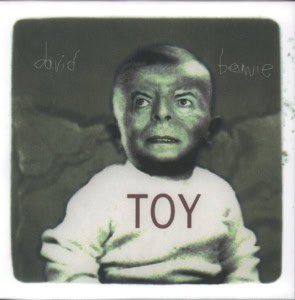
The concert association also has a studio counterpart. Official release documentation identifies “Silly Boy Blue” (Tibet version) as a recording made at The Looking Glass in New York in 2001, around the time of the benefit. It features Philip Glass on piano and Moby on guitar. The production credit belongs to David Bowie and Tony Visconti.
The recording later appeared among the alternatives and extras in Toy:Box, released on 7 January 2022. It should be heard as the 2001 Tibet version, with its own production history, rather than identified solely by the song title. The main Toy sessions took place in 2000 under Bowie and Mark Plati. The expanded release made room for this related but separately credited performance, allowing listeners to hear Moby‘s involvement directly.
Heathen: the musical setting for another collaboration
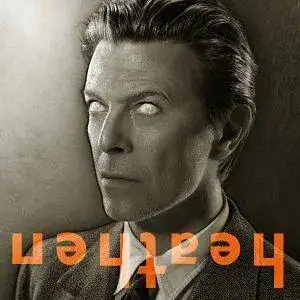
Heathen appeared in June 2002, with production credited to Bowie and Tony Visconti. Its twelve-song programme combined new Bowie writing with selected covers, including the Pixies‘ “Cactus”. This album supplied much of the current material Bowie took into the public appearances associated with Moby that summer.
The record’s place in the relationship is therefore twofold. It provided a song for Moby to remix and repertoire for their later shared television performance. The original album remained a Bowie–Visconti production, built around Bowie’s decisions about writing, musicians and sound. Moby’s participation belongs to the associated remix and live activity.
“Sunday”: Moby reworks the opening of Heathen
“Sunday”, the opening track of Heathen, received a Moby remix. Bowie’s official April 2002 announcement explicitly separates Visconti’s album mixes from the additional versions by Moby and the French duo Air, who reworked “A Better Future”. The limited edition of Heathen included Moby‘s version on its four-track bonus CD. BowieNet’s contemporary format announcement confirms its inclusion.
Working with an album opener carries a particular musical implication. The original “Sunday” establishes the album’s atmosphere. A remix can redirect that atmosphere by changing how rhythm and texture surround the vocal. The listener may recognise the song while approaching it through another sense of motion and another balance of instrumental elements.
18: Moby‘s new album in the Area2 year
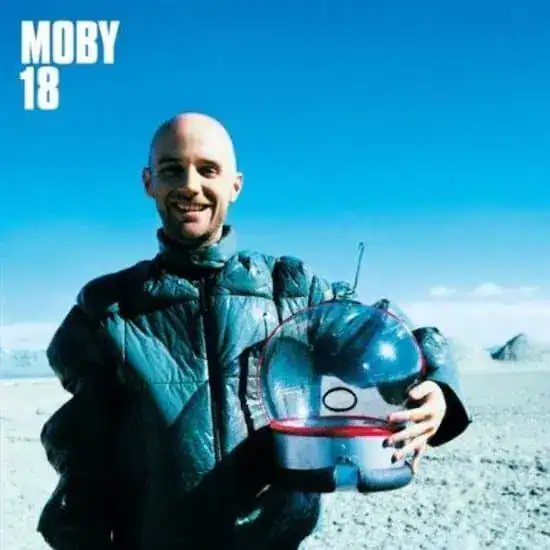
Moby was also presenting new music in 2002. 18, the follow-up to Play, arrived that May. His official advance announcement described eighteen new tracks recorded at his New York studio, with guest appearances, and named “We Are All Made of Stars” as the first single. The album continued his movement between songs, electronic textures and quieter instrumental passages.
This parallel release schedule gave the summer partnership a practical symmetry. Bowie had Heathen; Moby had 18. Each could bring recent material into a festival setting while drawing on records that audiences already knew. The tour offered listeners a meeting between active repertoires rather than an event organised entirely around past achievements.
Area2: Moby invites Bowie into a travelling festival
Area2 was the second edition of Moby‘s travelling Area festival. His official announcement recalled the first year’s guests, including New Order, Outkast and the Roots, before setting out the new programme. Bowie joined an event designed to bring performers from different musical backgrounds into a shared touring structure.
Bowie’s website described the 2002 run as a Moby and David Bowie co-headline tour, with twelve dates in the United States and Canada. It began on 28 July at Nissan Pavilion in the Washington area and ended on 16 August at the Gorge Amphitheatre in Washington state. Toronto provided the Canadian stop among the American dates. The official twelve-date announcement supplies the itinerary.
Moby‘s role here was broader than playing a guest part or delivering a remix. He helped create the setting in which Bowie appeared. The festival concept brought the older artist into contact with Moby’s audience and with listeners arriving for other acts. It gave their friendship a substantial public expression over several weeks, with repeated opportunities to hear one another and spend time within the same touring community.
A mixed programme: bands, hip-hop and electronic music
Moby‘s May 2002 lineup update named Ash, Blue Man Group, Busta Rhymes, Bowie and Moby on the main stage. The dance tent featured Carl Cox, DJ Dan, Dieselboy, John Digweed, Tiësto and the Avalanches, with variations possible between cities. Read the lineup update. The programme brought different kinds of performance into proximity, from a singer fronting a band to music organised around a DJ’s selection and transitions.
That variety mattered to the experience of the festival. Audience members did not all arrive with the same musical history or the same reason for buying a ticket. Someone following electronic music could encounter a Bowie set; a Bowie listener could hear performers outside the usual surroundings of his concerts. The combination made curiosity part of the event’s design.
The opening night: Moby listens from the side of the stage

Moby‘s response to the first Area2 night survives in a contemporary journal entry reproduced by BowieNet. He described watching Bowie from the side of the stage and singled out the new Heathen material, especially the song referring to Oogie and Uncle Floyd: “Slip Away”. Older songs including “Life on Mars?”, “Heroes” and “Ashes to Ashes” also contributed to his excitement.
Moby after the first Area2 show
“he is, in my opinion, the most inspirational musician of the last 30 years.”
Source: Moby‘s contemporary journal, reproduced in BowieNet’s report on the opening night.
His interest in “Slip Away” is particularly useful evidence. The praise addressed music Bowie had recently made, alongside familiar landmarks. Moby was listening to a current performance and responding to its emotional detail. The comment preserves the excitement of someone who had arranged the festival and could still be surprised by what another artist brought to its stage.
Toronto: new songs within a broad Bowie set
The official report for Toronto on 5 August 2002 preserves a setlist that demonstrates the range Bowie brought to Area2. “Cactus”, “Slip Away”, “I Would Be Your Slave” and “Heathen (The Rays)” appeared alongside songs from several earlier periods. The programme also included “Be My Wife”, “Stay”, “Fashion” and “Ziggy Stardust”.
The set gives a more precise picture than the assumption that a festival appearance must reduce an artist to a short run of greatest hits. Bowie introduced current material and selected older songs with different rhythmic and dramatic functions. Changes in mood could give the performance shape while recognition helped sustain the connection with listeners.
The Gorge finale and Bowie’s appreciation of the tour
The final Area2 show took place at the Gorge on 16 August 2002. Bowie’s official report described a set lasting an hour and forty-five minutes and an encore including “One Night” and “I Feel So Bad”, songs associated with Elvis Presley. The additions marked the anniversary of Presley’s death and gave the finale an extra, spontaneous element.
Bowie also supplied his own account of the tour’s atmosphere. His words establish that the appreciation flowed in both directions: Moby‘s enthusiasm for Bowie was matched by Bowie’s enjoyment of the event Moby had brought together.
David Bowie after Area2
“Moby gave us all one of the most enjoyable tours we’ve ever been on.”
Source: David Bowie’s comments in the official report on the final Area2 show.
The statement attaches Moby‘s importance to an experience Bowie explicitly valued. It concerns the touring environment and the people involved, extending beyond a judgement about one record. In an archive of collaborators, that is a substantial contribution: helping make a period of public work enjoyable and memorable for the artist and his band.
Moby‘s closing reflection and the work behind Area2
In his journal on 17 August 2002, Moby thanked the performers, audiences and the many people who had made Area2 possible. His journal named musicians and DJs, but also drivers, caterers, riggers, sound and lighting workers, managers and administrators. The entry recognised a festival as a collective undertaking whose visible performances depended on extensive practical work.
The sense of scale continued in his later conversation with Blair Jackson for Mix. Asked in 2005 about repeating the Area tours, Moby explained that his role had been primarily creative and that the logistics had been demanding for those responsible for them. That recollection gives useful substance to the festival history, acknowledging the distinction between proposing an artistic programme and moving it from venue to venue.
The Tonight Show: a joint appearance on 12 August 2002
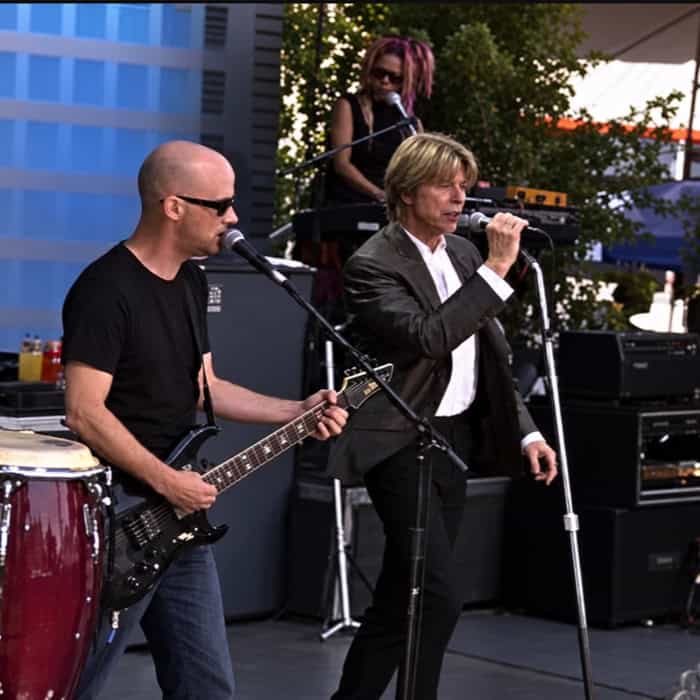
During the Area2 period, Bowie and Moby appeared together on The Tonight Show with Jay Leno on 12 August 2002. The performance took place on the programme’s outdoor stage. Bowie’s contemporary website report identifies two songs, “Cactus” and “Everyone Says Hi”, and describes Moby‘s role on each.
On “Cactus” he played guitar and sang. For “Everyone Says Hi” he played percussion. Those details are more informative than describing the occasion simply as Bowie performing with Moby. They show the guest adapting his contribution to the requirements of the songs, while Bowie’s band supplied the broader instrumental framework.
The television appearance brought the partnership to an audience outside the festival venues. Its compact format also made the collaboration easy to see: the guest was physically present within the band, contributing to music from Bowie’s recent album. The footage preserves a specific shared performance, with Moby contributing as a guitarist and singer beside Bowie.
“Cactus”: guitar, voice and the physical side of the partnership
“Cactus” originated with the Pixies and was recorded by Bowie for Heathen. Its compact structure and insistent rhythm make it a useful contrast to more expansive Bowie material. The song concentrates attention on the singer’s delivery and on a repeating musical movement that supports its uncomfortable, intimate request.
In the Tonight Show performance, Moby‘s guitar and singing placed him within that direct ensemble activity. The contribution is visible and audible as part of a band playing a song. It offers a different understanding of the partnership from a remix credit, where the work takes place through the transformation of recorded material.
“Everyone Says Hi”: another role within the same band
The second Tonight Show song, “Everyone Says Hi”, called for a different contribution. Moby played percussion, as recorded in BowieNet’s contemporary account. The change illustrates how a guest appearance can be shaped around individual songs rather than around one fixed instrumental identity.
Placed beside “Cactus”, the performance shows two sides of the same working encounter. One song foregrounds a more forceful band sound; the other allows a lighter supporting role. Moby‘s involvement was responsive to that difference. It is a small but useful example of collaboration as attention to the material, with the guest contributing where the arrangement gives him a place.
Moby in Q: making time to work with Bowie
The December 2002 issue of Q included Moby in its Cash for Questions feature. Asked about further work with Bowie, he described a willingness to make time for his favourite musician even when other commitments competed for his attention.
Moby on working with David Bowie
“However busy I am, if David Bowie asks me to do something, I have to say yes.”
Source: Moby, Q, December 2002, Cash for Questions, page 19; excerpt reproduced on Bowie’s official website.
In the same answer, Moby referred to remixing and to playing guitar and piano on recordings. The excerpt does not identify the titles for the piano work. It is valuable first-hand testimony, but it cannot establish a piano credit on a particular released song. The separately documented guitar credit on the Tibet version of “Silly Boy Blue” remains the clearest named studio performance discussed here.
SonicVision: Bowie in Moby‘s planetarium programme
SonicVision — trailer for the planetarium show featuring a soundtrack mixed by Moby.
In September 2003, Moby‘s website announced SonicVision, a music and visual programme for the Hayden Planetarium at New York’s American Museum of Natural History. Moby assembled its musical sequence, which included Bowie alongside Radiohead, the Flaming Lips and other artists. The announcement scheduled its opening for 3 October 2003.
This belongs to the history of Moby presenting Bowie’s existing music in another setting. It was a curatorial connection, rather than evidence of a new Bowie recording session or a shared live appearance. Moby‘s original announcement documents the project.
Acoustic guitar and Moby‘s later approach to songs
Moby‘s 2005 Mix interview, conducted around Hotel, describes how touring affected his writing habits. At home he could explore electronics; on the road, an acoustic guitar was the instrument available for working on ideas. He linked some of his guitar-based songwriting to that practical difference in environment.
The account helps connect the musician seen in the Bowie performances with the producer heard on his own records. Instrumental work and electronic construction were parts of one practice, and circumstances could bring one of them forward. A tour could encourage a song to begin with voice and chords, even if the finished recording later involved a more elaborate arrangement.
January 2016: a personal goodbye
After Bowie’s death on 10 January 2016, Moby published a tribute on his website the following day. Its opening thanked Bowie for music, meals, laughter and friendship. The sequence placed the public achievement and the private relationship beside one another, expressing a loss that involved both the artist he had admired and the person he had known.
Moby‘s farewell to Bowie
“Goodbye my friend. You gave us everything.”
Source: Moby, “The Bowie you might have missed”, 11 January 2016. Read the original tribute.
He also recalled Bowie coming to his home for coffee on a Saturday morning and the two playing “Heroes” together on acoustic guitar. The memory gives the tribute a particular setting: a sofa, daylight and a familiar song performed without the demands of a concert. It is Moby‘s recollection of an earlier visit, without a precise date attached, and its significance rests in that quiet personal scale.
“The Bowie you might have missed”: remembering through listening
Moby accompanied the 2016 remembrance with a Bowie playlist, explaining that he wanted to draw attention to songs listeners might know less well. The title, “The Bowie you might have missed”, placed discovery at the centre of the tribute. Remembering the artist meant returning to the recordings and encouraging other people to explore them.
The playlist lets readers follow Moby‘s interests beyond the best-known singles. It also returns the story to its starting point: a listener sharing music that had mattered to him for decades.
Reprise: revisiting songs through another musical language
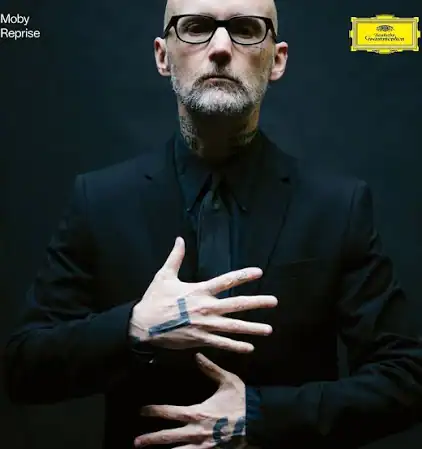
Reprise was released by Deutsche Grammophon in May 2021. Moby revisited songs from his own catalogue through acoustic and orchestral arrangements, working with guest singers and the Budapest Art Orchestra. The programme included a cover of “Heroes” featuring Mindy Jones, bringing a Bowie composition into an album largely concerned with reinterpreting Moby‘s own work.
Mindy Jones and “Heroes” as a remembered private performance
Mindy Jones sings “Heroes” on Reprise. Moby connected this new recording with his memory of playing the song privately with Bowie.
Moby explained in Deutsche Grammophon’s published account that the version he and Bowie played at home had never been recorded. The 2021 release is therefore a new interpretation inspired by that memory. It preserves his response to an experience, rather than presenting a recovered duet or an unheard Bowie vocal.
Moby on the meaning of his “Heroes” cover
“this acoustic version is my love letter to that memory.”
Source: Moby, quoted in Deutsche Grammophon’s Reprise artist biography.
Later editions and the continuing availability of the collaborations
The 2022 Dead Man Walking digital EP brought together Moby Mix 1, Moby Mix 2 and the Moby House Mix. Earlier expanded editions of Earthling had also included Moby Mix 1 and Moby Mix 2; Bowie’s official documentation identifies the latter as the US promotional 12-inch mix. These are archive presentations of the remix work, rather than new collaborations made in the year of reissue. The official expanded-album track listing identifies the earlier editions.
The 2025 box set I Can’t Give Everything Away (2002–2016) includes “Sunday” (Moby Remix) on Re:Call 6. Alongside the appearance of the Tibet recording in Toy:Box, these releases allow different parts of Moby‘s contribution to be heard within Bowie’s wider recorded catalogue.
The versions reward different kinds of listening. A remix invites comparison with the source recording; an instrumental studio contribution draws attention to the ensemble; a television performance adds the visual evidence of musicians working together. Availability across these formats means the relationship can be explored through the work itself, alongside the interviews that explain how the participants understood it.
Moby‘s place in Bowie’s creative circle
Moby‘s importance comes from the variety and specificity of the connection. He was a musician Bowie trusted to reinterpret recordings, an instrumental guest in selected performances and a colleague who created a substantial festival setting for Bowie’s 2002 live work. Bowie’s own comments recognise both the quality of the remix and the pleasure of the tour.
The friendship adds another dimension. Its public record includes conversation and humour, while Moby‘s later recollections preserve quieter encounters away from an audience. These different forms of contact belong together without requiring an exaggerated claim about his influence on every Bowie album or creative decision.
Within Bowie’s history, Moby offers a clear example of admiration becoming reciprocal professional respect and then a personal relationship. The result survives in identifiable recordings, documented appearances and words from both musicians. That combination gives the story its weight: the fan became a collaborator, the collaborator became a friend, and the friend continued to respond to the music through his own work.
Official Website & Further Information
Moby‘s official website provides information about his music and performances, together with an archive of news and journal entries. Its historical material includes the Carnegie Hall appearance, Area2 announcements, his 2016 Bowie tribute, the SonicVision announcement and the later introduction to his “Heroes” recording.
David Bowie’s official website supplies album credits, contemporary reports and archive-release documentation. The Tibet House US concert archive confirms the 2001 benefit date and programme, while Deutsche Grammophon documents Reprise and its performers.
For direct listening, the relevant titles are the Moby “Dead Man Walking” mixes, “Sunday” (Moby Remix), “Silly Boy Blue” (Tibet version) and “Heroes” featuring Mindy Jones. Their individual credits and version names identify the different kinds of contribution described here.
First-Hand Contributions
This article draws on published first-hand statements by both Moby and David Bowie. These include Bowie’s MAGNET interview, their Entertainment Weekly conversation, Moby‘s Q answer, Bowie’s comments after Area2, Moby‘s contemporary journal and his later interviews about their friendship. The quotations are attributed to the publications or official pages where they can be checked.
These are existing public sources, rather than interviews conducted for DavidBowieWorld.com. Personal memories are presented as the speaker’s recollections; recording roles and release histories are established through credits and official documentation. Any future contribution supplied directly to this archive will be identified separately with its source and context.
Article Origin
This article has been researched and written for DavidBowieWorld.com. It brings together official recording information, contemporary concert reports and published interviews to explain Moby‘s direct musical connections with David Bowie and the friendship that developed alongside them. Discussion of musical effects is interpretation of the recordings and performances, distinguished from the historical credits.
Principal sources include the official Earthling credits, Bowie’s 2002 MAGNET interview, the contemporary Heathen remix announcement and the official Tonight Show report.
Further reference points are the Toy:Box recording documentation, Moby‘s 2021 Noise11 interview, his 2005 conversation with Blair Jackson, Universal Music’s career biography and the official 2025 Bowie box-set announcement.
© DavidBowieWorld.com – David Bowie Collaborations & Creative Circle Archive.

Leave a comment