
Jason Lindner – Keyboardist, Synthesist and Sound Designer on Blackstar
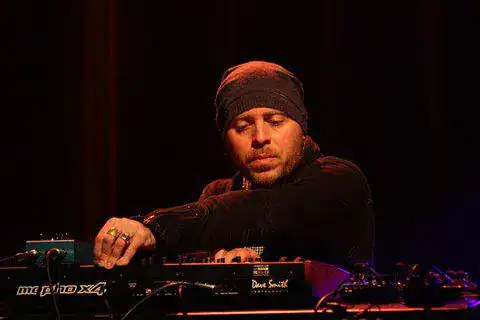
Deutsches Jazzfestival 2013 – Donny McCaslin casting for gravity – Jason Lindner. Photo: Schorle / Wikimedia Commons / CC BY-SA 4.0 — Wikimedia file page.
Jason Lindner is an American pianist, keyboardist, synthesist, composer, arranger, producer and sound designer. He became part of David Bowie’s final studio ensemble when Bowie and producer Tony Visconti selected the working group led by saxophonist Donny McCaslin to record Blackstar.
During three periods of recording at the Magic Shop in New York in January, February and March 2015, Lindner worked alongside Bowie, Visconti, McCaslin, bassist Tim Lefebvre, drummer Mark Guiliana and guitarist Ben Monder. His contribution combined piano, vintage Wurlitzer electric instruments, analogue synthesisers, electronic processing and original sound design.
Lindner did considerably more than add conventional keyboard accompaniment. Bowie’s demos frequently contained few completed keyboard parts, leaving Lindner to translate guitar figures, devise new harmonic material and construct sounds that complemented the acoustic instruments without restricting the ensemble’s freedom. His work became an essential part of the unsettling and exploratory musical environment heard across Blackstar.
The same 2015 sessions also produced No Plan, Killing a Little Time and When I Met You. These recordings were written in connection with Bowie’s stage work Lazarus and were released after his death, completing Lindner’s documented studio collaboration with Bowie.
Although Lindner’s association with Bowie brought his work to a much larger international audience, it represented only one chapter in a career already rooted in more than two decades of New York music. Before meeting Bowie, he had developed from a jazz pianist and big-band leader into an experimental keyboardist whose musical language incorporated bebop, Afro-Cuban music, funk, rock, hip-hop, electronic music and free improvisation.
- Full name: Jason Lindner
- Born: 1 February 1973
- Birthplace: New York City, United States
- Raised: Brooklyn, New York
- Occupations: Pianist, keyboardist, synthesist, composer, arranger, producer and sound designer
- Instruments: Piano, electric piano, organ, synthesisers and electronic processing
- Early training: Formal piano lessons from the age of seven
- Important teachers and mentors: Barry Harris and Chris Anderson
- Own projects: Jason Lindner Big Band and Now Vs Now
- Donny McCaslin connection: Member of McCaslin’s working group with Tim Lefebvre and Mark Guiliana
- Direct work with David Bowie: Recording sessions in January, February and March 2015
- Bowie studio role: Keyboardist, synthesist and sound designer
- Bowie album: Blackstar (released 8 January 2016)
- Related Bowie release: No Plan EP (released digitally 8 January 2017)
- Documented Bowie recordings: The seven tracks released on Blackstar, together with No Plan, Killing a Little Time and When I Met You
- Live work with Bowie: None; Bowie did not tour or perform publicly with the Blackstar studio ensemble
- Historical importance: A central contributor to the keyboard textures, electronic colours and improvised group sound of Bowie’s final studio recordings
Early life in Brooklyn
Jason Lindner was born in New York City on 1 February 1973 and grew up in Brooklyn. Music was present in his family from the beginning. His father was a pianist and vocalist who worked club dates and theatre engagements, sometimes accompanying entertainers and comedians. Lindner consequently encountered both the practical life of a working musician and the sound of the piano at a very young age.
He began finding notes and melodies by ear when he was still a small child. Rather than beginning with written exercises, his earliest relationship with the instrument developed through listening, recognition and imitation. This ability to hear musical information and locate it at the keyboard became an important foundation for his later work as an improviser and arranger.
Formal piano training began when Lindner was seven. He continued playing in school groups while listening to music outside the traditional boundaries of formal piano education. His childhood and teenage listening included rock and heavy metal as well as the hip-hop, dance music, blues and Latin sounds that formed part of New York’s wider musical environment.
At approximately ten years old, Lindner had an early encounter with electronic sound through his father’s Moog Rogue synthesiser. At that stage he remained primarily committed to acoustic piano, and synthesis did not immediately become the centre of his musical identity. The experience nevertheless introduced him to an instrument on which the performer could shape not only notes and harmony but also the character of the sound itself.
That distinction would later become crucial. Lindner eventually approached synthesisers not simply as electronic substitutes for a piano, but as independent instruments with their own expressive possibilities. His later contribution to Blackstar grew from this combination of traditional keyboard training, a highly developed ear and a willingness to manipulate sound in real time.
LaGuardia High School of Music and Art
Lindner attended New York’s Fiorello H. LaGuardia High School of Music & Art and Performing Arts. For his audition, he played Herbie Hancock’s interpretation of Thelonious Monk’s ’Round Midnight, which he had learned by ear. His acceptance placed him in an environment where serious musical study existed alongside regular ensemble performance.
LaGuardia gave Lindner opportunities to develop as both a pianist and ensemble musician. He performed in school bands and appeared with the school’s award-winning big band at major New York venues including Carnegie Hall and Lincoln Center. These experiences introduced him to the discipline required when playing written arrangements in a large ensemble while also strengthening his confidence as a live performer.
By the age of fifteen, Lindner was already performing at very different kinds of New York locations. His early engagements included a Lower East Side art gallery, a Baptist church in Harlem, a Muslim social club and a cabaret venue on the Upper West Side. The contrast between these settings exposed him to different audiences, musical functions and performance traditions.
These were not simply prestigious early appearances presented as evidence of a predetermined career. They were part of the practical education of a young New York musician: listening, accompanying, adjusting to unfamiliar circumstances and learning how music operated within different communities.
Learning from New York’s jazz musicians
After high school, Lindner continued his education through both formal study and direct contact with experienced musicians. The most important part of this development came through apprenticeships with pianists Barry Harris and Chris Anderson.
Harris was one of the leading teachers and performers associated with the bebop tradition. Lindner studied with him for approximately three years, absorbing a detailed understanding of harmony, melodic movement, rhythm and improvisation. This education connected Lindner directly to a living musical tradition rather than treating bebop as a fixed historical style.
Chris Anderson offered another important perspective. Admired by musicians for the depth of his harmonic knowledge, Anderson had also been an important mentor to Herbie Hancock. Lindner’s contact with Harris and Anderson gave him a strong technical and historical foundation from which he could later move towards electronic and experimental music.
He also learned from and worked around musicians including Junior Mance, Jaki Byard, Junior Cook, Dennis Charles and other figures connected with New York’s jazz community. Lindner has consistently presented these relationships as part of an inherited body of knowledge. His later stylistic expansion did not involve rejecting that education; instead, he used it as the basis from which to explore contemporary rhythms and electronic sound.
Smalls and the New York jazz scene
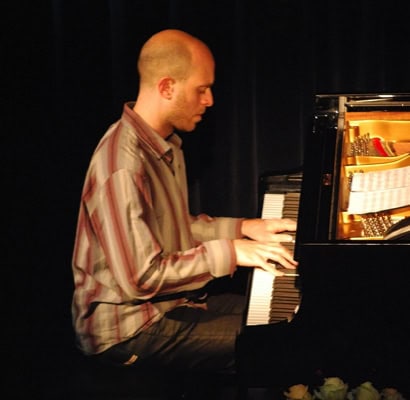
During the 1990s, Lindner became closely associated with Smalls Jazz Club in Greenwich Village. The venue opened in 1994 and became an important meeting place for a younger generation of New York musicians. Lindner performed there regularly and was part of the community that developed around the club during its formative period.
The musical environment at Smalls was strongly connected to bebop, reflecting both the musicians who gathered there and the influence of club founder Mitch Borden. Lindner respected and participated in that tradition, but his interests were already broader. Alongside musicians such as Omer Avital, Kurt Rosenwinkel and Myron Walden, he explored ways of extending the language without discarding the knowledge passed down by older players.
Lindner first led smaller ensembles at the club before establishing regular performances with a larger group. His Monday-night big-band appearances developed a strong following and became one of the most visible parts of his early career. Leading a large ensemble required him to combine composition, orchestration, rehearsal direction and improvisation, responsibilities that expanded his identity beyond that of a featured pianist.
The Smalls community was documented on Jazz Underground: Live at Smalls, released by Impulse! Records. Lindner’s own large-ensemble work subsequently led to the recording of Premonition. Although an intended Impulse! release was affected by corporate changes at the label, the album was ultimately issued by Stretch Records in 2000 with the support of pianist and composer Chick Corea.
Premonition presented Lindner as a composer, arranger, pianist and ensemble leader. The recording drew upon the musicians and musical relationships developed around New York’s jazz scene and established a documented beginning for his career under his own name.
He continued to record in a range of formats rather than tying his work to one permanent ensemble. Live: UK documented a quartet performance recorded for BBC Radio 3 in London, while 1, 2, 3, Etc. presented a trio with bassist Giulia Valle and drummer Marc Ayza. Ab Aeterno placed Lindner with bassist Omer Avital and percussionist Luisito Quintero, allowing rhythm and percussion to play a particularly prominent role.
His large-ensemble work also continued. Live at the Jazz Gallery documented the scale and detail of his writing for big band and demonstrated that his leadership of a large group was not merely an early phase abandoned after his first album.
Across these projects, Lindner developed a career that did not fit neatly within one jazz category. He remained grounded in improvisation but incorporated rhythmic and harmonic ideas drawn from Afro-Cuban music, salsa, funk, R&B, hip-hop and other parts of New York’s musical culture.
This broad musical vocabulary would eventually make him particularly suited to Bowie’s way of working. However, the connection was still many years away. Before Lindner entered Bowie’s studio, further collaborations would transform him from an acoustic pianist who also played keyboards into a synthesist and sound designer capable of constructing an entire electronic environment around a band.
Work with Claudia Acuña and Avishai Cohen
Alongside his work as a leader, Jason Lindner developed extensive experience as a supporting musician, arranger and musical director. One of his important early professional relationships was with Chilean vocalist Claudia Acuña, who established herself in New York during the 1990s.
Lindner worked with Acuña as a pianist, arranger and musical director. He contributed to her debut album, Wind from the South, released by Verve Records in 2000, and continued to record and perform with her. Acuña’s music required sensitivity to lyrics and vocal phrasing while also drawing upon jazz and Latin American traditions. This work strengthened Lindner’s ability to support a lead performer without restricting the flexibility of the surrounding ensemble.
He also recorded and toured with Israeli bassist and composer Avishai Cohen. Cohen’s music combined jazz improvisation with rhythms and melodic influences from the Middle East, North Africa, Europe and the Americas. Working in this environment contributed to Lindner’s growing understanding of music as an interconnected language rather than a collection of isolated genres.
These collaborations took Lindner beyond the New York clubs in which he had developed. International touring exposed him to musicians and audiences in Europe, Latin America and other parts of the world. The experience reinforced an approach already evident in his own compositions: musical identity could remain rooted in a particular tradition while also absorbing ideas from many other sources.
Expanding beyond acoustic piano
Although Lindner had encountered a Moog synthesiser during childhood, the acoustic piano remained his principal instrument through the early years of his career. His movement into electronic music developed gradually. He first added electric piano, then workstation keyboards and later virtual-analogue instruments to the equipment he used professionally.
This was not simply a matter of replacing an acoustic instrument with a more portable electronic version. A synthesiser required Lindner to think about sound at its most basic level. Oscillators, filters, envelopes, modulation and electronic effects allowed him to control the shape, movement and texture of each note.
The change also affected his improvisation. On an acoustic piano, the performer controls timing, dynamics, articulation and pedalling, but the fundamental sound of the instrument is already established. On a synthesiser, the sound itself can continue changing throughout a performance. Lindner began treating these alterations as an integral part of musical expression.
His experience as an arranger helped him understand where electronic sounds could fit within a larger ensemble. Instead of filling every available space, he could select a narrow frequency, a repeated pulse, a distorted tone or a sustained background texture that performed a specific function within the arrangement.
Meshell Ndegeocello and a new electronic direction
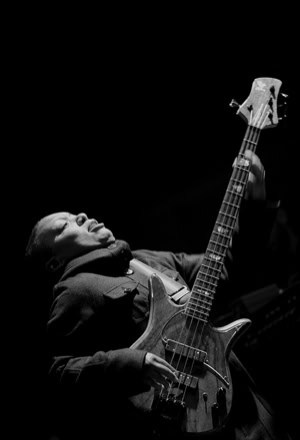
A decisive stage in Lindner’s development as a synthesist came through his work with bassist, vocalist, songwriter and producer Meshell Ndegeocello. Lindner toured as a member of her band during the second half of the 2000s, working alongside musicians including guitarist Chris Bruce, drummer Deantoni Parks and bassist Mark Kelley.
Ndegeocello encouraged Lindner to concentrate on synthesisers instead of relying upon the Rhodes electric piano that had previously formed an important part of his sound. Lindner initially acknowledged that synthesis was not yet his strongest area, but Ndegeocello expressed confidence that he could develop the required musical language.
The challenge forced him to move beyond using factory sounds or treating the synthesiser as a secondary keyboard. He began programming his own sounds and learning how analogue instruments responded to real-time manipulation. The Minimoog Voyager became one of the instruments through which he developed a more personal synthesiser voice.
Lindner also moved away from virtual-analogue instruments towards genuine analogue synthesisers. His growing collection included instruments manufactured by Dave Smith Instruments, later known again as Sequential. Among the instruments that became important to his work were the Prophet ’08, Prophet 12 and Mopho x4.
Ndegeocello subsequently produced the first album by Lindner’s electronic group Now Vs Now. Her role therefore extended beyond his development as a touring synthesist: she also helped shape one of the principal projects through which he combined jazz improvisation with contemporary electronic production.
Work connected with Lauryn Hill
During the mid-2000s, Lindner also auditioned for Lauryn Hill. Following the audition, he was asked to undertake preparatory and studio work that included recording synthesiser parts, transcribing music, writing horn arrangements and helping prepare Hill’s live band for a forthcoming tour.
These responsibilities brought together several areas of Lindner’s experience. Accurate transcription required close listening; horn writing drew upon his years as a big-band arranger; and the synthesiser parts demanded an understanding of electronic texture. Preparing a live ensemble also required him to translate recorded or conceptual material into parts that musicians could perform consistently.
Although this work differed from the circumstances he would later encounter with Bowie, it contributed to the professional versatility that made him valuable in a studio. By the time of the Blackstar sessions, Lindner was accustomed to learning incomplete or evolving material, interpreting demos and adapting arrangements without losing their essential character.
Founding Now Vs Now
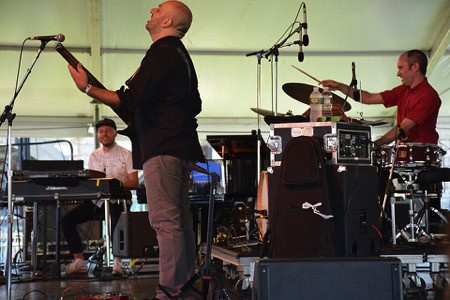
Lindner created Now Vs Now as a vehicle for music that could move freely between improvisation, electronic sound, funk, rock and rhythmically driven contemporary production. The project developed during the second half of the 2000s and eventually became closely associated with bassist Panagiotis Andreou and drummer Mark Guiliana.
Rather than presenting electronic elements as decoration added to an otherwise conventional jazz trio, Now Vs Now incorporated them into the structure of the music. Synthesiser bass lines, processed keyboards, repeated patterns, effects and groove-based drumming could determine the direction of a composition as strongly as melody or harmony.
The group also provided Lindner with a setting in which he could continue developing sounds during live performance. Synthesiser parameters could be altered while he played, allowing a solo to begin with one tonal character and gradually transform into something entirely different.
The self-titled album Now Vs Now was released in 2009. Produced by Meshell Ndegeocello, it featured the central trio of Lindner, Andreou and Guiliana with additional contributions from musicians and vocalists including Anat Cohen, Avishai Cohen, Kurt Rosenwinkel, Claudia Acuña and Ndegeocello.
The group continued with Earth Analog in 2013 and later The Buffering Cocoon in 2018. Justin Tyson played drums on the latter album. Across these recordings, Lindner developed a recognisable approach in which detailed keyboard programming coexisted with the risk and spontaneity of live improvisation.
The musical partnership with Mark Guiliana and Tim Lefebvre
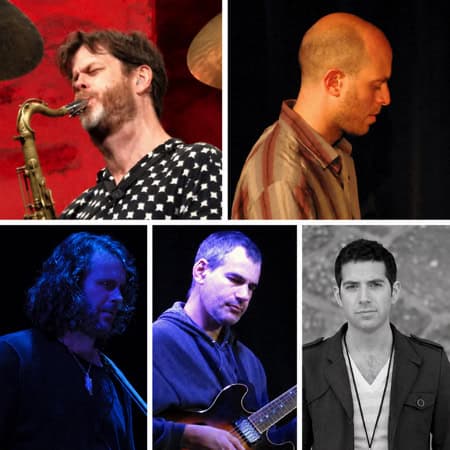
Lindner’s work with Mark Guiliana became an important link in the series of relationships that eventually led to David Bowie. Guiliana was already the drummer in Now Vs Now and had developed a distinctive approach that combined acoustic technique with ideas drawn from programmed beats and electronic music.
Lindner also worked with bassist Tim Lefebvre, whose experience crossed jazz, rock, funk, electronic music and studio production. Lindner, Lefebvre and Guiliana recorded together for Guiliana’s Beat Music project before becoming the rhythm section in saxophonist Donny McCaslin’s group.
The three musicians shared a willingness to disrupt conventional arrangements. They could establish a tightly controlled rhythmic pattern and then allow the music to become open, distorted or freely improvised. Electronic and acoustic sounds were not treated as opposing elements: each could be processed, reshaped or used rhythmically.
Their chemistry gave McCaslin a rhythm section capable of supporting his saxophone while also changing the direction of the music from within. Lindner later described the group as sharing influences from rock, funk, punk, electronica, reggae, dub and jazz. McCaslin gave the musicians sufficient freedom to bring these interests into his compositions.
Joining the Donny McCaslin Group
Donny McCaslin had established a wide-ranging career as a saxophonist before assembling the working group that included Lindner, Lefebvre and Guiliana. Although the instrumentation resembled a jazz quartet, the group’s sound drew heavily upon electronic production, amplified instruments, complex rhythms and contemporary beat music.
Lindner’s role went beyond conventional piano accompaniment. He could provide harmonic support, distorted electric-piano sounds, synthesiser bass, atmospheric layers or rapidly changing electronic textures. His sounds often occupied the space that might otherwise have been filled by additional guitars or studio overdubs.
The group’s developing identity can be heard on McCaslin’s Casting for Gravity, released in 2012. The album brought together McCaslin’s writing with the rhythmic and electronic interests of the musicians around him. Lindner’s synthesisers were part of a band sound in which improvisation and detailed sound design were inseparable.
McCaslin continued working with the same central group on Fast Future, released in 2015. The title reflected a musical direction that looked towards electronic and rhythmically adventurous forms rather than recreating an earlier period of jazz.
This existing group identity was important to what followed. Bowie did not assemble four unrelated session musicians and ask them to imitate a sound he had already created. He selected musicians who had developed their own musical understanding through repeated performances and recordings.
Sue (Or in a Season of Crime) and the connection to Bowie
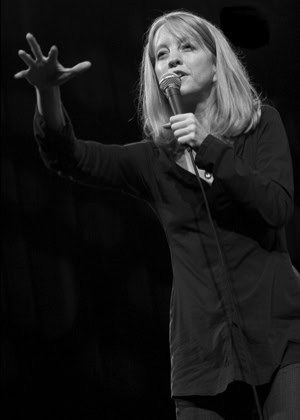
The path connecting Donny McCaslin’s group to David Bowie began through composer and bandleader Maria Schneider. Bowie collaborated with Schneider and her orchestra on the original recording of Sue (Or in a Season of Crime), which was recorded in New York in 2014 and released later that year.
McCaslin played saxophone on that recording, while Mark Guiliana was among the participating musicians. Jason Lindner did not play on the original 2014 Maria Schneider Orchestra version. His contribution belongs to the substantially different version later recorded for Blackstar.
The distinction is important because the two recordings used different ensembles and arrangements. Schneider’s version was written for a large orchestra. The later Blackstar version was created by Bowie, Visconti and the smaller studio group that included Lindner.
Through the work on the original Sue, Bowie and Visconti became familiar with McCaslin. Bowie also listened to Casting for Gravity, which demonstrated the musical identity of McCaslin’s working group and Lindner’s place within it.
Bowie and Visconti hear the group in New York
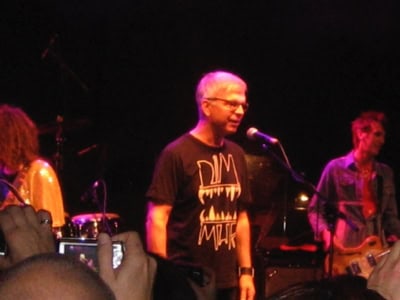
In 2014, Bowie and Tony Visconti went to hear Donny McCaslin’s group perform at the 55 Bar in Greenwich Village. Bowie attended discreetly and did not use the visit as a public appearance. The purpose was to experience the musicians as a functioning live group.
The performance allowed Bowie and Visconti to hear the interaction between McCaslin, Lindner, Lefebvre and Guiliana directly. Their ability to move between written material, groove-based playing, electronic sound and improvisation offered possibilities that differed from those of a conventional rock studio band.
Bowie subsequently decided that McCaslin’s group would form the core ensemble for his next recordings. Tony Visconti later recalled Bowie identifying McCaslin, Lindner, Lefebvre and Guiliana as the band he wanted for the album that became Blackstar.
Guitarist Ben Monder was added for the later recording periods, while James Murphy participated during part of the sessions, primarily contributing ideas and additional sonic input. Bowie and Visconti remained the album’s producers.
The selection of Lindner was therefore not based only on his ability to play piano or reproduce written keyboard parts. Bowie had heard the sound Lindner created inside an established ensemble. His combination of harmonic knowledge, improvisational freedom, analogue synthesis and real-time sound processing offered precisely the kind of open musical environment Bowie wanted to explore.
Preparing David Bowie’s demos
Before the musicians entered the studio, Donny McCaslin sent the members of the group a collection of demos supplied by Bowie. The recordings already communicated the melodies, structures and general atmosphere of the material, although some lyrics and individual parts were still being developed.
Jason Lindner on preparing for the Blackstar sessions
“You prepare by being prepared.”
— Jason Lindner, interview with Sequential
The demos included programmed drums, guitar and guide vocals. Tony Visconti and others had also contributed elements to some of the preparatory recordings. They were sufficiently complete to establish the identity of each composition, but they were not intended as finished arrangements that the band had to reproduce note for note.
McCaslin prepared charts that helped the musicians learn the structures. The group worked on the material both individually and together, discussing how to respect Bowie’s compositions while retaining its own musical identity.
This balance was essential. If the musicians had copied every element of the demos, the qualities for which Bowie had selected them would have disappeared. At the same time, complete freedom without careful preparation could have weakened the songs. The group therefore learned the material thoroughly before allowing it to change through rehearsal and recording.
The demos contained relatively few predetermined keyboard parts. When a specific keyboard idea was present, Lindner adapted it to the instruments available to him. He also learned several guitar figures and transformed them into keyboard or synthesiser parts.
Other ideas were created at home or developed after the musicians entered the studio. Some sounds or phrases that initially appeared promising were abandoned when the full group began playing. Lindner approached the material flexibly, leaving room for Bowie, Visconti and the ensemble to redirect an arrangement when a stronger possibility emerged.
By the beginning of the first recording period in January 2015, Lindner had prepared the compositions without fixing his contribution so rigidly that it could no longer respond to the moment. This combination of preparation and adaptability became one of the defining working principles of the Blackstar sessions.
The first recording period in January 2015
The recording of the material that became Blackstar and the later No Plan EP took place across three concentrated periods in January, February and March 2015. Each period lasted approximately one week and was held at the Magic Shop, a recording studio in Manhattan that had also been used for Bowie’s previous album, The Next Day.
The first period began in January. Bowie and Tony Visconti maintained the secrecy that had surrounded Bowie’s studio work since his return to recording. The musicians understood that the material was confidential and did not discuss their involvement publicly.
The central studio ensemble consisted of Donny McCaslin on saxophones, flute and woodwinds, Jason Lindner on piano, Wurlitzer and keyboards, Tim Lefebvre on bass and Mark Guiliana on drums and percussion. Bowie sang and played guitar, while Visconti supervised the production and engineering alongside Bowie.
Lindner later defined his function more broadly than the album’s formal keyboard credit. In addition to playing the written and improvised musical parts, he programmed synthesisers, created original sounds and altered instrumental textures through amplifiers and effects.
Jason Lindner on his role during the sessions
“My involvement with Blackstar was as keyboardist, synthesist and sound designer.”
— Jason Lindner, Juno Daily, 2026
The description is important because it distinguishes Lindner’s contribution from conventional keyboard accompaniment. He was not present only to play chords behind Bowie’s vocal or to reproduce parts from a completed demo. Sound selection, electronic processing and the creation of new instrumental colours were part of the musical work itself.
Daily life inside the Magic Shop
Tony Visconti discussing the recording and production of David Bowie’s Blackstar
The recording days followed an organised routine. Lindner recalled that Tony Visconti, assistant producer and engineer Erin Tonkon, engineer Kevin Killen, assistant Kabir Hermon, photographer Jimmy King and the members of the group generally assembled at the studio at approximately ten in the morning.
Bowie arrived at around eleven with his long-time assistant Coco Schwab. Lindner remembered Bowie arriving punctually and remaining fully involved in the work until late afternoon, depending upon the progress made that day.
The musicians usually concentrated on one composition at a time. They discussed the song, rehearsed its structure, checked the instrumental sounds and then attempted a complete live performance. Bowie initially sang with the musicians, allowing the ensemble to respond to his phrasing and physical presence rather than working only from an isolated guide track.
The first full take was therefore not merely an instrumental backing track recorded without Bowie. His singing formed part of the shared performance inside the studio. When further instrumental takes were required, Bowie could move to the control room while the musicians played along with the vocal from the first take.
Most of Bowie’s finished vocals were recorded again during later, more private sessions with Visconti. Lindner nevertheless recalled that portions of the live vocal from the initial performance of ’Tis a Pity She Was a Whore remained in the released recording.
This process preserved the energy of musicians responding to a singer in real time while still allowing Bowie and Visconti to refine the vocals and production afterwards. It also helps explain why the album can sound spontaneous despite the detail of its completed arrangements and mixes.
Bowie’s presence as a performer
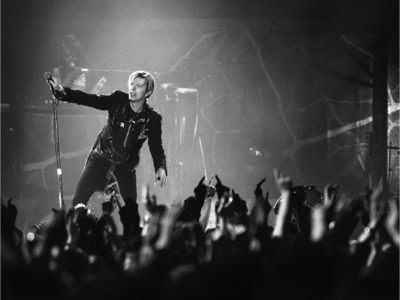
Lindner had known Bowie primarily through his recordings before entering the Magic Shop. He first heard Let’s Dance when he was ten years old, but later identified the 1997 album Earthling as the record that led him to investigate Bowie’s work more deeply.
Meeting Bowie did not produce the distant or highly formal atmosphere Lindner might have expected. He remembered Bowie as accessible, engaged and down-to-earth. The musicians could concentrate on the work without being prevented from contributing by Bowie’s reputation.
That relaxed personal manner changed when Bowie began performing. Lindner has described the impact of hearing him sing with the group for the first time. Bowie’s vocal presence transformed the atmosphere in the studio and made the historical significance of the session suddenly tangible to the musicians.
Bowie was not a passive singer waiting for an arrangement to be delivered. He discussed the compositions, participated in rehearsals, sang during the live takes and remained attentive to the ensemble’s decisions. Lindner remembered him as focused and exacting while still allowing humour and informal exchanges to become part of the working day.
Bowie and Visconti’s long relationship was also important to the experience. They had first worked together during the late 1960s and had created recordings across several distinct periods of Bowie’s career. Lindner was able to observe how they communicated, evaluated performances and made production decisions after decades of shared studio experience.
Three separate periods of recording
The decision to record across three concentrated periods allowed the material to develop between sessions. Rather than attempting to complete the album in one uninterrupted block, the musicians could prepare new compositions and reconsider sounds before returning to the Magic Shop.
The January period established the ensemble’s working method. A second period followed in February, and the final principal group sessions took place in March. Guitarist Ben Monder participated during the second and third periods, adding electric-guitar textures to the ensemble.
James Murphy, known for his work with LCD Soundsystem, joined during part of the second recording period. Lindner described Murphy’s role primarily as that of a consultant who contributed ideas to the expanding sonic palette. Murphy also received a percussion credit on the released versions of Sue (Or in a Season of Crime) and Girl Loves Me.
Although different musicians and technical contributors participated at particular stages, the McCaslin group remained the central performing unit. Its existing chemistry allowed the musicians to respond quickly when Bowie or Visconti changed a structure, rejected a part or asked the ensemble to pursue a different atmosphere.
Recording the title track
The backing track for Blackstar was recorded at the Magic Shop in New York on 20 March 2015. The composition was constructed in contrasting sections rather than following one conventional verse-and-chorus structure throughout.
The studio ensemble included Donny McCaslin on saxophones and woodwinds, Jason Lindner on keyboards, Tim Lefebvre on bass, Mark Guiliana on drums and Ben Monder on guitar. David Bowie performed vocals and also contributed guitar, while Bowie and Tony Visconti produced the recording.
The musicians had prepared Bowie’s demos before entering the studio, but the arrangement continued to develop through rehearsal and live performance. The group recorded the principal backing track together, after which Bowie, Visconti and other contributors completed further production, vocal work and mixing.
The published album credits identify Lindner on piano, Wurlitzer organ and keyboards across Blackstar. They do not specify which individual keyboard parts or instruments heard on the title track were played by him. His documented contribution to this recording should therefore be described as part of the credited studio ensemble without assigning particular sounds to him.
Lindner’s keyboard setup
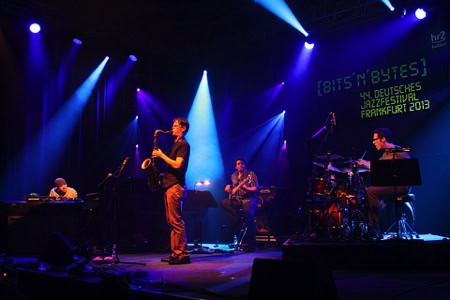
Lindner used a broad collection of acoustic, electro-mechanical and electronic instruments during the sessions. The official album credits identify him on piano, Wurlitzer organ and keyboards, while his own accounts provide greater detail about his synthesisers and signal processing.
His principal programmable synthesisers included a Prophet ’08, Prophet 12 and Mopho x4. These instruments allowed him to prepare sounds before the sessions while retaining the ability to alter them after hearing the full ensemble.
The Prophet ’08 provided an analogue character that Lindner believed blended particularly well with acoustic instruments. It could therefore add electronic colour without separating itself completely from McCaslin’s saxophone, Monder’s guitar or the acoustic components of Guiliana’s drums.
The Prophet 12 combined digital oscillators with extensive sound-shaping possibilities. Lindner used it to create full, harder-edged pads and metallic overtones suited to the album’s more intense passages. The Mopho x4 offered another compact analogue instrument on which he had already spent considerable time developing and storing sounds.
The Magic Shop also contained vintage Wurlitzer instruments. When Lindner did not begin with a predetermined electronic sound, he could use a Wurlitzer as a starting point or select a relatively simple Prophet ’08 patch that functioned as a neutral foundation.
This did not mean that the resulting sound remained simple. An initial electric-piano or synthesiser tone could be amplified, distorted, delayed or otherwise processed until it occupied a very different place in the arrangement.
Amplifiers, pedals and real-time sound design
Lindner routed instruments through a pedal chain and a Fender Twin Reverb amplifier. The pedals were arranged so that they could be moved between instruments, allowing him to process a Wurlitzer, synthesiser or other keyboard according to the needs of a particular recording.
Jason Lindner on shaping the sound in the studio
“We were trying to sculpt the sound right there, as if we were on a live gig.”
— Jason Lindner, interview with Sequential
His available effects included analogue and digital delays, overdrive and more extreme forms of digital distortion. Among the devices he has identified were a Way Huge Aqua-Puss delay, MXR Carbon Copy, Moogerfooger delay, Fulltone OCD overdrive and WMD Geiger Counter.
The Geiger Counter was especially useful for heavily altered digital textures. In contrast, the overdrive could produce a warmer and less extreme form of distortion. Having both available allowed Lindner to choose between subtle tonal roughness and a deliberately unstable or damaged electronic sound.
The musicians attempted to create many of these sounds while performing rather than recording a clean keyboard signal and leaving every decision until the mixing stage. Lindner compared the approach to shaping sound during a live performance.
This method affected the way the group played. A distorted Wurlitzer or an aggressively processed synthesiser responds differently within an ensemble from a clean piano. The other musicians could hear the finished or nearly finished character of the sound and react to it during the take.
Transforming guitar parts into keyboard parts
Because Bowie’s demos contained relatively few completed keyboard lines, Lindner did not have a fixed set of parts to reproduce. Some of the material instead contained guitar figures that helped establish the identity of the composition.
Lindner learned several of these figures and translated them into keyboard language. This did not always mean playing the same notes with a piano sound. A guitar rhythm could become a synthesiser pulse, a processed Wurlitzer figure or a sustained electronic texture.
The translation preserved the structural purpose of Bowie’s demo while allowing the new studio group to develop its own sound. Lindner could retain a rhythmic accent or harmonic movement without imitating the tone and articulation of the original guitar.
Other keyboard ideas were created independently. Lindner prepared some material at home and developed additional parts after hearing Bowie and the ensemble in the studio. Ideas could be altered substantially or removed when they no longer served the complete recording.
This willingness to abandon prepared material was part of the discipline of the sessions. A carefully programmed sound was not retained simply because it had required time to create. Bowie, Visconti and the musicians evaluated it according to how it functioned within the song.
’Tis a Pity She Was a Whore
David Bowie – “’Tis a Pity She Was a Whore” from Blackstar
Bowie first released a different version of ’Tis a Pity She Was a Whore in 2014. For Blackstar, the composition was recorded again with the Magic Shop ensemble and received a substantially different arrangement.
The new version was among the first recordings made for Blackstar. Its backing track was recorded at the Magic Shop on 5 January 2015.
Lindner recalled that Bowie initially sang live with the musicians in the same room. When additional takes were recorded, the group could perform while listening to Bowie’s first vocal. According to Lindner, parts of Bowie’s live first-take vocal remained in the completed version of ’Tis a Pity She Was a Whore.
Lindner is credited as part of the keyboard team across the Blackstar album, but the published credits do not identify his exact instrument or individual part on this track. It is therefore accurate to record his participation in the ensemble without attributing specific electronic or harmonic elements to him.
Lazarus
David Bowie – “Lazarus” (official music video, 2016)
Lazarus was recorded during the 2015 Magic Shop sessions and released as the third track on Blackstar. It was also closely connected with the stage production of the same name, written by David Bowie and playwright Enda Walsh.
The musical continued the story of Thomas Jerome Newton, the extraterrestrial character Bowie had portrayed in Nicolas Roeg’s 1976 film The Man Who Fell to Earth. The New York Theatre Workshop production officially opened in December 2015 with Michael C. Hall in the principal role.
Bowie’s studio recording featured the central Blackstar ensemble, including Donny McCaslin, Jason Lindner, Tim Lefebvre, Mark Guiliana and Ben Monder. Bowie performed the lead vocal and played guitar, while Bowie and Tony Visconti produced the recording.
Lindner’s published album credit covers piano, Wurlitzer organ and keyboards, but it does not state which particular instrument or passage he played on Lazarus. No more specific keyboard contribution should therefore be claimed without additional first-hand documentation.
Sue (Or in a Season of Crime)

The original version of Sue (Or in a Season of Crime) was recorded in 2014 through Bowie’s collaboration with composer and bandleader Maria Schneider. Donny McCaslin and Mark Guiliana participated in that orchestral recording, but Jason Lindner did not play on the original Maria Schneider Orchestra version.
Bowie and the Magic Shop ensemble recorded a new version for Blackstar in 2015. This was not an edit or remaster of the earlier recording. It was a separate performance created with a smaller group and a substantially revised arrangement.
The Blackstar version included McCaslin, Lindner, Tim Lefebvre, Guiliana and Ben Monder. James Murphy received a percussion credit on the track, while Bowie and Tony Visconti produced the recording.
Lindner is credited on piano, Wurlitzer organ and keyboards across the album. Although the new arrangement contains keyboard material, the published credits do not provide a complete track-specific account of which individual sounds or passages he played. His participation should therefore be documented without claiming that he personally replaced particular orchestral parts from the 2014 version.
Girl Loves Me
David Bowie – “Girl Loves Me” (official audio)
Girl Loves Me was recorded with the Magic Shop ensemble and released as the fifth track on Blackstar. Its lyrics incorporate language influenced by Nadsat, the constructed vocabulary used in Anthony Burgess’s novel A Clockwork Orange, together with elements associated with Polari.
Lindner recalled that the words surprised the musicians when they first heard Bowie’s demo. He later explained that Bowie discussed some of the language with the group during the studio sessions.
Lindner also commented upon the composition’s unusual harmonic effect, observing that the bass note did not always function as a conventional indication of the root or key. This was his published analysis of the song and should not automatically be interpreted as a description of a specific keyboard part.
The recording featured the central Blackstar ensemble, and James Murphy received an additional percussion credit. Lindner’s album credit confirms his participation on piano, Wurlitzer organ and keyboards across the project, but it does not identify his exact instrument or individual contribution to Girl Loves Me.
Dollar Days
David Bowie – “Dollar Days” from Blackstar
Dollar Days was recorded during the 2015 sessions and released as the sixth track on Blackstar. The studio ensemble included Donny McCaslin, Jason Lindner, Tim Lefebvre, Mark Guiliana and Ben Monder, working with Bowie and producer Tony Visconti.
Unlike much of the material prepared for the sessions, Dollar Days was not developed from a completed demo. Donny McCaslin recalled that Bowie introduced the musical idea on guitar in the studio and that the musicians learned and developed the composition there.
Lindner is credited on the album for piano, Wurlitzer organ and keyboards. However, the published album credits do not provide a complete track-by-track identification of every instrument he played or every individual passage for which he was responsible.
It is therefore accurate to identify Lindner as a participating member of the studio ensemble, but not to describe a particular piano, harmonic or atmospheric function as his work unless a first-hand source confirms it.
I Can’t Give Everything Away
Blackstar Symphony performing David Bowie’s “I Can’t Give Everything Away” with the San Francisco Symphony
I Can’t Give Everything Away was released as the seventh and final track on Blackstar. Bowie performed the lead vocal and harmonica, while the recording featured the musicians who formed the central ensemble for the album.
Jason Lindner participated alongside Donny McCaslin, Tim Lefebvre, Mark Guiliana and Ben Monder. Bowie and Tony Visconti produced the track as part of the same 2015 recording project.
The official album credits identify Lindner on piano, Wurlitzer organ and keyboards but do not provide a track-by-track breakdown of every sound he created. It is consequently not possible to assign a particular keyboard texture or harmonic passage on I Can’t Give Everything Away to Lindner solely from the published credits.
His involvement should be described as a documented contribution to the studio ensemble without making a more specific claim about his individual part.
The complete keyboard contribution to Blackstar
The released album credits Jason Lindner across Blackstar as a whole rather than assigning every piano, Wurlitzer or synthesiser sound to an individual track. It would therefore be inaccurate to identify every audible keyboard texture as a particular instrument unless Lindner or another participant has documented it.
The album credits identify Lindner on piano, Wurlitzer organ and keyboards as a member of the studio ensemble heard across Blackstar. The published credits do not specify his exact instrument or individual part on every track.
Across those recordings, he moved between acoustic piano, Wurlitzer, analogue synthesisers, electronic effects and original sound programming. The precise balance changed according to the needs of each composition, but the underlying method remained consistent: prepare thoroughly, listen to the ensemble and allow the sound to change when the music required it.
The recordings later released on No Plan
The 2015 Magic Shop sessions produced more completed Bowie recordings than the seven selected for Blackstar. Three additional songs—No Plan, Killing a Little Time and When I Met You—were recorded with the same central studio ensemble and retained for later release.
All three compositions were connected with Lazarus, the stage work written by David Bowie and playwright Enda Walsh. The production continued the story of Thomas Jerome Newton, the extraterrestrial character Bowie had portrayed in Nicolas Roeg’s 1976 film The Man Who Fell to Earth.
The stage production contained new arrangements of songs from across Bowie’s career as well as these newly written compositions. Michael C. Hall and other members of the original New York cast performed the songs in the theatre, but Bowie also recorded his own studio versions.
It is important to distinguish the cast performances from Bowie’s recordings. Lindner’s documented contribution concerns the Bowie studio versions created during the Magic Shop sessions, not every version heard in the theatrical production or on the cast recording.
No Plan
David Bowie – “No Plan” (official music video, 2017)
No Plan was written in connection with Bowie and Enda Walsh’s stage production Lazarus. Bowie recorded his own version during the 2015 Magic Shop sessions with the musicians involved in Blackstar.
The recording featured Donny McCaslin, Jason Lindner, Tim Lefebvre, Mark Guiliana and Ben Monder. It was completed during Bowie’s lifetime and should not be described as a posthumously constructed recording.
Bowie’s version was first released on 21 October 2016 as part of Lazarus: Original Cast Recording. It was subsequently included on the digital No Plan EP, released on 8 January 2017.
The published credits identify Lindner on piano, Wurlitzer organ and keyboards across these Bowie recordings. They do not state which exact instrument or passage he played on No Plan. His participation is established, but the specific harmonic or atmospheric function of his part should not be presented as fact.
Killing a Little Time
Killing a Little Time was another new composition associated with the stage production Lazarus. Bowie recorded the song during the 2015 Magic Shop sessions with the ensemble also heard on Blackstar.
The participating musicians included Donny McCaslin, Jason Lindner, Tim Lefebvre, Mark Guiliana and Ben Monder. Bowie performed the lead vocal, and the recording was produced by Bowie and Tony Visconti.
Bowie’s studio version was first released on Lazarus: Original Cast Recording on 21 October 2016. It later appeared with Lazarus, No Plan and When I Met You on the No Plan EP.
Lindner’s participation is confirmed by the release credits, which list him on piano, Wurlitzer organ and keyboards. The credits do not identify his exact instrument or individual part on Killing a Little Time, so no particular electronic texture or element of the arrangement should be assigned to him without further documentation.
When I Met You
When I Met You was recorded during the same 2015 sessions that produced Blackstar and the other new material associated with Lazarus.
The Bowie studio recording featured Donny McCaslin, Jason Lindner, Tim Lefebvre, Mark Guiliana and Ben Monder. Bowie and Tony Visconti produced the performance as part of the final group of recordings completed during Bowie’s lifetime.
The track was first issued on Lazarus: Original Cast Recording on 21 October 2016 and was subsequently included on the No Plan EP released digitally on 8 January 2017.
The release credits confirm Lindner’s participation on piano, Wurlitzer organ and keyboards but do not provide a track-specific description of his performance. It is therefore accurate to name him as a member of the recording ensemble without assigning particular keyboard passages or production functions to him.
First release on the Lazarus cast album
Bowie’s recordings of No Plan, Killing a Little Time and When I Met You were first released on 21 October 2016 as part of the album Lazarus: Original Cast Recording.
The first disc documented the New York cast performing material from the stage production. The second disc contained Bowie’s own versions of the three new songs, recorded with the Blackstar musicians.
This release structure made the distinction between theatrical and Bowie studio performances clear. Lindner’s piano, Wurlitzer and keyboards belonged to Bowie’s three recordings on the second disc.
The No Plan EP
On 8 January 2017, the date that would have been Bowie’s seventieth birthday, the three additional recordings were brought together digitally with Lazarus on the No Plan EP.
Because Lazarus had already appeared on Blackstar, the EP connected one of the album’s central songs with the three Bowie recordings first issued on the cast album. The release presented the four compositions as a distinct final group associated with the stage production and the 2015 sessions.
The EP credits Lindner on piano, Wurlitzer organ and keyboards alongside Bowie, McCaslin, Lefebvre, Guiliana and Monder. It is therefore one of the principal releases documenting his direct work with Bowie.
The EP should not be described as a new collaboration completed after Bowie’s death. The recordings had already been made with Bowie in 2015. Their later release brought existing completed performances to the public.
The release of Blackstar

Blackstar was released on 8 January 2016, Bowie’s sixty-ninth birthday. Its seven tracks presented a concentrated album that differed markedly from the more extensive song collection issued as The Next Day three years earlier.
The title track and Lazarus had been introduced before the album appeared, but much of the recording process remained secret. Listeners consequently encountered the full extent of the McCaslin group’s involvement only when the album and its credits became available.
Lindner’s name appeared alongside musicians whose careers were familiar within jazz and experimental music but less widely known to a large part of Bowie’s international audience. The album brought their established musical relationships into a new context without presenting them as anonymous backing players.
The critical response frequently concentrated on the unusual interaction between Bowie’s compositions and the New York musicians. The album’s sound could not be attributed to jazz influence in a general or decorative sense. It resulted from Bowie and Visconti working directly with an ensemble whose members had already developed their own approach.
David Bowie’s death
David Bowie died on 10 January 2016, two days after the release of Blackstar. His death transformed the public understanding of the album and intensified attention to its lyrics, visual imagery and emotional atmosphere.
For Lindner and the other participating musicians, the loss was connected to a recent personal and professional experience. They had not simply contributed parts remotely to a Bowie recording. They had rehearsed, performed and developed the music with him inside the Magic Shop.
Later interpretations often presented every part of Blackstar exclusively as a coded farewell. The album unquestionably became inseparable from the circumstances of Bowie’s death, but the musicians’ accounts also document focused and practical creative work: demos, charts, rehearsals, instrument choices, live takes, humour and collective decision-making.
Remembering this working process does not reduce the album’s emotional importance. It demonstrates that Bowie’s final recordings were created through active engagement with other musicians and through a sustained interest in finding new musical possibilities.
Jason Lindner’s memories of Bowie
Lindner remembered a brief moment of feeling starstruck when he began working with Bowie. That reaction did not become a barrier because Bowie made the studio feel accessible and collaborative.
Jason Lindner on working with David Bowie
“It really was a comfortable and beautiful situation to work in.”
— Jason Lindner, JazzTimes
Lindner’s recollections describe Bowie as focused, kind, humorous and fully involved in the recording process. They do not support an image of a distant figure who issued instructions and left the musicians to complete the work.
He was particularly affected by the contrast between Bowie’s calm personal manner and the force of his singing. When Bowie began performing, Lindner experienced a concentration and urgency that changed the atmosphere in the room.
Observing Bowie and Tony Visconti also left a lasting professional impression. Lindner saw how two musicians with a long shared history could work efficiently, evaluate performances and maintain high standards without making the studio environment needlessly rigid.
Five Grammy Awards for Blackstar
At the 59th Annual Grammy Awards in 2017, material connected with Blackstar received five awards. The album won Best Alternative Music Album and Best Engineered Album, Non-Classical, while Jonathan Barnbrook’s artwork received Best Recording Package.
The title track won Best Rock Performance and Best Rock Song. These were Bowie’s first competitive Grammy victories in musical categories during his lifetime or immediately following it, apart from the earlier award connected with the short film Jazzin’ for Blue Jean and his Lifetime Achievement Award.
The awards recognised several different aspects of the project, including Bowie’s writing and performance, the engineering, the visual presentation and the album as a complete work. They also increased public awareness of the musicians whose performances formed its instrumental foundation.
It would be inaccurate to describe every participating musician as the individual recipient of all five awards. Lindner’s historical connection is that he performed throughout the album honoured at the ceremony and helped create the music recognised by those awards.
Donny McCaslin’s Beyond Now
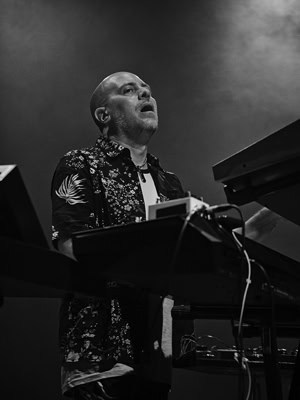
Following Bowie’s death, Donny McCaslin completed Beyond Now, released in October 2016. The album featured Jason Lindner, Tim Lefebvre and Mark Guiliana, preserving the central group chemistry heard during the Bowie sessions.
Beyond Now contained McCaslin’s original material together with interpretations of music by other composers. Two Bowie compositions were included: A Small Plot of Land, originally released on 1. Outside in 1995, and Warszawa, the Bowie and Brian Eno composition from Low.
The album should not be treated as an unofficial continuation of Blackstar. It was a Donny McCaslin recording with its own repertoire and identity. Nevertheless, the experience of working with Bowie formed part of the context in which it was created and released.
For Lindner, the project continued the musical relationships that had brought him into the Magic Shop. It also allowed the group to acknowledge Bowie’s work through new instrumental interpretations rather than attempting to reproduce his studio recordings exactly.
Performing Bowie’s music after 2016
Donny McCaslin and Jason Lindner performing with the Frankfurt Radio Big Band
After Bowie’s death, Lindner participated in performances of Bowie’s music with Donny McCaslin and other musicians. These concerts offered new arrangements and instrumental interpretations rather than recreations of a tour that had never taken place.
The distinction is historically important. Lindner recorded with Bowie but never appeared on stage with him. Every public performance by Lindner of Blackstar material took place independently or as a posthumous celebration after Bowie’s death.
McCaslin’s groups did not always use the exact Blackstar studio line-up. Bassists and drummers could change according to the date and location. Each video or concert must therefore be credited to the musicians who actually participated rather than automatically identifying every McCaslin performance as the original Bowie ensemble.
Video: Lazarus performed by the Donny McCaslin Quartet
Jason Lindner and the Donny McCaslin Quartet performing David Bowie’s Lazarus in Birmingham. This is a post-Bowie performance and does not feature David Bowie.
Following the release of Blackstar, Donny McCaslin and Jason Lindner continued to perform music connected with the album. Their interpretations allowed the compositions to develop through live improvisation while preserving the principal melodies and atmosphere of Bowie’s recordings.
This performance of Lazarus comes from a later Donny McCaslin Quartet appearance in Birmingham. The accompanying musicians were bassist Jonathan Maron and drummer Zach Danziger, rather than the complete rhythm section heard on Blackstar.
The performance therefore belongs to the continuing life of the music after Bowie’s death. It should not be presented as footage from the original sessions or as a concert by David Bowie’s band.
Blackstar Symphony
Lindner later became involved in Blackstar Symphony: The Music of David Bowie, a large-scale concert project conceived by Donny McCaslin. The production combined musicians connected with Bowie’s final recordings with a full symphony orchestra, guest vocalists and new arrangements.
The world premiere took place at the Belk Theater in Charlotte, North Carolina, on 16 and 17 September 2022. McCaslin served as artistic director, and the participating Bowie collaborators included Lindner and vocalist and bassist Gail Ann Dorsey.
The first half presented the complete Blackstar album in newly orchestrated form. The second half drew upon a wider selection of Bowie’s work. The orchestral arrangements were created by several arrangers, including Maria Schneider, Tony Visconti, Jules Buckley, Vince Mendoza, Tim Davies, Jamshied Sharifi, Michael Dudley Jr. and Vellu Halkosalmi.
Blackstar Symphony did not claim to reproduce the Magic Shop sessions exactly. Its purpose was to reinterpret the compositions for substantially larger forces while retaining direct participation from musicians connected with Bowie.
For Lindner, the project brought music originally developed by a compact studio ensemble into a setting that combined electronic keyboards, improvising musicians and symphonic arrangements. It provided another example of the ways in which the Blackstar material continued to evolve after its release.
Continuing work with Donny McCaslin
Jason Lindner’s musical relationship with Donny McCaslin continued beyond the projects directly connected with David Bowie. He remained part of McCaslin’s evolving groups, contributing keyboards, synthesisers and sound design to recordings and international performances.
On McCaslin’s 2018 album Blow., electronic production, vocals and song-based structures became more prominent. The recording moved further away from a conventional acoustic-jazz format and continued the group’s interest in combining improvisation with rock, electronic music and contemporary production.
Lindner’s presence helped connect this later work with the electronic language the musicians had already been developing before Blackstar. Their collaboration with Bowie did not create that language, but it gave them an unusual setting in which to apply it to another artist’s compositions.
This distinction is essential when considering Lindner’s career. He was selected for Blackstar because Bowie and Visconti had heard qualities already present in his work with McCaslin, Guiliana and Lefebvre. His musical identity did not begin with Bowie, and it did not end when the sessions were completed.
The continuing development of Now Vs Now
Now Vs Now remained one of Lindner’s principal creative projects. Its third album, The Buffering Cocoon, was released in 2018 with Panagiotis Andreou on bass and vocals and Justin Tyson on drums.
The album continued Lindner’s exploration of the relationship between live musicians and electronic systems. Synthesiser sequences, processed keyboards, bass, drums and vocals were organised into compositions that retained room for improvisation.
The group’s work demonstrated how far Lindner had travelled from the primarily acoustic settings of his earliest recordings. However, the underlying skills remained connected: careful listening, rhythmic awareness, harmonic knowledge and the ability to respond immediately to other musicians.
Lindner continued developing further Now Vs Now material while also performing and recording in a range of other settings. The project remained a means of testing new electronic sounds without abandoning the interaction of a live ensemble.
Oscillations and electronic improvisation
During the period of the Bowie sessions, Lindner was also running a weekly New York event called Oscillations: Ambient Mondays at Nublu. The series created a space in which musicians could connect electronic hardware through MIDI clock and construct performances collectively in real time.
These were not conventional keyboard recitals or fixed presentations of studio recordings. The musicians worked with synthesisers, sequencers, rhythm machines and electronic processing, allowing the structure of a performance to emerge through interaction.
The timing of the residency is significant because it shows that Lindner’s electronic work during Blackstar was part of a broader period of experimentation. His interest in synchronised hardware, live sound manipulation and collective electronic improvisation existed alongside the Bowie sessions.
Lindner later expanded the Oscillations name through projects connecting electronic sound with yoga and wellness practices. These performances used live sound as an environment for movement and concentration rather than following the expectations of a conventional concert.
Production and collaborative electronic work
As Lindner’s career developed, production became increasingly important alongside instrumental performance. He continued to work as a pianist and synthesist but also became more involved in constructing tracks, shaping arrangements and developing electronic systems through which musicians could improvise.
This work included collaborations with musicians and producers operating in house music, experimental electronics and beat-driven forms. Lindner’s background allowed him to move between the detailed preparation of a producer and the immediate response of an improvising performer.
He has explained that in-person collaboration allows musicians to experiment, repeat ideas and narrow them down while the creative energy remains active. This resembles aspects of the Blackstar process, even though the musical settings are very different: preparation creates a foundation, but the participants retain enough flexibility to follow an unexpected result.
Collaboration with JKriv
Lindner developed a continuing collaboration with New York musician, producer and DJ JKriv. They met during the COVID-19 pandemic through the musical community surrounding the Hot Honey Sundays events.
JKriv subsequently invited Lindner to participate in the live band for the A Joyful Noise parties at Public Records in Brooklyn. The events combined DJs, live dance music and guest performers, giving Lindner another environment in which to connect instrumental improvisation with club-oriented rhythm.
After working together in the live ensemble, Lindner and JKriv began collaborating on production. Their method involved working together in person, jamming over rhythmic foundations and identifying ideas that could be developed into completed arrangements.
Lindner contributed synthesisers, sequenced figures, piano patterns and other rhythmic keyboard parts. Although some passages preserved the feeling of a live performance, his role increasingly resembled that of a co-producer rather than a featured jazz soloist.
Their work led to the collaborative Real Ones EP, released through Razor-N-Tape. The project brought together house-music structures and the responsiveness of musicians accustomed to performing in real time.
The collaboration illustrates the continuing development of skills already present during Lindner’s work with Bowie. He remained interested in the point where detailed sound construction and spontaneous performance could coexist, but he applied those interests within a different musical and cultural setting.
Moment Machine and experimental sound
Another of Lindner’s later projects is Moment Machine, created with digital drummer and producer Currency Audio. The project concentrates on fully produced music generated through live improvisation.
Its musical language draws upon post-jungle, intelligent dance music and experimental electronic production. Instead of separating the improvisation stage from production, the project attempts to make both processes happen at the same time.
Lindner’s role involves synthesisers, electronic sound design and interaction with digitally produced rhythm. This work continues his long-standing interest in allowing technology to respond to the musician rather than reducing performance to the playback of predetermined sequences.
A career built upon collaboration
Across his career, Lindner has occupied several different positions within an ensemble. He has been a bandleader, arranger, musical director, supporting pianist, touring keyboardist, synthesist, sound designer, producer and improviser.
His work with Claudia Acuña demanded sensitivity to a vocalist and her repertoire. His apprenticeship with Barry Harris and Chris Anderson gave him a foundation in harmony and improvisation. His years at Smalls required him to participate in a living New York jazz community, while his big-band projects developed his skills as a composer and arranger.
Meshell Ndegeocello encouraged him to take synthesisers more seriously. Now Vs Now provided a laboratory for electronic improvisation, and the Donny McCaslin group brought him into a rhythm section whose collective identity led directly to Bowie.
These experiences converged during the Blackstar sessions. Lindner could understand a chart, learn a part by ear, translate guitar material to keyboards, create an original synthesiser sound, alter it through effects and abandon it when the complete arrangement required something different.
His value to Bowie therefore cannot be reduced to technical skill on one instrument. It was the combination of historical knowledge, preparation, flexibility and sonic imagination that made him appropriate for the project.
The lasting influence of the Blackstar sessions
Lindner has described working with Bowie and Visconti as a transformative professional experience. Watching them operate in the studio provided a standard against which he could evaluate his own later work.
The influence did not require him to imitate Bowie’s music. It concerned focus, preparation, judgement and commitment: arriving ready to work, recognising when an idea served the recording and giving complete attention to a performance.
Lindner also carried the memory of Bowie’s presence as a vocalist into later projects. He had witnessed how a performer could change the energy of a room when a recording began, even after behaving informally and calmly during rehearsal.
The humour of the sessions remained part of his recollections as well. Lindner remembered verbal exchanges, jokes and a running scoreboard used to record the studio’s battles of wit. These memories provide a human counterbalance to interpretations that present Bowie’s final sessions only through illness, mortality and farewell.
The recordings were historically significant, but they were also made by people working together in a studio: preparing, laughing, listening, rejecting ideas and attempting another take. Lindner’s first-hand testimony helps preserve that practical creative reality.
Jason Lindner in Bowie’s collaborative universe
Jason Lindner belongs to a relatively small group of musicians who participated directly in David Bowie’s final studio recordings. His documented collaboration was concentrated within the three Magic Shop recording periods of 2015, but it encompassed the complete Blackstar album and the three additional Bowie recordings later associated with No Plan.
He did not tour with Bowie, perform publicly with him or serve as a long-term member of an established Bowie live band. Describing the relationship accurately does not diminish it. Lindner’s importance rests upon a clearly defined body of studio work created during one of the most closely examined periods of Bowie’s career.
Within that work, Lindner connected several musical worlds. His foundation came from New York jazz and bebop, but his contribution also reflected electronic production, analogue synthesis, funk, rock, hip-hop and free improvisation.
Bowie had repeatedly selected collaborators capable of bringing an independent musical identity into his recordings. Lindner continued that pattern. He was not asked to reproduce the keyboard language of Mike Garson, Brian Eno or any other earlier Bowie associate. He was chosen because of the musical vocabulary he had developed for himself.
Legacy
Jason Lindner’s place in David Bowie’s history is defined by his work as the keyboardist, synthesist and sound designer within the ensemble that recorded Blackstar. His piano, Wurlitzer, synthesiser programming and processed sounds contributed to the album’s balance of structured songwriting, electronic texture and live improvisation.
His involvement also demonstrates the importance of the existing Donny McCaslin group. Bowie and Visconti did not simply recruit individual musicians according to their instruments. They selected a working ensemble whose members already possessed a distinctive chemistry.
Lindner brought decades of preparation to those sessions: childhood learning by ear, formal piano study, apprenticeship within New York’s jazz tradition, experience as a big-band arranger, international touring, vocal accompaniment and years of experimentation with analogue synthesisers.
The resulting collaboration was brief in duration but substantial in recorded output. Ten Bowie studio performances document Lindner’s direct involvement: the seven tracks on Blackstar and the three additional songs first released through the Lazarus cast album and later collected on No Plan.
After Bowie’s death, Lindner helped carry the music into new settings through performances with Donny McCaslin and through Blackstar Symphony. At the same time, he continued developing his own work rather than allowing the Bowie connection to define his complete identity.
His career provides a clear example of why Bowie’s choice of collaborators remained important until the end. Lindner arrived with his own history, methods and sound. Bowie created space for those qualities within his compositions, and Lindner responded with performances that became part of Bowie’s final completed body of studio work.
Official Website & Further Information
Jason Lindner continues to work as a pianist, keyboardist, synthesist, composer, producer and sound designer. His current work includes solo activity, collaborative electronic projects, performances with Donny McCaslin and the continuing development of music beyond conventional genre boundaries.
For more information about Jason Lindner’s music and current projects, please visit his official website:
www.jasonlindner.com
Further information about Now Vs Now is available through the group’s official website:
www.nowvsnow.com
DavidBowieWorld.com is dedicated to documenting the careers of David Bowie’s collaborators through carefully researched historical information and, where available, first-hand contributions from the artists themselves. This page will continue to be updated as new verified information becomes available.
Article Origin
This article has been researched and written exclusively for DavidBowieWorld.com. It is based upon verified album credits, official David Bowie information and published first-hand interviews in which Jason Lindner discussed his life, career, instruments and work during the Blackstar sessions.
The article distinguishes between Lindner’s direct studio work with David Bowie in 2015, the later release of those recordings and the posthumous performances of Bowie’s music in which Lindner subsequently participated. No live performance with David Bowie is claimed.
No personal contribution or endorsement from Jason Lindner is implied. If further verified information or first-hand material becomes available, the article will be updated accordingly.
© DavidBowieWorld.com — David Bowie Collaborations & Creative Circle Archive.
