
Gus Dudgeon – Producer of David Bowie’s Space Oddity
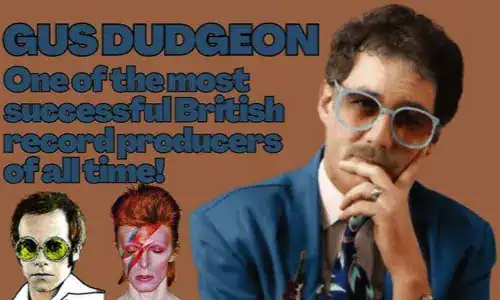
Photo: Unknown photographer / editorial use.
Gus Dudgeon was an English record producer and recording engineer whose work helped shape one of the most important early moments in David Bowie’s career. Although he was not Bowie’s long-term producer, Dudgeon holds a significant place in Bowie history as the producer of the 1969 single Space Oddity.
Released in July 1969, Space Oddity became Bowie’s first major hit and one of the recordings that first introduced his songwriting imagination to a wider audience. Dudgeon’s production gave the song space, drama and structure, helping transform Bowie’s unusual science-fiction ballad into a recording that could work as both a pop single and a piece of atmospheric studio storytelling.
Dudgeon later became best known for his long and hugely successful production partnership with Elton John, but his brief collaboration with Bowie remains one of the defining early chapters in both men’s careers.
- Full name: Angus Boyd Dudgeon
- Born: 30 September 1942, Woking, Surrey, England
- Died: 21 July 2002, Berkshire, England
- Profession: Record producer, recording engineer
- Bowie connection: Producer of David Bowie’s 1969 single Space Oddity
- Other major work: Producer for Elton John, The Zombies, John Kongos, Joan Armatrading, Chris Rea and others
- Known for: Detailed studio production, orchestral pop arrangements and innovative recording techniques
Early Life and Entry into Recording
Gus Dudgeon was born Angus Boyd Dudgeon in Woking, Surrey, on 30 September 1942. He entered the music world without formal musical training, beginning at London’s Olympic Studios before moving into engineering and production work.
His early career followed a path that was common to many important British studio figures of the 1960s: he learned the craft from inside the recording studio itself. Rather than approaching records as a trained musician, Dudgeon developed his skills through listening, experimentation and hands-on technical work.
This background became central to his later reputation. Dudgeon understood how to shape a recording from the control room, balancing sound, arrangement and atmosphere while allowing the artist’s identity to remain at the centre of the record.
From Olympic Studios to Decca
After his early period at Olympic Studios, Dudgeon became associated with Decca, where he worked as a recording engineer during an important period for British popular music. His work at Decca brought him into contact with emerging artists, changing studio methods and the rapidly expanding sound of British rock and pop.

One of his most important early engineering credits was She’s Not There by The Zombies, a major international hit in 1964. He also worked on recordings connected with John Mayall and the Bluesbreakers, and his Decca period helped establish him as a technically skilled and musically sensitive studio figure.
Dudgeon later recalled that he was not a conventional musician and did not pretend to be one. His strength was in understanding records: how they should feel, how they should move, and how studio techniques could support an artist rather than overwhelm them.
The Decca Years and David Bowie
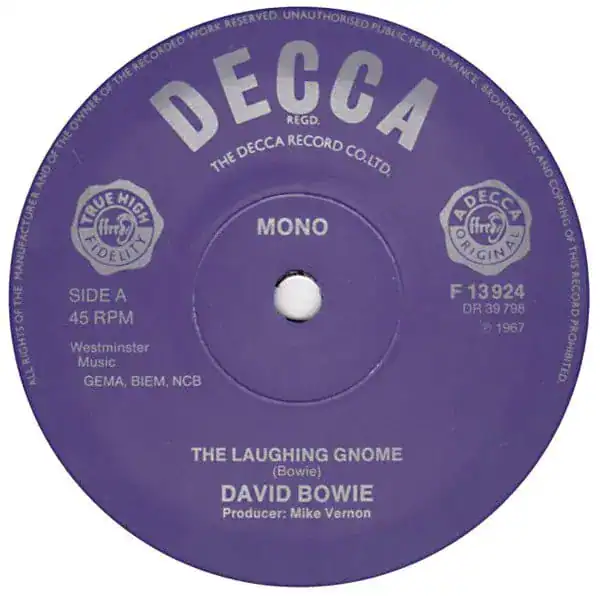
During his years at Decca Records, Gus Dudgeon encountered many of Britain’s most promising young artists, among them a young David Bowie, who had signed to the label in 1966. At the time Bowie was still searching for a distinctive musical identity, experimenting with everything from mod-influenced pop to music hall, theatrical songwriting and whimsical character pieces.
As an engineer and emerging producer, Dudgeon worked on several Decca recording sessions and came to know Bowie during these formative years. One of the best-known recordings from this period was The Laughing Gnome, the novelty single released in 1967. Although the record failed to establish Bowie as a major artist, it demonstrated his willingness to experiment with storytelling, character voices and unconventional ideas—qualities that would later become central to his work.
Dudgeon later recalled that Bowie stood apart from many of the artists passing through the studio. Even before achieving commercial success, he possessed an unusually vivid imagination and a curiosity that extended beyond contemporary pop music into theatre, mime, visual art and performance. Those qualities left a lasting impression on Dudgeon, who recognised that Bowie was unlike the more conventional acts then recording for Decca.
Although Bowie left Decca after his first album failed to achieve commercial success, the professional relationship between the two men remained intact. When Mercury Records prepared to release Space Oddity in 1969, Bowie turned to Dudgeon to produce the single, beginning the collaboration that would result in one of the defining recordings of his career.
Early Encounters with David Bowie
Gus Dudgeon’s connection with David Bowie began before Space Oddity. During Bowie’s early Decca period, Dudgeon encountered the young singer at a time when Bowie was still searching for a lasting public identity. Bowie had already shown unusual ambition, but his early recordings had not yet brought him major commercial success.
Dudgeon later remembered Bowie as someone who stood apart from many of the other artists passing through the studio world of the 1960s. Bowie’s interests, appearance and artistic curiosity made him seem different from the more conventional pop acts of the period.
“I got on with Bowie really well. He was very easy to talk to, but he was also like a fish out of water.”
That observation captures Bowie’s position in the late 1960s. He was not yet the international figure he would become, but he was already developing ideas that did not fit neatly into the usual expectations of the British recording industry.
Before Space Oddity
Before the breakthrough of Space Oddity, Bowie’s career had moved through several different phases. He had recorded as Davie Jones and as David Bowie, worked with different managers and labels, explored theatre and mime, and continued developing songs that combined pop, folk, character writing and unusual narrative ideas.
By 1969 Bowie was connected with Tony Visconti, who would become one of the most important producers in his career. Visconti produced most of Bowie’s 1969 album, later widely known as Space Oddity, but he did not produce the original single version of Space Oddity. That specific and historically important recording was produced by Gus Dudgeon.
Recording Space Oddity
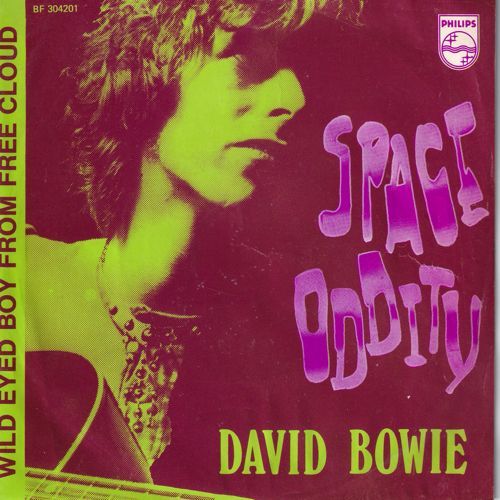
The defining moment in Gus Dudgeon‘s collaboration with David Bowie came during the summer of 1969. Bowie had written Space Oddity, an ambitious composition inspired in part by Stanley Kubrick’s film 2001: A Space Odyssey, while also reflecting themes of isolation, uncertainty and humanity’s fascination with space exploration. It was unlike anything else being released by a British pop artist at the time.
Although producer Tony Visconti was overseeing the forthcoming album, he felt that Space Oddity was too closely tied to the Apollo 11 Moon mission and believed it might quickly become dated. Rather than producing the single himself, Visconti suggested that Gus Dudgeon should handle the recording while he concentrated on the remainder of the album.
For Dudgeon, the opportunity arrived unexpectedly. Bowie visited him and played him a demonstration recording of the song, asking for his opinion. Dudgeon immediately recognised its potential and enthusiastically agreed to produce what would become one of the defining recordings of Bowie’s career.
Gus Dudgeon on hearing Space Oddity
“One day, David came into my office and asked me if he could play me a demo. I told him it was fantastic.”
Dudgeon later explained that the song required careful planning rather than a straightforward recording session. Its unusual structure, changing dynamics and cinematic atmosphere demanded far more preparation than the average pop single of the period.
Video: David Bowie – Space Oddity (Official)
David Bowie – Space Oddity, the landmark 1969 single produced by Gus Dudgeon.
This official video celebrates one of the most important recordings in David Bowie’s career. Produced by Gus Dudgeon, Space Oddity introduced the world to the character of Major Tom and marked Bowie’s first major commercial breakthrough.
Dudgeon’s carefully considered production combined acoustic instruments, Mellotron, stylophone, orchestral arrangements and dramatic dynamics to create a cinematic soundscape that perfectly complemented Bowie’s imaginative songwriting. The recording remains one of the defining achievements of late-1960s British popular music.
Released in July 1969, just days before the Apollo 11 Moon landing, Space Oddity became Bowie’s first UK Top Five hit and laid the foundations for the extraordinary career that followed. More than fifty years later, it remains one of the songs most closely associated with both David Bowie and producer Gus Dudgeon.
This official video celebrates one of the most important recordings in David Bowie’s career. Produced by Gus Dudgeon, Space Oddity introduced the world to the character of Major Tom and marked Bowie’s first major commercial breakthrough.
Dudgeon’s carefully considered production combined acoustic instruments, Mellotron, stylophone, orchestral arrangements and dramatic dynamics to create a cinematic soundscape that perfectly complemented Bowie’s imaginative songwriting. The recording remains one of the defining achievements of late-1960s British popular music.
Released in July 1969, just days before the Apollo 11 Moon landing, Space Oddity became Bowie’s first UK Top Five hit and laid the foundations for the extraordinary career that followed. More than fifty years later, it remains one of the songs most closely associated with both David Bowie and producer Gus Dudgeon.
Creating a Landmark Recording
Recorded at Trident Studios in London on 20 June 1969, with additional overdubs completed shortly afterwards, Space Oddity brought together an exceptional group of musicians assembled by Dudgeon and Bowie. The session featured Rick Wakeman on Mellotron, Mick Wayne on guitar, Herbie Flowers on bass, Terry Cox on drums, together with Paul Buckmaster‘s distinctive string arrangement.
Rather than treating the recording as a conventional pop song, Dudgeon approached it almost like a miniature film soundtrack. He carefully balanced acoustic instruments, orchestral textures, Mellotron, stylophone and dramatic dynamic changes to create an expansive sonic landscape that perfectly supported Bowie’s story of astronaut Major Tom.
The production demonstrated Dudgeon’s remarkable instinct for atmosphere. Every musical element was given room to breathe, allowing Bowie’s vocal performance to remain the emotional focus while the arrangement gradually expanded around it. The result was unlike any previous Bowie recording and immediately established a more sophisticated musical direction.
David Bowie’s breakthrough single Space Oddity, produced by Gus Dudgeon in 1969.
Released on 11 July 1969, just days before the Apollo 11 Moon landing, Space Oddity initially received cautious radio support. The BBC briefly limited airplay because of concerns that broadcasting a song about a stranded astronaut might prove inappropriate if the lunar mission ended in tragedy.
Once Apollo 11 safely returned to Earth, the single quickly gained momentum. Helped by the BBC’s extensive coverage of the Moon landing, Bowie suddenly found himself with his first major commercial success. The record reached the UK Top Five and introduced David Bowie to a national audience for the first time.
Although Bowie would continue to reinvent himself throughout the following decades, Space Oddity remains one of the defining recordings of his career. Gus Dudgeon‘s production played a crucial role in transforming an imaginative demo into one of the most recognisable recordings in British popular music.
Dudgeon Reflects on Space Oddity
Looking back several years later, Dudgeon remained convinced that Space Oddity was one of David Bowie’s strongest early compositions. He never questioned its commercial potential and admitted that he had been astonished anyone could fail to recognise its quality.
He also explained that the song demanded considerably more preparation than an ordinary recording session. Every section had to be planned carefully to preserve the dramatic narrative while ensuring that the arrangement remained accessible to a mainstream audience.
Gus Dudgeon on producing Space Oddity
“It was in need of production. It needed thought and it needed planning.”
The success of the single marked an important turning point for both men. For Bowie it was the breakthrough that established him as one of Britain’s most original new songwriters. For Dudgeon it demonstrated his ability to recognise exceptional material and shape it into recordings that balanced artistic ambition with commercial appeal.
Beyond Space Oddity
Although Gus Dudgeon‘s direct collaboration with David Bowie was relatively brief, its significance has often been underestimated. Unlike Tony Visconti, who would remain closely associated with Bowie across several decades, Dudgeon’s contribution centred on one recording. Yet that recording became one of the defining moments in Bowie’s entire catalogue.
After Space Oddity, Dudgeon devoted most of his attention to other artists, particularly Elton John, with whom he enjoyed one of the most successful producer-artist partnerships in popular music. Bowie, meanwhile, continued his own remarkable artistic evolution through albums including The Man Who Sold the World, Hunky Dory, The Rise and Fall of Ziggy Stardust and the Spiders from Mars and many others, working primarily with Tony Visconti and later Ken Scott as producers.
The Elton John Years
Following the success of Space Oddity, Gus Dudgeon‘s reputation as a producer grew rapidly. In 1970 he was invited to produce the second album by a relatively unknown singer-songwriter named Elton John. That record, simply titled Elton John, became the beginning of one of the most successful producer-artist partnerships in modern popular music.
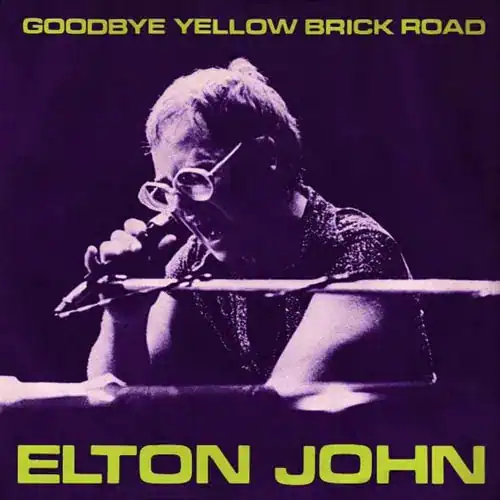
The album featured Your Song, which introduced Elton John to an international audience and established Gus Dudgeon as one of Britain’s leading record producers. Over the following years he produced many of Elton John’s classic albums, including Tumbleweed Connection (1970), Madman Across the Water (1971), Honky Château (1972), Don’t Shoot Me I’m Only the Piano Player (1973), Goodbye Yellow Brick Road (1973) and Captain Fantastic and the Brown Dirt Cowboy (1975).
Between 1972 and 1975, Dudgeon enjoyed one of the most remarkable runs of success by any British record producer, with numerous chart-topping albums helping to define Elton John’s most celebrated creative period. His productions combined technical precision with a remarkable sensitivity for orchestration, arrangement and dynamics, allowing Elton’s songwriting and performances to take centre stage while creating recordings that have become enduring classics of popular music.
An Innovative Producer
Although Gus Dudgeon never regarded himself as a trained musician, he possessed an exceptional instinct for recording. He often described himself as someone who understood records rather than musical theory, believing that a producer’s role was to help artists communicate their ideas as clearly and effectively as possible.
Throughout the 1970s he became known for his willingness to experiment with new recording techniques. His productions frequently combined rock instrumentation with orchestral arrangements, unusual microphone placement and innovative studio effects without allowing technology to overshadow the music itself.
One of his most famous technical achievements came with John Kongos’ 1971 hit He’s Gonna Step on You Again. Built around a repeating tape loop of African percussion, the recording has often been recognised as one of the earliest commercially successful examples of sampling in popular music. The Guinness Book of Records later acknowledged it as the first commercially released record to use a sample in this way.
Working Philosophy
Unlike many producers of the period, Dudgeon avoided imposing a recognisable “house style” on every artist he recorded. Instead, he believed that each project should sound unique and reflect the personality of the performer rather than the producer.
In interviews he frequently explained that his job was not to dominate a recording but to help artists become the best version of themselves. This philosophy helped explain why his productions could vary dramatically in style, from the intimate orchestral balladry of Your Song to the cinematic atmosphere of Space Oddity or the driving rock sound of later Elton John albums.
His reputation within the recording industry grew steadily, and by the mid-1970s he was widely regarded as one of Britain’s most respected producers. Artists sought him out because of his ability to understand songs, recognise strong material and create recordings that balanced artistic ambition with commercial appeal.
Beyond Bowie
Although David Bowie occupies an important place in Gus Dudgeon‘s career, his achievements extended far beyond a single collaboration. During more than four decades in the recording industry he worked with an impressive range of artists, including Joan Armatrading, Chris Rea, The Zombies, Michael Chapman, The Strawbs, Elkie Brooks, Lindisfarne, The Beach Boys and many others.
Dudgeon was also instrumental in establishing The Rocket Record Company, the label created by Elton John and Bernie Taupin during the 1970s. His experience as both engineer and producer made him an influential figure behind the scenes, mentoring younger musicians and encouraging high production standards throughout the British recording industry.
He later became one of the founding members of the Music Producers Guild, reflecting the respect he had earned among fellow producers and engineers. His influence reached far beyond the records he personally produced, helping to raise the professional profile of music production itself.
Final Years
During the 1980s and 1990s, Gus Dudgeon remained active as a producer, engineer and studio owner. He reunited with Elton John for several later projects while continuing to work with established artists and promising new talent. His enthusiasm for discovering new music never diminished, and he continued attending live performances in search of emerging artists throughout his career.
On 21 July 2002, Gus Dudgeon and his wife Sheila were killed in a road accident on the M4 motorway in Berkshire. He was 59 years old. His sudden death brought to an end one of the most distinguished production careers in British popular music.
Legacy
Although Gus Dudgeon‘s direct collaboration with David Bowie consisted primarily of the landmark recording of Space Oddity, its importance cannot be overstated. The single introduced millions of listeners to Bowie’s extraordinary imagination and became the foundation upon which his international career was built.
Beyond Bowie, Dudgeon’s influence on popular music was immense. His productions helped launch Elton John to worldwide superstardom, introduced innovative recording techniques that shaped future generations of producers, and demonstrated that a great producer could enhance an artist’s vision without overshadowing it.
Today, Space Oddity remains one of David Bowie’s defining recordings and one of the greatest achievements of Gus Dudgeon‘s remarkable career. More than half a century after its release, the record continues to demonstrate the lasting impact that a thoughtful, imaginative producer can have on a timeless song.
Place within Bowie’s Collaborative Universe
Gus Dudgeon‘s contribution to David Bowie’s career was brief but pivotal. While producers such as Tony Visconti and Ken Scott became associated with Bowie’s longer artistic development, Dudgeon’s name will always be linked with the recording that first introduced Bowie to a mass audience.
His work on Space Oddity demonstrated an instinctive understanding of Bowie’s songwriting and an ability to translate ambitious ideas into compelling recordings. That achievement alone secures Gus Dudgeon‘s place within David Bowie’s collaborative universe as one of the producers who helped shape the earliest stages of one of popular music’s most extraordinary careers.
Official Website & Further Information
Although Gus Dudgeon passed away in 2002, his contribution to music production continues to be celebrated through the work of the Gus Dudgeon Foundation. The Foundation preserves his legacy by supporting music education, encouraging the next generation of producers and documenting the career of one of Britain’s most influential recording figures.
For more information about Gus Dudgeon‘s career, recordings and the continuing work of the Foundation, please visit the official website: www.gusdudgeonfoundation.com
Gus Dudgeon‘s production of Space Oddity remains one of the defining moments in David Bowie’s early career. Although his collaboration with Bowie was relatively brief, the recording helped launch one of the most remarkable careers in popular music and remains an enduring testament to Dudgeon’s talent as a producer.
Article Origin
This article has been researched and written for DavidBowieWorld.com as part of the site’s ongoing project documenting the musicians, producers, engineers, designers, performers and creative figures who helped shape David Bowie’s extraordinary career.
Particular attention has been given to Gus Dudgeon‘s documented role in the creation of Space Oddity, ensuring that his contribution is presented within the wider historical context of David Bowie’s early recording career and accurately distinguished from the work of producer Tony Visconti on Bowie’s subsequent recordings.
