
Hermione Farthingale – Dancer, Feathers Member and David Bowie Collaborator
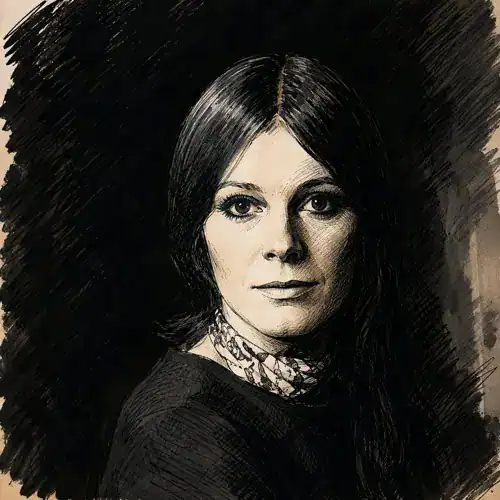
Hermione Farthingale, David Bowie and John Hutchinson as the acoustic trio Feathers, 1968.
Hermione Farthingale is an English dancer, actress and performer whose personal and creative relationship with David Bowie formed an important part of his development during the late 1960s. They met while both were involved in the theatrical world surrounding dancer and mime artist Lindsay Kemp, at a time when Bowie was exploring ways of combining music, movement, mime, poetry and visual performance.
Farthingale subsequently performed with Bowie and guitarist John Hutchinson in the acoustic trio Feathers. Although the group existed only briefly and left no commercially released album, it represented a documented stage in Bowie’s transition from conventional pop singer to a more theatrical and multidisciplinary performer.
Her relationship with Bowie also became closely connected with several songs from his 1969 period. Letter to Hermione addressed her directly, while An Occasional Dream is widely understood as Bowie’s reflection on their life together. These intimate compositions preserved a deeply personal chapter from the years immediately before Space Oddity brought Bowie his first major commercial success.
Farthingale later spoke publicly about their relationship in the 2019 BBC documentary David Bowie: Finding Fame. Her first-hand recollections provided rare insight into Bowie’s ambitions, uncertainties and constant experimentation during one of the least documented but most formative periods of his career.
- Birth name: Hermione Dennis
- Profession: Dancer, actress and performer
- Training: Classical ballet and performance training associated with Lindsay Kemp
- Bowie connection: Personal and creative partner during the late 1960s
- Group: Feathers, with David Bowie and John Hutchinson
- Associated Bowie songs: Letter to Hermione and An Occasional Dream
- Screen work: Love You Till Tuesday and Song of Norway
- Later Bowie documentary: David Bowie: Finding Fame (2019)
Early Life and Dance Training
Hermione Farthingale was born Hermione Dennis and grew up in Edenbridge, Kent. She trained as a dancer and developed a particular foundation in classical ballet before becoming involved in the more experimental performance world of the 1960s.
Her training eventually brought her into contact with Lindsay Kemp, whose work combined dance, mime, theatre, music and visual storytelling. Kemp’s approach differed considerably from conventional ballet, encouraging performers to use movement, costume and dramatic expression as interconnected elements of a complete theatrical presentation.
Farthingale became associated with Kemp’s theatrical company and pursued work as both a dancer and actress. This placed her within the London performance community at a time when traditional distinctions between theatre, popular music, dance and experimental art were increasingly being challenged.
Working in Theatre and Film
During the late 1960s, Farthingale appeared in dance and acting productions while continuing to develop her career as a performer. Her work included television, stage and film projects rather than a separate commercial recording career.
This distinction is important to her history. Although she later sang and performed acoustic material with Bowie and John Hutchinson, Farthingale’s principal professional background was in dance and theatrical performance. Her involvement in Feathers grew from this wider creative environment rather than from an established career as a solo folk singer.
It was through this theatrical circle that her path crossed with David Bowie, who was himself beginning to study movement and mime as he searched for a more distinctive form of stage presentation.
Meeting David Bowie
Hermione Farthingale met David Bowie during the period in which both were working within the creative circle of Lindsay Kemp. Their paths crossed while Bowie was studying mime and theatrical movement as part of his search for a broader artistic identity beyond conventional pop music. Through Kemp’s productions and rehearsals, the two quickly developed both a personal and creative relationship.
At the time, Bowie was attempting to redefine his career following the commercial disappointment of his 1967 debut album. Rather than concentrating solely on songwriting, he immersed himself in theatre, mime, dance and experimental performance. Farthingale shared many of these artistic interests, and their relationship developed within an environment that encouraged creative collaboration as much as personal companionship.
Within a short time they were living together in South Kensington, London. Friends later recalled the couple as deeply involved in one another’s artistic lives, discussing theatre, literature, music and performance while Bowie continued searching for the creative direction that would eventually transform his career.
Hermione Farthingale on David Bowie
“We did fall in love, it took maybe five minutes maximum.”
— Hermione Farthingale, recalling her first meeting with David Bowie (BBC Finding Fame, 2019)
The Lindsay Kemp Influence
Lindsay Kemp became one of the most important artistic influences on both Bowie and Farthingale during this period. His productions combined mime, dance, visual theatre and symbolism in ways that challenged traditional stage conventions. Bowie later acknowledged Kemp’s lasting influence on his approach to performance, costume and stage presentation throughout his career.
Farthingale already possessed formal dance training before joining Kemp’s company, allowing her to move naturally within his theatrical productions. Bowie, by contrast, approached mime as a new discipline that offered fresh possibilities for storytelling beyond conventional rock performance. Their shared involvement with Kemp’s work strengthened both their relationship and their creative partnership.
The atmosphere surrounding Kemp’s company encouraged experimentation and collaboration. Musicians, actors, dancers and mime artists worked alongside one another, creating an environment in which Bowie increasingly viewed performance as a complete artistic experience rather than simply a musical one.
Living Together in South Kensington
As their relationship developed, Bowie and Farthingale shared a flat in South Kensington. The period coincided with one of the most uncertain phases of Bowie’s professional life. Recording opportunities were limited, commercial success remained elusive and he continued exploring different artistic directions while searching for a distinctive identity as a performer.
Despite these uncertainties, those close to the couple remembered an atmosphere of creativity and optimism. Bowie was constantly writing songs, developing theatrical ideas and discussing future projects, while Farthingale continued building her own career as a dancer and actress. Their home became both a personal refuge and a place where artistic ideas were exchanged freely.
Although their relationship would ultimately prove relatively brief, it became one of the most emotionally significant periods of Bowie’s early adult life and inspired several of the most personal songs he would write before achieving international success.
Feathers: A Creative Partnership
During the second half of 1968, Hermione Farthingale, David Bowie and guitarist John Hutchinson formed the acoustic trio Feathers. Rather than functioning as a conventional folk group, Feathers combined acoustic music with poetry, mime and theatrical presentation, reflecting the artistic environment that surrounded Lindsay Kemp and Bowie’s growing interest in multidisciplinary performance.
The trio performed a small number of concerts between late 1968 and early 1969, appearing at venues and events that favoured experimental performance rather than mainstream popular music. Their repertoire included traditional folk material, contemporary songs, Merseybeat influences and original Bowie compositions, presented within an intimate acoustic setting.
John Hutchinson later described the trio as a perfectly balanced partnership, recalling that each member brought a different quality to the performances. Bowie contributed original material and theatrical ideas, Hutchinson provided strong vocal harmonies and guitar arrangements, while Farthingale added both vocal textures and an elegant stage presence shaped by her background in dance and theatre.
“We were a matching set of three.”
— John Hutchinson, describing Feathers
Although Feathers never recorded a commercial album, the group occupies an important place in Bowie’s artistic development. The performances demonstrated his growing confidence in combining music with visual storytelling, ideas that would later evolve into the theatrical stage productions for which he became internationally renowned.
The Restless Generation
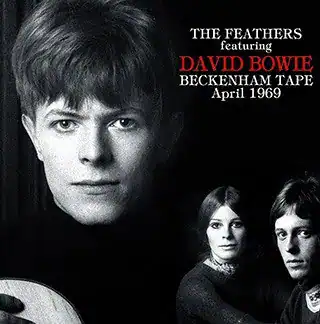
One of the best documented moments in the history of Feathers came in December 1968, when photographer Clive Arrowsmith photographed the trio for an article by journalist Sheila More entitled The Restless Generation: 2, published in The Times on 11 December 1968. The feature included interviews with Bowie, Farthingale and Hutchinson and remains one of the most important contemporary documents describing the group.
The photographs captured the quiet, acoustic image that Bowie was presenting during this period, standing in marked contrast to the flamboyant Ziggy Stardust persona that would emerge only a few years later. Today these images remain among the best-known visual records of Feathers and of Bowie’s late-1968 artistic transition.
Love You Till Tuesday
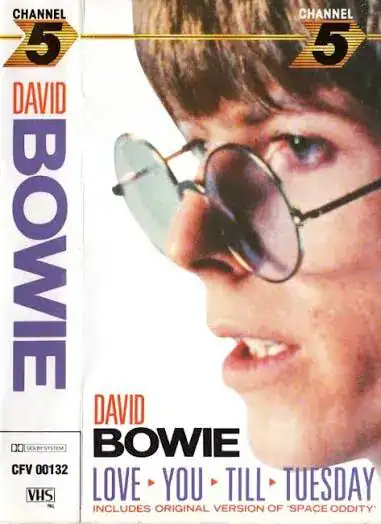
During this same period, Farthingale also appeared alongside Bowie in the promotional film project Love You Till Tuesday, produced to showcase his songs for potential television and film opportunities. Although the project was completed in 1969, it remained unreleased for many years before finally becoming available during the 1980s.
Her appearance provides one of the few surviving moving images of Bowie and Farthingale together during their relationship. The film therefore represents not only an important document of Bowie’s early career but also a rare visual record of the creative partnership they shared during one of the most formative periods of his artistic development.
The End of the Relationship
By early 1969, Bowie and Farthingale found themselves moving in different directions professionally. While Bowie continued searching for the artistic breakthrough that had so far eluded him, Farthingale was increasingly focused on developing her own career as a dancer and actress. When she accepted a role in the MGM production Song of Norway, the opportunity required her to leave London for an extended period.
For Farthingale, the decision represented an important step in her own career rather than a rejection of Bowie’s ambitions. Years later she explained that she had come to realise their lives were beginning to follow different paths. Although she recognised Bowie’s extraordinary determination, she did not believe that her own future lay alongside his.
Hermione Farthingale on the End of Feathers
“Feathers were never destined to last… I also said to myself, ‘Am I going to be with David for the rest of my life?’ I didn’t think I was actually going to. He was clearly going somewhere and I didn’t think I was going to tread that path with him.”
— Hermione Farthingale, BBC David Bowie: Finding Fame (2019)
Following the end of the relationship, Bowie expressed the emotional impact of the separation through some of his most personal songwriting from this period. The clearest documented example is Letter to Hermione, which Bowie directly identified as a message intended for Farthingale.
Letter to Hermione
Among the clearest musical reflections of the relationship is Letter to Hermione, recorded for Bowie’s 1969 album David Bowie, later commonly known as Space Oddity. Unlike many songs whose inspirations have been debated over the years, Bowie himself explained the origin of this composition in a contemporary interview.
The song stands as one of Bowie’s most intimate early recordings. Rather than presenting an imagined narrative or fictional character, it expresses the uncertainty, longing and vulnerability that followed the end of an important relationship. Its restrained arrangement and deeply personal lyrics differ markedly from much of Bowie’s earlier work and reveal an emotional honesty that would become an important characteristic of his songwriting.
David Bowie on Letter to Hermione
“I once wrote a letter I never sent to Hermione, who was a dancer with the Lindsay Kemp mime company. I thought I’d record it instead and send her the record.”
— David Bowie, Disc and Music Echo, 25 October 1969
An Occasional Dream
Another song frequently associated with the relationship is An Occasional Dream, also included on the 1969 album. Although Bowie never explicitly identified the song’s subject in the same direct manner as Letter to Hermione, it has long been understood by biographers and historians as a reflection on the couple’s life together and the memories that remained after their separation.
Its gentle acoustic arrangement and nostalgic atmosphere complement the emotional openness already established in Letter to Hermione. Together, the two compositions provide some of the clearest insight into Bowie’s personal life immediately before the commercial breakthrough of Space Oddity.
Was Hermione the “Girl with the Mousy Hair”?
Among Bowie followers, one of the most frequently repeated stories is that Hermione Farthingale was the “girl with the mousy hair” described in Life on Mars?, released in 1971. The suggestion has appeared in numerous books, magazine articles and online biographies and has gradually become accepted by many fans as established fact.
However, the historical evidence is considerably less certain. Although Hermione has often been proposed as one possible inspiration for the lyric, David Bowie never publicly confirmed that the character in Life on Mars? was based specifically on her. No contemporary interview, recording session documentation or first-hand statement from Bowie identifies Hermione as the definitive subject of the song.
The lyric itself forms part of a much broader surreal narrative rather than a straightforward autobiographical account. Like many of Bowie’s compositions from the early 1970s, Life on Mars? combines personal observations, cinematic imagery and social commentary, making it difficult to assign individual characters to specific real people.
For that reason, it is historically more accurate to state that Hermione Farthingale has frequently been suggested as one possible influence behind the song, while recognising that Bowie himself never confirmed this interpretation. DavidBowieWorld.com therefore distinguishes between documented fact and later speculation.
Hermione Farthingale on Her Relationship with David Bowie
“We missed each other as soul mates, as family, whatever it is that makes people incredibly close and lonely when they are not together. It wasn’t a one-sided relationship by any means. It was completely mutual.”
— Hermione Farthingale, David Bowie: Finding Fame (BBC, 2019)
Song of Norway and a New Direction
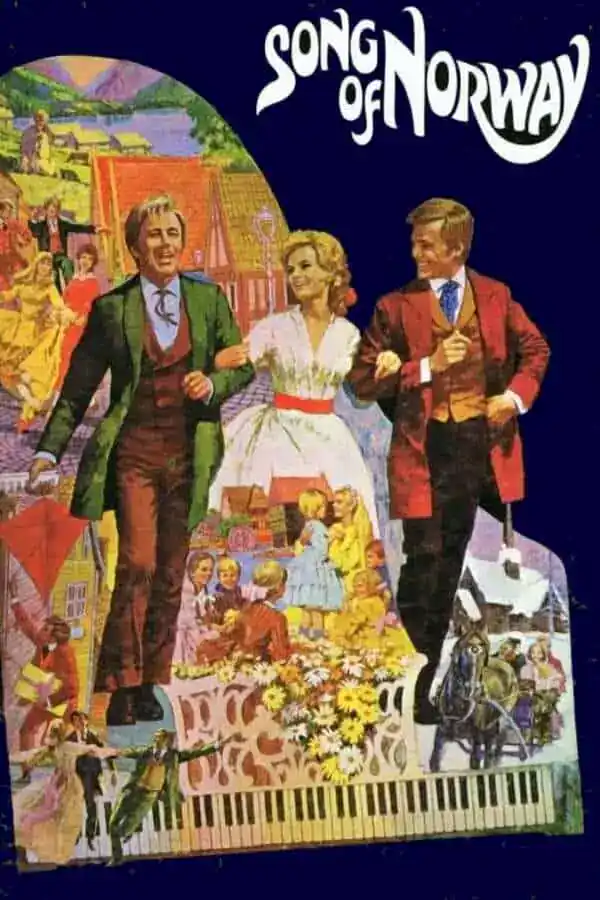
After leaving London, Farthingale accepted a role in the MGM production Song of Norway. The large-scale musical included location filming in Norway and was released in 1970, representing a significant professional opportunity during the early years of her screen career.
The production required an extended period away from England and effectively brought the Bowie chapter of her life to a close. While Bowie remained in London preparing the material that would lead to Space Oddity and his first international success, Farthingale concentrated on developing her own career in film and dance.
Although their professional paths separated, the period they shared together continued to resonate in Bowie’s songwriting. Several of his most personal compositions from 1969 remain closely connected with this formative chapter of his life.
Film and Television Career
Farthingale continued working as both a dancer and actress after leaving the London folk and theatre scene. Her screen appearances included Dancing Shoes, Love You Till Tuesday, Song of Norway and later The Great Waltz, demonstrating that her professional ambitions extended well beyond music.
Unlike Bowie, whose career increasingly centred on songwriting and recording, Farthingale pursued opportunities in dance and film. Although she never sought the same level of public recognition within the music industry, her work reflected the versatility that had characterised her artistic background from the beginning.
Later Life
Following her acting work during the late 1960s and early 1970s, Hermione Farthingale gradually withdrew from public life. She later married anthropologist Professor Stephen Frankel, with whom she raised two children. Away from the entertainment industry, she developed new interests while maintaining a largely private life.
In later years Farthingale settled in Bristol, where she became involved in teaching yoga and Pilates while also pursuing painting. Unlike many figures associated with David Bowie’s early career, she rarely gave interviews or sought publicity, choosing instead to remain outside the public spotlight for many decades.
Her long absence from the media contributed to the almost mythical status she acquired among Bowie followers. For many years she was known primarily through a handful of photographs and the songs that Bowie wrote during and after their relationship.
David Bowie: Finding Fame
In 2019 Farthingale agreed to speak publicly about her relationship with Bowie for the BBC documentary David Bowie: Finding Fame. It marked the first time she had discussed their time together in such detail, offering valuable first-hand insight into Bowie’s personality during the years before international success.
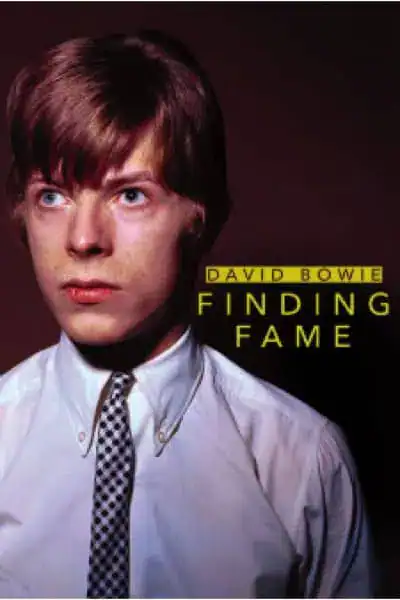
Her recollections presented a thoughtful and balanced portrait of the young Bowie. Rather than describing a future superstar, she remembered an endlessly curious artist who constantly experimented with new ideas, accepted failure as part of the creative process and refused to stop searching for his own artistic identity.
In David Bowie: Finding Fame, Farthingale described Bowie as an artist who continually experimented with new creative ideas and was never afraid to abandon one direction in favour of another. Looking back, she remembered that he was not lacking direction, but was still searching for the artistic identity through which he would eventually achieve international recognition.
Legacy
Hermione Farthingale occupies a distinctive place in David Bowie’s history. Although her own recording career was brief, her influence extended far beyond the small number of performances she gave with Bowie and John Hutchinson as part of Feathers. Their relationship coincided with one of the most formative periods of Bowie’s artistic development and inspired some of his most personal early songwriting.
Unlike many collaborators whose importance is measured through albums, tours or commercial success, Farthingale’s contribution lies in the emotional and creative influence she had during Bowie’s years of experimentation. Through Letter to Hermione, An Occasional Dream and the surviving memories shared by those who knew them, her place within Bowie’s story remains both unique and historically significant.
Her decision to speak openly in David Bowie: Finding Fame also provided historians and Bowie enthusiasts with an invaluable first-hand account of a period that had previously been documented only through interviews, photographs and Bowie’s own songs. Those recollections helped separate historical fact from decades of speculation surrounding one of the most important relationships of Bowie’s early life.
Official Website & Further Information
Hermione Farthingale has maintained a largely private life following her years in dance, film and performance. No official public website for Hermione Farthingale has been identified. Her work with Feathers and her connection with several songs from Bowie’s 1969 period nevertheless remain important parts of David Bowie’s early history.
DavidBowieWorld.com is dedicated to documenting the careers of David Bowie’s collaborators through carefully researched historical information and, where available, first-hand contributions from the artists themselves. This page will continue to be updated as new verified information becomes available.
Article Origin
This article has been researched and written exclusively for DavidBowieWorld.com as part of its ongoing project documenting the musicians, performers, actors and creative collaborators who contributed to David Bowie’s remarkable career. Particular care has been taken to distinguish documented historical facts from later speculation, especially concerning the songs inspired by Hermione Farthingale and the frequently repeated claims surrounding Life on Mars?.
