
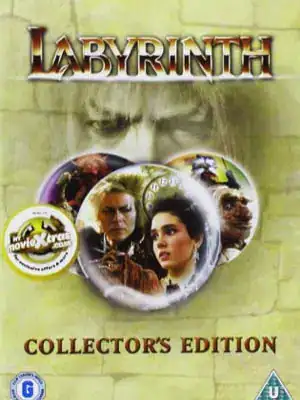
Jennifer Connelly – Labyrinth, David Bowie and an Award-Winning Career
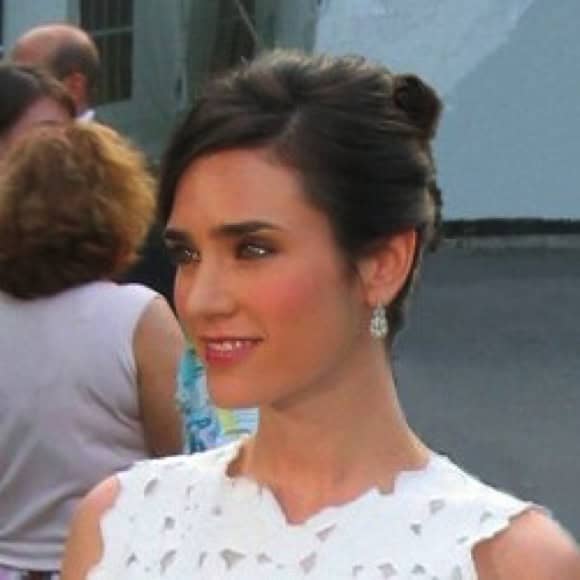
Jennifer Connelly in Central Park, New York City, 2 June 2005. Photo: Alejandro / Wikimedia Commons. Cropped and retouched from the original. Licensed under CC BY-SA 2.0.
Few actors remain permanently associated with a single David Bowie project, yet Jennifer Connelly occupies a unique place within Bowie’s career. At just fourteen years old she was cast opposite Bowie as Sarah Williams in Labyrinth (1986), Jim Henson’s ambitious fantasy film that would gradually become one of the most beloved cult classics of the twentieth century.
Although Labyrinth initially disappointed at the box office, the film found an ever-growing audience through television broadcasts and home video. Connelly’s performance as Sarah and Bowie’s unforgettable portrayal of Jareth, the Goblin King, eventually became inseparable from the film’s enduring reputation. Their performances introduced generations of viewers to one of the most imaginative fantasy productions ever created.
For David Bowie, Labyrinth represented his most substantial acting role since Merry Christmas, Mr. Lawrence and offered an opportunity to combine dramatic performance with original music. For Jennifer Connelly, the production became the first major leading role of a career that would later include critically acclaimed performances in films such as Requiem for a Dream, A Beautiful Mind, Blood Diamond and Top Gun: Maverick.
Key Facts
- Born: 12 December 1970, Cairo, New York, United States
- Profession: Actress and former child model
- Worked with David Bowie: Labyrinth (1986)
- Role: Sarah Williams
- Director: Jim Henson
- David Bowie’s role: Jareth, the Goblin King
- Music: David Bowie and Trevor Jones
- Academy Award: Best Supporting Actress for A Beautiful Mind (2002)
Early Life
Jennifer Lynn Connelly was born on 12 December 1970 in Cairo, a small community in New York’s Catskill Mountains. She was raised primarily in Brooklyn Heights, where she spent much of her childhood before later attending schools in New York City. Her father, Gerard Connelly, worked in the clothing industry, while her mother, Eileen Connelly, was an antiques dealer. Growing up in New York exposed Jennifer to an environment in which fashion, photography and the performing arts were never far away.
Unlike many future actors, Connelly did not begin by actively seeking a career in film. Her first opportunities arose almost by chance when a family friend working in advertising suggested that her parents introduce her to a modelling agency. Her striking appearance quickly attracted attention, and while still a child she began appearing in magazine advertisements, newspaper campaigns and television commercials.
By the early 1980s, Jennifer Connelly had developed confidence in front of cameras but had little reason to imagine that her career would soon intersect with one of the world’s most celebrated musicians. Within only a few years she would be cast opposite David Bowie in a fantasy production that neither actor could have predicted would become one of the defining cult films of modern cinema.
From Child Model to Film Actress
By the early 1980s Jennifer Connelly had already gained considerable experience in front of cameras through modelling and commercial work, but her ambitions gradually shifted towards acting. Directors quickly recognised that she possessed a natural screen presence that went beyond simply looking comfortable in front of a lens. Her performances displayed confidence and emotional restraint, qualities that distinguished her from many young performers of the period.
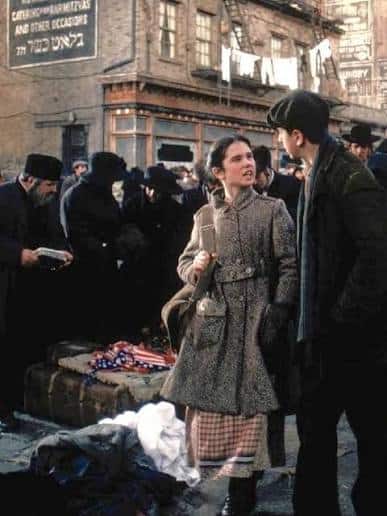
Her feature-film debut came with Sergio Leone’s epic crime drama Once Upon a Time in America, released in 1984. The film starred Robert De Niro, James Woods and Elizabeth McGovern, while Connelly appeared as the young Deborah Gelly. Although her role was relatively small, working under Leone provided invaluable experience. The production introduced her to large-scale filmmaking, detailed direction and the discipline required on an international film set.
Despite limited screen time, critics and casting directors noticed the young actress. Rather than portraying Deborah simply as an innocent childhood figure, Connelly brought a quiet maturity to the role that complemented Leone’s nostalgic vision of early twentieth-century New York. The film itself would later become recognised as one of Leone’s greatest achievements and remains regarded as a classic of American gangster cinema.
Only a year later Connelly accepted another demanding role when she starred in the Italian horror film Phenomena (1985), directed by Dario Argento. Released under different titles in several countries, the film cast her as Jennifer Corvino, an American student attending a Swiss boarding school who discovers she possesses an unusual ability to communicate with insects.
Although Phenomena belonged to the supernatural horror genre, the production demonstrated Connelly’s willingness to take on challenging material rather than remaining within conventional family films. Much of the film required her to carry scenes almost entirely on her own while reacting to elaborate practical effects, atmospheric locations and increasingly surreal situations. The experience broadened her acting range and further established her as one of Hollywood’s most promising young performers.
During these formative years Connelly deliberately avoided becoming associated with a single screen image. She moved comfortably between historical drama, psychological horror and commercial productions while continuing her education. That versatility soon attracted the attention of filmmakers searching for a teenage actress capable of carrying a fantasy adventure centred almost entirely around one central character.
At the same time, producer George Lucas and director Jim Henson were developing one of the most ambitious fantasy productions of the decade. Combining live-action performances with advanced puppetry, animatronics and visual effects, the project required a young actress who could convincingly interact with dozens of puppet characters while remaining believable opposite one of the world’s most charismatic performers. After numerous auditions, Jennifer Connelly emerged as the actress who best matched that demanding combination of innocence, determination and emotional depth.
The role would not simply become another film credit. It would introduce Jennifer Connelly to David Bowie and place her at the centre of a production that, although only modestly successful upon its initial release, would eventually become one of the defining cult films of the 1980s.
The Making of Labyrinth
To realise that ambition, Henson collaborated with executive producer George Lucas, whose experience with large-scale fantasy and adventure films brought additional creative and technical expertise to the project. Screenwriter Terry Jones, best known as a member of Monty Python, developed the screenplay from a story concept by Dennis Lee, while British fantasy illustrator Brian Froud returned after The Dark Crystal to design the visual world of the labyrinth.
Bringing those designs to life required one of the most ambitious practical-effects productions ever attempted. Jim Henson’s Creature Shop constructed dozens of principal characters together with hundreds of masks, costumes, mechanical props and animatronic creatures. Teams of sculptors, painters, engineers, costume makers and puppeteers worked for many months before filming began, ensuring that almost every creature appearing on screen physically existed rather than being added through visual effects.
This commitment to practical craftsmanship became one of the defining characteristics of Labyrinth. At a time long before computer-generated imagery became commonplace, audiences encountered a fantasy world that actors could genuinely see and interact with on set. Decades later, the extraordinary work of Henson’s Creature Shop continues to be regarded as one of the film’s greatest artistic achievements.
David Bowie Becomes the Goblin King
Finding the actor to portray Jareth, the Goblin King, proved equally important. The character was unlike a conventional fantasy villain. Rather than relying on physical violence, Jareth needed charm, intelligence, theatrical presence and musical ability. He had to dominate the screen while remaining enigmatic enough that audiences could never entirely decide whether he was hero, villain or something in between.
Jim Henson concluded that David Bowie possessed exactly that combination of qualities. By the mid-1980s Bowie had established himself as one of the world’s most innovative musicians while simultaneously developing an impressive acting career through films including The Man Who Fell to Earth (1976), Just a Gigolo (1978), Merry Christmas, Mr. Lawrence (1983) and The Hunger (1983). His ability to combine music, theatre and dramatic performance made him uniquely suited to Henson’s vision.
Bowie accepted the role and became involved in shaping the musical identity of the production. He wrote and performed five original songs for the film: Underground, Magic Dance, Chilly Down, As the World Falls Down and Within You. Rather than functioning simply as musical interludes, the songs became an integral part of the narrative, revealing different aspects of Jareth’s personality while supporting Sarah’s emotional journey through the labyrinth. The orchestral score composed by Trevor Jones complemented Bowie’s contemporary songwriting, creating one of the most distinctive fantasy soundtracks of the 1980s.
Bowie also approached the role as a dramatic performance rather than an extended music video. His interpretation of Jareth combined elegance, humour, confidence and vulnerability, producing a character whose motives remained deliberately ambiguous throughout the film. That complexity has contributed significantly to the Goblin King’s lasting popularity and has made Jareth one of Bowie’s most celebrated screen performances.
Jennifer Connelly Cast as Sarah Williams
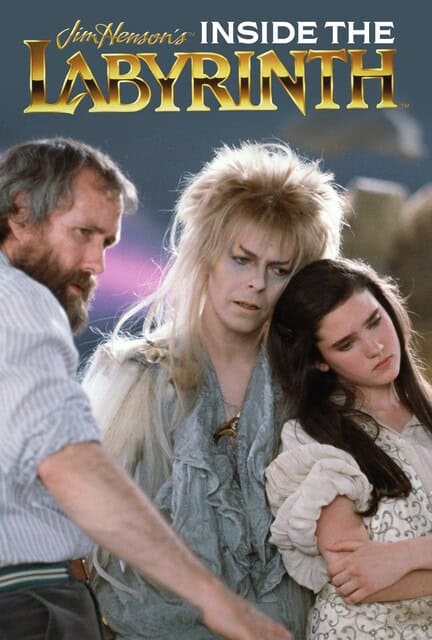
While finding the right actor for Jareth was essential, the success of Labyrinth depended equally upon casting Sarah Williams. Almost every scene follows her journey through the maze, requiring an actress capable of carrying the emotional weight of the story while convincingly interacting with an extraordinary world filled with puppets, animatronic creatures and elaborate practical effects.
Jennifer Connelly auditioned for the role at the age of fourteen. Despite her youth, she had already established herself through modelling, television commercials and several film appearances, demonstrating both confidence before the camera and a natural dramatic ability. Jim Henson recognised that she possessed the intelligence, determination and emotional authenticity required for Sarah, a character whose personal growth forms the heart of the film.
Unlike many fantasy heroines of the period, Sarah was intentionally written as an ordinary teenager rather than a fearless adventurer. Throughout the story she matures from a frustrated adolescent into a young woman willing to accept responsibility for her own actions. Connelly’s understated performance allowed that transformation to develop naturally, providing audiences with a believable emotional connection amid the film’s extraordinary visual spectacle.
Once Jennifer Connelly accepted the role, preparations began for several months of filming at Elstree Studios in Hertfordshire, England. There she would work alongside David Bowie, Jim Henson and hundreds of artists, technicians and puppeteers whose combined talents transformed Brian Froud’s imaginative illustrations into one of cinema’s most memorable fantasy worlds. Although neither Bowie nor Connelly could have anticipated it at the time, their collaboration would become one of the defining elements of a film whose reputation would continue to grow for decades after its original release.
Filming Labyrinth
Principal photography on Labyrinth began in April 1985 at Elstree Studios in Hertfordshire, England. For Jennifer Connelly, who was still only fourteen years old, the production represented the most ambitious project of her career. Unlike a conventional feature film, almost every working day involved complex interactions with puppets, animatronic creatures, mechanical effects and large fantasy sets that had been constructed specifically for the production.
The majority of the film was photographed on sound stages rather than on location. Enormous sets recreated forests, castles, underground passages, villages and the ever-changing labyrinth itself. Each environment required careful coordination between camera crews, lighting technicians, special-effects teams and Jim Henson’s Creature Shop, whose artists had spent many months designing and building the inhabitants of the fantasy world.
More than simply creating visual spectacle, Henson wanted every creature to appear as though it genuinely lived within the labyrinth. Hundreds of craftsmen contributed to the production by sculpting heads, constructing costumes, painting masks and engineering sophisticated mechanical systems capable of producing facial expressions, blinking eyes and realistic movement. Rather than relying upon optical tricks, nearly every major creature physically existed on the set.
For Jennifer Connelly, this meant reacting not to imaginary effects but to fully realised characters standing only a few feet away. That practical environment allowed her performance to develop naturally and contributed significantly to the film’s lasting realism despite its fantastical setting.
Working with Jim Henson
Although Jim Henson had achieved worldwide fame through The Muppet Show, colleagues consistently described him as a calm, thoughtful and encouraging director. Rather than dominating the set, Henson preferred collaboration, carefully explaining scenes while giving actors the confidence to develop their own performances. His quiet manner proved particularly valuable when directing a young actress carrying almost every scene of an exceptionally demanding production.
Because so many technical elements had to work simultaneously, filming often required considerable patience. Camera movements, puppet choreography, mechanical effects and dialogue all had to remain perfectly synchronised. Henson guided these complex sequences with remarkable composure, ensuring that the technical challenges never overwhelmed the emotional story at the centre of the film.
Jennifer Connelly has spoken warmly about Henson’s supportive approach during filming. Working under his direction allowed her to concentrate on Sarah’s emotional journey while trusting the experienced production teams surrounding her to bring the fantasy world to life.
Working with David Bowie
For Jennifer Connelly, one of the most memorable aspects of the production was working opposite David Bowie. By 1985 Bowie was already an internationally celebrated musician, songwriter and actor whose career had influenced popular culture for more than a decade. Yet on set he approached the production as part of an ensemble rather than as its dominant star.
Because Sarah and Jareth share many of the film’s most significant scenes, Connelly spent much of the production acting directly opposite Bowie. Their performances depended less upon confrontation than upon an evolving psychological relationship in which Jareth repeatedly attempts to manipulate Sarah through temptation, illusion and emotional persuasion. The success of those scenes relied upon the contrast between Bowie’s theatrical confidence and Connelly’s increasingly determined performance as Sarah gradually matured throughout the story.
Although the considerable difference in age and experience between the two performers might easily have proved intimidating, later interviews suggest that Bowie helped create a reassuring atmosphere for his young co-star. Rather than treating Connelly simply as an inexperienced teenager, he worked with the same professionalism and respect that he extended to every member of the cast.
Years later Jennifer Connelly reflected warmly on her memories of Bowie. Looking back on the production, she described him as a kind and considerate colleague whose presence helped make an ambitious film less intimidating for a young actress still at the beginning of her career. Her recollections echoed those of many musicians, actors and technicians who worked with Bowie throughout his life and frequently described his generosity towards fellow performers.
Jennifer Connelly on David Bowie
“There’s something about how gracious he was, and how he was with me, which was so kind and gentle and comforting.”
Connelly has explained that, despite Bowie’s enormous international reputation, she never experienced him as unapproachable. Instead, she remembered an actor who understood that a fantasy film of this scale depended upon trust between its performers. That supportive relationship helped create several of Labyrinth‘s most memorable dramatic moments, particularly during the increasingly emotional encounters between Sarah and Jareth.
As filming progressed, Jennifer Connelly‘s confidence continued to grow. The combination of Jim Henson’s careful direction, David Bowie’s experience as a performer and the remarkable work of the Creature Shop enabled the young actress to develop a performance that carried the audience through one of cinema’s most imaginative fantasy adventures.
Music, Performance and the Film’s Most Memorable Sequences
Music forms the emotional heart of Labyrinth. Rather than functioning merely as background accompaniment, David Bowie’s original songs are woven directly into the narrative and reveal different aspects of Jareth’s personality throughout Sarah’s journey. Together with Trevor Jones’ orchestral score, they create a musical landscape that is inseparable from the film’s identity.
Bowie composed and performed five original songs for the production: Underground, Magic Dance, Chilly Down, As the World Falls Down and Within You. Trevor Jones provided the dramatic orchestral score that links the fantasy world together, allowing Bowie’s contemporary songwriting and Henson’s visual storytelling to complement one another without either dominating the film.
Magic Dance
One of the film’s best-known musical moments occurs early in the story when Jareth introduces himself through Magic Dance. Surrounded by goblins inside his castle, Bowie performs the energetic song while holding Sarah’s baby brother Toby. The sequence immediately establishes the unpredictable nature of the Goblin King and introduces audiences to the bizarre world that Sarah must enter.
Although the scene appears spontaneous on screen, it required careful coordination between Bowie, dozens of puppeteers, dancers and camera operators. Every goblin visible during the performance was physically operated by members of Jim Henson’s Creature Shop, making the sequence one of the production’s most technically demanding musical numbers.
Over the years, Magic Dance has become one of Bowie’s most recognisable film performances and remains a highlight of concerts, tribute performances and fan conventions dedicated to Labyrinth.
The Ballroom Sequence
If Magic Dance represents the playful side of Jareth, the masquerade ballroom sequence reveals his more sophisticated and mysterious character. Accompanied by Bowie’s ballad As the World Falls Down, Sarah suddenly finds herself transported into an elegant ballroom where masked guests dance beneath crystal chandeliers while Jareth attempts to persuade her to remain with him.
The sequence deliberately contrasts with the strange landscapes that dominate the rest of the film. Rich costumes, elaborate choreography and romantic lighting create an atmosphere resembling a dream rather than reality. Beneath its beauty, however, the ballroom remains another illusion designed to distract Sarah from completing her journey.
Jennifer Connelly later recalled that filming these scenes required extensive rehearsal. Dancing with Bowie while surrounded by dozens of masked performers demanded precise choreography, careful camera movements and perfect timing. The emotional success of the sequence depended not only upon the music but also upon the growing tension between Sarah’s determination and Jareth’s increasingly desperate attempts to influence her.
Today the ballroom sequence is widely regarded as one of the defining moments of Labyrinth. Bowie’s restrained vocal performance gives As the World Falls Down an emotional depth that continues to resonate with audiences and has helped make the song one of the most admired pieces he wrote specifically for a film.
The Escher Room and Within You
The climax of Labyrinth takes place inside one of the production’s most remarkable sets. Inspired by the impossible architectural drawings of Dutch artist M. C. Escher, the room appears to defy gravity as staircases lead simultaneously upwards, downwards and sideways. The illusion was achieved almost entirely through practical construction, carefully planned camera angles and imaginative production design rather than digital effects.
Within this surreal setting Bowie performs Within You, perhaps the most emotionally complex song in the film. Instead of presenting Jareth as a traditional fantasy villain, the performance reveals a character whose apparent confidence conceals loneliness and frustration. His attempts to persuade Sarah to remain with him become increasingly personal, suggesting that his greatest desire is not power but understanding.
Jennifer Connelly‘s performance during these scenes demonstrates the confidence she had developed throughout filming. Sarah finally recognises that the Goblin King’s authority depends upon her own fears and uncertainties rather than genuine power. This emotional realisation gives the conclusion of the story a psychological depth unusual for a family fantasy film.
When Sarah declares, “You have no power over me,” the illusion surrounding Jareth is broken. The moment represents the emotional climax of the film and remains one of the most frequently quoted scenes in fantasy cinema. Rather than defeating her opponent through violence, Sarah succeeds by understanding herself, bringing both her adventure and her personal journey to a satisfying conclusion.
David Bowie and Jennifer Connelly
Although David Bowie and Jennifer Connelly shared the screen for only a single feature film, their performances complement one another throughout Labyrinth. Bowie’s theatrical interpretation of Jareth provides the fantasy’s larger-than-life presence, while Connelly’s understated and believable performance keeps the story emotionally grounded. The contrast between their acting styles became one of the film’s greatest strengths.
Bowie later praised Connelly’s work during the production, recognising the importance of her performance to the success of the film’s emotional climax.
David Bowie on Jennifer Connelly
“Jennifer Connelly‘s performance in this sequence is particularly good.”
— David Bowie
Nearly forty years after its release, the music of Labyrinth continues to attract new audiences. Bowie’s songs remain central to the film’s enduring popularity, while Jennifer Connelly‘s performance provides the emotional foundation that allows the fantasy to remain believable. Together, their work helped transform Labyrinth from an initial commercial disappointment into one of the most celebrated cult films of the twentieth century.
Release and Initial Reception
Labyrinth was released in 1986 as one of the most ambitious fantasy productions of its generation. Combining Jim Henson’s extraordinary puppetry, Brian Froud’s imaginative creature designs, George Lucas’ support as executive producer and David Bowie’s original music, the film offered audiences a fantasy world unlike anything then in cinemas. Expectations were understandably high, particularly following the success of Henson’s television productions and the growing popularity of fantasy films during the 1980s.
Critical reaction upon release proved mixed. Reviewers almost universally praised the film’s visual imagination, production design and technical achievements, while opinions differed regarding its story and pacing. Commercially, Labyrinth performed below expectations during its original theatrical run, earning considerably less than anticipated at the North American box office.
Neither David Bowie nor Jennifer Connelly allowed the film’s initial commercial performance to define their careers. Bowie continued balancing recording, touring and acting projects, while Connelly steadily expanded her experience as one of Hollywood’s most promising young actresses. Although few could have predicted it in 1986, the reputation of Labyrinth was only beginning to develop.
From Commercial Disappointment to Cult Classic
The transformation of Labyrinth into a cult classic occurred gradually during the late 1980s and 1990s. Television broadcasts introduced the film to younger audiences, while VHS releases allowed families to revisit the story repeatedly at home. Rather than disappearing after its cinema release, the film steadily gained a loyal international following whose appreciation continued to grow with each passing decade.
As home entertainment formats evolved from VHS to DVD, Blu-ray and eventually streaming platforms, entirely new generations discovered Sarah Williams and the mysterious world of the Goblin King. Many viewers first encountered David Bowie not through his music but through his unforgettable portrayal of Jareth, while Jennifer Connelly‘s performance introduced audiences to an actress who would later become one of Hollywood’s most respected dramatic performers.
Modern appreciation of Labyrinth has also been strengthened by renewed admiration for practical filmmaking. At a time when many fantasy productions rely heavily upon computer-generated imagery, Jim Henson’s Creature Shop created a world populated almost entirely by physical puppets, costumes and animatronic characters. The craftsmanship behind those practical effects remains one of the film’s defining strengths and continues to impress contemporary audiences.
The ballroom sequence, the Goblin City, Sir Didymus, Ludo, Hoggle and the remarkable Escher-inspired finale have all become iconic elements of fantasy cinema. Special anniversary screenings, exhibitions, fan conventions and costume events held around the world demonstrate the remarkable affection that audiences continue to feel for the film nearly four decades after its original release.
Today Labyrinth is widely recognised as one of the defining fantasy films of the 1980s. Its reputation has grown steadily over time, transforming what was once viewed as a commercial disappointment into one of Jim Henson’s most enduring cinematic achievements.
Jennifer Connelly After Labyrinth
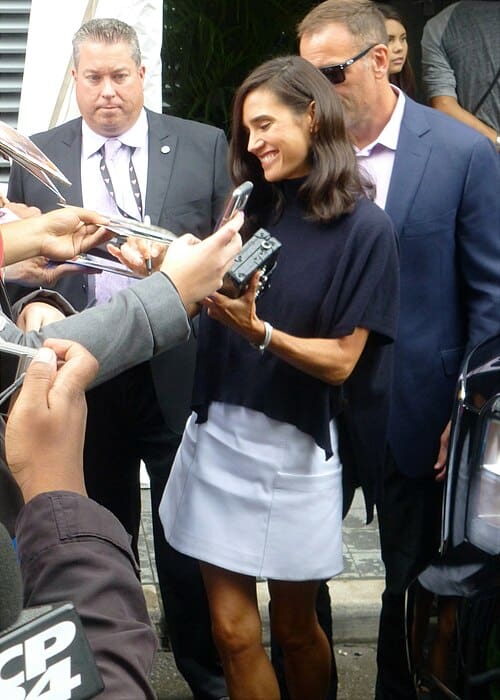
Following Labyrinth, Jennifer Connelly deliberately avoided becoming identified solely with fantasy films. Instead, she developed a remarkably varied career, choosing projects that allowed her to mature naturally as an actress. During the following years she appeared in productions including Some Girls (1988), The Hot Spot (1990), Career Opportunities (1991), The Rocketeer (1991), Higher Learning (1995) and Alex Proyas’ science-fiction noir Dark City (1998).
Her reputation reached a new level with Darren Aronofsky’s Requiem for a Dream (2000), in which she delivered one of the most emotionally demanding performances of her career. Widely praised by critics, the film demonstrated her dramatic range and established her as one of the leading actresses of her generation.
International recognition followed with Ron Howard’s A Beautiful Mind (2001). Starring opposite Russell Crowe as Alicia Nash, Connelly received the Academy Award, BAFTA Award and Golden Globe Award for Best Supporting Actress. The performance confirmed the extraordinary promise first recognised during her teenage years.
Her subsequent career continued to balance large-scale productions with character-driven drama. Among her later films are House of Sand and Fog (2003), Blood Diamond (2006), Reservation Road (2007), He’s Just Not That Into You (2009), Noah (2014), Alita: Battle Angel (2019) and Top Gun: Maverick (2022). She also returned to television with the dystopian series Snowpiercer (2020–2024) and later appeared in the Apple TV+ science-fiction drama Dark Matter (2024).
Throughout her career Connelly has remained selective in her choice of roles, earning widespread respect for performances characterised by emotional intelligence, restraint and authenticity. Those qualities were already visible in Labyrinth, where she successfully carried an exceptionally demanding fantasy production at only fourteen years of age.
Jennifer Connelly‘s Place in David Bowie’s Career
Although Jennifer Connelly and David Bowie collaborated only once, their partnership remains one of the defining elements of Labyrinth. Bowie’s charismatic portrayal of Jareth provided the film with one of fantasy cinema’s most memorable characters, while Connelly’s believable performance as Sarah ensured that audiences remained emotionally invested throughout the story. Together they created a balance between fantasy and humanity that continues to distinguish the film from many of its contemporaries.
For David Bowie, Labyrinth represented one of his most substantial acting roles, allowing him to combine dramatic performance with original songwriting in a way that reflected the multidisciplinary nature of his artistic career. For Jennifer Connelly, the production marked the beginning of a remarkable journey that would eventually lead to Academy Award-winning success while forever preserving her place within one of the most beloved fantasy films ever made.
Although they shared the screen only once, Jennifer Connelly and David Bowie created performances that continue to introduce new audiences to both artists. Nearly four decades after its release, Labyrinth remains a celebration of imagination, music, craftsmanship and storytelling, securing a permanent place in the careers of Jim Henson, David Bowie and Jennifer Connelly alike.
Official Website & Further Information
Jennifer Connelly does not maintain an official personal website. Information about her current film and television projects is generally published through the official websites and media channels of the studios and production companies with which she collaborates.
DavidBowieWorld.com is dedicated to documenting the careers of David Bowie’s collaborators through carefully researched historical information and, where available, first-hand contributions from the artists themselves. This page will continue to be updated as new verified information becomes available.
Article Origin
This article has been researched and written by DavidBowieWorld.com using contemporary newspaper and magazine articles, production documentation, published interviews, official film material, books and other verified historical sources relating to Jennifer Connelly, David Bowie and the production of Labyrinth.
Particular attention has been given to documenting Jennifer Connelly‘s collaboration with David Bowie within its historical context. Every effort has been made to distinguish verified facts from later interpretation, ensuring that the article reflects the most accurate information currently available.
As with all DavidBowieWorld.com collaborator pages, this article is intended as a living historical document and will be updated whenever new verified information, interviews or archival material becomes available.
