
Richard Wright – Pink Floyd, David Bowie and the Art of Atmospheric Keyboards
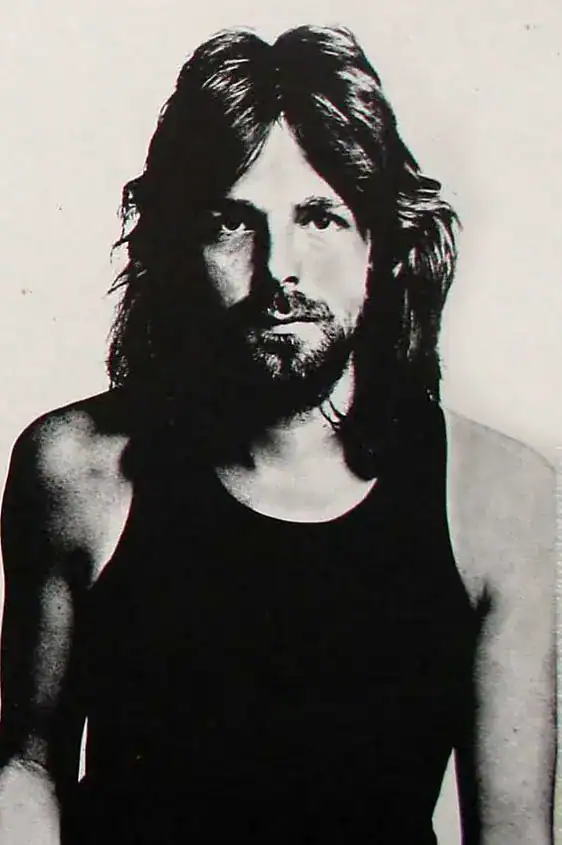
Richard Wright, 1971 – Capitol Records, Meddle promotional advertisement. Wikimedia Commons (Public Domain in the United States).
Richard William Wright (1943–2008) was an English keyboardist, pianist, composer, vocalist and founding member of Pink Floyd. His distinctive use of harmony, atmospheric keyboard textures and understated singing helped establish one of the most recognisable musical identities in British rock.
From the psychedelic recordings of the Syd Barrett era to the expansive arrangements of The Dark Side of the Moon, Wish You Were Here and The Division Bell, Wright contributed an individual musical vocabulary rooted in jazz, melody and electronic experimentation. His role extended beyond keyboard accompaniment, encompassing songwriting, vocal arrangements and the development of extended instrumental compositions.
On 29 May 2006, Wright performed alongside David Bowie during David Gilmour‘s concert at the Royal Albert Hall in London. Bowie’s surprise appearance brought together musicians whose careers had developed through different but historically connected areas of British experimental rock.
Their performances of Arnold Layne and Comfortably Numb connected two important periods of Pink Floyd’s history with one of Bowie’s final public appearances as a singer. Both performances survive in officially released concert footage.
- Full name: Richard William Wright
- Also known as: Rick Wright
- Born: 28 July 1943, England
- Grew up in: Hatch End, Middlesex
- Died: 15 September 2008, aged 65
- Nationality: British
- Profession: Keyboardist, pianist, composer, songwriter and vocalist
- Instruments: Piano, Hammond organ, Farfisa organ, electric piano and synthesizers
- Major association: Founding member of Pink Floyd
- Notable compositions: Remember a Day, Summer ’68, Us and Them, The Great Gig in the Sky and Wearing the Inside Out
- Solo albums: Wet Dream (1978) and Broken China (1996)
- Other project: Zee – Identity (1984), with Dave Harris
- Bowie connection: David Gilmour‘s Royal Albert Hall concert, London, 29 May 2006
- Role: Keyboards and vocals in David Gilmour‘s touring band
- Songs performed with Bowie: Arnold Layne and Comfortably Numb
- Official concert release: Remember That Night: Live at the Royal Albert Hall (2007)
1943–1962: Early life and musical education
Richard William Wright was born on 28 July 1943 and grew up in Hatch End, Middlesex. He attended Haberdashers’ Aske’s School, developing an interest in music that extended beyond the popular guitar-based recordings of his generation.
Wright’s early musical interests included guitar, trumpet and piano. He also received private instruction in musical theory and composition at the Eric Gilder School of Music. This combination of practical playing and theoretical study provided a foundation for his later work as a composer.
Jazz became particularly important to his musical development. Its harmonic possibilities offered a means of creating tension, movement and atmosphere through chords rather than through rhythmic intensity alone.
Extended harmonies and subtle changes in chord voicing would eventually become central to Wright’s contribution to Pink Floyd. His approach frequently differed from the blues-based structures that dominated much of the British rock scene in the early 1960s.
Instead of treating keyboards exclusively as instruments for accompaniment or solos, Wright developed a musical vocabulary in which sustained tones, harmonic transitions and contrasting instrumental colours could determine the character of an entire composition.
1962–1965: Architecture and the formation of Pink Floyd
In 1962, Wright enrolled at Regent Street Polytechnic in London to study architecture. There he met fellow students Roger Waters and Nick Mason, with whom he became involved in various early musical groups.
The formations included Sigma 6 and line-ups associated with the Abdabs name. Their repertoire emerged from the developing British rhythm and blues scene, in which young musicians explored American recordings alongside contemporary British popular music.
Wright did not remain committed to architectural studies. After approximately one year, he moved to the London College of Music, continuing his interest in musical development while maintaining his association with Waters and Mason.
Guitarist and songwriter Syd Barrett subsequently became the central creative personality of the group that developed into Pink Floyd. By 1965, Barrett, Waters, Mason and Wright formed the core of The Pink Floyd Sound.
The group’s transformation from rhythm and blues towards experimental music created a particularly important role for Wright. The sustained sound of electric organs enabled the musicians to develop instrumental passages that extended beyond traditional song structures.
1965–1967: The London underground and Syd Barrett’s Pink Floyd
Pink Floyd became associated with London’s emerging underground music scene, performing in settings where experimental rock, visual projections and extended improvisation formed part of a broader artistic environment.
Barrett’s guitar playing combined recognisable musical themes with feedback, unusual effects and spontaneous departures from conventional melodic structures.
Wright’s Farfisa organ offered a contrasting musical resource. Its bright electronic tones could reinforce Barrett’s guitar phrases or provide a sustained harmonic background during passages in which the other instruments became increasingly experimental.
Compositions such as Interstellar Overdrive demonstrated the possibilities of this relationship. A recognisable opening theme could develop into an extended exploration of sound before the musicians returned to more structured material.
Wright also contributed vocals, establishing another aspect of his musical identity. His voice blended particularly effectively with those of Barrett and, subsequently, David Gilmour.
The combination of collective improvisation and concise songwriting became one of the defining characteristics of early Pink Floyd.
1967: Arnold Layne and Pink Floyd’s recording debut
On 10 March 1967, Pink Floyd released their debut single, Arnold Layne. Written by Syd Barrett and produced by Joe Boyd, the recording introduced the group to a wider British audience.
Wright’s organ formed an important part of the arrangement, complementing Barrett’s unusual subject matter and melodic writing. The recording demonstrated that Pink Floyd’s musical identity could operate within the compact format of a commercial single.
The group subsequently released See Emily Play and their debut album, The Piper at the Gates of Dawn, in August 1967.
Wright shared prominent vocal passages with Barrett on songs including Astronomy Domine and Matilda Mother. These performances established his voice as a recognisable part of Pink Floyd’s early sound.
His own composition Paintbox appeared later that year as the B-side of Apples and Oranges, providing further evidence of his individual songwriting interests.
David Bowie was developing his own recording career during the same period. Barrett’s imaginative songwriting and distinctive approach to English popular music subsequently became a documented influence on Bowie.
The historical connection between these musicians would acquire a direct musical form in 2006, when Wright accompanied Bowie in a performance of Pink Floyd’s debut single.
1968–1970: Establishing a musical identity beyond Syd Barrett
David Gilmour joined Pink Floyd in early 1968. For a brief period the group contained five members, before Barrett’s departure left Gilmour, Waters, Mason and Wright to develop its next musical direction.
Wright emerged as an important individual songwriter during this transitional period. His compositions Remember a Day and See-Saw appeared on A Saucerful of Secrets, released in 1968.
Both songs revealed an interest in reflective melodies and layered arrangements. Their character differed from Barrett’s more eccentric forms of musical storytelling and from the lyrical direction subsequently developed by Waters.
Wright also wrote It Would Be So Nice, released as a Pink Floyd single in April 1968.
The group’s experiments gradually expanded into film music and extended instrumental structures. Wright contributed to the musical vocabulary heard on the soundtrack albums More and Obscured by Clouds, the latter appearing in 1972.
On the studio component of Ummagumma in 1969, the individual members explored separate compositional projects. Wright contributed Sysyphus, a multi-part work combining contrasting keyboard sounds and experimental elements.
His composition Summer ’68 appeared on Atom Heart Mother in 1970. Its melodic writing and contrasting ensemble sections demonstrated the relationship between his individual songwriting and Pink Floyd’s increasingly ambitious production.
1971: Meddle and the development of Echoes
With the release of Meddle in 1971, Pink Floyd established a more integrated relationship between songwriting, extended instrumental development and studio experimentation.
The album’s closing composition, Echoes, occupied the entire second side of the original record. Its opening piano note, processed to produce a distinctive resonating effect, became one of the most recognisable sounds associated with the group.
Wright and Gilmour shared the principal vocal passages, establishing a balance between their contrasting voices. Their singing became part of the arrangement’s musical texture rather than operating independently of it.
The composition subsequently developed through instrumental themes, atmospheric passages and experimental sounds before returning to more recognisable harmonic and melodic material.
Wright’s playing helped maintain continuity between these sections. His keyboard textures allowed the composition to move gradually between passages that differed substantially in rhythm, volume and instrumentation.
Echoes became an important part of Pink Floyd’s live repertoire and was documented in the concert film Pink Floyd: Live at Pompeii.
Its structure would remain relevant to Wright’s musical relationship with Gilmour throughout their subsequent careers, including its revival during the 2006 On an Island tour.
1972–1973: The Dark Side of the Moon
Pink Floyd developed the material for The Dark Side of the Moon through live performances before completing the album at Abbey Road Studios. Released in 1973, it brought the group’s musical experiments into an exceptionally successful and coherent album-length structure.
Wright’s contribution included two of its most prominent compositions: The Great Gig in the Sky and Us and Them, the latter featuring lyrics by Roger Waters.
The music of Us and Them originated in an earlier composition associated with the period of Pink Floyd’s work on Michelangelo Antonioni’s film Zabriskie Point.
Its spacious piano harmonies created the foundation for an arrangement featuring saxophone, contrasting vocal sections and carefully controlled changes in dynamics.
The Great Gig in the Sky developed around Wright’s piano composition, with vocalist Clare Torry providing its celebrated wordless performance. Torry subsequently received a songwriting credit alongside Wright.
Wright also contributed vocals to Time, alternating with Gilmour, and helped shape the album through his use of organ, electric piano and electronic keyboards.
These instrumental contributions extended across the recording, helping connect its individual compositions within a continuous musical sequence.
His importance to the album is therefore evident both in the songs carrying his writing credits and in the arrangements to which all four members contributed.
1975: Wish You Were Here and the memory of Syd Barrett
Released in September 1975, Wish You Were Here explored themes of absence, artistic identity and the music industry. The memory of Syd Barrett formed an important element of its creative background.
The extended composition Shine On You Crazy Diamond, credited to David Gilmour, Roger Waters and Richard Wright, framed the original album.
Wright’s sustained keyboard textures established the opening atmosphere before Gilmour’s guitar gradually introduced the composition’s recognisable melodic identity.
Rather than filling every available musical space, the arrangement depended on restraint. Individual tones and instrumental phrases were allowed to develop without unnecessary competition between the musicians.
Wright’s contribution extended to the later sections, in which changing keyboard sounds helped bring the composition towards its conclusion.
The recording sessions also became associated with Barrett’s unexpected visit to Abbey Road in 1975. His appearance brought the group’s earlier history into direct contact with an album partly concerned with his absence.
Wright’s relationship with Barrett’s musical legacy would continue through later performances of early Pink Floyd material.
1977: Animals and changing creative priorities
Pink Floyd released Animals in January 1977. The album reflected an increasingly prominent songwriting role for Roger Waters, whose social criticism provided its principal conceptual framework.
Wright received no songwriting credits on the album, but his keyboard performances remained part of its musical structure.
The electric piano introduction to Sheep provides a particularly clear example. Its restrained atmosphere contrasts with the increasingly forceful arrangement that follows.
Across the extended compositions, organ and synthesizer textures offered additional colours within music frequently dominated by Gilmour’s guitar and Waters’ vocals.
The accompanying In the Flesh tour expanded the group’s concert activities into large venues across Europe and North America.
For Wright, the period marked a growing distinction between instrumental participation and individual songwriting recognition. His independent recording project the following year offered another outlet for his musical ideas.
1978: Wet Dream and Wright’s first solo album
Wright released his first solo studio album, Wet Dream, in 1978. The record allowed him to develop compositions outside Pink Floyd’s increasingly elaborate conceptual framework.
The participating musicians included gitarist Snowy White, saxophonist Mel Collins, bassist Larry Steele and drummer Reg Isidore.
The album combined instrumental pieces with songs featuring Wright’s own voice, placing the melodic and jazz-influenced aspects of his musical identity in a more intimate setting.
Tracks including Mediterranean C, Against the Odds and Summer Elegy demonstrated an individual approach to musical atmosphere that did not depend on Pink Floyd’s large-scale productions.
The saxophone and guitar provided contrasting melodic voices, while Wright’s keyboards remained central to the relationship between the compositions and their arrangements.
Its historical importance lies partly in the opportunity it offers to distinguish Wright’s individual preferences from the collective identity of Pink Floyd.
Although its commercial profile remained considerably smaller than that of the band’s major recordings, the album established a separate body of work that would later receive renewed archival attention.
1979–1983: The Wall and separation from Pink Floyd
The recording of The Wall, released in November 1979, took place during a difficult period in Pink Floyd’s professional relationships.
Roger Waters supplied the principal narrative and much of the songwriting, while producer Bob Ezrin became an important participant in developing the album’s arrangements and recorded presentation.
Disagreements concerning Wright’s contribution and the working arrangements eventually resulted in his departure as a full member of Pink Floyd.
His separation from the band’s formal membership did not immediately end his participation in its musical activities. Wright returned as a salaried musician for the live performances of The Wall during 1980 and 1981.
These concerts required the musicians to work within an unusually elaborate theatrical production. The relationship between musical performance, visual narrative and stage construction was central to the show’s identity.
Among the compositions performed was Comfortably Numb, written by Gilmour and Waters. Its contrasting vocal sections and extended guitar passages would later provide the setting for Wright’s second performance alongside David Bowie in May 2006.
Wright did not participate in The Final Cut, released in 1983. His absence marked a more complete separation from Pink Floyd’s contemporary recording activities.
1984: Zee and the electronic experimentation of Identity
During his years outside Pink Floyd, Wright collaborated with Dave Harris, previously associated with the group Fashion. Together they formed the musical project Zee.
Their album, Identity, appeared in 1984 and explored a production style substantially different from Wright’s earlier solo recording.
The project made extensive use of the Fairlight CMI, a digital musical system that enabled musicians to combine sampling, electronic synthesis and programmed arrangements.
Its production reflected a period in which digital instruments were introducing new methods of constructing popular music recordings.
For Wright, whose previous work had already involved electronic keyboards and studio experimentation, the project represented an opportunity to explore a different technological environment.
Zee did not develop into a continuing series of albums. Nevertheless, Identity remains a distinct entry in Wright’s discography and demonstrates that his musical interests were not confined to the instrumental vocabulary of Pink Floyd.
1987–1989: Returning to Pink Floyd
Following Roger Waters’ departure from Pink Floyd, David Gilmour and Nick Mason continued recording under the group’s name.
Wright returned during the development of A Momentary Lapse of Reason, released in 1987. His restoration to the group was gradual rather than an immediate return to his former position.
The album involved a substantial number of additional studio musicians, reflecting both the circumstances of the group’s reconstruction and contemporary approaches to record production.
Wright subsequently participated in the international tour supporting the recording. The concert repertoire combined new material with compositions drawn from Pink Floyd’s earlier history.
The tour was documented through Delicate Sound of Thunder, released in 1988, providing an audiovisual record of the group’s renewed concert activities.
Wright’s return restored musical relationships established during the previous two decades. His renewed creative involvement would become considerably more apparent during the group’s next studio album.
1994–1995: The Division Bell and renewed creative involvement
Released in 1994, The Division Bell represented a substantial resurgence of Wright’s individual songwriting within Pink Floyd.
He received five songwriting credits, including contributions to Cluster One, What Do You Want from Me, Marooned, Wearing the Inside Out and Keep Talking.
Wearing the Inside Out was particularly significant. Wright composed its music, Anthony Moore supplied the lyrics and Wright performed its principal vocal.
The recording placed his voice and harmonic vocabulary at the centre of a Pink Floyd song, recalling an aspect of his musical identity that had received considerably less attention during the group’s intervening history.
The album’s preparation also generated extensive instrumental material that remained outside the finished recording. That material would eventually become important to the development of The Endless River.
Pink Floyd’s accompanying 1994 tour was subsequently represented by the live album and concert film Pulse, released in 1995.
Wright’s performances brought together music from different stages of the group’s development while demonstrating the extent to which his role had been restored within its contemporary arrangements.
1996: Broken China and an independent musical narrative
Wright released his second solo studio album, Broken China, in 1996. Developed with Anthony Moore, the recording explored themes of depression, emotional isolation and recovery.
Its connected songs and instrumental passages created a more explicitly conceptual structure than that of Wet Dream.
Participating musicians included guitarist Tim Renwick, bassist Pino Palladino and drummer Manu Katché.
Sinéad O’Connor contributed vocals to Reaching for the Rail and Breakthrough. Her performances added a distinct vocal perspective to the album’s carefully constructed atmosphere.
Electronic textures and piano-led arrangements helped connect its individual compositions, placing musical continuity at the centre of the listening experience.
The project demonstrated that Wright’s interest in extended musical narratives was not dependent on his membership of Pink Floyd.
Broken China remained his final completed solo studio album released during his lifetime.
2002–2005: David Gilmour and the Live 8 reunion
Wright’s musical relationship with Gilmour continued through the latter’s independent concert activities.
In 2002, Wright appeared as a guest during Gilmour’s solo performances. Their rendition of Breakthrough was subsequently included in the concert release David Gilmour in Concert.
The performance provided an opportunity to hear material from Wright’s independent catalogue within Gilmour’s concert arrangements.
On 2 July 2005, Wright, Gilmour, Mason and Waters reunited at Live 8 in London’s Hyde Park.
The concert featured Breathe, Money, Wish You Were Here and Comfortably Numb, returning the four musicians to material associated with Pink Floyd’s internationally recognised recordings.
Their appearance was particularly significant because the four-member line-up had not performed publicly together as Pink Floyd since the earlier Wall concerts.
Despite widespread interest in the possibility of further concerts, the reunion did not lead to another tour by that line-up.
Live 8 ultimately became the final performance bringing together Wright, Gilmour, Mason and Waters.
2006: On an Island and David Gilmour‘s international tour
David Gilmour released his third solo studio album, On an Island, in March 2006. Wright contributed to the recording and subsequently joined the touring ensemble.
The band brought together musicians with extensive experience of rock recording, touring and collaborative projects. Alongside Gilmour and Wright were Phil Manzanera, Guy Pratt, Jon Carin, Steve DiStanislao and Dick Parry.
Its concert repertoire combined the new solo album with material selected from several periods of Pink Floyd’s history.
Wright’s participation enabled the group to perform compositions closely associated with his songwriting and instrumental identity. These included Wearing the Inside Out and the extended Echoes.
His partnership with Gilmour was particularly evident in the shared vocal passages and instrumental exchanges of Echoes, a composition they had first recorded during the preparation of Meddle.
The tour also returned to songs written by Syd Barrett, including Arnold Layne and Astronomy Domine, acknowledging the earliest period of Pink Floyd’s recording career.
These selections created the musical circumstances in which David Bowie would make his unexpected London appearance.
29 May 2006: Richard Wright and David Bowie at the Royal Albert Hall
On Monday, 29 May 2006, David Gilmour performed at London’s Royal Albert Hall during his On an Island world tour.
The venue’s official archive identifies Richard Wright as a member of the performing band, credited with keyboards and vocals.
The concert also featured guest appearances by David Crosby, Graham Nash and Robert Wyatt. David Bowie’s participation, however, was not announced to the audience in advance.
The programme combined the new album with a selection of Pink Floyd compositions. Wright’s own Wearing the Inside Out appeared in the second part of the concert, alongside extended works from earlier periods of the group’s history.
Following the main programme, Gilmour returned for an encore that included Wish You Were Here and a performance of Find the Cost of Freedom with Crosby and Nash.
Bowie subsequently appeared as a surprise guest, performing Arnold Layne and Comfortably Numb.
His participation brought him into an established touring ensemble rather than a group assembled specifically to accompany his own compositions.
Wright’s presence gave the occasion an additional historical dimension. He had participated in Pink Floyd’s original recordings of the selected songs, linking the 2006 performances with the music’s earlier recording history.
Bowie’s official website published a contemporary account of the concert, including his own confirmation of the appearance through the BowieNet message boards.
David Bowie on performing with David Gilmour
“I had a ball tonight singing with David Gilmour and the band.”
— David Bowie, 29 May 2006, BowieNet message. Source: DavidBowie.com.
The Royal Albert Hall archive identifies the occasion as Bowie’s final public performance in the United Kingdom. It was not, however, his final public singing appearance worldwide.
This distinction establishes the concert’s significance without placing it incorrectly at the end of Bowie’s complete performing chronology.
The Royal Albert Hall musicians – 29 May 2006
The documented touring ensemble consisted of seven principal musicians. Bowie joined them as a guest vocalist during the final two songs.
- David Gilmour: Guitar and vocals
- Richard Wright: Keyboards and vocals
- Phil Manzanera : Guitar and vocals
- Guy Pratt: Bass guitar and vocals
- Jon Carin: Keyboards, vocals and slide guitar
- Steve DiStanislao: Drums and vocals
- Dick Parry: Saxophone and keyboards
- David Bowie: Guest vocals on Arnold Layne and Comfortably Numb
The distinction between the regular touring musicians and the evening’s additional guests is important when documenting Bowie’s musical collaborations. Wright was part of Gilmour’s established ensemble, while Bowie’s involvement was limited to the two documented encore performances.
View the official Royal Albert Hall concert archive →
2006: Arnold Layne and the connection with Syd Barrett
Bowie’s first performance at the Royal Albert Hall was Arnold Layne, the song that had introduced Pink Floyd to the commercial recording world in 1967.
Almost four decades separated the original single from the London concert. Wright remained a direct musical connection with its recording history, while Bowie approached the composition as an interpreter of Barrett’s songwriting.
The arrangement retained the song’s distinctive melodic identity while placing it within the instrumental resources available to Gilmour’s contemporary touring ensemble.
The historical relationship between Bowie and Barrett’s music gave the performance a significance beyond that of an unexpected celebrity appearance.
Bowie was performing material from an artist whose unusual approach to British songwriting he had long admired, accompanied by musicians who had participated in the development of that musical tradition.
Barrett was still alive at the time of the concert. He died on 7 July 2006, meaning that the Royal Albert Hall performance should not be described as a posthumous memorial tribute.
A live single released in December 2006 subsequently presented separate versions of Arnold Layne featuring Bowie and Wright as vocalists, together with Gilmour’s interpretation of Barrett’s Dark Globe.
Wright’s lead-vocal version was a separate performance and should not be confused with the rendition featuring Bowie.
The single provided a recorded connection between different interpretations of Barrett’s work and the musicians who continued to perform it decades after its original publication.
2006: Comfortably Numb and the final encore
Bowie’s second contribution was Comfortably Numb, originally released on Pink Floyd’s The Wall in 1979.
Written by David Gilmour and Roger Waters, the composition depends partly on the contrast between its darker narrative verses and its expansive melodic sections.
Bowie performed the vocal passages associated with Waters, while Gilmour retained his familiar singing and guitar contributions.
Wright’s keyboards belonged to the wider instrumental foundation supporting these contrasting vocal sections and the composition’s extended guitar passages.
His contribution should be distinguished from its authorship. Wright participated in the performance but was not a credited composer of Comfortably Numb.
The performance placed Bowie’s distinctive voice within an established arrangement, allowing his interpretation to emerge without removing the musical characteristics associated with Gilmour and Pink Floyd.
In contrast to the concise psychedelic songwriting of Arnold Layne, the final encore drew on the extended emotional and instrumental language of the group’s later repertoire.
The two performances therefore documented contrasting periods of Pink Floyd’s history within a single guest appearance by Bowie.
2007: Remember That Night preserves the collaboration
In 2007, the concert film Remember That Night: Live at the Royal Albert Hall documented David Gilmour‘s London concerts of May 2006.
Both performances featuring David Bowie were included on the principal concert disc, establishing an official audiovisual record of the encounter.
Their inclusion is particularly useful to historical research because the collaboration can be examined through the released performances rather than relying exclusively on audience recollections, photographs or unofficial recordings.
The wider release also documented Wright’s involvement throughout Gilmour’s concert programme, including the instrumental exchanges and shared vocals that formed part of their longstanding musical relationship.
Additional features included documentary material from the tour and recording sessions. Some of the backstage footage used in the American West Coast documentary was filmed by Wright himself.
The release consequently preserved both his musical participation and an additional perspective on the touring experience.
Official Remember That Night release information →
10 May 2007: The Madcap’s Last Laugh
Wright returned to the music of Syd Barrett at The Madcap’s Last Laugh, a memorial concert held at London’s Barbican Centre on 10 May 2007.
Organised by producer Joe Boyd, the event brought together musicians associated with Barrett’s work and artists influenced by his songwriting.
Gilmour, Mason and Wright performed Arnold Layne, once again revisiting the composition that had established Pink Floyd’s recording career.
Roger Waters also participated in the memorial, but performed separately. The occasion should therefore not be recorded as another reunion performance by the complete four-member line-up seen at Live 8.
Nor should the memorial performance be confused with the appearance featuring Bowie at the Royal Albert Hall the previous year.
The Barbican event represented a separate occasion with a different historical purpose: a public remembrance of Barrett following his death.
2008: Live in Gdańsk and Wright’s final musical projects
David Gilmour‘s Live in Gdańsk documented the concert performed at the Gdańsk Shipyard in Poland on 26 August 2006, at the conclusion of the On an Island tour.
The performance featured Wright alongside the established touring musicians and orchestral accompaniment.
Its recording of Echoes preserved one of the defining musical relationships of Wright’s career, allowing listeners to compare the later performance with the composition’s earlier recorded forms.
The album and its associated concert material appeared in September 2008, shortly after Wright’s death.
Reports published around the time of his passing indicated that he had been developing further solo music. No completed third solo studio album appeared during his lifetime.
His established solo album catalogue therefore remains distinct from the unfinished projects associated with his final years.
Live in Gdańsk acquired a particular historical importance as an official record of his final international touring period.
15 September 2008: The death of Richard Wright
Richard Wright died on 15 September 2008, aged 65, following cancer.
His death brought an end to a musical career extending from the experimental London underground of the 1960s to some of the most internationally recognised recordings and concert productions in rock history.
David Gilmour‘s tribute emphasised the longstanding musical relationship between them, acknowledging Wright’s voice, instrumental contribution and personal importance.
David Gilmour remembers Richard Wright
“I have never played with anyone quite like him.”
— David Gilmour, tribute to Richard Wright, September 2008. Source: archived tribute statement.
Roger Waters also acknowledged the importance of Wright’s musical understanding, particularly the jazz-influenced harmonies that had shaped much of their collective work.
Roger Waters on Richard Wright‘s musical contribution
“Rick’s ear for harmonic progression was our bedrock.”
— Roger Waters, tribute to Richard Wright, September 2008. Source: archived tribute statement.
These statements were especially significant because they acknowledged musical contributions that could not always be measured through individual songwriting credits.
Wright’s understanding of harmony had influenced compositions throughout Pink Floyd’s career, including works credited principally to other members.
Gilmour also paid musical tribute to his former colleague through a performance of Wright’s early composition Remember a Day on BBC television’s Later… with Jools Holland in September 2008.
The choice returned attention to Wright’s individual songwriting during the formative years of Pink Floyd.
His death also established a permanent historical boundary around the group’s Live 8 reunion, which remained the final appearance of all four musicians together.
2014: The Endless River and Wright’s surviving recordings
In November 2014, Pink Floyd released The Endless River, developed largely from instrumental material recorded during the 1993 sessions associated with The Division Bell.
David Gilmour and Nick Mason worked with surviving recordings in which Wright’s keyboard performances remained an important component.
The resulting album was predominantly instrumental, placing the relationship between guitar, keyboards and percussion at the centre of its musical identity.
Its production differed from that of a conventional reunion album. Wright’s performances originated in earlier recording sessions and were incorporated into a project completed after his death.
Among the archival elements was an organ performance recorded at the Royal Albert Hall in 1969, used within Autumn ’68.
This material connected different stages of Wright’s musical career, demonstrating the historical range of recordings available to the project.
The album offered listeners an opportunity to encounter surviving examples of the instrumental exchanges that had characterised the musical relationship between Gilmour, Mason and Wright.
2023–2024: Renewed attention to Richard Wright‘s recorded legacy
In 2023, Wright’s debut solo album Wet Dream received renewed attention through a new edition featuring mixes by Steven Wilson.
The digital release appeared on 28 July 2023, the date on which Wright would have celebrated his eightieth birthday. Additional physical editions followed.
The project enabled listeners to reconsider the album as an independent musical statement rather than simply a recording associated with the period between Pink Floyd’s Animals and The Wall.
Further archival recognition appeared in September 2024 with David Gilmour‘s album Luck and Strange.
Its title composition incorporated Wright’s keyboard playing from a musical session recorded in 2007.
The source was an actual performance made during Wright’s lifetime, not a reconstruction of his playing or a newly recorded contribution.
The original barn jam was also made available as additional material, allowing listeners to examine the earlier musical interaction alongside the composition developed from it.
These projects represent different methods of preserving Wright’s recorded work: revisiting an existing solo album through new mixes and incorporating an authentic earlier performance into a later recording.
Both approaches direct attention towards the surviving music itself and the continuing importance of Wright’s distinctive instrumental identity.
Legacy: Richard Wright in David Bowie’s collaborative history
Richard Wright occupies a distinctive position within David Bowie’s extended musical history. Unlike musicians who joined Bowie’s recording sessions or remained members of his touring bands across several years, Wright’s documented association with Bowie centred on a particular concert.
The significance of that encounter rests partly on the independent musical histories brought together on the Royal Albert Hall stage.
Wright had helped establish the instrumental identity of Pink Floyd during the period in which Syd Barrett’s songwriting introduced the group to a wider audience. Bowie had subsequently developed his own artistic vocabulary through songwriting, theatrical performance and continual musical reinvention.
Their respective careers demonstrate different approaches to experimental British rock. Wright worked primarily within the changing identity of a collective ensemble, while Bowie repeatedly reorganised his musical environment around new compositions, collaborators and artistic concepts.
At the Royal Albert Hall, Bowie temporarily entered the musical environment of Wright and Gilmour. The encounter was therefore different from a conventional Bowie concert in which an accompanying musician interpreted Bowie’s own repertoire.
Here, Bowie became the interpreter of music associated with Pink Floyd, accompanied by musicians possessing direct connections with its development.
This reversal of the usual relationship between Bowie and his collaborators gives the occasion particular value within his performing history. It demonstrates his continuing interest in the work of other musicians and his ability to enter an established arrangement without requiring it to become an extension of his own recording catalogue.
Wright’s contribution belonged to the collective musical foundation of those performances. His importance was not dependent on an individual solo, a songwriting credit or a separately documented personal relationship with Bowie.
More broadly, his career illustrates the importance of musical contributions that operate through harmonic structure, instrumental colour and relationships between performers.
Such contributions are not always immediately apparent when examining a list of composers or principal vocalists, yet they can determine the identity of an entire arrangement.
Within the DavidBowieWorld archive, Wright consequently belongs among the musicians whose established achievements gave additional historical meaning to a documented encounter with Bowie.
His place in that history does not require the invention of an extended friendship, an undocumented studio collaboration or further private musical projects.
The surviving evidence is substantial enough: an officially documented concert, two released performances and a musical career whose origins extended back to the earliest years of Pink Floyd.
Richard Wright‘s enduring achievement remains the distinctive harmonic and atmospheric language he brought to British rock music. His appearance alongside Bowie in 2006 preserved a brief but historically meaningful meeting between two remarkable musical traditions.
Official Website & Further Information
Further information about Richard Wright‘s musical career, recordings, concert appearances and association with Pink Floyd can be explored through the following artist-related websites, historical archives and official concert documentation.
- Richard Wright: rickwright.com – Information associated with Wright’s recorded legacy and solo releases.
- The Richard Wright Archives: richardwright.net – Biographical and historical information.
- Pink Floyd – Official Website: pinkfloyd.com – Recordings, band history and archival releases.
- David Gilmour – Official Website: davidgilmour.com – Solo recordings and concert releases.
- Royal Albert Hall – Concert Archive: 29 May 2006 concert record – Documented personnel, programme and David Bowie’s guest appearance.
- David Bowie – Official Website: David Bowie’s surprise appearance with David Gilmour – Contemporary concert report and Bowie’s own response.
- Remember That Night: Official concert release – Film containing both performances featuring David Bowie.
Article Origin
This article was independently researched and written for DavidBowieWorld as part of its continuing project documenting the musicians, composers, producers and creative individuals whose careers intersected with David Bowie’s musical history.
The biography draws upon published historical material, album and concert documentation, artist-related archives, contemporary reports and officially released recordings.
Particular attention has been given to distinguishing Richard Wright‘s independent musical achievements from his documented appearance alongside David Bowie at the Royal Albert Hall on 29 May 2006.
Direct quotations are attributed to their original speakers. External references are provided to support further research and examination of the historical material.
DavidBowieWorld welcomes additional documented information, historical corrections, personal recollections and appropriately authorised photographs from musicians, family members, colleagues and researchers connected with the events described.
The purpose of this continuing research is to preserve an accurate and respectful historical account of David Bowie’s musical collaborations and the individual careers of the people who contributed to them.
