
Mary Finnigan – David Bowie and the Beckenham Arts Lab
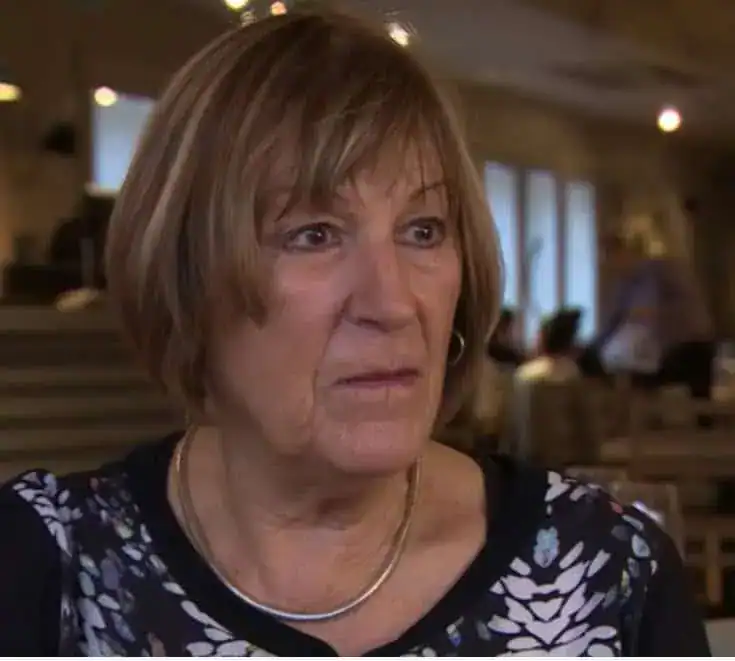
Mary Finnigan is a British journalist and author whose connection with David Bowie began when he came to live in her Beckenham flat in the spring of 1969. With other local participants, she helped turn a Sunday folk club into the Beckenham Arts Lab, known as Growth, and helped organise its free festival that August.
Her part in this history reaches beyond a photograph or a passing encounter. She provided a home while Bowie was still seeking a wider audience, worked on the presentation of the club, helped sustain a community arts project and later wrote about events she had witnessed. Her published memories offer a valuable perspective, provided that memories, official records and later interpretations are kept distinct.
- Name: Mary Finnigan
- Born: Manchester, England; exact date not publicly verified
- Work: Journalist and author
- Bowie connection: Beckenham housemate and fellow organiser of Growth, the Beckenham Arts Lab
- Key event: Beckenham Free Festival, 16 August 1969
- Book: Psychedelic Suburbia: David Bowie and the Beckenham Arts Lab (2016)
Before Beckenham: Mary Finnigan’s own career
Finnigan’s publisher describes her as born in Manchester shortly before the Second World War. It gives no exact birth date, so a more precise age should not be inferred from that description. She moved to London after having two children and worked as a fashion writer for the Daily Mirror. Her print career also included the Daily Sketch, the Daily Express and freelance work for the Sunday Times and The Guardian.
Journalism was part of her life before Bowie entered it. Her professional experience also helps explain why she later recorded the Arts Lab story in articles, a speech and a book. These publications give readers her own account of work that otherwise appears only briefly in musician-centred histories.
Finnigan’s life in 1969 included the demands of supporting a household with two young children. Her later account recalls occasional employment and practical concerns about the rent. The conditions help explain why a paying lodger and a Sunday club might appeal to her. They also show how a story often presented as the beginning of Bowie’s ascent took place inside somebody else’s working and family life.
Spring 1969: Bowie comes to stay
According to the account accompanying Finnigan’s book, she and Bowie met in Beckenham while he was visiting neighbours. He moved into her home in Foxgrove Road with her two children in the spring of 1969. Her own published recollection places him in the spare room of her flat. At the time he was a working musician, but the later international success associated with “Space Oddity” and Ziggy Stardust still lay ahead.
Finnigan was a housemate and landlady; her publisher also describes a brief romantic relationship. Those distinctions matter. The household connection is documented without needing to describe it as a lifelong partnership, and a personal account of affection does not establish what Bowie privately intended for his music. Their shared address did, however, make the exchange of ideas and the practical work of putting on events possible.
In a recollection published on Bowie’s official website, Finnigan remembered Bowie composing at Foxgrove Road and described the household hearing songs including “Space Oddity” and “Janine”. She named her children Richard and Caroline and recalled a play session with Richard that she associated with “Wild Eyed Boy from Freecloud”. These are Finnigan’s memories of life in the flat, not evidence that a child appears on a released Bowie recording.
The Sunday folk club at the Three Tuns
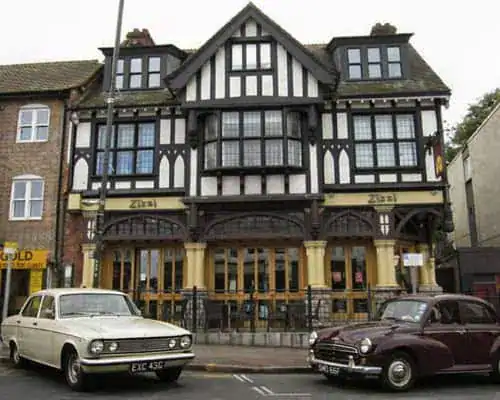
Finnigan recalled that she and Bowie began Sunday folk-club evenings in the back room of the Three Tuns on Beckenham High Street. The premises later became The Rat & Parrot and now house Zizzi Beckenham. In her 2013 account, she gave two motives: enjoyment and the prospect of helping Bowie pay rent. The project started on a manageable scale. She remembered 20 paying visitors at the first evening and a larger audience the following week.
Her account gives unusually specific details of what she herself did. Finnigan operated a simple light projector, using ink and glass slides to cast colours across sheets on the walls. Candles, incense and posters changed the atmosphere of an ordinary pub room. Bowie performed and acted as compère. These were different jobs contributing to the same evening: the sound came from musicians, while the room itself helped make the event feel like a creative gathering.
She also recalled George Underwood designing an advertisement for the following Sunday, Keith Christmas appearing, Tony Visconti playing bass and the group Comus offering to return. In her 2013 article Finnigan specifically remembered Caroline playing stylophone during a performance of “Space Oddity”. That is her account of a local live event and does not identify the players on the released studio single.
From folk club to Growth
As interest grew, the Sunday gatherings developed into the Beckenham Arts Lab, also known as Growth. Finnigan explained that she and Bowie asked the club’s regular visitors whether they wanted to broaden it. The response encouraged an expansion beyond a sequence of musical performances. The pub room became a place where people could share work and try ideas in front of others.
The name Growth expressed the ambitions of those involved at the time. Finnigan remembered paintings, poetry, stories and crafts arriving alongside music. Events reached into other parts of the premises; participants rehearsed street theatre and performed outside the pub. She also recalled puppeteer Brian Moore and a weekly newsletter. The details point to an arts project with more than one medium and more than one organiser.
“an experimental space where people could test their creative impulses.”
— Mary Finnigan, speech at the Three Tuns plaque unveiling, 6 December 2001That description is useful because it defines the Arts Lab by what participants could do there. Bowie’s presence drew attention, but the lab depended on people bringing work, making the rooms usable and returning each week. Finnigan helped create that opportunity. Her organisational role is as much a part of the history as the more readily remembered appearances by future stars.
A collective venture, with identifiable organisers
Finnigan did not claim that she and Bowie carried the entire Arts Lab alone. In a speech delivered in 2001, she named Christina Ostrom, formerly Christina Jackson, and Christina’s then husband Barry alongside herself and Bowie as people who started the venture. She credited the wider gathering with turning those beginnings into something more substantial. Bowie’s official website also identifies Mary and Christina with the Arts Lab and the later commemoration.
Giving these names keeps the sequence clear. A club grew into an arts project because people with different skills took part. Finnigan remembered working on the newsletter with Nick Godwin and cited the efforts of many other local contributors. Some arranged, advertised or performed; others supplied the visual and theatrical work. The project’s cooperative character should not erase Finnigan’s labour, just as recognising her labour should not erase her fellow organisers.
The weekly newsletter and street theatre extended Growth beyond the Sunday audience. Finnigan recalled Nick Godwin producing the newsletter with her and performers taking their work into Beckenham High Street and the park. Those activities give substance to the Arts Lab’s community role: the participants could encounter the project even if they had never attended the club.
Beckenham in the summer of 1969
The Arts Lab belonged to a wider movement of experimental venues and gatherings in Britain. Finnigan said that she and Bowie knew of the Drury Lane Arts Lab in London and that the Beckenham audience welcomed a similar idea locally. The connection helps explain the term “Arts Lab”; it does not make the Beckenham meetings a branch operated by another organisation.
Beckenham’s position outside central London mattered in her account. A Sunday evening could bring musicians and visitors into a suburban pub while giving local young people a space they could reach regularly. Finnigan recalled performers arriving from elsewhere, but she also stressed the people living around the Three Tuns who supplied its momentum. The mixture of visiting artists and local participation became part of the group’s identity.
According to Finnigan, Bowie’s professional experience helped attract and present visiting performers. The initial club evenings also needed ordinary decisions about posters, admission, stage time and the use of the room. Her recollection of those arrangements gives the wider arts movement a tangible Beckenham setting.
Planning the Beckenham Free Festival
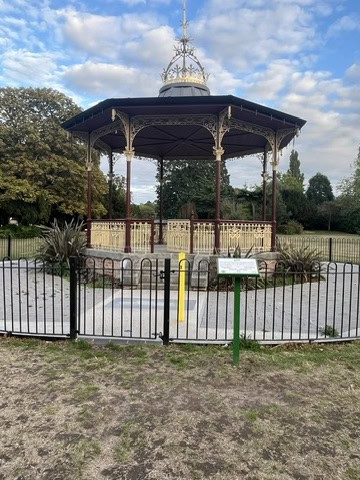
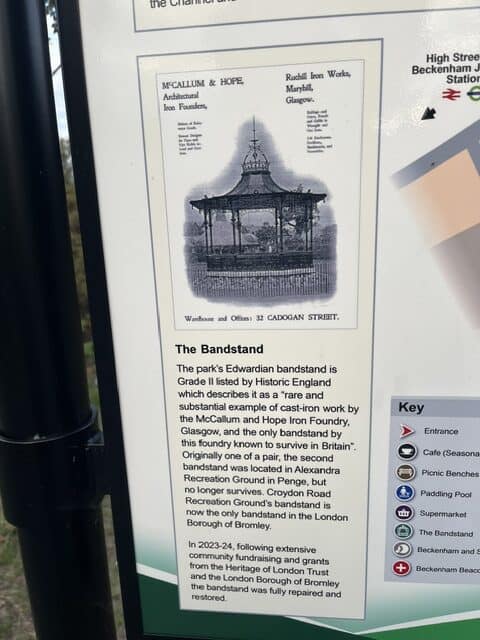
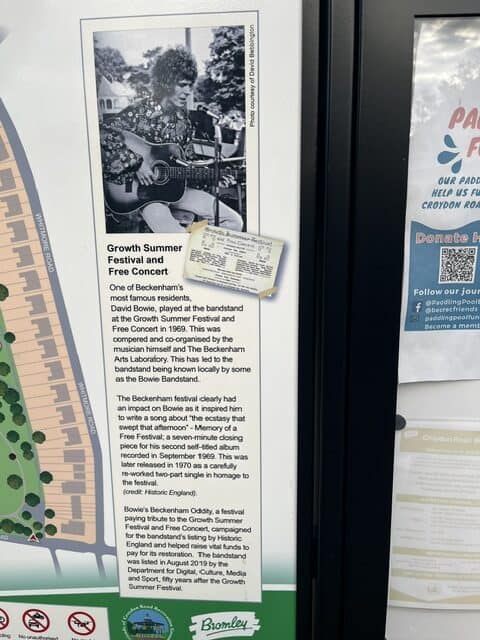
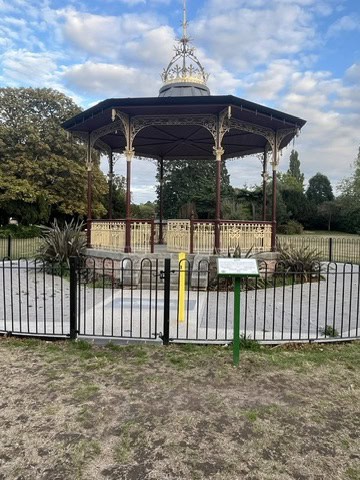
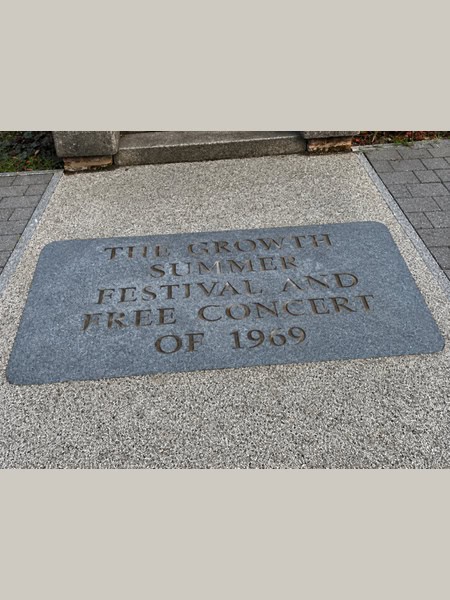
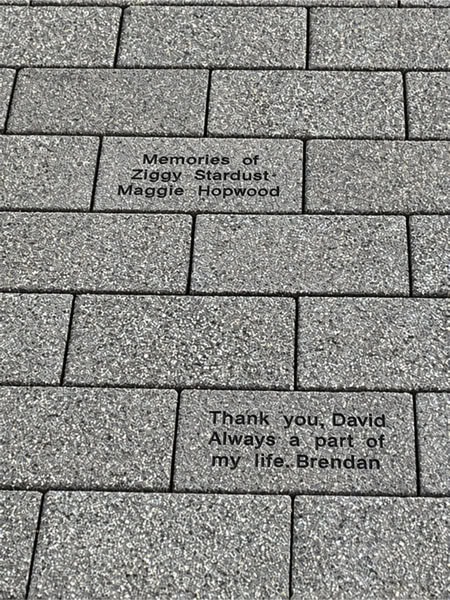
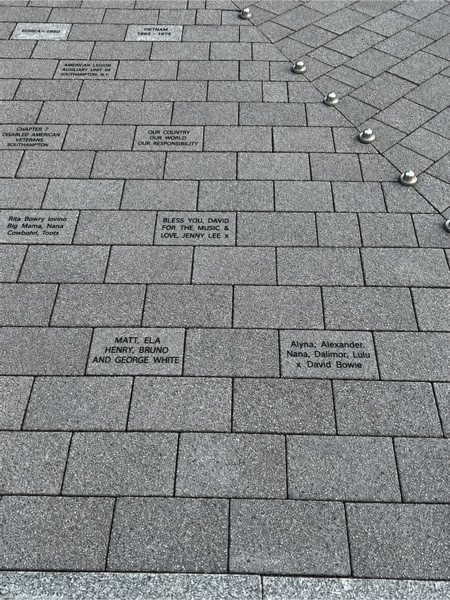
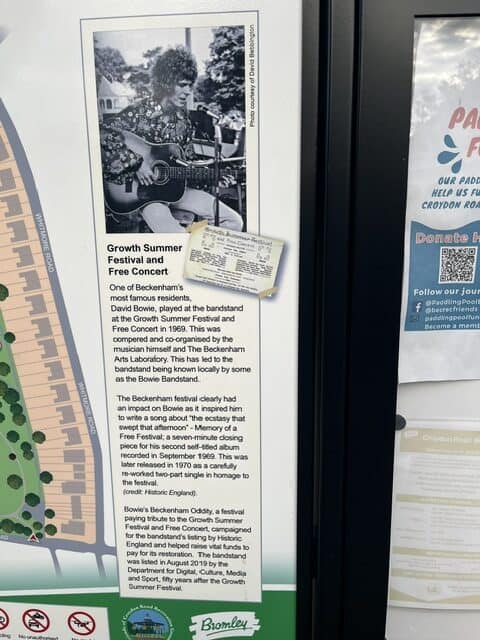
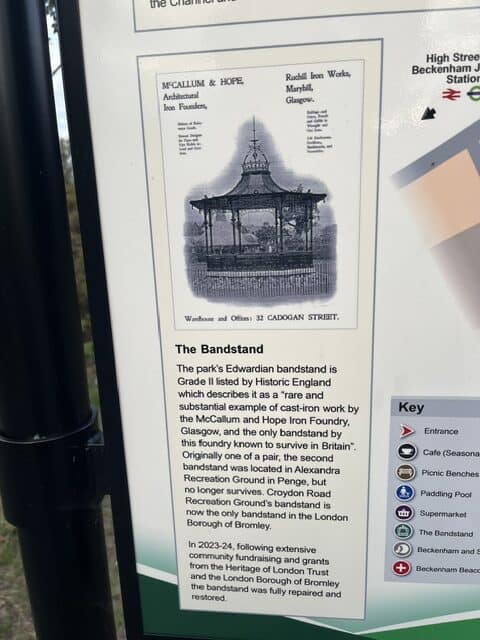
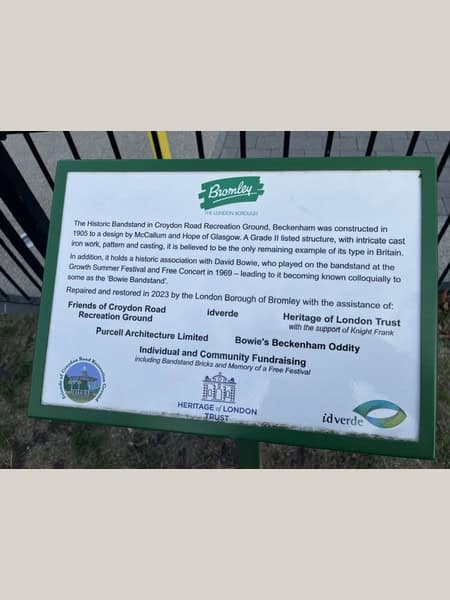
Growth’s most prominent public event took place at Croydon Road Recreation Ground on 16 August 1969. Finnigan later wrote that she did most of the organising, helped by Angie Barnett, later Angie Bowie, and practical members of Growth. This is a first-hand statement about the division of work. It identifies her role while explicitly recognising help from others.
“I did most of the organising with help from Angie”
— Mary Finnigan, “Flatshare with Bowie: what happened next”, The Arts Desk, 2013Despite its name, the free festival had financial and logistical needs. Finnigan remembered selling food, drinks, posters and craft items to support the Arts Lab. A free event for the audience did not mean that materials, arrangements or refreshments appeared without effort. In her account, the sales brought in a surplus. It is reasonable to describe the outcome as she did without presenting an unverified modern monetary equivalent as an audited figure.
The date, location and organisers place the festival in the history of the Beckenham project. Finnigan herself later wondered whether it was among Britain’s earliest free festivals. The available accounts here establish the local date and programme without settling a national “first”. For her own story, its clearest significance is that she helped carry Growth beyond the Three Tuns and into a public park.
Bowie’s performance and the limits of the legend
Finnigan remembered Bowie performing and introducing acts on festival day. She also wrote that his father had died shortly beforehand and that he was grieving. She described a bright, successful afternoon for many people around him but did not remember Bowie sharing their mood. This is her view of what she observed, not a diagnosis of his feelings or a claim that every witness experienced the afternoon in the same way.
Bowie’s own later recollection complicates any simple description of the day as uniformly joyful:
“I actually didn’t enjoy the day at all!”
— David Bowie, recollection reproduced by DavidBowie.com in its 2002 Arts Lab Pack announcement“Memory of a Free Festival” later gave the event a place in Bowie’s recorded work. A song can capture an atmosphere or transform a memory without serving as a literal register of everyone’s behaviour. Finnigan’s account and Bowie’s retrospective comment are useful precisely because they remind readers that the lived event contained disappointment as well as shared creative effort.
After the festival
Finnigan wrote that she left the Arts Lab after the August festival and did not return to running it. She also said she remained friends with Bowie and Angie for a period afterward. Her involvement in organising Growth therefore has a recognisable beginning and end; it should not be extended across Bowie’s later career simply because her name remains associated with this early chapter.
As Bowie’s career expanded, the Beckenham events acquired a different place in public memory. A local club could be viewed retrospectively through the fame of someone who had once performed there. Finnigan’s subsequent writing restores the scale at which the participants experienced it: weeks of meetings, a particular pub room, her children at home and neighbours giving their time. Those details are evidence for her relationship to the events, even when precise private conversations depend on later recollection.
Journalism and interests beyond Bowie
After her time in Beckenham, Finnigan continued a professional life in news and broadcasting. Her publisher identifies roles as a reporter, editor and producer at Visnews, Independent Radio News and London Broadcasting Company. The list demonstrates why she should be described as a journalist in her own right. Bowie forms a significant part of her published work, but he did not provide the sole subject of her working life.
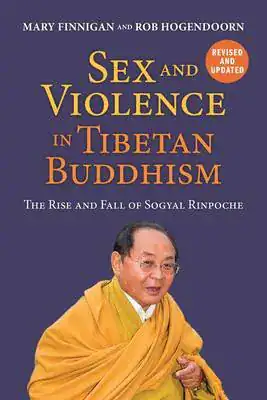
Her publisher also states that Bowie introduced her to Tibetan Buddhism, an interest she pursued in later decades. With Rob Hogendoorn she wrote Sex and Violence in Tibetan Buddhism: The Rise and Fall of Sogyal Rinpoche. The publisher records a revised edition in 2021. This separate investigative work shows that her writing continued well beyond the Beckenham memoir.
Care is needed when describing this later work. The publisher’s biographical note provides a summary of her interests and employment; it does not, by itself, establish every date or motivation in her personal history. For the Bowie connection, her first-person articles and speeches supply more specific evidence about what she remembers doing in Beckenham.
2001: remembering the Three Tuns
On 6 December 2001, Finnigan spoke at a commemoration of the Arts Lab in the former Three Tuns premises, then called The Rat & Parrot. Bowie’s official website reported that she and Christina Ostrom unveiled a plaque. Her speech named fellow organisers and performers, acknowledged the wider community and described the experimental purpose of Growth. The occasion shows that her role as a witness did not begin with the later publication of a memoir.
The speech is valuable for its named participants and for Finnigan’s description of the project, but it was delivered more than thirty years after the original events. She acknowledged that some memories were blurred. That admission is a reason to use her words accurately, rather than a reason to dismiss them. Where she names her own contribution, it is a first-hand recollection; where a detail affects a recording credit or an exact chronology, contemporary or official documentation deserves separate attention.
In 2002 Bowie’s official website advertised an Arts Lab Pack that included Finnigan’s written recollections alongside contributions from Bowie and other participants. Her voice therefore formed part of an early effort to preserve the local history while several people who had been there could still give their accounts.
2013: the festival remembered and revived
Finnigan returned to the subject in a 2013 article for The Arts Desk. She described the first Sunday club nights, the expansion into Growth and the work behind the 1969 festival in her own words. Because she specifies what she did as well as what Bowie did, the piece helps correct a version of the story in which the musician is the only active participant.
She also reported on a festival held at Croydon Road Recreation Ground on 15 September 2013 to raise money for the bandstand. Finnigan credited fashion designer and Bowie fan Natasha Ryzhova Lau with initiating the effort. Her account says the day raised £6,950 for repairs and brought back people associated with the original Arts Lab. These details describe the 2013 event, not a second performance by Bowie.
The return to the park gave Finnigan a chance to address a later audience as somebody who had helped organise the first gathering. The revival had its own organisers, weather, performers and purpose. Treating it on its own terms avoids turning a fundraiser more than four decades later into an imagined recreation of everything that happened in 1969.
2016: Psychedelic Suburbia
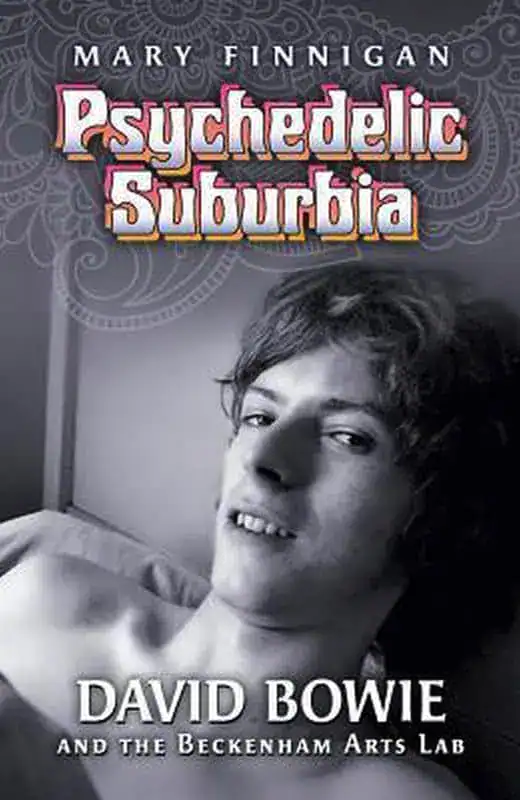
Finnigan’s book Psychedelic Suburbia: David Bowie and the Beckenham Arts Lab was published on 8 January 2016, according to its publisher. Bowie died two days later. The order of those dates matters: the book was prepared and initially issued during his lifetime. Its later reception was inevitably affected by news of his death, but that news did not cause the original publication.
The memoir gives Finnigan room to connect her own household, the folk club and the Arts Lab in a way a concert listing cannot. It is a personal account by someone closely involved, not a neutral transcript made in 1969. Readers can value its detailed descriptions while recognising that dialogue and motives recalled years later may be less independently checkable than a contemporary release date or an official credit.
Her publisher notes that an expanded version added an epilogue reflecting on the aftermath of Bowie’s death. The distinction between the initial publication and subsequent material helps when dating a passage. A comment written after January 2016 cannot be assumed to have appeared in exactly the same form in the first printing.
What her account establishes
Finnigan’s testimony supports several specific statements: Bowie lodged in her Beckenham home, they began a Sunday club, she supplied visual effects for it, the activity developed into Growth, and she organised much of the free festival with help from others. The published speech, first-person article and official Bowie site provide overlapping accounts of that local history. They also identify colleagues whose work belongs in the story.
Other questions need different kinds of evidence. A memory of somebody joining a live “Space Oddity” performance does not identify players on the released single. A song inspired by a festival does not report the mood of everybody who attended it. Finnigan’s personal recollection of a conversation does not automatically become Bowie’s verified word-for-word statement. These boundaries allow her account to remain both vivid and credible.
Her role was neither incidental nor all-encompassing. Bowie and his fellow musicians wrote and performed their own work; Finnigan and her fellow Arts Lab organisers made a setting where local art and music could be presented. The evidence is strongest when each contribution retains its proper scale.
Historical legacy
Mary Finnigan belongs in Bowie’s history because she took part in the practical life surrounding his Beckenham performances and later left a detailed account of it. Her flat provided a temporary home. Her lights and preparations helped turn a pub back room into a gathering place. Her organising helped bring a local arts project before a larger audience on a summer afternoon in 1969.
Her journalism and subsequent books also keep her from being reduced to a supporting character in somebody else’s biography. She made choices, worked with colleagues and described the events in her own voice. Some details rest on retrospective memory; the date of the festival, the shared Arts Lab history and her published role are supported by accounts that readers can examine.
The enduring value of her contribution lies in that combination of participation and testimony. Her memories let readers look past the finished record and see the people who arranged rooms, welcomed performers and gathered neighbours together. In the Beckenham chapter of Bowie’s life, Finnigan was one of those people, and she also helped preserve the story afterward.
Official Website & Further Information
David Bowie’s official account of the 2001 Arts Lab commemoration documents the plaque unveiling and the former pub’s name at the time. Zizzi Beckenham’s official restaurant page identifies the current venue at 157 High Street. Bowie’s site also carries the 2002 Arts Lab Pack announcement with his festival recollection.
For Finnigan’s own words, see her 2001 speech at the former Three Tuns and 2013 first-person account in The Arts Desk. Jorvik Press’s book page supplies the publication date and description of Psychedelic Suburbia; its author biography outlines Finnigan’s journalism and other work.
Article Origin
This article was prepared for DavidBowieWorld.com using Finnigan’s published first-person accounts, David Bowie’s official website and her publisher’s author and book information. Recollections are attributed to their speakers. Dates and publication details are distinguished from later memories, and interpretations of the Arts Lab’s significance are identified as interpretation rather than undocumented claims about Bowie’s intentions.
No personal review or endorsement by Mary Finnigan or another participant is claimed for this article.
© DavidBowieWorld.com — David Bowie Collaborations & Creative Circle Archive.
