
Krautrock and David Bowie – NEU!, Berlin and the Düsseldorf Sound
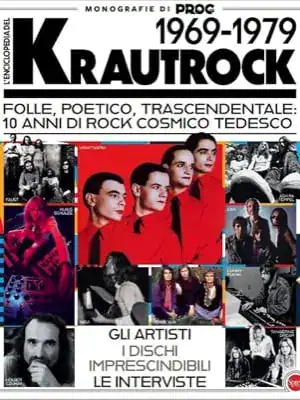
Photo: Unknown photographer
The music commonly described as Krautrock became an important part of David Bowie’s changing musical world during the mid-1970s. Groups including NEU!, Kraftwerk, Can and Faust, together with artists from the wider West German experimental scene, demonstrated possibilities far removed from conventional British and American rock.
Bowie’s engagement with this music began before his celebrated period in Berlin. By the middle of the decade he was already listening closely to German records, exchanging discoveries with Brian Eno and absorbing ideas that contributed to his move towards increasingly experimental forms.
The influence was significant, but it was never simple imitation. Bowie combined what he heard with rhythm and blues, electronic experimentation, improvisation, European art and the distinctive abilities of his own musicians.
- Term: Krautrock
- Period: Primarily late 1960s and 1970s
- Origin: West Germany
- Bowie connection: Important musical and conceptual influence
- Key Bowie interest: NEU! and the Düsseldorf sound
- Other connections: Kraftwerk, Tangerine Dream, Can, Faust and Cluster
- Important collaborator: Brian Eno
- Key period: 1975–1979
What was Krautrock?
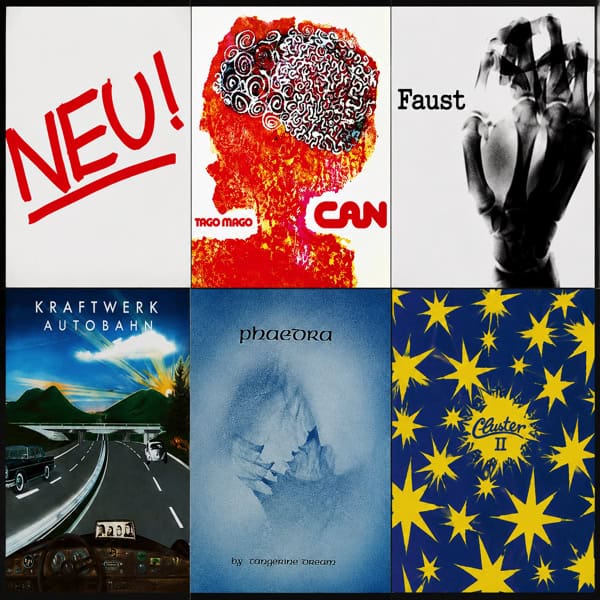
The term Krautrock came to describe a remarkably diverse collection of experimental groups that emerged in West Germany during the late 1960s and 1970s. It was never a single musical style, and many of the musicians associated with the label had little in common beyond geography, experimentation and a determination to find alternatives to established rock conventions.
Some artists explored electronics and repetition; others pursued improvisation, tape manipulation, psychedelic music, minimalism or extended instrumental forms. The differences between Kraftwerk, NEU!, Can, Faust and Tangerine Dream are therefore as important as the qualities that caused journalists to place them beneath the same convenient label.
A new musical identity in West Germany
A younger generation of West German musicians was developing in a country still confronting the cultural consequences of the Second World War. Rather than simply reproduce British beat music or American blues-based rock, many searched for forms that could express a different contemporary identity.
Technology, repetition, improvisation and the studio itself became tools for creating music that could sound detached from conventional rock history.
This search for an independent European musical language would later resonate strongly with Bowie as he reconsidered his own relationship with American music and culture.
NEU! – a crucial Bowie discovery
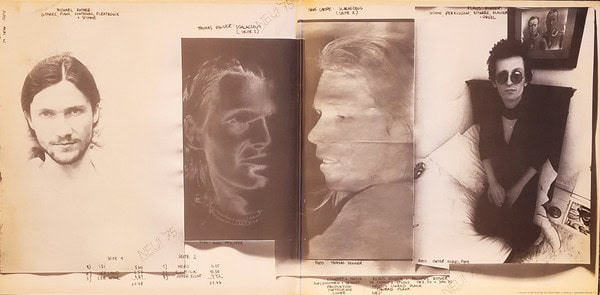
Among the German groups Bowie admired, NEU! occupied a particularly important position.
The duo was formed by Michael Rother and Klaus Dinger after their involvement with an early incarnation of Kraftwerk. Working with producer Conny Plank, they developed a radically stripped-down music built from repetition, texture, movement and contrasting approaches to sound.
Bowie later described NEU! in affectionate contrast to Kraftwerk, emphasising the group’s more unruly and passionate character.
Bowie discovers NEU! 2

Bowie’s interest in NEU! predates his permanent move to Berlin. He later recalled buying NEU! 2 during a brief visit to Berlin around 1975.
The discovery became part of a much wider change in his listening habits. Bowie was increasingly attracted to contemporary European music that offered alternatives to the musical environment surrounding him in the United States.
His growing interest in NEU! therefore belongs to the transitional period that preceded Low rather than being something that began only after Bowie settled in Berlin.
Motorik – movement without conventional swing
One of the sounds most closely associated with NEU! is the relentless rhythmic approach developed by drummer Klaus Dinger, later widely described as motorik.
The beat creates continuous forward motion through a steady pulse rather than the conventional swing of blues-derived rock. On recordings such as Hallogallo, repetition becomes a source of momentum rather than limitation.
It is important, however, not to treat motorik as the defining rhythm of all Krautrock. The term covers music made by artists with dramatically different rhythmic and compositional approaches.
Station to Station – the transition had already begun
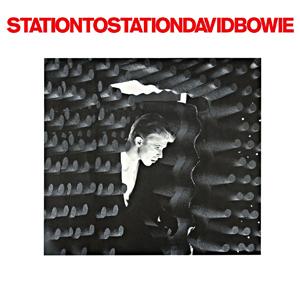
Bowie’s engagement with German experimental music was already feeding his imagination before Low.
Station to Station, recorded in Los Angeles in 1975 and released in January 1976, occupies a crucial position between Bowie’s American soul period and the experimental work that followed.
Bowie later identified the title track as a direct predecessor to the musical direction of Low. The transition towards his European experimental period was therefore already underway before he established himself in Berlin.
Bowie, Brian Eno and the Düsseldorf sound
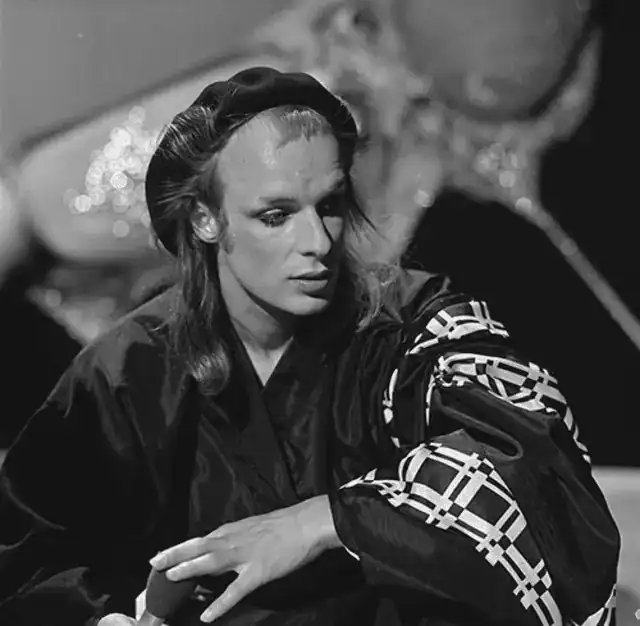
Bowie’s relationship with Brian Eno became central to the music that followed. Their exchange of musical ideas included Bowie’s enthusiasm for records emerging from Düsseldorf and the surrounding German experimental scene.
Bowie later recalled introducing Eno to what he called the Düsseldorf sound, including music connected with producer Conny Plank. Eno responded enthusiastically and would later work directly with musicians from that environment.
These records formed part of the shared musical vocabulary surrounding Bowie and Eno during this crucial period.
David Bowie on the Düsseldorf sound
“They sort of became our soundtrack for the year 1976.”
Michael Rother and Low
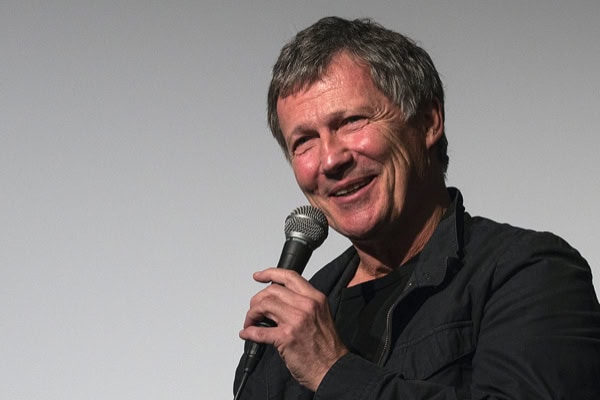
The NEU! connection nearly became much more direct.
Bowie later revealed that Michael Rother was his first choice when he was considering a guitarist for Low.
Bowie telephoned Rother from France during the first days of recording. According to Bowie’s recollection, Rother politely declined the invitation, and the proposed involvement went no further.
The episode is significant because it moves the NEU! connection beyond general influence: Bowie actively considered bringing one of the group’s principal musicians into the making of Low.
No collaboration with NEU! or Cluster
Bowie’s enthusiasm for German experimental music has generated numerous stories about meetings and proposed collaborations. Bowie himself provided a much more restrained account.
When asked about meetings or planned collaborations with Cluster, NEU! or Tangerine Dream, Bowie said there had been none. He explained that he had no particular inclination to travel to Düsseldorf during this period because he was intensely focused on his own studio work.
There was, however, an important distinction in the case of Tangerine Dream: Bowie confirmed that he knew Edgar Froese and Froese’s wife socially. This was a personal acquaintance rather than a recording collaboration.
The distinction is important: Bowie could be deeply interested in musicians and their work without necessarily recording or collaborating with them.
Edgar Froese and Tangerine Dream
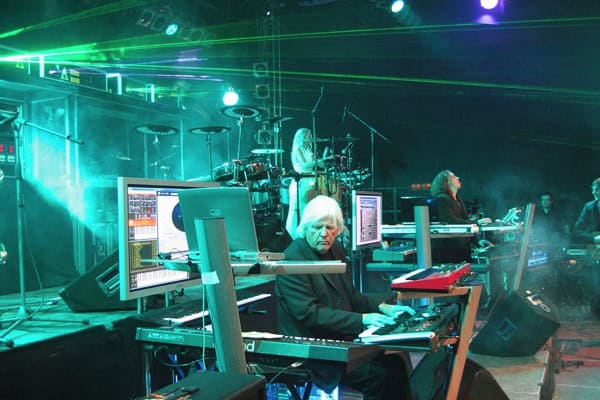
Bowie’s relationship with Tangerine Dream was therefore different from his relationship with many other musicians associated with the German experimental scene.
He confirmed that he knew the group’s founder Edgar Froese and Froese’s wife socially. Tangerine Dream represented another branch of West German experimental music, developing extended electronic compositions and atmospheric sound worlds that differed considerably from both Kraftwerk and NEU!.
Their presence in Bowie’s listening world demonstrates again why the broad term Krautrock should not be mistaken for a single musical formula.
Can, Faust and the wider landscape
NEU! and Kraftwerk belonged to a much broader landscape of experimental music emerging from West Germany. Groups such as Can and Faust developed very different approaches to improvisation, editing, repetition and studio experimentation.
Their presence helps explain why the convenient label Krautrock should never be mistaken for a single musical style. The West German experimental scene contained musicians whose methods and ambitions could differ dramatically.
For Bowie’s story, the strongest documented connections remain his enthusiasm for NEU! and Kraftwerk, his exchanges with Brian Eno, his proposed involvement of Michael Rother on Low, and his social acquaintance with Edgar Froese.
Low – influence transformed
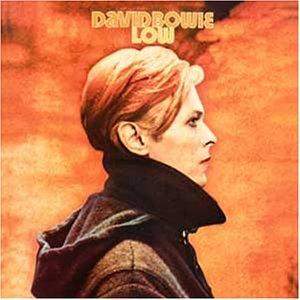
Low was recorded principally at the Château d’Hérouville in France and Hansa Studios in West Berlin in 1976, before being released in January 1977. The album is frequently associated with Bowie’s engagement with German experimental music, but its sound came from a much broader combination of influences and personalities.
Dennis Davis, George Murray and Carlos Alomar supplied a powerful human rhythm section. Brian Eno contributed electronic and conceptual ideas, while producer Tony Visconti used studio technology such as the Eventide Harmonizer to reshape the sound of the recordings.
The result was not Bowie’s version of Krautrock. It was a hybrid in which German experimental ideas interacted with rhythm and blues, electronic treatments, improvisation and Bowie’s own compositional instincts.
Berlin – not the beginning of the story
Bowie’s years in West Berlin became so closely associated with his experimental transformation that they can obscure what came before.
By the time Bowie was established in Berlin, he had already listened extensively to Kraftwerk, discovered NEU!, moved towards more experimental structures on Station to Station and exchanged German records and ideas with Brian Eno.
Berlin provided an important environment for the next stage of that development, but it did not create Bowie’s interest in German experimental music from nothing.
Lodger and the influence beyond Berlin
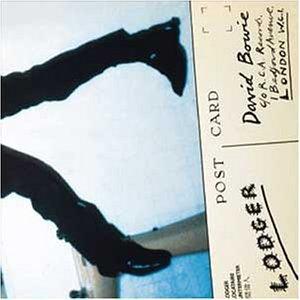
Bowie’s engagement with ideas associated with German experimental music did not end with Low and “Heroes“.
On Lodger, released in 1979, those ideas continued to appear within a much broader and increasingly international musical vocabulary. The album moved beyond the atmosphere of its predecessors while retaining Bowie’s interest in unusual structures, repetition and experimental studio methods.
Red Sails provides one particularly clear example. Bowie’s official biography describes the track in relation to the hypnotic rhythmic pulse associated with Krautrock, while the music itself transforms that momentum within Bowie’s own distinctive framework.
The example demonstrates that Bowie’s engagement with German experimental music was not confined to a brief moment in Berlin. Its possibilities continued to be absorbed and transformed as his music moved in new directions.
Influence without imitation
The most important distinction in Bowie’s relationship with Krautrock is the difference between influence and imitation.
Bowie admired the freedom with which German musicians rejected established formulas, but his own recordings remained rooted in a very different combination of influences. Rhythm and blues, soul, electronic music, avant-garde composition, visual art, literature and spontaneous studio experimentation all continued to shape his work.
The German scene offered Bowie possibilities rather than instructions.
Why Krautrock mattered to David Bowie
Krautrock mattered to Bowie because it demonstrated that contemporary music did not have to remain tied to established Anglo-American rock traditions.
Kraftwerk offered one vision of European modernism. NEU! provided something more passionate and unruly. Tangerine Dream explored extended electronic environments, while Can and Faust represented other strands of West German experimentation.
Bowie absorbed ideas from this extraordinary musical landscape while maintaining his own identity. The result was not a German imitation but one of the most important periods of transformation in his career.
Krautrock‘s greatest contribution to Bowie’s development was therefore not a particular rhythm or electronic sound, but the demonstration that rock music could abandon familiar rules and invent an entirely different future.
Article origin
This article was researched and compiled for the David Bowie Collaborations & Creative Circle Archive at DavidBowieWorld.com, documenting David Bowie’s engagement with Krautrock, NEU!, the Düsseldorf sound and the wider West German experimental music scene.
© DavidBowieWorld.com — David Bowie Collaborations & Creative Circle Archive.
