
Marianne Faithfull – Guest Performer on David Bowie’s 1980 Floor Show
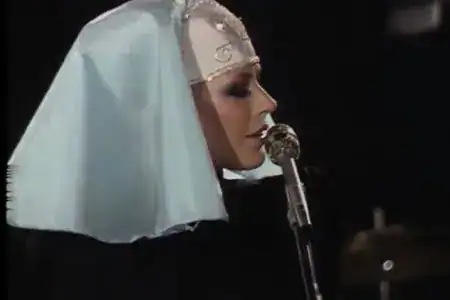
Marianne Faithfull occupies a distinctive place in David Bowie’s performance history. In October 1973 she appeared as one of the guest artists in Bowie’s extraordinary television production The 1980 Floor Show, filmed over three days at the legendary Marquee Club in London’s Wardour Street.
Faithfull was not simply brought onstage for a brief celebrity cameo. She performed As Tears Go By, the song that had launched her recording career in 1964, and Noël Coward’s 20th Century Blues before joining Bowie for an unforgettable interpretation of I Got You Babe.
The duet has become one of the most recognisable surviving images of Bowie’s late Ziggy Stardust period. Bowie appeared in his dramatic red costume while Faithfull wore an extraordinary nun’s habit, turning the familiar Sonny & Cher love song into a deliberately theatrical piece of glam performance.
Yet Faithfull’s significance within the production goes much deeper than the costumes. She and Bowie represented two different histories of British popular culture. Faithfull had become famous during the first great explosion of Swinging London in the mid-1960s; Bowie had spent those same years struggling for recognition before becoming one of the defining stars of the following decade.
Their meeting at the Marquee therefore brought together two artists at very different crossroads. Bowie had publicly retired Ziggy Stardust only months earlier and was already moving towards a new creative phase. Faithfull, meanwhile, was living through a difficult period far removed from the carefully constructed image that had accompanied her teenage fame.
- Name: Marianne Faithfull
- Born: 29 December 1946, London, England
- Died: 30 January 2025, London, England
- Occupation: Singer, songwriter and actress
- Bowie connection: The 1980 Floor Show
- Recorded: October 1973, over three days
- Venue: The Marquee Club, Wardour Street, London
- Television programme: NBC’s The Midnight Special
- US broadcast: 16 November 1973
- Solo performances: As Tears Go By and 20th Century Blues
- Duet with David Bowie: I Got You Babe
- Bowie era: Late Ziggy Stardust / Pin Ups
- Historical significance: Bowie’s final performance as the Ziggy Stardust persona with the Spiders from Mars
Marianne Faithfull before David Bowie
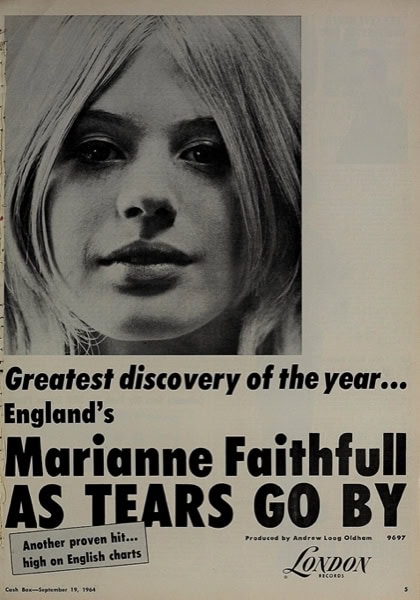
Marianne Faithfull was already an established figure in British popular culture long before she shared a television stage with David Bowie. Born in London on 29 December 1946, Faithfull grew up partly in Reading and entered the music business while still in her teens.
Her breakthrough came in 1964. At a London party she was noticed by Rolling Stones manager Andrew Loog Oldham, who became an important figure in launching her recording career. Her first single, As Tears Go By, had been written by Mick Jagger, Keith Richards and Oldham and immediately established Faithfull as one of the most recognisable young voices in British pop.
The song helped create a public image around Faithfull that emphasised youth, delicacy and apparent innocence. That image proved enormously successful commercially but would later become something she repeatedly had to escape.
Faithfull’s early career was broader than a single hit. She recorded both pop and folk material, releasing albums that demonstrated an interest in traditional music as well as contemporary songwriting. Her voice at this stage was light and clear, very different from the deep, weathered instrument that would eventually define her later work.
At the same time, Faithfull began developing an acting career. She worked on stage and in film, including appearances in productions of Chekhov and Shakespeare and in movies such as The Girl on a Motorcycle. From the beginning, therefore, she moved between popular music, performance and theatre rather than remaining simply a chart singer.
Faithfull and Swinging London
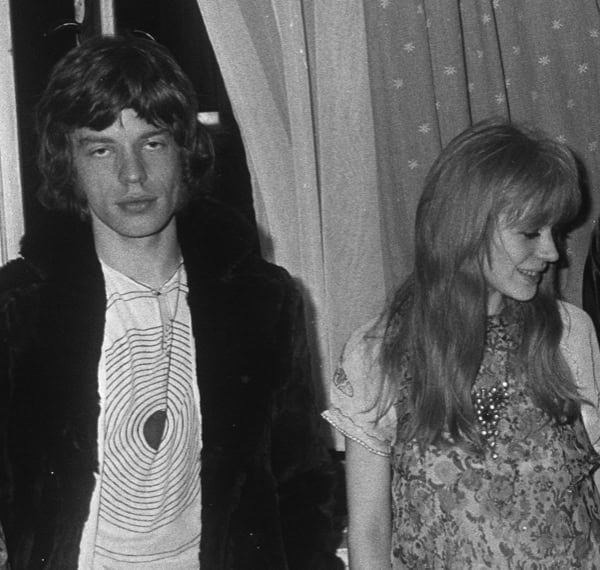
During the second half of the 1960s Faithfull became closely associated with the world usually described as Swinging London. Her relationship with Mick Jagger ensured constant press attention, while her friendships and cultural connections placed her among musicians, actors, writers, artists and filmmakers who were redefining British youth culture.
The press frequently treated Faithfull less as an artist than as a symbol. Her appearance, relationships and private life were often given more attention than her work. That imbalance would remain a recurring theme in later accounts of her career.
Her position in this world is relevant to the later Bowie connection because Bowie spent much of the same decade trying to enter precisely the kind of cultural environment Faithfull already inhabited.
While she was appearing in newspapers, films and major concert halls, Bowie was moving through The King Bees, The Manish Boys, the Lower Third, The Buzz and several unsuccessful solo recordings. His reputation among fellow musicians and people inside the London music business grew faster than his commercial success.
By the time the two finally worked together, therefore, they had already experienced very different versions of fame.
Bowie and Faithfull before 1973
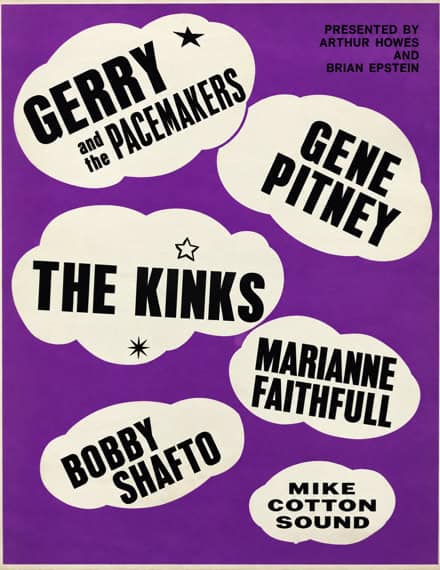
Bowie and Faithfull had occupied overlapping areas of the British music world long before The 1980 Floor Show, although their careers developed at very different speeds.
Faithfull later remembered that Bowie, still performing under the name Davy Jones, appeared at the bottom of the bill on her first tour. At the time Faithfull was already a recognised recording star, while Bowie was still searching for the breakthrough that would not arrive until years later.
“On my first tour he was at the bottom of the bill, as Davy Jones.”
— Marianne Faithfull, 2016The contrast is historically striking. Faithfull had achieved national fame while Bowie was still one of many young British performers attempting to establish himself. By the time they shared the stage again in 1973, their positions had changed dramatically.
The End of the 1960s
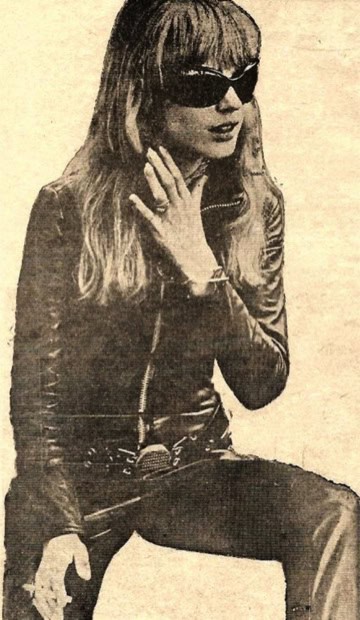
By the end of the decade Faithfull’s personal and professional circumstances had changed dramatically.
The carefully controlled teenage-pop image was disappearing, while difficulties involving addiction, intense media scrutiny and personal relationships affected both her health and her career.
Her recording activity became less consistent and her position within the mainstream music industry weakened. The contrast with the polished young performer who had entered the charts in 1964 was increasingly stark.
This period should not simply be described as a fall from fame. Faithfull’s later artistic identity emerged partly from the experiences of these years. When she eventually returned to major recording work, the difference between the youthful Faithfull and the mature interpreter would become one of the defining elements of her career.
That transformation was still incomplete when she appeared with Bowie in 1973.
David Bowie in 1973
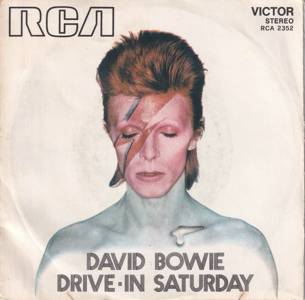
Bowie’s position could hardly have been more different. The commercial and cultural breakthrough that had eluded him during the 1960s had finally arrived.
The Rise and Fall of Ziggy Stardust and the Spiders from Mars had transformed Bowie into a major rock star. During 1972 and 1973 the Ziggy persona became one of the most recognisable images in British music: red hair, elaborate costumes, theatrical gestures and deliberate ambiguity.
The following album, Aladdin Sane, expanded his success further. Touring became increasingly intense and the boundary between Bowie and the characters he created appeared, at least from the outside, increasingly difficult to define.
On 3 July 1973, at London’s Hammersmith Odeon, Bowie famously announced that the concert would be the final performance of the tour and the last appearance by the Spiders from Mars.
Many members of the audience interpreted the statement as Bowie announcing his retirement from music. In reality, he was retiring a particular band and stage identity.
Only a few months later, The 1980 Floor Show would provide an unusual final television chapter to the Ziggy Stardust era.
Pin Ups and a Transitional Bowie
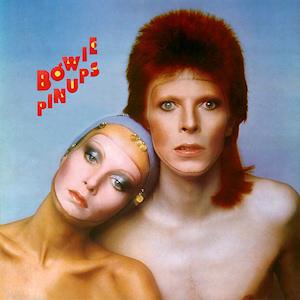
By October 1973 Bowie was promoting Pin Ups, an album made up entirely of songs associated with the British music scene that had influenced him during the 1960s.
The record was in many ways a look backwards. Bowie revisited songs by artists including The Who, The Kinks, Pink Floyd, The Yardbirds, Them, The Pretty Things and The Merseys.
Yet at exactly the same time he was moving forward. Material related to George Orwell‘s Nineteen Eighty-Four was already entering his work, pointing towards the dystopian themes that would eventually feed into Diamond Dogs.
This mixture of past and future helps explain the unusual atmosphere of The 1980 Floor Show. Bowie was celebrating the musical world from which he had emerged while simultaneously dismantling the identity that had finally made him famous.
The Marquee Club
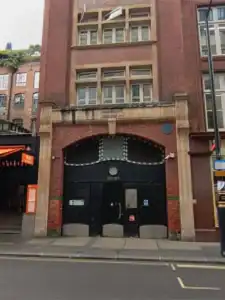
The choice of venue was deeply appropriate.
The 1980 Floor Show was filmed at the Marquee Club in Wardour Street, Soho, one of the most important venues in the history of British rock music.
For Bowie the Marquee also carried personal history. He had performed there during his pre-fame years, when he was one of many young musicians moving through the London club circuit.
By 1973 he returned not as an unknown support act but as an international star with enough creative authority to transform the club into the setting for an elaborate American television production.
The contrast must have been considerable. The club remained relatively small, yet Bowie’s ambitions for the programme were theatrical and cinematic.
The 1980 Floor Show
David Bowie – The 1980 Floor Show, recorded at the Marquee Club in London in October 1973 for NBC’s The Midnight Special.
The 1980 Floor Show was created for NBC’s American late-night music programme The Midnight Special.
The title has sometimes caused confusion. It was not recorded in 1980, and it had nothing to do with Bowie’s 1974 Diamond Dogs Tour. The production belongs firmly to October 1973.
Filming took place over three days at the Marquee Club. The audience was made up largely of members of Bowie’s fan club, creating an atmosphere very different from a normal television studio audience.
The production combined live music, television staging, cabaret, costume, choreography and theatrical spectacle. Rather than simply filming a Bowie concert, it created a self-contained performance world.
The invited guests included The Troggs, the flamenco-rock group Carmen, and Marianne Faithfull.
Their presence also connected Bowie’s contemporary success with several different strands of British music culture.
Why “1980”?
David Bowie – 1984/Dodo, performed during The 1980 Floor Show in 1973.
The title deliberately pointed towards Bowie’s developing interest in George Orwell.
During this period Bowie was working on music related to Nineteen Eighty-Four. The programme featured 1984/Dodo, a performance that provided audiences with an early glimpse of the darker world he was beginning to construct.
The proposed Orwell project would not ultimately develop in the form Bowie originally intended, but many of its themes survived within Diamond Dogs.
The title The 1980 Floor Show therefore captured a transitional Bowie: still visually connected to Ziggy Stardust, looking backwards through Pin Ups, and simultaneously beginning to enter the dystopian imagination of his next phase.
Marianne Faithfull‘s Role
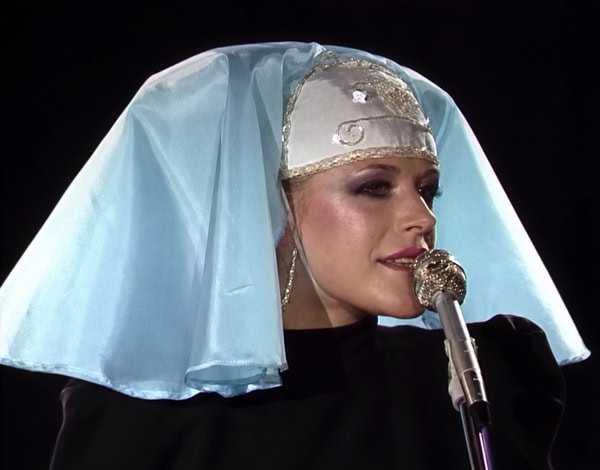
Faithfull’s contribution was more substantial than the famous closing duet sometimes suggests.
She appeared as a performer in her own right before joining Bowie. Her two solo numbers were As Tears Go By and 20th Century Blues.
The combination was revealing. One song returned directly to Faithfull’s own beginning as a teenage pop star; the other came from the theatrical world of Noël Coward.
Together they demonstrated a broader musical identity than the narrow 1960s pop image with which Faithfull was still commonly associated.
Her participation also gave The 1980 Floor Show another historical layer. Bowie was revisiting the music and imagery of the 1960s through Pin Ups, while Faithfull was herself a living representative of that era.
As Tears Go By
Marianne Faithfull – As Tears Go By, performed during The 1980 Floor Show at the Marquee Club, London, 1973.
As Tears Go By had launched Faithfull’s recording career in 1964. Nine years later she returned to the song in a radically different personal context.
For contemporary viewers who remembered her teenage debut, the performance carried an unavoidable sense of time passing. The young voice associated with the original single belonged to another period.
This contrast would become even more striking later in Faithfull’s career. She repeatedly revisited older songs with a voice transformed by age and experience, making the passage of time part of the performance.
At the Marquee, that process was already beginning to become visible.
20th Century Blues
Marianne Faithfull – 20th Century Blues, performed during The 1980 Floor Show at the Marquee Club, London, 1973.
Faithfull’s second solo performance was Noël Coward’s 20th Century Blues.
The choice was significant because it placed her outside the conventional boundaries of rock music and demonstrated an interest in theatrical song, cabaret and older popular traditions.
Those interests would become increasingly important in later decades. Faithfull eventually built a reputation as one of the most distinctive interpreters of twentieth-century song, including work associated with Bertolt Brecht and Kurt Weill.
In that sense, the 1973 performance foreshadowed a direction that would later become central to her artistic identity.
I Got You Babe
David Bowie & Marianne Faithfull – I Got You Babe, performed during The 1980 Floor Show at the Marquee Club, London, 1973.
The most famous Bowie–Faithfull moment from the production was their joint rendition of I Got You Babe.
The song had been a major hit for Sonny & Cher in 1965. By choosing such a familiar romantic duet, Bowie and Faithfull began with material that audiences immediately recognised.
They then transformed it through appearance and performance.
The result was not an attempt to imitate Sonny & Cher. Instead, Bowie and Faithfull turned a conventional pop duet into something deliberately strange, theatrical and humorous.
Their contrasting voices were part of the appeal. Bowie was still using many of the vocal and theatrical characteristics associated with his glam period, while Faithfull brought a very different emotional presence.
The Nun and the Angel of Death
The costumes ensured that the performance could never be mistaken for an ordinary television duet.
Bowie appeared in an extraordinary red outfit that he later referred to as his Angel of Death costume. Faithfull wore a nun’s habit whose apparently conventional front concealed a dramatically open back.
The combination played with religious imagery, sexuality and theatrical exaggeration.
It was also ideally suited to Bowie’s approach during this period. Costume did not merely decorate the music; it changed the meaning of the performance.
Faithfull’s costume carried an additional irony because ideas of innocence and scandal had surrounded her public image for years.
“I dressed Marianne in a nun’s habit with the back cut out.”
— David Bowie, recalling The 1980 Floor ShowFaithfull Remembers the Performance
Marianne Faithfull recalls The 1980 Floor Show and her appearance with David Bowie in October 1973.
Faithfull later looked back on the production with characteristic directness. She remembered her solo performances and the duet without attempting to inflate the event into a long Bowie collaboration.
“I did a couple of songs on my own and I got to duet with David.”
— Marianne FaithfullHer recollection is valuable because it places the duet in its proper context. She was not simply Bowie’s partner for one number; she had an independent role in the programme.
The Final Ziggy Stardust Performance
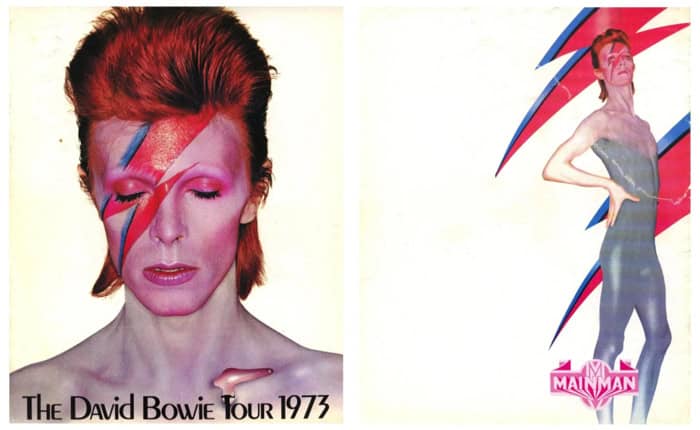
The 1980 Floor Show occupies an important position in Bowie’s chronology because his official archive identifies it as the last performance of the Ziggy Stardust persona.
The Spiders from Mars had effectively ended as a touring unit in July, although Mick Ronson and Trevor Bolder remained involved at the Marquee. Woody Woodmansey was no longer part of the line-up.
Bowie’s appearance therefore retained elements of Ziggy without simply recreating the earlier tour.
The result feels transitional because that is exactly what it was. The visual language of Ziggy remained visible, but Bowie was already moving elsewhere.
Faithfull’s appearance consequently became part of the final public chapter of Bowie’s most famous early persona.
The Bowie Performances
The material recorded for The 1980 Floor Show drew heavily on Bowie’s recent and current work.
Songs broadcast included 1984/Dodo, Sorrow, Everything’s Alright, Space Oddity, I Can’t Explain, Time and The Jean Genie.
Rock ‘N’ Roll Suicide was also performed during the production but was not included in the original broadcast.
The mixture was unusual: early Bowie, Ziggy-era material, covers from Pin Ups and new dystopian music all occupied the same programme.
That mixture is one reason the show remains so fascinating. It documents several versions of Bowie existing simultaneously.
The Other Guests
The Troggs – Stange Movies, performed during The 1980 Floor Show at the Marquee Club, London, 1973.
Faithfull was one element in a wider guest structure.
The Troggs performed Wild Thing, reconnecting Bowie with another part of the British 1960s pop landscape. Carmen brought a radically different sound, combining rock instrumentation with flamenco influences.
Their appearances helped make the programme feel more like a deliberately curated floor show than a standard Bowie television concert.
Faithfull nevertheless remains the guest most closely associated with the programme because her final duet placed her directly alongside Bowie in one of the production’s most theatrical images.
16 November 1973 – The American Broadcast
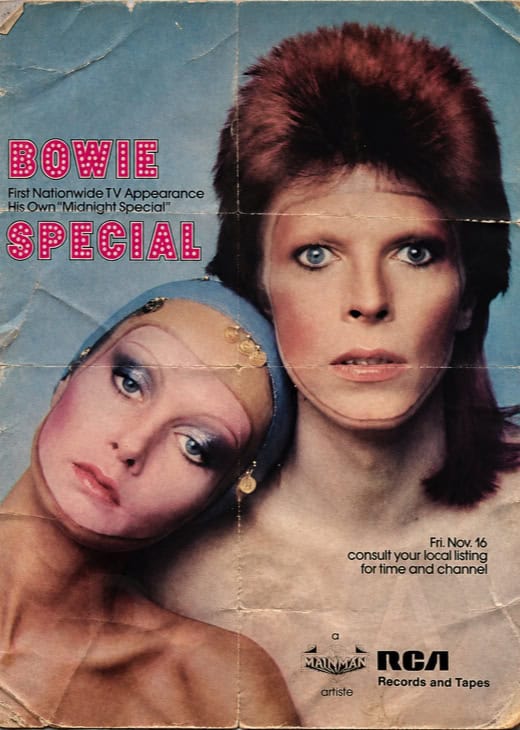
The 1980 Floor Show was broadcast in the United States on 16 November 1973 as part of NBC’s The Midnight Special.
The programme functioned partly as promotion for Pin Ups and partly as an attempt to strengthen Bowie’s profile in the American market.
For American viewers, it offered an unusually concentrated version of Bowie’s theatrical world.
Faithfull’s solo performances of As Tears Go By and 20th Century Blues were included, as was her duet with Bowie on I Got You Babe.
The complete production has never received a full official commercial release, which helped give The 1980 Floor Show an almost legendary reputation among collectors.
After the 1980 Floor Show
The appearance did not develop into an immediate continuing Bowie–Faithfull partnership.
There was no Bowie-produced Marianne Faithfull album in 1973, no joint tour and no series of studio recordings.
Their documented musical collaboration therefore remains unusually concentrated around the Marquee production.
That brevity is part of what makes it memorable. It represents a genuine intersection rather than a long professional partnership.
Faithfull’s Difficult 1970s
Marianne Faithfull – The Ballad of Lucy Jordan (Top Pop Dutch TV) .
Faithfull’s career during the first half of the 1970s remained difficult. The problems that had disrupted her life at the end of the previous decade did not disappear quickly.
Her public profile diminished sharply from the level she had known during the 1960s.
Yet she continued to perform and record intermittently, gradually working towards a return.
The fact that Bowie invited her into a major television project during this period is therefore significant. She was not being selected simply because she was currently dominating the charts. Her value lay in her identity, voice, history and presence.
Dreamin’ My Dreams
Title-track from Marianne Faithfull‘s 1975 album Dreaming My Dreams.
Faithfull began rebuilding her recording career more substantially in the middle of the decade.
The country-influenced album Dreamin’ My Dreams, released in 1976, did not initially restore her British chart status but became a major success in Ireland.
Its success helped return Faithfull to regular live performance.
The album represents an important bridge between the disrupted early 1970s and the dramatic reinvention that followed.
Broken English – A New Marianne Faithfull
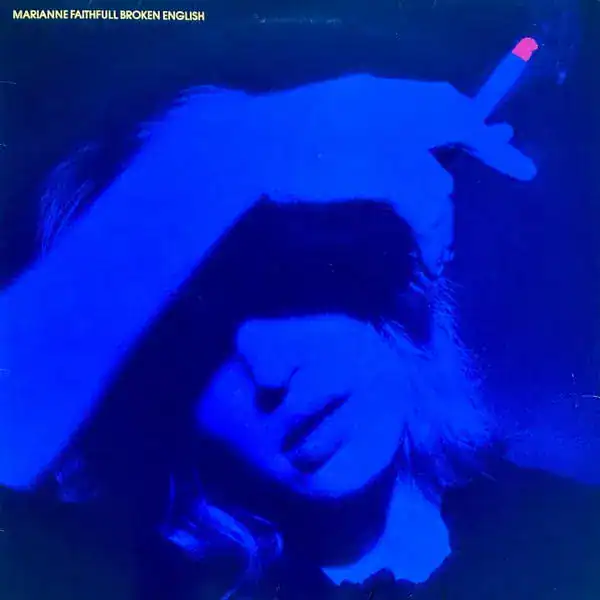
Marianne Faithfull – Broken English.
Faithfull’s decisive artistic return came with Broken English in 1979.
The album destroyed any remaining expectation that she should continue playing the role of the delicate 1960s pop singer.
Her voice had changed radically. Deeper, rougher and far more damaged sounding, it became one of the most distinctive voices in contemporary music.
The material was equally uncompromising. Songs such as Broken English, Guilt, The Ballad of Lucy Jordan and Why D’Ya Do It? presented politics, sexuality, anger, disappointment and survival with a directness that would have been unimaginable in her earliest pop work.
The album was both critically and commercially successful and gave Faithfull an entirely new artistic identity.
Faithfull and the Art of Reinvention
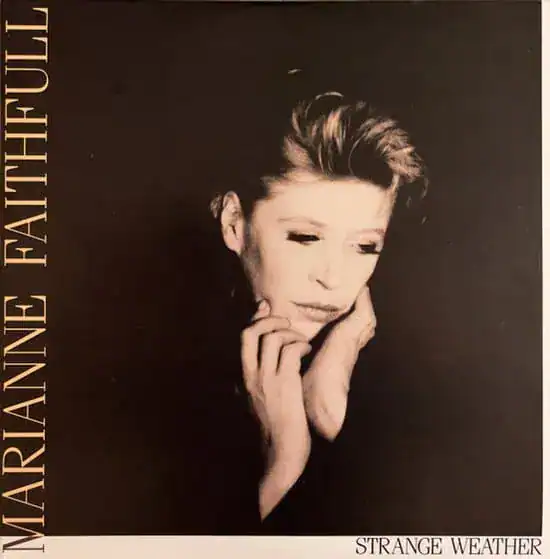
A deeper parallel with Bowie becomes visible when their careers are viewed over the long term.
Both artists were confronted with public identities that threatened to define them permanently.
For Bowie, the danger was Ziggy Stardust. The character had become so successful that Bowie dismantled it rather than allowing it to determine everything that followed.
For Faithfull, the trap was the image of the beautiful, fragile young woman of the 1960s.
Her later career became powerful precisely because she stopped attempting to preserve that image. The dramatic transformation heard on Broken English turned experience, age and damage into artistic strength rather than something to conceal.
Both careers therefore demonstrate that reinvention could be more than a change of image. It could become a means of artistic survival.
Faithfull on Working with Bowie
Faithfull later suggested that their collaboration might have developed further.
Looking back in 2013, she admitted that she regretted not pursuing one particular possibility.
“I should have let him produce a record for me.”
— Marianne Faithfull, 2013The statement should not be interpreted as evidence of an unreleased Bowie-produced Faithfull album. No such completed project is documented.
Instead, it reveals an unrealised possibility: Bowie had apparently wanted to work with Faithfull more extensively, and she later wondered what might have happened had she accepted.
Faithfull Remembers Bowie in 2016
Following David Bowie’s death in January 2016, Marianne Faithfull looked back on their friendship and their appearance together on The 1980 Floor Show.
“We had great fun (doing the 1980 Floor Show TV special back in 1973).”
— Marianne Faithfull, January 2016Her memories of Bowie were not limited to their television appearance. Faithfull described him as a friend and emphasised that their connection went back to the years before Bowie became internationally famous.
Faithfull also expressed her admiration for Bowie’s artistic achievement. Her tribute placed their brief collaboration within the much longer personal and cultural history they had shared.
“you are one of the greatest Artists of our time, or at any rate my time; Go well”
— Marianne Faithfull, 12 January 2016Marianne Faithfull‘s Later Career
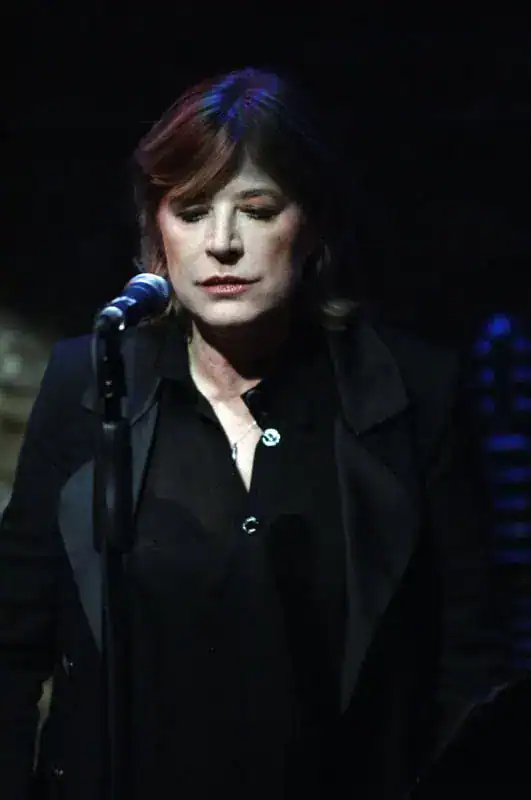
After Broken English, Faithfull continued recording with an extraordinary range of collaborators and songwriters.
Albums including Dangerous Acquaintances, A Child’s Adventure, Strange Weather, Blazing Away, A Secret Life, Vagabond Ways, Kissin Time, Before the Poison, Easy Come, Easy Go, Horses and High Heels, Give My Love to London and Negative Capability demonstrated a career that refused to settle into one final form.
Her collaborators came from several generations of popular and experimental music, reinforcing her position as a bridge between the counterculture of the 1960s and later forms of alternative music.
She also continued acting and exploring theatrical material, proving that the mixture of music, literature and performance visible even in her early career had never disappeared.
She Walks in Beauty
Marianne Faithfull with Warren Ellis – She Walks in Beauty.
In 2021 Faithfull released She Walks in Beauty, created with Warren Ellis and featuring contributions from musicians including Nick Cave and Brian Eno.
The project combined poetry with atmospheric music and fulfilled a long-held ambition to record works by the English Romantic poets.
By this point Faithfull’s voice carried more than half a century of musical history.
The contrast with the teenage voice of As Tears Go By could hardly have been greater, yet the continuity lay in her ability to make language sound completely personal.
Marianne Faithfull‘s Death
Marianne Faithfull died in London on 30 January 2025, aged 78.
Her death brought to a close a recording, acting and performing career that had stretched for approximately six decades.
The scale of the tributes that followed demonstrated how completely her reputation had moved beyond the narrow image attached to her during the 1960s.
She was remembered not only as a survivor of that period but as a distinctive artist whose later work had given her an entirely separate place in music history.
Why the Bowie–Faithfull Collaboration Matters
Faithfull’s collaboration with Bowie was brief, but duration is not the only measure of historical importance.
The meeting brought together two performers whose careers represented different stages of British popular culture.
Faithfull had entered fame near the beginning of the great British 1960s pop explosion. Bowie had spent that same period outside the centre of success, absorbing music, fashion, theatre, mime and performance techniques before finally creating a form of stardom that belonged unmistakably to the 1970s.
By the time they shared the Marquee stage, those two cultural histories had effectively changed places. Bowie was now the dominant star, while Faithfull was moving through a period of uncertainty before her later reinvention.
That reversal gives their appearance together an importance that a simple description of I Got You Babe cannot capture.
Marianne Faithfull in Bowie’s Creative Universe
Marianne Faithfull was not a Bowie collaborator in the conventional sense of a long-term band member, producer, instrumentalist or recurring studio partner.
Her place in Bowie’s history is more specific.
She entered his world at one of the most transitional moments of his career.
Ziggy Stardust had been publicly retired, but the visual identity had not completely disappeared. Pin Ups looked back towards the British music that had shaped Bowie in the 1960s. The Orwell material looked forward towards Diamond Dogs.
Faithfull belonged naturally within that collision of past and future because she carried her own history of the British 1960s onto the stage.
Her two solo performances gave her an independent presence before the closing duet united the two artists in one of Bowie’s strangest and most memorable television images.
Legacy
Marianne Faithfull ultimately became one of the most remarkable reinvention stories in British popular music.
Her early fame could easily have become the only story told about her. Instead, her later career produced work that was often more artistically ambitious and emotionally powerful than the recordings that had first made her famous.
Within Bowie’s story, her appearance at the Marquee remains unique.
She arrived not as a member of his band or permanent creative circle, but as another survivor of the London music culture from which Bowie himself had emerged.
Their paths crossed briefly and memorably in October 1973.
The resulting images have become part of the visual mythology of Bowie’s glam period, while the history behind those images reveals a richer meeting between two artists whose careers were both defined by their ability to move beyond the identities that first made them famous.
Official Website & Further Information
More information about Marianne Faithfull‘s life, recordings, acting career and later work can be found on her official website: MarianneFaithfull.com .
David Bowie’s official archive contains further documentation relating to The 1980 Floor Show, its Marquee Club setting, its American television broadcast and its place in Bowie’s 1973 chronology: DavidBowie.com .
DavidBowieWorld.com also maintains a dedicated archive page about The Midnight Special / 1980 Floor Show , including further material relating to the performances, television production and surviving recordings.
Article Origin & Editorial Note
This DavidBowieWorld.com archive page documents the creative connection between Marianne Faithfull and David Bowie, with particular emphasis on Faithfull’s participation in The 1980 Floor Show at London’s Marquee Club in October 1973.
Particular care has been taken to distinguish the documented 1973 production from Bowie’s later Diamond Dogs Tour. The 1980 Floor Show was recorded in London in October 1973 for NBC’s The Midnight Special; it was not recorded in Los Angeles in 1974.
Faithfull’s documented contributions to the production included As Tears Go By, 20th Century Blues and the duet I Got You Babe with Bowie.
The page distinguishes between their documented collaboration and later possibilities discussed by Faithfull. Her statement that she should have allowed Bowie to produce a record for her is treated as an unrealised possibility, not as evidence of an undiscovered Bowie production.
Quotations are restricted to published recollections attributed to Faithfull or Bowie. Interpretative passages are kept separate from documented events so that later mythology is not presented as historical fact.
© DavidBowieWorld.com — David Bowie Collaborations & Creative Circle Archive.
