
Chuck Hammer & David Bowie | Guitar Synth Pioneer on Ashes to Ashes

Photo: Deeperknowledge22 / Wikimedia Commons / CC BY-SA 4.0 (editorial use)
Chuck Hammer is an American guitarist, composer and soundtrack creator best known in the David Bowie universe for his groundbreaking guitar synthesizer work on Scary Monsters (and Super Creeps) (1980).
Although his contribution to Bowie’s catalogue was limited to only a handful of tracks, Hammer helped introduce a completely new sonic language into Bowie’s music. His layered guitar-synth textures became a defining element of Ashes to Ashes and Teenage Wildlife, two of the most celebrated recordings from the Scary Monsters era.
- Name: Chuck Hammer
- Role: Guitarist, guitar synthesist, composer
- Bowie connection: Guitar-synth performer on Scary Monsters
- Key Bowie tracks: Ashes to Ashes, Teenage Wildlife
- Known for: Guitarchitecture
- Technology: Roland GR-500, Eventide Harmonizer, analogue tape delays
- Other association: Lou Reed
Early career and musical vision
Chuck Hammer emerged from the New York music scene during the 1970s, developing an approach to the guitar that was radically different from traditional rock playing. Rather than focusing on riffs and solos, he became interested in texture, atmosphere and sustained sonic environments.
His experiments eventually evolved into what he called Guitarchitecture — a compositional approach that treated guitar layers as architectural structures rather than conventional performances. This concept would become the foundation of his later work with both Lou Reed and David Bowie.
Touring with Lou Reed
Between 1978 and 1980, Hammer toured extensively with Lou Reed, performing material from albums such as Berlin, Street Hassle, The Bells and songs associated with The Velvet Underground.
During these performances he used the then-new Roland GR-500 guitar synthesizer, creating orchestral textures and sustained soundscapes that were unlike anything audiences were hearing from guitarists at the time.
Hammer later described these performances as the period during which Guitarchitecture truly took shape. The combination of improvisation, electronics and layered guitar textures became his musical identity.
Meeting David Bowie
Hammer first met David Bowie after a Lou Reed concert at the Hammersmith Odeon in London in October 1979. Bowie attended the show and was intrigued by Hammer’s unusual guitar-synth sounds.
After the concert, Hammer sent Bowie a cassette containing several experimental Guitarchitecture recordings. One piece, called Guitargraphy, reportedly featured descending harmonic structures that Hammer later felt may have influenced aspects of Ashes to Ashes.
Bowie responded enthusiastically. Not long afterwards, Bowie’s assistant Coco Schwab contacted Hammer and invited him to participate in sessions for Bowie’s next album.
The Scary Monsters sessions
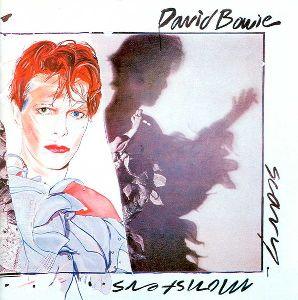
Scary Monsters (and Super Creeps) (1980)
Hammer entered the studio with David Bowie and producer Tony Visconti in March 1980 during the recording of Scary Monsters (and Super Creeps).
The sessions were highly focused and efficient. Hammer later recalled that Bowie and Visconti worked quickly, constantly shaping and processing sounds while tracks were still being recorded.
Unlike many session musicians, Hammer was not brought in to play conventional guitar parts. Instead, Bowie wanted new textures and sonic colours that could push beyond the Berlin Trilogy while remaining emotionally connected to the songs.
Ashes to Ashes
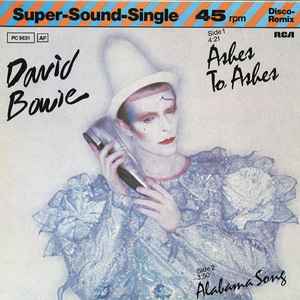
Ashes to Ashes (1980)
Hammer’s most famous Bowie contribution appears on Ashes to Ashes, one of the defining recordings of Bowie’s career.
Using a Roland GR-500 guitar synthesizer, Eventide Harmonizer and multiple analogue tape delays, Hammer layered numerous chord inversions and sustained textures across the track.
Tony Visconti subsequently processed and blended these performances into what Hammer described as an “ethereal wall of guitar.” The result became one of the song’s most distinctive sonic signatures.
Many Bowie historians regard these recordings as the earliest documented use of guitar synthesizer technology within Bowie’s catalogue.
Teenage Wildlife
Hammer also contributed guitar-synth textures to Teenage Wildlife, one of the album’s most ambitious compositions.
The track is notable because it combines Hammer’s atmospheric layers with the expressive lead guitar work of Robert Fripp. Rather than competing with Fripp’s performance, Hammer created an emotional and orchestral backdrop that expanded the scale of the song.
During some of the track’s most dramatic moments, Hammer’s harmonised guitar textures rise behind Bowie’s vocal, contributing significantly to the song’s emotional impact.
Guitarchitecture and innovation
Hammer’s work with Bowie represented one of the earliest examples of what would later become known as textural guitar layering. Rather than treating the guitar as a lead instrument, he approached it as a source of atmosphere, colour and architecture.
This approach differed from traditional rock guitar and anticipated later developments in ambient music, soundtrack composition, post-rock and modern sound design.
Hammer’s recordings on Ashes to Ashes and Teenage Wildlife are often cited as landmark examples of this style and helped establish a template for later generations of experimental guitarists.
Technology behind the sound
The Roland GR-500 guitar synthesizer was a notoriously difficult instrument to master. Unlike modern digital systems, it required real-time control and offered no preset memory.
The instrument’s unusual sustain characteristics, combined with harmonizers and analogue delays, forced Hammer to think less like a guitarist and more like a composer. This way of working became central to both Guitarchitecture and his Bowie recordings.
Beyond Bowie
Following his work with Bowie and Lou Reed, Hammer continued developing Guitarchitecture while also building a successful career as a soundtrack composer.
Over the years he has composed music for approximately 300 documentary films and has remained active as both a recording artist and experimental guitarist.
His later work continues to explore the same ideas that first attracted Bowie’s attention: texture, atmosphere, improvisation and sonic innovation.
Video
David Bowie – Ashes To Ashes
Ashes to Ashes remains the definitive example of Chuck Hammer’s contribution to David Bowie’s catalogue. The song’s floating, orchestral atmosphere owes much to the layered guitar-synth textures Hammer recorded during the Scary Monsters sessions.
More than forty years later, these recordings remain among the most influential examples of textural guitar work in popular music.
Place within Bowie’s universe
Within David Bowie’s creative universe, Chuck Hammer represents the pursuit of new sonic frontiers. Bowie consistently sought musicians capable of introducing unfamiliar sounds into his work, and Hammer was one of the most successful examples of that approach.
Although his direct contribution was limited to a small number of recordings, those recordings helped define the sound of one of Bowie’s most acclaimed albums. His work on Ashes to Ashes and Teenage Wildlife remains an essential part of the Scary Monsters legacy.
Hammer’s place in Bowie history is therefore secure: not as a long-term band member, but as the pioneering guitar-synth innovator who helped David Bowie discover one of the sounds of the future.

Leave a comment