
Peter John Hall – David Bowie’s Costume Designer and His Life in Theatre
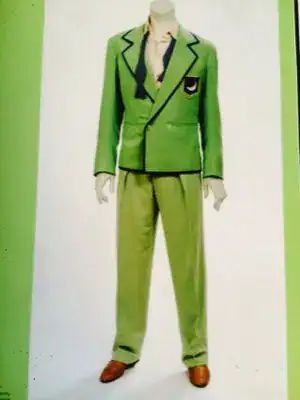
Peter John Hall, professionally credited as Peter J. Hall or Peter Hall, was a British-born costume designer whose career connected opera houses, dramatic theatre, film and rock performance. For David Bowie, he helped create the stage wardrobe of the 1983 Serious Moonlight Tour, bringing an established theatrical craft to one of the most widely recognised periods of Bowie’s career.
Hall’s professional life extended far beyond that collaboration. His work appeared at The Dallas Opera, the Metropolitan Opera, the Royal Opera House, LA Opera and other international companies. His designs served productions by directors including Franco Zeffirelli and Elijah Moshinsky, while his credits also encompassed Broadway and the film Doctor Faustus.
Understanding that wider career gives his Bowie contribution its proper context. Hall approached clothing as part of a performance: something worn by a particular person, seen within a particular setting and transformed by movement and light. The familiar image of Bowie in a tailored stage suit belonged to this practical world of theatrical design.
The costume designer should be distinguished from Sir Peter Hall, the theatre director. Peter John Hall was born in 1926 and died in 2010. His documented connection with Bowie was professional costume design.
- Full name: Peter John Hall
- Professional credits: Peter J. Hall; Peter Hall
- Born: 22 January 1926, Bristol, England
- Died: 27 May 2010, Dallas, Texas, United States
- Principal profession: Costume designer
- Other work: Scenic design and costume work for theatre, film and concert performance
- Education: West of England College of Art, Bristol
- Longstanding association: The Dallas Opera, where his design credits began with Il barbiere di Siviglia in 1962
- Metropolitan Opera debut: Costume designer for Otello, 25 March 1972
- Broadway credit: Zoot Suit, 1979
- David Bowie collaboration: Costume design for the Serious Moonlight Tour, 1983
- Archival connection: A Peter Hall suit worn by Bowie is documented by the Victoria and Albert Museum
1926: Bristol and an education in visual art
Peter John Hall was born in Bristol on 22 January 1926. His artistic training took place at the West of England College of Art, providing a foundation for a career in which drawing, colour, fabric and the human figure became closely connected. Although audiences would encounter his work on performers rather than in a gallery, its starting point belonged to the visual arts.
His early life also included military service during the Second World War. After the war, he entered professional theatre, beginning the working life that would eventually take him into major opera houses and international productions.
Costume design occupies a position between an image and a working object. A drawing can propose an outline, a combination of colours or the impression of a historical period. The completed garment must translate that proposal into something a performer can inhabit. Hall’s later career developed through this relationship between visual invention and practical construction.
His professional range eventually encompassed opera, spoken theatre, film and concert performance. Those settings required different kinds of presentation, but each depended on a garment working for a person engaged in performance. This practical foundation helps explain the relevance of his experience when Bowie later commissioned him.
Entering the theatre: learning the demands of performance
Hall’s early professional experience included work in post-war theatre. He developed within an environment in which costume existed alongside scenery, lighting, rehearsal and stage management. The visible result depended on these different activities working together.
Designing for performance involves considerations that extend beyond the appearance of a garment in isolation. Clothing is seen from changing angles and distances. It must accommodate the wearer’s actions, while its colour and texture are affected by the conditions in which it is presented.
Hall’s subsequent production credits show him working within this collaborative structure. The director, scenic designer, costume designer and lighting designer might hold separate responsibilities, but their work contributed to a single presentation. His profession required him to make clothing belong to that larger theatrical environment.
This background provides the practical context for his later concert work. The documented Bowie collaboration brought an experienced costume designer into a production with its own visual requirements. It does not establish that Hall taught Bowie acting, mime or movement during the singer’s formative years.
Franco Zeffirelli and the development of an international career
One of the important recurring names in Hall’s professional history is Franco Zeffirelli. Their association can be traced through individual production records. Zeffirelli worked as both director and designer, and Hall contributed costumes to several productions associated with him.
An early example appears in the Royal Opera House records for Falstaff in 1961. The production opened on 10 May, with Zeffirelli responsible for the production and scenery. Hall’s contribution is specified as the masquerade costumes.
That qualification identifies his responsibility accurately. It recognises a particular contribution without assigning him sole authorship of every costume in the production. Theatre credits can contain several layers of design work, and preserving those distinctions is essential to understanding the collaboration.
The association with Zeffirelli continued in other settings, including the Metropolitan Opera. Hall’s professional standing developed through repeated work in institutions where the visual presentation had to serve a production, its performers and the circumstances of the stage.
1962: beginning a lasting relationship with The Dallas Opera
The Dallas Opera became one of the central institutions of Hall’s working life. The company identifies Il barbiere di Siviglia in 1962 as the beginning of his design credits there. Over the years that followed, he designed costumes, and occasionally scenery, for more than seventy Dallas Opera productions.
This sustained association provides a different perspective from a list of famous clients. Hall’s career involved the continuing work of a production organisation, with its changing repertory and recurring need to prepare operas for performance. Dallas became an important base within an otherwise geographically extensive career.
Working across a repertory requires a designer to respond to different periods, settings and dramatic situations. A comedy, a historical tragedy and an intimate domestic scene do not necessarily call for the same visual treatment. Hall’s extensive Dallas record reflects repeated engagement with those changing requirements.
His association with the company remained visible after his death. Dallas continued to credit his designs when reviving productions, including its presentation of La bohème in 2015. His work therefore survived within the company’s active repertory as well as in its historical record.
1964: I puritani at Covent Garden
The Royal Opera House production record for I puritani identifies Hall as costume designer for the staging first presented at Covent Garden on 20 March 1964. Zeffirelli was credited as producer and set designer.
The record also notes that the production was hired from Palermo’s Teatro Massimo. This places it within the international exchange of theatrical productions and shows how a design could travel beyond its first setting.
A production’s movement between companies does not remove its original creative history. The design credits continue to identify the people responsible for its visual conception, even when a different institution presents the work to a new audience.
Hall’s association with I puritani extended beyond this engagement. The opera appears elsewhere in his career, including American production credits. Those engagements should be distinguished individually rather than treated as one unchanging commission repeated in every location.
Theatre and film beyond the opera house
Doctor Faustus (1967), featuring Richard Burton and Elizabeth Taylor. Costume design by Peter J. Hall.
Opera was Hall’s principal professional field, but his work also reached spoken theatre and film. Institutional biographies record design work for the National Theatre and the Royal Shakespeare Company, placing him within British theatrical production as a practising designer.
His screen credits include Doctor Faustus, released in 1967, with Richard Burton and Elizabeth Taylor. This was another setting in which costume contributed to the construction of a dramatic world.
Moving between theatre and film changes the conditions under which clothing is seen. A stage audience observes a performance from a particular position, while film can move between a distant view and close attention to a garment or face. Hall’s credits encompass both kinds of presentation.
His work across these media demonstrates professional range. It also establishes that his experience outside opera preceded the Bowie commission. He had already worked within different forms of performance before applying his skills to a major rock tour.
1972: Metropolitan Opera debut with Otello
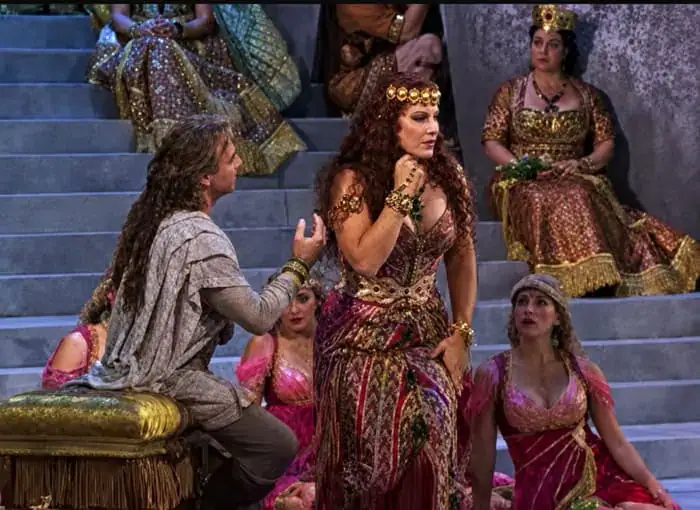
The Metropolitan Opera archives provide a precise landmark in Hall’s American career. He made his company debut as costume designer for Verdi’s Otello on 25 March 1972.
The production was by Franco Zeffirelli, with Karl Böhm conducting. The principal cast included James McCracken, Teresa Żylis-Gara and Sherrill Milnes.
The production record separates the creative responsibilities clearly. Hall is credited for costume design, while Zeffirelli’s production and the musical performance belonged to other named participants. Together, their contributions created the event.
In a work such as Otello, costume forms part of a dramatic society containing distinctions of public authority, military identity and private life. Clothing can help make those differences visible, contributing to the audience’s understanding of the characters and their relationships.
Hall’s Metropolitan Opera debut preceded his Bowie commission by more than a decade. When Bowie later engaged him, he was drawing on the experience of an established designer whose work had already appeared at major international institutions.
An international repertory and a wide range of performers
Hall’s institutional biographies record work for companies including Covent Garden, La Scala, the Vienna State Opera, Lyric Opera of Chicago, LA Opera and Opera Australia. His career also included work associated with the Kirov Opera, now generally known as the Mariinsky.
The repertory was correspondingly broad. Opera Australia’s biography lists works by composers including Mozart, Rossini, Donizetti, Bellini, Verdi and Puccini, alongside other operatic traditions.
His designs were worn by performers including Joan Sutherland, Kiri Te Kanawa, Plácido Domingo and Luciano Pavarotti. Dallas Opera also records work associated with actors including Judi Dench, Maggie Smith and Elizabeth Taylor.
These names reflect the different settings in which Hall worked. His contribution depended on clothing serving a performer’s activity, whether that involved singing, acting or moving through a staged scene. The garment had to support the presentation while remaining usable by its wearer.
1979: Zoot Suit on Broadway
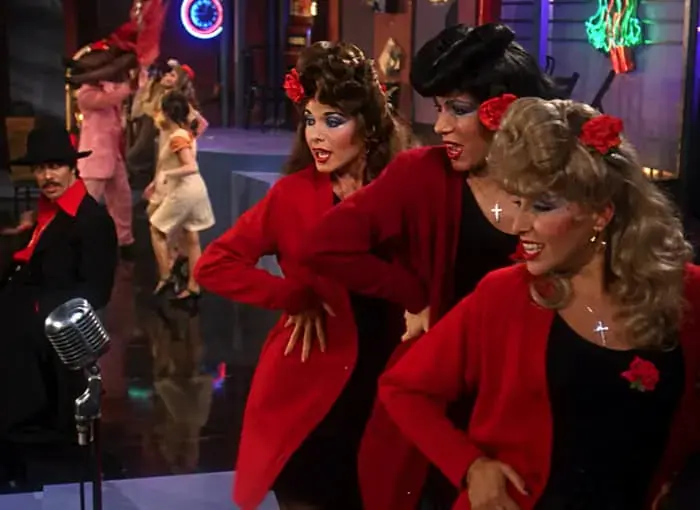
Hall’s Broadway credits include Zoot Suit in 1979, written and directed by Luis Valdez. The Broadway production record names Peter J. Hall as costume designer.
Other members of the creative team were separately responsible for scenery, lighting, sound and choreography. Hall’s credit identifies a theatrical commission outside the opera repertory and places his work within a different kind of ensemble production.
The title makes clothing particularly prominent. The proportions of a zoot suit create a recognisable silhouette, giving dress a visible role in the presentation of identity. Costume therefore participates in the audience’s understanding of the characters rather than functioning only as decoration.
The production is relevant to Hall’s Bowie story because accounts of the singer’s 1983 wardrobe have connected Bowie’s interest in the designer with his work on Zoot Suit and La bohème. This does not mean that Bowie’s clothes were transferred directly from the play or carried the same historical meanings.
Instead, the Broadway credit demonstrates Hall’s experience with theatrical tailoring before Bowie commissioned him. His professional practice encompassed both the appearance of an individual garment and its place within a wider production.
1981: La bohème at the Metropolitan Opera
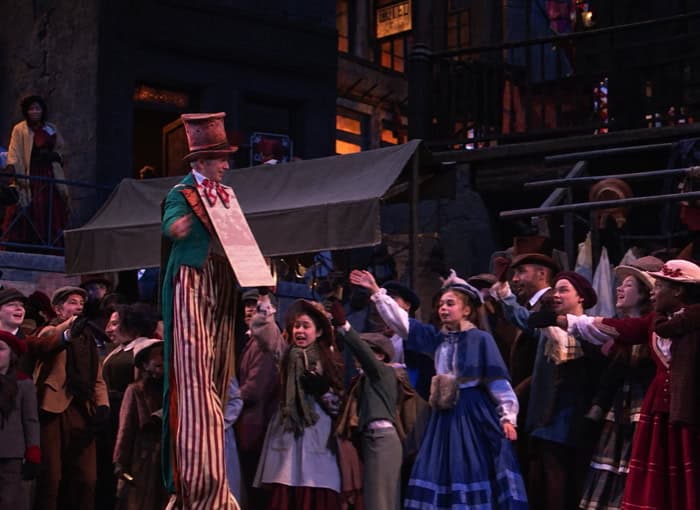
Another important credit came with the Metropolitan Opera’s new La bohème, first presented on 14 December 1981. Franco Zeffirelli was responsible for the production, while Hall designed the costumes.
The opening cast included Teresa Stratas and José Carreras, with James Levine conducting. Hall’s work formed part of a theatrical environment moving between intimate domestic space and crowded public scenes.
Those contrasting settings illustrate the different scales at which costume operates. Clothing helps define a principal character, but it also contributes to the collective appearance of a crowd. Individual choices become part of a larger visual composition.
A comparable design problem arises in concert presentation, where the central performer needs a clear presence while the surrounding musicians remain part of the same event. This is a practical parallel between the two settings, rather than evidence that Hall reproduced an operatic design scheme for Bowie.
The 1981 production belongs close to the Bowie commission chronologically. It places Hall at a major New York institution shortly before the preparations for Serious Moonlight, establishing the professional world from which his concert work emerged.
Working with David Bowie
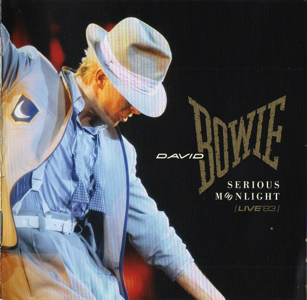
Hall’s collaboration with Bowie concerned the Serious Moonlight Tour of 1983, the concert production associated with Let’s Dance. It brought a designer known for opera and theatre into the planning of Bowie’s stage wardrobe.
Accounts of Bowie’s choice connect his interest in Hall with the designer’s New York work, including Zoot Suit and La bohème. The precise date and circumstances of their first personal meeting are not established here.
The commission was a direct professional contribution to Bowie’s performance presentation. Hall applied his experience of materials and theatrical clothing, while Bowie remained an active participant in the production’s visual direction.
Their collaboration joined these responsibilities. Hall was not simply supplying an unrelated fashion item, and his contribution did not replace the work of the production’s other creative participants. The wardrobe belonged to the coordinated presentation of the concert.
1983: tailoring and a different visual language
Tailoring, shirts, ties and a carefully arranged silhouette became prominent elements of Bowie’s Serious Moonlight appearance. This differed visibly from the elaborate clothing associated with the Ziggy Stardust and Aladdin Sane years.
A suit can carry theatrical meaning even when it resembles a familiar form of everyday dress. Proportion, colour, styling and the person wearing it influence its effect. On stage, those choices also interact with movement and lighting.
Hall’s contribution did not need to resemble a historical opera costume to benefit from theatrical expertise. The task was to make the chosen clothing function for Bowie and for the production in which he would wear it.
The Victoria and Albert Museum identifies a suit designed by Peter Hall and worn by Bowie during the 1983 tour. That surviving object connects the familiar performance image with a specific designer credit.
The museum record supports a material history of the collaboration. It identifies an actual garment rather than relying on a general observation that Bowie’s style changed during the period.
Fabric, lighting and the practical work of design
One of Bowie’s published comments about Hall addresses the selection of materials and their appearance under stage lighting. It describes the designer examining the conditions in which the completed clothes would be seen.
David Bowie on Peter Hall’s attention to materials and lighting
“He chose all the materials and came to see how everything would look under our lighting.”
— David Bowie, from the Serious Moonlight tour book, reproduced in MR PORTER’s account of Bowie’s 1983 stage wardrobe.
The comment identifies a concrete part of the collaboration. Hall was interested in the translation from fabric choice to performance appearance, considering the garment within the actual production rather than only in ordinary lighting.
A surface can absorb light, reflect it or reveal a texture that is less apparent in other conditions. Testing those relationships allows a designer to judge the completed effect. Bowie’s recollection documents Hall’s attention to that process without supplying an unsupported account of every fitting or adjustment.
Designing an ensemble: the musicians around Bowie
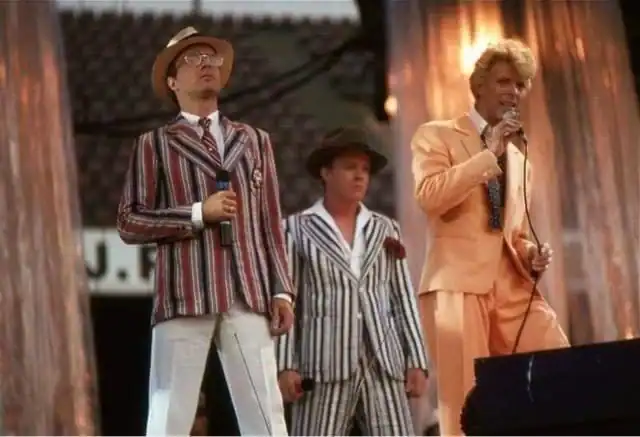
Hall’s involvement extended beyond the image of Bowie wearing a tailored suit. Frank Simms, one of the tour’s backing vocalists, described the wider band’s clothing in an interview published in 2016.
Simms identified Hall through his association with the Metropolitan Opera and recalled Bowie giving different visual directions for different musicians. His account presents the wardrobe as an ensemble of individual appearances.
Frank Simms on the Serious Moonlight band’s costumes
“Everybody had his own incredible, unique costume, from all over the world.”
— Frank Simms, interviewed by Lauren Sarner, Inverse, 14 April 2016.
The testimony comes from someone who participated in the concerts and wore the clothes. It supports a wider understanding of Hall’s commission, in which the surrounding musicians contributed visually to the production.
Different appearances could distinguish the players while keeping them within a shared presentation. Simms’s recollection establishes that collective dimension without providing a complete inventory of every garment or the authorship of each individual accessory.
A wardrobe designed to be worn in performance
Theatre and concert costume share practical concerns even when their dramatic purposes differ. A musician must use an instrument, reach equipment and move within the available space. A singer needs clothing that allows the performance to proceed.
A photograph records an instant, concentrating attention on shape, colour and pose. A live performance reveals the garment over time as the wearer turns, walks and interacts with other people. Hall’s profession belonged to that continuing event.
The Serious Moonlight clothes became recognisable images, but they also belonged to a working concert wardrobe. Their later familiarity should not obscure the original design task: translating a visual intention into clothing that could be used during the show.
Bowie’s comment about materials and lighting, together with Simms’s description of the ensemble, provides specific evidence of that process. Neither account requires additional claims about undocumented construction methods or private conversations.
Peter Hall’s recollection of Bowie
Hall’s own brief description of Bowie provides a personal counterpoint to the production credits. He characterised the singer in terms of seriousness and intellectual engagement, while expressing pleasure in the working relationship.
Peter J. Hall on working with David Bowie
“serious, intellectual, wonderful to work with”
— Peter J. Hall, quoted in David Jays’s obituary in The Guardian, 24 June 2010.
The recollection establishes a favourable professional impression. It should not be expanded into an undocumented account of an extensive private friendship or a lifelong exchange of artistic ideas.
Placed alongside Bowie’s observation about Hall’s practical attention, the statement gives the collaboration a human dimension. One participant remembered the designer’s work, while the other remembered the performer’s manner.
The end of Serious Moonlight and the scope of Hall’s contribution
The Serious Moonlight Tour concluded in Hong Kong on 8 December 1983. Bowie’s official website has subsequently marked the final concert and its performance of John Lennon’s Imagine.
Hall’s documented contribution belongs to the costume history of that production. It does not establish a musical role on Let’s Dance, participation in its recording sessions or responsibility for every outfit Bowie wore during the surrounding period.
Bowie worked with different designers across his career, and those contributions need to remain distinguishable. A garment credited to Hall provides evidence for that particular design, rather than automatic authorship of other superficially similar clothes.
The collaboration remains a substantial chapter within Hall’s career on its own terms. It connected an established theatrical profession with a major concert production and left surviving material evidence.
Continuing opera work after the Bowie collaboration
Opera remained central to Hall’s professional life after 1983. His later credits show that the Bowie commission formed one engagement within a continuing career rather than replacing the activity on which most of his reputation had been built.
His work involved several directors and production teams. Zeffirelli was a recurring collaborator, while Elijah Moshinsky appears in important later production records at Covent Garden and elsewhere.
Those individual credits give Hall’s biography a chronology extending beyond the familiar Bowie photographs. They also show the professional range available to a designer who could work within different directorial approaches and institutional settings.
1987: Otello at the Royal Opera House
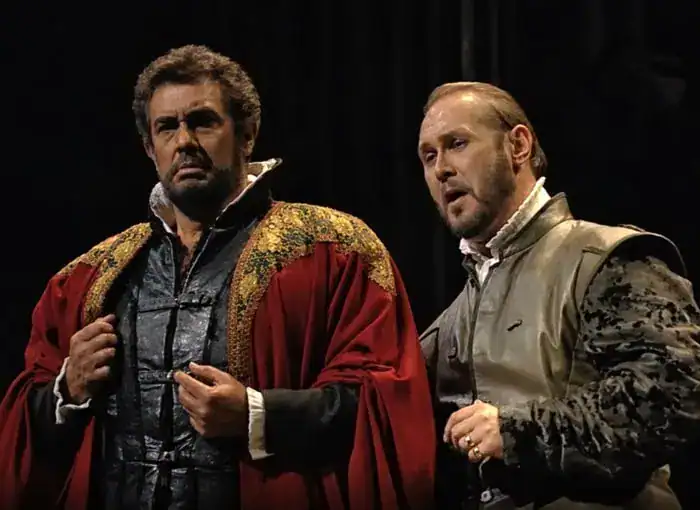
Hall returned to Otello in a different production at the Royal Opera House, first presented on 13 January 1987.
The production record credits Elijah Moshinsky as producer, Timothy O’Brien as set designer and Peter J. Hall as costume designer, with lighting by Robert Bryan.
This engagement should be distinguished from Hall’s Metropolitan Opera debut in the same opera fifteen years earlier. A repeated title does not mean an identical production: different teams and settings create different circumstances for the design.
The Royal Opera House record documents subsequent revivals, placing the original costume contribution within a longer performance history. The 1987 staging provides a clear post-Bowie landmark in Hall’s continuing work.
1991: Simon Boccanegra
Simon Boccanegra — trailer from The Royal Opera.
The Royal Opera’s Simon Boccanegra opened on 12 November 1991. Its creative team included Elijah Moshinsky as director, Michael Yeargan as set designer and Peter J. Hall as costume designer.
The production record identifies a co-production with the Teatro Comunale di Bologna. Hall’s work therefore belonged to another internationally connected production, with the responsibilities of director, scenic designer and costume designer recorded separately.
The staging continued through numerous revivals. Its history illustrates the difference between the working life of an individual designer and the performance life of a production that can return with new casts and conductors.
The archive records that the 2010 revival was dedicated to Hall’s memory. The tribute accompanied the renewed presentation of a production to which he had contributed.
1992 and beyond: LA Opera
LA Opera records Hall’s company debut with Hansel and Gretel in 1992. Its institutional biography also lists his work on La bohème, Stiffelio and Simon Boccanegra.
These credits extend the American map of Hall’s career beyond Dallas and New York. They also document the later presentation of designs associated with his name.
Some recorded performance dates fall after Hall’s death. Such credits identify the continuing use of his design contribution, not new work personally undertaken by him. The chronology of the designer and the presentation history of a production must therefore be read separately.
1993: Stiffelio with Elijah Moshinsky
Verdi’s Stiffelio at the Royal Opera House, recorded in 1993, with José Carreras and Catherine Malfitano. Production by Elijah Moshinsky, with costumes designed by Peter J. Hall.
The Royal Opera’s production of Verdi’s Stiffelio opened on 25 January 1993.
Its archived credits identify Elijah Moshinsky as director, Michael Yeargan as set designer, Peter J. Hall as costume designer and Paul Pyant as lighting designer.
Moshinsky and Yeargan also appear in the record of Simon Boccanegra, demonstrating recurring professional relationships within Hall’s later career. Each production nevertheless retained its own design responsibilities and performance history.
The Royal Opera House archive records revivals of Stiffelio in 1995 and 2007. Hall’s costume contribution consequently remained visible to audiences many years after the first presentation.
Opera Australia and La traviata
Opera Australia’s La traviata at the Sydney Opera House in 2018, featuring Nicole Car as Violetta. Production by Elijah Moshinsky, with costumes designed by Peter J. Hall.
Hall’s international career included Opera Australia, whose artist biography identifies him as costume designer for La traviata.
A Sydney Opera House performance recorded on 17 March 2018 and broadcast by ABC retained his costume-design credit. Its listed creative team included Elijah Moshinsky as director, Michael Yeargan as set designer and Nigel Levings as lighting designer.
The posthumous credit records the presentation of an established design. It also reminds us that revivals involve the continuing work of wardrobe departments and production teams, who prepare the clothes for the performers appearing on that occasion.
Opera Australia’s record demonstrates the geographical reach of Hall’s work and the continuing presence of his designs within an international repertory.
Later work and the breadth of a long career
Institutional biographies identify later Hall designs associated with Ariadne auf Naxos in Dallas, Simon Boccanegra in San Francisco, Otello in South Korea and Stiffelio in Argentina.
These references show continued geographical and repertory range. Hall’s later professional identity was not restricted to the revival of a few early successes or to recollections of his work with famous rock performers.
Some engagements also crossed the boundary between costume and scenery. Dallas Opera explicitly notes that he occasionally designed sets as well as clothes. He remained principally a costume designer, with additional scenic work rather than automatic responsibility for every visible part of a production.
Across his career, Hall worked with different generations of performers and creative teams. His opera, theatre, film and concert credits together describe the scope of that professional life.
2010: death and remembrance
Peter John Hall died in Dallas on 27 May 2010, aged eighty-four. His life dates are recorded by institutions that presented his work.
The Royal Opera’s dedication of its 2010 Simon Boccanegra revival provides a tangible form of remembrance. It accompanied the return of a production in which his costume contribution remained visible.
Hall’s death closed his personal working chronology, but productions associated with his designs continued. Their later history belongs to the preservation and presentation of his work by the companies and craftspeople responsible for those revivals.
After 2010: designs that continued to reach audiences
The posthumous record includes revivals at several companies. Lyric Opera of Chicago’s biography identifies later presentations of Hall’s work, including I puritani in the 2017–2018 season.
Dallas Opera continued to credit his costumes, while Opera Australia and LA Opera likewise retained his name in their production histories.
A revived design returns to the circumstances for which it was created: a performer wearing it before an audience. The performance is new, even when an established visual conception forms part of its presentation.
Hall’s legacy can therefore be followed through programmes and performance records as well as through photographs. Those records preserve authorship in a profession whose results are often remembered more readily than the designer’s name.
The Bowie suit as an archival object
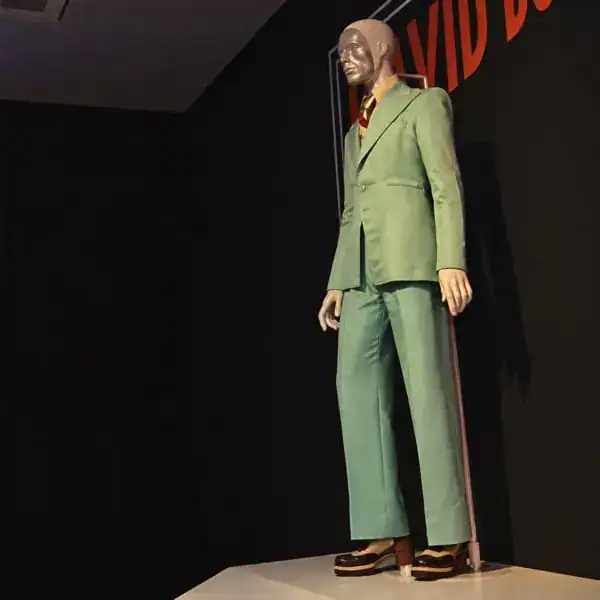
The Victoria and Albert Museum documents a Peter Hall suit worn by Bowie during the Serious Moonlight Tour in 1983. Its inclusion among the David Bowie Centre’s display highlights connects Hall’s name with a surviving object from the singer’s performance history.
An archival garment offers a different kind of evidence from a recollection. A photograph shows its appearance at a particular moment, testimony can describe circumstances of its creation or use, and the object preserves the material result.
Together, those forms of evidence allow the collaboration to be understood through both its public image and its practical production history. The suit identifies Hall’s contribution without requiring speculation about a wider or earlier influence on Bowie.
The object also preserves the work behind a familiar image. Bowie’s stage appearance involved actual garments and identifiable creative contributions, rather than emerging independently of the people who designed and prepared them.
Legacy: Peter John Hall in Bowie’s collaborative universe
Peter John Hall’s career connected opera, theatre, film and concert performance through the craft of costume design. His work belonged to different kinds of production, each with its own requirements and creative partnerships.
The Bowie collaboration remains especially visible because the Serious Moonlight performances generated widely circulated images. The Dallas productions, Metropolitan Opera credits, British theatrical work and international revivals establish the much larger career surrounding that commission.
Hall’s place in Bowie’s collaborative history is therefore specific and documented. He contributed costume design to the 1983 tour, bringing experience developed through decades of theatrical work.
His independent achievements retain their significance within that account. Understanding the wider career explains the professional experience Bowie engaged, while the concert wardrobe shows how that experience could be applied in another performance setting.
Official Website & Further Information
Institutional biographies and performance archives provide further information about Peter John Hall’s career, his production credits and the continuing presentation of his designs.
LA Opera — Peter J. Hall:
Peter J. Hall’s artist biography
Lyric Opera of Chicago — Peter J. Hall:
Peter J. Hall’s biography and company credits
Victoria and Albert Museum — David Bowie Centre:
Information about the David Bowie archive and its displays
Article Origin
This article has been prepared for DavidBowieWorld.com to document the career of Peter John Hall and his professional contribution to David Bowie’s 1983 Serious Moonlight Tour. It places the collaboration within Hall’s wider work in opera, theatre and film.
The account is based on documented production credits, institutional biographies, archival descriptions and published recollections. The quotations are accompanied by their published provenance. No personal cooperation with Hall, his family or his representatives is claimed.
© DavidBowieWorld.com — David Bowie Collaborations & Creative Circle Archive.
